
Journalist

AJP
-
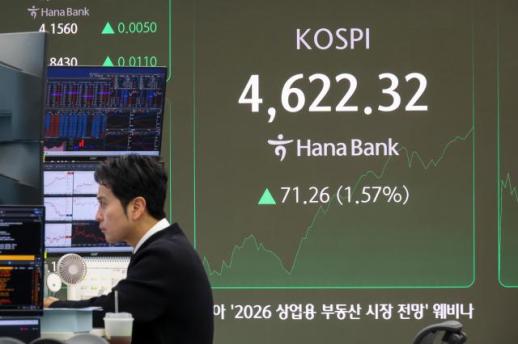 Tax may be one reason Koreans prefer overseas ETFs over home-based ones SEOUL, January 08 (AJP) - Authorities have blamed overseas securities investment for the stubborn weakness of the Korean won and have rolled out incentives to encourage capital to return home. But for many individual investors, tax treatment remains a decisive reason to stick with foreign exchange-traded funds (ETFs). An investor who generates 30 million won ($20,691) in profits from Korea-listed ETFs within a pension account would take home about 19.1 million won after tax. That implies an effective tax rate of roughly 35 percent. By contrast, profits from overseas-listed ETFs are subject to a flat 22 percent capital gains tax on excess earnings, allowing the same investor to retain around 24 million won. The arithmetic alone tilts preferences toward overseas ETFs. How Korea’s ETF tax system works South Korea’s ETF taxation rests on two pillars: dividend income tax and global income tax. Investment profits of up to 20 million won are subject only to dividend income tax. Once gains exceed that threshold, the excess is classified as “other income” and added to earned income, triggering progressive global income tax rates. For higher earners, this can push the marginal tax rate as high as 49.5 percent. As a result, a 30 million won gain can translate into a 35 percent tax burden, significantly eroding net returns. A widening global gap The disparity becomes more pronounced in international comparison. For the same 30 million won gain, investors in Japan or China would retain about 24 million won. In the United States, the most popular destination for Korean investors, long-term capital gains are taxed at 15 percent, leaving investors with more than 25 million won. In Taiwan and Singapore, capital gains from ETFs are largely untaxed beyond transaction fees, allowing investors to keep nearly the full amount. Capital outflows accelerate Against this backdrop, the shift toward foreign securities has intensified. According to a press release from the Bank of Korea last December, South Korean residents invested $99.85 billion in foreign stocks and bonds between January and September last year — more than three times the $29.65 billion foreign investors put into Korean securities over the same period. The ETF market mirrors this trend. Based on data from ETFGI and the Korea Exchange, capital inflows from Korea into overseas ETFs reached an estimated 150–160 trillion won last year, more than double the 77.5 trillion won that flowed into domestically listed ETFs. While Korean ETFs still lead in total assets under management, the gap is narrowing rapidly. “Too much capital from individual investors is flowing overseas,” BOK Governor Rhee Chang-yong said at a press conference following a Monetary Policy Board meeting in November, stressing the need to induce net inflows to help stabilize the exchange rate. Policy friction, structural problem In response, authorities began requiring investors in overseas-listed ETFs to complete a mandatory one-hour educational session starting last December — a move widely interpreted as an attempt to slow capital outflows by raising procedural hurdles. Market participants argue, however, that such measures fail to address the root cause. The Korea Capital Market Institute noted that disparities in ETF taxation and regulation have created structural incentives for high-net-worth investors to favor overseas products. The institute has called for tax neutrality between domestically listed overseas ETFs and overseas-listed ETFs. “We are seeing a phenomenon where Koreans ‘direct-purchase’ Korean ETFs through foreign markets,” said Lim Tae-hyuk, head of ETF management at Samsung Securities. “Eliminating double taxation would bring domestic investors back to the home market.” Kim Jung-hyun, head of ETF business at Shinhan Asset Management, echoed the view, calling for separate taxation of dividend income for domestic ETFs held in individual retirement pensions. “For the long-term growth of Korea’s capital market,” he said, “structural tax reform is no longer optional.” 2026-01-08 17:49:15
 -
 South Korean street-food chain captivates Singaporean palates with tailored approach SEOUL, January 8 (AJP) - Snack-food chain Ssada Gimbap has achieved 4 billion won ($3 million) in annual sales in Singapore in just three years since making its entry into the Southeast Asian country. According to the affordable street-food chain, the key to its success lies in its deliberate strategy of gradually opening outlets in key locations. Starting with its first outlet in Bukit Timah, home to one of the largest South Korean communities there, in June 2023, the chain gradually opened additional outlets to lay the foundation for promoting the brand through word of mouth among South Korean expats. Its second outlet, opened just a year later, is located at Great World City, a large shopping mall near the posh River Valley area, home to many foreign expatriates and high-income locals. The chain then opened its third outlet in a newly built shopping mall in Lentor, a residential area with a large population, in a bid to attract more customers. QR code-based ordering also enhances convenience for customers while reflecting local dining trends in the tech-savvy country in Asia. Another key driver of sales growth also appears to be its carefully selected menu, which caters to local tastes. Stew made with soft tofu, in particular, has become especially popular among Chinese Singaporean customers, who make up the majority of the population. Its spicy yet rich flavor captivated many local diners, making it one of the brand's signature dishes. A couple of cold noodle dishes, with some variations, have also delighted many locals’ palates due to Singapore's hot and humid climate, as more and more customers want to try them. The popularity of its dishes has also prompted more Singaporeans to travel to Seoul to taste the authentic versions. "The success of Ssada Gimbap in Singapore demonstrates that Korean food has a competitive edge in one of the world's pickiest markets and other foreign countries, if it comes with strategies tailored to local tastes rather than simply serving food," said one market insider. Ssada Gimbap plans to further expand its market presence across Singapore while also exploring other countries like Malaysia. 2026-01-08 17:48:03
 -
 Shipbuilders lift South Korean stocks as Asian markets trade mixed SEOUL, January 08 (AJP) - Asian equities were mixed on Thursday, while South Korean stocks ended marginally higher as a sharp rally in shipbuilding shares offset weakness in technology-heavy stocks. In Seoul, the benchmark KOSPI edged up 0.03 percent to close at 4,552.37, finishing largely flat as gains among shipbuilders countered declines elsewhere. Buying in the sector was driven by rising expectations of large shipbuilding and offshore project orders linked to Canada. The tech-heavy KOSDAQ underperformed, slipping 0.3 percent to 944.06, as investors locked in profits in selected growth and small-cap shares. Shipbuilders led the market higher. Hanwha Ocean jumped 6.6 percent to 129,300 won, emerging as one of the day’s top performers on optimism over potential large-scale contracts. HD Hyundai Heavy Industries climbed 4.9 percent to 584,000 won, while SK Oceanplant gained 5.4 percent to 20,850 won. Samsung Heavy Industries rose 4.1 percent to 26,400 won, and HJ Shipbuilding & Construction added 1.9 percent to 24,750 won, reflecting broad-based strength across the sector. The rally was further supported by fresh order news. HD Hyundai Marine Engine said it had signed a ship engine supply contract with China’s Jiangsu New Yangzi Shipbuilding, according to a regulatory filing. The contract is valued at 24.3 billion won ($18.2 million), equivalent to 7.7 percent of the company’s 2024 consolidated revenue of 315.8 billion won. Outside shipbuilding, entertainment stocks rebounded after recent volatility. Shares of major K-pop agencies rose as investors looked beyond fading expectations for an easing of China’s restrictions on Korean cultural content and refocused on longer-term growth prospects. SM Entertainment gained 1.3 percent to 117,000 won, while YG Entertainment surged 5.1 percent to 67,600 won. JYP Entertainment rose 1.7 percent to 71,200 won, and Hybe added 1.5 percent to 334,000 won, supported by expectations of high-profile artist comebacks slated for 2026. The Korean won weakened slightly amid steady demand for the U.S. dollar, closing at 1,451.59 per dollar as of 4:20 p.m. local time. Elsewhere in Asia, major markets finished little changed. Japan’s Nikkei 225 fell 1.6 percent to 51,117.3, while China’s Shanghai Composite edged down 0.07 percent to 4,083, as investors remained cautious ahead of global economic data and policy signals. 2026-01-08 17:44:58
 -
 Naver's sovereign AI plan questioned over use of China's open-source technology SEOUL, Jan. 8 (AJP) - Naver’s push to develop a so-called “sovereign AI” model has come under scrutiny after disclosures that its government-backed foundation model incorporated components from Alibaba’s open-source Qwen system, raising questions about South Korea’s technological independence and its ambition to build advanced artificial intelligence from scratch. Industry sources said on Thursday that Naver Cloud’s HyperCLOVA X Seed 32B Sync model used a vision encoder from Alibaba’s Qwen. Vision encoders convert visual data into numerical representations that allow AI systems to process images and other non-text inputs. Naver Cloud defended the decision, saying the integration was a strategic choice aimed at ensuring compatibility with the global AI ecosystem and improving overall performance. The revelation, however, has challenged the domestic industry narrative that South Korea’s sovereign AI initiatives are fully homegrown. Several industry officials said reliance on global open-source models was a pragmatic response to tight deadlines and limited resources under government-led projects. “Given the compressed timelines and performance requirements, developers had little choice but to rely on proven open-source tools to deliver functioning multimodal AI,” one industry official said, declining to be named. Chinese open-source models have gained traction globally by offering open-weight architectures that allow developers to modify and optimize systems freely. In contrast, leading U.S. models such as OpenAI’s ChatGPT and Google’s Gemini operate largely as closed systems. Data from developer platform OpenRouter and venture capital firm Andreessen Horowitz show that usage of Chinese-developed open-source models rose sharply, from 1.2 percent in late 2024 to about 30 percent by August last year. Even U.S.-based companies such as Nvidia and Perplexity, as well as Stanford University, have reportedly used Alibaba’s Qwen for specific applications. At the same time, the performance gap between Chinese and Western models is narrowing. Stanford University’s Human-Centered AI institute said in its AI Index 2025 report that the U.S. lead in benchmarks such as Massive Multitask Language Understanding shrank from double digits in late 2023 to between 0.3 and 3.7 percentage points by the end of 2024. Research firm Epoch AI estimated that leading Chinese models now trail top Western systems by an average of about three months. “China is strengthening its position in the open-source AI ecosystem through large-scale state support and regulatory easing,” another industry official said. “Firms developing sovereign models may need selective collaboration to remain competitive.” Performance data has also tempered expectations. In December, a Sogang University research team tested five government-backed AI models using university entrance exam-style questions, including South Korea’s CSAT mathematics section. While startup Upstage scored 58 points, other domestic models recorded results in the 20-point range. By contrast, leading global systems such as GPT-5.1 and DeepSeek V3.2 scored above 70, highlighting the gap that remains despite state-backed efforts. 2026-01-08 17:31:42
 -
 Stray Kids to perform at star-studded charity concert in France later this month SEOUL, January 8 (AJP) - K-pop boy band Stray Kids will attend at a charity concert in France later this month. The eight-member band will perform along with global stars such as American singer-songwriter and actress Christina Aguilera, American rapper A$AP Rocky, and South Korean rapper G-Dragon at Le Gala des Pièces Jaunes, also known as the Yellow Coins Gala, slated to be held at a multipurpose indoor arena in Nanterre, a western suburb of Paris on Jan. 22. Organized by a charity foundation run by France's first lady Brigitte Macron, the concert has been held almost annually since 1989 to raise funds for children with illnesses and young people in need. It will be Stray Kids' second consecutive appearance at the event, after stopping in Paris as part of their world tour in July last year, which drew 120,000 fans. 2026-01-08 16:37:13
 -
 Samsung regains top spot in global DRAM, NAND markets SEOUL, January 08 (AJP) - Samsung Electronics has regained the top global position in both DRAM and NAND flash memory following stronger-than-expected preliminary fourth-quarter results, according to data from industry researcher Counterpoint Research, released on Thursday. The research firm estimated that Samsung’s memory semiconductor revenue rose 34 percent from the previous quarter to $25.9 billion in the fourth quarter. DRAM accounted for $19.2 billion of the total, while NAND flash contributed $6.7 billion. Over the same period, SK hynix posted total memory revenue of $22.4 billion, including $17.1 billion from DRAM and $5.3 billion from NAND, Counterpoint said. The figures put Samsung back in the No. 1 spot in the global DRAM market after a year. Samsung had dominated the segment for about three decades through the fourth quarter of 2024, before losing the top position to SK hynix for the first time in the first quarter of 2025. Choi Jeong-gu, a research director at Counterpoint, said Samsung has responded effectively to shifts in demand by steering its commodity DRAM output toward server applications, while adopting advanced manufacturing nodes. These include a 4-nanometer logic process for next-generation high-bandwidth memory, or HBM4, which he said has delivered improvements in speed and thermal performance. Choi added that Samsung’s efforts to address internal issues, including an earlier focus on short-term results, and to refocus on technological competitiveness are now translating into improved market performance. 2026-01-08 15:55:30
 -
![[CES 2026] Seoul startups vie for attention at CES, powered by student talent](https://image.ajunews.com//content/image/2026/01/08/20260108153955802448_518_323.jpg) [[CES 2026]] Seoul startups vie for attention at CES, powered by student talent LAS VEGAS, January 08 (AJP) - CES 2026 is not just a stage for global tech giants. For many startups, it serves as a debut platform or a critical stepping stone — and at the Seoul Pavilion this year, university students have emerged as unlikely stars. At the Seoul Pavilion at CES 2026, hosting 69 startups, student talent has become a defining feature. The pavilion is operated by the Seoul Business Agency (SBA), which set up a 743-square-meter space inside Eureka Park, CES' dedicated startup hub. Orange-themed booths line the floor, while Haechi — Seoul's mascot — roams the aisles, drawing curious glances from international visitors. The pavilion brings together 19 organizations, including four district offices, five startup support agencies and nine universities. Participating companies span artificial intelligence, mobility and healthcare sectors. Among the exhibitors, AI startup A.PLA demonstrated its proprietary motion-capture technology. The system extracts human movements from ordinary webcam footage or YouTube videos, converting them into training data for robots. The company had planned to bring a humanoid robot from Unitree Robotics for live demonstrations, but battery restrictions during air transport forced a change of plans. "We're not a robotics manufacturer," said A.PLA co-founder Jake Hong. "We help robot makers produce high-quality training data at scale. That's what we came here to show the world." Nearby, mental-health startup ATLO drew crowds with its emotion-sensing AI companion. Equipped with cameras, the robot reads facial expressions, gestures and vocal tones to gauge a user's emotional state and respond accordingly. The company offers the technology both as a mobile app and as a physical robot. The robot demonstrated its capabilities on the show floor, recognizing hand gestures and engaging in conversation. "Many people struggling with mental health don't want to be treated as patients at hospitals or counseling centers," said ATLO CEO Park Sung-hyun. "They want to be treated as individuals. Our AI companion serves as a friend who listens." Park, who attended CES with a three-member team, praised the pavilion's support system. "Each company gets a dedicated university student who handles interpretation and booth logistics," he said. "They've been outstanding." The student volunteer program has emerged as a hallmark of Seoul's CES presence. Drawn from nine Seoul-based universities and the University of Nevada Las Vegas, volunteers are matched with participating companies months in advance. According to SBA CEO Kim Hyun-woo, students undergo extensive preparation before arriving in Las Vegas, studying their assigned companies' products, analyzing competitors and learning the broader industry landscape. "The goal is simple: get one more investor, one more buyer in front of these startups," Kim said. It took four years, he added, to persuade universities and government agencies to join forces under a single pavilion. "When everyone came separately, it cost more and made less impact," Kim said. "Together, we punch above our weight." Visually, the Seoul Pavilion stands out among national booths at Eureka Park. Kim pointed to deliberate design choices aimed at maximizing foot traffic, including a dedicated media center where journalists can file stories on site. "If you don't have deep insight into a particular industry, you won't seek out those booths," he said. "We need to catch people's eyes first, then create an interface for conversation." The results, Kim noted, speak for themselves. Of the 69 participating companies, 17 received CES Innovation Awards — a ratio he called the best in the world, crediting months of pre-show consulting and post-show follow-up. "Other pavilions might bring 100 companies and win eight or nine awards," he said. "We're running at a different level." Kim also observed that CES itself is evolving. With fewer Chinese companies participating in recent years, Korean firms have gained greater visibility. Still, he cautioned that the exhibition's global standing may be shifting. "We'll evaluate after this show ends and plan accordingly," he said. For now, the focus remains firmly on the show floor. "For students, it's invaluable experience. For startups, it's a lifeline," Kim said of the volunteer program. CES 2026 runs through Jan. 9. 2026-01-08 15:46:36
[[CES 2026]] Seoul startups vie for attention at CES, powered by student talent LAS VEGAS, January 08 (AJP) - CES 2026 is not just a stage for global tech giants. For many startups, it serves as a debut platform or a critical stepping stone — and at the Seoul Pavilion this year, university students have emerged as unlikely stars. At the Seoul Pavilion at CES 2026, hosting 69 startups, student talent has become a defining feature. The pavilion is operated by the Seoul Business Agency (SBA), which set up a 743-square-meter space inside Eureka Park, CES' dedicated startup hub. Orange-themed booths line the floor, while Haechi — Seoul's mascot — roams the aisles, drawing curious glances from international visitors. The pavilion brings together 19 organizations, including four district offices, five startup support agencies and nine universities. Participating companies span artificial intelligence, mobility and healthcare sectors. Among the exhibitors, AI startup A.PLA demonstrated its proprietary motion-capture technology. The system extracts human movements from ordinary webcam footage or YouTube videos, converting them into training data for robots. The company had planned to bring a humanoid robot from Unitree Robotics for live demonstrations, but battery restrictions during air transport forced a change of plans. "We're not a robotics manufacturer," said A.PLA co-founder Jake Hong. "We help robot makers produce high-quality training data at scale. That's what we came here to show the world." Nearby, mental-health startup ATLO drew crowds with its emotion-sensing AI companion. Equipped with cameras, the robot reads facial expressions, gestures and vocal tones to gauge a user's emotional state and respond accordingly. The company offers the technology both as a mobile app and as a physical robot. The robot demonstrated its capabilities on the show floor, recognizing hand gestures and engaging in conversation. "Many people struggling with mental health don't want to be treated as patients at hospitals or counseling centers," said ATLO CEO Park Sung-hyun. "They want to be treated as individuals. Our AI companion serves as a friend who listens." Park, who attended CES with a three-member team, praised the pavilion's support system. "Each company gets a dedicated university student who handles interpretation and booth logistics," he said. "They've been outstanding." The student volunteer program has emerged as a hallmark of Seoul's CES presence. Drawn from nine Seoul-based universities and the University of Nevada Las Vegas, volunteers are matched with participating companies months in advance. According to SBA CEO Kim Hyun-woo, students undergo extensive preparation before arriving in Las Vegas, studying their assigned companies' products, analyzing competitors and learning the broader industry landscape. "The goal is simple: get one more investor, one more buyer in front of these startups," Kim said. It took four years, he added, to persuade universities and government agencies to join forces under a single pavilion. "When everyone came separately, it cost more and made less impact," Kim said. "Together, we punch above our weight." Visually, the Seoul Pavilion stands out among national booths at Eureka Park. Kim pointed to deliberate design choices aimed at maximizing foot traffic, including a dedicated media center where journalists can file stories on site. "If you don't have deep insight into a particular industry, you won't seek out those booths," he said. "We need to catch people's eyes first, then create an interface for conversation." The results, Kim noted, speak for themselves. Of the 69 participating companies, 17 received CES Innovation Awards — a ratio he called the best in the world, crediting months of pre-show consulting and post-show follow-up. "Other pavilions might bring 100 companies and win eight or nine awards," he said. "We're running at a different level." Kim also observed that CES itself is evolving. With fewer Chinese companies participating in recent years, Korean firms have gained greater visibility. Still, he cautioned that the exhibition's global standing may be shifting. "We'll evaluate after this show ends and plan accordingly," he said. For now, the focus remains firmly on the show floor. "For students, it's invaluable experience. For startups, it's a lifeline," Kim said of the volunteer program. CES 2026 runs through Jan. 9. 2026-01-08 15:46:36 -
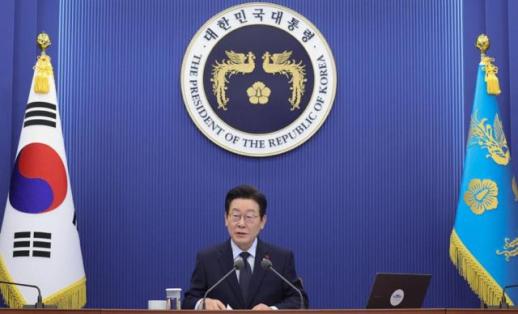 Lee's approval rating inches up to 61% SEOUL, January 8 (AJP) - President Lee Jae Myung's approval rating has inched up to 61 percent, up 2 percentage points from two weeks ago, a fresh poll showed on Thursday. Some 29 percent of respondents disapproved of Lee's performance, down 3 percentage points. But Lee gained support across the country overall except in the traditional conservative stronghold of Daegu and North Gyeongsang Province, where his approval rating stood at 49 percent. This was attributed to more respondents shifting to a favorable view. In particular, among people in their 20s and younger, opponents outnumbered supporters two weeks ago, with 48 percent versus 31 percent, but the figures have now reversed, with 41 percent in favor versus 32 percent opposed. The ruling Democratic Party (DP) garnered 39 percent of support, down 2 percentage points, while the main opposition People Power Party (PPP) edged up slightly to 23 percent, up 3 percentage points. The minor Reform Party and Rebuilding Korea Party each earned 3 percent of support. The joint poll, conducted fortnightly by Embrain Public, Kstat Research, Korea Research International, and Hankook Research, surveyed about 1,005 people aged 18 and older earlier this week. 2026-01-08 15:43:05
 -
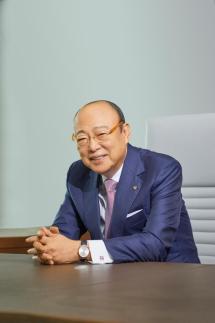 Hanwha chairman visits Jeju space center, underscores private space ambitions SEOUL, January 08 (AJP) - Hanwha Group Chairman Kim Seung-youn visited the firm's Jeju Space Center on Thursday, underscoring the conglomerate’s push to build a private-sector space industry ecosystem. The Jeju center, located in Seogwipo on Jeju Island, is a key base for the group's space business. Kim toured satellite production and testing facilities and received briefings on this year’s business plan and Hanwha’s broader space operations. “The Jeju Space Center is not just a workplace, but the present and future of Hanwha’s space ambitions,” Kim said during the visit, adding that space “opens a path only to those who never stop challenging.” The chairman's son, Hanwha Vice Chairman Kim Dong-kwan, who oversees the group’s space business, joined senior executives for the visit. After touring an exhibition hall, Kim Seung-youn met researchers working at the center and inspected clean-room facilities while wearing protective gear. Speaking to employees, Kim said Hanwha’s goal of launching satellites built with its own technology had been realized through the successful fourth launch of South Korea’s Nuri space rocket. He added that following work on a lunar orbiter, the group is now developing a propulsion system for a lunar lander, positioning Hanwha as a leading private-sector player in South Korea’s space industry. Kim urged employees to help develop the Jeju Space Center into a forward base for the country’s space industry, working alongside regional space clusters in Jeju, Goheung, Suncheon and Changwon. He said their efforts would help lay the foundation for South Korea to become one of the world’s top five space powers. Hanwha said its investments have expanded space-related operations at Hanwha Aerospace and Hanwha Systems, spanning launch vehicles, satellites and lunar exploration. Hanwha Aerospace is building on Nuri launch-vehicle technology, while Hanwha Systems is focusing on satellite systems and related technologies. 2026-01-08 14:55:42
 -
 North Korea keeps mum on leader's birthday SEOUL, January 8 (AJP) - North Korea's state media made no mention of leader Kim Jong-un's birthday, believed to fall on Thursday. The Ministry of Foreign Affairs here said there has been "no coverage at all by the country's state-run news agencies, and no related activity has been identified." Instead, North Korean media have focused on preparations for the Workers' Party's upcoming key congress, expected to take place early this year, with the official newspaper Rodong Sinmun running a front-page editorial urging officials to heighten their loyalty and ideological soundness by achieving major accomplishments. The secretive country has never officially disclosed Kim's birth date, but it is widely thought to be Jan. 8, 1984. North Korea has observed its leaders' birthdays as state holidays to promote a personality cult, celebrating Kim Jong-un's grandfather and regime founder Kim Il-sung on April 15 and his father Kim Jong-il on Feb. 16. 2026-01-08 14:55:41