
Journalist

AJP
-
 Comedian Yang Sang-guk Apologizes After Backlash Over His Behavior on YouTube Show Comedian Yang Sang-guk apologized after his remarks and attitude on the YouTube variety show 'Pinggyego' drew criticism. On May 3, a social media user wrote on Yang’s SNS that the comment section for 'Pinggyego' was “in an uproar” over how he addressed Yoo Jae-suk and over his views on dating as a “Gyeongsang-do man,” adding, “I want to keep watching you. I think you should go into humble mode.” Yang replied, “Yes. I’ll be more careful going forward.” The controversy followed an episode of 'Pinggyego' posted May 2 on the YouTube channel 'DdeunDdeun,' in which Yang appeared with Han Sang-jin and Nam Chang-hee. During the show, Nam said he is newly married and sees his wife off every day. Yang responded, “That’s dangerous. Seoul men are good at that. When they date, they take them home every time, but I’ve never taken a girlfriend home.” Yoo advised that even if not every day, it would be good to take a girlfriend home sometimes, saying it reflects wanting to spend more time together because you love the person. Yang pushed back, saying, “I usually listen to senior Yoo Jae-suk, but I don’t think so on this. I’m someone who dreams of marriage. I’m not at the age for kids’ dating.” Even after Yoo tried several times to persuade him, Yang said, “Mr. Yoo Jae-suk, if you say it one more time, I’ll scold you.” Watching the exchange, Han reacted, “It won’t be easy to make him a regular.”* This article has been translated by AI. 2026-05-04 14:46:54
 -
 Coles CEO says grocery price hikes may be unavoidable as fuel costs surge 호주 대형 슈퍼마켓 업체 콜스그룹이 연료비와 운송비 상승 여파로 일부 식료품 가격이 오를 수 있다고 밝혔다. 이란 전쟁 여파로 납품업체들의 인상 요구가 커지면서 장바구니 부담도 더 커질 수 있다는 전망이 나온다. 4일 블룸버그에 따르면 리아 웨커트 콜스 최고경영자(CEO)는 호주 멜버른에서 열린 호주주주협회 행사에서 “가격 인상이 불가피하다”고 말했다. 콜스와 납품업체들이 급등한 연료비와 물류비 부담을 함께 안고 있어 일부 품목은 가격 조정을 피하기 어렵다는 설명이다. 콜스는 앞서 지난주에도 이란 전쟁이 연료비와 운송비를 끌어올리면서 납품업체들의 가격 인상 요구가 늘고 있다고 밝혔다. 가격 인상이 현실화하면 이미 생활비 부담에 시달리는 호주 소비자들의 가계 부담은 더 커질 수 있다. 매장에서도 소비 변화가 나타나고 있다. 웨커트 CEO는 “소비자들이 스테이크 대신 다진 소고기나 닭고기처럼 더 저렴한 고기를 고르고 있다”고 말했다. 또 “기름값 부담을 줄이기 위해 장보러 가는 횟수도 줄이고 있다”고 설명했다. 호주 소비심리도 흔들리고 있다. 웨스트팩-멜버른연구소 소비자심리지수는 4월 91.6에서 80.1로 12.5% 떨어졌다. 웨스트팩은 이를 2020년 이후 가장 큰 월간 하락폭으로 평가했다. 시장에서는 호주중앙은행(RBA)이 5일 통화정책회의에서 기준금리를 연 4.35%로 인상할 가능성을 주시하고 있다. RBA는 2026년 5월 통화정책회의 일정을 4~5일로 공지했고, 결정문은 5일 오후 발표할 예정이다.* This article has been translated by AI. 2026-05-04 14:46:05
 -
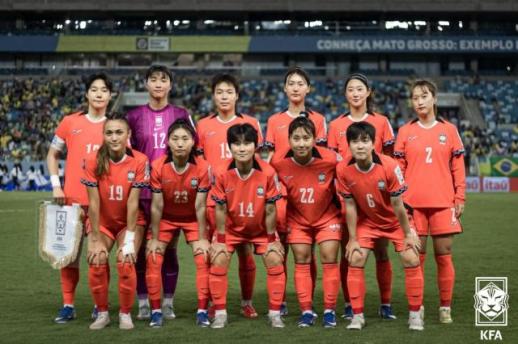 Unification Ministry Pledges Cooperation as North Korean Women’s Club Visits South for AFC Semifinal The Unification Ministry said it will communicate and cooperate while respecting the framework of an international tournament as North Korea’s Naegohyang Women’s Football Club plans to visit South Korea to compete in the Asian Football Confederation (AFC) Women’s Champions League (AWCL). A ministry official told reporters on the 4th at the Government Complex Seoul that the government will provide necessary support because a North Korean team is coming. The visit will mark the first time in eight years that North Korean athletes have come to South Korea to play. The official said the event should be viewed both as an international match and a club competition, stressing that it does not appear to be something the government is directly involved in. “From the government’s standpoint, it is important that this event gets off to a good start,” the official said, adding that Seoul will respect the structure so the tournament can be run through the AFC as an international competition and set a positive precedent. The comments were seen as signaling that the government will keep its role limited because the tournament is organized by the AFC, an international body, rather than the result of direct exchanges between the two Koreas. Cheong Wa Dae also said in an afternoon notice that it welcomes Naegohyang’s participation in the AWCL semifinal and that the government will work with the AFC and Suwon FC so the team can play its match smoothly. The Korea Football Association said Naegohyang’s trip has been confirmed for the AWCL semifinal against Suwon FC Women. 2026-05-04 14:45:15
 -
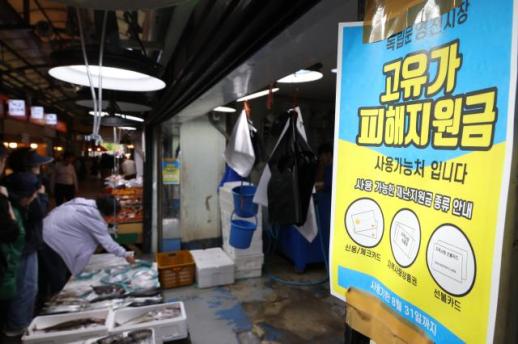 2.47 million apply for first round of South Korea high-oil-price relief; 1.4013 trillion won paid The Ministry of the Interior and Safety said Monday that 2,466,596 people had applied for the first round of the government’s “high-oil-price relief payment” as of midnight Saturday, or 76.4% of those eligible. The total amount paid was 1.4013 trillion won. By payment method, 1,076,418 applicants chose credit or debit cards, 814,481 chose prepaid cards, 508,490 chose mobile or card-based local gift certificates, and 67,207 chose paper local gift certificates, the ministry said. By region, Gyeonggi Province had the most applicants with 466,625, followed by Seoul with 414,014, Busan with 225,261, Incheon with 171,182, South Gyeongsang Province with 164,727, Daegu with 147,287 and North Gyeongsang Province with 142,425. Application rates were highest in South Jeolla Province at 80.9%, followed by Busan and Gwangju at 80.1% each, Seoul at 79.0%, Ulsan at 79.0%, Incheon at 77.8% and Daegu at 77.6%. By region, payments totaled 251.4 billion won in Gyeonggi Province, 223.7 billion won in Seoul, 133.4 billion won in Busan, 96.9 billion won in South Gyeongsang Province, 87.1 billion won in Daegu and 83.6 billion won in North Gyeongsang Province. The relief program is designed to cover 70% of the population, providing 100,000 to 600,000 won per person. The first round targets basic livelihood recipients, near-poverty households and single-parent families. First-round applications are being accepted online and in person from 9 a.m. April 27 through 6 p.m. May 8. Applicants can choose to receive the payment via credit or debit card, prepaid card or local gift certificate. A weekday application system based on the last digit of a person’s birth year applied during the first week but has since been lifted. Eligible people who miss the first-round window can apply during the second-round period from May 18 to July 3. The funds must be used by Aug. 31 this year.* This article has been translated by AI. 2026-05-04 14:39:16
 -
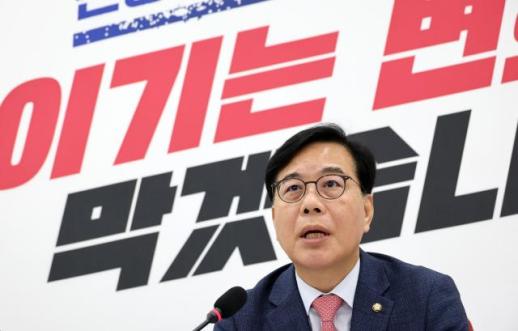 PPP Floor Leader Song Eon-seok Slams DP Leader Over 'Oppa' Remark to Child Song Eon-seok, floor leader of the People Power Party, on May 4 criticized Democratic Party leader Jeong Cheong-rae over a campaign incident in which Jeong urged a first-grade elementary school child to call Ha Jeong-woo, the Democratic Party’s candidate in the Busan Buk-gu Gap parliamentary by-election, “oppa.” In a Facebook post, Song called it “the DNA of the ‘Democratic Molestation Party,’” and said it was “clear child sexual abuse” and “a violation of children’s rights.” He added, “Tomorrow is Children’s Day,” and urged Jeong and Ha to reflect on their understanding of children’s rights ahead of the holiday. The controversy began after cameras captured Jeong during a visit the previous day to Gupo Market in Busan, where he appealed for support for Ha and pressed a first-grade girl to say, “Jeong-woo oppa.” The People Power Party has continued to attack the Democratic Party over the incident, calling it “sexual harassment of a child” and “child abuse.” Jeong apologized on May 4, saying he was sorry to the child and the parents after the situation at Gupo Market put them at the center of the controversy, but the dispute was not expected to subside quickly. Song also lashed out at the Democratic Party, citing a list of names — Park Won-soon, Oh Geo-don, Ahn Hee-jung, Jeong Bong-ju, Min Byung-doo, Park Wan-ju and Jang Kyung-tae — and saying the party’s “long-standing sexual violence DNA” had carried over to Jeong, whom he called an “oppa-forcing offender.” He added, “Did you even teach a lesson to Ha, who just joined the party?” Song repeated that forcing a child to say “oppa” was “clear child sexual abuse” and a violation of children’s rights, and said Ha should stop meeting voters in Busan with that mindset and “pack up and leave Busan.” He also suggested they seek consulting to change their views. 2026-05-04 14:36:17
 -
 BOK deputy governor flags rate hike possibility, bond yields tick up SEOUL, May 4 (AJP) — Bank of Korea Deputy Governor Ryoo Sang-dai on Sunday signaled that South Korea’s monetary policy may be shifting toward tightening rather than easing, becoming the first monetary board member to publicly lean toward a rate hike amid mounting inflationary pressure tied to Middle East tensions. “Given the external shock and broader economic conditions, my personal view is that monetary policy is moving closer to a hiking cycle than a rate-cut cycle,” Ryoo told reporters during a press conference on the sidelines of the Asian Development Bank annual meeting in Samarkand, Uzbekistan. Ryoo said economic growth is likely to remain broadly in line with this year’s official target of 2.0 percent, while inflation could exceed the central bank’s forecast of 2.2 percent. “Based on these factors, we should move away from easing and begin deliberating tightening,” he said. The deputy governor pointed to the blockade of the Strait of Hormuz as a key inflationary driver, with all three major crude benchmarks — West Texas Intermediate, Brent and Dubai — remaining above $100 per barrel as of Monday. Regarding the Bank of Korea’s so-called “six-month dot plot,” which reflects monetary board members’ policy-rate outlooks over the coming half year, Ryoo said more members may shift toward supporting hikes at the upcoming May 28 policy meeting. In the February dot plot, only one of the three dots allocated to each board member pointed to a quarter-percentage-point hike toward 2.75 percent. “If the current situation is confirmed, there is ample room for the interest-rate path to rise compared to the February dot plot,” Ryoo said. “Probabilistically, the possibility of a rate hike is open.” Inflationary pressure has yet to undermine economic growth. Korea’s economy expanded 1.7 percent in the first quarter, nearly doubled from estimated 0.9 percent, buoyed by strong semiconductor exports and robust artificial intelligence-related investment. Still, Ryoo stressed that uncertainty surrounding the duration and scope of the Middle East conflict makes policy decisions difficult. “We cannot finalize policy when it remains unclear how long the war will continue or how far it may spread,” he said, adding that the central bank would continue monitoring developments ahead of the May meeting. Ryoo disagreed with the Organization for Economic Co-operation and Development's downgrade of Korea’s potential growth rate estimate from 1.7 percent to 1.57 percent next year. “Potential growth does not suddenly fall unless there is a major economic crisis,” he said, adding that the Bank of Korea still estimates the economy’s potential growth rate at slightly below 2.0 percent. On the foreign exchange market, Ryoo acknowledged that the won’s recent trading range around 1,470 to 1,480 per dollar remains historically weak, though he avoided explicitly characterizing current levels as excessive. “The exchange rate is determined by market supply and demand,” he said, adding that authorities would intervene only in cases of excessive volatility or herd behavior. The Korean won opened at 1,472.9 per dollar on Monday, strengthening 10.4 won from the previous session, supported by Ryoo’s remarks and a softer dollar after the Bank of Japan intervened last week to support the yen. Government bonds weakened following the deputy governor’s hawkish comments. The three-year Treasury yield rose 1.3 basis points to 3.608 percent by midday, while the 10-year yield held steady at 3.923 percent. 2026-05-04 14:29:50
 -
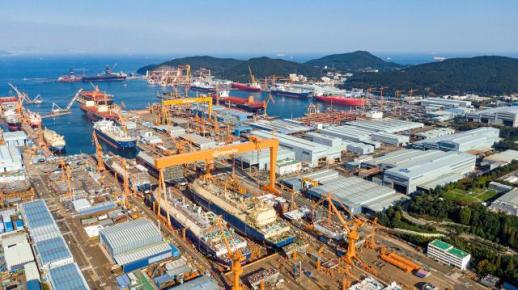 Korean shipbuilders draw 6 orders for very large carriers amid Hormuz disruption SEOUL, May 04 (AJP) -South Korea’s major shipbuilders secured more than 1 trillion won ($677 million) in fresh gas carrier orders as disruptions around the Strait of Hormuz drive longer shipping routes and accelerate demand for alternative-fuel transport vessels amid a reshaping global energy trade. HD Hyundai Heavy Industries said Monday it won a 504.8 billion won ($343 million) order from Korea-based KSS Line to build three very large gas carriers (VLGCs), according to a regulatory filing. The vessels are scheduled for delivery by August 2029. Separately, Hanwha Ocean announced a 507.4 billion won contract with an Africa-based shipowner to construct three very large ammonia carriers (VLACs), with deliveries set through January 2030. The latest deals bring the combined value of the two shipbuilding contracts to more than 1 trillion won. The orders come as instability in the Middle East forces energy exporters and importers to diversify supply routes away from the Persian Gulf, increasing voyage distances and demand for long-haul transport capacity. Hanwha Ocean said the VLAC market has faced short-term uncertainty as exports from the Middle East declined due to the regional conflict. But the company added that overall cargo demand has remained resilient as exports from the United States and other regions expanded. With major import demand concentrated in Asia, the shift in export origins is lengthening shipping routes and boosting the strategic importance of high-capacity gas carriers. Hanwha Ocean said the latest contract raises its ammonia carrier orders this year to 10 vessels, strengthening its foothold in a market increasingly tied to cleaner fuel infrastructure and the transition toward a hydrogen economy. The company has been developing ammonia carrier technologies for years as the global shipping industry accelerates decarbonization efforts. Hanwha Ocean said it secured approvals in principle in 2022 from Bureau Veritas and Lloyd's Register for its ammonia carrier design. Last year, the shipbuilder also began joint development work with Korean Register on a 150,000-cubic-meter very large ammonia carrier. Hanwha Ocean described ammonia carriers as a new high-value vessel category for South Korea’s shipbuilding industry following LNG carriers, where Korean shipbuilders hold more than 80 percent of the global market. The company said it will continue a selective order strategy focused on eco-friendly and high value-added vessels tied to cleaner energy demand. Including the latest agreement, Hanwha Ocean has secured orders this year for 18 vessels worth about $3.2 billion, including 10 very large crude carriers, four LNG carriers, three VLACs and one wind turbine installation vessel. Shares of Hanwha Ocean added 0.5 percent to 132,400 while HD Hyundai Heavy Industries fell 0.6 percent to 681,000 won as of 2:30 p.m. 2026-05-04 14:29:28
 -
 Germany’s Merz Calls U.S. ‘Most Important Partner’ Despite Planned Troop Cuts German Chancellor Friedrich Merz reaffirmed Germany’s alliance with the United States, calling Washington the most important partner in the North Atlantic alliance even after the U.S. announced plans to cut 5,000 troops stationed in Germany. According to Reuters, Merz said in an interview with German public broadcaster ARD on May 3 (local time) that while he acknowledged differences with U.S. President Donald Trump over issues including Iran, “nothing changes in the course of cooperation with the United States.” He also said recent friction between the two countries was not connected to the planned reduction of U.S. forces in Germany. The United States recently announced a plan to reduce its troop presence in Germany by 5,000. Reuters reported that the move has effectively put an end to a plan pursued under the Joe Biden administration to deploy a long-range Tomahawk missile battalion in Germany. Merz made similar remarks on April 30 during a visit to a military base in Muenster, saying the trans-Atlantic partnership was “especially important” and that Germany’s security policy remained aligned with “a strong NATO military alliance and reliable partnerships.” The comments came shortly after Trump raised the possibility of cutting U.S. troops in Germany.* This article has been translated by AI. 2026-05-04 14:27:15
 -
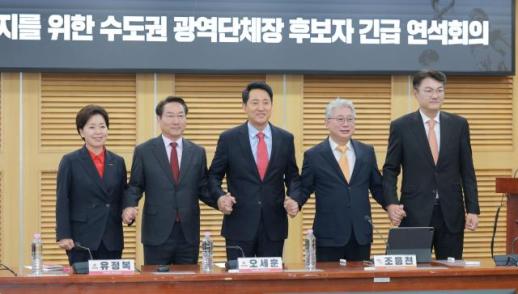 Seoul-Area Opposition Candidates Urge Withdrawal of Democratic Party Special Prosecutor Bill Seoul-area metropolitan candidates from opposition parties running in the June 3 local elections met Monday and denounced a Democratic Party-backed “special prosecutor bill on alleged fabricated prosecutions,” calling it an “Lee Jae-myung self-pardon special prosecutor bill.” They said they would begin a nationwide resistance campaign to stop what they described as a “judicial coup.” Seoul Mayor Oh Se-hoon and Incheon mayoral candidate Yoo Jeong-bok of the People Power Party, along with New Reform Party candidates Kim Jeong-cheol for Seoul mayor and Cho Eung-cheon for Gyeonggi governor, held a joint meeting at the National Assembly and issued a statement. People Power Party Gyeonggi governor candidate Yang Hyang-ja did not attend due to scheduling conflicts but joined the statement. Cho, who proposed the meeting, said, “How can a special prosecutor appointed by the president withdraw an indictment that erases the president’s crimes? It shakes the foundation of the rule of law and is a judicial insurrection.” He added, “On a foundation where the rule of law collapses, local autonomy and the people’s livelihood economy are nothing but a house of cards.” Oh said he could not “stand by” what he called the Lee Jae-myung government’s destruction of the rule of law and democracy, and urged all political forces except the Democratic Party to respond with “extraordinary resolve.” Yoo said South Korea stood at a crossroads between remaining a country governed by law and becoming one where those in power “erase their own cases,” and asked Democratic Party candidates Jeong Won-oh for Seoul mayor, Park Chan-dae for Incheon mayor and Choo Mi-ae for Gyeonggi governor whether they support or oppose the bill. Kim said that if a law allowing someone to “delete their own crimes” is permitted, it would set a precedent that could be repeated even after a change of government. In their joint statement, the candidates demanded that the Democratic Party immediately halt and withdraw what they called the “Lee Jae-myung self-pardon special prosecutor bill.” They also urged President Lee Jae-myung to clearly declare to the public: “During my term, there will never be any withdrawal of indictments related to my allegations, and I will stand trial according to law and principle.” They said they would launch a nationwide online petition to block what they called a judicial coup and conduct public outreach to highlight problems with the bill. They also said they would build solidarity beyond party lines and called on the media, intellectuals and civic groups to state their positions.* This article has been translated by AI. 2026-05-04 14:25:15
 -
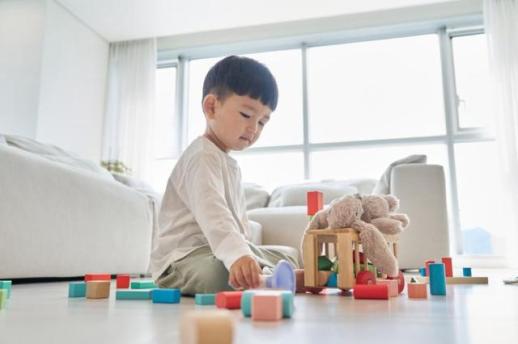 Half of Dual-Income Couples With Preschoolers Face Severe Time Poverty, Study Finds More than half of dual-income households with preschool-age children in South Korea lack enough personal time, a new analysis found, as child care and housework squeeze both leisure and sleep. The Korea Labor Institute said Monday it analyzed the 27th time-use survey from the Korea Labor and Income Panel Study, focusing on married-couple households with spouses ages 20 to 64. Compared with couples without children, households with children spent 49 more minutes a day on mandatory time — paid and unpaid work and commuting — and had 41 fewer minutes of discretionary time. The institute attributed the shift mainly to increased unpaid labor. The institute divided a 24-hour day into essential time (sleep and personal care), mandatory time and discretionary time, then measured time poverty based on discretionary time, leisure and sleep. Time pressure was greatest when children were youngest. In households with preschoolers, the discretionary-time poverty rate was 35.3%, the leisure-and-social-relationships time poverty rate was 23.9%, and the sleep-shortage rate was 26.6% — the highest across all child-age groups. Whether both spouses worked was also a key factor. Among all married-couple households, the discretionary-time poverty rate was 25.2% for dual-income couples, more than double the 11.6% for single-earner households. Leisure and sleep shortages were also more pronounced among dual-income couples, reflecting the combined burden of paid work, commuting and unpaid work. The strain intensified sharply for dual-income households with preschoolers. Their discretionary-time poverty rate reached 51.1%, while the leisure-and-social-relationships time poverty rate was 36.6% and the sleep-shortage rate was 30.5%. Jeong Hyeon-sang, a senior research fellow at the institute, said the combination of a period of concentrated care needs and dual-income work “rapidly compresses the time people can choose to use.” Gender gaps were clear. In dual-income households, women carried a heavier unpaid-work burden than men, further limiting women’s discretionary and leisure time. Among dual-income women with preschoolers, the discretionary-time poverty rate was 64.7% and the leisure-and-social-relationships time poverty rate was 50.5%. Patterns of time shortage also differed by gender. Men were more likely to face sleep loss alone, while women more often experienced overlapping shortages in both discretionary and leisure time — a combination the institute warned could restrict recovery and social ties. Experts said policy responses are needed because time poverty is concentrated in specific life stages and household types. Jeong said dual-income households with preschoolers should be treated as a core support target, calling for expanded access to care services and stronger institutional measures such as more flexible working hours. He added that reforms to encourage men’s participation in caregiving should also be pursued to ease structural imbalances in time burdens. * This article has been translated by AI. 2026-05-04 14:24:16