
Journalist

AJP
-
 Samsung Elec shares hit record high on red-hot earnings outlook ahead of Q4 guidance SEOUL, January 07 (AJP) - Shares of Samsung Electronics climbed to a fresh record high Wednesday, extending a near-nonstop rally since late December as investors bet on the company’s strongest quarterly and annual earnings in seven years. The stock has surged about 32 percent since Dec. 22, rising from a Dec. 19 close of 106,300 won to 141,000 won Wednesday, amid mounting optimism over a renewed memory supercycle fueled by artificial intelligence demand. Samsung Electronics will release its guidance for fourth-quarter and full-year earnings before the market opens in Seoul on Thursday. The rally has been driven by a sharp tightening in the global memory market, spanning legacy DRAM products to cutting-edge high-bandwidth memory (HBM) used in AI accelerators. Rapid adoption of AI applications has triggered aggressive stockpiling, pushing demand well ahead of supply. “Demand for DRAM and NAND currently exceeds supply by more than 30 percent, and Samsung is positioned to benefit most from the tightening market,” said Kim Dong-won, head of research at KB Securities, in a recent report. KB Securities on Tuesday raised its estimate for Samsung’s operating profit for the October–December period to 20.3 trillion won ($14.0 billion), the highest quarterly level since the third quarter of 2018, when profits peaked during the previous memory supercycle. Quarterly revenue is projected at around 90 trillion won ($62.0 billion), led by a strong rebound in the semiconductor business as memory prices surged. The brokerage estimates that operating profit at Samsung’s device solutions (DS) division reached 16.3 trillion won in the fourth quarter, supported by quarter-on-quarter price gains of 41 percent for DRAM and 20 percent for NAND. Looking ahead, KB Securities raised its target price for Samsung to 180,000 won, citing expectations that operating profit in 2026 could reach 123 trillion won—nearly triple last year’s level—as HBM shipments accelerate and AI server demand continues to expand. The firm forecasts that Samsung’s HBM shipments will triple next year, with market share expected to double as the company secures new supply contracts with major global customers, including Nvidia and Google. Broader sentiment toward memory and semiconductor stocks has also been supported by comments from Jensen Huang, chief executive of Nvidia, at CES 2026 in Las Vegas. Huang said Nvidia’s next-generation chips are now in “full production,” reinforcing expectations of sustained demand for AI infrastructure and underpinning the current memory upcycle. 2026-01-07 16:41:14
 -
 Stray Kids, Jennie to headline major US music festival 'The Governors Ball' SEOUL, January 07 (AJP) - K-pop girl group BLACKPINK's Jennie and K-pop boy band Stray Kids will headline The Governors Ball Music Festival, one of the largest music festivals in the U.S. Organizers of The Governors Ball Music Festival announced on Tuesday the lineup for this year's event, scheduled to take place from June 5 to 7 at Flushing Meadows Corona Park in New York. HYBE's Korean-American joint girl group KATSEYE, which has been nominated for Best New Artist at the 2026 Grammy Awards set to be held in February, will open the festival on June 5. Stray Kids will headline the June 6 show, while Jennie will take the stage as a headliner on June 7. Jennie is expected to perform tracks from her first full-length solo album, "Ruby," during her set. The festival is a large-scale outdoor music event held annually in New York during the summer. Past headliners include Eminem, Travis Scott, Kendrick Lamar and Lizzo. Meanwhile, Stray Kids have set a record by topping the U.S. Billboard 200 with eight consecutive releases. According to the latest chart released on Tuesday, the group's fourth full-length album, "KARMA," ranked No. 117, marking its 19th consecutive week on the chart and extending the group's longest charting record. Jennie recorded the highest first-week sales ever for a female solo artist in Korea last year, selling around 660,000 copies, according to the Korea-based music sales tracking system Hanteo Chart. She also logged the highest cumulative views at the Melon Music Awards, organized by Korea's largest music streaming platform, with a total of 1.7 billion streams to date. 2026-01-07 16:37:05
 -
 South Korea to import eggs, cut mackerel prices as it targets rising living costs SEOUL, January 07 (AJP) - South Korea will move to stabilize prices of fresh eggs and mackerel as part of broader efforts to curb rising living costs, the finance ministry said on Wednesday. Deputy Prime Minister and Finance Minister Koo Yun-cheol said the government has begun procedures to import 2.24 million fresh eggs and supply them to the domestic market in January, responding to a growing cull of laying hens amid the spread of avian influenza. Authorities will also consider lowering egg delivery prices depending on supply and demand conditions, he said. In addition, the government plans to import more than 7 million fertilized eggs for broiler hatching to expand chicken supply. To stabilize seafood prices, the government will support discounts of up to 60 percent on mackerel starting Wednesday, Koo said, adding that authorities plan to diversify import sources currently concentrated in Norway. The government will also expand the release of stockpiled seafood in processed forms so products can be sold immediately to consumers. Koo was speaking at a meeting held at the Government Complex Seoul, where officials discussed steps to strengthen price management and improve distribution. Koo said the government would work with relevant ministries to structurally stabilize food prices and improve livestock distribution and competition, with a detailed plan to be announced next week. 2026-01-07 16:29:42
 -
 Around 500 elementary schools in Seoul welcome new students SEOUL, January 7 (AJP) - Some 566 public elementary schools in Seoul are holding two-day prep sessions this week to welcome new students. According to the Seoul Metropolitan Office of Education, there are 51,265 first-graders this year, down about five percent from last year, as the young population continues to shrink due to the country's ultra-low birthrates. These sessions are an annual event aimed at preparing students for their upcoming school life. This year, they are being held from 4 p.m. to 8 p.m. on Tuesday and Wednesday to accommodate working parents who might not be able to take time off. 2026-01-07 16:25:24
 -
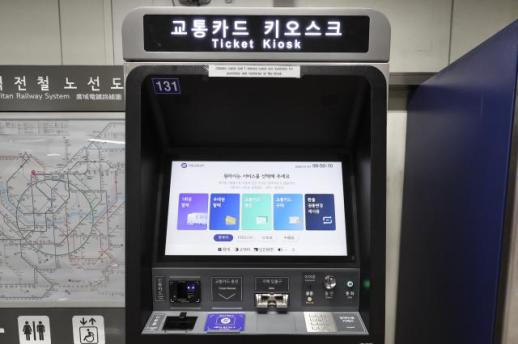 Seoul subways go fully self-service on fares SEOUL, January 07 (AJP) - Seoul Metro announced on January 6 that it has completed the installation of 440 new transportation card kiosks across all 273 stations on Lines 1-8, marking the first upgrade in 17 years since the introduction of cash-only machines in 2009. The new kiosks now accept credit cards and mobile payment methods including KakaoPay and Naver Pay for purchasing and recharging single-journey tickets, monthly passes, and Climate Companion Cards. The number of available card types has expanded from one disposable option to five varieties including the Climate Companion Card. Passengers can now independently process refunds for single-journey and monthly passes, change prepaid card types, and re-register lost or stolen public transportation safety cards—services that previously required staff assistance. Seoul Metro emphasized accessibility improvements for transportation-vulnerable users, incorporating standards from the Disability Discrimination Act. The kiosks feature screens and control panels positioned within 1,220mm from the floor for wheelchair users and children, along with a low-screen mode. Additional features include braille keypads, audio guide headphone jacks for the visually impaired, and simplified interfaces with large text for elderly and low-vision users. 2026-01-07 16:01:31
 -
 PHOTOS:Seoul exhibition explores centuries of human-equine history SEOUL, January 07 (AJP) - The National Folk Museum of Korea has launched a comprehensive exhibition to commemorate the Year of the Red Horse, exploring the deep-seated historical and cultural bonds between humans and horses. The exhibition, which opened on Dec. 16 and is scheduled to run through March 2, examines how horses transitioned from essential tools of survival to significant figures in global mythology and belief systems. For centuries, horses served as a primary means of transportation and labor. However, the museum’s curation goes beyond utility, tracing the animal’s evolution into a cultural icon. The displays feature artifacts and historical records that highlight the horse's prominent place in the human imagination, illustrating its role as both a companion in daily life and a symbol of power and spiritual significance. Curators say the collection offers visitors a chance to revisit the changing dynamics of the human-equine relationship across different eras, showcasing the horse's enduring legacy in the modern age. 2026-01-07 16:00:02
 -
 PHOTOS:Cinematic society bids farewell to late actor Ahn Sung-ki SEOUL, January 07 (AJP) - A memorial space honoring the late actor Ahn Sung-ki has been opened at the Seoul film center in Jung-gu, Seoul, and will operate from January 6 to 8. The space is open daily from 10 a.m. to 6 p.m., allowing citizens to freely pay their respects. Ahn Sung-ki made his debut in the film industry at the age of five through director Kim Ki-young's film "Twilight Train" in 1957. Over six decades, he appeared in more than 170 films and is regarded as a pillar of Korean cinema history. He led the Korean film industry through major works including "Whale Hunting," "Chilsu and Mansu," "Two Cops," "Taebaek Mountains," "Silmido," and "Radio Star." Ahn Sung-ki passed away at the age of 74 on the morning of January 5 at the intensive care unit of Soonchunhyang University Hospital in Yongsan-gu, Seoul. 2026-01-07 15:58:40
 -
 INTERVIEW: AI worsens labor mismatch as degree holders chase jobs machines replace SEOUL, January 07 (AJP) - The growing insecurity faced by college-educated workers in advanced economies stems from a structural mismatch: many young job seekers are targeting white-collar roles that artificial intelligence is rapidly automating, while labor shortages are emerging in sectors machines cannot replace, according to Canadian labor sociologist Barry Eidlin. Rather than signaling a collapse of work itself, the trend reflects a breakdown in how education systems, labor markets and public policy align skills with demand in the AI era. “The old system where companies hired young people and trained them for long careers has largely disappeared,” the professor Quebec-based McGill University told AJP in a recent Zoom interview. “Today, graduates are expected to arrive with experience — but you need a job to get experience, and experience to get a job.” Collapse of the school-to-work bridge For much of the postwar period, large firms in advanced economies operated internal labor markets, recruiting young workers and investing in their long-term development. That model has steadily eroded over the past four decades, leaving graduates to navigate fragmented, experience-driven labor markets on their own. As a result, Eidlin said, youth unemployment should not be framed as a failure of individual effort or ambition. “I try to get through to my students that it’s not about them,” he said. “It’s about broader macroeconomic and social trends that are largely beyond their control.” AI accelerates polarization Artificial intelligence has intensified these pressures, particularly for degree holders seeking entry-level or mid-skill office jobs — roles increasingly exposed to automation and outsourcing. According to the U.S. Bureau of Labor Statistics (BLS), as of Sept. 2025, individuals with a four-year college degree accounted for 25 percent of all unemployed people in the United States, marking an all-time high. This is the first time since the related data began to be compiled in 1992. The phenomenon is graver in Korea. According to the Ministry of Data and Statistics (MODS), the proportion of unemployed persons with a university degree or higher rose from 37.7 percent in 2010 to 47.8 percent in 2024, and further climbed to 49.6 percent in the first through third quarters of 2025. According to the Bank of Korea’s report titled “AI Expansion and the Contraction of Youth Employment,” of the 211,000 youth jobs lost over the past three years, 208,000 were in industries highly exposed to AI. While skepticism toward higher education has grown in the United States and Canada as graduate unemployment rises, Eidlin cautioned against interpreting the trend as evidence that college no longer pays off. “In terms of lifetime earnings, people with college degrees on average are still making quite a bit more,” he said. “But unemployment rates have to do with shifts within the structure of the labor market.” Job growth, he noted, is increasingly concentrated at the lower end of the wage and education spectrum. “You look at where the growth is in the job market and it is toward the bottom of the wage and education distribution,” Eidlin said. “Growth is in things like home-health aides and service work of various types, because a lot of this work cannot get automated.” By contrast, many mid-level jobs traditionally associated with higher education are precisely those most vulnerable to technological substitution. “A lot of jobs that require some degree of education are easier to automate or outsource,” he said. Jobs disappearing — and jobs not yet imagined Eidlin rejected alarmist narratives predicting a jobless future driven by artificial intelligence, arguing that history shows technological change reshapes work rather than eliminates it. “We tend to focus on the jobs that go away,” he said. “What we don’t think about as much are the jobs that are getting created as technological change increases and the world of work gets rearranged.” Those new roles, he added, are difficult to foresee precisely because they do not yet exist. “They’re hard to imagine,” he said. “That’s always been the case with major technological shifts.” Care work as the blind spot One area where labor demand is already overwhelming supply — and unlikely to be solved by machines — is social and care work, particularly as populations age across industrialized societies. “There are all kinds of socially necessary work that doesn’t get done because it’s not profitable,” Eidlin said. “Care work requires a lot of human labor, and it’s not something that can be automated.” Korea, facing one of the world’s fastest demographic declines, exemplifies the challenge. According to the 2025 Senior Statistics released by the Ministry of Data and Statistics on Sept. 29, 2025, the population aged 65 and older in South Korea reached 10.514 million, surpassing the 20 percent threshold for the first time and falling under UN-classified superaged society. “It’s a huge problem in Korea,” he said. “With aging populations and fewer children, the question becomes: who is going to take care of all these people?” Demand for elder care and childcare continues to rise, yet supply remains constrained, and costs remain prohibitive for many families. “There’s a crying need for more care workers and more childcare for young families,” Eidlin said. “That need is going unmet because when these services exist, they are incredibly expensive.” Eidlin argued that this gap presents a rare opportunity for governments to address both unemployment and welfare challenges simultaneously. “It creates a really perfect opportunity to address the unemployment problem while fulfilling socially important tasks and taking care of the broader population,” he said. Public investment in care work and job programs, he added, could absorb displaced workers while meeting urgent social needs that markets fail to provide. Political risks of stalled opportunity Beyond the labor market, Eidlin warned that prolonged insecurity among young people carries political risks. Degrading job quality, stagnant wages and weak representation have fueled labor unrest across regions, including Korea, North America, Europe and Latin America. “We’ve seen some of the biggest strike waves in decades,” he said. Yet economic frustration has not consistently translated into progressive political outcomes. According to Eidlin, the erosion of traditional labor-based political movements has left space for other forces to shape the narrative. “When there isn’t a strong left alternative, the political field opens up for narratives that shift blame,” he said. “It becomes ‘not the bosses, but immigrants,’ or ‘women entering the labor force,’ or ‘competition from other countries.’” Such dynamics, he said, have helped fuel the rise of far-right movements in many societies. For students and recent graduates navigating an increasingly uncertain labor market, Eidlin cautioned against advice that focuses solely on individual adaptation. “I think our expectations are actually too low,” he said. “Political and business elites have told people not to expect much and to be grateful for what they get.” The challenges young people face, he emphasized, are collective rather than personal. “The problems you are trying to solve are not individual problems,” Eidlin said. “They are social problems, and they can only be addressed collectively.” 2026-01-07 15:55:22
 -
 CES 2026: Everyday robotics in all sizes and for all purposes — China's Zeroth Robotics LAS VEGAS, January 07 (AJP) - Meet W1, inspired by WALL-E, the adorable cleaning robot from the Pixar movie. Don't let its big-eyed, cute looks fool you. The robot can follow users anywhere and carry up to 50 kilograms of gear, while its built-in camera enables autonomous filming — a feature likely to appeal to professional filmmakers and outdoor hobbyists alike. W1 is part of the domestic robot lineup from Zeroth Robotics, which is scheduled to open for preorder in the U.S. during the first quarter of this year. What differentiates the fledgling robotics company is its focus on humanoid and companion robots designed for everyday tasks, rather than industrial or warehouse use. "We want to build the world's first robot that can truly interact with the real world," said Zeroth Robotics CEO Renjie Guo in an interview with AJP on Tuesday at the company's booth in the North Hall of the Las Vegas Convention Center during CES 2026. Although the company was founded in 2024, the 28-year-old entrepreneur laid out an expansive ambition. "Our goal is to become a companion for every member of the family," Guo said. Unlike many consumer robots that simply mount a camera onto a mobile platform, W1 is designed to film independently while navigating its surroundings. "Other robots just stick a camera on," Guo said. "Ours actually shoots footage on its own." The robot can self-navigate to avoid hazards such as water, and a single charge powers W1 for two to three hours. As production scales up, the company expects manufacturing capacity to reach as many as 3,000 units per day, Guo said. From mini companions to humanoids M1, a 38-centimeter-tall robot named after "Mini" is designed to operate on tabletops, M1 can also mount a balancing scooter to move around the home. The robot is positioned as a companion for seniors, offering gentle medication reminders and safety monitoring. Its functions extend to reading stories to children, playing interactive games, helping care for pets — and even assisting users in writing autobiographies. "We've built an app store and an agent store," Guo said. "Users can download functions tailored to their needs." At the top of the lineup is Jupiter, a full-sized humanoid robot named after the largest planet in the solar system. Guo described Jupiter as the company's most ambitious project. "Someday, this robot will be capable of basic AGI," he said. "It will go beyond being a companion — sometimes it will be a tool." For now, Jupiter is capable of teleoperation demonstrations and basic walking, though Guo acknowledged its movements still need refinement. A camera embedded in the robot's abdomen allows it to perceive and interact with its environment. Why CES, and why now Asked why Zeroth Robotics chose CES 2026 for its debut, Guo said the goal was to present both its products and long-term vision directly to consumers. "We wanted to show all of our products and our vision to consumers," he said. "A robot that's both a companion and a tool — that's what we're here to present." "A robot that truly enters the home and does things you never imagined — that's our one and only goal," Guo added. The company's CES showcase reflects how far — and how boldly — China has advanced in humanoid and consumer robotics, as startups increasingly push robots beyond factories and into everyday life. 2026-01-07 15:47:28
 -
 South Korea draws record FDI in 2025 as investor sentiment improves SEOUL, January 07 (AJP) - South Korea’s foreign direct investment (FDI) reached a record high last year, rebounding strongly in the second half after a sluggish start, government data showed on Wednesday. FDI commitments in 2025 rose 4.3 percent from a year earlier to $36.05 billion, the highest level on record, according to the Ministry of Trade, Industry and Energy. Funds actually received increased 16.3 percent to $17.95 billion, the third-highest total to date. The ministry said the recovery came despite a 14.6 percent year-on-year decline in the first half, attributing the turnaround to improved investor sentiment following the launch of a new government. It cited restored confidence in the economy, reduced policy uncertainty and stronger expectations linked to the government’s push on artificial intelligence and investment promotion efforts tied to the Asia-Pacific Economic Cooperation summit in Gyeongju. Greenfield investment for new or expanded facilities rose 7.1 percent to a record $28.59 billion, the ministry said. The investment included “quality” projects in advanced industries, such as Amazon Web Services’ artificial intelligence data center and Amkor Technology’s semiconductor back-end processing facilities, the ministry said. By sector, manufacturing investment rose 8.8 percent to $15.77 billion, reflecting increased investment in key materials used in advanced industries. Investment in chemicals surged 99.5 percent to $5.81 billion, while metals jumped 272.2 percent to $2.74 billion. Electrical and electronics investment fell 31.6 percent to $3.59 billion, and machinery, equipment and medical precision dropped 63.7 percent to $850 million. Investment in services rose 6.8 percent to $19.05 billion, driven by expanded investment in areas such as AI data centers and online platforms. By country, U.S. investment surged 86.6 percent to $9.77 billion. Investment from the European Union rose 35.7 percent to $6.92 billion. Japanese investment fell 28.1 percent to $4.40 billion, while Chinese investment declined 38 percent to $3.59 billion. 2026-01-07 15:46:08