
Journalist

AJP
-
 Asian markets surge to record highs as CES week kicks off SEOUL, January 05 (AJP) - Asian equity markets rallied in a synchronized surge on Monday as investor focus shifted to major technology players ahead of the Consumer Electronics Show (CES) 2026 in Las Vegas. Benchmarks in Seoul and Taipei led the advance, with both markets scaling fresh record highs. South Korea’s benchmark KOSPI jumped 3.43 percent to close at 4,457.52, marking its sharpest daily gain this year and pushing the index to the doorstep of the 4,500 level after surpassing its previous all-time high. Foreign investors drove the rally with net purchases of 2.17 trillion won (about $1.5 billion), while retail and institutional investors booked profits, selling 1.5 trillion won and 703 billion won, respectively. Despite a firmer U.S. dollar amid geopolitical tensions — including a U.S. military operation in Venezuela — the won–dollar exchange rate held nearly flat at 1,446.8 as of 5 p.m. The stability was widely attributed to heavy foreign inflows into Korean tech stocks and continued vigilance by foreign-exchange authorities. Tech leads the charge Blue-chip technology names powered the rally. Samsung Electronics, a flagship CES participant, surged 7.47 percent to a record 138,100 won. Sentiment was buoyed by upbeat brokerage views, with Sangsangin Investment & Securities lifting its 2026 target price to 150,000 won. At CES, Samsung is set to unveil its “Affectionate Intelligence” concept for integrated home appliances. SK hynix, the global leader in high-bandwidth memory (HBM), rose 2.81 percent to a new peak of 696,000 won as it prepares to highlight its role as a “full-stack memory provider.” Optimism spilled over to supply-chain plays, with Hanmi Semiconductor surging 15.8 percent in regular trading before leaping another 23 percent to 178,000 won in after-hours Nextrade (NXT) trading. Energy, utilities and refiners rally Energy and utility stocks also logged outsized gains. Doosan Enerbility soared 10.64 percent to 83,200 won, tracking last week’s rally in U.S. small modular reactor (SMR) names. Korea Electric Power Corporation climbed 7.2 percent to 49,850 won. Manufacturers tied to transformers and high-voltage equipment advanced sharply, with Iljin Electric up 7.23 percent, HD Hyundai Electric gaining 6 percent, and Hyosung Heavy Industries rising 3.7 percent. Refiners joined the rally on expectations of improving margins and reduced Middle East dependence as Washington signaled a push to boost oil production in Venezuela. S-Oil gained 5.35 percent, while SK Innovation added 2.8 percent. Hyundai Motor Company and LG Energy Solution rose 2 percent and 2.9 percent, respectively, as both companies look to showcase new initiatives at CES. The tech-heavy KOSDAQ advanced a more modest 1.26 percent to 957.50, led by aerospace names. Innospace jumped 14.7 percent to 15,570 won, rebounding from earlier launch setbacks, while Nara Space Technology surged 10.1 percent to 31,050 won. Regional markets ride the CES wave Japan’s Nikkei 225 rallied 2.97 percent to 51,832.80, fueled by a broad semiconductor upswing. Chip-testing specialist Advantest climbed 7.84 percent to 21,175 yen, while Tokyo Electron, Disco and Ibiden gained between 6 percent and 8 percent. Toyota Motor Corporation added 1.28 percent. Taiwan’s TAIEX rose 2.57 percent to 30,105.54, extending gains ahead of CES. TSMC jumped 5.36 percent to a record 1,670 Taiwan dollars, cementing its position as the world’s sixth-largest company by market capitalization. MediaTek and Foxconn rose 3.74 percent and 1.08 percent, respectively. On the mainland, China’s Shanghai Composite gained 1.38 percent and the Shenzhen Component climbed 2.24 percent as CES-driven tech optimism lifted sentiment. Hong Kong’s Hang Seng Index, however, ended flat at 26,326.84, with lingering geopolitical uncertainty prompting a more cautious stance among some foreign investors. 2026-01-05 17:25:57
 -
 HOT STOCK: Hopes of China K-pop ban easing fizzle, sending shares lower SEOUL, January 05 (AJP) -South Korea’s K-pop sector retreated Monday as high expectations for an easing of China’s long-standing de facto ban on Korean entertainment though the momentum of President Lee Jae Myung’s state visit to Beijing fizzled out. Shares that had rallied on optimism over renewed access to the Chinese market reversed sharply. HYBE fell 2.5 percent, JYP Entertainment slid 6.2 percent, and YG Entertainment dropped 7.5 percent. SM Entertainment posted the steepest decline, plunging 10.1 percent and erasing a large portion of recent gains tied to China-reopening hopes. The retreat followed comments by presidential chief of staff Kang Hoon-sik, who said the “lifting of the unofficial ban on Korean culture is expected to take some time,” dampening expectations that concerts and broadcasts would resume in the near term. Among the roughly 200-member business delegation accompanying Lee’s trip were entertainment industry figures, including Son Kyung-shik, chairman of CJ Group, and SM Entertainment CEO Jang Cheol-hyuk—fueling earlier speculation that progress on cultural exchanges could be imminent. Entertainment stocks had surged ahead of the visit on prospects of concerts, broadcasts and online content distribution resuming in China, one of the industry’s most lucrative overseas markets. Despite the sell-off, Choi Min-ha, an equity analyst at Samsung Securities, said fundamentals for leading entertainment companies remain intact, supported by robust global demand for K-pop, strong overseas touring and expanding digital content businesses. Monday’s move suggests profit-taking and a reset of timelines rather than a reassessment of the sector’s long-term prospects, he added. 2026-01-05 17:21:21
 -
 PHOTOS:Brushstrokes of heritage: A mother-daughter duo redefine tradition in Bukchon SEOUL, January 05 (AJP) - Tucked away in the winding alleys of Gahoe-dong, the Bukchon Hanok Office serves as a serene sanctuary from the city's modern pulse. In late 2025, this traditional space — operated by the Seoul Metropolitan Government — offered more than just a glimpse of historic architecture; it became the stage for a deeply personal convergence of art and lineage. The exhibition, titled "Yeon: A Mother-Daughter Story Connected by Brush," brought together calligrapher Baek Kyung-ja (known by her art name, Yesol) and her daughter, dancheong (traditional decorative coloring) artist Lee Eun-young. The show’s origin is as heartwarming as the art itself. When Lee suggested her mother hold a solo exhibition, Baek initially declined. The impasse was broken by Lee’s simple, spirited invitation: "Mom, then let's do it together!" Stepping through the sarangchae (guest quarters) and main house, visitors were greeted by a dialogue between generations. Baek, a veteran artist with over 40 years of experience in Korean calligraphy and folk painting, displayed works that radiated the profound weight and refinement of a life dedicated to the brush. Beside her, Lee — who transitioned from fashion design to training under a National Intangible Cultural Heritage master — presented dancheong pieces that felt strikingly modern in their composition and interpretation. As natural light filtered through the hanji (traditional paper) windows, it illuminated the vibrant pigments and deep ink tones of the artworks. Walking through the wooden-floored rooms, the concept of "yeon" — the Korean word for a karmic connection or bond — felt palpable. For those wandering the historic slopes of Bukchon, this modest yet soulful exhibition offered a rare moment where traditional and contemporary artistry harmoniously intertwined, proving that the strongest threads of heritage are often those shared between a mother and her daughter. 2026-01-05 17:18:43
 -
 Korea–China Summit: Seoul bets on diplomatic reset, pundits doubt breakthrough SEOUL, January 05 (AJP) - Expectations remain muted over tangible outcomes from the Korea–China summit in Beijing, as experts warn that the first state visit by a South Korean leader in nearly nine years is more likely to deliver symbolic reassurance than substantive policy breakthroughs. President Lee Jae Myung and Chinese President Xi Jinping are set to exchange what many analysts describe as “ceremonial cordiality” at a time when Beijing has moved closer to North Korea and Seoul’s strategic room for maneuver remains constrained by intensifying U.S.–China rivalry. The South Korean presidential office, however, framed the summit as a necessary reset. Kang Yoo-jung, spokesperson for the Blue House, said the meeting is “meaningful in restoring the long-stagnant relationship between the two countries and rebuilding a mutually beneficial and future-oriented partnership as inseparable neighbors.” Lee echoed that message upon meeting South Korean residents in Beijing, calling the “full restoration” of bilateral ties the primary objective of his visit. Carefully Calibrated ‘One China’ Messaging The diplomatic tone was set ahead of the summit. In an interview aired on China Central Television, Lee said he “respects the ‘One China’ policy,” a remark that immediately drew scrutiny at home. Woo Jung Moo, professor of political science and international relations at Dongguk University, interpreted the comment as a deliberate attempt to lower friction rather than a substantive policy shift. “It should be understood as acknowledging China’s position without revealing South Korea’s own stance on Taiwan,” Woo said, stressing that Seoul continues to emphasize peaceful resolution and does not endorse any unilateral attempt to alter the regional order by force. Kim Youcheer, a professor at Duksung Women’s University, described the remarks as part of a pragmatic effort to manage entanglement risks that have grown amid heightened alliance expectations under the U.S. National Security Strategy. “The phrasing ‘respecting One China’ reflects South Korea’s long-held diplomatic language since normalization, not China’s unilateral ‘One China principle,’” Kim said, adding that the administration appeared to calibrate its message carefully ahead of the summit. Park Han-jin of Hankuk University of Foreign Studies also viewed the positioning as pragmatic, noting that it reaffirmed South Korea’s diplomatic principles while anchoring them to universal values such as regional peace and stability. Domestic Political Divide The summit has exposed sharp divisions within South Korea’s political sphere. Kim Sang-hoon, a lawmaker from the People Power Party, warned that Seoul risks undermining trilateral security cooperation with the United States and Japan. “China consistently maintains a dominant posture,” he said, expressing concern over possible fallout for advanced technology alliances with Washington. By contrast, Kim Joon-hyung of the Rebuilding Korea Party called the summit “a long-overdue restoration” of Korea–China relations after what he described as years of diplomatic stagnation. Limits on North Korea Impact Most experts agree the summit is unlikely to produce meaningful progress on inter-Korean relations. Kim Hyun-Wook, president of the Sejong Institute, said Korea–China economic ties have shifted from complementarity to competition, limiting the scope for cooperation. Still, he noted that any easing in U.S.–China tensions could marginally expand diplomatic space around North Korea. Lee Wang Hwi of Ajou University was more blunt. “China’s influence over North Korea is limited,” he said, adding that Pyongyang’s deepening ties with Russia now outweigh Beijing’s leverage. Woo Jung Moo concurred, arguing that North Korea would seek to dilute any joint messages emerging from Seoul and Beijing by leaning further on Moscow. Park Han-jin offered a more conditional view, suggesting that sustained trust-building between Seoul and Beijing could, over time, expand China’s willingness to play a stabilizing role — though likely only in exchange for concessions linked to economic or regional issues. Strategic Ambiguity and Economic Reality On the broader trajectory of Korea–China relations, views diverge sharply. Former presidential economic security secretary Ahn Se Hyun argued that geopolitical shifts leave China little choice but to adopt a more conciliatory approach toward South Korea, even as the bilateral relationship remains structurally constrained by the U.S.–ROK alliance. Others urged caution. Choi Jung-wook of Konkuk University described China as both a competitor and a potential long-term security threat, calling for “maximum strategic ambiguity,” particularly on cross-strait issues. Lee Jung-tae of Kyungpook National University countered that despite security frictions, Korea and China remain deeply economically integrated, making outright confrontation unrealistic. Several scholars emphasized the importance of expanding non-political exchanges. Kang Jun-young of Hankuk University of Foreign Studies said economic, social and cultural interaction with Taiwan should continue as long as it remains non-political, while Lee Han-eol of Pusan National University stressed the value of student, academic and business exchanges in reducing misperceptions. 2026-01-05 17:15:22
 -
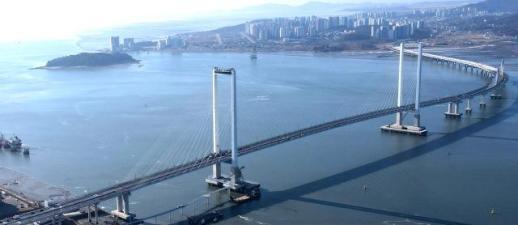 Incheon's third sea bridge opens with world's highest bridge observatory SEOUL, January 05 (AJP) - Incheon's Third Sea Bridge, connecting Yeongjong Island—home to Incheon International Airport—to the mainland, opened at 2 p.m. on January 5. The new crossing is expected to cut travel time from Gangnam in southern Seoul to the airport to about 45 minutes. The 4.68-kilometer-long, 30-meter-wide bridge features six lanes for traffic, plus 3.5-4-meter-wide bicycle paths and pedestrian walkways on both sides. Linking Jungsan-dong in Jung-gu to Cheongna International City in Seo-gu, the bridge is the third sea-crossing structure connecting Yeongjong Island to the mainland. Tolls will be collected starting January 15 after a 10-day trial period of the "smart tolling" (non-stop electronic toll collection) system. Fees are set at 2,000 won for passenger cars, 3,400 won for medium vehicles, and 4,400 won for large vehicles. The bridge's main tower observatory, standing 184.2 meters above sea level, has been certified by Guinness World Records and the World Record Certification (WRC) as the world's highest sea bridge observatory. The observation deck is scheduled to open in March-April 2025. 2026-01-05 17:06:14
 -
![[CES 2026] Global tech giants, startups converge in Las Vegas](https://image.ajunews.com//content/image/2026/01/05/20260105154608486982_518_323.jpg) [[CES 2026]] Global tech giants, startups converge in Las Vegas SEOUL, January 05 (AJP) - CES 2026, the world’s premier consumer electronics and information technology exhibition, is set to open its doors in Las Vegas from Jan. 6 to 9. An annual fixture of the global tech calendar, CES serves as the primary stage for the technology industry to debut latest trends and signal future strategic directions. This year’s event is expected to host approximately 4,500 companies from across the globe. South Korea will maintain a significant presence with roughly 700 participating entities. Major industry leaders — including Samsung Electronics, Hyundai Motor Group, LG Electronics, and Doosan — alongside a robust cohort of small-to-medium enterprises and startups, are prepared to unveil a new wave of innovation and flagship products. Industry analysts expect CES 2026 to be dominated by advancements in artificial intelligence, future mobility, smart home ecosystems, and sustainable technologies. 2026-01-05 17:05:38
[[CES 2026]] Global tech giants, startups converge in Las Vegas SEOUL, January 05 (AJP) - CES 2026, the world’s premier consumer electronics and information technology exhibition, is set to open its doors in Las Vegas from Jan. 6 to 9. An annual fixture of the global tech calendar, CES serves as the primary stage for the technology industry to debut latest trends and signal future strategic directions. This year’s event is expected to host approximately 4,500 companies from across the globe. South Korea will maintain a significant presence with roughly 700 participating entities. Major industry leaders — including Samsung Electronics, Hyundai Motor Group, LG Electronics, and Doosan — alongside a robust cohort of small-to-medium enterprises and startups, are prepared to unveil a new wave of innovation and flagship products. Industry analysts expect CES 2026 to be dominated by advancements in artificial intelligence, future mobility, smart home ecosystems, and sustainable technologies. 2026-01-05 17:05:38 -
 Lights-out warfare and why it should worry South Korea SEOUL, January 05 (AJP) - The capture of Venezuelan President Nicolás Maduro in a lightning U.S. raid last weekend was not merely a dramatic geopolitical shock. It marked a decisive shift in how modern wars are fought — quietly, surgically and increasingly in the dark. The operation, carried out by U.S. Delta Force commandos, removed a sitting head of state from his bedroom in just five minutes, completing an end-to-end mission in under five hours. Yet the most striking element was not speed or firepower, but how little the world saw while it was happening. There were no mass airstrikes. No prolonged fighting. No advance warning. Instead, the lights went out. The New Battlefield: Cyber Before Kinetic According to military analysts, the operation followed a now-emerging template of "dark warfare" — a fusion of cyber disruption, drone dominance and precision special operations. U.S. forces temporarily cut power and communications in parts of Caracas, reportedly through a coordinated cyberattack and drone strikes on key substations and communication towers. The objective was not destruction, but paralysis — delaying response, blinding defenses and sowing confusion. "This is modern warfare," said retired South Korean Army Lieutenant General Chun In-bum. "Drones didn't just support the operation — they reshaped the battlefield itself." Chun cautioned that many tactical details remain classified, but emphasized that drones have become central, not auxiliary, to contemporary military strategy. Drones That See What Satellites Cannot The groundwork for the raid was laid months earlier. Beginning last August, U.S. intelligence agencies deployed teams into Venezuela, combining human intelligence with persistent drone surveillance. Unlike satellites, which offer intermittent snapshots, drones hovered continuously — mapping Maduro's movements, routines and living quarters in granular detail. They tracked not only where he slept, but how he moved, what he wore, even the layout of his residence. Using this data, Delta Force built a full-scale replica of the hideout and rehearsed the assault repeatedly — a level of precision impossible without drone-collected intelligence. In early December, drones struck a remote coastal dock — a move widely seen as both a disruption of cartel logistics and a deliberate probe of Venezuelan air defenses. The strike drew radar responses without risking pilots, allowing U.S. planners to map threats in advance. Five Minutes in the Dark When the final order came from U.S. President Donald Trump late on Jan. 2, roughly 150 aircraft launched simultaneously from some 20 land and naval bases across the Western Hemisphere. As drones neutralized surveillance and cleared flight paths, helicopters carrying Delta Force operatives flew at just 30 meters above sea level toward Maduro's residence. Despite brief resistance, U.S. forces overwhelmed Venezuelan defenders under constant drone overwatch. Within three minutes of entry, commandos reached Maduro's location. Two minutes later, he and his wife were in custody as they attempted to flee to a reinforced panic room. By 4:30 a.m., the team had withdrawn safely to the USS Iwo Jima, stationed about 100 miles offshore. From authorization to extraction: four hours and 43 minutes. A Blueprint That Raises Alarms in Asia The operation has sent shockwaves far beyond Latin America — particularly in Northeast Asia. Just hours later, North Korea launched its first ballistic missile of the year, a move widely interpreted as signaling vigilance amid shifting global deterrence norms. Its foreign ministry was also among the first to respond to the U.S. operation, releasing a statement on Sunday to condemn "the most serious form of encroachment of sovereignty." Still experts caution against simplistic parallels. "Venezuela and North Korea are fundamentally different cases," said Jung Kyeong-woon, a researcher at the Korea Institute for Military Studies. Pyongyang's nuclear arsenal, he said, fundamentally alters the calculus. "The likelihood of a Venezuela-style operation on the Korean Peninsula remains low." Choi Seung-woo, a director of the Seoul Defense Forum Center for Nuclear Strategy, echoed that assessment, noting that Pyongyang emerged from the failed 2019 Hanoi summit convinced that Washington understands its nuclear capabilities, making so-called 'bloody nose' strikes unlikely. Why South Korea Still Cannot Ignore the Lesson Still, the Venezuelan raid underscores vulnerabilities that resonate uncomfortably in South Korea. South Korea is among the world's most digitized societies — its power grids, financial systems, transportation networks and military command structures deeply interconnected. That connectivity is a strength — and a potential weakness. In a crisis, a short-lived blackout, GPS disruption or cyberattack on civilian infrastructure could delay response just long enough for drones and special forces to act. North Korea, meanwhile, has invested heavily in asymmetric capabilities — cyber warfare units, GPS jamming, electronic warfare and special-operations forces trained not for invasion, but infiltration. Pyongyang is also accelerating drone development with reported Russian technology transfers, including AI-enabled reconnaissance and suicide drones. "The lesson is not that this will happen in South Korea," Chun said. "The lesson is that warfare has already changed — and anyone who ignores that reality is unprepared." War Without Sirens Perhaps the most unsettling takeaway is strategic ambiguity. Cyberattacks and drone strikes often fall below the legal threshold of war. They are deniable, reversible and difficult to attribute in real time. Mutual defense treaties were written for missiles and armies — not malware and micro-drones. When the lights go out, policymakers may still be debating whether an attack has even occurred. In the age of dark operations, wars may no longer begin with explosions — but with silence. And by the time certainty returns, the mission may already be over. 2026-01-05 16:54:33
 -
![[CES 2026] Samsung sets AI-led daily-use theme at CES 2026](https://image.ajunews.com//content/image/2026/01/05/20260105163129652710_518_323.jpg) [[CES 2026]] Samsung sets AI-led daily-use theme at CES 2026 SEOUL, January 05 (AJP) - Samsung Electronics will showcase its vision for integrating artificial intelligence into everyday life at 2026 Consumer Electronics Show (CES 2026), opening a standalone exhibition space and hosting a series of events during the annual technology trade show in Las Vegas. The South Korean tech giant said it will operate a dedicated exhibition hall at the Wynn and Encore Las Vegas from Jan. 4 to 7 (local time), alongside its annual “First Look” event, which combines product exhibitions, press briefings and forums. This year’s theme, “Your Companion to AI Living,” highlights Samsung’s push to embed AI across consumer electronics, home appliances and healthcare-related services. At the entrance of the exhibition, Samsung has installed an immersive “AI Gallery,” featuring large-scale displays and audiovisual presentations outlining its AI strategy and product ecosystem. The exhibition space is divided into three zones — entertainment, home and care — reflecting Samsung’s focus on AI-driven use cases across different aspects of daily life. The entertainment zone features large-format televisions, including a 130-inch Micro RGB TV, along with audio and gaming devices. Samsung is also demonstrating its integrated AI platform for TVs, Vision AI Companion. In the home zone, the company is showcasing AI-enabled appliances such as refrigerators, washers and robotic vacuum cleaners, including models equipped with camera, screen and voice-recognition functions. Some appliances incorporate Google’s Gemini AI assistant. The care zone focuses on health and safety solutions built around Samsung Health, Galaxy wearable devices and its SmartThings platform. Demonstrations include pet-monitoring services and home safety features. Samsung said the exhibition reflects its broader strategy to position AI not as a standalone feature, but as a core layer across its consumer electronics portfolio. CES 2026 runs from Jan. 7 to 10 in Las Vegas, with major technology companies using the event to outline product roadmaps and strategic priorities for the year ahead. 2026-01-05 16:37:46
[[CES 2026]] Samsung sets AI-led daily-use theme at CES 2026 SEOUL, January 05 (AJP) - Samsung Electronics will showcase its vision for integrating artificial intelligence into everyday life at 2026 Consumer Electronics Show (CES 2026), opening a standalone exhibition space and hosting a series of events during the annual technology trade show in Las Vegas. The South Korean tech giant said it will operate a dedicated exhibition hall at the Wynn and Encore Las Vegas from Jan. 4 to 7 (local time), alongside its annual “First Look” event, which combines product exhibitions, press briefings and forums. This year’s theme, “Your Companion to AI Living,” highlights Samsung’s push to embed AI across consumer electronics, home appliances and healthcare-related services. At the entrance of the exhibition, Samsung has installed an immersive “AI Gallery,” featuring large-scale displays and audiovisual presentations outlining its AI strategy and product ecosystem. The exhibition space is divided into three zones — entertainment, home and care — reflecting Samsung’s focus on AI-driven use cases across different aspects of daily life. The entertainment zone features large-format televisions, including a 130-inch Micro RGB TV, along with audio and gaming devices. Samsung is also demonstrating its integrated AI platform for TVs, Vision AI Companion. In the home zone, the company is showcasing AI-enabled appliances such as refrigerators, washers and robotic vacuum cleaners, including models equipped with camera, screen and voice-recognition functions. Some appliances incorporate Google’s Gemini AI assistant. The care zone focuses on health and safety solutions built around Samsung Health, Galaxy wearable devices and its SmartThings platform. Demonstrations include pet-monitoring services and home safety features. Samsung said the exhibition reflects its broader strategy to position AI not as a standalone feature, but as a core layer across its consumer electronics portfolio. CES 2026 runs from Jan. 7 to 10 in Las Vegas, with major technology companies using the event to outline product roadmaps and strategic priorities for the year ahead. 2026-01-05 16:37:46 -
 US surprise armed intervention in Venezuela renews flight to safe-haven assets SEOUL, January 05 (AJP) - The United States’ surprise armed intervention in Venezuela is sending shockwaves through global markets, rekindling demand for traditional safe-haven assets as investors reassess geopolitical risk. The overnight operation targeting Venezuela’s leadership — followed by U.S. President Donald Trump publicly touting it as an “incredible thing” that could be repeated because “nobody can stop us” — has raised fears that Washington’s actions may send the wrong signal to other expansion-minded powers, notably China and Russia. As of 1:50 p.m. Monday, gold surged 2 percent to $4,416 per troy ounce, nearing last year’s record high of $4,565. Silver jumped 5.9 percent to $75. The U.S. Dollar Index edged up 0.3 percent to 98.71, underscoring renewed demand for dollar-denominated safe assets. Asian Currencies Buckle Under Dollar Strength The rush into safe havens weighed on Asian currencies, traditionally vulnerable during periods of heightened geopolitical stress. The Korean won slipped 0.3 percent to 1,447 per dollar, while the Japanese yen weakened 0.1 percent to 157 per dollar by 2 p.m., both struggling against the greenback despite verbal interventions and hints of additional rate hikes from their respective monetary authorities. Precious Metals Take Center Stage Gold and silver remain at the heart of the current market rally. In 2025, gold prices climbed 65 percent, while silver soared an extraordinary 160 percent, driven by its dual role as both a safe-haven asset and a critical industrial input. Persistent supply deficits in silver have amplified its price swings during periods of stress. Earlier warnings that the rally had become overstretched briefly materialized in a correction, with gold falling 4 percent and silver dropping 10 percent. The Venezuelan operation, however, has abruptly reversed expectations of a cooling market. Geopolitical Shock Overrides Prior Forecasts Before the strikes, several analysts — including Avi Gilburt of ElliottWaveTrader — had expected safe-haven gains to be capped this year, projecting gold to peak near $5,000 and silver to face resistance in the $75–$80 range. Those projections were upended as U.S. military action injected fresh geopolitical uncertainty into markets. Historically, bullion has served as a frontline hedge during global shocks. Gold and silver jumped 5.7 percent and 5.2 percent, respectively, on the day of the September 11 attacks, and rose 3.2 percent and 4.5 percent following Russia’s invasion of Ukraine. “Geopolitical uncertainty directly translates into increased demand for gold, silver and other safe-haven assets,” said Kim Doo-eun, senior research fellow at Hana Securities. Citing precedents such as the Iraq War and 9/11, Kim said prices could climb an additional 10 to 20 percent, warning that markets are particularly sensitive to actions perceived as setting dangerous precedents. ‘Wrong Signal’ Risk Looms Large Concerns are mounting that Washington’s logic in Venezuela could be mirrored elsewhere. “The logic used by the U.S. could be co-opted by China to justify a crackdown on so-called separatist forces in Taiwan, or by Russia to rationalize further military action in Ukraine,” said Lee Jun-seok, leader of the Reform Party, in a Facebook post Sunday. Lee also warned that North Korea — long accused of cyberattacks and illicit activities — could respond with provocation amid heightened global tensions. Similar concerns were echoed by Kenneth Rogoff, Maurits C. Boas Professor at Harvard University, who said at the American Economic Association meeting that the Venezuelan operation could serve as a future military pretext for China over Taiwan. Rally Faces Structural Limits Despite the sharp move, analysts are doubtful of a prolonged surge. “Safe-haven assets typically require a broader economic slowdown to sustain a long-term rally,” Kim of Hana Securities said. “From that perspective, it is unlikely that gold and silver can maintain this pace indefinitely.” Choi Jin-young, a commodity analyst at Daishin Securities, projected that while precious metals may continue to rise through the first half of the year, demand could soften in the second half as capital rotates toward energy markets. Rising oil and gas prices often divert investment away from bullion. Venezuela’s oil production — accounting for less than 1 percent of global output — is unlikely to trigger a supply shock large enough to stabilize energy markets in the near term, Choi added. 2026-01-05 16:32:52
 -
 The Korean won wobbles after Venezuela turmoil SEOUL, January 05 (AJP) -Strenuous efforts to shore up the Korean won were undermined Monday on escalating tensions between between Venezuela and the United States after a surprise armed intervention. The dollar shot near to 1,450 won Monday on deepened bias towards safe-haven assets at times of geopolitical risks. The volatility may continue depending on developments related to energy and oil markets. 2026-01-05 16:29:23