
Journalist

AJP
-
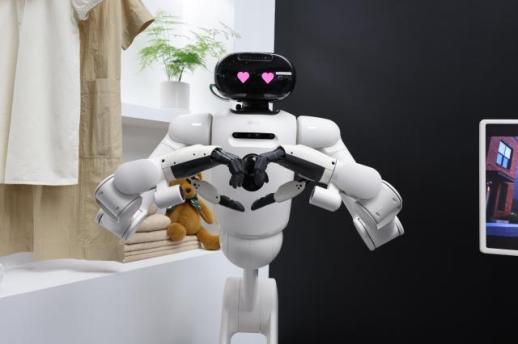 K-battery makers bet on premium to fight EV slump and China dominance SEOUL, March 12 (AJP) - South Korea's battery industry is doubling down on premium technologies — from high-nickel chemistries to all-solid-state prototypes and advanced cell engineering — as it seeks to outpace Chinese rivals and move beyond the slowing electric-vehicle market. The strategic pivot was on full display at the InterBattery 2026, the three-day exhibition that opened Wednesday at COEX in southern Seoul. The 14th edition of the show drew 667 companies from 14 countries across 2,382 booths, marking the largest turnout in the exhibition's history and underscoring how battery technology is rapidly expanding beyond automobiles into robotics, artificial intelligence and energy storage. National pavilions from Sweden, the United Kingdom, the United States, Australia, Canada and the Netherlands highlighted growing international demand for partnerships with Korean battery firms. China fielded 79 exhibitors, the largest single-country contingent. "Batteries are the heart of advanced industries," said Moon Shin-hak, vice minister of trade, industry and energy, at the opening ceremony, pledging continued government backing to help domestic manufacturers maintain their technological edge amid a slowdown in EV demand and an increasingly volatile global trade environment. On the exhibition floor, one theme was unmistakable: premium technology over low-cost chemistry. Discussion of lithium iron phosphate (LFP) — the inexpensive battery chemistry that has underpinned China's dominance in entry-level EVs and energy storage — was relatively muted. Instead, booth after booth highlighted high-nickel cathodes, all-solid-state batteries and sophisticated packaging technologies, signaling that Korean manufacturers are staking their future on the high-performance end of the market. SK On made perhaps the most vivid statement of that strategy by placing a Genesis GV60 Magma electric SUV at the center of its booth. The performance-focused vehicle carries an 84-kilowatt-hour battery pack built with SK On's high-nickel NCM pouch cells and offers a driving range of about 346 kilometers on a single charge. The company also unveiled a "Hyper Fast" battery capable of charging from 10 percent to 80 percent in just seven minutes, alongside its cell-to-pack architecture and immersion-cooling battery system. SK On further showcased its first sulfide-based all-solid-state battery, targeting mass production by 2029. Across the hall, LG Energy Solution occupied the largest exhibition space at 540 square meters. Its centerpiece was the JF2 DC LINK 5.0, a grid-scale energy storage system that won the InterBattery Awards 2026 and represents the company's first use of LFP chemistry in an ESS product. A Renault Scenic fitted with LG's mid-nickel battery — containing about 70 percent nickel — illustrated a different strategic approach. The configuration aims to balance the performance of high-nickel batteries with a cost profile that sits between premium cells and low-cost LFP alternatives. Robotics also made an appearance on the show floor, though demonstrations were limited. LG Electronics displayed its home robot CLOiD, first introduced at CES 2026, which greeted visitors with a heart-hand gesture while remaining largely static. Meanwhile, Samsung SDI drew heavy crowds with the first public unveiling of a pouch-type all-solid-state battery sample designed for robotics and other "physical AI" applications. The company aims to begin mass production in the second half of 2027. Samsung selected the pouch format for its lighter weight — a crucial advantage for robots that require high energy density and burst power in compact spaces. While the company declined to identify potential humanoid-robot clients, its booth slogan — "AI thinks, Battery enables" — left little doubt about its intended market. Samsung SDI also displayed a high-energy prismatic cell with a volumetric energy density of 700 watt-hours per liter, capable of powering an EV for roughly 800 kilometers on a single charge. Among cathode material suppliers, the emphasis on performance over cost was equally clear. POSCO Future M presented ultra-high-nickel cathodes with nickel content above 95 percent, along with newly developed steel battery cans. Rival suppliers L&F and EcoPro also attracted steady traffic. The premium-focused posture reflects a broader strategic calculation. With Chinese competitors dominating much of the mid-tier battery market, Korean manufacturers are betting that advanced chemistries, all-solid-state technology and sophisticated cell engineering will secure territory where margins remain higher and technological barriers harder to replicate. "The robot battery market is expanding very rapidly, with different technical requirements depending on the type of robot," said Jung Ji-sub, team leader at LG Energy Solution's small-size battery division on the sidelines of the exhibition. "While many robots rely on GPUs or CPUs for intelligence, their actuators and operating time create very different battery demands." Safety, however, remains the overriding concern. "One client at the vice-president level told us directly that they lose sleep over the prospect of a robot catching fire near people," Jung said. "Energy density and battery life are important, but for robots to coexist safely with humans, safety is the most critical requirement." 2026-03-12 17:02:36
 -
 Seoul theater troupe’s ‘Big Mother’ explores algorithm-driven power in the data age "With a mother-like warmth, it uses our information to change and manipulate what we think." Lee Jun-woo, who leads the Seoul Metropolitan Theatre Company, said at a news conference on March 12 at the Sejong Center for the Performing Arts that the play "Big Mother" looks at a kind of power different from "Big Brother," the symbol of coercive control. The company’s first production of the year, "Big Mother," asks in an era dominated by algorithms, "What is truth?" Centered on the struggle of New York investigative reporters trying to expose a conspiracy by a massive power, it portrays how unseen information can function as power in today’s big-data age. Lee said he wanted audiences to reconsider how they slip into comfort and familiarity and follow algorithms, adding that the work is "humorous and light rather than serious." The play draws audiences in with familiar-seeming characters and settings, but does not stay there. "It gets the audience to follow scenes without thinking, then leaves a bitter aftertaste at the end," Lee said. He compared it to reality: people keep watching videos guided by algorithms until they reach a moment when their thinking becomes polarized. A French original staged in a small theater used projection, but the production at Sejong Center’s M Theater will make heavier use of video to fit the larger venue. Lee said audiences will be able to watch both the images on the onstage screen and how those images are created, calling that the biggest difference from the French version. He said he hopes audiences enjoy "Big Mother" the way they watch a Netflix drama. "My goal is for audiences to follow each of the four reporters’ stories easily and with interest," Lee said. He added that he wants the media environment around the story — including news, breaking alerts, and relationships between political parties and companies — to feel realistic. The show runs from March 30 to April 25. * This article has been translated by AI. 2026-03-12 16:36:18
 -
 Samsung's agentic-AI flagship posts record presales, software edge in premium market SEOUL, March 12 (AJP) - Samsung Electronics’ latest AI-strong flagship is off to a bar-raising debut, signaling a shift in the premium handset race from hardware specifications toward practical artificial intelligence features. The Galaxy S26 series, launched Wednesday in more than 120 countries including South Korea and the United States, logged 1.35 million preorders in its home market, the highest ever for the Galaxy S lineup. Industry observers say the strong early demand reflects a broader change in consumer priorities as smartphones increasingly compete on usable AI functions rather than processor speed or camera upgrades. Samsung’s new lineup centers on agentic AI, designed to move beyond passive assistance and carry out tasks autonomously for users. Among the most notable features is on-device real-time translation that works without an internet connection, allowing conversations across languages without relying on cloud processing. The phone also introduces generative AI tools such as “Call Screening,” which can answer incoming calls and summarize them for the user, and “Privacy Display,” a feature that blocks side-angle viewing to protect information in public spaces. The emphasis on practical AI utilities has become a key differentiator as rivals struggle to bring comparable capabilities to global users. Apple, which dominates the premium smartphone segment, has faced hurdles rolling out its Apple Intelligence system internationally. The platform’s expansion has been slowed by delayed support for non-English languages and staggered updates to core features, frustrating many users outside the United States. Recent survey data suggests that the AI gap may be influencing consumer loyalty. A study by resale marketplace SellCell of more than 2,000 smartphone users found that 16.8 percent of iPhone owners said they would consider switching to a Galaxy device for better AI features, compared with 9.7 percent of Samsung users willing to move to Apple for its AI system. The shifting sentiment is already beginning to show up in market data. Powered by aggressive deployment of on-device AI functions, Samsung has gradually narrowed Apple’s market-share lead in the United States to about 11 percentage points by late 2025, according to industry estimates. Real-world users echo the trend. “I tried my husband’s Galaxy, and it’s definitely much more user-friendly when it comes to AI,” said Kyuri Kim, a longtime iPhone user in Seoul. “I wish I could have those features on my iPhone. It gets frustrating at times.” “Choosing a smartphone without AI is now akin to buying a car without a navigation system or autonomous driving capabilities,” said Lee Soo-jun, a professor of business administration at Sejong University. “Privacy is the biggest concern with AI today, but Samsung’s on-device processing ensures that personal data remains strictly on the phone without leaking externally, which is a decisive factor for consumers.” With the smartphone industry entering what analysts describe as the “AI utility era,” the market is closely watching whether Samsung’s early push into practical, on-device intelligence can finally dent Apple’s long-standing dominance in the premium segment. 2026-03-12 16:36:01
 -
 Korea Auto Industry Welcomes Passage of Special Law on Strategic U.S. Investment South Korea’s auto industry welcomed the National Assembly’s passage on Thursday of a special law on strategic investment management with the United States, a follow-up step to tariff negotiations. The Korea Automobile & Mobility Association said in a statement Thursday that it “sincerely welcomes” the bill’s approval, thanking the Assembly for bipartisan cooperation and government officials for pursuing trade talks. The association said the industry had been concerned that if U.S. export tariffs on Korean vehicles were raised again from 15% to 25%, it could weaken export competitiveness, reduce domestic production and shrink the broader auto industry ecosystem. With the law’s passage, it said, uncertainty over possible tariff hikes has been eased and Korean companies will be able to compete on equal footing with rivals. The association added that the measure is expected to help create a more stable business environment across the industry — including automakers and parts suppliers — and support expanded investment. It said the industry will continue investing in technology innovation, productivity improvements and the shift to future vehicles, while also working to strengthen the domestic production base through efforts such as boosting domestic demand and building a virtuous cycle in the parts ecosystem.* This article has been translated by AI. 2026-03-12 16:18:30
 -
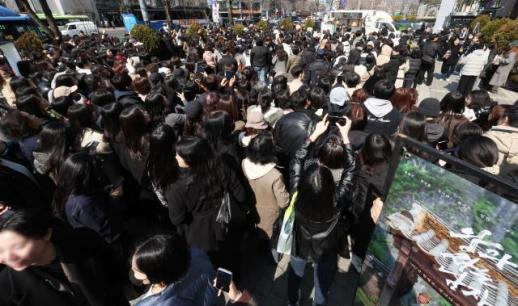 Director Jang Hang-jun treats fans to coffee to celebrate his box-office success SEOUL, March 12 (AJP) - Director Jang Hang-jun shared the joy of his latest film’s huge box-office success with an up-close, personal event for Seoulites in central Seoul on Thursday. Jang served around 200 cups of coffee in front of the Korea Press Center, expressing his gratitude to his fans. The event was arranged as a gesture of appreciation after period film "The King's Warden" attracted over 10 million moviegoers, about a month after its release on Feb. 4. A large crowd gathered at the venue even before the event began, and all the prepared coffee ran out quickly. Citizens took photos with Jang and cheered in celebration of the film's success. The 117-minute film tells the story of Danjong, the sixth king of the Joseon Dynasty, who was exiled to Yeongwol in Gangwon Province. 2026-03-12 16:17:05
 -
 South Korea to face Dominican Republic in WBC quarterfinals in Miami SEOUL, March 12 (AJP) - South Korea will face the Dominican Republic in the quarterfinals of the World Baseball Classic (WBC) in Miami later this week. The formidable Dominican Republic wrapped up the quadrennial tournament's regional matchups by defeating Venezuela 7‑5 at loanDepot park in Miami on Wednesday, extending its undefeated run to advance to the quarterfinals as the top finisher in its group. With the win, the Dominican Republic is now set to face South Korea at the same ballpark, the home of the Miami Marlins on Friday. Led by manager Ryu Ji-hyun, South Korea, which advanced to the quarterfinals with a dramatic victory over Austria earlier this week, will face a tough challenge against the Caribbean country's star-studded lineup, which includes Fernando Tatís Jr., Juan Soto, Manny Machado and Vladimir Guerrero Jr., all in Major League Baseball (MLB). This year's WBC, featuring 20 teams split into four groups with regional rounds held in Houston, Miami, Puerto Rico, and Tokyo, runs until March 17. The top two teams from each group advanced to the quarterfinals, with games to be played in Houston and Miami, while the semifinals and finals will be held in Miami. 2026-03-12 15:40:40
 -
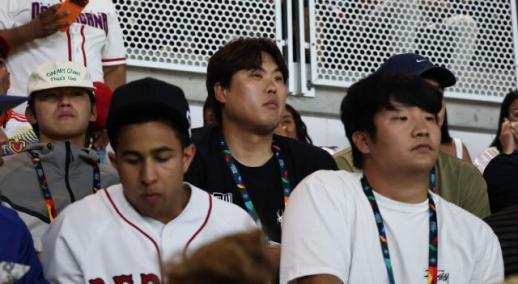 South Korea to Face Dominican Republic in WBC Quarterfinal in Miami South Korea has reached the World Baseball Classic quarterfinals for the first time since 2009 and will face the Dominican Republic in a winner-take-all matchup. The South Korean national team, managed by Ryu Ji-hyun, will play the Dominican Republic at 7:30 a.m. (Korea time) on March 14 at loanDepot park in Miami, Florida. South Korea advanced by finishing second in Pool C in Tokyo. It is the first time the team has made it out of the group stage since its runner-up finish in 2009. South Korea opened pool play with a rout of the Czech Republic but then lost to Japan and Taiwan, putting its tournament hopes in jeopardy. In its final pool game against Australia on March 9, it needed a win by at least five runs while allowing no more than two. The players kept fighting and secured a quarterfinal berth. The Dominican Republic went 4-0 in Pool D, beating Nicaragua 12-3, the Netherlands 12-1, Israel 10-1 and Venezuela 7-5. The Dominican Republic is widely viewed as the stronger team on paper, with a lineup packed with Major League Baseball All-Star-caliber talent. Its offense has been especially productive, scoring 41 runs in four games, more than 10 per game. The roster includes Juan Soto (New York Mets), Vladimir Guerrero Jr. (Toronto Blue Jays), Fernando Tatis Jr. and Manny Machado (both San Diego Padres). The pitching staff is also deep, led by Cristopher Sanchez (Philadelphia Phillies), who has won at least 10 games in each of the past two MLB seasons; Brayan Bello (Boston Red Sox), who has posted double-digit wins in each of the past three seasons; and Camilo Doval (New York Yankees), who led the National League in saves in 2023. All quarterfinal matchups have been set. If South Korea beats the Dominican Republic, it will meet the winner of Italy (Pool B winner) vs. Puerto Rico (Pool A runner-up) for a spot in the final. Japan (Pool C winner) will face Venezuela (Pool D runner-up) in the quarterfinals. The winner will play the winner of Canada (Pool A winner) vs. the United States (Pool B runner-up) in the semifinals.* This article has been translated by AI. 2026-03-12 15:24:00
 -
 Korean Internet Banks’ Boards Rarely Dissent Despite 70% Outside Directors South Korea’s internet-only banks have boards where outside directors make up nearly 70%, yet most agenda items are still approved unanimously, according to a review of recent filings. Over the past three years, Toss Bank recorded the most dissenting votes, but only six in total. Industry observers say the boards’ oversight role is unlikely to strengthen unless the process for recommending outside directors changes. An analysis of the past three years of “annual reports on governance and compensation systems” for the three internet-only banks — Toss Bank, K Bank and KakaoBank — posted on the Korea Federation of Banks website showed Toss Bank had five dissenting opinions last year and one in 2024, for six overall. At Toss Bank, five dissenting opinions were recorded among 119 board resolutions last year. Four were raised at a January board meeting by Lee Kun-ho, an outside director and a former KB Kookmin Bank president. Lee opposed approval of a 2025 stock option grant plan; convening a first extraordinary shareholders meeting in 2025 and setting the record date; approval of canceling stock option grants; and an agenda item to revise internal rules. Since launching in 2021, Toss Bank has granted stock options to employees in 19 rounds through September last year. In April last year, it introduced a program allowing employees to swap part of their year-end bonus (1 million won) for stock options. The stock options included a condition barring resignation for two years, and 372 of about 700 regular employees reportedly chose the program. The industry has speculated that disagreements may have surfaced on the board during the process of adopting the program. K Bank, despite having the highest outside-director ratio at 73%, had no dissenting votes on board resolutions over the past three years, the analysis found. KakaoBank recorded two dissenting opinions over the same period. In 2023, outside director Lee Eun-kyung opposed agenda items on support measures for victims of rental fraud and approval of revisions to a shared-growth agreement. There was also one case in which an item was put on hold: In June last year, directors agreed to defer a proposal on an affiliate contract for employee corporate and welfare card use, citing the need for additional review and discussion. The resolution was later taken up at the eighth board meeting. Kim Dae-jong, a professor in the business administration department at Sejong University, said outside directors are selected by bank employees, creating a structure in which “they have no choice but to agree close to 100%,” making dissent effectively difficult. 2026-03-12 15:18:00
 -
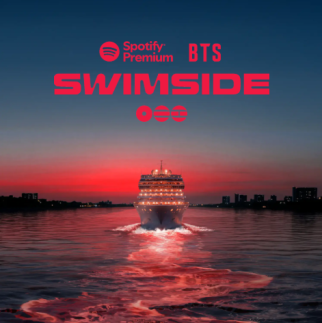 BTS Comeback D-9 — Spotify sets Han River cruise for immersive "SWIMSIDE" fan event SEOUL, March 12 (AJP) - As BTS counts down to the release of its comeback album ARIRANG, Spotify is taking the anticipation off the screen and onto the Han River. The streaming platform is launching “SWIMSIDE,” an immersive fan campaign built around BTS’s upcoming title track “SWIM,” which is set for release with the album on March 20 at 1 p.m. KST. At the heart of the campaign is the “Spotify × BTS SWIMSIDE Cruise,” a themed evening program that will run on the Han River from March 27 to 29, departing from Yeouido Hangang Park. The cruise will operate three times each evening between 5:30 p.m. and 10:30 p.m., offering selected fans interactive experiences and exclusive content tied to the comeback. Fans can apply for the event from March 12 to 19, with winners to be announced on March 23, according to Spotify. The campaign also includes an in-app feature titled “Decoding ARIRANG,” designed as a countdown experience leading up to the album release. The project underscores Spotify’s wider effort to turn fandom into something more participatory than streaming alone. Beyond playlists and plays, the platform has increasingly leaned into artist-centered experiences through features such as Wrapped, Canvas and exclusive fan content. Few artists suit that strategy better than BTS, whose global fandom remains one of the most powerful in pop music. The group currently has 25.2 million monthly listeners on Spotify and more than 82.9 million followers on the platform. Its 2020 megahit “Dynamite” remains BTS’s most-streamed song there, with more than 2.22 billion plays. Other tracks that have crossed the billion-stream mark include “My Universe,” “Butter,” “Boy With Luv (feat. Halsey)” and “Fake Love.” The members’ solo reach is formidable as well. Jung Kook leads with 15.3 million monthly listeners, powered by “Seven (feat. Latto),” which has surpassed 2.82 billion streams. J-Hope follows with 11.9 million, while Jimin has 5.5 million, Jin 4.2 million, V 3.9 million, Agust D 3.1 million, RM 2.6 million and Suga 1.6 million. Beyond its streaming pull, ARIRANG is drawing attention for its unusually expansive production roster. The 14-track album brings together longtime BTS collaborator PDogg with a wide range of international names, including Ryan Tedder, Diplo, Mike WiLL Made-It, Flume, JPEGMafia, Kevin Parker of Tame Impala and Teezo Touchdown. Tedder, the OneRepublic frontman and hitmaker behind songs for artists including Beyoncé and Adele, is credited on several tracks, among them the lead single “SWIM.” Diplo appears on five tracks — “Body to Body,” “FYA,” “Like Animals,” “One More Night” and “Into the Sun.” Mike WiLL Made-It contributed to “Aliens” and “2.0,” while Flume and JPEGMafia teamed up on “FYA.” Kevin Parker is credited on “Merry Go Round.” The album title itself adds another layer of intrigue. “Arirang,” one of Korea’s best-known traditional folk songs, has endured across generations in regional forms such as Jeongseon, Miryang and Jindo Arirang. As a musical emblem of Korean identity and collective memory, the title hints that the album may blend heritage with BTS’s global pop language. ARIRANG will mark BTS’s first major group project since the 2022 anthology album Proof. 2026-03-12 15:13:01
 -
 South Korea’s Top 5 Banks Boost SME Lending by 4 Trillion Won as Tech Finance Rebounds Small-business lending at South Korea’s five biggest banks is rising quickly, in line with the government’s push for so-called productive finance that steers funding toward promising companies. As of last month, the outstanding balance of small and medium-sized enterprise loans at KB Kookmin, Shinhan, Hana, Woori and NH NongHyup totaled 678.7439 trillion won, the financial sector said Thursday. That was up 2.8385 trillion won from the previous month’s 675.9054 trillion won. Compared with the end of last year, the balance rose 4.3177 trillion won from 674.4262 trillion won. The increase is attributed to expanded lending to advanced strategic industries and innovative companies, in step with government policy. In September, the Financial Services Commission held a “productive finance transformation meeting” and announced plans to expand productive finance. The core goal is to reduce policy guarantees tied to real estate and strengthen support for technology and innovation-driven firms. As banks broaden corporate lending under that policy direction, technology credit loans — often called technology finance — have also turned upward for the first time in three years. An analysis of Korea Federation of Banks data showed the technology finance balance stood at 319.1068 trillion won at the end of last year, up more than 16 trillion won from 302.7538 trillion won at the end of 2024. Technology finance had fallen for two straight years after reaching 325.9611 trillion won in 2022, slipping to 304.5353 trillion won in 2023 and 302.7538 trillion won in 2024. It shifted back to growth after topping 307 trillion won in the first half of last year. The five major banks’ technology finance balance was 161.6287 trillion won at the end of last year, up more than 2.4 trillion won from 159.2071 trillion won at the end of 2024 — the first increase since 2022. Technology credit loans provide funding based on technology assessments for small and venture firms that have strong technical potential but lack collateral or financial capacity. Banks and technology credit bureaus evaluate applicants’ technology and may offer benefits such as higher loan limits or lower interest rates. The industry expects the trend to continue this year as banks keep expanding lending to companies with technology and growth potential. KB Kookmin Bank, through an organizational overhaul this year, created a Growth Finance Promotion Division to expand corporate lending centered on productive finance and is operating a dedicated review team for advanced strategic industries. Shinhan Bank said it will supply 72 trillion to 75 trillion won in group-funded loans to general small and mid-sized companies excluding real estate, through the “Ultra-Innovative Economy Growth Support Task Force” it set up last year. Hana Bank also reorganized its investment banking group, reshaping its investment finance unit into a “productive investment” unit. Woori Bank said it created dedicated investment and financing teams in its IB and corporate groups late last year and will strengthen support for regional growth companies and innovative venture firms. Shin Yong-sang, a senior research fellow at the Korea Institute of Finance, said the lending expansion is likely to continue as the government keeps emphasizing productive finance. “To keep it as a sustainable policy, banks need supporting efforts such as improving systems for venture capital and business feasibility assessments, and expanding staffing,” he said. 2026-03-12 15:12:00