
Journalist

AJP
-
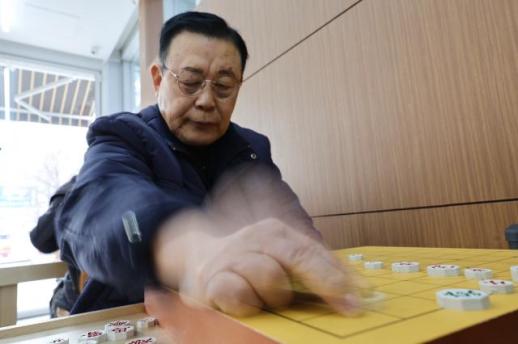 Shopping arcade in Seoul finds new life as elderly hangout SEOUL, March 12 (AJP) - A shopping arcade in central Seoul has found an unlikely second life as a favorite hangout for elderly people with little money. On the first floor of Nakwon Arcade in Jongno, a boisterous crowd of seniors fills the tables daily, some seated, others standing nearby, their laughter and chatter echoing all the way to the entrance. This is where the neighborhood’s best janggi (or Korean chess) players gather to compete. With recreational activities banned in nearby Tapgol Park, once a popular gathering spot for the elderly, the arcade has emerged as a new alternative, giving seniors a place to relax and enjoy their favorite pastimes. The faces of those seated said it all - anger, joy, the tension of their matches. Seventeen janggi tables now fill the space, but it was not always that way. The room originally housed twelve janggi tables and five for baduk, but baduk players had their own gathering spot nearby and rarely showed up. Eventually, all seventeen became janggi tables. The aisles between tables are unusually wide, enough to fit another table. The reason is simple: their matches attract kibitzers who like to offer advice and tips. The extra space lets people move freely even when spectators line the sides. At peak times around sixty people fill the room. No food or smoking is allowed. When someone steps out for a cigarette or a coffee, another player naturally takes their seat. No fees. No restrictions. Visitors come from as far as other provinces. They play against new opponents, test their skills, and find worthy rivals. Unofficial rules sometimes emerge suddenly among them. 2026-03-12 10:23:16
 -
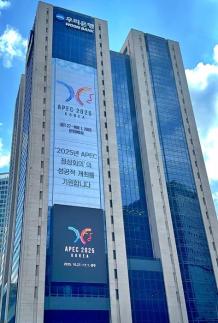 Woori Bank to Create Financial Consumer Protection Committee Under Board Woori Bank will create a Financial Consumer Protection Committee under its board of directors as it seeks to make consumer protection a core management value. According to the Financial Supervisory Service on Wednesday, the bank plans to establish the committee on March 20 as a specialized subcommittee under the board. The move is intended to proactively implement best practices for financial consumer protection governance announced by the watchdog in September last year. The committee will have at least three members, including a director specializing in consumer protection, and will meet regularly at least once every six months. It will review key matters such as management strategies and policies related to consumer protection, as well as the enactment and revision of internal rules. Woori Bank said the new committee will strengthen internal controls so that consumer protection is reflected throughout the process, from product planning to post-sale management. The bank will also introduce a system in which its chief consumer officer, or CCO, can exercise exclusive prior-agreement rights and the right to request improvements on the design of performance compensation systems, including key performance indicators, to ensure consumer protection functions in practice during product sales. In addition, Woori Bank will run a professional training program to bolster consumer protection capabilities, creating courses to respond to changes in relevant laws and policies and to develop in-house experts. A Woori Bank official said the steps are aimed at embedding consumer protection as a core management value, adding that the bank will establish a consumer-centered financial culture across the entire process from product planning through post-sale management. 2026-03-12 10:21:00
 -
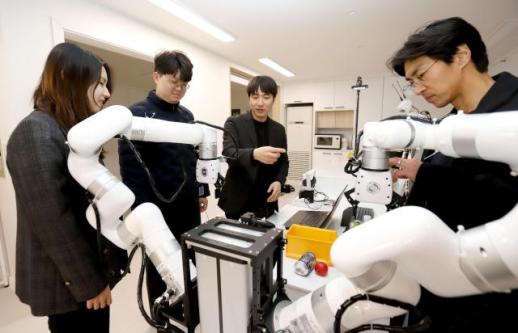 South Korean researchers develop task AI enabling robots to learn, execute everyday chores SEOUL, March 12 (AJP) - South Korean researchers have developed a robotic task artificial intelligence system capable of learning and carrying out routine household and workplace chores by observing human demonstrations, the state-run Korea Institute of Machinery & Materials (KIMM) said Thursday. The AI system, built by a team led by Kim Jeong-jung at KIMM's Department of AI Machinery, allows robots to acquire task skills from human demonstrations, replicate them in a virtual environment for training and verification, and then execute them in real-world settings through a hierarchical task-execution framework. Unlike conventional robotic task technologies that have largely been confined to single-task datasets and simulation-only validation, the new system integrates the entire pipeline — from multi-task dataset construction and real-space virtualization to hierarchical task AI and physical robot deployment, according to KIMM. The research team said it achieved a success rate exceeding 90 percent across a range of tasks by employing a layered execution structure that breaks down complex operations into sequential steps. The system was validated on an actual robotic platform operating in real-world conditions, confirming its viability for field deployment. Potential applications span household and office service tasks, retail shelf arrangement and logistics operations such as picking and sorting — areas where labor-intensive, repetitive work has long been a bottleneck for automation. "This robotic task AI learns from demonstrations and reasons hierarchically, much like a human worker," Kim said. "We have secured generalized task capabilities applicable across a wide spectrum of everyday operations." Kim added that the team verified the system's reliability by building a diverse task dataset, securing a real-world testing environment and running validation on an actual robot, confirming that robots can reliably assist with repetitive daily tasks. The team plans to broaden the range of tasks robots can perform and strengthen their adaptability to shifting environments and unfamiliar objects, with the aim of accelerating deployment in commercial service settings. 2026-03-12 09:58:12
 -
 Polestar Discloses Carbon Footprints for Full Lineup, Including Polestar 5 Swedish premium EV maker Polestar on 12일 disclosed the carbon footprints for its entire lineup, including the four-door grand tourer Polestar 5. Polestar has published lifecycle assessments, or LCAs, for all models since 2020 to identify emissions from materials and manufacturing and reduce the climate impact of vehicle production. For the Polestar 5, total greenhouse-gas emissions before delivery are 23.8 tons, covering the process from raw-material extraction through production and delivery to the customer. The company said it is working to cut emissions by using more environmentally friendly materials. Aluminum is considered one of the most carbon-intensive materials in vehicle manufacturing. Polestar said it overhauled how aluminum is sourced for the Polestar 5: 13% of the aluminum is recycled, and 83% is produced at smelters powered by renewable energy. The company said that reduces greenhouse-gas emissions by more than 14 tons per vehicle compared with conventional methods. Renewable energy also plays a key role in production, Polestar said. The Polestar 5 uses renewable power not only at its manufacturing facilities but also at sites producing battery cell modules and key battery materials, cutting emissions from vehicle, parts and battery manufacturing. Polestar also said it used new materials in the interior to reduce environmental impact and applied circular design to the front trunk. "If you don’t measure it, you can’t reduce it," said Fredrika Klaren, Polestar’s head of sustainability. Disclosing a car’s carbon footprint, she said, "clearly shows where emissions occur" and encourages industry efforts to cut emissions from materials and manufacturing. She added that such transparency is essential to expanding low-carbon materials, renewable energy and circular solutions and reducing the auto industry’s climate impact. 2026-03-12 09:55:05
 -
 BLACKPINK draws big crowds in China and Japan with 'Deadline' promotions BLACKPINK drew strong interest in China and Japan with large-scale events marking the release of its third mini album, "Deadline." YG Entertainment said Thursday it successfully wrapped up a "Deadline" release promotion held across 20 Chinese cities in partnership with Tencent Music Entertainment Group, or TME. The company said it was planned as TME’s largest offline promotion to date, with a range of events rolled out starting on the album’s release day. Landmarks in cities including Ningbo, Macau, Shenzhen, Zhongshan and Foshan were lit in the group’s signature pink. Major shopping malls in high-traffic cities such as Beijing, Shanghai and Guangzhou featured album-themed wraps and large installations, while the music video for the title track, "GO," played on giant outdoor screens, turning the areas into "BLACKPINK spots." Pop-up stores in five cities also drew heavy crowds. In Shanghai, Dolby House Shanghai in the Zhangyuan cultural complex offered an immersive Dolby Atmos sound experience and large-screen presentations of the group’s music. The space combined tech-based music content with limited-edition merchandise, drawing positive reviews from visitors. The momentum continued in Japan. A pop-up store in Tokyo’s Shibuya district drew early lines before opening, and some items sold out quickly. Fans also took part in billboard events and promotions tied to major record labels, posting photos from the site on social media to celebrate the group’s comeback. "Deadline" sold 1,774,577 copies in its first week, according to Hanteo Chart, setting a new first-week record for a K-pop girl group. The album also ranked high on the main charts of the U.K.’s Official Charts and the U.S. Billboard, setting a record for the most chart entries by a K-pop female artist, the company said.* This article has been translated by AI. 2026-03-12 09:51:20
 -
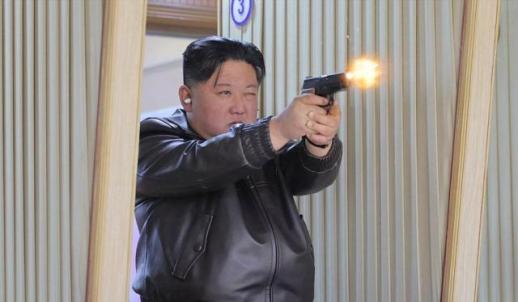 Photos show North Korean leader and daughter firing pistols during on-site inspection SEOUL, March 12 (AJP) - North Korean leader Kim Jong-un inspected a munitions factory producing light weapons such as pistols, state media reported on Thursday. According to the state-run Korean Central News Agency, Kim visited the factory the previous day to "learn about the munitions production." He was quoted as urging officials to "expand the factory's production capacity in a far-sighted way and raise the level of modernization of the production line," stressing that the factory is "playing a very important role in increasing the combat efficiency of the army, public security forces and militia forces." Photos released by KCNA showed Kim and his teenage daughter Ju-ae, both in leather jackets, firing pistols at an indoor shooting range there. Similar photos were released late last month when Ju-ae joined senior military officials at an event to present newly developed sniper rifles to troops. Meanwhile, Kim said he plans to convene a meeting with key military officials next month to review modernization projects and budgets for munitions factories over the next five years. 2026-03-12 09:34:01
 -
 BYD Joins IATF, Global Automotive Quality Standards Body BYD said Thursday it has officially joined the International Automotive Task Force, or IATF, which sets international automotive quality standards. The IATF is an international body that oversees global automotive quality management systems. Founding members include major auto industry associations such as the Automotive Industry Action Group in the United States, ANFIA in Italy, FIEV in France, SMMT in the United Kingdom and VDA in Germany, along with many global automakers. BYD said it was recommended by AIAG and approved through a vote of the full IATF membership. The company said the move will allow it to take part in developing international automotive quality management standards alongside global automakers including Volkswagen and General Motors. Zhao Jianping, BYD vice president and chief quality officer, said the membership is “a meaningful achievement” showing international recognition of BYD’s technology-driven, innovation-based development strategy. BYD said it has continued rapid growth in the global eco-friendly vehicle market. In 2025, it posted annual vehicle sales of 4,602,400, ranking No. 1 worldwide in eco-friendly vehicle sales for a fourth straight year. Overseas sales of passenger cars and pickup trucks totaled 1,049,600, up 145% from a year earlier. BYD said it plans to use its IATF membership to strengthen technical cooperation during the auto industry’s shift toward electrification and intelligent systems, and to take an active role in advancing international standards. It also said it will work with global partners to help build a sustainable automotive industry ecosystem and accelerate the transition to eco-friendly mobility.* This article has been translated by AI. 2026-03-12 09:30:18
 -
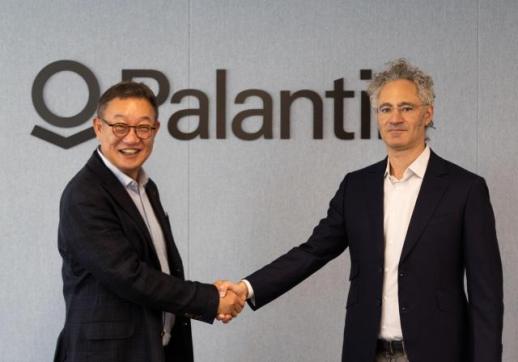 LG CNS strikes strategic partnership with Palantir to accelerate AI transformation push SEOUL, March 12 (AJP) - LG CNS, the IT services arm of South Korea's LG Group, signed a strategic partnership with U.S. artificial intelligence software firm Palantir Technologies, as the company moves to broaden its enterprise AI platform business. The agreement was signed ahead of Palantir's AIPCon event in the United States. LG CNS President and CEO Hyun Shin-gyoon and Palantir co-founder and CEO Alex Karp were among senior executives present at the signing ceremony on Wednesday (local time). Under the deal, LG CNS will offer Palantir's enterprise platforms — Foundry, which consolidates and refines fragmented corporate data, and AIP (Artificial Intelligence Platform), which integrates generative AI into that data environment to support real-time decision-making — tailored to each client's operations. To drive the initiative, LG CNS will establish a dedicated unit called FDE (Forward Deployed Engineering), which will work closely with Palantir to identify and execute high-value AI transformation projects across manufacturing, energy, electronics, and logistics. The company plans to begin its commercial expansion with LG Group affiliates before targeting broader clients. LG CNS said it has already completed a proof-of-concept deployment of Foundry and AIP in the quality management division of one LG affiliate, and has since secured a full commercial contract. The company has also validated the platforms internally, building out risk-forecasting and decision-support capabilities using its own operational data. "This partnership marks a critical turning point in expanding LG CNS's AI transformation business to a global level," Hyun said, adding that the company aims to lead enterprise innovation by combining its industry expertise with Palantir's AI platform capabilities. 2026-03-12 09:25:54
 -
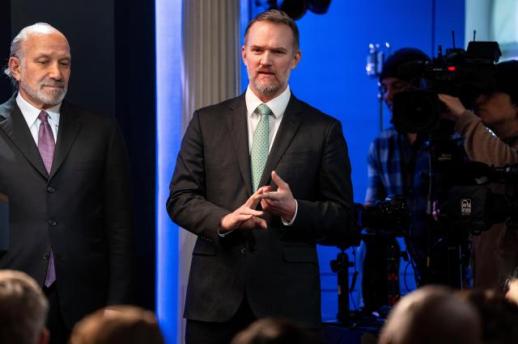 U.S. targets Korea and 15 others for Section 301 trade probe after tariff setback SEOUL, March 12 (AJP) -The United States has opened a trade investigation into South Korea and 15 other economies over alleged structural overcapacity in manufacturing sectors, a move that could eventually lead to new tariffs as the Trump administration rebuilds its trade policy after a recent Supreme Court setback. The Office of the United States Trade Representative (USTR) said Wednesday it had initiated investigations under Section 301 of the Trade Act of 1974 into the “acts, policies and practices” of major trading partners that may contribute to excess production and exports that burden U.S. commerce. The probe covers South Korea, China, Japan, India, Taiwan, the European Union and several Southeast Asian economies including Vietnam, Thailand and Malaysia. “The United States will no longer sacrifice its industrial base to other countries that may be exporting their problems with excess capacity and production to us,” U.S. Trade Representative Jamieson Greer said in a statement. Greer said the investigation will determine whether government policies — including subsidies, state-backed financing, labor and environmental practices, and barriers to imports — have encouraged production levels “not aligned with market demand,” creating oversupply that harms U.S. manufacturers. Section 301 investigations allow the U.S. government to impose retaliatory measures such as tariffs, fees or other trade restrictions if it determines that foreign practices are unfair or discriminatory. The probe reflects Washington’s effort to reconstruct its tariff policy after the U.S. Supreme Court last month struck down the Trump administration’s country-specific “reciprocal tariffs” imposed under the International Emergency Economic Powers Act (IEEPA). The administration had relied on emergency powers under the law to impose sweeping tariffs on several trading partners. The court ruled that the statute did not authorize such trade actions, effectively invalidating the measures. U.S. officials have since indicated that Section 301 investigations will serve as a key legal pathway to pursue tariff actions on a country-by-country basis. By launching investigations under the 1974 trade law, Washington can formally examine foreign trade practices and impose tariffs or other restrictions if they are deemed to harm U.S. commerce. The process will include written submissions and public hearings. The USTR said comments are due by April 15 and hearings are scheduled to begin May 5. The announcement adds to layers of complicated trade issues between Washington and Seoul despite the Korea-U.S. Free Trade Agreement. South Korean officials have made a series of visits to Washington in recent weeks in an effort to ease tensions and prevent potential tariff measures. Industry Minister Kim Jung-kwan and other trade officials have met with U.S. policymakers to explain Seoul’s investment and trade policies and highlight the scale of Korean corporate investment in the United States and address concerns raised by U.S. policymakers regarding Seoul’s regulatory actions involving e-commerce platform Coupang. South Korean authorities say the antitrust investigation into the company is part of normal competition enforcement, while U.S. officials have raised questions about whether such actions could disadvantage American investors. The issue has emerged alongside broader U.S. complaints about market access, digital regulations and treatment of foreign technology companies. Major U.S. investors in Coupang — Greenoaks and Altimeter — earlier this week withdrew a petition seeking a Section 301 probe into Seoul’s treatment of the company after U.S. officials signaled Washington may pursue a broader investigation into Korean trade practices affecting American firms. 2026-03-12 09:23:57
 -
 Eastar Jet Leads South Korea With 90% Load Factor After Offering 6.33 Million Seats Eastar Jet said Thursday it posted an annual load factor of 90% last year, the highest among South Korean airlines. The carrier operated 33,600 flights and offered 6,329,790 seats. A total of 5,705,493 passengers flew, putting the load factor at 90.14%. Based on the Transport Ministry’s aviation information portal, the figure was the highest among domestic airlines and well above the overall average load factor of 84.86%. Eastar Jet cited several factors, including competitive fares, flexible route operations, a more comfortable cabin environment on new aircraft, easier airport and in-flight services, and partnership benefits for members. The airline is accelerating fleet modernization, operating 10 Boeing 737-8 aircraft as new planes, half of its 20-aircraft fleet. Because the aircraft are new rather than used, the company said, they feature new leather seats and reduce engine noise by more than 50%, providing a more comfortable flight environment. Eastar Jet also noted that in a service monitoring survey run by Incheon International Airport Corp. last year, its check-in processing time, including waiting, averaged 10 minutes 8 seconds, the shortest among South Korean carriers. The airline said it also provides real-time gate information via mobile and offers airport services such as discounts through partnerships with airport limousine buses and lounges. An Eastar Jet official said, “We thank the many customers who chose Eastar Jet last year,” adding, “In line with our brand slogan, ‘Easy Flight,’ we will continue working to provide an easy and convenient travel experience.”* This article has been translated by AI. 2026-03-12 09:15:48