

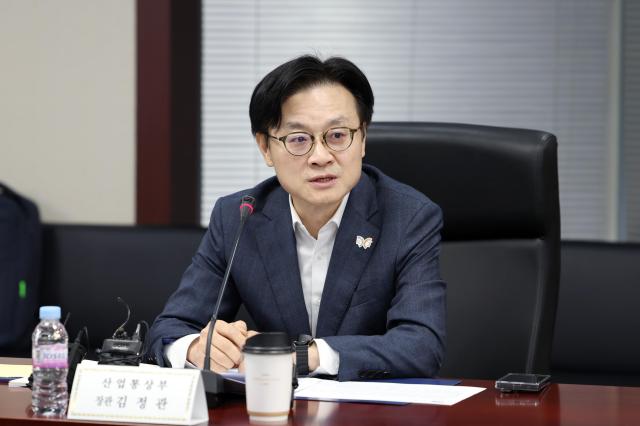
The Ministry of Trade, Industry and Resources said it hosted the South Korea–Canada Industrial Cooperation Forum on Monday at the Park Hyatt hotel in Toronto, bringing together business and government leaders from both countries.
The event comprised a two-part program: an automotive industry cooperation forum and a South Korea–Canada CEO dialogue.
Senior figures in attendance included presidential chief of staff Kang Hoon-sik, Industry Minister Kim Jung-kwan, and Defense Acquisition Program Administration Commissioner Lee Yong-cheol.
From the Canadian side, participants included Philip Jennings, deputy minister of Innovation, Science and Economic Development, and Victor Fedeli, the Ontario minister of economic development, job creation and trade, alongside other federal and provincial officials.
Officials discussed strengthening collaboration in future mobility sectors such as eco-friendly and autonomous vehicles.
“The auto industry is a core backbone industry that runs through both countries,” Kim said, emphasizing that South Korea will help both nations’ automakers “seek opportunities together and grow.”
In a show of expanding cooperation, six memorandums of understanding (MOUs) were signed between major firms in key high-tech and strategic industries.
They included agreements between Hanwha Ocean and Algoma Steel (steel), Hanwha Systems with Telesat and MDA Space (low-Earth-orbit satellites), Hanwha Ocean–Hanwha Systems–Cohere (AI), Hanwha Systems and PV Labs (advanced sensors), and POSCO International and Torngat Metals (rare earths).
The MOU was signed as part of discussions between the South Korean and Canadian governments and companies on industrial cooperation ahead of Canada’s upcoming submarine procurement program. It outlines a concrete model for industrial collaboration that aligns with the Canadian government’s emphasis on local industry participation and Industrial and Technological Benefits (ITB) — the so-called “Buy Canadian” policy.
Hanwha Ocean first signed an agreement with Algoma Steel, Canada’s largest steel manufacturer, to support the Canadian submarine project. If Hanwha wins the submarine contract, the two companies will cooperate on building a steel plant in Canada and establishing a stable supply chain for steel products used in submarine construction and maintenance (MRO) infrastructure. Hanwha Ocean will invest approximately CAD 345 million in the initiative.
Hanwha Ocean and Hanwha Systems also entered into an artificial intelligence partnership with Cohere, a leading Canadian AI unicorn, to jointly develop specialized AI technologies applicable to shipbuilding and submarine system integration and operation. The collaboration will utilize Cohere’s large language models (LLMs) and large multimodal models (LMMs) to enhance processes across production planning, design, and manufacturing.
Hanwha Systems will further collaborate with Telesat, a Canadian satellite communications company, to develop next-generation low Earth orbit (LEO) satellite communications. By combining Hanwha’s expertise in satellite manufacturing and terminal development with Telesat’s satellite network operation and design capabilities, the two companies aim to deliver a globally competitive LEO satellite communication network for both domestic and international markets.
In addition, Hanwha Systems signed an MOU with MDA Space to cooperate on defense and security-oriented satellite communications and space technologies, and another with PV Labs to advance electro-optical and infrared (EO/IR) sensor technologies for defense applications.
A study by global consulting firm KPMG estimated that Hanwha’s proposed industrial cooperation plan for the Canadian submarine project could create more than 200,000 cumulative job-years in Canada by 2040.
The ministry said the deals are expected to reinforce collaboration across advanced industrial sectors including steel, defense, space, AI, and rare earth development.
During the second session, business leaders gathered for the third South Korea–Canada CEO Dialogue, co-hosted by the Federation of Korean Industries and the Business Council of Canada.
Executives from 12 South Korean and nine Canadian companies discussed opportunities in supply-chain resilience and strategic industries.
“Our companies already see Canada as a trusted, key partner,” Kim said, adding that stronger cooperation will “enhance supply chain stability, create jobs in both countries, and boost global competitiveness.”
Strategic Stakes in Canada’s Submarine Modernization
Beyond trade, Seoul’s outreach carries strategic weight.
South Korean shipbuilders — notably Hanwha Ocean — are reportedly positioning themselves for Canada’s multibillion-dollar Canadian Patrol Submarine Project (CPSP), one of Ottawa’s largest and most consequential defense procurements.
Canada’s aging fleet of Victoria-class submarines, built in the 1980s and slated for retirement by the mid-2030s, has prompted Ottawa to pursue up to 12 conventionally powered, under-ice-capable submarines under the CPSP.
The project, part of the government’s “Our North, Strong and Free” defense policy, reflects growing security concerns in the rapidly warming Arctic, where Russia and China are expanding their presence.
“Submarines are crucial to Canada’s ability to defend its sovereignty, monitor maritime approaches, and project power beyond its shores,” said Julie Kim of the Canadian Global Affairs Institute.
“The CPSP has assessed that the most efficient path forward is to procure foreign-built, Military-Off-the-Shelf submarines that meet Canada’s operational needs.”
A Deeper Strategic Partnership
If South Korea were selected as a partner, analysts say the decision could mark a watershed in bilateral ties.
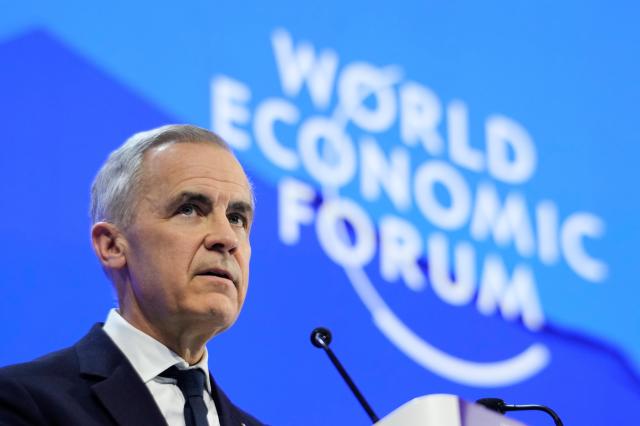
“With mounting global instability and the shifting dynamics of Canada–U.S. relations, Ottawa is actively seeking reliable defense partners with proven production capacity,” Kim noted.
“South Korea has earned a reputation for delivering cost-effective, U.S.-interoperable systems that are already in service with key Western allies.”
The Royal Canadian Navy already conducts joint maritime exercises with the ROK Navy through Operation HORIZON and Operation NEON, while also operating together in multinational maneuvers such as RIMPAC and PACIFIC VANGUARD.
If Canada were to procure South Korean-built submarines, both navies would share advanced underwater technologies for decades — a move expected to significantly strengthen bilateral defense cooperation and interoperability in the Pacific.
Copyright ⓒ Aju Press All rights reserved.
