SEOUL, March 04 (AJP) -South Korea’s industry minister will head to Canada this week to lend a final push to Team Korea’s bid for Ottawa’s multibillion-dollar submarine program, as Seoul throws its weight behind a national effort to secure one of the world’s largest naval procurement deals.
Industry Minister Kim Jung-kwan is scheduled to depart Thursday for Canada to support a South Korean consortium competing for the Canadian Patrol Submarine Project (CPSP) — a program valued at up to 60 trillion won ($40 billion) to replace the Royal Canadian Navy’s aging fleet.
The Korean team led by Hanwha Ocean and HD Hyundai Heavy Industries is competing against a European bid spearheaded by Germany’s Thyssenkrupp Marine Systems (TKMS), which is working with partners including Norway.
Both sides submitted their final proposals to the Canadian government on Monday, moving the competition into its final phase.
Kim’s trip will officially center on attending the completion ceremony for LG Energy Solution’s electric-vehicle battery plant in Ontario, but the visit is expected to double as a diplomatic push for the submarine bid.
During the trip, he is expected to meet senior Canadian officials including Industry Minister Mélanie Joly to highlight Korea’s submarine construction capabilities and discuss broader industrial cooperation between the two countries.
The CPSP program calls for the procurement of up to 12 conventionally powered submarines, with Canada aiming to deploy the vessels beginning in the early 2030s as its Victoria-class submarines approach retirement.
Canadian officials have made clear that the winning bidder will be judged not only on capability, cost and delivery schedule but also on which proposal delivers the greatest economic and manufacturing benefits within Canada.
That requirement has effectively turned the competition into a wider industrial partnership race.
Hanwha Ocean has framed its proposal as the foundation for a long-term industrial partnership between South Korea and Canada, pledging investment in sectors including steel, artificial intelligence and space technologies.
The company estimates the initiative could generate around 25,000 jobs annually between 2026 and 2044, while strengthening Canada’s marine manufacturing supply chain.
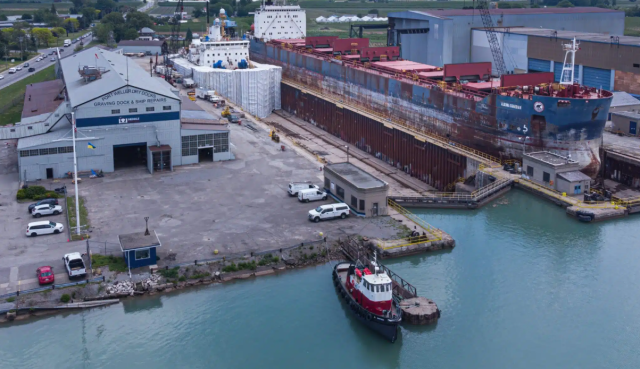
Hanwha has also signed cooperation agreements with Canadian partners including Ontario Shipyards and Mohawk College to support workforce training and shipbuilding capability in Ontario.
The plan includes establishing a shipbuilding training hub at the Hamilton shipyard aimed at addressing labor shortages in skilled trades and developing next-generation shipbuilding expertise.
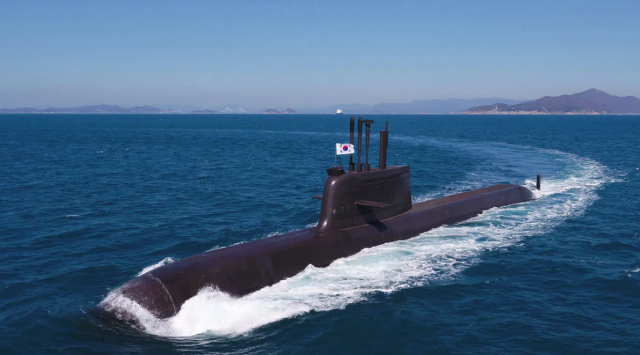
Hanwha Ocean is pitching its KSS-III class submarine, a platform currently operated by the Republic of Korea Navy.
The design features lithium-ion batteries and an air-independent propulsion (AIP) system, allowing extended submerged endurance and a cruising range exceeding 7,000 nautical miles, along with Korean-developed sonar and combat systems.
The company says it could deliver the first submarine by 2032 and four vessels by 2035, supported by what it describes as a firm delivery schedule and established supply chain.
“In short, this is not just a platform pitch,” Charlie SC Eoh, president of Hanwha Ocean, said in a written response to the Canadian Press on March 2. “It is a risk-eliminated delivery plan paired with a generational industrial partnership that aligns with Canada’s defense industrial strategy.”
The rival bid led by TKMS proposes a European partnership model. The German shipbuilder says it could deliver two submarines by 2034, though it has not publicly disclosed detailed cost or employment estimates.
TKMS Chief Executive Oliver Burkhard described Canada’s procurement timeline — with a decision expected as early as mid-2026 — as “very ambitious,” noting that earlier plans had envisioned a decision closer to 2028 or 2029.
The scale of the contract and Canada’s emphasis on domestic economic benefits have prompted a government-level lobbying push from Seoul, involving multiple ministries and defense agencies supporting the bid.
South Korea’s Defense Acquisition Program Administration and other ministries have established a coordinated support framework aimed at facilitating technology transfer, training opportunities for Canadian submarine crews and broader defense-industrial cooperation.
Kim’s visit follows an earlier trip to Canada in January alongside senior presidential officials to promote industrial collaboration and the submarine bid.
Canada is expected to select the winning bidder as early as mid-2026, making the CPSP one of the largest defense procurement decisions in the country’s history.
Copyright ⓒ Aju Press All rights reserved.