
Journalist

AJP
-
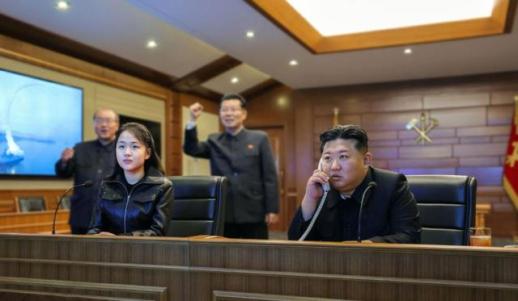 North Korea conducts another missile test from new destroyer SEOUL, March 11 (AJP) - North Korea has conducted another test‑firing of strategic cruise missiles from its new destroyer, state media reported on Wednesday. According to the state-run Korean Central News Agency (KCNA), leader Kim Jong‑un observed the test through a monitor the previous day, accompanied by his daughter Ju‑ae. The test comes less than a week after a similar test conducted at a shipyard in Nampo and also coincides with the annual joint military exercises between South Korea and the U.S., which are currently underway. KCNA said the missiles from the multipurpose destroyer Choe Hyun flew along the West Sea for roughly 10,000 seconds before hitting their designated targets, with Kim expressing "his great satisfaction over the verified reliability of the national integrated control system of strategic weapons and the superiority of the destroyer's integrated combat system." Kim was quoted as saying, "The components of our war deterrent are now being included in the very sophisticated operational system in an effective and accelerated manner continuously and the country's nuclear forces have made a switch to the phase of multifaceted operation." He also vowed to enhance the country's naval capabilities with more warships in the future. In April last year, North Korea unveiled the Choe Hyon, named after a comrade of its regime founder Kim Il‑sung during his days as a partisan fighter. The 5,000-ton destroyer is believed to be capable of carrying nuclear weapons. North Korea is also building another destroyer, which is expected to be completed by early October, in time for the 81st anniversary of the founding of the country's key ruling organ, the Workers' Party of Korea. 2026-03-11 10:56:29
 -
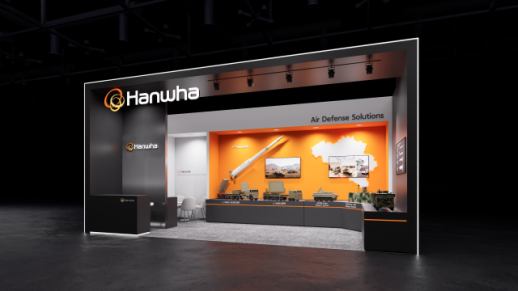 Hanwha to Debut L-SAM Missile Defense System at Belgium’s BEDEX Arms Show Hanwha will showcase South Korea’s long-range surface-to-air missile interceptor, known as the L-SAM, at the BEDEX defense exhibition in Belgium, aiming to expand sales in the global market. Hanwha Aerospace and Hanwha Systems said Wednesday they are taking part in BEDEX in Brussels from March 12-14, marking the first participation by a South Korean company. The exhibition, being held in Belgium for the first time, is set to draw major defense firms including Rheinmetall, KNDS and Raytheon, among other European and global companies. Hanwha said it is moving early to establish a foothold in Western Europe by exhibiting in Belgium, home to NATO headquarters. Belgium is pursuing a layered air defense network as a top defense priority. Hanwha Aerospace plans to display the L-SAM interceptor missile and launcher, while Hanwha Systems will exhibit a multifunction radar, the Cheongwang laser air defense weapon and a laser armored vehicle under development. Often described as a South Korean version of THAAD, the L-SAM is a long-range surface-to-air missile system designed to hit and destroy ballistic missiles at altitudes above 40 kilometers using a hit-to-kill method. Development was completed in 2024, and mass production began last year. Hanwha said the system can intercept fast, medium-range ballistic missiles descending from high altitude, enabling rapid response. The company also plans to emphasize its ability to support quick fielding tailored to local requirements as European countries accelerate efforts to strengthen missile defense networks. Hanwha Aerospace will also introduce the Chunmoo multiple rocket launcher to Western European customers. The system’s European operators have expanded beyond Poland to include Estonia and Norway. At the exhibition, Hanwha will display a Chunmoo launcher and four types of guided rockets with ranges of 80 kilometers to 290 kilometers. “Belgium is a key hub for European security, hosting NATO headquarters and major European Union institutions,” a Hanwha official said. “Building on Hanwha’s standing as a strategic partner to NATO, strengthened through exports such as the K9 self-propelled howitzer, we will actively seek cooperation to present our air defense and ground firepower capabilities in Europe and contribute to strengthening the defense capabilities of NATO member states.”* This article has been translated by AI. 2026-03-11 10:39:49
 -
 Alaska Airlines Names Korea Country Manager Yoo Su-jin to Lead Asia Regional Headquarters Alaska Airlines said March 11 that it has appointed Yoo Su-jin, its Korea country manager, to lead its Asia regional headquarters. The company said the move is part of efforts to expand international routes, strengthen premium services and improve global operating capabilities. Alaska Airlines and Hawaiian Airlines have stepped up cooperation as a single group since their merger, expanding their network to 29 international routes and more than 140 destinations across North America, Central and South America, Asia and the Pacific. The group will add new routes to Europe starting this spring. Yoo graduated from Yonsei University with a degree in English literature. She began her career as a foreign-exchange dealer at Banque Indosuez in Seoul and later worked at Renault Samsung Motors and Air France-KLM, among others. She has worked in the airline industry for more than 10 years, including serving as Hawaiian Airlines' Korea country manager since 2016. Based in Seoul, she will oversee all Asia routes, including those serving South Korea and Japan. "It is very meaningful to take on the role of overseeing both South Korea and Japan, key markets in Asia," Yoo said. "This year marks an important momentum as Alaska Airlines officially enters the South Korean market, and I will further strengthen Alaska Airlines' presence in Asia based on my expertise." She said she will focus on maximizing synergies between the two airlines across Asia, drawing on more than a decade of experience with Hawaiian Airlines, and will work to expand customer touchpoints and advance as a premium global airline. Alaska Airlines also appointed Kees Berkelk, a Dutch national, to lead its U.K. and Europe regional headquarters, and Andrew Stanbury, from Sydney, Australia, to lead its South Pacific regional headquarters. * This article has been translated by AI. 2026-03-11 10:33:18
 -
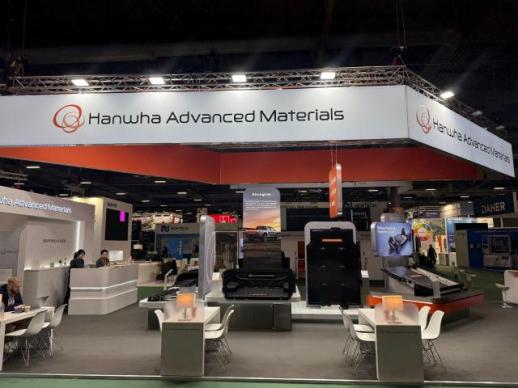 Hanwha Advanced Materials showcases lightweight composite solutions for EVs at global convention SEOUL, March 11 (AJP) - Hanwha Advanced Materials is presenting a suite of lightweight composite solutions for electric vehicles at JEC World 2026, the world's largest composites exhibition running from Tuesday to Thursday in Paris, as the South Korean materials maker ramps up its push into the global mobility market. The company is exhibiting products designed to address two pivotal challenges in EV development — weight reduction and safety — including a lightweight seat cushion frame that trims mass compared with conventional metal components while retaining the strength and rigidity required for mass-produced vehicles. The proprietary frame, built on Hanwha's in-house composite design and processing technology, is engineered to boost fuel efficiency and extend driving range through structurally optimized design that cuts both thickness and weight without compromising crash safety or passenger protection. Hanwha is also unveiling EV-specific parts already in serial production, such as a front trunk, or frunk, and a composite truck bed for electric commercial vehicles. The parts leverage the moldability, impact resistance and corrosion resistance of composite materials to expand cargo space, enhance design flexibility and reduce overall vehicle weight. Among the flagship exhibits is a next-generation battery protection system comprising an underfloor structure and upper case, both currently under development. The integrated design reduces part count and achieves about 20 percent weight savings while incorporating materials technology capable of slowing thermal runaway propagation during battery fires, along with electromagnetic shielding. "This exhibition will serve as a venue to explore technical synergies with our global automaker partners in advancing the lightweight performance and safety of electric vehicles," a Hanwha Advanced Materials spokesperson said. "We will continue to propose practical composite-based solutions in step with the evolving mobility market and strengthen cooperation on the global stage." 2026-03-11 10:25:13
 -
 Porsche Unveils New Cayenne S Electric With 544-HP AWD System Porsche AG on Tuesday unveiled the new Cayenne S Electric, an all-electric sport utility vehicle. Positioned between the Cayenne Electric and the range-topping Cayenne Turbo Electric, the Cayenne S Electric adds 224 PS over the base model, with a sharper exterior design and a broad list of options, the company said. Its drive system uses permanent-magnet synchronous motors on the front and rear axles, producing 544 PS. With launch control, system output rises to as much as 666 PS. The model accelerates from 0 to 100 kph in 3.8 seconds and has a top speed of 250 kph. Driving range is up to 653 kilometers under the WLTP standard. An optional push-to-pass function can deliver up to an additional 122 PS for 10 seconds. The Cayenne S Electric uses the same 113-kWh high-voltage battery fitted to the Cayenne Electric and Cayenne Turbo Electric. At a compatible fast-charging station, it can charge from 10% to 80% in under 16 minutes at up to 400 kW, Porsche said. The exterior features model-specific front and rear aprons in Volcano Gray Metallic, with inserts and the diffuser finished in the body color. It also comes with 20-inch Cayenne S Aero wheels. Porsche said buyers can choose from 13 exterior colors, along with multiple interior and accent packages. Porsche Exclusive Manufaktur will offer packages under its “Style” product line developed with the Style Porsche design studio. One configuration pairs Mystic Green Metallic paint with a mix of colors and materials aimed at a modern, exclusive look. Aluminum trim in Isarbal Green contrasts with leather surfaces. A black leather GT sports steering wheel features a 12 o’clock marker and Delgada Green cross-stitching. In South Korea, the Cayenne S Electric will be priced at 163.8 million won and is scheduled to go on sale in the second half of this year.* This article has been translated by AI. 2026-03-11 10:24:17
 -
 National Museum, HYBE Team Up on BTS Goods Inspired by Korean National Treasure Korean national treasures are increasingly being recast through K-pop, with the 1,250-year-old Bell of King Seongdeok now serving as inspiration for BTS-linked merchandise aimed at global fans. The “Hip Tradition” trend that has spread in South Korea in recent years is moving onto the international stage through K-pop, broadening interest from K-content to Korean culture more broadly, including traditional heritage. Industry officials said Wednesday that the National Museum of Korea has become a key venue for collaborations between K-pop and traditional culture. A leading example is “Mu:ds,” the museum’s cultural merchandise line. Reinterpreting heritage through a modern lens, Mu:ds topped 40 billion won in annual sales last year. Its reach has grown further through partnerships with globally recognized K-pop, helping bring traditional culture to a wider audience. Riding the popularity of the Netflix animation “K-pop Demon Hunters,” a “magpie and tiger” badge sold about 90,000 units over the year, prompting “open-run” lines for purchases. This year, BTS is set to take over the Mu:ds spotlight. The National Museum Foundation of Korea said it will begin selling products developed with HYBE starting on the 20th to mark the release of BTS’ fifth full-length album, “ARIRANG.” The collaboration draws on patterns from the Bell of King Seongdeok, a national treasure held by the Gyeongju National Museum. Designers developed graphics based on donor figures and cloud motifs engraved on the bell’s surface and applied them to items including hairpins, shoulder bags, card holders and layered skirts. With BTS set to stage a comeback performance blending tradition and modernity at Gyeongbokgung Palace on the 21st, to be livestreamed worldwide on Netflix, the foundation expects the new Mu:ds products to draw interest from ARMY fans around the world. The Hip Tradition wave has been driven in large part by K-pop. After years of emphasizing a more borderless image, K-pop artists over the past five years have increasingly incorporated traditional elements such as hanbok, helping spark interest in heritage among Generation Z. BTS leader RM has also been credited with boosting Mu:ds’ visibility. Public attention grew after it became known that he owns a Mu:ds miniature modeled on the gilt-bronze pensive bodhisattva, a national treasure. Performances and videos have reinforced the trend, including BTS wearing reinterpreted hanbok while performing in front of Geunjeongjeon Hall at Gyeongbokgung Palace, and Blackpink featuring a jeogori jacket in a music video, the report said. Collaborations are also expanding into museum spaces. The National Museum of Korea and Blackpink recently set up a listening zone inside the museum timed to the group’s new album release, allowing visitors and fans to hear tracks from the album. The museum also offered a docent program in which Thai member Lisa introduced museum artifacts in Thai, the report said, as a way to present Korean heritage to overseas K-pop fans. Experts said the synergy between K-pop and traditional culture is a positive development. Pop culture critic Jeong Deok-hyeon said, “We are moving from the era of K-content to the era of K-culture,” adding that events featuring globally recognized K-pop artists at the National Museum of Korea can be “highly effective” in promoting K-culture. Reinterpreting heritage through goods, he said, has become a channel for showing that “our culture is hip.” 2026-03-11 10:21:32
 -
 Toss Bank faces FSS investigation after transaction glitch SEOUL, March 11 (AJP) — The Financial Supervisory Service (FSS) is set to conduct an on-site inspection of online banking platform Toss Bank on Wednesday. The inspection comes a day after an error in Toss's foreign exchange system that resulted in massive financial losses. At around 7:30 p.m. the previous day, a glitch in its mobile app allowed users to exchange yen at a rate of roughly 470 Korean won per 100 yen. Given that the actual market rate was approximately 934 won, the currency was traded at about half its market value. While Toss Bank immediately suspended transactions upon discovering the error, the glitch reportedly incurred losses of approximately 10 billion won. Some users who had set up automated buy orders found transactions already processed, while others rushed to purchase yen after receiving alerts of the sudden price drop. Transactions resumed at 9:00 p.m. after a suspension of around two hours. The financial watchdog seeks to investigate the cause of the system failure, the total volume of transactions, and the potential impact on users. This is not the first time Toss Bank has mismanaged exchange rate settings. In September 2022, the bank displayed the FX rate at 1,290 per dollar for nearly 30 minutes, despite the actual rate exceeding 1,400 at the time. The incident adds to a string of clerical errors across the financial sector. In February last year, Hana Bank mistakenly posted the Vietnamese dong at one-tenth of its actual value, leading to the cancellation of transactions. In January this year, cryptocurrency exchange Bithumb failed to recover approximately 13 billion won ($9.8 million) worth of assets after a clerical error led to the over-distribution of 620,000 bitcoins. 2026-03-11 10:14:40
 -
 Hyundai Glovis wins CDP Korea Award for carbon management in industrials sector Hyundai Glovis said March 11 it won the industrials-sector “Carbon Management Sector Honors” at the 2025 CDP Korea Awards, held March 10 at the Ambassador Seoul Pullman Hotel by the Korea committee of the Carbon Disclosure Project. CDP is a U.K.-based nonprofit that evaluates environmental, social and governance performance. Each year it assesses about 20,000 companies in roughly 90 countries on carbon emissions, climate risks and response strategies, selectively disclosing results. The information is published in annual reports and used by financial institutions in investment decisions. CDP grades companies’ climate-change response across eight levels, including Leadership A, Leadership A- and Management B, and recognizes top performers. Hyundai Glovis received the top “Leadership A” grade in the 2025 CDP climate-change assessment released late last year. The company has maintained a high grade for nearly 10 years after earning Leadership A- in its first assessment in 2016. With that result, Hyundai Glovis won the Carbon Management Sector Honors for the eighth time, the most among South Korean logistics companies, it said. The company said it was recognized for carbon-management efforts including its 2045 carbon-neutral strategy, adoption of low-carbon transport, expansion of renewable energy and building a system to calculate supply-chain emissions. Hyundai Glovis has declared a goal of reaching carbon neutrality by 2045, five years earlier than the International Maritime Organization’s 2050 target, and said it is carrying out a roadmap to meet that goal. In land transport, it is preparing to shift its fleet through pilot operations of low-carbon vehicles such as hydrogen trucks. In maritime transport, it began introducing five LNG dual-fuel car carriers in 2024 and plans to expand to more than 30 ships by 2028. On renewable energy, the company said it signed a virtual power purchase agreement totaling 127 GWh with a power brokerage firm, and is gradually switching electricity use at sites nationwide to renewable energy based on the renewable energy certificates it has secured. It has also set a mid- to long-term reduction roadmap to convert electricity used at overseas sites in the Americas and Asia to 100% renewable energy by 2030, and at sites in Europe and at its headquarters in South Korea by 2040. “Based on global top-level leadership in responding to climate change, we will continue to actively pursue environmental management,” a Hyundai Glovis official said. * This article has been translated by AI. 2026-03-11 10:09:21
 -
 Hana Bank, Jeju Province Sign Deal to Attract and Support Relocating Companies Hana Bank said Wednesday it signed a memorandum of understanding with Jeju Special Self-Governing Province to build a public-private base for attracting companies to the island. The agreement is aimed at helping companies that want to relocate to Jeju settle in and at boosting investment by using the bank’s financial infrastructure. The two sides said they will work together to identify strong companies, share information and strengthen regional economic competitiveness. Hana Bank said it will provide relocating companies with temporary office space, business consultations and investor briefings, and venues for workshops and seminars, free of charge. It also plans to offer company-tailored financial services and connect firms with nonfinancial support such as management, tax and investment services, along with information on policy funds, investment funds and subsidies. Jeju Province said it will pursue efforts to find and support companies moving to Jeju, run joint business consulting, link customized financial and nonfinancial services, and cooperate on networks to promote corporate attraction and investment. Hana Bank CEO Lee Ho-seong called the agreement “a first step toward our shared goal of strengthening Jeju’s economic self-reliance.” He said the bank will work with the province to identify and nurture promising companies seeking to move to Jeju and serve as a “reliable financial partner” to help them become a new growth engine for the local economy. * This article has been translated by AI. 2026-03-11 10:06:00
 -
 BYD Korea Launches Nationwide Roadshow for Dolphin Electric Hatchback BYD Korea said Tuesday it is launching a nationwide traveling exhibition program, the “BYD Dolphin Roadshow.” The roadshow is designed to let people see and experience the small electric hatchback Dolphin, which was released in February, in everyday settings. The vehicle is carried in a specially made transparent showcase trailer that tours major cities as a “mobile showroom.” Running from Tuesday through April 4, the tour starts in the Seoul metropolitan area and will travel to Daegu, Busan, Daejeon, Gwangju and Jeju. The trailer will move among high-traffic locations such as areas near train stations and local landmarks. BYD Korea is also holding promotional events. Anyone who scans a QR code on the trailer and enters basic information will receive a mobile coffee coupon. The company will also hold a drawing for Dolphin buyers, offering prizes including airline tickets, a coffee machine and a hair dryer. “This roadshow was prepared to deliver the appeal of the BYD Dolphin, which is loved in global markets, in a closer and more friendly way,” a BYD Korea official said.* This article has been translated by AI. 2026-03-11 09:57:54