
Journalist

AJP
-
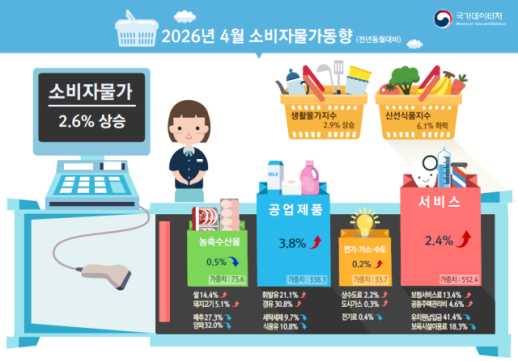 South Korea’s April Consumer Inflation Hits 2.6%, Highest in 21 Months on Fuel Surge Global oil prices kept climbing, driving a sharp jump in fuel costs and pushing consumer inflation to its fastest pace in 21 months. A government cap on fuel prices, in place since March, helped cushion the rise but did not prevent inflation from staying in the 2% range. Officials also warned that price pressures that have been concentrated in energy could spread to non-energy items starting in May. According to the National Data Center’s “April 2026 Consumer Price Trends” released Tuesday, the consumer price index stood at 119.37 (2020=100) in April, up 2.6% from a year earlier. Prices for agricultural, livestock and fisheries products fell, but the steep rise in petroleum products lifted overall inflation to its biggest increase in 21 months. Processed food prices, which had posted high gains since last year, rose 1.0% in April. The slower increase appeared to reflect cuts in factory-gate prices, the agency said. Petroleum product prices jumped 21.9% from a year earlier, the biggest increase since July 2022 during the Russia-Ukraine war, when the rise reached 35.25, marking the largest gain in three years and nine months. Over the same period, gasoline rose 21.1% and diesel climbed 30.8%. Kerosene increased 18.7%, the strongest rise in three years and two months since February 2023, when it gained 27.1%. The agency said the fuel price cap introduced in March acted as a buffer against inflation. The Korea Development Institute has also reported that the cap lowered March consumer inflation by 0.8%, according to its research findings. “Rising global oil prices pushed up petroleum products and international airfares in particular,” said Lee Du-won, the agency’s director for economic trends and statistical review. “However, compared with the OECD, the increase in petroleum products is smaller. The fuel price cap had some effect in easing the overall rise in consumer prices,” he said. Price pressures also extended into services. Public service prices rose 1.4% from a year earlier and personal services increased 3.2%. International airfares jumped 15.9% as fuel surcharges rose, leading the increase in public service prices, the agency said. Domestic airfares have not shown a marked rise so far, but increases are expected from May. The April fuel surcharge for domestic flights was calculated based on February levels, while May pricing is expected to reflect the impact of the Middle East war in late February, the agency said. Prices for rice and livestock products also continued to rise. Rice, including glutinous rice, posted larger increases due to reduced cultivation area. Livestock prices rose sharply for items such as imported beef and chicken, driven by higher import prices and avian influenza, the agency said. Still, the agency said higher oil prices had not yet spread broadly into non-energy categories. “So far, we are not seeing an overall rise in dining out or processed foods,” Lee said. He added that prices for paper diapers and sanitary pads have not fluctuated much, and that garbage bags fell 0.3% due to price adjustments by some local governments. The core inflation index excluding food and energy rose 2.2% from a year earlier. The index excluding agricultural products and petroleum products also increased 2.2% over the year. Among 458 items, the cost-of-living index covering 144 frequently purchased goods rose 2.9% from April last year. The fresh food index, however, fell 6.1% from a year earlier. An index excluding owners’ equivalent rent, which reflects the cost of housing services consumed by homeowners, rose 2.3% from a year earlier. * This article has been translated by AI. 2026-05-06 09:28:39
 -
 Do Divorce Settlements Include Big Bonuses? Lawyer Weighs Factors as SK hynix Payouts Draw Attention 최근 SK하이닉스의 억대 성과급이 화두로 떠오르면서, 이혼 시 성과급이 재산분할 대상에 포함되는지에 대한 논의도 이어지고 있다. 다만 전문가는 “혼인 기간 중 기여도에 따라 달라질 수 있다”며 신중한 접근이 필요하다고 말했다. 지난 3일 유튜브 채널 ‘양나래 변호사’에는 결혼 7년 차에 자녀 1명을 둔 여성 A씨의 사연이 소개됐다. A씨는 신혼 1년을 제외하면 남편과 행복한 시간이 거의 없었다고 했다. 가정폭력이나 외도는 없었지만 성향과 성격 차이로 갈등이 커졌고, 아이 때문에 결혼 생활을 이어왔다고 설명했다. 두 사람은 대화 없이 지내다 협의 이혼을 하기로 했고, 위자료 없이 재산을 6대4로 나누기로 합의해 공증까지 마쳤다. A씨는 자녀를 양육하는 조건으로 40%를 받기로 했으며, 남편도 동의해 법원에 협의이혼 신청서만 제출하면 되는 상황이었다. 그러나 A씨는 지인들로부터 남편이 억대 성과급을 받을 수 있다는 이야기를 들었다. 지인들이 “성과급도 결국 네 몫 아니냐”고 말하자 A씨는 고민에 빠졌다고 했다. A씨는 인터넷 검색을 통해 “재산분할 기준은 변론 종결 시점”이라는 내용을 접한 뒤 생각을 바꿨다. 이혼 소송 중 남편이 성과급을 받으면 그 금액도 분할 대상이 될 수 있다고 보고, 협의이혼을 취소하고 소송을 하기로 결심했다. 이에 대해 Yang Narae 변호사는 “원칙적으로는 ‘변론 종결 시점’의 재산을 기준으로 하지만, 실무에서는 예금·주식처럼 변동성이 큰 자산은 ‘혼인 파탄 시점(보통 소 제기 시점)’을 기준으로 보는 경우가 많다”고 말했다. 그는 “성과급의 산정 대상이 되는 근로 기간이 혼인 기간과 겹친다면 배우자의 기여분을 일부 인정할 여지가 있다”면서도 “성과급을 받는 시기, 성과급 기준 기간, 부부 관계가 파탄 난 시기, 공동 재산에서 성과급이 차지하는 비중 등을 종합적으로 반영하게 된다”고 말했다. A씨 사례처럼 사실상 각자 독립적으로 생활해 왔다면, 남편의 근로에 대한 아내의 기여도가 낮게 평가돼 분할이 인정되지 않거나 줄어들 수 있다고 조언했다. 또 “이미 협의이혼에서 유리한 조건을 확보했다면 소송 비용과 시간까지 고려해 신중히 판단해야 한다”고 덧붙였다. 한편 SK하이닉스는 반도체 호황으로 올해 영업이익이 250조 원으로 추측된다는 관측이 나오고 있다. 영업이익의 10%를 성과급으로 지급하는 제도를 운영해 임직원 약 3만 5000명이 1인당 약 7억 원의 성과급을 받을 수 있다는 전망도 제기됐다. 앞서 지난 2월 SK하이닉스는 기본급의 2964%에 달하는 역대 최대 규모의 성과급을 지급했다. 연봉 1억 원 직원 기준 성과급은 약 1억 4820만 원(세전)으로 알려졌으며, 당시 주변 상권이 활성화되고 일부 직원들이 기부에 나서는 등 긍정적 효과도 있었다. 2026-05-06 09:27:16
 -
 Coupang hit by biggest loss since 2021 as breach fallout dents growth SEOUL, May 06 (AJP) -Coupang, grappling with eroding confidence among South Korean regulators and consumers following a major data breach late last year, saw its largest quarterly loss in more than four years as revenue growth sharply slowed in the first quarter. The New York-listed company on Tuesday reported an operating loss of $242 million for the January-March period, reversing from a $154 million profit a year earlier and the red nearly wiping out half of its annual income of 2025 . Net loss attributable to shareholders widened to $266 million, marking Coupang’s weakest quarterly bottom line since the fourth quarter of 2021. Revenue rose 8 percent on year to $8.5 billion, extending a sharp deceleration from the double-digit expansion that had long defined the company’s rise since 2021 listing on the New York Stock Exchange. The disappointing quarter came as the Korea Fair Trade Commission redesignated Bom Kim as Coupang’s “identical person,” or controlling shareholder, replacing the previous corporate designation after concluding that Kim’s younger brother, Kim Yoo-suk, exercised meaningful influence within the group. The KFTC said Kim Yoo-suk, who holds a vice president-level role, receives compensation comparable to registered executives and exerts influence over parts of the company’s operations, undermining Coupang’s eligibility to maintain a corporate entity as its controlling designation. The change places greater direct accountability on Bom Kim at a sensitive moment for the company, which has faced intensifying criticism over governance, labor conditions, platform dominance and consumer protection issues. The earnings deterioration was largely tied to the aftermath of one of Korea’s most serious e-commerce data breaches. Coupang had rolled out a customer compensation program worth roughly $1.2 billion in shopping credits after leaked personal information triggered regulatory probes and consumer lawsuits. The company said the compensation credits were deducted directly from sales, weighing heavily on revenue and profitability throughout the quarter. The credits expired on April 15. At the same time, growth in Coupang’s flagship Product Commerce division continued to slow. Sales in the segment, which includes Rocket Delivery and Rocket Fresh, rose just 4 percent from a year earlier to $7.2 billion, sharply down from 12 percent growth in the previous quarter. Gross margin fell to 27 percent from 29.3 percent a year earlier, while adjusted EBITDA plunged 92 percent to $29 million. Total operating expenses reached $8.75 billion, exceeding quarterly revenue. Customer indicators also showed signs of strain. Active customers rose only 2 percent on-year to 23.9 million and fell by roughly 700,000 from the previous quarter. The slowdown extended to Coupang’s prized WOW membership ecosystem, long viewed as the company’s strongest loyalty engine. Industry observers have closely monitored whether the data breach and repeated controversy surrounding platform practices would weaken retention among high-frequency users. Bom Kim nevertheless sought to reassure investors that customer loyalty and spending trends remained resilient. “Customers cast a new vote with every purchase they make,” Kim said during an earnings call, arguing that consumers “will not hesitate to spend their money at another venue they deem to be better.” Kim emphasized that Coupang intended to respond by further expanding infrastructure investment, delivery coverage and WOW membership benefits. “We’ll be relentless in our pursuit of new moments of WOW for customers across selection, price and service,” he said. The company said it planned to expand WOW-related customer benefits to more than $4 billion this year, including free delivery, returns and streaming-linked perks. Chief Financial Officer Gaurav Anand also attempted to calm investor concerns over slowing growth and mounting external pressure, arguing that Coupang’s longer-term profitability trajectory remained intact despite short-term disruptions. “We believe we are still far from realizing the full margin potential of our business,” Anand said, adding that the company remained “confident in our ability to continue expanding consolidated margins.” Anand also defended the company’s aggressive investment strategy, saying Coupang continued to see strong returns from logistics optimization, advertising and fulfillment services for third-party merchants. He described shareholder returns as another priority, noting that the company continued evaluating stock repurchases and capital allocation opportunities “to drive long-term returns for shareholders.” While neither Kim nor Anand directly addressed the KFTC’s redesignation during the earnings call, the regulatory decision hovered over the results as investors weighed whether tighter scrutiny around governance and market dominance could further complicate Coupang’s expansion plans. Coupang and its logistics affiliates remain under repeated investigation by regulators and lawmakers over alleged unfair trade practices, warehouse safety issues and treatment of delivery workers. Despite the losses, Coupang continued aggressive shareholder returns, repurchasing 20.4 million shares worth $391 million during the quarter. Its board also approved an additional $1 billion stock buyback program. Wall Street expectations had projected a far narrower operating loss of around $39 million, according to Bloomberg consensus estimates. Coupang shares initially fell in after-hours trading following the earnings release before recovering part of the losses. 2026-05-06 09:25:05
 -
 Trump Cites Progress With Iran, Pauses Hormuz ‘Project Freedom’ as U.S. Declares ‘Epic Fury’ Over U.S. President Donald Trump said he will briefly pause a military operation tied to the Strait of Hormuz, citing progress in talks with Iran, while keeping a maritime blockade aimed at cutting off Iran’s oil-export revenue. In a post Monday on Truth Social, Trump said “Project Freedom,” which he described as ensuring ship movement through the Strait of Hormuz, would be suspended for a short period to determine whether a final agreement can be reached and signed. He said the decision reflected requests from Pakistan and other countries, what he called “tremendous success” in U.S. military operations against Iran, and “substantial progress” toward a “complete and final” agreement with Iranian representatives. Trump said the maritime blockade against Iran would remain in place, maintaining pressure during the remaining negotiations. Separately, the U.S. administration said an earlier Iran-related military operation had ended and that the Hormuz response had entered a new phase. Secretary of State Marco Rubio told reporters in the White House briefing room that “Epic Fury” was over and that Trump had notified Congress. “That phase is over. We are now in Project Freedom,” he said. “Epic Fury” was a U.S. military operation against Iran launched on Feb. 28. Trump recently sent a letter to Congress stating that the hostilities that began on Feb. 28, 2026, had ended. The move has been interpreted as an attempt to bypass the War Powers Resolution’s 60-day limit on the use of force abroad without congressional approval. Rubio said the U.S. military would respond if Iran attacks first, but repeatedly stressed that Project Freedom is defensive. He said the United States bears the main responsibility because it is the only country able to project power in the region, adding that while other nations’ ships are trapped in the Strait of Hormuz, the United States is carrying out the operation “in good faith.” He said a closure of the strait would hit the global economy and, over time, the U.S. economy, and warned that failing to respond could lead to similar situations in other international waterways. Rubio sharply criticized Iran’s attempt to control the strait, saying Tehran was trying to establish a new maritime order. “It is completely illegal and absurd, and every country in the world should join us in condemning Iran and doing something,” he said. He said multiple countries had expressed willingness to respond but did not name them. He also said at least 10 civilian sailors had died on ships stranded in the Strait of Hormuz because of the blockade, accusing Iran of effectively engaging in piracy. Rubio said the United States is pushing for a U.N. Security Council resolution to reopen the strait, calling it a “real test” for the United Nations. A similar resolution led by Bahrain last month failed after vetoes by China and Russia. Rubio said Iran’s blockade also harms China and urged Beijing to pressure Iran directly.* This article has been translated by AI. 2026-05-06 09:24:15
 -
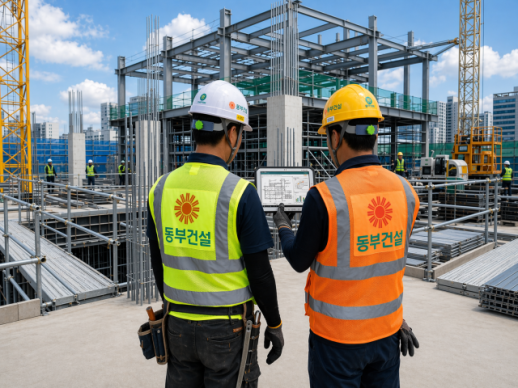 Dongbu Construction Expands Generative AI Use Across Company Operations Dongbu Construction is rolling out generative AI across company operations to boost productivity and strengthen its digital competitiveness. The company said Tuesday it is expanding use of generative AI for everyday tasks including drafting documents, researching materials, summarizing meetings and organizing data. It plans to broaden applications to support on-site construction work and to build work systems based on internal data. After a pilot program last year, Dongbu Construction began allowing all employees to use generative AI freely in early April. Staff are using it to draft reports and documents, summarize meeting discussions, search for and organize information, and assist with data analysis. The company said the goal is to reduce repetitive, simple workloads so employees can focus on core tasks. The company is also moving in stages to apply the technology at construction sites. It is exploring uses tailored to field work, including drafting site reports, organizing safety checklists, classifying materials, searching for information and supporting communication with multinational workers. Dongbu Construction said it aims to improve efficiency beyond headquarters-based use by expanding practical applications in the field. Dongbu Construction said it views generative AI not as a one-time upgrade but as a foundation for companywide digital transformation. Starting with common AI use across the company, it plans to introduce job-specific AI tools by department and to gradually advance an AI-based support system using internal documents and data. The company also emphasized security and accuracy. It said it restricts entry of important and sensitive company information and requires employees to review AI-generated outputs before using them. A Dongbu Construction official said, “Generative AI is becoming a key factor that determines corporate competitiveness beyond improving work efficiency,” adding that the company will continue to identify practical uses spanning headquarters and worksites and create an environment for safe and effective use to strengthen digital competitiveness. Separately, expectations are rising that Dongbu Construction’s performance could improve, centered on winning specialized public construction projects. The company recently won a 111 billion won contract for a small-scale housing redevelopment project in the Bangbae-dong 977 area of Seocho-gu, Seoul. Park Se-ra, an analyst at Shinyoung Securities, said the company recorded about 670 billion won in orders in the private sector from small-scale redevelopment projects in the Seoul metropolitan area, including alley housing redevelopment and Moa Housing projects.* This article has been translated by AI. 2026-05-06 09:21:15
 -
 US Moves to Revamp Visa Rules to Support Korean Investment, but Enforcement Concerns Persist The U.S. government is moving to revamp its visa system to better support South Korean companies investing in the United States, citing the need to move training and operations staff in and out on time. But officials and investors say the push to attract foreign capital still clashes with a hard-line immigration enforcement posture. Christopher Landau, the U.S. deputy secretary of state, said May 5 (local time) at the SelectUSA investment promotion event in National Harbor, Maryland, that Washington is "making major changes" to the visa system to address concerns raised by the South Korean government and companies. He said South Korean capital and know-how can be put to work in the United States only if personnel can travel for training and operations, and that current visa rules do not adequately reflect that demand. The effort follows a case last September in Georgia in which more than 300 South Korean business consultants and workers were detained at a Hyundai Motor plant site. The incident became a diplomatic issue between the two allies, and a U.S.-South Korea visa working group was launched afterward. In December, the U.S. Embassy in Seoul also opened a dedicated visa window for South Korean companies. Landau, while stressing that the United States is strictly enforcing immigration and visa laws, said "these systems should not become unnecessary obstacles" to foreign investment. With South Korea having pledged $350 billion (about 515 trillion won) in U.S. investment during tariff negotiations, visa issues have emerged as a key factor in carrying out those plans, not a side concern. Still, reaction on the ground has been cool. Middle East Eye, a London-based online outlet focused on the Middle East, reported comments from U.S. southern state officials responsible for investment recruitment who attended the same event. They said it is difficult to reassure foreign companies while a strong anti-immigration stance continues. "There is no good answer," one official was quoted as saying. "We have to explain to foreign investors that they are safe and protected, but the reality is not." Another said the United States still looks like the most attractive market, "but inside it looks like the house is on fire." SelectUSA is the U.S. government’s flagship investment promotion event, launched in 2013. The U.S. Commerce Department says the program has supported more than $400 billion (about 588 trillion won) in investment and more than 270,000 jobs. With investment promotion and strict immigration enforcement moving in parallel, a central question is whether visa changes can ease uncertainty for companies trying to invest and operate in the United States.* This article has been translated by AI. 2026-05-06 09:18:53
 -
 KAIST researchers develop silicon-based hardware for complex optimization problems SEOUL, May 06 (AJP) - Researchers at the Korea Advanced Institute of Science and Technology have developed a silicon-based hardware platform designed to solve complex combinatorial optimization problems, the institute said Wednesday. A joint research team led by the Korea Advanced Institute of Science and Technology (KAIST) Professors Choi Yang-kyu and Kim Sang-hyun from the School of Electrical Engineering succeeded in implementing an oscillatory Ising machine using standard silicon semiconductor processes. The system uses multiple vibrating elements, or oscillators, that interact with each other to naturally reach an energy-stable state representing the optimal solution. Combinatorial optimization involves finding the most efficient answer among a vast number of possibilities. These problems are central to logistics, financial portfolio management, and semiconductor circuit design, but they often overwhelm traditional computing architectures as the scale of data increases. The researchers addressed technical hurdles in previous Ising machines, such as frequency deviations between oscillators and limited connectivity. They introduced a new approach where both the oscillators and the couplers, which control interaction strength, are implemented using single silicon transistors. By using the floating body characteristics of transistors, the team created oscillators that can have their frequencies precisely adjusted via gate voltage. This method reduces synchronization errors and allows for multi-bit coupling, which enables the system to reflect the specific weights and importance of various conditions in a complex problem. The hardware was successfully tested on the Max-Cut problem, a representative optimization task used to maximize connections when dividing a network into two groups. Because the technology uses standard complementary metal-oxide-semiconductor (CMOS) processes, it can be mass-produced using existing South Korean semiconductor production lines without additional equipment investment. "This research is Ising machine hardware that has secured both scalability and precision by implementing both oscillators and couplers with silicon devices," Professor Choi Yang-kyu said. "It is expected to be applied to various industrial fields requiring large-scale combinatorial optimization, such as semiconductor design automation, communication network optimization, and resource distribution." The study, co-authored by doctoral student Yoon Seong-yun and Dr. Kim Joon-pyo, was published in the journal Science Advances on March 27, 2026. (Reference Information) Journal/Source: Science Advances Title: Scalable Ising machine composed entirely of Si transistors Link/DOI: 10.1126/sciadv.adz2384 2026-05-06 09:18:30
 -
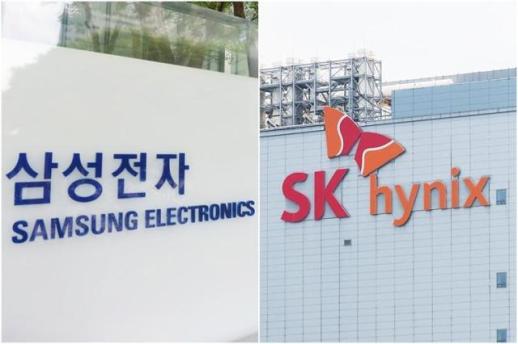 Samsung Electronics, SK Hynix jump about 10% to fresh record highs Samsung Electronics and SK Hynix surged to new record highs as expectations for an AI-driven investment cycle and foreign inflows reinforced a semiconductor-led rally. According to the Korea Exchange, Samsung Electronics was trading at 258,000 won as of 9:07 a.m., up 25,500 won, or 10.97%, from the previous session. SK Hynix rose 135,000 won, or 9.33%, to 1,582,000 won. It climbed as much as 10.64% intraday, briefly topping 1.6 million won. SK Square, SK Hynix’s holding company, jumped 15.94% to 1,149,000 won. Samsung Electronics’ preferred shares also advanced, up 9.08% to 185,000 won. Analysts cited optimism about the chip cycle and global market momentum. Strength in U.S. technology shares over the Children’s Day holiday was seen as feeding into sentiment in South Korea. Expectations that expanding AI investment will lift memory demand have also kept talk of a semiconductor “supercycle” alive. On May 5 (local time), U.S. stocks rose, with the S&P 500 and the Nasdaq both closing at record highs, according to the report. Falling international oil prices also added to a supportive backdrop. The tech-heavy Nasdaq gained 258.32 points, or 1.03%, to finish at 25,326.126. Chip-related shares broadly advanced after reports said Apple began talks with Intel and Samsung Electronics to diversify its chip production. . 2026-05-06 09:15:15
 -
 South Korea Launches Two-Track Plan to Boost Tourism Demand and Stabilize Industry Funding The government is rolling out a two-track strategy to support South Korea’s tourism ecosystem, which has been hit by high oil prices and weak domestic demand. The plan aims to draw more foreign visitors to regional destinations to create new demand, while providing large-scale loans to cash-strapped tourism businesses to stabilize the industry’s supply chain. ◆ Steering foreign visitors to the regions with tailored transport options The Ministry of Culture, Sports and Tourism, led by Minister Choi Hwi-young, and the Korea Tourism Organization, headed by President Park Sung-hyuk, are running a regional tourism promotion campaign with global online travel agency Klook through June 3. To address what officials have cited as the biggest barrier — transportation convenience — the campaign expands booking access through Klook’s app and website. Foreign travelers can check real-time train schedules and seat availability across all Korail routes and make reservations. The service supports about 20 languages, 40 currencies and simplified payment options. During the campaign, Korail will release a limited-edition Railplus card. The tourism organization will provide a 6,000-won discount coupon, and Klook will offer a free travel eSIM. Starting in June, the government will also expand online booking channels for express and intercity buses. Foreign bus ridership in the second half of last year totaled 1.058 million, up 28.3% from 825,000 a year earlier, but travelers reported inconvenience due to low awareness of booking platforms. ◆ 437.5 billion won to stabilize the supply chain Alongside demand measures, the ministry is accelerating financial support to help the industry maintain basic capacity. The move is intended to limit damage to tourism businesses facing higher costs as elevated oil prices persist, including due to the fallout from the war in the Middle East. Of 200 billion won secured through a supplementary budget, the ministry will add 100 billion won to first-half loans from the Tourism Promotion and Development Fund. That raises planned first-half lending to 437.5 billion won from 337.5 billion won, effective immediately starting May 6. For the second half, the ministry plans to provide 370 billion won in loans by adding 70 billion won in remaining supplementary funds to the previously planned 300 billion won. ◆ Separate 30 billion won allocation for tourism startups The ministry is also offering targeted support for early-stage companies to promote longer-term innovation in the tourism industry. It set aside 30 billion won in separate “tourism startup loans” for small and midsize tourism businesses that are less than seven years old. The loans will be available through an always-on loan support center, with limits of 3 billion won for new construction, 1 billion won for renovations and 300 million won for operating funds. The ministry said it expects the financing to help innovative firms secure funding, establish themselves in the market and create quality jobs.* This article has been translated by AI. 2026-05-06 09:12:15
 -
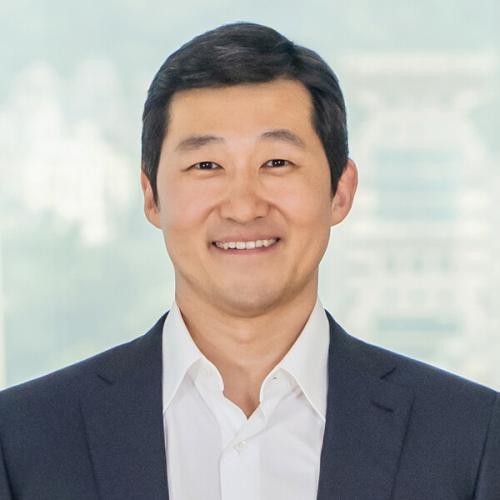 Coupang Chairman Kim Bum-seok Says Data Breach Recovery Will Take Time Coupang founder and Coupang Inc. Chairman Kim Bum-seok said the company will need time for a full recovery from last year’s personal data breach, though the impact from customer departures has eased. He said compensation costs and temporary inefficiencies in the logistics network weighed on first-quarter results. Speaking on a first-quarter earnings conference call held on May 6 (Korea time), Kim said product commerce revenue growth hit its low point in January, then improved each month year over year, with the pace of improvement accelerating in February and March. Coupang Inc. reported first-quarter revenue of 12.4597 trillion won, up 8% from 11.4876 trillion won a year earlier. It posted an operating loss of 354.5 billion won, about 52% of its 2025 full-year operating profit of 679.0 billion won. It was the first time Coupang’s quarterly revenue growth fell to a single-digit rate. Kim cited compensation tied to the data breach and temporary logistics inefficiencies as key drivers of the operating loss. In January, Coupang issued purchase vouchers worth 50,000 won per person to 33.7 million people in connection with the breach, for a total cost of 1.6850 trillion won. Kim said Coupang’s facility expansion and supply-chain planning are adjusted to demand trends based on predictable customer patterns. When external factors such as the data breach disrupt those patterns, he said, actual demand can fall short of planned demand, leaving the company to carry idle capacity and inventory costs during that period. Still, Kim said the recovery trend is continuing. “It will take time for year-over-year growth rates to fully reflect a fundamental recovery,” he said, adding that the January-to-March revenue growth trend is running ahead of past trends and that year-over-year comparisons will keep improving through the year. Kim said the company will continue to expand. “Beyond recovery, efforts to build the business are continuing,” he said, adding that automation and artificial intelligence across services, including logistics and delivery networks, are improving service levels while reducing costs. He said the changes are expected to contribute significantly to better customer experience and wider margins.* This article has been translated by AI. 2026-05-06 09:09:15