
Journalist

AJP
-
 An Se-young named world's top badminton player for third straight year SEOUL, December 16 (AJP) - Badminton player An Se-young has been named this year's top player by the Badminton World Federation (BWF). The world No. 1 in women's singles received the award at the BWF's annual gala dinner in Hangzhou, China on Monday, beating competitors such as Wang Zhiyi and Chen Yufei of China, and Japan's Akane Yamaguchi. With the award, An became the first female player to win it three years in a row, having first received the honor in 2023 following her triumph at the 2022 Asian Games in Hangzhou. An was also voted the best player by her fellow players for the second consecutive year, a recognition that was first created last year. She expressed her thanks, saying, "Receiving these awards is both an honor and an encouragement to work harder. Winning proves my efforts, but being recognized by fellow players makes it even more special." An competed in 14 international tournaments this year and secured 10 victories, breaking her own record of nine wins set in 2023. While in the Chinese city, An is set to play in the BWF World Tour Finals later this week. A victory would tie her with former Japanese player Kento Momota's 2019 record of 11 wins in a single season. * This article, published by Aju Business Daily, was translated by AI and edited by AJP. 2025-12-16 09:31:05
 -
 Seoul and London upgrade FTA, lower tariff for Korean cars and consumer goods SEOUL, December 16 (AJP) -South Korea and the United Kingdom have finalized an upgraded free trade agreement that locks in permanent tariff-free access across 98 percent of South Korean tariff lines, marking one of the most comprehensive post-Brexit trade resets between the two countries. The revised agreement, signed in London on Monday by South Korean Trade Minister Yeo Han-koo and UK Trade Minister Chris Bryant, concludes two years of negotiations aimed at modernizing the bilateral pact originally rolled over from the Korea-EU FTA after Brexit. With the temporary UK-Korea trade arrangement set to expire in January 2026, the new deal removes lingering uncertainty for exporters on both sides. According to the U.K. Department of Business Trade, Korea is the UK's 25th largest trading partner, accounting for 0.8 percent of the UK total trade in the 12 months to the end of June this year. At its core, the updated FTA significantly loosens rules of origin, most notably for automobiles, by lowering the domestic value-added threshold for tariff-free treatment from 55 percent to 25 percent. The change is expected to benefit Korean automakers and consumer-goods exporters while aligning UK practice more closely with EU standards. Car exports accounted for 36 percent of Korea's total exports to UK last year. The agreement also expands tariff exemptions to K-beauty and processed food products, allowing preferential access even when key ingredients are sourced from third countries, provided substantial processing takes place in Korea. For British exporters, the deal safeguards an estimated £2 billion worth of exports that would otherwise have faced higher duties once the temporary regime expired. The two governments will also streamline visa system under the upgraded FTA to facilitate the entry of Korean engineers and special workforces responsible for building manufacturing plants in Britain. Beyond goods trade, the revised FTA opens new ground in government procurement and services. The UK agreed to open its high-speed rail market — correcting what Seoul has long described as an imbalance — while expanding access for Korean firms in online gaming, advertising, translation and emerging technologies such as artificial intelligence. Visa procedures were also streamlined to reduce risks for engineers and skilled workers dispatched for large-scale industrial projects. A major pillar of the deal is the introduction of comprehensive digital trade norms, including freer cross-border data transfers, consumer protection standards and legal certainty for digital and audiovisual services — areas largely absent from earlier-generation FTAs. The agreement also establishes a supply-chain cooperation chapter covering joint research and development, material shortages and international standard-setting. “This agreement will help reinforce the free-market order at a time of growing protectionism and deepen economic cooperation with the UK, our key European partner,” Yeo said, adding that Seoul would move swiftly to complete legal reviews, impact assessments and parliamentary approval. Bryant said the deal provides “cast-iron protections” for British industries and supports growth in services, manufacturing and advanced technologies. British business groups welcomed the pact. Rain Newton-Smith, CEO of the Confederation of British Industry, said the agreement would “power growth through collaboration in advanced manufacturing, digital, services, clean energy and creative industries,” adding that it turns ambition into “long-term, sustainable growth” for both economies. The pharmaceutical sector also highlighted gains, with the Association of the British Pharmaceutical Industry noting expanded regulatory cooperation and new opportunities in South Korea’s fast-growing life-sciences market. 2025-12-16 09:24:31
 -
 Won–dollar exchange rate SEOUL, December 16 (AJP) - A screen at Yonhap Infomax in Jongno District, Seoul, displays peak won–dollar exchange rates from 1997 to 2025 on December 16. The monthly average exchange rate this month has exceeded 1,470 won per dollar, marking the highest level on a monthly basis since the Asian financial crisis. The won opened at 1,476.0 per dollar on December 15, up 2.3 won from the previous session. As upward pressure on the currency continues, Deputy Prime Minister and Finance Minister Koo Yun-cheol convened an emergency meeting of economic ministers on December 14 to review domestic and global financial and foreign exchange market conditions and discuss response measures. 2025-12-16 09:18:18
 -
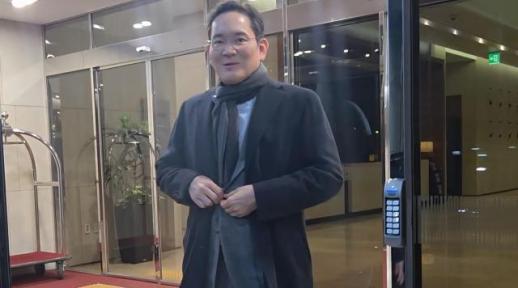 Samsung's Lee Jae-yong holds AI chip talks with Tesla, AMD in US SEOUL, December 16 (AJP) - Samsung Electronics Chairman Lee Jae-yong met Tesla Chief Executive Elon Musk and Advanced Micro Devices Chief Executive Lisa Su during a visit to the United States, as the company moves to strengthen partnerships in next-generation artificial intelligence semiconductors. Lee returned to South Korea on Sunday after the trip, which focused on expanding Samsung’s foundry and memory businesses with leading global technology firms. “I worked hard,” Lee told reporters upon his arrival in Seoul. According to industry sources, discussions with Musk covered cooperation on AI chip development, U.S.-based production infrastructure and long-term supply stability. Samsung and Tesla in July signed a 23 billion dollar foundry supply contract — the largest in Samsung’s history — under which Samsung will manufacture Tesla’s AI6 chips at its Texas plant. Samsung is already producing Tesla’s AI4 chips and has secured part of the production for AI5 chips, which had initially been expected to be awarded to Taiwan Semiconductor Manufacturing Company. Musk recently said on social media that Samsung had agreed to help improve Tesla’s manufacturing efficiency, highlighting the deepening relationship between the two companies. Lee also met AMD Chief Executive Lisa Su to discuss expanding cooperation in advanced chips. Samsung currently supplies high-bandwidth memory HBM3E to AMD and is in talks to manufacture AMD’s next-generation central processing units using Samsung’s 2-nanometer process, industry officials said. Such cooperation would help Samsung diversify its foundry business beyond memory chips and strengthen its position in the market for high-performance system semiconductors. * This article, published by Economic Daily, was translated by AI and edited by AJP. 2025-12-16 09:00:11
 -
 15-hour raid on Unification Church ends without finding key evidence SEOUL, December 16 (AJP) - Police on Tuesday failed to find key evidence after a 15-hour raid on about a dozen locations linked to the powerful Unification Church, also known as the Moonies, over allegations of bribery involving political figures. During the raid, which began at 9 a.m. the previous day and wrapped up after midnight, police searched about 10 locations including the sprawling residence of the church's leader Han Hak-ja in Gapyeong, Gyeonggi Province as well as other sites and the offices of those linked to the allegations including former Minister of Oceans and Fisheries Chun Jae-soo. Chun is under investigation for allegedly receiving 20 million Korean won (about US $14,000) in cash and a luxury watch worth 10 million won in 2018. Police will analyze seized records, phones, and computers, with further questioning of those involved expected based on the findings. * This article, published by Aju Business Daily, was translated by AI and edited by AJP. 2025-12-16 08:53:28
 -
 OPINION: A reckoning for church-state separation South Korea’s Constitution guarantees freedom of religion while mandating the separation of church and state, a principle enshrined in 1948. For more than eight decades, this constitutional boundary has remained largely uncontested. Recently, however, calls have emerged to clarify the scope of this separation and strengthen penalties for violations, reflecting growing concern that the principle is being eroded. President Lee Jae Myung recently underscored the need for firm action against religious foundations that violate constitutional norms, warning that inaction could fuel social conflict reminiscent of religious strife. It is the first time a South Korean president has publicly raised the need for legal measures against unconstitutional religious activities. In principle, South Korea’s protection of religious freedom is broad, encompassing worship, education, and assembly. The establishment of religious corporations is relatively easy, a system that has inadvertently enabled the proliferation of questionable religious groups. Yet the legal framework offers no clear mechanism for dissolving such entities — a stark contrast to Japan, where a court ordered the dissolution of the Unification Church following revelations over coercive fundraising practices. Religion has historically played a constructive role in Korea’s modernization and independence movements. Over time, however, some religious groups have expanded their influence through political alliances, often operating beyond effective oversight. Today, religious organizations openly engage in political activities, raising serious questions about their growing sway over public policy and governance. In a democratic republic, the separation of church and state is not merely symbolic; it is foundational. Allowing religious groups to exercise unchecked political power risks hollowing out this constitutional principle. Recent controversies surrounding the Unification Church underscore the urgency of legislative action to close existing legal gaps. President Lee’s remarks signal a renewed commitment to constitutional order. The challenge now is to translate that resolve into concrete legal and institutional safeguards — ensuring that freedom of religion is protected without allowing it to become a shield for political influence or legal immunity. Author's Background △ Current affairs commentator △ Ph.D. in Political Science, Inha University △ Former visiting professor, Inha University Graduate School of Policy △ Former member, Korea Communications Standards Commission Election Broadcast Deliberation Committee △ Former director, Institute for Innovation and Future * This article, published by Aju Business Daily, was translated by AI and edited by AJP. 2025-12-16 08:53:27
 -
 OPINION: In defense of Korean democracy in martial law aftermath On Dec. 3, 2024, President Yoon Suk Yeol’s declaration of martial law sent shockwaves through South Korea, one of the world’s leading economies. The country was unprepared for such a drastic measure. Although rumors had circulated, few believed they would materialize. A nation built on the sacrifices of its people suddenly confronted a crisis evocative of its painful struggles for democracy. South Korea’s path to democracy has been anything but smooth. From 1948 to 1987, the country went through nine constitutions. The current constitutional order, established in 1987, has endured longer than any previous system. The public’s resolute response to the declaration of martial law demonstrated the resilience of Korea’s democratic institutions, ultimately leading to its repeal. What followed was the impeachment and removal of President Yoon—an extraordinary moment in the nation’s constitutional history. The swift action taken by the National Assembly, coupled with widespread public resistance, underscored the power of collective civic action in defending democratic norms. This episode stood in stark contrast to President Yoon’s repeated emphasis on “freedom,” a central theme of his inauguration speech in 2022. The declaration of martial law exposed a fundamental contradiction between rhetoric and action, raising serious questions about the failure of institutional checks on presidential power. In the aftermath, Lee Jae Myung was elected president on June 4, 2025, campaigning on the principle of “people’s sovereignty.” Legal accountability for those involved in the martial law episode is now being pursued through four separate special investigations. These probes have already resulted in the unprecedented arrest of a former president and a first lady. At the same time, the investigations themselves have drawn criticism, with concerns raised over possible bias and excessive prosecutorial reach. The controversy has reignited debate over the appropriate scope of special prosecutors and the delicate balance of power within the constitutional system. Further concerns have emerged over judicial independence, as proposals for new legislation risk undermining the separation of powers. The ongoing political turbulence serves as a reminder that democratic consolidation requires restraint as much as resolve. As South Korea moves forward, it must resist the temptation to remain trapped in cycles of retribution. The task ahead is to reconcile freedom with democratic accountability, and to channel the lessons of this crisis toward building a more united, stable and just republic. Author's Background ▷ Ph.D. in Law from Paris 2 University ▷ Former President of the Korean Public Law Association ▷ Former President of the Korean Association of Law Professors ▷ Former Chairman of the National Assembly Public Officials Ethics Committee ▷ Chairman of the East Asian Research Universities Association ▷ 26th President of Seoul National University ▷ Honorary Professor at Seoul National University * This article, published by Aju Business Daily, was translated by AI and edited by AJP. 2025-12-16 08:47:51
 -
 OPINION: Human cost of overnight delivery SEOUL, December 16 (AJP) - South Korea’s lightning-fast delivery services, including overnight and same-day options, have become a defining feature of its retail industry and a source of national pride. For consumers, the appeal is clear: fresh groceries and online purchases arriving at the doorstep by morning. Yet behind this convenience lies a less visible cost, borne by delivery workers who endure punishing night shifts and unsafe working conditions. To sustain overnight delivery, workers spend the night sorting, inspecting and packing goods at logistics centers. Drivers then take to the roads while most of the country sleeps, navigating fatigue and heightened accident risks. Medical experts warn that prolonged night work disrupts circadian rhythms, increasing the likelihood of chronic illness and workplace accidents. In 2021, delivery companies, labor unions, the government and consumer groups reached an agreement aimed at curbing excessive night work and removing sorting duties from drivers’ responsibilities. Four years on, however, the reality on the ground has barely changed. Many drivers continue to work close to 70 hours a week, often without the ability to rest even when sick. The human cost of this system was underscored on Dec. 10, when a delivery driver in his 30s died in an accident after completing an overnight delivery on the southern island of Jeju. Subsequent investigations found that he worked six days a week for an average of 11.5 hours a day, clocking more than 83 hours a week when night premiums were included. He reportedly even worked on his scheduled day off using another person’s identification. This was not simply a matter of individual choice. It reflects a structural problem in an industry where long hours are effectively required to earn a livable income. Recognizing delivery drivers as workers, rather than independent contractors in name only, must mean enforcing limits on working hours and strengthening safety protections. Some companies point to annual earnings of up to 69 million won ($50,000) as evidence that drivers are well compensated. Yet after accounting for vehicle maintenance, fuel and other expenses, take-home income often falls below 40 million won, less than that of many office workers, despite far harsher conditions. Inadequate heating and cooling at logistics centers further expose workers to extreme temperatures throughout the year. Delivery services have become an essential part of daily life in South Korea, functioning in practice as a public utility. Yet meaningful political and regulatory attention tends to follow only after fatal incidents. The convenience enjoyed by consumers should not come at the expense of workers’ health and lives. As the world’s 12th-largest economy, South Korea can afford to place safety and sustainability ahead of sheer speed. The new government and the National Assembly must confront the risks inherent in night deliveries and move beyond symbolic agreements to implement enforceable legal and systemic reforms. A society that requires delivery workers to prove their worth through exhaustion and sacrifice is neither just nor sustainable. * This article, published by Aju Business Daily, was translated by AI and edited by AJP. 2025-12-16 08:44:03
 -
 Seoul FX authorities extend $65 bn currency swap with NPS SEOUL, December 16 (AJP) -South Korea’s foreign exchange authorities have agreed to extend a $65 billion currency swap arrangement with the National Pension Service (NPS) through the end of 2026, as policymakers step up efforts to stabilize the won amid rising overseas investment flows and renewed market volatility. The Ministry of Economy and Finance and the Bank of Korea (BOK) in a joint statement on Monday said that the extension will help "absorb the pension fund’s demand for U.S. dollars during periods of market stress," easing pressure on the spot foreign exchange market. The arrangement with the central bank, which had been due to expire at the end of this year, allows the NPS to obtain dollars via swap transactions rather than buying them directly in the open market when rebalancing or expanding its overseas portfolio. Although foreign exchange reserves will temporarily decline by the size of the swap during the contract period, authorities stressed that the funds will be fully restored at maturity, making the impact on reserves transitory. Authorities added that hedging foreign assets through swap transactions would help the NPS mitigate exchange-rate volatility risks associated with its overseas investments, while also supporting the pension fund’s long-term returns. The NPS swap facility was first introduced in September 2022 with a $10 billion ceiling, at a time when the won was under heavy pressure amid aggressive U.S. rate hikes. Since then, the limit has been expanded steadily as overseas investment by Korea’s largest institutional investor has grown. The cap was raised to $35 billion in April 2023, $50 billion in June 2024, and further to $65 billion in December 2024, underscoring the authorities’ increasing reliance on the mechanism as a structural FX stabilizer rather than a temporary crisis tool. Policymakers have said the won’s recent weakness has been driven largely by increased U.S. equity investments by domestic investors and the NPS, alongside profit-taking by foreign investors following strong gains in the Korean stock market. The won has neared 1,500 won in recent weeks, prompting authorities to deploy a range of measures to safeguard financial stability. The currency reacted immediately to news of the extension. The dollar fell 7 won to 1,470.50 won late Monday, though officials cautioned that FX risks remain elevated given global monetary uncertainty and persistent capital outflows. Last month, the finance ministry, the BOK, the NPS and the Ministry of Health and Welfare, which oversees the pension fund, established a four-way consultation body to coordinate responses to foreign exchange market developments. The extension signals that Seoul is prepared to use institutional coordination rather than direct market intervention as its first line of defense against currency instability, as capital flows continue to test the resilience of Korea’s open financial system. NPS, the world's third largest institutional player, manages 1,100 trillion won ($750 billion), with more than 40 percent invested overseas, spanning U.S. equities, global bonds, private equity and infrastructure. These allocations require large and recurring purchases of foreign currency—primarily U.S. dollars—particularly during periods of portfolio rebalancing or strong global equity inflows. 2025-12-16 08:06:12
 -
 Korea Zinc strikes strategic alliance with US for $7.4 smelter project SEOUL, December 16 (AJP) -Korea Zinc has struck a strategic alliance with the U.S. government, including defense authorities, to build a $7.4 billion critical-minerals smelter—supporting Washington’s effort to cut reliance on China while shoring up its own defenses against a hostile takeover at home. The world’s largest non-ferrous metal smelter is deepening its alignment with Washington through a large-scale U.S. expansion that places it at the center of America’s push to rebuild domestic supply chains for critical minerals used in defense systems, semiconductors, artificial intelligence infrastructure and advanced manufacturing. At the core of the plan is a Tennessee-based integrated smelter, to be developed through Korea Zinc’s U.S. platform Crucible Metals, with total project investment estimated at $7.4 billion, combining equity, debt financing and U.S. government support. The initiative has drawn explicit backing from Washington. U.S. Commerce Secretary Howard Lutnick described the project as a “big win” for the United States, saying it would materially strengthen America’s industrial and security supply chains. He said the facility is expected to produce 540,000 tons of essential materials annually, supplying inputs critical to defense systems, advanced chips, AI infrastructure and next-generation manufacturing, while reducing U.S. dependence on China and other geopolitically sensitive sources. To fund the expansion, Korea Zinc’s board on Monday approved a 2.85 trillion won ($1.94 billion) rights offering scheme , involving 2.21 million new shares priced at 1.29 million won per share, or about a 10% discount to market prices. The shares will be allocated to Crucible JV, the U.S. joint-venture vehicle, with a one-year lock-up. Proceeds will be injected into Crucible Metals Holdings, which oversees U.S. operations. Additionally, Korea Zinc will provide long-term debt guarantees of up to $3.0 billion, extending through 2040, for borrowings by U.S. affiliate Crucible Metals LLC. The guarantee amount equals roughly 58% of the company’s consolidated equity, underscoring the scale of the financial commitment. The U.S. government will also take a direct equity role. The U.S. Commerce Department plans to grant $210 million to Crucible Metals under the CHIPS and Science Act, with the funds provided directly to the U.S. entity and the department acquiring a corresponding stake in the joint venture. Korea Zinc said the U.S. government and American strategic partners will collectively hold around 40% of the JV’s voting rights, while Korea Zinc will take a 9.99% stake. Through the JV structure, U.S. entities are also expected to gain an indirect ownership interest of about 10% in Korea Zinc. The announcement initially sent Korea Zinc shares sharply higher, reflecting investor optimism about the geopolitical tailwind and the strategic value of anchoring production in the United States at a time when critical minerals have become a cornerstone of industrial and national security policy. But the move has intensified controversy at home. Korea Zinc is facing a hostile takeover attempt led by Young Poong Group and private equity firm MBK Partners, which argue the U.S. project functions as a management entrenchment strategy that burdens the company with excessive financial risk. Korea Zinc has rejected that characterization, saying the U.S. expansion is a strategic necessity rather than a takeover defense. The company argues that closer alignment with Washington secures long-term competitiveness, access to policy support and subsidies, and demand tied to defense and advanced manufacturing—advantages that few global peers can replicate. In a separate capital measure, Korea Zinc said it will cancel 680,010 treasury shares Tuesday, reducing total outstanding shares from 19,343,263 to 18,663,253, a move expected to partially offset dilution from the new issuance. * This article, published by Aju Business Daily, was translated by AI and edited by AJP. 2025-12-16 07:38:46