
Journalist

AJP
-
 OPINION: Why defense stocks aren't sure bet in turbulent times SEOUL, March 10 (AJP) - As global tensions rise, such as the ongoing conflict in the Middle East, financial markets often grow more cautious. As gunfire grows louder, investors tend to shift their attention away from the human toll and toward which industries might benefit and which stocks could climb. Defense companies are often viewed as potential winners in these moments. Over the past year, shares of major weapons makers in advanced countries have risen sharply. Some estimates suggest that companies such as Hanwha Aerospace have seen their valuations surge dramatically since early 2024. As the British weekly magazine The Economist observed, defense has become nearly as hot in venture investing as artificial intelligence. But investors should keep one thing in mind: war does not automatically mean defense stocks will keep rising. Modern history often suggests the opposite. When conflict remains limited, orders for military weapons can increase and earnings may improve. But once war is in full swing, governments often step in to reclaim corporate profits for public purposes — imposing excess-profits taxes, cutting contract prices, restricting dividends and share buybacks, and sometimes capping executives' pay. History shows it hasn't been simple. During both world wars, the British government imposed high excess-profits taxes to reclaim gains from arms makers. After the U.S. fully entered World War II, it repeatedly renegotiated and lowered prices even on contracts already signed, a practice that continued through the Korean War and the Cold War. The Economist also cited research showing that from 1938 until the attack on Pearl Harbor, U.S. aircraft manufacturers' shares performed well. But from late 1941 through the end of the war in 1945, returns for the overall U.S. stock market outpaced those of defense stocks. The larger the war became, the less governments tolerated outsized profits. Today's international environment is reviving that pattern. U.S. President Donald Trump issued an executive order in January barring defense contractors from paying dividends or buying back shares, and he also said CEO pay at defense companies should be capped at about US$5 million a year. Whatever the legal reach, the message is clear: When national security is at stake, governments put public priorities over market logic. That does not mean long-term demand for defense industries will vanish. In 2025, NATO set a new benchmark targeting 5 percent of GDP, with 3.5 percent for core defense spending and 1.5 percent for security-related investment. Europe's push to rearm amid uncertainty over the U.S. security umbrella is clear. But this does not automatically translate into large-scale orders for tanks, missiles, or self-propelled artillery, since the commitment also covers broader security spending including cybersecurity, protection of energy infrastructure, and upgrades to roads and bridges. This has implications for South Korean defense companies, which have posted strong results in global markets in recent years. A $13.7 billion contract with Poland in 2022 marked a turning point for South Korea's defense exports, and Hanwha Aerospace has said it aims to double its European sales by 2027. Hyundai Rotem secured a roughly $6.5 billion deal to supply an additional 180 K2 tanks to Poland, while LIG Nex1 won an contract with Iraq worth about 3.71 trillion won for a medium-range surface-to-air missile system. That success is also cause for caution. The question is not whether defense stocks are worth investing in, but whether they are already priced too high. According to The Economist, Western defense stocks are trading at around 35 times expected earnings, a level not far from Nvidia, which led the boom of artificial intelligence (AI). A common misconception among South Korean investors is that a major war would automatically boost stocks such as Hanwha Aerospace. The reality is more complex. If a conflict remains limited, expectations of increased weapons demand can lift share prices. But if war drags on and escalates, national finances come under pressure, governments tighten budget controls, and pricing negotiations usually tilt in the state's favor. Still, the outlook for South Korea's defense industry should not be underestimated. As of 2023, South Korea ranked among the world's top 10 arms exporters, and the government has set a goal of becoming one of the world's four leading defense powers. Europe's rearmament after Russia's war in Ukraine, growing demand for missiles and other weapons in the Middle East, and security uncertainties in the Indo-Pacific create opportunities for South Korean companies. However, these opportunities will materialize into tangible results only when companies can maintain sufficient production capacity and deliver strong performance in quality, delivery schedules, localization and others. War pushes up oil prices, higher oil boosts energy stocks, and rising uncertainty lifts defense stocks. History, however, suggests a more complex reality. War can generate orders for defense companies, but it also brings state power that can cap profits. The larger the conflict, the less flexibility companies have; the higher the priority given to national security, the smaller the share left for shareholders. The right approach to defense stocks is restraint, not euphoria. South Korean defense companies have proven competitive on the global stage. But investors should consider not only whether governments want more weapons, but also how much profit those governments will permit. War can boost revenue, but it does not guarantee a windfall for shareholders. When national security comes first, corporate profits can quickly take a back seat. * This article, published by Business Daily, was translated by AI and edited by AJP. 2026-03-10 09:33:54
 -
 Kia releases video showcasing EV safety and convenience technologies Kia said March 10 it released a video titled “Symphony of EV Technology” on the Hyundai Motor Group YouTube channel and social media, highlighting advanced driver-assistance features for its electric vehicles. The video focuses on technology designed to respond to unusual acceleration situations as reports of pedal-misapplication crashes have become more frequent, aiming to create a safer driving environment for both drivers and pedestrians. It presents the advanced safety-assistance systems fitted to Kia’s dedicated EV models — the EV3, EV4 and EV5 — as a coordinated “symphony,” explaining how each feature works over a refined classical soundtrack. The video covers four safety and convenience technologies used on Kia’s dedicated EVs: Pedal Misapplication Safety Assist, Acceleration Limiting Assist, i-Pedal 3.0 and Smart Regenerative System 3.0. Pedal Misapplication Safety Assist is designed to help prevent crashes by recognizing excessive accelerator input as a misapplication when the vehicle is stopped or moving at low speed. Kia said the latest specification applied to the EV5 strengthens safety by expanding obstacle-detection distance to up to 1.5 meters and by analyzing steering direction and collision risk for control. Acceleration Limiting Assist is intended to reduce risk by detecting excessive acceleration while driving. When it identifies a situation that differs from typical driving patterns, it warns the driver and limits acceleration. i-Pedal 3.0 enables one-pedal driving, allowing acceleration, deceleration and a complete stop using only the accelerator pedal. Smart Regenerative System 3.0 automatically adjusts regenerative braking based on traffic flow and road conditions analyzed using a front camera and navigation information. A Kia official said the video shows EV technology being implemented naturally in everyday driving and added that the company will continue advancing electrification technology that covers both safety and convenience.* This article has been translated by AI. 2026-03-10 09:33:16
 -
 KakaoBank’s One-Month Savings Tops 14 Million Accounts in 2 Years, 5 Months KakaoBank said Tuesday that its “One-Month Savings” product has surpassed 14 million cumulative accounts in the 2 years and 5 months since its launch. Introduced in October 2023, the short-term installment savings product is designed to help customers build a saving habit by setting aside small daily amounts ranging from 100 won to 30,000 won. With a 31-day maturity, it is easier to keep through to the end. Each deposit also triggers an on-screen animation of the bank’s “Chunsik” character climbing a 31-story building, adding a playful element. KakaoBank said the product reached 5 million accounts about seven months after launch, 10 million in 1 year and 5 months, and exceeded 14 million earlier this month. The customer base has broadened. While the product initially drew a higher share of customers in their 30s and younger, customers in their 40s now account for 31% and those 50 and older for 32%, or 63% combined. Women made up 72% of customers, the bank said. KakaoBank has also offered the product as a “partner savings” program tied to companies including Samsung Electronics, LG Electronics, Hana Securities, Baskin-Robbins and Gmarket, providing additional benefits to customers. KakaoBank said the product’s reputation as “easy and 부담 없는” — simple and not burdensome — along with its fun features helped it reach 14 million accounts quickly. The bank said it will continue working to provide greater benefits and convenience through differentiated products and services.* This article has been translated by AI. 2026-03-10 09:24:00
 -
 Hyundai Rotem Wins Two 2026 iF Design Awards for Hydrogen Rail Vehicles Hyundai Rotem said Tuesday that its hydrogen electric locomotive and hydrogen electric multiple unit each won an iF Design Award 2026, giving the company two honors in the competition. The iF Design Award, considered one of the world’s three major design prizes, selected this year’s winners after expert judging of more than 10,000 projects submitted from 68 countries, the company said. The hydrogen electric locomotive and hydrogen electric multiple unit are hydrogen mobility models Hyundai Rotem is developing. The company said they are strategic products aimed at expanding hydrogen mobility in rail, following its hydrogen electric tram scheduled to begin operations in cities including Daejeon and Ulsan. Hyundai Rotem said the two award-winning models are the first to adopt an “H”-shaped side graphic that it expects to become a signature design element for its hydrogen mobility lineup. The company said the grid pattern spreading outward from the H motif, which it said represents both Hyundai Rotem and hydrogen, reflects its vision for broader adoption of hydrogen mobility. The company said the designs are based on three core principles: purity, simplicity and symbolism, and are intended to set a new benchmark for sustainable mobility in rail. It said the roofline and front-end form combine a soft curve flowing from the windshield with sharper, more dynamic lines lower down to express both the sustainability and strength of hydrogen energy. The linear headlight arrangement was inspired by light trails seen when moving at high speed through tunnels, it said. Hyundai Rotem said the hydrogen electric multiple unit uses a low-floor structure to improve accessibility for passengers with mobility challenges and features a smooth front-end shape meant to convey the sustainable value of hydrogen energy. In 2023, Hyundai Rotem’s hydrogen electric tram won an iF Design Award, which the company said made it the first in South Korea’s rail industry to receive a global design prize. The company said the latest awards further demonstrate the competitiveness of its hydrogen mobility products. “This award recognizes Hyundai Rotem’s efforts and design philosophy toward realizing hydrogen mobility in the rail sector,” a company official said.* This article has been translated by AI. 2026-03-10 09:09:20
 -
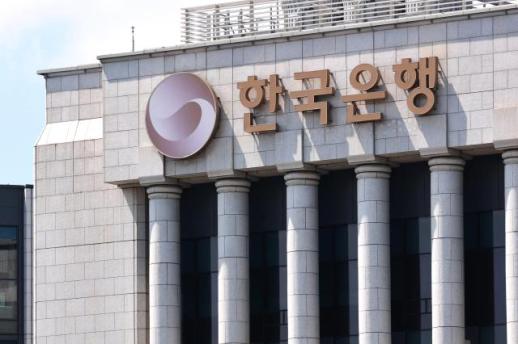 South Korea GDP confirmed contracting in Q4, 2025 growth slowest in five years SEOUL, Mar. 10 (AJP) — South Korea confirmed that its economy contracted in the fourth quarter of 2025, while full-year growth slowed to its weakest pace in five years amid a slump in construction and slowed investment activity. According to final data released by the Bank of Korea on Tuesday, real gross domestic product (GDP) fell 0.2 percent from the previous quarter in the October–December period, marking a return to contraction after earlier gains in the year. The decline reflected weakness in key sectors of the economy. Manufacturing output dropped 1.5 percent from the previous quarter, while construction shrank 4.5 percent as both building and civil engineering projects slowed. The services sector expanded 0.6 percent, supported by gains in finance, healthcare and social services. On the expenditure side, private consumption rose 0.3 percent, mostly on health care spending, while government consumption increased 1.3 percent largely due to higher health insurance payouts. Construction investment fell 3.5 percent and facility investment declined 1.7 percent, while exports slipped 1.7 percent from the previous quarter. For the full year, South Korea’s economy grew 1.0 percent in 2025, sharply slowing from 2.0 percent in 2024 and marking the weakest expansion since the pandemic-hit year of 2020. Nominal GDP reached 2,663.3 trillion won last year, up 4.2 percent from the previous year but down 0.1 percent to about $1.87 trillion when converted to U.S. dollar, as the Korean won averaged a record low of 1,439 per dollar during the year. Gross national income per capita stood at 52.4 million won, up 4.6 percent from a year earlier. In dollar terms, however, it rose only 0.3 percent to $36,855, leaving Korea’s per-capita income in the $36,000 range for a third consecutive year as currency weakness offset domestic income gains. The GDP deflator, a broad measure of price levels across the economy, rose 3.1 percent in 2025. Real gross national income (GNI) expanded 1.4 percent in the fourth quarter, reflecting improved terms of trade and higher overseas income receipts. 2026-03-10 09:04:07
 -
 Korea GM, Union Near Deal to Keep 3 of 9 Service Centers Open; Talks Resume Korea GM and its labor union have reached a working-level understanding to keep some company-run service centers open, rather than shutting them all, industry sources said. Final issues include how to reassign service-center staff to plants and the terms of any voluntary retirement program. According to the industry on the 10th, the two sides will hold a second round of main talks at 10 a.m. at the company’s headquarters to discuss the planned closure of its company-owned service centers. They have continued working-level discussions since the first main talks in January and are returning to formal negotiations as their positions have narrowed. Korea GM previously said it would close all nine of its company-run service centers nationwide as of Feb. 15. To improve financial health, it planned to sell assets including service-center sites and shift maintenance and repair work to 383 partner service centers nationwide. After the union pushed back and filed legal action, including a request for an injunction, the sides began seeking a compromise through a working-level consultative body. So far, they have tentatively agreed to close six of the nine centers. The plan would keep the Daejeon, Jeonju and Changwon service centers operating and establish a “high-tech center” in Bupyeong. The high-tech center would handle work that is difficult to resolve through partner service centers. A union official said the high-tech center is intended to fill gaps created by reducing the company-run network to three sites and to take on cases requiring advanced, specialized repair skills, either by referral from partner centers or by handling them directly. The key test will be the second round of main talks. Because the plan remains tentative, some union members may oppose it. The downsizing also leaves unresolved what happens to surplus staff. About 320 engineers work across the nine service centers, but if the plan is finalized, the required headcount would fall to about 70, including the high-tech center. That would leave roughly 250 workers to be reassigned to production jobs or to take voluntary retirement. Those who want to stay are expected to be transferred to the Changwon and Bupyeong plants. For voluntary retirement, terms are also an issue; a proposal has been discussed to pay 10 million won per person in consolation money, according to the report. If an agreement is finalized in the second round of talks, speculation that Korea GM could withdraw from South Korea is expected to ease. But the union official said strong opposition cannot be ruled out because the changes would sharply reduce the service-center operation, adding that the main talks will decide whether to approve the plan.* This article has been translated by AI. 2026-03-10 09:03:30
 -
 BTS’ Jin Songs Played at WBC and Winter Olympics Venues BTS member Jin’s solo music has again been featured at major international sports events, underscoring his global reach. At the 2026 World Baseball Classic game between South Korea and Taiwan on March 8 at the Tokyo Dome in Japan, Jin’s “Running Wild,” the title track from his first solo album “Happy,” was played in the stadium. His clear vocals and band-driven sound blended with the crowd’s cheers and lifted the atmosphere, the report said. It was not the first time “Running Wild” has been used in a high-profile sports broadcast. The song drew attention after it was included in a CBS prime-time telecast of an NFL game between the Buffalo Bills and Detroit Lions in December 2024. The track, released in November 2024, surpassed 1.7 million TikTok posts using it within 10 days, ranking second among Korean male solo songs in usage after Shaun’s “Way Back Home,” according to the report. Jin’s voice was also heard at the 2026 Milan-Cortina d’Ampezzo Winter Olympics, which ended last month. After major figure skating events — the pairs free skate on Feb. 9, the men’s singles short program on Feb. 11 and the women’s singles short program on Feb. 18 — “Don’t Say You Love Me,” the title track from his second mini-album “Echo,” played in the venue, the report said. Released in May last year, “Don’t Say You Love Me” topped Spotify’s global chart on May 25, 2025, making Jin the first Asian artist to reach No. 1 on the platform’s global chart with a song released in 2025, the report said. Jin also drew attention during the Paris Summer Olympics in July 2024 when he took part as a torchbearer. French weekly magazine Paris Match described him holding the torch in front of the Louvre Museum and praised him as “a true prince crowned 235 years after the French Revolution.”* This article has been translated by AI. 2026-03-10 09:00:42
 -
 LS Eco Energy Enters Japan Power Market for First Time With Cable Supply Deal LS Eco Energy has entered Japan’s power market for the first time. The company said March 10 that its Vietnam production unit, LS-VINA, signed an annual supply contract with Japan’s Kitanihon Electric Wire for 6.6-kilovolt (kV) constant-voltage transformer (CVT) cables used in power distribution. Kitanihon Electric Wire is a subsidiary of Tohoku Electric Power and supplies distribution cables to major Japanese power companies. Japan’s power market is widely seen as difficult to enter because of proprietary technical standards and strict quality control. LS Eco Energy said it secured the deal in cooperation with LS Cable & System’s Japan unit, LSCJ, marking a full-scale move into Japan’s power infrastructure market. Jang Dong-uk, head of LS-VINA, said winning a supply opportunity in Japan was significant given the market’s demanding technical requirements. He said the company will step up efforts to target advanced power markets including Japan, the United States and Europe, focusing on higher value-added products. LS Eco Energy said it posted about 1 trillion won in revenue based on preliminary 2025 results and expects the improvement trend to continue this year, citing rising exports amid growing global demand for power infrastructure.* This article has been translated by AI. 2026-03-10 08:51:22
 -
 Kia Unveils Updated Niro Hybrid With New Features, Ends Niro EV Production Kia has introduced a refreshed version of its second-generation Niro small SUV, adding hybrid-focused features as it targets buyers who prioritize practicality. The automaker said it has improved safety and convenience compared with the current second-generation model. Kia unveiled the vehicle for the first time at a media day on March 9 at Layer Studio 11 in Seoul’s Mapo district. The New Niro is a facelift based on the second-generation Niro launched in January 2022. Kia said it upgraded product competitiveness and design, marking a new model after four years. This was the first public showing of the vehicle. Kia highlighted new hybrid-specific functions, including a smart regenerative braking system, Stay Mode and a hybrid hierarchical predictive control system. The smart regenerative braking system automatically adjusts regenerative braking levels by considering navigation road information and driving conditions. Stay Mode allows occupants to use in-car convenience features for a set period while stopped using only high-voltage battery power, without idling the engine. The hybrid hierarchical predictive control system forecasts and analyzes the route and road conditions to the destination and optimizes battery charge control to help improve real-world fuel economy. With the added features, prices rise by up to 3 million won compared with the current second-generation Niro. After eco-friendly vehicle tax benefits, prices are 28.85 million won for the Trendy trim, 31.95 million won for Prestige and 34.64 million won for Signature. The Trendy trim of the second-generation Niro was 26.6 million won, meaning the entry price increases by 2.25 million won. Kia also addressed the discontinuation of the Niro electric vehicle. Baek Gyeong-eun, a researcher on the MSV Project 5 team, said, “We will proceed by discontinuing the Niro EV and selling only the remaining inventory,” adding, “Kia is very focused on electrification, and with many electrified vehicles such as the EV3 waiting, we discontinued it to focus on those vehicles.” First launched in 2016, the Niro lineup has included EV, hybrid (HEV) and plug-in hybrid (PHEV) variants through the first generation and into the second generation introduced in 2022. Kia said it will not produce additional EV units and plans to emphasize the hybrid model instead. It will strengthen EV competitiveness with models using its dedicated electric platform, E-GMP. Current E-GMP-based models include the EV3, EV4, EV5, EV6 and EV9. Jeong Won-jeong, Kia’s vice president and head of its domestic business division, said, “The New Niro will be an attractive choice for customers who value practicality, based on the best fuel economy among domestic hybrid SUVs at 20.2 kilometers per liter and a spacious interior.” * This article has been translated by AI. 2026-03-10 08:33:22
 -
 YouTuber Haejju Announces Second Pregnancy in New Video YouTuber Haejju said she is pregnant with her second child. A video titled, "I can’t hide it anymore… second pregnancy (+telling my parents first)," was posted Monday on her YouTube channel, "Haejju." In the video, she showed a pregnancy test and said, "It’s two faint lines. If it’s faint, that means it’s the very early stage of pregnancy." She also shared an update about her pet cat, saying, "Since I got pregnant, Gossaesam has been glued to me. It doesn’t usually do this when I’m eating, but these days it does. It’s so amazing. It feels like it’s gotten much more affectionate." Haejju added that she has been struggling physically and emotionally, saying, "My body is tired, and then I suddenly get hit with hormones and I start crying," and, "I can’t hide it anymore. Second pregnancies show sooner." Haejju, who has 820,000 subscribers, is active while living in Australia. * This article has been translated by AI. 2026-03-10 08:09:18