
Journalist

AJP
-
 Coupang investors withdraw U.S. trade probe petition as Seoul shifts toward arbitration SEOUL, March 10 (AJP) - U.S. investment firms backing Coupang Inc. have withdrawn their request for a U.S. trade investigation into South Korea’s treatment of the e-commerce company, as the dispute shifts toward an investment arbitration case under the Korea–U.S. Free Trade Agreement. Greenoaks and Altimeter said Monday they had withdrawn a petition filed under Section 301 of the U.S. Trade Act, which had asked the Office of the United States Trade Representative (USTR) to investigate what they described as discriminatory actions by the Korean government against Coupang. The investors said the petition was dropped because Washington has signaled plans to pursue broader Section 301 investigations into unfair trade practices affecting American technology companies, making a company-specific probe potentially redundant. “Pursuing a standalone petition focused on a single company would be redundant,” the firms said in a statement, adding that the issue had already prompted discussions between the U.S. and South Korean governments and drawn attention from members of Congress. The petition, filed on Jan. 22 by the investors who claim to hold a combined $1.5 billion worth of Nasdaq-trading Coupang shares, alleged that Seoul had launched a government-wide crackdown on Coupang following a major data breach, arguing that the response amounted to unfair and discriminatory treatment of a U.S. company operating in Korea. Section 301 of the U.S. Trade Act allows Washington to investigate foreign government actions deemed unjustified or discriminatory and to impose retaliatory trade measures such as tariffs. A USTR official confirmed the withdrawal, saying several U.S. investors in Coupang had asked that the petition be removed. The official added that Washington will continue urging Seoul to ensure investigations into the data breach are conducted in a non-discriminatory manner and that U.S. digital service firms do not face unnecessary barriers in the Korean market. The issue was also raised during trade meetings in Washington last week, where Trade Minister Kim Jung-kwan and Trade Deputy Minister Yeo Han-koo met separately with U.S. Commerce Secretary Howard Lutnick and U.S. Trade Representative Jamieson Greer. According to Seoul’s Ministry of Trade, Industry and Energy, Yeo conveyed the Korean government’s position that the dispute involving Coupang’s investors should not negatively affect broader Korea–U.S. trade relations. The talks were part of a broader round of consultations following a U.S. Supreme Court ruling that struck down reciprocal tariffs imposed by the Trump administration under the International Emergency Economic Powers Act (IEEPA). Washington has since signaled it may rely more heavily on alternative trade tools, including tariffs under Section 122, national security investigations under Section 232, and actions under Section 301. The investors’ broader legal challenge against Seoul nevertheless remains active. South Korea has already begun preparing its legal defense after U.S. investors formally notified the government of their intention to pursue investor–state dispute settlement (ISDS) arbitration under the Korea–U.S. Free Trade Agreement (KORUS FTA). The Justice Ministry said it has appointed South Korean law firm Peter & Kim and U.S.-based Arnold & Porter Kaye Scholer LLP to advise the government during the initial phase of the dispute. Officials said the firms were selected for their experience in international investment arbitration, including their previous work representing South Korea in the high-profile Lone Star dispute over the sale of Korea Exchange Bank. The legal teams will assist during the 90-day consultation period that follows a notice of intent to arbitrate under the KORUS FTA, during which the parties may attempt to resolve the dispute before formal arbitration is filed. The dispute stems from a cybersecurity incident disclosed by Coupang in November 2025, involving the leak of data linked to more than 30 million customer accounts. The breach triggered regulatory probes, parliamentary hearings and public criticism from Korean officials. Coupang, founded in 2010 and often dubbed the “Amazon of Korea,” operates primarily in South Korea but is incorporated in Delaware and listed on the New York Stock Exchange, with a shareholder base dominated by U.S. investors. Additional notices of intent have since been filed by other investors, including Foxhaven Capital, Durable Capital Associates, and Abrams Capital, expanding the group of claimants considering arbitration. 2026-03-10 07:38:56
 -
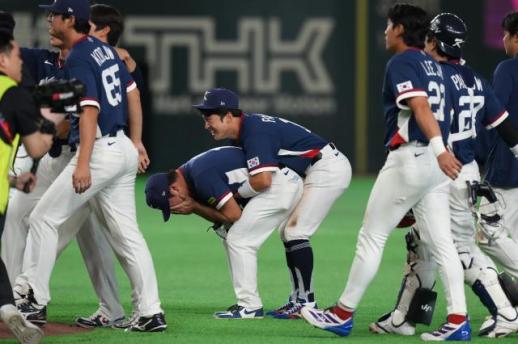 South Korea survives a dramatic tiebreaker to advance WBC quarterfinals in 17 years SEOUL, March 10 (AJP) - South Korea advanced to the quarterfinals of the World Baseball Classic for the first time in 17 years on Monday, defeating Australia 7–2 in Tokyo through a combination of disciplined execution, mathematical precision — and a measure of luck. The win at Tokyo Dome gave South Korea the exact margin it needed — a victory by at least five runs while allowing no more than two — to edge past Australia and Chinese Taipei in Pool C and secure the final ticket to the knockout stage. Designated hitter Moon Bo-gyeong delivered the decisive performance, blasting a two-run homer and finishing with four RBIs to power South Korea’s offense in the must-win finale. Still, South Korea’s path to the quarterfinals came down to the final inning and a sequence of fortunate moments. Leading 6-2 entering the ninth, South Korea still needed one more run to maintain the required five-run margin. Kim Do-yeong drew a leadoff walk, and Lee Jung-hoo’s sharp grounder deflected off Australian pitcher Jack O’Loughlin’s glove, triggering a rushed throw by shortstop Jarryd Dale that sailed into right field. The error placed runners on the corners before Ahn Hyun-min lifted a sacrifice fly to right field, restoring the crucial five-run cushion. South Korea then held firm in the bottom of the ninth to seal the victory and the long-awaited return to the WBC quarterfinals — its first since finishing runner-up in 2009. Fortune had also tilted the broader tournament math slightly in Korea’s favor. South Korea, Australia and Chinese Taipei all finished Pool C with identical 2–2 records. With head-to-head results tied, the standings were determined by the team run-prevention average in games among the tied teams. All three teams allowed seven runs in those matchups, but South Korea edged the tiebreaker by recording one more defensive inning than the others, giving it the best run-prevention ratio. Earlier in the tournament, Australia’s upset 3–0 victory over Chinese Taipei also helped keep the mathematical pathway open for South Korea, which had appeared on the brink of elimination after losing to Taipei the previous day. South Korea will now travel to Miami to face the winner of Pool D — likely Venezuela or the Dominican Republic — in the quarterfinals on March 14 (Korea time). 2026-03-10 07:26:09
 -
 South Korea beats Australia to reach WBC quarterfinals for first time in 17 years South Korea advanced to the World Baseball Classic quarterfinals for the first time in 17 years, beating Australia 7-2 on March 9 at Tokyo Dome in Japan. The team managed by Ryu Ji-hyun finished 2-2 in Pool C. South Korea, Taiwan and Australia ended tied, but South Korea moved on as the pool’s No. 2 team behind Japan (3-1) on the tiebreaker of lowest runs allowed. It is South Korea’s first trip out of the WBC group stage since its runner-up finish in 2009. South Korea entered the game needing a win by at least five runs while allowing no more than two, and it met both conditions. The team will fly to Miami on the night of March 10 on a chartered plane. The quarterfinal is scheduled for 7:30 a.m. March 14 (Korean time) against the Pool D winner. In Pool D, the Dominican Republic and Venezuela each have two wins. South Korea struck first in the second inning when Moon Bo-gyeong of the LG Twins hit a two-run homer. In the third, Jahmai Jones of the Detroit Tigers, Lee Jung-hoo of the San Francisco Giants and Moon hit consecutive doubles, driving in two more runs for a 4-0 lead. Moon delivered again in the fifth with an RBI single to make it 5-0. Australia got on the board in the bottom of the fifth when So Hyeong-jun of the KT Wiz gave up a solo homer to Robbie Glendinning, cutting it to 5-1. South Korea answered in the sixth on an RBI hit by Kim Do-yeong of the KIA Tigers to restore a five-run cushion at 6-1. Australia scored again in the eighth, tightening the margin and leaving South Korea needing an insurance run in the ninth to keep the required five-run gap. In the ninth, Kim drew a walk and a throwing error by the shortstop on a ball hit by Lee put runners at first and third with one out. Ahn Hyeon-min of the KT Wiz followed with a sacrifice fly to push the lead back to five runs. In the bottom of the ninth, reliever Jo Byeong-hyeon of the SSG Landers recorded the final out on an infield fly, sealing South Korea’s quarterfinal berth.* This article has been translated by AI. 2026-03-09 22:42:00
 -
 Hyundai’s Middle East growth push faces war risk as U.S.-Iran conflict disrupts demand and shipping Hyundai Motor Group’s push to build a “second Middle East boom” to offset expanding U.S. high-tariff pressure is facing a new obstacle: war risk. With Iran launching indiscriminate attacks that also hit key regional markets such as Saudi Arabia, the United Arab Emirates and Kuwait, the industry expects weaker auto demand across the Gulf Cooperation Council and disruptions to logistics. If the conflict drags on, Hyundai’s planned Middle East production base — targeted to begin operations in the fourth quarter — could also be delayed. The unexpected shock of the U.S.-Israel and Iran war is also clouding Hyundai’s goal of reaching a 20% market share in the region by 2030. According to industry officials on the 9th, Hyundai and Kia sold about 320,000 vehicles in the Middle East last year, maintaining a market share of roughly 15%. The region accounts for about 8% of their global sales, making it their fifth-largest market after North America, Europe, India and South Korea. The Middle East market is a three-way contest among South Korea, China and Japan: Toyota ranks first with about 450,000 vehicles a year, Hyundai and Kia are second, and third place is held by multiple Chinese EV brands including Chery Automobile. Hyundai has focused on the Middle East because of its growth. The regional auto market is valued at $25.6 billion and is projected to expand 5.2% annually to $35.4 billion by 2030 — more than 1.5 times the global auto market’s average growth rate of about 3%. The GCC accounts for 60% of the market and Iran 40%. Hyundai and Kia plan to raise annual Middle East sales to 550,000 vehicles by 2030, centered on Saudi Arabia, positioning the region as a growth market alongside India and Latin America. The war, however, could derail those plans. If it becomes prolonged, operations at Hyundai’s Middle East manufacturing unit, being built with Saudi Arabia’s Public Investment Fund and slated for a fourth-quarter start, are expected to face setbacks. The plant is designed to produce 50,000 vehicles a year, including internal combustion models and EVs, and is reported to be about 50% complete. Because the facility is to run on a complete knockdown, or CKD, model — importing parts for local assembly — it must complete staffing and the setup of parts and equipment up to six months in advance. “Skilled workers are essential for stable CKD operations, but if the war continues, it becomes nearly impossible to put key personnel in place,” an auto industry official said. “Hyundai Motor Group’s core strategy of countering U.S. high-tariff pressure by expanding Middle East sales is now under threat.” A bigger concern is a potential contraction in regional demand and shipping. Toyota plans to cut production by 40,000 vehicles to prepare for possible logistics disruptions. Hyundai has also temporarily halted shipping schedules from its India unit, HMIL, to the Middle East as the closure of the Strait of Hormuz has continued for more than 10 days. A Hyundai official said that if the war is prolonged, delays in transporting equipment and materials are expected to be unavoidable. “Because this situation could have a significant impact on key local markets such as Saudi Arabia and the UAE, we are strengthening monitoring,” the official said. * This article has been translated by AI. 2026-03-09 18:24:21
 -
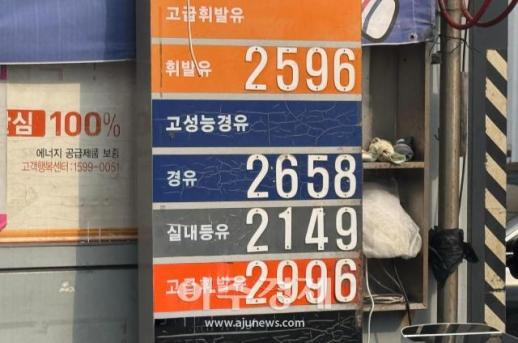 Diesel Prices Top Gasoline in South Korea, Raising Fears of Freight Disruptions "I use as much as 5,000 liters of diesel a month. If the price rises by just 500 won, my fuel bill goes up 2.5 million won," a cargo truck driver said. "Then my take-home pay drops below what you can make at a part-time job. I’m hanging on, but if things get as bad as the urea-solution crisis, I may have to stop driving." With global oil prices topping $100 a barrel and diesel now costing more than gasoline, South Korea’s freight industry is warning of mounting strain. Since March 6, diesel has been priced above gasoline, raising concerns that many truckers could be forced to stop operating. Any widespread halt would likely disrupt logistics and push up distribution costs, adding to pressure on households. According to the Korea National Oil Corp.’s Opinet price system, as of 10 a.m. March 9 the nationwide average diesel price was 1,920 won per liter, 22 won higher than gasoline at 1,898 won. In Seoul, diesel averaged 1,970 won per liter, nearing 2,000 won, and some stations have already posted prices in the 2,000-won range. Industry officials say the situation risks echoing the urea-solution shortages of 2021 and 2023, when trucks were sidelined in large numbers. At the time, the government even used military transport aircraft to rush in emergency supplies to keep freight moving. The Cargo Truckers Solidarity Division said the current spike in fuel prices directly cuts into drivers’ income. Park Jae-ha, the group’s policy director, said freight rates are typically split roughly into thirds: fuel, vehicle maintenance and driver income. "When oil prices surge, freight rates stay the same but fuel costs rise, so income drops sharply," he said. Park added that members have recently reported monthly fuel bills rising by 1.3 million to 1.4 million won, calling it "a situation where the more you work, the more you lose." Park said a safety freight-rate system that links fuel prices and rates applies only in part and covers about 6% of all cargo trucks. That leaves 94% of freight workers fully exposed to fuel-price spikes, he said. Gas stations are also under pressure. Many receive fuel from refiners in advance and settle payments later, a structure that can deepen losses when prices rise. While the government has signaled a willingness to intervene, including by mentioning a review of setting a maximum price, diesel wholesale costs are still climbing, according to industry officials. Some in the industry say diesel supply prices could rise to about 2,300 won per liter. A gas station official said fuel brought in during February was settled on March 9 at 1,520 won per liter, but the refiner notified the station that the next settlement could be set around 2,300 won. For now, stations are selling stockpiled inventory and keeping prices below 2,000 won per liter, but once reserves run out, they expect to have no choice but to post prices in the 2,000-won range. Most stations have already used up the volumes they secured in February. * This article has been translated by AI. 2026-03-09 18:14:30
 -
 Diesel Prices in South Korea Top Gasoline, Raising Alarm for Transport Industries International oil prices have surged, pushing diesel — often seen as a working-class fuel — above gasoline in South Korea and raising alarms across industry. With the economy slowing and business conditions already weak, higher energy costs are expected to make it harder for transport-heavy sectors such as logistics, shipping, rail and aviation to protect earnings. According to Opinet, the Korea National Oil Corp.’s price information system, the nationwide average gasoline price at gas stations stood at 1,900.7 won per liter as of 1:30 p.m. Monday, up 5.3 won from the previous day. Diesel rose 6.1 won to 1,923.8 won per liter, overtaking gasoline. Since March 4, when the Middle East war intensified, gasoline has climbed 160.83 won per liter while diesel has jumped 264.45 won. It was the first time diesel exceeded gasoline since February 2023, about three years ago. Diesel typically trades below gasoline because taxes are lower due to heavy industrial use and its pricing tends to be more stable. But the war has increased uncertainty over diesel supply. When geopolitical risks rise, supply can tighten while demand is slow to fall. Diesel is widely used across the economy, including in freight trucks and buses, ships, construction equipment and generators. It is also used to power combat equipment such as tanks, armored vehicles and military trucks, keeping demand elevated. Rising diesel prices can ripple through industry, with logistics firms among the most exposed because fuel accounts for a large share of costs. In aviation, companies are said to be reviewing measures including raising fuel surcharges. Korean Air carries out oil-price hedging for up to 50% of its expected annual fuel consumption and plans to adjust its response as it monitors global oil trends. Low-cost carriers, which rely more heavily on passenger revenue than large airlines that can offset losses with air cargo, could see already weak results deteriorate further. Rail operators also face pressure because fares are directly managed by the government, making it difficult to quickly pass higher fuel costs on to customers. Shipping companies are also on alert, focusing on whether higher oil prices will reduce cargo volumes. They can reflect some fuel costs in freight rates through bunker adjustment factors, but if high oil prices weaken global consumption, export and import volumes could fall. Even industries not directly tied to oil face broader cost pressure. Export-heavy sectors such as semiconductors, automobiles and PCs are concerned about higher logistics costs and transport disruptions. If a prolonged war pushes up shipping and airfreight rates enough to be reflected in product prices, demand could weaken. Automakers also expect high oil prices could slightly dampen consumer sentiment for internal combustion vehicles. While hybrids and electric vehicles are taking a larger share, internal combustion models still account for about half of new-car sales in South Korea, making the sector vulnerable. “Rising fuel costs can affect not only corporate expenses across industry but also consumer prices,” an industry official said. “Policy responses are needed to cushion the shock from a sharp rise in energy prices.”* This article has been translated by AI. 2026-03-09 18:13:12
 -
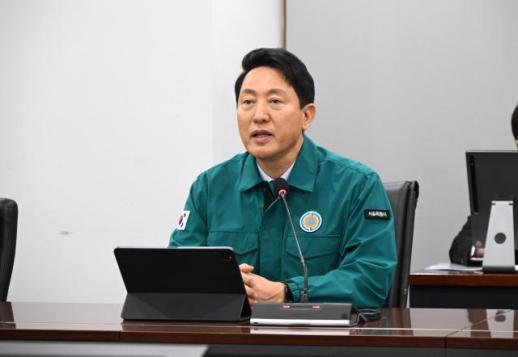 BTS Comeback D-12 Seoul to deploy 3,400 personnel for BTS event SEOUL, March 09 (AJP) - The Seoul City will deploy more than 3,400 personnel to manage crowds and ensure safety during the upcoming BTS comeback event scheduled for March 21 at Gwanghwamun Square, the heart of the capital city. City officials said nearby subway stations will bypass stops and bus routes will be temporarily diverted on the day of the event to reduce congestion around the venue. Seoul Mayor Oh Se-hoon hosted a joint safety inspection meeting Monday with officials from district governments, police and fire authorities to review preparations for the large-scale event. The city will operate a special safety control tower composed of eight working teams responsible for crowd management, traffic control, emergency medical response and facility safety. Authorities plan to monitor crowd flows in real time across the venue, nearby subway stations and other areas expected to see large gatherings. Police and emergency personnel will also be deployed to support traffic control, medical services and rescue operations. The Seoul Fire Department will dispatch 99 fire engines and 765 firefighters, while police will implement a stadium-style crowd control to manage pedestrian movement and respond to potential emergencies. Officials said patrols will be strengthened around Gwanghwamun Square and Sejong-daero starting the day before the event to prevent overnight camping, long queues and sidewalk congestion. Illegal street vendors will also be subject to enforcement in cooperation with local district offices. To improve convenience for visitors, the city plans to secure more than 2,500 public and portable toilets around the event area. Traffic controls and subway bypass planned Four nearby subway stations Gwanghwamun Station on Line 5 (Purple Line), City Hall Station on Lines 1 (Dark Blue) and 2 (Green Line), and Gyeongbokgung Station on Line 3 (Orange Line), will operate without stopping during peak hours on the day of the event. Subway entrances at those stations will also be closed to prevent overcrowding, while nearby stations such as Euljiro 1-ga may also bypass stops depending on crowd conditions. Seoul Metro said safety inspections have already been completed at 17 stations around the venue, and the number of safety personnel will be increased from 111 to 461 on the day of the event. To facilitate safe departures after the performance, 12 additional subway trains will be deployed starting at 9 p.m. (1200GMT), increasing service frequency by 24 trips on Lines 2, 3 and 5. Several bus routes passing through key routes around the square will also be temporarily rerouted or skip stops during traffic control operations. Digital guides and multilingual support for visitors Seoul will also release a digital guidebook in both Korean and English in mid-March to help domestic and international visitors navigate transportation, safety information and nearby attractions. The city plans to provide a multilingual online map showing the locations of public toilets, information booths and medical stations around the event area. Real-time safety notices and traffic updates will also be sent through emergency text alerts in Korean and English. The city’s Dasan Call Center, Seoul's official, multilingual, one-stop telephone service will expand multilingual services during the event, while 70 tourism interpreters and about 600 volunteers will assist visitors on site. Oh emphasized the importance of comprehensive preparation for the event. “We must view the entire downtown area from Gwanghwamun to Seoul Plaza as a single event venue. Our mission will only be complete once the last citizen returns home safely.” 2026-03-09 18:04:46
 -
 LIV Golf Korea 2026 to be held May 28-31 at Busan’s Asiad CC LIV Golf said Monday it will stage “LIV Golf Korea 2026” from May 28-31 at Asiad CC in Busan. Backed by Saudi Arabia’s Public Investment Fund, LIV Golf launched in 2022 and held LIV Golf Korea for the first time last year at Jack Nicklaus Golf Club Korea in Incheon. The event drew about 35,000 spectators over three days, organizers said. This year’s tournament will move to Busan under a multiyear agreement with Asiad CC. LIV Golf CEO Scott O’Neil called the return to South Korea and the Busan venue “an important step” for the league and Korean fans. “Interest in LIV Golf continues to grow,” O’Neil said, adding that Asiad CC and Busan meet the league’s vision “both competitively and culturally.” He said he hopes to deliver another memorable week for Korean fans after last season’s successful debut. Korean GC, a team formed this season, is also set to play in South Korea for the first time. The all-Korean roster is led by captain An Byeong-hun and includes Kim Min-gyu, Song Young-han and Danny Lee. The team has signed partnerships including the Hanwha Financial Group co-brand Plus and golfwear brand Amazingcre, the league said. “Having LIV Golf held in Korea means a great deal to all of us,” An said. “Competing in our home country and in front of Korean fans gives us a special sense of pride.” He said he is glad the team can represent Korean golf worldwide and hopes to show Korean GC’s “energy, passion and competitiveness.” Organizers said the event will again pair golf with entertainment. Last year’s tournament drew attention with performances by top artists including G-Dragon and IVE. Details of this year’s concert and entertainment programs will be announced later. Busan Mayor Park Heong-joon said it is meaningful that LIV Golf is returning to South Korea and holding the May event in Busan. Hosting a global sports event of this scale in the city reflects Busan’s rising profile as an international hub for sports, culture and tourism, he said, adding that he hopes to welcome world-class players and golf fans and showcase the city’s appeal.* This article has been translated by AI. 2026-03-09 17:55:18
 -
 Daewoong Sees Early Signal for UDCA in Long COVID; Celltrion, Lotte Bio, JW, Hugel Updates Daewoong Pharmaceutical says UDCA shows improvement signal in early long COVID patients Daewoong Pharmaceutical said Monday that ursodeoxycholic acid, or UDCA, the main ingredient in its Urusa product, showed an improvement signal among long COVID patients who were 2 to 6 months past infection. The findings were posted online March 3, Eastern time, in the journal Annals of Internal Medicine. In that 2-to-6-month group, 81.6% of patients receiving UDCA showed symptom improvement, significantly higher than 57.1% in the placebo group. By simple comparison, that was about 43% higher than placebo, the company said. No such improvement signal was seen in patients more than 6 months after infection. The results suggest the importance of timing in long COVID treatment and, in an exploratory way, point to the potential for drug intervention earlier after infection. Researchers also conducted immune analyses to examine inflammatory changes. Among patients whose symptoms improved, inflammation-related markers tended to decline, and the pattern was more pronounced in the 2-to-6-month group. The researchers said additional analysis is needed to determine whether the inflammation changes reflect a drug effect. JW Pharmaceutical holds ‘J-Cle’ symposium at Korean gastroenterology endoscopy meeting JW Pharmaceutical said Monday it held a symposium on its bowel-cleansing agent J-Cle at the 47th Spring Scientific Meeting of the Korean Society of Gastrointestinal Endoscopy, held March 8 at Lotte Hotel Seoul in the Sogong-dong area of Seoul. Park Su-beom, a professor in the gastroenterology department at Pusan National University Yangsan Hospital, presented Phase 3 results for J-Cle and discussed how it can be used for preparation before colonoscopy. J-Cle is a prescription drug taken to cleanse the colon before tests such as endoscopy and X-ray imaging. JW said the total dose is 20 tablets, and the film-coated tablets are designed to be easier to swallow. The company said powder or liquid bowel preps can cause adverse reactions such as nausea and headaches during dosing, increasing patient burden or reducing test accuracy, while tablet formulations can reduce adverse reactions and improve convenience. J-Cle contains magnesium sulfate, potassium sulfate and sodium sulfate, which act as osmotic laxatives, along with simethicone to reduce foam in the colon and sodium picosulfate to promote bowel movement. Park said that, based on Phase 3 results, J-Cle showed bowel-cleansing efficacy comparable to the control group, with features related to safety and medication adherence. Celltrion says Remsima leads market share in major Asian countries Celltrion said Monday that its flagship treatment Remsima, whose active ingredient is infliximab, has demonstrated prescription performance in Asia with a dominant market share. Citing IQVIA, Celltrion said Remsima held the top prescription share as of the third quarter of last year, with 93% in Singapore, 77% in Hong Kong, 73% in Thailand and 65% in Malaysia. Another autoimmune disease treatment, Yuflyma, whose active ingredient is adalimumab, rose to No. 2 in Singapore, surpassing the original product, the company said. Celltrion said its local subsidiaries have increased bid-win rates in Asia’s tender-driven markets by emphasizing supply stability. In Thailand, the company said its local unit has built long-term cooperation with all university hospitals, which has helped win recognition for the quality competitiveness of key products including Remsima, Truxima and Herzuma. Celltrion said the three products are used exclusively at all university hospitals there. The company said it plans to expand its product portfolio in Asia based on the performance of its existing lineup. Lotte Biologics to attend DCAT Week in New York Lotte Biologics said Monday it will participate in DCAT Week 2026, a global pharmaceutical and biotech business event, to be held March 23-26 in New York. DCAT Week is an annual international networking event in New York where global drugmakers and contract development and manufacturing organizations, or CDMOs, seek collaboration opportunities. Lotte Biologics said it will operate a dedicated meeting room at the Lotte New York Palace hotel during the event and pursue partnerships for its global CDMO business, including in North America. The company said it will highlight synergies between the quality competitiveness of its Syracuse Bio Campus in New York and the large-scale production capacity of the first plant at its Incheon Songdo Bio Campus, which is scheduled for completion in August. Hugel and Korean anti-aging dermatology society set annual collaboration Hugel said Monday it will work with the Korean Academy of Anti-Aging Dermatology, or KAAD, on an annual collaboration aimed at establishing global standards for botulinum toxin procedures and strengthening clinician education. Hugel said it held the ‘Hugel X Korean Academy of Anti-Aging Dermatology Academic Collaboration Kickoff Meeting’ on March 6 at the Westin Josun Seoul Parnas, where the sides discussed developing treatment protocols for its botulinum toxin product Botulax, exported as Letybo, and plans for global webinars. The two sides agreed to hold five global webinars every other month from April through December. Each session will include a lecture, live demonstration and Q&A. Hugel said real-time subtitles in English and Chinese will be provided for the convenience of clinicians worldwide.* This article has been translated by AI. 2026-03-09 17:45:00
 -
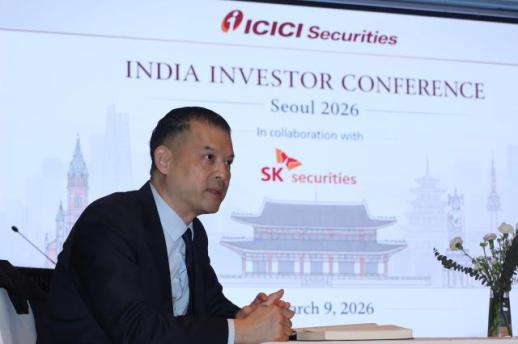 Korea and India beef up institutional financing to prepare for expanding business ties SEOUL, March 09 (AJP) - Institutional financing links between South Korea and India are gaining traction as the world's most populous nation accelerates economic expansion and seeks advanced manufacturing capabilities in sectors ranging from small modular nuclear reactors to defense and shipbuilding. A closed-door investor relations conference jointly hosted by SK Securities and India's ICICI Group in Seoul on Monday underscored the growing momentum. The event drew major Korean institutional investors including Korea Investment & Securities, Mirae Asset Securities and the National Pension Service, alongside prominent Indian conglomerates such as the Adani Group. "There is a lot of complementarity between the two countries' industries," said Patrick Han, head of global business at SK Securities. "Financial institutions can play a key role in facilitating foreign direct investment and industrial cooperation." India, now the world's fifth-largest economy with a gross domestic product of roughly $4.1 trillion, has emerged as an increasingly attractive destination for Korean capital. The United Nations projects the country's economy will expand about 6.6 percent in 2026, maintaining its position as the fastest-growing major economy. Despite the momentum, economic ties remain relatively underdeveloped compared with their potential. Trade between the two countries reached about $26.9 billion in the 2024–25 fiscal year, according to combined data from Seoul and New Delhi. For India, South Korea ranks as a mid-tier trading partner. For Korea, however, the Indian market still accounts for only around 3 percent of total exports — far behind its major destinations such as China, the United States and Vietnam. Similarly, Korean investment in India remains modest. According to India's Ministry of External Affairs and the India Brand Equity Foundation, cumulative Korean foreign direct investment in India has totaled roughly $6.7 billion since 2000, placing Korea around the 13th-largest investor. A broader estimate by the Indian government suggests cumulative investment may be closer to $10 billion, with about $929 million flowing into India in 2024 alone. Market participants say the relatively low base leaves significant room for expansion as both economies seek to diversify supply chains and investment partnerships. Nuclear sector opens new opportunities One area drawing particular interest from investors is India's newly liberalized nuclear energy sector. India's parliament passed legislation in December 2025 allowing private companies for the first time to participate in the country's nuclear power industry, opening the door for foreign investors and technology providers. Frederick Peter Jones, co-founder of Fairwood Nuclear and a veteran energy executive who previously served as a strategic adviser to the president of the Organization of the Petroleum Exporting Countries, attended the conference specifically to explore investment opportunities related to small modular reactors. "India is very interested in SMRs and all forms of energy, including green energy like solar and wind," Jones said. "Energy demand is enormous, and the country is looking at every possible option." India has allocated 20,000 crore rupees, or about $2.16 billion, for SMR research and development under a new Nuclear Energy Mission. The government aims to deploy at least five domestically developed SMRs by 2033. Defense cooperation deepens The conference also highlighted expanding opportunities in the defense sector, where Korean technology has gained increasing attention following renewed tensions along the India-Pakistan border. India is preparing to induct an additional 100 K9 Vajra-T self-propelled howitzers manufactured by Hanwha Aerospace, reflecting deepening defense ties between the two countries. Korean companies have also demonstrated the viability of the Indian capital market through successful listings. Shares of LG Electronics India surged about 50 percent on their market debut in October 2025 after the initial public offering attracted the strongest investor demand for an Indian listing since 2008. Hyundai Motor India had earlier raised about $3.3 billion in October 2024 in what was then India's largest-ever IPO. Shipbuilding emerges as another pillar Shipbuilding is emerging as another promising area for bilateral industrial cooperation. Korean shipbuilders are exploring potential technology transfers for conventional vessels such as tankers and bulk carriers to Indian partners, potentially providing an alternative to China's dominance in the segment. In an interview with AJP earlier this year, Indian Ambassador to South Korea Gourangalal Das said New Delhi is actively seeking Korean expertise to build up its domestic shipbuilding industry. "There is huge demand for ships in India," Das said. "Korea brings a lot of value in terms of technology and competence, and it is a trusted partner." India is backing that ambition with one of its most comprehensive industrial policy drives in decades. Under the country's Union Budget announced last year, New Delhi unveiled a large-scale shipbuilding support program combining financing assistance, cost subsidies and cluster-based industrial development. The initiative is aligned with the government's long-term road maps — Maritime India Vision 2030 and Amrit Kaal Vision 2047 — which aim to position India among the world's top 10 shipbuilding nations by 2030 and among the top five by 2047. Infrastructure hurdles remain Despite growing financial and industrial cooperation, logistical barriers remain. One persistent obstacle is the lack of direct air connections between the two countries' major business centers. There are currently no direct flights between Mumbai and Seoul, forcing travelers to transit through hubs such as Hong Kong, Singapore or Bangkok. Industry officials say improving connectivity could significantly boost financial and business exchanges. The partnership between SK Securities and ICICI Group is expected to extend beyond financial services. Follow-up meetings scheduled this week will involve major Korean conglomerates in industries including automobiles, shipbuilding, semiconductors and batteries as both sides explore new investment and technology partnerships. The discussions also come ahead of a state visit to India that New Delhi is organizing for later this year, according to Ambassador Das. 2026-03-09 17:37:41