
Journalist

AJP
-
 Go grandmaster urges shift to AI collaboration decade after AlphaGo match SEOUL, March 9 (AJP) - Former South Korean Go grandmaster Lee Se-dol returned to the site of his historic 2016 match against AlphaGo on Monday to advocate for a new era of cooperation between humans and artificial intelligence. Speaking during a press conference held at the Four Seasons Hotel in Seoul, the same location where he faced the Google DeepMind program 10 years ago, Lee reflected on how the perception of AI has evolved from a competitive threat to a collaborative tool. The event was hosted by Enhans, a South Korean AI startup, as part of a campaign for the commercialization of agentic AI. According to the event organizers, the global showcase was also broadcast live in major international hubs including New York and Tokyo. Lee, who appeared in a suit similar to the one he wore during the 2016 matches, said that while many programs can now outperform humans at the game of Go, there is a distinct lack of AI specifically designed for educational purposes. He suggested that utilizing AI for instruction could significantly lower the barrier to entry for the complex strategy game. "Go is the only perfect abstract strategy game created by humanity, but its difficulty is both its strength and its weakness," Lee said. "Go is now in the realm of education, and it is no longer necessary to play as well as a professional." In March 2016, Lee faced AlphaGo in a five-game series that ended in a 4-1 victory for the machine. Despite the loss, Lee's victory in the fourth game remains the only time a human has defeated that version of the AlphaGo system in a formal setting. He famously retired from professional play in 2019, stating that AI had become an entity that could not be overcome. Information regarding the match history and his retirement was sourced from public news archives. Lee noted that the global situation has changed since he first sat across from the machine. He said that while the world previously viewed AI as an opponent, the current focus should be on working together to solve unsolvable problems and create new value. Addressing concerns about job security, Lee said he believes AI will transform the nature of work rather than lead to its disappearance. He described the current period as an early stage where technology will eventually present and create new opportunities for people. During the event, Lee participated in a demonstration using voice commands to direct an AI agent in building a Go game model. The demonstration was intended to show how human intent can guide AI to perform technical tasks. Lee, who currently serves as a professor at the Ulsan National Institute of Science and Technology, continues to explore the integration of technology in traditional sports and culture. His current academic role was confirmed through university appointment records. 2026-03-09 15:17:10
 -
 Why South Korean Banks Aren’t Raising Deposit Rates as Money Moves Into Stocks South Korean banks are facing a growing dilemma. As a strong stock market pulls money out of bank accounts, lenders are still reluctant to raise deposit rates, constrained by the government’s household-loan management stance and heightened uncertainty tied to the Middle East. According to the Korea Federation of Banks on March 9, deposit rates at the five major commercial banks — KB Kookmin, Shinhan, Hana, Woori and NH NongHyup — stood at about 2.60% to 3.05%. Base rates excluding preferential terms were around 2.05%, pushing the lower end down further. Installment savings rates were also in the 2.60% to 3.40% range at their maximum levels. Banks typically respond to rapid fund outflows by raising rates on deposits and savings products. But with policy pressure to curb growth in household lending and external risks including the Middle East situation, increases in deposit and savings rates have remained limited. Raising deposit rates would increase banks’ funding costs and could add pressure for higher loan rates. With financial authorities trying to restrain household lending, banks are wary that greater volatility in loan rates could clash with that policy direction. Some banks are marketing products with high “maximum rates,” but the base rates are low or the top rates require meeting specific conditions. The approach is seen as a way to maintain competitiveness in attracting deposits without broadly lifting rates. Woori Bank’s “Dugeun Dugeun Haengun Savings,” launched last year, advertises a maximum annual rate of 12.50%, but its base rate is only 2.50%. The remaining interest is paid only if customers win a monthly drawing for a “luck card.” Shinhan Bank’s “One Month Savings (Weekly) X Hyundai Motor” offers a base annual rate of 1.80% and a maximum of 8.80% including partnership preferential rates, but customers must meet conditions such as confirming a Hyundai Motor purchase contract, designating a card payment account, or reaching required payment rounds. The same pattern applies to deposits. NH NongHyup Bank recently raised the one-year maximum rate on key time-deposit products — “NH All One e-Deposit” and “NH Waltz Rotating Deposit II” — into the 3% range. Other large banks are still keeping rates in the 2% range. Woori Bank raised the rate on its “WON Plus Deposit (12-month maturity)” last month, and KB Kookmin Bank and Hana Bank also made small increases, prompting expectations of broader competition. But aside from NH NongHyup Bank, no bank is offering a 3% rate. As banks’ rate moves remain muted, money has continued to flow into stocks. Even as volatility has increased due to the Middle East situation, some investors have treated the swings as a buying opportunity. As of the previous day, time deposits at the five major banks totaled 944.1025 trillion won, down 2.7872 trillion won from the end of last month. Demand deposits, often viewed as funds waiting to be invested, fell to 676.2610 trillion won from 684.8604 trillion won over the same period, a drop of 8.5993 trillion won. Market participants say deposit outflows could persist if the stock rally continues. Still, the financial sector also expects that if external uncertainty grows — including tensions in the Middle East — investors could shift back to bank deposits as a safer asset. A commercial bank official said, “With external volatility so high, including Middle East risks, the top priority is to manage funding costs in a stable way,” adding, “Rather than forcing deposit rates higher to chase market moves, banks are likely to proceed cautiously, considering overall soundness and profitability.”* This article has been translated by AI. 2026-03-09 15:06:00
 -
 South Korea Faces Must-Win vs Australia, Needs Big Margin to Reach WBC Quarterfinals South Korea’s national baseball team is on the brink of a fourth straight World Baseball Classic group-stage exit and must win its finale against Australia before turning to tiebreaker math. Even a victory may not be enough. Manager Ryu Ji-hyun’s team plays Australia at 7 p.m. on March 9 at the Tokyo Dome in Tokyo in its fourth Pool C game of the 2026 WBC. South Korea is 1-2 in pool play. It opened with an 11-4 win over the Czech Republic on March 5, then lost 8-6 to Japan on March 7 and fell 5-4 to Taiwan in the bottom of the 10th inning on March 8. South Korea is fourth in the group behind Japan (3-0), Australia (2-1) and Taiwan (2-2). To reach the quarterfinals in Miami, teams must finish in the top two. That leaves South Korea needing a win over Australia to have any chance. If South Korea beats Australia, South Korea, Australia and Taiwan would all finish 2-2. The tournament’s tiebreakers are head-to-head results, fewest runs allowed, fewest earned runs allowed, batting average and, if needed, a drawing of lots. In a three-way tie, head-to-head does not break the deadlock, so runs allowed becomes decisive. Only games among the tied teams count; results against Japan and the Czech Republic are excluded. South Korea allowed five runs in 10 innings against Taiwan. Taiwan has allowed seven runs in 18 innings against South Korea and Australia, while Australia posted a nine-inning shutout against Taiwan. For South Korea to finish ahead of both Australia and Taiwan, it needs to win a nine-inning game against Australia by at least five runs. Runs allowed also matter: If South Korea gives up three or more, it would trail Taiwan on runs allowed rate. That means South Korea must beat Australia by at least five runs while allowing two or fewer in a nine-inning game to advance to the quarterfinals. South Korea will start left-hander Son Ju-young of the LG Twins, with the team needing to keep runs to a minimum. Son pitched one scoreless inning in relief against Japan on March 7, allowing one hit. Son has performed well in big games, posting a 2.45 ERA in five career KBO postseason appearances. Australia will start left-hander Lachlan Wells of LG. He pitched in South Korea last season as a replacement foreign player for the Kiwoom Heroes and joined LG this season under the league’s Asia quota.* This article has been translated by AI. 2026-03-09 15:00:43
 -
 K-pop girl band ITZY's Yuna to roll out solo debut album 'Ice Cream' SEOUL, March 09 (AJP) - Yuna, the youngest member of the five-member K-pop girl band ITZY, will make her solo debut with album "Ice Cream," her agency JYP Entertainment said Monday. Ice Cream will consist of four tracks, including the title track of the same name. The album will be released at 6 p.m. (0900 GMT) on March 23 across major music streaming platforms. According to the tracklist released through the official social media accounts, the album will contain four songs: the title track Ice Cream, along with "B-Boy," "Blue Maze" and "Hyper Dream." The 22-year-old will be the second member of ITZY to launch a solo project following leader Yeji. She is the youngest member, widely known for her stage presence and performance skills since the group’s debut in 2019. A trailer for Yuna's upcoming album is ranked No. 2 on YouTube’s "worldwide music video trending chart," reflecting strong anticipation from fans ahead of the release. ITZY debuted in 2019 under JYP Entertainment with hit songs such as "Dalla Dalla," "Wannabe" and "Not Shy." The group drew attention early in its career after earning the nickname super rookies upon debut. The release of Ice Cream will mark Yuna’s first official solo project since her debut with the group. 2026-03-09 14:46:13
 -
 South Korea, Switzerland extend currency swap deal by another five years SEOUL, March 9 (AJP) - South Korea has agreed with Switzerland to extend their currency swap deal by five years, financial authorities here said on Monday. According to the Bank of Korea (BOK), the bilateral currency swap deal will now run until March 1, 2031, allowing the two countries to swap up to 10 billion Swiss francs or about 18.5 trillion won (US$12.4 billion). A currency swap allows one country to deposit its own currency in another country's reserves in return for the other country's currency in case of a liquidity shortage. South Korea and Switzerland first signed the deal in 2018 and extended it in 2021, with the latest renewal expected to further strengthen financial cooperation and support market stability. South Korea has similar deals with about 10 countries including Australia, Canada, China, Indonesia, Japan and Malaysia. "The renewal will bolster South Korea's foreign exchange reserves, given Switzerland's status as a key reserve-currency country, providing an additional safety net against potential financial crises," a BOK official said. 2026-03-09 14:36:54
 -
 HD Hyundai, ABS to Develop Nuclear-Linked Electric Propulsion for Zero-Carbon Ships HD Hyundai said Monday it has signed a joint development agreement with the American Bureau of Shipping, or ABS, to begin concept design of a nuclear-linked electric propulsion system, as it moves to secure next-generation zero-carbon ship technology. The signing ceremony was held at HD Hyundai Global R&D Center in Bundang, Gyeonggi Province, with Kwon Byeong-hun, head of the Electrification Center at HD Korea Shipbuilding & Offshore Engineering; Sim Hak-mu, head of the design division at HD Hyundai Samho; and ABS Far East Asia sales representative Matthew Muller in attendance. Under the agreement, the two sides will jointly work on a 16,000-TEU container ship, cooperating on basic design of the nuclear-linked electric propulsion system, selection of electrical equipment specifications, and layout design for power equipment. They plan to apply the characteristics of a small modular reactor, or SMR, capable of stably supplying up to 100 megawatts, and to assess the feasibility of using an SMR as a new ship power source. HD Hyundai said it will build a power management system tailored to large container ships that require long voyages and high-speed operation. It also plans to apply a twin-screw propeller system to improve propulsion and maneuverability. The company said it will adopt a direct-drive propulsion method that connects the motor directly to the propeller to minimize energy losses in power transmission and improve operating efficiency. It also said it will step up efforts to ensure safety related to nuclear power generation. Muller said the collaboration is “a very important project” to verify whether nuclear-based electric propulsion can be applied to large container ships, adding that the partners will combine HD Hyundai’s shipbuilding capabilities with ABS engineering expertise in maritime safety to comprehensively validate the safety, efficiency and environmental performance of next-generation propulsion solutions. Sim said nuclear-linked electric propulsion ships are “a groundbreaking and advanced technology” for achieving net zero, and could become a strong tool for HD Hyundai amid intense competition to lead the eco-friendly ship market.* This article has been translated by AI. 2026-03-09 14:33:16
 -
 South Korea, US kick off annual joint exercise SEOUL, March 9 (AJP) - South Korean and U.S. troops began their annual joint military exercise on Monday to strengthen their combined defense posture. The exercise, dubbed Freedom Shield (FS), runs until March 19 under a scenario simulating a full-scale war to prepare for contingencies on the Korean Peninsula. The exercise, involving about 18,000 troops, similar to the levels seen last year, also aims to assess combat readiness to prepare for the transfer of wartime operational control from Washington to Seoul. But field drills will be reduced to 16 from 33 last year. Pundits say the scaled-down drills may reflect the South's efforts to avoid provoking North Korea and help create an atmosphere for talks ahead of U.S. President Donald Trump's planned visit to China later this month, though the talks now appear unlikely after U.S.-led airstrikes on Iran earlier this month. But others speculate that the drills are being scaled back amid the possible deployment of U.S. military assets to the ongoing conflict in the Middle East. Meanwhile, North Korea, which has condemned the drills as rehearsals for an invasion, is expected to pretest again. 2026-03-09 14:04:57
 -
 Hyundai Motor, Kia Picked for South Korea’s ‘K-Autonomous Driving’ Pilot in Gwangju Hyundai Motor and Kia said Monday they have been selected as the automaker and transportation platform operator for the government-led “K-autonomous driving cooperation model,” part of the Ministry of Land, Infrastructure and Transport’s autonomous-driving test city initiative. The project, to be carried out in the city of Gwangju, is South Korea’s first effort to test autonomous-driving technology at the city level. The ministry said the large-scale trials are expected to secure high-quality real-world driving data while standards for technology development and related regulations are updated in parallel. Hyundai Motor and Kia were chosen to handle two areas in the demonstration: producing vehicles dedicated to autonomous-driving development and operating the transportation platform. The companies said building development vehicles requires not only supplying cars but also adding sensors tailored to each autonomous-driving approach, integrating vehicle controls and enabling over-the-air updates, among other functions needed for development and verification. Hyundai Motor and Kia said they have already built such capabilities by providing Ioniq 5-based autonomous vehicles in a foundry-style model to their autonomous-driving joint venture Motional and to Waymo’s robotaxi program. In the Gwangju project, they plan to support production of development vehicles and share vehicle and operational data generated during the trials with developers to help advance the technology. They also plan to deploy a dispatch and ride-hailing platform tailored for autonomous services based on their Shucle platform. The companies said Shucle’s core functions include AI- and real-time traffic-based route optimization, managing passenger pick-ups and drop-offs, and safety oversight through fleet monitoring. Hyundai Motor and Kia said they have strengthened operational stability by providing call and dispatch services since 2019 across 33 local governments and more than 82 service areas. Using Shucle in the demonstration, the companies said they aim to complete an integrated autonomous-service model that smoothly connects vehicles, the platform and users, and to lead efforts to build a new mobility experience and ecosystem. “This demonstration is an important opportunity to verify Hyundai Motor and Kia’s integrated autonomous-driving capabilities in a real urban environment,” said Kim Su-young, an executive director in the companies’ mobility business division. “We will focus our efforts on advancing the technology so that a system in which vehicles, autonomous-driving technology and the platform are organically linked can be established, and the results can develop into scalable standards.” * This article has been translated by AI. 2026-03-09 13:48:17
 -
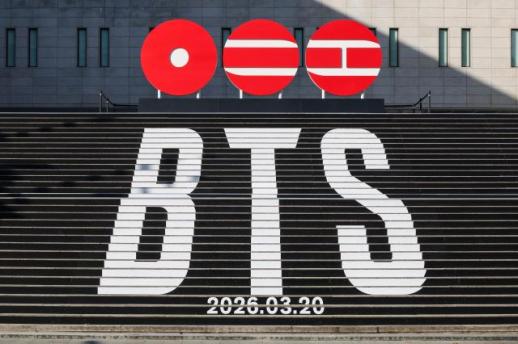 BTS Comeback D-12: Seoul goes hard on lodging and scalping SEOUL, March 09 (AJP) - South Korea and its capital city authorities have intensified inspections of accommodations and launched a massive crackdown on ticket scalping as the K-pop legend is preparing for its comeback with a free public concert in central Seoul on March 21. The multi-agency enforcement effort follows the discovery of widespread lodging violations and reports of tickets for the free event being resold for hundreds of thousands of won. The Seoul City said Sunday that 18 lodging facilities near the concert site were caught violating regulations during a campaign aimed at preventing price gouging. Lodging inspections ahead of BTS concert The Special Police Bureau for Citizens' Livelihood and Safety, an investigative unit within the Seoul city government, conducted surprise inspections from February 25 to March 4 at 83 hotels and tourist accommodations around Gwanghwamun Square. The square will serve as the venue for the group's comeback performance on March 21. The inspections were carried out jointly with district authorities in Jongno-gu and Jung-gu, as well as the Seoul Metropolitan Police Agency. The city began monitoring facilities in January after the Korea Heritage Service granted conditional approval for the use of the historic site. Investigators found that 18 establishments failed to post lodging rates or business registration certificates, which are required under the Public Health Control Act. Under the law, accommodation providers must display their business registration certificate inside the premises and clearly post room rates at reception desks, charging customers according to the listed prices. Authorities reported violations including unmanned lodging facilities operating without rate displays and businesses that had never posted rate tables since opening. Operators of the establishments will be referred for investigation. Violations can carry up to six months in prison or fines of up to 5 million won, along with administrative penalties such as business suspension. Whistleblower rewards for lodging violations The city government has established a public reporting system to identify further violations, including unauthorized rentals in officetels and failure to follow posted rates. Reports can be submitted through the Seoul Smart Complaint Reporting app or the city’s civic portal until the day of the concert. Whistleblowers who provide significant evidence of lodging violations may receive rewards of up to 200 million won after a formal review. Byun Kyung-ok, head of the Special Police Bureau for Citizens’ Livelihood and Safety, said the inspections are intended to protect the city's reputation during the high-profile event. "We will continue strong inspections and investigations into illegal lodging operations until the concert to ensure that foreign visitors attending the BTS event do not experience inconvenience during their stay in Seoul," Byun said. Government mobilizes crowd safety measures The Ministry of the Interior and Safety has launched a nationwide crowd-management effort to handle the influx of fans. Interior Minister Yoon Ho-jung is scheduled to chair a multi-agency safety meeting on Wednesday involving central government ministries, the Seoul city government, police, fire authorities, and Seoul Metro. A joint government safety inspection team will conduct on-site checks from March 19 to March 20, reviewing potential bottleneck areas and emergency response systems. On the day of the event, the minister is expected to personally inspect high-risk areas including subway stations and narrow pedestrian corridors. Citywide fan festival The concert also marks the centerpiece of "BTS THE CITY ARIRANG SEOUL," a citywide fan experience project running from March 20 to April 12. The initiative is part of HYBE’s "THE CITY" model, which expands major concerts into urban-scale festivals by linking performances with exhibitions, themed attractions and tourism programs across the host city. The concept was first introduced in Las Vegas in 2022 during "BTS PERMISSION TO DANCE THE CITY – LAS VEGAS," when the entire city hosted BTS-themed attractions. These included a special Bellagio fountain show set to BTS music, photo exhibitions documenting the group’s concerts and rehearsals, and large-scale pop-up stores. HYBE also partnered with MGM Resorts International to operate BTS-themed hotel rooms across 11 MGM properties, offering fans welcome cards written by members and exclusive merchandise. Restaurants joined the program as well, offering a themed dining event called "Cafe in the City," where Korean dishes favored by BTS, including bibim noodles, tteokbokki, kimbap and fried chicken, were served as a curated tasting course. In Seoul, the upcoming edition will be held under the official title BTS THE CITY ARIRANG SEOUL. The citywide project is expected to be officially unveiled on March 20 through BTS’ official social media channels and HYBE’s fan platform Weverse. Scheduled to run from March 20 to April 12, the program will transform parts of Seoul into a large-scale fan experience zone linked to BTS' comeback. It will feature media-facade installations at landmarks such as Sungnyemun Gate and N Seoul Tower, along with fan lounge programs at Yeouido Hangang Park and urban media-art displays inspired by BTS song lyrics. Byun Kyung-ok, head of the Special Police Bureau for Citizens’ Livelihood and Safety, said inspections would continue until the day of the concert. "We will continue strong inspections and investigations into illegal lodging operations until the concert to ensure that foreign visitors attending the BTS event do not experience inconvenience during their stay in Seoul," Byun said. Authorities said inspections and monitoring efforts will remain in place as Seoul prepares for an influx of domestic and international visitors ahead of the concert. Nationwide crackdown on ticket scalping The Ministry of Culture, Sports and Tourism has designated the upcoming BTS performance as a model case for a new public-private crackdown on ticket scalping. Although the Gwanghwamun Square concert is a free event, authorities have detected cases of tickets being resold for up to 1.5 million won on secondhand trading platforms. Culture Minister Chae Hwi-young announced the launch of a public-private consultative body on March 5 to eradicate illegal ticket resales. The body includes the Fair Trade Commission, the National Police Agency, and major ticketing and secondhand platforms. Under recently passed amendments to the Public Performance Act, those found using automated "macro" programs to purchase tickets or reselling tickets at prices exceeding face value can face fines of up to 50 times the transaction amount. While the full weight of the new law takes effect in August, Minister Chae said the government would use all available tools to disrupt illegal sales immediately. Authorities are currently monitoring platforms for suspected proxy-booking and ID transfer schemes. The government has warned fans that any ticket identified as a scalped transaction will be canceled, and attendees may be denied entry following on-site identity verification. 2026-03-09 13:47:16
 -
 Shinhan Financial to Develop Corporate Growth-Focused Credit Rating System Shinhan Financial Group said Monday it will push ahead with a project to develop a “corporate growth credit rating system” as it seeks to expand support for corporate finance. The group said existing corporate credit rating methods in the financial sector are largely built around stability assessments based on past performance, such as financial results, making it difficult to fully reflect the future growth potential of technology-based companies and firms in emerging industries. Shinhan said the new system will go beyond finance-centered evaluations by incorporating forward-looking competitiveness factors, including a company’s technology capabilities, business model and industry outlook. Unlike conventional approaches that focus mainly on the likelihood of default, the system will apply criteria that consider growth stage and industry characteristics for companies with high growth potential, including venture, advanced-technology and innovative firms. In addition to existing finance and transaction data, Shinhan said it will use information on a company’s growth stage along with traditional financial data and alternative data to comprehensively analyze business viability, market growth potential and technological competitiveness. A Shinhan Financial official said the project will create “a new corporate evaluation framework” to more precisely assess companies with strong technology and growth potential, adding that the group will expand “productive finance” to support innovative companies and national strategic industries based on insight into industrial and future changes.* This article has been translated by AI. 2026-03-09 13:42:00