
Journalist

AJP
-
 Eom Ye-jin, Kim Han-seol Win Women’s Doubles at Korea Soft Tennis National Team Trials Eom Ye-jin of Mungyeong City Hall and Kim Han-seol of iM Bank won the women’s doubles title at the 2026 soft tennis national team trials. In the final on the last day of competition, held on the 7th at Palma Soft Tennis Stadium in Suncheon, South Jeolla Province, Eom and Kim beat Kim Yeon-hwa and Kim Yu-jin, both of Anseong City Hall, 5-3. In men’s doubles, Lee Hyeon-gwon and Park Jae-gyu, both of Eumseong County Hall, defeated Lee Ha-neul and Ryu Tae-woo, both of Suncheon City Hall, 5-3. The top three doubles teams from the trials and the top two finishers in singles will be selected for this year’s national team. Earlier, on the 2nd, Kim Jin-ung of Suwon City Hall and Hwang Jeong-mi of NongHyup Bank won the men’s and women’s singles titles at the 2026 trials. The athletes plan to enter the national training center in Jincheon, North Chungcheong Province, in mid-April. A final roster for this year’s Aichi-Nagoya Asian Games will be set through internal evaluation matches at the center.* This article has been translated by AI. 2026-03-07 20:15:00
 -
 Jung Suk-won Says Daughter Was Born After Two Miscarriages With Baek Ji-young Singer Baek Ji-young and actor Jung Suk-won said they experienced the pain of two miscarriages before having their daughter. On the 7th, Baek’s YouTube channel, “Baek Ji-young,” posted a video titled, “First reveal: The pregnancy story of Baek Ji-young♥Jung Suk-won’s daughter that came suddenly.” In the video, the couple congratulated a staff member on a pregnancy and looked back on when they were expecting their daughter, Jung Ha-im. Jung said he was filming “Kingdom” and “Bad Guys” at the time. He recalled that Baek woke him up one morning and told him, “We’re screwed.” Baek said she was on tour then and had been prescribed medication for throat problems. She said she told the doctor there was no chance she was pregnant, but a blood test that day showed she was. She added that she canceled concerts because of the pregnancy. Jung said the couple had “two miscarriages” and did not allow themselves to hope too much. “We thought, ‘Let’s just live well together,’” he said. “But when (Ha-im) was born, she was so beautiful.” He added that he cared for the baby when his wife went to perform, and called the time with his child “a gift.” Baek and Jung married in 2013 and welcomed their daughter in 2017. 2026-03-07 18:48:15
 -
 Actor Lee Jae-ryong Arrested After Alleged Drunk-Driving Crash and Leaving Scene Actor Lee Jae-ryong was arrested after allegedly causing a drunk-driving crash and leaving the scene, police said. The case has also drawn renewed attention to his recent appearance on the YouTube channel “Soolhanhyung Shin Dong-yup,” and has cast a shadow over the return of his wife, actor Yoo Ho-jung. According to Seoul’s Gangnam Police Station, Lee drove while intoxicated and struck a median near Samseong Jungang Station at about 2 a.m. on March 7. Police said he then left the scene, parked the vehicle at his home and stayed at an acquaintance’s residence before being arrested. He is being investigated on suspicion of violating the Road Traffic Act, including failing to take required measures after an accident. His blood-alcohol level at the time of arrest was high enough to warrant a license suspension, police said. Lee previously had his license revoked in 2003 after refusing a breath test following a drunk-driving accident. In 2019, he received a deferred indictment after damaging a signboard while intoxicated, on suspicion of property damage. Online commenters have since revisited an episode from last month in which Lee appeared with fellow actors. In the program, actor Ahn Jae-wook said Lee had the highest alcohol tolerance among actors he knows, adding, “I’ve never beaten him, and I’ve never seen him drunk.” Ahn also recalled thinking when he was younger, “How can someone drink like that?” and said Lee stayed composed even after multiple rounds of drinking. Because Ahn has also faced controversy in the past over two drunk-driving incidents, some viewers criticized the show, saying a program centered on drinking should not feature people with drunk-driving histories. Some have called for the video to be removed, but the production team has not taken action, according to the report. “Soolhanhyung Shin Dong-yup” is a channel in which broadcaster Shin Dong-yup drinks with guests while sharing candid conversations. It has about 2.07 million subscribers. Lee’s case has also affected Yoo, who is appearing in the KBS2 weekend drama “I Prescribe Love.” Yoo returned to television after 11 years, but the report said she now faces negative fallout from her husband’s incident. Lee and Yoo married in 1995 and have a son and a daughter. 2026-03-07 18:21:17
 -
 South Korea dispatches top trade envoys to U.S. to navigate tariff uncertainties SEOUL, March 07 (AJP) - South Korea has dispatched its top trade officials to the United States to ease growing uncertainties over U.S. tariff policies following a recent court ruling against the International Emergency Economic Powers Act (IEEPA), the industry ministry said Saturday. Minister of Trade, Industry and Energy Kim Jeong-gwan and Trade Minister Yeo Han-koo held talks with key U.S. counterparts on Friday to address pending bilateral trade issues and the implementation of tariff agreements. Kim met with U.S. Commerce Secretary Howard Lutnick to share Seoul's progress in fulfilling previous tariff pacts, including discussions on enacting a special law to boost investments in the U.S. He emphasized that existing bilateral tariff agreements must be effectively guaranteed as Washington pushes forward with trade measures under Section 122 of the Trade Act and Section 232 of the Trade Expansion Act in the wake of the IEEPA ruling. Separately, Yeo met with U.S. Trade Representative (USTR) Jamieson Greer to discuss implementation plans for non-tariff sectors. The two sides agreed to convene a U.S.-Korea Free Trade Agreement (KORUS FTA) joint committee at an appropriate time to finalize these plans. Yeo also discussed developments regarding Sections 122 and 301 of the U.S. Trade Act. He reiterated Seoul's stance that a recent Section 301 probe petition filed by an investment firm involving e-commerce giant Coupang should not negatively impact broader bilateral trade relations. The ministry vowed to continue friendly consultations with Washington to maintain a stable trade environment and minimize uncertainties for South Korean businesses. 2026-03-07 17:43:45
 -
 S.Korean fuel prices surge on Hormuz blockade, bypassing standard physical lag SEOUL, March 07 (AJP) - South Korean retail fuel prices have surged immediately following the blockade of the Strait of Hormuz, bypassing the standard two-to-three-week lag typically required for global crude fluctuations to reach domestic pumps. As of Saturday, the national average gasoline price reached 1,871.83 won ($1.39) per liter, up 178.94 won ($0.13) from Feb. 28, according to the Korea National Oil Corp (KNOC). Diesel prices outpaced gasoline, hitting 1,887.38 won per liter, raising concerns over an increase in broader logistics and transportation costs. The rapid hikes follow the escalating conflict involving the U.S., Israel, and Iran, which has disrupted transit through the Strait of Hormuz. South Korea relies on the Middle East for over 70 percent of its crude imports. Local refiners and gas stations attribute the immediate price increases to a preemptive rush to secure inventory amid supply uncertainties. Industry officials maintain that reflecting replacement costs immediately helps mitigate heavier market shocks, arguing that delaying the hikes could result in steeper, sudden price spikes later. The local surge mirrors global market anxieties. West Texas Intermediate (WTI) crude has topped $90 a barrel, with market forecasts warning it could reach $100. Global inflationary pressures are further compounded by U.S. stagflation fears, following a drop of 92,000 non-farm jobs in February and a rise in the unemployment rate to 4.4 percent. In response to domestic supply concerns, KNOC received 2 million barrels of joint-reserve crude from Kuwait at its Ulsan facility on Saturday, with another 2 million barrels from the UAE expected on March 22. South Korea currently holds 102 million barrels in strategic reserves. Meanwhile, the Ministry of Trade, Industry and Energy has launched special inspections into gas stations nationwide to crack down on illegal practices, including hoarding and price gouging. 2026-03-07 16:49:35
 -
 EV slump hits hard: SK On slashes 37 percent of Georgia plant staff SEOUL, March 07 (AJP) - SK Battery America, the U.S. unit of South Korean battery maker SK On, has laid off 37 percent of the workforce at its Georgia plant, citing slowing electric vehicle (EV) sales and a shifting market landscape. The company announced on Saturday that it cut 968 jobs out of its 2,566 employees at the manufacturing facility in Commerce, Georgia. The restructuring comes as the global EV transition loses momentum. The plant, which supplies batteries to automakers including Volkswagen and Hyundai Motor, was severely impacted by Ford Motor's recent decision to cancel production of its F-150 Lightning electric pickup truck. Ford's move follows the Trump administration's rollback of EV tax credits, prompting the U.S. automaker to pivot toward more profitable hybrid and internal combustion engine vehicles. In an emailed statement, SK Battery America called the job cuts a "difficult decision to adjust operations in line with market conditions." The company added that it remains committed to Georgia and to building a robust U.S. supply chain for advanced battery manufacturing. South Korean battery makers are facing broader headwinds as the transition from internal combustion engines to EVs decelerates in major markets like the United States. Despite the setback, parent company SK Innovation is proceeding with a second battery plant in Georgia dedicated to supplying Hyundai Motor, with production scheduled to begin in the first half of this year. Another facility in Tennessee, previously planned as a joint venture with Ford, is slated to open in 2028. A company official indicated that the Tennessee plant may supply both automotive and energy storage system (ESS) batteries. 2026-03-07 15:01:24
 -
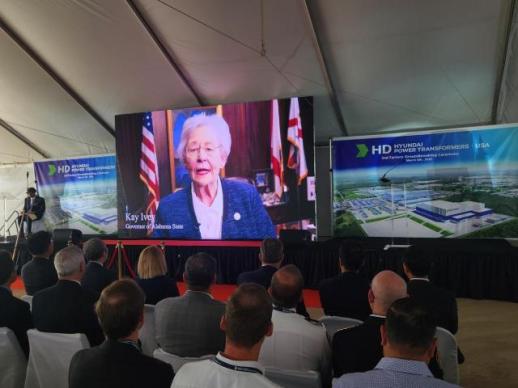 HD Hyundai Electric breaks ground on $200 mln transformer plant in US amid AI boom SEOUL, March 07 (AJP) - South Korea's HD Hyundai Electric has broken ground on a $200 million second transformer manufacturing plant in Alabama to meet surging power grid demand driven by artificial intelligence (AI) infrastructure and a resurgence in U.S. manufacturing. The power equipment maker held a groundbreaking ceremony on Saturday at its North American subsidiary in Montgomery. The new facility, spanning 48,215 square meters, is scheduled for completion in April next year. The expansion will boost the company's ultra-high-voltage transformer production capacity by 50 percent. To expedite delivery for clients such as AI data centers, which increasingly place bulk orders, the expanded facility utilizes an internal railway system that cuts transportation time by more than a week. "Through the establishment of the second plant, we will prepare for the future represented by AI by building and strengthening the U.S. transmission grid," HD Hyundai Vice Chairman Cho Seok said at the ceremony. Demand for power transformers has skyrocketed as tech companies build power-hungry data centers and the Trump administration pushes to bring manufacturing facilities back to the United States. Local politicians, including Alabama Senators Tommy Tuberville and Katie Britt, welcomed the investment via video messages, highlighting the critical role of transformers in energy policy and national security. Amid stricter U.S. immigration enforcement under the current administration, HD Hyundai Electric also emphasized its commitment to local hiring and strict visa compliance. The company plans to add about 140 local workers to its current workforce of roughly 460 once the second plant is completed. "We strictly verify immigration status during hiring and ensure all visiting staff enter with proper visas," said Kim Young-chul, Chief Operating Officer of the Montgomery plant. Since establishing its first Montgomery plant in 2011, the subsidiary's revenue has quadrupled from $100 million in 2017 to approximately $400 million in 2025. The company expects the second plant to generate an additional 200 billion won in annual sales. 2026-03-07 13:42:22
 -
 Korea Oil Groups Pledge Cooperation to Stabilize Pump Prices After U.S. Strike on Iran The Korea Petroleum Association, the Korea Petroleum Distribution Association and the Korea Gas Station Association said March 7 they will actively cooperate to help stabilize domestic fuel prices, which have been surging since the United States attacked Iran. The three groups said they will work together so that spikes in international oil prices are not rapidly passed through to prices at South Korean gas stations. The Korea Petroleum Association said it will join the government’s preemptive response system for energy supply and demand after authorities issued a “attention” level resource security crisis alert for crude oil and gas. The association said it will cooperate to ensure stable domestic supply of petroleum products and to help keep prices steady. The association noted that Singapore gasoline prices, a key benchmark used to calculate domestic prices, have been rising sharply. It warned that if those factors are reflected all at once in domestic prices, the public could face heavier burdens, including higher inflation. It said it will do its best to spread any increases over time at the pump. Domestic refiners said they will continue efforts to stabilize prices, noting that since the Russia-Ukraine war they have absorbed losses when fuel taxes were cut and immediately reflected the reductions at company-run gas stations. They also said they plan to disclose supply prices transparently to help maintain order in the petroleum market. The Korea Petroleum Distribution Association and the Korea Gas Station Association, representing fuel distribution, said they will urge agencies and gas station operators to appropriately reflect price increases during periods of sharp rises while also cooperating to keep supplies stable.* This article has been translated by AI. 2026-03-07 11:33:16
 -
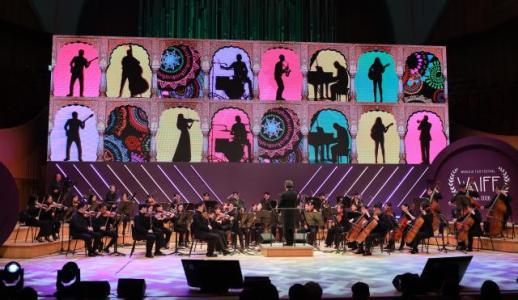 World AI Film Festival Seoul highlights how AI can expand filmmaking SEOUL, March 07 (AJP) - From scripts written with algorithms to films rendered entirely with digital tools, the World AI Film Festival in Seoul offered a glimpse of cinema’s next frontier — one where artificial intelligence works alongside human storytellers rather than replacing them. The festival, founded in Nice, France last year, brought its third edition to Seoul, a city widely seen as a global hub of high technology and the Korean cultural wave. The finale event on Friday at Lotte Concert Hall gathered filmmakers, technology companies, creators and audiences to explore how AI tools are reshaping storytelling and film production. More than 2,000 entries were submitted to this year’s competition, up from 1,500 for the inaugural festival in Nice, reflecting rapidly growing global interest in AI-assisted filmmaking. The concert hall was filled with attendees eager to witness the emerging field of AI cinema. The evening featured a purple-carpet reception, an awards ceremony and live performances, including a celebratory stage by Korean singer Insooni that drew enthusiastic applause from the audience. Several cultural figures also attended the event. Actress Hwang Seok-jeong highlighted how new technologies are opening creative opportunities for storytellers. “Anyone can now express their ideas and stories through visual media,” she said. “Events like this show how storytelling will evolve in the AI era.” The program began with a purple-carpet reception, followed by opening remarks, panel presentations and the awards ceremony. Festival founder Marko Landi said artificial intelligence is helping democratize filmmaking by lowering barriers to entry. “AI gives young creators the opportunity to make films faster and at lower cost,” he said. “One of the major objectives of this festival is to discover new talent, protect their rights and reward their creativity.” During a panel discussion, the Cheif AI Officer at the Blue House Ha Jung-woo emphasized that artificial intelligence should be seen as a creative partner rather than a replacement for filmmakers. “AI is not here to replace human creativity,” he said. “It is a tool that expands what creators can imagine and produce. The future of cinema will come from collaboration between human storytelling and intelligent technology.” Screenwriter David Bendi, who presented the screenplay award, also underscored the enduring importance of storytelling in filmmaking. “A story is the beginning of everything,” he said. “You can have all the tools in the world, but without a powerful story nothing truly happens.” Several awards recognizing AI-assisted filmmaking were presented during the ceremony. Director Kim Won-kyung won the grand prize in the AI short film category for “Known or Unknown.” The excellence award went to director Lim Da-young for “Losing,” a film that explores the emotional tension before saying goodbye to a loved one through the perspective of a mother. The encouragement award was presented to “The Dog, the Octopus and Me,” produced by AI content studio AI Revolution. The whimsical film depicts the unusual coexistence of a human, a dog and an octopus after the sea creature escapes being cooked. Jessie Yang of MiniMax, who announced the Youth Film Award, praised the creativity of emerging filmmakers. “The works submitted by young creators exceeded our expectations and showed remarkable individuality and potential,” she said. Another standout entry, “We Looked Away,” centers on a mysterious door on a mountainside that a village community silently agrees to ignore. Through the villagers’ shared silence, the story explores themes of moral responsibility, collective denial and the choices people make when confronted with uncomfortable truths. Accepting the award, filmmaker WK Kim said he had not expected the recognition. “I flew in from Seogwipo in Jeju this morning hoping to attend the festival,” he said. “I had only used AI as a work tool before, and this was the first time I tried creating content with it.” He added that the experience felt like “the beginning of a second chapter” in his life as a creator. Organizers said the festival illustrates how AI technology is rapidly transforming the filmmaking landscape, opening new opportunities for independent creators while redefining the boundaries of cinematic storytelling. 2026-03-07 11:31:16
 -
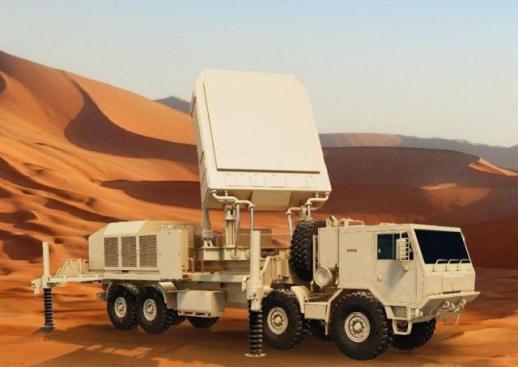 Hanwha Systems to sell 1.7 trillion won stake in Hanwha Ocean for defense, IT investments SEOUL, March 07 (AJP) - South Korea's Hanwha Systems said it will sell a 1.7 trillion won ($1.2 billion) stake in its shipbuilding affiliate Hanwha Ocean to secure funds for strategic investments in the defense and information technology sectors. The company's board on Friday approved the sale of 13.92 million shares, representing a 4.54 percent stake, at 122,100 won per share, based on Thursday's closing price. The transaction will reduce Hanwha Systems' holding in the shipbuilder to 7.03 percent from 11.57 percent. The sale amount accounts for 29.70 percent of the company's total assets and 70.35 percent of its equity capital as of the end of 2024. The shares will be sold via an off-hours block trade scheduled for April 6, with the settlement due on April 8, the company said in a regulatory filing. The deal is structured as a one-year price return swap (PRS) agreement with seven special purpose companies: The Sara First, Felix OS First, Felix OS Second, KIS ON Tenth, KIS Prime Fourth, N2 Glory First, and N2 Glory Second. Under the terms, Hanwha Systems will compensate the buyers if Hanwha Ocean's stock price falls below the benchmark price at the time of settlement. Hanwha Systems plans to use the proceeds to accelerate investments in key projects, including a South Korea-U.S. shipbuilding cooperation initiative known as MASGA (Make American Shipbuilding Great Again). 2026-03-07 10:27:14