SEOUL, January 16 (AJP) - South Korea’s exports remain resilient, but the country is steadily losing ground in global competitiveness in some sectors, according to a report released Friday by the Bank of Korea.
While headline export figures have held up, shipments of major non-IT goods — excluding semiconductors — have been largely stagnant for years, deepening performance gaps across industries.
South Korea’s share of the global export market has been on a downward trajectory since 2018, as competition intensifies, particularly from China. Export growth since the COVID-19 pandemic has been concentrated in a handful of sectors, most notably semiconductors, while non-IT exports have effectively stalled since the mid-2010s, according to the report.
Overall exports are expected to rise this year, supported by strong semiconductor demand. But persistent weakness in non-IT sectors could further widen disparities among products, highlighting structural vulnerabilities in the export base.
By sector, the bank said steel and machinery have suffered a broad decline in competitiveness as global demand slows and both product quality and market positioning weaken. Expanded Chinese supply has intensified competition, weighing on South Korea’s presence in key markets such as Southeast Asia.
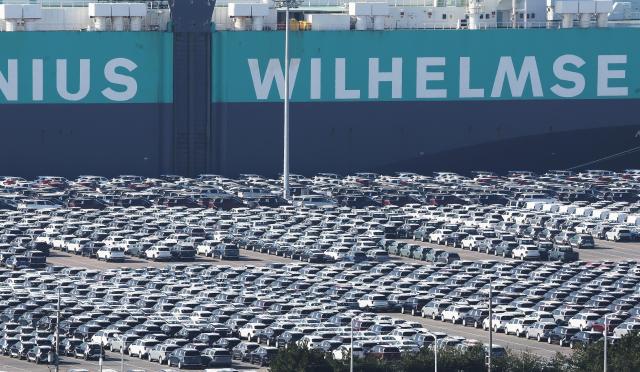
Automakers strengthened competitiveness through brand premiumization and the development of dedicated electric-vehicle platforms, while semiconductor makers maintained a technological edge in high value-added memory chips and benefited from rising demand linked to artificial intelligence.
Still, risks are mounting. The bank warned that global automakers are expanding local production in major export markets, potentially eroding South Korea’s market access. In semiconductors, China’s rapid progress could weaken competitiveness in general-purpose, lower-spec memory chips, the BOK said.
* This article, published by Aju Business Daily, was translated by AI and edited by AJP.
Copyright ⓒ Aju Press All rights reserved.