
Journalist

AJP
-
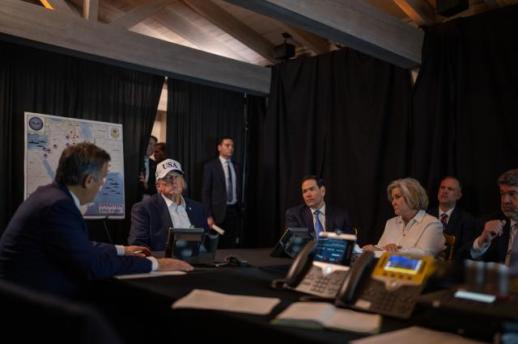 Day 7 Middle East War: Trump's Iran war exposes fractured alliances and global ripples SEOUL, March 06 (AJP) - The U.S.-Israeli strikes on Iran under Operation Epic Fury have done more than cripple Tehran’s leadership and military infrastructure. They have also exposed deep fractures in the Western alliance system and revived questions about the future of the post–World War II international order. The campaign began with the assassination of Iranian Supreme Leader Ayatollah Ali Khamenei on Feb. 28 — a dramatic opening move that President Donald Trump framed as a decisive effort to dismantle Iran’s military and nuclear capabilities. Yet the manner in which the operation unfolded — executed without meaningful consultation with traditional allies — has underscored a striking shift in Washington’s approach to global security: rapid unilateral action first, alliance management later. As Iranian missiles and drones struck Gulf targets, including near Dubai’s airport, the war quickly illustrated the unpredictable consequences of that approach. Italy’s defense minister Guido Crosetto, who happened to be vacationing in Dubai when retaliation hit the United Arab Emirates, later acknowledged that even analysts had not expected Iranian strikes on Gulf commercial hubs. Allies left in the dark Europe’s major powers — long pillars of the transatlantic alliance — were largely excluded from pre-strike deliberations, forcing governments into awkward post-facto positioning. French President Emmanuel Macron publicly acknowledged Paris had been “neither informed nor involved,” a rare and pointed rebuke that echoed across Europe. The European Union eventually convened an emergency security meeting more than two days after the strikes began, highlighting the continent’s discomfort with a war initiated outside its consultation structures. Even Britain, traditionally Washington’s closest military partner, found itself politically divided. Prime Minister Keir Starmer had earlier denied U.S. access to the British-controlled Diego Garcia base in the Indian Ocean. His subsequent cautious endorsement of the strikes drew criticism from both Labour’s anti-war wing and Conservative hawks demanding stronger support for Washington. The diplomatic confusion extended across the Middle East as well. Gulf states condemned violations of their airspace while simultaneously bracing for Iranian retaliation across the region. Saudi Arabia, the United Arab Emirates and other Gulf monarchies have since faced waves of drone and missile attacks on civilian and energy infrastructure. Russia, meanwhile, has limited its response largely to rhetoric. Foreign Minister Sergei Lavrov condemned the strikes as aggression following talks with Iranian officials, but Moscow has offered little tangible assistance. The muted response reflects Russia’s weakened position after years of geopolitical setbacks, including heavy losses in Ukraine and the collapse of allied governments in parts of the Middle East. No coalition for ground war Security experts say the structure of the operation itself suggests Washington is not seeking a multinational ground campaign similar to those in Iraq or Afghanistan. Andrew Gordon of Harvard University said Trump’s decision to launch the war without building an international coalition will likely deter allied participation in any potential invasion. “No one expects multiple countries to join a U.S. intervention sending troops into Iran,” he said. Instead, analysts say the operation appears designed as an air- and cyber-heavy campaign aimed at weakening the Iranian state without occupying the country. Chiara Redaelli of the University of Geneva described the strategy as a shift toward coercive regime pressure conducted largely from the air. “The operation signals a move from limited strikes toward sustained military pressure without the political burden of occupation,” she said. Several analysts also expect the conflict to remain relatively short. Muhamed H. Almaliky of Harvard argues Iran’s missile and drone stockpiles could be depleted within several weeks if the country receives no outside assistance. He added regarding Iran: "Iran does not have partners or allies of the type willing to endure the risk and consequences of joining it. Apart from the proxies in Lebanon, Iraq and Yemen who are not expected to have a substantial impact on the course of the war." European participation is likely to remain limited to defensive naval deployments protecting shipping lanes, according to historian Jeremy Friedman of Harvard. A short war — but lasting disruption Even if the fighting ends quickly, analysts warn the geopolitical and economic disruptions could persist far longer. Christian Bueger of the University of Copenhagen notes that insurance premiums, shipping routes and global energy markets often remain unstable well after military operations subside. “The conflict itself may last weeks, but disruptions to trade and maritime security can last much longer,” he said. Bueger added, "U.S. leadership continues to be unpredictable. For Korea, stable regional and international partnerships become ever more important. That includes the relationship to Japan, but also ASEAN and the EU." Kenneth Rogoff, the Harvard economist, adds that the war’s strategic lessons will be closely watched by other states. He said regarding the possibility of other countries joining the war: "the US will almost certainly get some other countries to join in, though probably it will require exerting considerable leverage to do so." North Korea, already armed with nuclear weapons, may draw the conclusion that nuclear deterrence remains the ultimate protection against external intervention. Strains on the rules-based order Operation Epic Fury also raises broader questions about the future of the international system built around U.S. alliances and multilateral institutions. Jeffrey Frankel of Harvard Kennedy School said the unilateral nature of the intervention represents another blow to the post-war global framework Washington helped build. “It’s another blow to the 80-year structure of alliances and multilateral rules that the United States itself created,” he said. Redaelli similarly warned that the growing gap between Western rhetoric about a “rules-based order” and the willingness to use unilateral force risks weakening the credibility of international law. For South Korea, the war’s most immediate impact is economic rather than military. The country relies heavily on Middle Eastern energy supplies, with much of its oil passing through the Strait of Hormuz, a strategic chokepoint now under heightened risk. South Korean lawmakers have warned that even a short disruption could ripple through domestic industries ranging from petrochemicals and shipping to aviation and semiconductors. “If the Strait of Hormuz issue is not resolved promptly, Korea will inevitably be affected across all industries,” said Democratic Party lawmaker Maeng Seong-gyu, chairman of the National Assembly’s transport committee. Others see a deeper shift in the global security environment. People Power Party lawmaker Kim Ki-woong, a former vice minister of unification, argued the conflict reflects a broader transformation in international politics. “The era of norms, order and morality has ended,” he said. “We have entered an era where power is openly displayed.” As Operation Epic Fury enters its second week, its military trajectory remains uncertain. But the geopolitical implications are already clear. Trump’s strategy of decisive, alliance-light military action may weaken adversaries quickly. Yet it also risks reshaping alliances, challenging global norms and deepening geopolitical fault lines far beyond the Middle East. For countries like South Korea — deeply tied to global energy flows and U.S. security guarantees — the conflict is a stark reminder that wars fought thousands of miles away can still reshape the strategic landscape at home. 2026-03-06 17:03:18
 -
 Volkswagen Group EV Deliveries Top 4 Million, Plans 20-Plus New Models This Year Volkswagen Group said Thursday that cumulative deliveries of its battery-electric vehicles have surpassed 4 million. On the back of that milestone, the automaker said it holds about 27% of Europe’s EV market. Of the 4 million EVs delivered, 77% were built in Europe. Volkswagen Group has 11 production sites there: Emden, Zwickau, Hanover, Bratislava, Mlada Boleslav, Ingolstadt, Neckarsulm, Leipzig, Zuffenhausen, Munich and Sodertalje. Two additional plants set to begin operating this year — Pamplona and Martorell — will produce the Core Brand Group’s city EV family models. The Wolfsburg plant, Volkswagen’s main production hub, and Bentley’s plant in Crewe, England, are also preparing for EV production, the company said. About 20% of the group’s EVs are currently produced in China, where it has four production sites: Anting, Foshan, Hefei and Changchun. Volkswagen Group said 95% of its EV deliveries are concentrated in three key markets — Europe, China and the United States. Europe accounted for 68%, followed by China at 20% and the U.S. at 8%. Other markets made up about 5%. Compact-class vehicles were the most popular segment, representing about 70% of deliveries. Key models include the Volkswagen ID.3 and ID.4, the Skoda Enyaq, the Cupra Born and the Audi Q4 e-tron. By body type, SUVs and crossover-style models accounted for more than half of demand. The group’s first mass-produced EV model was the VW e-up, launched in 2013, followed by the VW e-Golf in 2014. Since 2019, it has rolled out cross-brand models based on its dedicated EV platform, MEB (Modular Electric Drive Matrix). About 3 million MEB-based vehicles have been delivered, the company said. Over the past two years, Volkswagen Group said it has refreshed its portfolio with about 60 new models, about one-third of them fully electric. In passenger cars alone, it now offers more than 30 battery-electric models, ranging from small cars to luxury SUVs. It has also expanded its lineup to include battery-electric trucks and buses from TRATON brands including Scania, MAN, International and Volkswagen Truck & Bus. Volkswagen Group said it plans to add more than 20 new models this year, about half of them fully electric. The rollout includes new EVs aimed at China and an entry-segment “city EV family” of four models for Europe. * This article has been translated by AI. 2026-03-06 16:48:19
 -
 Jay Park Says He Felt Only Sorry When He Left 2PM Singer Jay Park has spoken about leaving the K-pop group 2PM. Park appeared on the YouTube channel "Eyes Magazine" on March 5. "At the time I left the team, I only felt sorry and apologetic," he said, adding that he had caused "disrespect and harm" to many people. He said he did not feel anxious. "I really live by accepting things as they come," Park said. "I’m the type to do my best in the situation I’m given, so I wasn’t anxious." Park also described a cover video he posted from Seattle after leaving 2PM, calling it "the reason I was able to come back." He said YouTube was surging at the time and it was popular for Asian Americans to upload cover videos. He said he filmed the clip in a bathroom on a MacBook he had received as a gift to share his musical tastes, and it reached 3 million views in a day. He said that led to offers and allowed him to resume activities. Park, who was promoting with 2PM, left the group in 2009 and returned to the United States after posts he had left on U.S. social media became controversial amid claims they criticized South Korea. He later debuted as a solo singer and is currently a singer and the head of an agency.* This article has been translated by AI. 2026-03-06 16:39:19
 -
 Kwon Noh-kap to Hold Book Launch for ‘Kwon Noh-kap: 100-Year Biography’ at National Assembly Museum Kwon Noh-kap, chairman of the Kim Dae-jung Foundation (96) and a standing adviser to the Democratic Party, will hold a publication ceremony on March 6 at the National Assembly Museum in Yeouido for his book, “Kwon Noh-kap: 100-Year Biography,” which sums up his political life. The book features comments on Kwon from 117 people, ranging from presidents and first ladies to National Assembly speakers, prime ministers, ministers, political allies and juniors, rivals and friends. It is both a tribute to a veteran politician and a record of modern South Korean political history. Congratulatory messages (to be read on behalf of the speakers) are scheduled from President Lee Jae-myung, former first lady Kwon Yang-sook and former President Moon Jae-in. Video messages are also planned from National Assembly Speaker Woo Won-shik and Democratic Party leader Jung Cheong-rae. Prime Minister Kim Min-seok, former National Assembly speakers, the head of the National Assembly Alumni Association and other senior political figures are expected to attend and offer remarks. The book is divided into four parts. Part 1 includes recollections of Kwon by figures such as Moon, Woo and Kim. Part 2 traces an era marked by industrialization and democratization, division and solidarity, portraying Kwon as guided not by power but by what he believed was the right direction. Part 3 describes years of hardship endured in the struggle for democratization and persistent preparations aimed at a change of government. Part 4 focuses on Kwon’s present, depicting him as someone who, even as he nears 100, chooses to keep learning rather than to teach. Kwon said, “I cannot fully express my gratitude to the colleagues and juniors who wrote for this book.” * This article has been translated by AI. 2026-03-06 16:31:13
 -
 KB Kookmin Bank Nominates Yeon Tae-hoon as New Outside Director KB Kookmin Bank said Thursday its outside director nomination committee recommended one new outside director and three outside directors for reappointment. The committee nominated Yeon Tae-hoon, a senior research fellow at the Korea Institute of Finance, as the new outside director candidate. Yeon graduated from Seoul National University with a degree in economics and earned master’s and doctoral degrees in economics at the University of Michigan. He previously worked at the Korea Institute of Public Finance and the Korea Development Institute, and now researches capital markets and financial consumer protection, among other topics, at the Korea Institute of Finance. Yeon has also served as an outside director at IBK Investment & Securities, Sh Suhyup Bank, Hyundai Card and Korea Growth Investment Corp. He has held roles including a deliberation member at the Credit Recovery Committee and chair of the Financial Services Commission’s conflict management review committee. The bank said he is regarded as having both on-the-ground financial experience and expertise in consumer protection. The committee said it made the final recommendation after six meetings and three rounds of screening and qualification reviews. Outside directors Moon Soo-bok, Kim Sung-jin and Lee Jung-sook were recommended for reappointment for one-year terms. The nominees are to be formally appointed after a vote at the annual shareholders meeting on March 25. Outside director Seo Tae-jong will step down after the shareholders meeting as his maximum term ends.* This article has been translated by AI. 2026-03-06 16:24:20
 -
 Celltrion, Yuhan, Dongkook Pharma and Kolon TissueGene Report New Study, Awards and Deals Celltrion: 52-week Stekima results show long-term treatment competitiveness Celltrion said Thursday that 52-week results from a global Phase 3 trial of its autoimmune disease treatment Stekima (ustekinumab) were published in the international dermatology journal Dermatologic Therapy. The study analyzed 52-week long-term data from a global Phase 3 trial involving 509 patients with moderate to severe plaque psoriasis. It assessed Stekima versus the originator drug across efficacy, safety, immunogenicity and pharmacokinetics. Patients were initially assigned to Stekima or the originator. From week 16, those on the originator were randomized either to continue the originator or to switch to Stekima and were followed through week 52. Results showed similar efficacy between the Stekima and originator groups. Among patients who switched from the originator to Stekima, efficacy remained stable compared with those who stayed on the originator. Safety findings were also comparable, with no meaningful differences in adverse events across groups. Yuhan named a 2025 top disclosure company Yuhan Corp. said Thursday it was selected as an “excellent disclosure company” on the Korea Exchange’s main board at the 2025 securities market disclosure awards ceremony held Wednesday at the exchange’s Seoul office in Yeouido. The designation is awarded to listed companies based on the accuracy, timeliness and completeness of disclosures, as well as efforts to communicate with investors. Yuhan said it was recognized for strengthening trust in capital markets through faithful and transparent disclosures and for providing useful information to investors in a timely manner. The company said it has continued to manage disclosure quality and strengthen internal processes to improve reliability while maintaining communication with investors, efforts it said contributed to greater market transparency. Dongkook Pharmaceutical signs Korea distribution rights deal for Inhilo Plus skin booster Dongkook Pharmaceutical said Thursday it signed a distribution rights agreement to expand domestic distribution of Inhilo Plus, a dual hyaluronic acid (HA)-based skin booster. Inhilo is an injectable HA-based product approved as a Class 4 medical device categorized as a biomaterial for tissue repair. It is designed to provide immediate hydration through HA while stimulating fibroblasts to improve the skin’s structural environment via the extracellular matrix, the company said. Dongkook said Inhilo’s dual-HA design combines low- and high-molecular-weight hyaluronic acid in one syringe (2 mL), which it said can support skin improvement effects. Through the Korea rights agreement with BS Pharm Korea, Dongkook said it plans to secure a stable distribution network for Inhilo and strengthen its position in the domestic aesthetic medical market. Kolon TissueGene presents knee osteoarthritis therapy at U.S. orthopedics meeting Kolon TissueGene said Thursday that co-CEOs Jeon Seung-ho and Noh Moon-jong attended the 2026 American Academy of Orthopaedic Surgeons meeting, held March 2-6 local time in New Orleans, Louisiana. The company described AAOS as the world’s largest orthopedics conference, drawing about 16,000 specialists and global biotech industry participants to share the latest research. Kolon TissueGene said it presented existing clinical data and research progress for TG-C, which it is developing to treat knee osteoarthritis. The company said TG-C could offer an alternative for patients whose current options focus on pain relief or for whom total knee arthroplasty is the only fundamental treatment. It also said it held discussions with potential partners on TG-C commercialization, including talks with medical affairs staff and advisory groups at global pharmaceutical companies on the therapy’s medical value and commercialization strategy. 2026-03-06 16:21:00
 -
 South Korea secures 6 million barrels of crude oil from UAE to curb soaring fuel prices SEOUL, March 6 (AJP) - South Korea has secured over 6 million barrels of crude oil from the United Arab Emirates (UAE), Cheong Wa Dae said on Friday. "We have consulted with the UAE to secure crude oil, and the good news is that we were able to secure more than 6 million barrels," presidential chief of staff Kang Hoon-sik said during a press briefing on Friday, adding that it will help stabilize oil prices. Fuel prices in South Korea have been rapidly rising amid the escalating conflict in the Middle East shortly after U.S.-led airstrikes on Iran last week, sparking fears of an energy crisis and prompting the government to vow a crackdown on price collusion and other unfair practices. Kang also said that an additional passenger flight carrying South Korean nationals and other travelers stranded in Dubai is set to arrive at Incheon International Airport later in the day, following discussions with the UAE to ensure their safe return. He pledged to continue talks with the UAE to dispatch a chartered flight to bring back those unable to return due to the closure of airports in Dubai. 2026-03-06 16:13:03
 -
 LIG Nex1 Named KRX’s 2025 Award Winner for English-Language Disclosures LIG Nex1 said March 5 it was selected as a “2025 Excellent English-Language Disclosure Company” at an awards ceremony hosted by the Korea Exchange (KRX). The KRX honor recognizes companies that provide high-quality English disclosures quickly and accurately, helping improve capital-market transparency and strengthen trust among global investors. Award recipients receive benefits including a five-year grace period from designation as an unfaithful disclosure company, exemption from annual training and exemption from listing fees. LIG Nex1 said it began issuing English disclosures in 2021, ahead of the phased introduction of mandatory English disclosures, to reduce information gaps between domestic and overseas investors by providing timely and accurate filings. The company said the latest recognition follows its selection as a “2022 Excellent Disclosure Company” for corporate governance report filings and as a “2024 KOSPI Market Excellent Disclosure Company.” “This achievement reflects the results of 10 years of efforts to faithfully meet disclosure obligations since listing on the KOSPI market,” a company official said. “We will continue to prioritize transparent communication with investors at home and abroad to enhance our corporate value in the capital market.”* This article has been translated by AI. 2026-03-06 16:09:20
 -
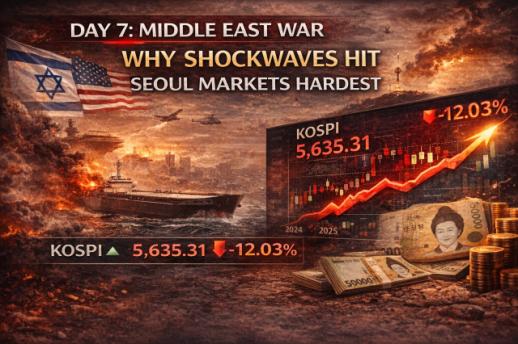 Day 7 Middle East War: Why shockwaves hit Seoul markets hardest As the war triggered by U.S.–Israeli strikes on Iran enters its first week, AJP examines how the conflict began and evolved, the emerging power vacuum in Tehran and its implications for Iran and the Gulf states, and the broader impact on global energy routes, financial markets and the international order. SEOUL, March 06 (AJP) - South Korea’s stock market entered 2026 in a euphoric rally. The benchmark KOSPI surged nearly 50 percent in the first two months of the year, pushing past the 6,300 level after an extraordinary 76 percent gain in 2025, making it one of the world’s strongest equity markets. The mood reversed abruptly when investors returned from a long holiday weekend to the shocking news of U.S.–Israeli strikes on Iran that killed the country’s supreme leader and senior military officials. Within days, the Korean equity market experienced one of the most dramatic swings in its history. The first week of the Middle East war triggered a historic whipsaw in Seoul, sending the KOSPI plunging 12 percent in a single session — the worst crash on record — before rebounding nearly 10 percent the next day as oil prices, the Korean won and foreign investor positioning repriced simultaneously. By the end of the first week of March, the market was still roughly 10 percent lower than before the war began. On Wednesday — the second trading day after the weekend strikes — the KOSPI collapsed 12 percent. The index then surged back the following day in a near mirror-image rebound. The tug-of-war continued through Friday as retail investors and foreign funds battled for control of the market, producing one of the most volatile trading weeks in decades. “This market is not for the faint of heart,” veteran investor Jim Bianco wrote on X. Part of the turbulence reflected timing. Korea’s market had been closed for a three-day holiday from Feb. 28 to March 2, compressing the geopolitical shock into the first two trading sessions of March. But the magnitude of the swings also revealed how quickly risk premiums can be repriced in Korea — a market where oil prices, the currency and foreign investor flows often move together. Hormuz shock ripples across Asia The war’s financial shock spread quickly across Asia, a region heavily dependent on Middle Eastern energy shipments passing through the Strait of Hormuz. Although the strait was not formally closed, Iranian threats against vessels and heightened military tensions effectively slowed shipping traffic and increased the perceived risk of disruption. For global markets, the mere possibility of disruption was enough. Even without a full blockade, the risk feeds into energy costs through multiple channels: higher war-risk insurance premiums, tanker rerouting, delivery delays and rising freight rates. Those costs ultimately raise the landed price of oil and industrial inputs. For Korea, those risks translate directly into market volatility. The country imports about 70.7 percent of its crude oil and roughly 20.4 percent of its liquefied natural gas from the Middle East, leaving it unusually exposed to geopolitical disruptions in the Gulf. When global investors move into risk-off mode, those structural vulnerabilities quickly become an equity story. Energy is priced in dollars. When oil rises while the Korean won weakens, the import bill increases twice — lifting inflation risks and squeezing corporate margins. That dynamic was visible throughout the week. The dollar-won exchange rate climbed from 1,439.8 before the war to 1,480.6 by Thursday, briefly touching 1,506.7, a level widely seen by investors as a psychological stress threshold. Meanwhile Brent crude jumped from $72.48 to $84.31, reaching an intraday high of $86.27. For Korea, oil and foreign exchange tend to reinforce each other. When both move at once, the market typically reprices risk more aggressively than peers with lower energy exposure or weaker FX sensitivity. Foreign selling amplifies the drop Foreign investor flows amplified the volatility. Korea’s equity market has one of the highest foreign participation rates among major markets, meaning global portfolio shifts can move the index rapidly. Foreign investors had already been trimming positions after Korea’s extraordinary rally. Data from the Korea Exchange show foreign investors sold 26.1 trillion won worth of shares in the benchmark market this year as of March 3. The selling was concentrated in the large-cap stocks that had led the rally — particularly Samsung Electronics and SK Hynix, the backbone of the KOSPI. Foreign investors sold 22 trillion won worth of Samsung Electronics shares and 10.5 trillion won of SK Hynix, while also trimming positions in Hyundai Motor and Hyundai Mobis. Retail investors moved aggressively in the opposite direction. Individuals bought 12.8 trillion won of Samsung Electronics and 6.7 trillion won of SK Hynix, absorbing much of the foreign selling pressure. According to Noh Dong-gil, a researcher at Shinhan Securities, foreign investors were not abandoning Korea entirely but were rebalancing their portfolios. “They reduced exposure to semiconductors — the key driver of KOSPI volatility — while adding defensive or policy-related stocks,” he said. “The problem was the scale and speed of the selling, which amplified the market’s decline.” Base case vs. Stress case For strategists, the week’s violent swings reflected a rapid shift between base-case and stress-case geopolitical scenarios. Kim Do-un, a senior analyst at Hana Securities, described the whipsaw as a market briefly pricing in an extreme energy shock. Historically, he said, Middle East crises often create buying opportunities — provided the conflict does not escalate into a prolonged oil shock. “If the conflict doesn’t escalate into an all-out regional war and oil does not move into the $100 to $120 range, then the pullback at these levels can be interpreted as a healthy correction,” Kim said. “What we saw was the market’s center of gravity shifting — at least temporarily — from the base scenario toward the worst-case scenario.” Kim mapped those scenarios into index levels. “If the conflict remains contained within roughly two months and the currency stabilizes, the KOSPI’s lower bound would likely be around 5,600,” he said. “But if Hormuz disruption intensifies, the won breaks above 1,500 again and oil approaches $120, then a move toward 5,000 becomes plausible.” 2026-03-06 16:02:53
 -
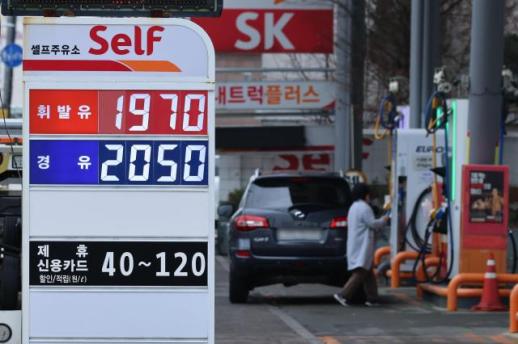 Day 7 Middle East War: Hormuz chokepoint jolts Korean macroeconomy SEOUL, Mar 06 (AJP) - The war in the Middle East is reverberating far beyond the battlefield. For South Korea — one of the world’s most energy-dependent industrial economies — the shock is moving rapidly through the core channels of the macroeconomy: the currency, bond yields, financial markets and ultimately consumer prices. The immediate trigger is the Strait of Hormuz, the narrow maritime corridor off Iran’s coast through which a large share of the world’s seaborne oil passes. Even without a formal closure, the risk of disruption has been enough to push energy prices, freight costs and financial volatility sharply higher. For Seoul, the result has been a swift repricing of risk across markets. The Korean won has been the first pressure point. As of 2 p.m. Friday, the currency was trading around 1,471 per dollar, nearly 3 percent weaker than the Feb. 25 pre-war level of 1,426.69. During Wednesday’s overnight trading, the won briefly slipped past the 1,500 mark, its sharpest intraday drop since the Asian financial crisis. Verbal intervention from the Bank of Korea (BOK) helped stabilize the currency near 1,462, though it weakened again toward 1,480 the following day. Between the New York close on Feb. 26 and March 3, the won fell 3.15 percent, the steepest decline among major currencies. Over the same period, the New Taiwan dollar dropped 1.39 percent, the Japanese yen 1.01 percent and the euro 1.54 percent. Bond markets reacted just as sharply. On March 3, the yield on Korea’s three-year government bond rose 13.9 basis points to 3.18 percent, while the 10-year yield climbed 14.8 basis points to 3.594 percent — a steeper increase than the rise in U.S. Treasury yields that day. The pressure on the currency reflects Korea’s structural exposure to energy shocks and global capital flows. South Korea imports roughly 70 percent of its crude oil from five Middle Eastern suppliers — Saudi Arabia, the UAE, Kuwait, Iraq and Qatar. More critically, around 95 percent of those shipments must pass through the Strait of Hormuz, one of the world’s most important energy chokepoints. Shipping data suggests traffic through the waterway has slowed dramatically since hostilities began. On Monday only two vessels reportedly transited the strait, far below the usual daily average of 50 to 80 tankers. Freight costs have surged as well. The Baltic Dirty Tanker Index, a benchmark for crude transport rates, jumped 54 percent in a week, rising from 1,991 on Feb. 27 to 3,083 on March 5. In global currency markets the won is often treated as a risk-sensitive proxy for trade and energy exposure, meaning geopolitical shocks that push oil prices higher tend to trigger outsized moves in Korea’s exchange rate. The currency shock has been amplified by extreme volatility in equity markets. Over the two sessions from March 3 to March 4, the KOSPI plunged nearly 20 percent, including a 12.06 percent single-day crash — a drop steeper than the declines following the September 11 attacks in 2001 or the dot-com crash in 2000. Foreign investors drove much of the selling. More than 5.17 trillion won ($3.5 billion) in foreign capital exited Korean equities on March 3 alone, accelerating the pressure on the currency. The selling was concentrated in large-cap exporters — particularly semiconductor and automobile stocks that had led the market rally over the past year. Analysts say the move reflects rapid portfolio rebalancing rather than a deterioration in corporate fundamentals. Oil shock threatens inflation and growth The larger concern now lies in the real economy. Energy costs feed directly into inflation, and the recent surge in oil prices could quickly reverse Korea’s disinflation trend. South Korea’s consumer price index rose 2 percent in February, while core inflation excluding food and energy stood at 2.5 percent. At that time, oil prices were relatively stable. That situation has changed quickly. Dubai crude futures have climbed to around $81 per barrel, Brent crude trades near $84, and U.S. WTI remains close to $79, with markets increasingly focused on the possibility of prices exceeding $100 if Hormuz disruptions intensify. Retail fuel prices are already rising. In Seoul, the average gasoline price increased about 8 percent in a week, from 1,749 won per liter on Feb. 28 to roughly 1,889 won. According to estimates from the Hyundai Research Institute, oil prices above $100 per barrel could reduce South Korea’s annual GDP growth by 0.3 percentage points while raising consumer inflation by around 1.1 percentage points. “A 10 percent rise in international oil prices is estimated to lift South Korea’s CPI growth by about 0.22 percentage points,” said Kwon Hee-jin, a researcher at KB Securities. The Bank of Korea has warned that prolonged conflict could amplify those pressures. “If the Middle East conflict is prolonged, international oil and energy prices are likely to rise,” said Yoo Seong-wook, head of the financial statistics department at the central bank. He added that the shock could weaken global economic conditions and indirectly affect Korea’s trade balance by slowing exports, underscoring the close link between oil prices and growth. For now, the central macro variable is the duration of the conflict. Analysts broadly believe a prolonged war is unlikely, as few global powers have an appetite for sustained escalation. “The crux of the matter is that no one wants a protracted war,” said Patrick Han, head of global business at SK Securities. Still, the conflict has already reshaped financial expectations. Han noted that market hopes for an early U.S. interest-rate cut have temporarily evaporated, as rising energy prices risk reigniting inflation pressures. China’s role could also become decisive. “If the Strait of Hormuz remains closed for an extended period, pressure from China — one of Iran’s key economic partners — will intensify,” said Lee Seung-hoon, a researcher at Meritz Securities. Roughly 40 percent of China’s crude imports pass through Hormuz, while Iranian oil accounts for about 13 percent of its total supply. Some analysts also point to the practical limits of military escalation. The Bank of Korea’s London office has estimated that high-intensity combat could last one to two weeks, shorter than earlier projections, due to constraints on ammunition reserves on both sides. U.S. military officials said Iranian missile launches had already fallen sharply by Thursday. Still, significant uncertainty remains. “For the war to end, negotiations must begin, but it is unclear whether such dialogue can even start,” Han said, noting that Iran’s trust in Washington and Jerusalem may have been shattered by the strikes. “The speed with which negotiations begin will ultimately determine how quickly the conflict can end.” Until shipping flows through Hormuz normalize, South Korea’s macro outlook will remain closely tied to developments thousands of kilometers away in the Persian Gulf. 2026-03-06 15:55:36