
Journalist

AJP
-
 Korean Air Named a 2025 Disclosure Excellence Company by Korea Exchange Korean Air said Thursday it received an award after being selected as a disclosure excellence company at the “2025 KOSPI Disclosure Excellence Awards” ceremony held March 5 at the Korea Exchange building in Seoul. The designation is given each year to listed companies on the benchmark KOSPI market that have established systematic disclosure management and actively communicated with investors. Korean Air said it was recognized for efforts over the past year to provide timely and accurate disclosures. The company said it met statutory filing deadlines and made quarterly checks and guidance on ad-hoc disclosures a regular practice to prevent omissions. It also said it provided prompt and accurate information on unannounced matters, including market rumors, to reduce information gaps and build trust with shareholders and investors. The airline said it also provided English-language investor relations materials for overseas investors. “This award reflects the results of all employees working together for transparent and responsible management,” a Korean Air official said. The Korea Exchange selects disclosure excellence companies each year for contributing to greater transparency and trust through timely and accurate disclosures. Korean Air said the selection brings benefits including a one-time, five-year grace period from being designated an unfaithful disclosure company, a one-year exemption from annual charges and listing fees after selection, and an exemption from required annual training.* This article has been translated by AI. 2026-03-06 08:57:44
 -
 Celltrion Expands Treasury Share Cancellation to 9.11 Million Shares Worth 1.93 Trillion Won Celltrion said it will expand its planned cancellation of treasury shares to about 9.11 million shares and filed a disclosure on the 6th revising the agenda for its regular shareholders meeting. Based on the previous day’s closing price, the amount totals about 1.9268 trillion won. In the agenda previously disclosed for its 35th regular shareholders meeting, Celltrion had proposed canceling about 6.11 million shares under an item titled approval of a plan to hold and dispose of treasury shares and to cancel them, excluding shares held to compensate stock options. The excluded treasury shares totaled about 3 million shares and were to be kept to deliver stock options already granted to some employees. In the latest filing, Celltrion said it will also cancel those stock option-related shares, bringing the total to about 9.11 million shares, and will submit the revised item for approval. The company said, “Employee stock option compensation will be managed through future issuance of new shares, but because the cancellation will occur first and the new issuance afterward, there is no impact on the total number of issued shares.” The planned cancellation equals about 74% of all treasury shares held by Celltrion. The remaining 26%, or about 3.23 million shares, will be used to secure future growth drivers, the company said.* This article has been translated by AI. 2026-03-06 08:57:00
 -
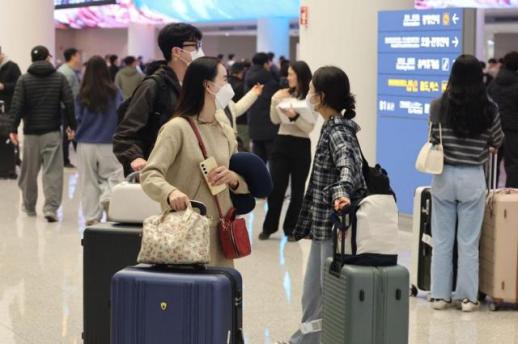 South Korea bans travel to all parts of Iran SEOUL, March 6 (AJP) - A travel ban has been issued on all parts of Iran amid rising tensions in the Middle East, the Ministry of Foreign Affairs said Thursday. According to the ministry, the government raised its travel alert for Iran to the highest level, which prohibits travel to the country, from the previous level that had advised South Korean nationals to leave. The measure, which took effect from Thursday evening, came after last week's U.S.-led airstrikes against Iran amid growing concerns over the safety of South Koreans in the already volatile region. The ministry warned that South Koreans visiting or staying in Tehran without prior authorization may face punishment, according to relevant laws. "We advise South Koreans planning to travel to Iran to cancel their trips and those already there to leave immediately," the ministry said. 2026-03-06 08:56:45
 -
 Hyundai launches rental car partnership promotion with discounts up to 1 million won per vehicle Hyundai Motor said Thursday it will launch a “rental car partnership special promotion” offering purchase incentives to help strengthen the competitiveness of new and small rental car companies. The program includes eased discount requirements, a wider range of eligible models and larger discount amounts, as well as a rental-car-focused residual-value-guarantee financing product. Hyundai said it expanded eligibility for discounts. Previously, incentives were available only to companies that bought at least 12 Hyundai vehicles in the year before purchase. Under the promotion, discounts apply regardless of the prior year’s purchase volume. Hyundai also expanded eligible models from eight to 12 by adding the Staria and Genesis models — the G80, GV70 and GV80 — to the Tucson, Santa Fe, Kona, Ioniq 5, Ioniq 6, Sonata, Grandeur and Solati. The company raised the maximum discount to 1 million won per vehicle to reduce the burden of buying new cars and improve fleet supply stability. For the Tucson, Santa Fe, Kona, Ioniq 5, Ioniq 6, Sonata, Grandeur and Staria, Hyundai said it will offer 100,000 won off for one vehicle; 300,000 won for buying two to three at once; 400,000 won for four to five; and 500,000 won for six or more. For the Solati, the discount is 200,000 won for one vehicle and 1 million won for buying two or more at once. For Genesis models (G80, GV70, GV80), Hyundai said it will offer 200,000 won off for one vehicle; 400,000 won for two to three; 600,000 won for four to five; and 1 million won for six or more. Separately, Hyundai said it will begin offering a “rental-car-focused residual-value-guarantee financing product” jointly developed with Hyundai Capital starting Monday. Hyundai said installment rates for 24-, 36- and 48-month terms will be lowered by 0.3 to 0.8 percentage points from existing levels. At contract end, customers can return the vehicle, repay by making a lump-sum payment of deferred amounts, or extend the loan, it said. Linked to Hyundai’s certified used-car business, the product is designed to sharply reduce residual-value risk and upfront operating costs for rental car companies, Hyundai said. It guarantees a used-car price of up to 61% of the new-car price when the vehicle is returned. “In a changing rental car market, we strengthened a partnership support program so small operators and new companies can grow sustainably,” a Hyundai official said. “We will continue close cooperation with the broader rental car industry to support stronger competitiveness and improved customer service.”* This article has been translated by AI. 2026-03-06 08:54:22
 -
 Equity issues ground to a halt, bond offerings surge in Seoul in Jan SEOUL, March 06 (AJP) - Stock issues virtually came to a halt in January amid overheat concerns while bond issues — particularly in one- to five-year maturities — surged in Seoul, reflecting fears of borrowing rates going higher. According to the Financial Supervisory Service on Friday, total offerings in Korean equities and bonds in January came to 17.7440 trillion won ($12 billion), down 226.4 billion won, or 1.3 percent, from the previous month. Stock issuance totaled 108.2 billion won, off 2.4 trillion won, or 95.7 percent, from 2.4880 trillion won a month earlier and 85.4 percent from a year earlier against the base effect of large-size rights offerings in December, including Hanon Systems (980 billion won) and KDB Life Insurance (500 billion won). Rights offerings raised 28.7 billion won, down 98.5 percent from the previous month. Initial public offerings totaled two deals worth 79.5 billion won, a decline of 86.6 percent. Corporate bond issuance, in contrast, surged to 17.6358 trillion won, up 2.1534 trillion won, or 13.9 percent, from the previous month. Issuance of general corporate bonds jumped to 7.1765 trillion won from 230 billion won, an increase of 3,020.2 percent, as companies mostly in AA or higher investment grade rushed to issue debt on signs of higher yields in U.S. Treasuries and Korean government bonds. For general corporate bonds, refinancing accounted for 5.5010 trillion won, or 76.7 percent of the total, while operating funds and facility investment made up 18.9 percent and 4.5 percent, respectively. By credit rating, AA or higher issues represented 93.6 percent, and by maturity, midterm bonds accounted for 98.5 percent. Financial bond issuance fell 29.4 percent from the previous month to 9.7141 trillion won. As of the end of January, outstanding corporate bonds totaled 752.8585 trillion won, down 0.5 percent from a month earlier. Issuance of commercial paper and short-term bonds in January totaled 154.7302 trillion won, down 24.0329 trillion won, or 13.4 percent, from the previous month. Commercial paper rose 8.2 percent to 46.8926 trillion won, but short-term bonds fell 20.4 percent to 107.8376 trillion won, pulling down the overall total. 2026-03-06 08:52:20
 -
 Hankook Tire to Supply iON evo Tires for Ford Mustang Mach-E Hankook Tire & Technology, part of South Korea’s Hankook & Company Group, said Thursday it will supply its iON evo tires as original equipment for Ford’s electric SUV, the Mustang Mach-E. The Mustang Mach-E is a key model representing Ford’s electrification strategy. Hankook said it worked closely with Ford on technology development and succeeded in creating a tire optimized for the vehicle. The 19-inch iON evo uses Hankook’s iON Innovative Technology design system, balancing four core areas: low noise, improved mileage, strong grip and low rolling resistance, the company said. Hankook said its EV-optimized shape technology increased cornering stiffness by 10%, while noise-focused technology cut interior driving noise by up to 18%. It also said the tire can improve energy efficiency by up to 6% and increase mileage by 15% by reducing wear. Hankook said the supply deal strengthens its portfolio across internal combustion and electrified vehicles. The company said it began a partnership with Ford in 1999, the first such tie-up for an Asian tire maker, and has supplied original equipment tires for major models including the Mustang, Explorer, Ranger, F-150, Focus and Mondeo.* This article has been translated by AI. 2026-03-06 08:48:18
 -
 Actress Uhm Ji-won Says She Needed Emergency Surgery After Japan Trip Injury Actress Uhm Ji-won said she underwent emergency surgery after breaking her ankle during a trip to Japan. A video titled “An unprecedented situation during a trip, Uhm Ji-won’s emergency surgery” was posted March 5 on her YouTube channel, “Uhm Ji-won.” The video shows Uhm returning to South Korea after suffering an ankle fracture in Japan in February and then having surgery. Uhm said she was not injured while skiing, but in what she described as a combination of circumstances. “My shoe got stuck in a manhole, so my foot was fixed in place, and my ankle twisted. The bones in my foot were completely shattered,” she said. She said both the larger and smaller bones were broken, adding that the larger bone “was shattered into pieces,” and that the fracture had been stabilized. Uhm said she had reviewed the surgical results and found “nothing lacking.” She told viewers they may have been surprised to see her suddenly injured, but said she is recovering well and asked them not to worry. She said she would share updates, including rehabilitation, as she improves.* This article has been translated by AI. 2026-03-06 08:42:06
 -
 Hyundai Motor Group to Expand EU EV Production as New IAA Subsidy Rules Loom The European Union’s proposed Industrial Accelerator Act, or IAA, is raising concerns across the auto industry. If the rules take effect as planned, electric-vehicle makers seeking EU subsidies would have to produce at least 70% of a vehicle’s parts in the EU. Hyundai Motor Group, which exports most of its EVs sold in Europe from South Korea, says it will reorganize its European plants around EV production to meet the new requirements. On March 5, the European Commission announced the IAA, which would apply “made-in-region” requirements to public procurement and subsidies in strategic sectors including autos, steel, cement and aluminum, as well as green industries such as wind turbines. Under the proposal, exporters would need to meet minimum EU-content thresholds to qualify for public funding. The bill also includes foreign direct investment rules requiring, in certain cases, that EU workers make up at least 50% of the workforce, foreign ownership be capped at 49%, and technology transfer be required when a country accounting for more than 40% of global production capacity invests more than 100 million euros in Europe. Automakers are most focused on the “70% EU origin” requirement. Under the IAA, consumers buying EVs and hybrids in Europe would qualify for government subsidies only if the vehicle is assembled in the EU and at least 70% of parts excluding the battery are produced in the EU, among other conditions. An industry official said most automakers, including Hyundai and Kia, supply the bulk of their European EV sales through exports, calling the measure an unfair new penalty on exports compared with South Korea, which provides subsidies regardless of where a vehicle is made. The official added that it was a relief the origin rules broadly recognize not only EU member states but also countries that have free trade agreements with the EU. Hyundai and Kia sold 183,912 EVs in Europe last year, but locally produced vehicles accounted for only 17.2%, or 31,722 units. Hyundai currently has two European production bases — Nosovice, Czech Republic (HMMC) and Izmit, Turkiye (HMTR) — while Kia operates one in Zilina, Slovakia (KMS). Annual capacity is about 300,000 vehicles at HMMC; roughly 200,000 to 240,000 at HMTR; and about 350,000 at KMS, but production is heavily weighted toward internal-combustion models. Key EV models such as the Ioniq 5 and 6 and the EV5, EV6 and EV9 are produced in South Korea and exported. Hyundai and Kia said they will steadily expand EV production models in Europe this year. Hyundai plans to begin full-scale mass production of the Ioniq 3 at HMTR in August and is pursuing equipment conversions with a goal of producing 200,000 EVs a year. Kia began mass production of the EV4 at KMS in August last year and plans to start producing the EV2 this year, aiming to build a system to produce more than 100,000 EV2s annually by 2027. A Hyundai-Kia official said the group will accelerate electrification of its European plants in line with the pace of the IAA and maintain market share by producing a wider range of EVs within Europe. 2026-03-06 05:04:42
 -
 Novel Explores Kim Gu’s Personal Struggles in ‘Baekbeom, Lying Down on the Mountains and Rivers’ “‘They say the Japanese enemy is surrendering!’ To me, those words were not good news but as if the sky were collapsing and the ground giving way. Years of effort to prepare to enter the war came to nothing. We worked closely with the U.S. War Department, but Japan surrendered before we could carry anything out. I regretted all we had put into it, and I worried about what lay ahead.” -Baekbeom Kim Gu UNESCO has selected Kim Gu as its “Peace Figure of the Year,” and novelist Lim Sun-man, 72, has published a new work, <Baekbeom, Lying Down on the Mountains and Rivers>, publisher Hangilsa said Wednesday. The novel portrays Kim’s life and his personal anguish. Lim completed the book after more than a decade of reporting and about five years of writing. He said the project began when, as a reporter in 1995, he visited the shabby building that housed the Provisional Government in Chongqing, China, and felt both sadness and a sense of debt. At the briefing, held Feb. 23 at the memorial hall in Seoul’s Yongsan district, Lim recalled the visit to the provisional government site, saying it was “so shabby” that it “really hurt.” He said something stayed with him, adding, “I felt an echo that I had to write something about this.” The book is organized into 24 chapters, covering the Chihapo incident in which Kim killed a Japanese man in revenge for the assassination of Empress Myeongseong, his involvement with the Donghak movement and life in exile, the independence struggle of Lee Bong-chang and Yun Bong-gil, post-liberation turmoil and division, opposition to trusteeship, inter-Korean talks, and Kim’s assassination at Kyunggyojang. Hangilsa CEO Kim Eon-ho said UNESCO’s selection of Kim as “Person of the Year” has made him, beyond Korea, a great independence activist recognized worldwide. He said he hopes as many teenagers as possible will read the novel. * This article has been translated by AI. 2026-03-06 00:07:26
 -
 Secret 1920 Letter by Independence Leader Kim Ga-jin Goes on Display After 106 Years On March 12, 1920, Joseon Minjok Daedongdan president Kim Ga-jin sent a secret letter to Park Yong-man (1881-1928), the group’s military affairs chief — a role comparable to a defense minister today. In the letter, Kim argued for an “independence war,” saying Korea should not only reclaim its territory but also open a path to strike Japan’s mainland. “There is nothing better than to build ties with China, ally with the United States, make an agreement with the radicals, and then choose the nearest and most suitable place in Russian territory as our military’s central base, controlling Yanji and the two Gando regions. (omitted) We will be able to water our horses in Tokyo Bay.” The letter is being shown publicly for the first time in 106 years at a special exhibition, “Joseon Minjok Daedongdan — Determined to Risk a Bloody Fight,” running through May 31 at the Museum of Modern and Contemporary History. The show is organized by the Dongnong Cultural Foundation and the Joseon Minjok Daedongdan Memorial Association. Organizers say it is the first exhibition to focus on Joseon Minjok Daedongdan, 107 years after the group’s founding. The exhibit covers the March 1 independence movement and the group’s formation, its activities and the Daedongdan Declaration. “We will be able to water our horses in Tokyo Bay” Joseon Minjok Daedongdan was a secret anti-Japanese independence organization formed in the wake of the March 1 movement in 1919. Because it operated as a clandestine group, few records remain. Research on Korea’s independence movement has also largely centered on the March 1 movement and the Provisional Government of the Republic of Korea, leaving Daedongdan relatively understudied. Organizers say the newly revealed letter is therefore a valuable historical source. Kim’s family had kept the letter privately. Kim Seon-hyeon, chair of the Dongnong Cultural Foundation and Kim’s great-granddaughter, said her great-grandfather fled to the Provisional Government in Shanghai and traveled widely across China. She said that despite wars including the Korean War, her grandmother safeguarded the belongings, leaving about 600 items including the letter and calligraphy. The letter came to light during preparations for a 2024 calligraphy exhibition on Kim at the Seoul Arts Center, titled “Baegun Seogyeong.” Kim Seon-hyeon said the team transcribed the cursive text into a more readable script, confirming the existence of the secret letter and deciding to disclose it now. Kim wrote to Park at a time of internal rifts within the Provisional Government in Shanghai. Independence activists clashed over strategy — war, diplomacy and training — and over whether to maintain the Provisional Government. Ahn Chang-ho and Yeo Un-hyeong backed keeping it while pursuing partial reforms. Shin Chae-ho and Park argued for dissolving it and establishing a new independence government, emphasizing armed struggle. Syngman Rhee and others also argued for maintaining the Provisional Government. Kim believed independence could be achieved through armed struggle, and he was appointed an adviser to the Bukro Military Administration Office under Gen. Kim Jwa-jin. Organizers say the letter is an important document showing Kim’s resolve to pursue an independence war. In the letter, Kim invoked the sound of a drum to press the need to advance. “With the drum sounded once, we can strike the cunning Japanese enemy’s solid armor and sharp weapons; with the drum sounded twice, we can recover our land; with the drum sounded three times, we will be able to water our horses in Tokyo Bay.” Dreaming of a world without discrimination True to its name, Daedong — meaning “great unity” — the group envisioned a society without discrimination. It argued that Koreans should unite across status and class to achieve independence, world peace and a “Daedong society.” Its membership spanned social groups, including Prince Uichin Yi Kang (1877-1955), described as the only royal family member to join the independence movement, as well as Kim Ga-jin and others including Jeon Hyeop, Choi Ik-hwan, Baek Cho-wol and Lee Sin-ae. It also included teachers, students, workers, merchants and others. After the March 1 movement, the group elevated Kim as president and set up core bodies including administrative, foreign affairs, finance and military functions, forming an organization comparable to a government. It actively cooperated with the Provisional Government and divided responsibilities. It communicated with the Provisional Government through the Yeontongje network, ran a secret printing operation and led anti-Japanese information activities. The nationwide network was used to share news of the Provisional Government inside Korea and raise military funds, functioning like a communications web. The group also supported the exile of royal family members and former Korean Empire officials, raised funds and held current-affairs lectures for Koreans in Shanghai. It issued the Daedongdan Declaration — described as a second March 1 declaration — explored plans to attack Japan’s mainland and shared the Provisional Government’s work in military, diplomacy, finance, communications and propaganda. It also pushed for Prince Uichin Yi Kang’s flight to Shanghai, aiming to counter Japan’s claim that Emperor Gojong had legally transferred the country to Japan, a move organizers said strengthened the legitimacy and symbolism of the independence struggle. The exhibition also features the original Daedongdan Declaration written by Kim, also preserved by his descendants. The group announced the declaration in Jongno on Nov. 28, 1919, during what the article describes as a second independence demonstration, led by figures including Jeong Gyu-sik, Lee Sin-ae and Park Jeong-seon. Kim, then in exile in Shanghai, drafted the text in his own hand and sent it to Gyeongseong through the Yeontongje network. As with the March 1 declaration, the Daedongdan Declaration centered on 33 people, but it is noted as the only case in which participants from across social strata joined nationwide. The article says it rejected discrimination by gender and status. The declaration denounced Japanese abuses and stated, “We now declare that we are determined to risk a bloody fight with the greatest sincerity and the greatest effort until the last person and the last moment,” underscoring its commitment to independence. The exhibition also includes a first-trial ruling from the Gyeongseong District Court written in June 1920 on the “Daedongdan incident,” and an original handwritten “current-affairs lecture” document by Kim. “Joseon Minjok Daedongdan is an important anti-Japanese independence organization, but little is known about it,” Kim Seon-hyeon said. “I hope this exhibition will help many people reflect on the spirit of Daedongdan.” An expert forum titled “Daedong Thought and Society” will be held April 24 in the museum’s seminar room. Participants include Han Hong-gu, a chair professor at Sungkonghoe University, Kim Dong-hwan, a research fellow at the Institute of Korean Studies, and Lim Gyeong-seok, a professor at Sungkyunkwan University. Admission is free. * This article has been translated by AI. 2026-03-06 00:03:52