
Journalist

AJP
-
 Lee outlines phased approach to North Korea's denuclearization at UN SEOUL, September 24 (AJP) - President Lee Jae Myung outlined his vision for peace on the Korean Peninsula in a keynote speech at the UN General Assembly in New York on Tuesday. Speaking seventh, he pledged to end Cold War-era hostility and confrontations in the region and to promote global peace through his so-called "END initiative," which highlights exchange, normalization, and denuclearization as its key principles. "History tells us that exchange and cooperation are the quickest paths to peace. We will make these efforts step by step to achieve sustainable peace," he said. He also expressed his willingness to support North Korea in normalizing its standing on the global stage, while working to improve inter-Korean relations. Regarding North Korea's denuclearization, he said he will pursue a practical, phased approach, starting with halting, then reducing, and ultimately eliminating its nuclear weapons. Emphasizing the need to rebuild trust and mutual respect between the two Koreas, Lee added, "South Korea will not seek reunification by attempting to absorb the North or by engaging in any hostile actions." Lee concluded his speech by calling for multilateral collaboration to address global challenges, stressing the UN's core principles of cooperation and trust. * This article, published by Aju Business Daily, was translated by AI and edited by AJP. 2025-09-24 09:21:37
 -
 Can upcoming APEC summit offer breakthrough in inter-Korean relations with Xi and Trump in attendance? Chinese President Xi Jinping (left) and North Korean leader Kim Jong-un arrive at a state reception in Beijing on Sept. 3, 2025, marking the 80th anniversary of China's "Victory Day." TASS-Yonhap SEOUL, September 23 (AJP) - With Chinese President Xi Jinping set to visit South Korea for the Asia-Pacific Economic Cooperation (APEC) summit late next month, experts are speculating on a possible breakthrough in inter-Korean relations. South Korean President Lee Jae Myung's upcoming meeting with Xi will, in particular, test his diplomatic skills amid a complex geopolitical landscape, as Beijing restored relations with its traditional ally following the isolated country's deepening military ties with Russia. North Korean leader Kim Jong-un attended China's large-scale military parade in Beijing early this month, where he appeared alongside Xi and Russian President Vladimir Putin, the first time in 66 years that the leaders of the three countries, historically linked by Cold War-era ties, shared the same stage. Shortly after, Xi sent a congratulatory message to mark North Korea's 77th founding anniversary on Sept. 9, and Kim replied with a letter on Sunday, reaffirming his country's commitment to stronger ties with China. Kim and Xi met several times between 2018 and 2019, but they became somewhat alienated when the coronavirus pandemic began in early 2020, while North Korea deepened its military ties with Russia. Beijing, which had kept a cautious distance from the heavily sanctioned regime, now appears to be regaining momentum in bilateral relations, with the two leader’s meeting in Beijing for the first time in more than six years. Now, all eyes around the world are expected to be on South Korea's historic city of Gyeongju, where the multilateral gathering scheduled for Oct. 31 to Nov. 1 is expected to present historic moments, with the attendance of not only Xi but also U.S. President Donald Trump. A bilateral summit between Xi and Trump is highly likely, though it has yet to be confirmed, leaving the prospect of diplomacy between the world's two major powers hanging over the gathering. For Beijing, closer ties with Pyongyang would give it an upper hand in talks with Washington. "North Korea–related issues hold strategic importance amid intensifying rivalry between the world's two powers," Jun Byoung-kon, a senior research fellow at the Korea Institute for National Unification, told AJP on Tuesday. He added that if dialogue between Washington and Pyongyang resumes, China might want to leverage its ties with Pyongyang to avoid being sidelined in North Korea–related negotiations with the U.S. With complex challenges lying ahead for Seoul amid global power politics, renewed ties between Beijing and Pyongyang could further weaken UN sanctions and complicate inter-Korean dialogue. Jun said South Korea's role has become "much more difficult, far more complex," but argued that Seoul could still act as a mediator between Beijing and Washington. Lee Dong Gyu, a research fellow at the Asan Institute for Policy Studies, said that while Seoul cannot directly shape Washington's talks with the North, it would be able to "create conditions" for dialogue between Washington and Beijing. 2025-09-23 18:02:03
 -
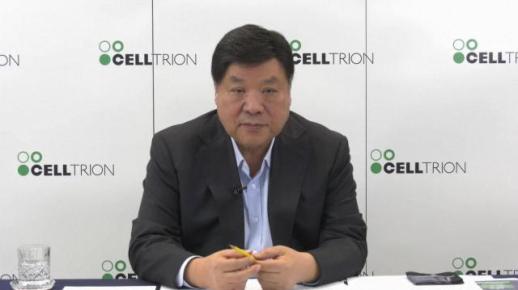 Celltrion acquires New Jersey plant for $330 million to mitigate tariff risks SEOUL, September 23 (AJP) - South Korea's Celltrion said Tuesday it had acquired an Eli Lilly manufacturing facility in New Jersey for about $330 million, a move aimed at expanding its U.S. presence and shielding the company from steep tariffs that could be imposed under the Trump administration. The 45,000-square-meter plant, which includes two production lines, will be operated by Celltrion USA. Chairman Seo Jung-jin said the purchase was part of a broader “Made in USA” strategy designed to secure a stable supply chain at a time when Washington is considering tariffs of up to 200 percent on certain imported pharmaceuticals. “This marks a turning point for Celltrion,” Seo told reporters. “We are strengthening our global position while ensuring a secure and trusted supply chain for the future.” Production is expected to begin by 2027, pending regulatory approval from the U.S. government. Half of the plant’s operations will continue serving Eli Lilly through contract manufacturing, while the other half will be dedicated to Celltrion’s own products. The deal highlights the growing pressure on Asian drugmakers to localize production in the United States, where political leaders have increasingly tied health care supply chains to national security. Few of Celltrion’s competitors maintain large-scale manufacturing facilities in the U.S., giving the company a potential edge as it seeks to expand its biopharmaceutical exports. Seo said Celltrion also plans to introduce artificial intelligence and robotics-based automation at the plant to increase efficiency, while exploring further investments in Europe. * This article, published by Economic Daily, was translated by AI and edited by AJP. 2025-09-23 16:42:13
 -
 Korean memory giants await super bumper years on AI harvest SEOUL, September 23 (AJP) - South Korea’s memory giants and investors are betting on a looming chip super cycle that could prove the most lucrative and enduring yet, fueled by the surging appetite for artificial intelligence (AI). SK hynix is poised to lead the AI-driven memory race, having leapt ahead in conventional DRAM and seized the initiative in high-bandwidth memory (HBM), a critical component for powering AI chips. The company is expected to command at least half of the global HBM market through 2027 under its contract with NVIDIA. Its stock, already at historic highs, is projected to climb further as demand for HBM is forecast to grow more than 50 percent next year. Samsung Electronics, dethroned by SK hynix in the HBM market due to its slower move, has nevertheless secured milestone foundry contracts that could lift its chip division earnings close to pandemic-era peaks. Samsung has won orders to produce 7-nanometer chips for IBM’s data center processors and 2-nanometer chips for Tesla’s sixth-generation AI processors. Chip super cycles typically emerge every three to four years when breakthrough technologies spark sustained demand surges lasting 18 to 24 months. The smartphone revolution of 2010–2011 marked the first major super cycle, driven by explosive demand for mobile DRAM and NAND flash memory. Cloud computing and cryptocurrency mining underpinned the 2017–2018 cycle, while the pandemic-driven remote work boom fueled the 2020–2022 surge, sending memory prices soaring amid supply shortages. The upcoming bull cycle differs fundamentally from past booms, which were driven by supply shortages or consumer electronics adoption. AI data centers require specialized HBM chips capable of processing massive datasets with minimal latency, creating what industry executives describe as a structural shift toward higher-value products. “This AI boom has a bigger effect than data centers alone,” said Lee Seung-woo at Eugene Investment Securities. “We expect this cycle could break records that haven’t been touched since around 2016, roughly 10 years ago.” HBM shipments are projected to rise about 70 percent year-on-year, with global sales jumping from an estimated $38 billion in 2025 to $58 billion in 2026, according to TechInsights and JPMorgan. In a report titled “Memory Supercycle — Rising AI Tide Lifting All Boats”, Morgan Stanley named Korean chipmakers as prime beneficiaries, designating Samsung Electronics as its “top pick” and raising SK hynix’s target price by 58 percent to 410,000 won. The AI-driven cycle may also last longer than the typical two-year span, depending on transitions by big-data giants Google, Amazon, and Meta. Recent developments suggest the cycle may have more momentum than initially expected, with Oracle's September 11 earnings announcement helping to dispel "AI peak" concerns. Lee noted that mobile and PC manufacturers are now actively requesting increased supply, while the latest iPhone model launch has shown strong sales performance, suggesting pent-up smartphone demand may be emerging alongside AI growth. TechInsights projects more than 2.5 million AI models will be deployed in 2025—nearly double the number in 2024—while datacenter NAND demand could grow over 30 percent as operators shift from hard disk drives to high-capacity solid-state storage for faster data access. 2025-09-23 16:38:52
 -
 Hyundai Capital launches financing services for car buyers in Indonesia SEOUL, September 23 (AJP) - South Korean financing company Hyundai Capital said Tuesday it had launched a new automotive finance company in Indonesia, aiming to strengthen its foothold in one of Southeast Asia’s fastest-growing car markets. The joint venture, created with Indonesia’s Sinarmas conglomerate and Shinhan Bank Indonesia, will operate under the brand name Hyundai Finance. The company plans to offer a suite of services for car buyers, including deferred and installment payment plans, as well as in-dealership financial consultants to guide customers through financing options. Hyundai Finance will also introduce a platform that allows buyers to complete the entire financing process online, reflecting growing demand for digital services in Indonesia’s consumer finance sector. Indonesia, Southeast Asia’s largest economy, has become an increasingly important market for global automakers. Hyundai Motor, which opened its first manufacturing plant in the country in 2022, has sought to position itself as a competitor in both the traditional and electric vehicle segments. Hyundai Finance will play a critical role in boosting sales by lowering barriers to car ownership in a market where installment plans dominate vehicle purchases, company officials said. * This article, published by Aju Business Daily, was translated by AI and edited by AJP. 2025-09-23 16:29:33
 -
 LIG Nex1 signs pact with Airbus to bolster air defense cooperation SEOUL, September 23 (AJP) - South Korean defense firm LIG Nex1 said Tuesday it had signed an agreement with Airbus Defense and Space to expand collaboration on integrated air defense systems. The agreement, finalized on Sept. 22 at LIG Nex1’s headquarters in Pangyo, Gyeonggi Province, builds on an earlier pact signed during the Seoul International Aerospace and Defense Exhibition in 2023. Company officials said the latest deal aims to strengthen research in integrated air defense at home while boosting export projects in the Middle East and Southeast Asia, where demand for advanced missile defense systems has been rising. Airbus Defense and Space, based in France, is one of Europe’s leading defense contractors, with expertise in aerospace technologies and military equipment. LIG Nex1, meanwhile, has positioned itself as South Korea’s only defense manufacturer with a full spectrum of experience in air defense systems, from the medium-range Cheongung interceptor to the long-range L-SAM, a system often compared to the U.S.-made THAAD. “With the rise of complex threats such as drones, ballistic missiles and long-range rockets, the need for a multi-layered, network-based integrated air defense system is growing,” LIG Nex1 said in a press release. “We hope this partnership will advance Korea’s capabilities while opening new opportunities in overseas markets.” South Korea has recently struck multibillion-dollar arms agreements with Poland and other nations, positioning itself as one of the world’s fastest-growing defense suppliers amid heightened global demand. * This article, published by Aju Business Daily, was translated by AI and edited by AJP. 2025-09-23 16:20:57
 -
 Samsung heir begins naval officer training to become ensign SEOUL, September 23 (AJP) - Lee Ji-ho, the son of Samsung Electronics chairman Lee Jae-yong, began his military service as a naval officer candidate with a ceremony in Jinhae, South Gyeongsang Province on Tuesday. Of the 84 candidates who enrolled last Monday, 83 attended the ceremony after one male candidate withdrew. They will undergo 10 weeks of combat training, including marksmanship, chemical, biological, and radiological (CBR) defense drills as well as exercises involving inflatable boats, before being commissioned as ensigns in late November. Tuesday's ceremony was open only to the press, with no family or friends in attendance. Lee, set to serve as an interpreter officer, gave up his U.S. citizenship to carry out his military duty in South Korea. Earlier in 2014, Chey Min-jung, the daughter of SK Group chairman Chey Tae-won, drew attention by enrolling as a naval officer candidate, a rare move for a woman from a conglomerate family. Chey's case has sent a refreshing jolt through a world of privilege, where most scions of chaebol families are mysteriously exempt from mandatory military service. * This article, published by Aju Business Daily, was translated by AI and edited by AJP. 2025-09-23 16:20:41
 -
 Celltrion shares jump on deal to acquire Eli Lilly and fend off US tariff risks SEOUL, September 23 (AJP) - South Korean biopharmaceutical company Celltrion's shares surged upon a major M&A deal in the United States, setting the contract-based drug maker better positioned against U.S. tariff exposure. The company said on Tuesday its U.S. operation signed a deal to acquire Eli Lilly's biopharmaceutical manufacturing facility in Branchburg, New Jersey for about 460 billion won ($330 million), with an aim to close the deal by the end of the year. Shares of Celltrion closed Tuesday 8.93 percent higher at 184,200 won. The facility operates as a ready-to-use biopharmaceutical drug substance current good manufacturing practice production site, allowing immediate operations and significantly reducing the five-year timeline and trillion-won costs typically required for new plant construction. The deal includes full employment transfer of experienced local staff. Celltrion also signed a contract manufacturing agreement with Lilly to supply drug substances from the facility, providing revenue growth and early investment recovery opportunities while establishing a complete local supply chain from production to sales in the U.S. market. 2025-09-23 15:35:11
 -
 PHOTOS: The present and future of the Korean Army at Gyeryongdae airstrip SEOUL, September 23 (AJP) - From the moment visitors passed through the main gate of Gyeryongdae and walked toward the venue, there was a palpable sense of tension and anticipation. The chance to see up close the military equipment usually only seen on television quickened their steps. Upon entering the airstrip with the guidance of soldiers, the scale was overwhelming. Massive tanks stood proudly with their barrels pointed skyward, helicopters spread their rotor blades wide, and the Chunmoo multiple rocket launcher system exuded power by its sheer size. Set against the quiet hills of Gyeryong city in South Chungcheong Province, Gyeryongdae is normally closed to civilians. But on Sep. 18, the 21st Ground Forces Festival opened the heart of the Korean Army to the public. Rows of equipment stretched endlessly along one side of the airstrip, each accompanied by panels detailing their names, capabilities, and specifications. Many offered opportunities for children to climb aboard and take photos with soldiers. Young visitors raised their arms in salute beside troops, creating memories that parents and children shared together. Beyond the exhibition stood the experience zone, where civilians tried out simulators and saw daily life in uniform. Long lines formed at the shooting simulator, and children filled the uniform experience booth with laughter. Soldiers at each stand patiently explained to the crowd, turning curiosity into understanding. Even small tank and helicopter models, as well as army-themed souvenirs, drew attention from visitors who wished they could take them home. In the early afternoon, the highlight of the day began: a combined-arms combat demonstration. The K2 tank, the K1A1 armored vehicle for mine-clearing and obstacle removal, the AVLB bridge-laying tank, and Apache helicopters all took part. Over 40 minutes, they recreated a battlefield scenario—reconnaissance, obstacle removal, bridge deployment, enemy clearance, and drone-based resupply. With the ground still muddy from the previous day’s rain, tanks and vehicles churned through the dirt, their dramatic movement amplified by the conditions. The finale featured 21 soldiers parachuting from aircraft, landing with flags, colored smoke, and banners. The quiet grace of parachutes drifting through the blue sky contrasted with the intensity of the combat display, yet underscored the concentration and responsibility of those in uniform. Close-combat demonstrations showcased the Army’s precision and discipline. Quick, sharp movements, seamless teamwork, and performance under smoke and mud displayed the professionalism of trained soldiers. The audience responded with resounding applause, a sign of respect and trust. Later in the afternoon, a road parade stretched about 1 kilometer (0.62 miles) down the runway. Military police on motorcycles, K-pop dance routines by soldiers, and rifle-spinning by the honor guard entertained the crowd. A mock "turtle ship" accompanied by martial arts, traditional drums, and plate-spinning added a mix of modern and historical flair. One section of the festival highlighted a joint Korea–U.S. equipment display. Korean and American vehicles stood side by side, symbolizing 70 years of alliance. Though designed with different philosophies and technologies, they shared a single purpose—defending freedom and democracy. As visitors left Gyeryongdae, it became clear that the day was more than a spectacle. The displayed weapons, the soldiers’ demonstrations, and the advanced technology represented the will to defend freedom and peace. Through its array of equipment, performances, and explanations, the festival presented the past, present, and future of the Korean Army in one place. The commitment, effort, and continuous pursuit of advanced defense technologies reminded visitors that Korea’s safe daily life is supported by this dedication. What unfolded at Gyeryongdae was not merely a display of strength but the Army’s deliberate effort to earn the trust of the people while preparing to safeguard peace. 2025-09-23 14:51:03
 -
 Lotte exit from Ho Chi Minh property project exposes risks in Vietnam SEOUL, September 23 (AJP) - South Korea’s Lotte Group has officially withdrawn from a large-scale property development in Ho Chi Minh City after completing documentation for its exit, according to regulatory filings. The company concluded that the Thu Thiem Eco Smart City project had become “financially unfeasible” as costs ballooned due to regulatory delays and surging land prices. The project, on a 74,513 m² site with a 50,000 m² development area in functional area 2A, was planned as a landmark complex with five underground floors and 60 above-ground stories. Lotte had pledged about VND 20,100 billion in investment. Ground was broken in September 2022 in a ceremony attended by Lotte Group Chairman Shin Dong-bin. The complex was intended to anchor a financial, banking, trade, and service hub in the Thu Thiem new urban area. In its request to the government to terminate the project, Lotte cited prolonged delays in land valuation, regulatory inspections, and frequent legal changes that inflated land use and investment costs, sharply reducing financial efficiency compared with the initial plan. The Ho Chi Minh City Department of Finance acknowledged receipt of Lotte’s request but stressed that the group remains the legal investor until termination procedures are finalized under the Investment Law. The city also noted that land prices related to the project were announced in early July 2025. At a September 22 meeting of the National Assembly Standing Committee, Phan Van Mai, chairman of the Economic and Financial Committee, criticized the withdrawal as “a waste,” warning that years of idle land use could damage Vietnam’s investment environment. Industry watchers say the retreat underscores the risks of large-scale property investment in Vietnam, where slow administrative procedures and shifting policies can derail projects. The decision could also disrupt Lotte’s retail and real estate expansion plans in the country, leaving the group exposed to sunk costs, possible compensation liabilities, and legal entanglements. Lotte’s exit highlights how rising costs and policy uncertainty can transform seemingly viable projects into financial burdens, raising fresh concerns about Vietnam’s stability as a destination for foreign investment. 2025-09-23 14:32:31