
Journalist

AJP
-
 Korean Industry Urges Action as Hormuz Closure Fears and U.S. Tariffs Add Pressure U.S.-Iran fighting has heightened fears that the Strait of Hormuz could be blocked, prompting South Korean industry leaders to press for swift countermeasures at an emergency meeting at the National Assembly on the 5th. Exporters and energy companies attended the “Democratic Party-industry emergency meeting on Middle East issues,” urging the government to respond quickly to what they called a compound crisis driven by Middle East instability and U.S. tariffs. Democratic Party lawmaker Kim Young-bae said South Korea relies on the Middle East for about 70% of its crude oil. “It’s a very grave situation,” he said, calling for diversified supply chains and tighter energy security. Democratic Party lawmaker Ahn Do-geol said crude oil stockpiles cover about 270 days, but liquefied natural gas reserves amount to only about nine days. He urged a stronger plan centered on LNG supply. Representing industry, Kim Chang-beom, vice chairman of the Federation of Korean Industries, warned that if the Iran situation drags on, it could quickly weigh on the broader economy, including energy and shipping. He said difficulties could deepen for the petrochemical sector, where restructuring has only just begun. Kim said broad government support is needed, citing key variables such as energy and logistics costs, exchange rates and non-tariff barriers. He also asked lawmakers to help pass a “special law on investment in the United States” quickly through bipartisan agreement. After opening remarks, the meeting shifted behind closed doors. Oh Tae-gil, vice president of HD Hyundai Oilbank, told reporters afterward that he asked the government to release oil from strategic reserves. He said there was no discussion of the petrochemical sector, where naphtha cracking capacity is being reduced. Democratic Party lawmaker Heo Seong-moo said response measures for the shipping industry were also discussed. He said participants raised the need to keep hotlines with embassies and consulates running smoothly to ensure the safety of employees and family members dispatched to the Middle East. Heo said a recent rise of about 200 won per liter in gasoline prices reflected, in part, psychological factors, and stressed the need for the government to send a stabilizing signal to the market. International oil prices have jumped amid the fighting, fueling controversy around domestic refiners. Critics have raised collusion suspicions after refiners adjusted prices preemptively, rather than following the usual practice of reflecting global oil-price increases two to three weeks later. Gasoline prices in Seoul topped 1,800 won per liter, the highest level in about two years and five months. The government has said it will respond strictly to unfair trading and has announced plans to hold meetings with refiners and others to review oil supply and market conditions. The meeting, hosted by the Democratic Party, was attended by Hanwha Ocean President Jeong In-seop; Samsung Electronics Vice President Yoon Young-jo; Hyundai Motor Vice President Lee Hang-soo; HD Hyundai Oilbank Vice President Oh Tae-gil; Ko Yoon-joo, head of LG’s Global Strategy Development Institute; Park Seok-joong, head of SK’s Management and Economy Research Institute; Ahn Young-mo, head of policy at GS Caltex; FKI Vice Chairman Kim Chang-beom; Jang Sang-sik, head of the Korea International Trade Association’s Institute for International Trade; and Kim Myeong-hee, vice president of the Korea Trade-Investment Promotion Agency. HMM was listed among participants but did not attend due to company circumstances, according to the report.* This article has been translated by AI. 2026-03-05 15:36:55
 -
 Jinyoung and Kim Minju Lead JTBC’s New Friday Romance Series “Shining” Actors Park Jinyoung and Kim Minju are betting a first-love story can help revive JTBC’s Friday series. JTBC’s new Friday drama “Shining,” directed by Kim Yoon-jin (“Our Beloved Summer”) and written by Lee Sook-yeon (“One Fine Spring Day”), layers a teenage first meeting with a reunion in the characters’ 30s. The creators said the series aims to prove love through the passage of seasons rather than through big “incidents.” On the afternoon of the 5th, JTBC held a production presentation for “Shining” (written by Lee, directed by Kim) at The Link Hotel Seoul in the Guro district of Seoul. Kim and cast members Park and Kim attended and described the tone of the project. “Shining” follows young people who once shared a world of their own as they become each other’s faith and a light that guides their lives. Park and Kim co-star alongside Shin Jae-ha and Park Se-hyun. Kim said it is “a drama that doesn’t drive the story with some huge event.” He said that when he read the script, he felt the characters Tae-seo and Eun-a were portrayed in ordinary, recognizable moments, with a narrative that builds as the seasons pass. Asked how it differs from his previous work, Kim said, “If the last project felt like spring into early summer, I think ‘Shining’ may be a work that contains all four seasons.” Park plays Yeon Tae-seo, a subway train driver who looks at the world with precision. Living by the goal of simply getting through each day safely, the character is shaken in quiet ways when he reunites with his first love, Mo Eun-a, from when he was 19. Park said he found the through line from the character’s teens to his 30s in “consistency.” He called Tae-seo an ordinary person and said it was difficult to portray, adding that the writer told him she wanted Tae-seo to remain consistent in his teens, 20s and 30s. Park said he looked back on his own life and felt he had not changed dramatically, though his ways of coping with hardship differed over time. He said he tried to reflect that by playing Tae-seo with small shifts, keeping the performance restrained so viewers might think, “Someone like this really exists.” He also joked about wearing a school uniform again, crediting the lighting and cinematography teams for helping him pull it off. He said playing Tae-seo let him revisit his teens and 20s, and that his 30s now feel like the best time of his life. Asked about pressure after his previous work “Unknown Seoul,” Park said it would be a lie to say he felt none. He said he was grateful for the love but needed to approach the next project coolly, adding that “Shining,” unlike the previous work, is primarily a male-female romance. Kim plays Mo Eun-a, a manager of an old-house stay in Seoul with a background in hotel work. The character is energetic and charming but, after cycles of small rewards and major failures, meets her first love again. Kim said it was her first time playing a character across her teens, 20s and 30s. She said she had many concerns but enjoyed building the role in a more three-dimensional way. She said portraying a 30-something version of the character was especially challenging, so she talked extensively with the director and asked people around her for input. She said outward changes have limits, so she focused on how the character’s attitude and values might have shifted. Both actors emphasized their on-screen chemistry. Park called it “perfect,” saying the director scheduled extensive readings in advance — including one that lasted 10 hours — and that it would have been their fault if they had not become close. Kim said the readings helped her start filming in a comfortable state and called the time valuable. She said the set was fun and relaxed, crediting the director and Park. Park and Kim said they would work to make the “first love” story relatable, saying they wanted to show it “as if through a magnifying glass.” Park said the drama contains a story that anyone who has been in love will relate to, adding that while love is a common theme, “Shining” enlarges and highlights it like a magnifying glass. Kim said it is a story “everyone can relate to,” and added that the visuals are beautiful and may feel healing to watch. Park agreed, saying he knew South Korea was pretty but did not realize “how beautiful it is,” adding that the production filmed around the country and found it “truly beautiful.” JTBC’s Friday series slot was newly programmed last year, but earlier dramas including “The Good Man,” “My Youth” and “Love Me” stayed in the 1% to 3% ratings range, failing to establish a strong presence. That track record has fueled both anticipation and concern for “Shining.” Kim said any project comes with pressure, but noted the time slot’s format, with Episodes 1 and 2 airing back-to-back. He said viewers who follow how Tae-seo and Eun-a begin, move through time and return to each other may feel they want to keep watching for the full two hours. Episodes 1 and 2 air back-to-back at 8:50 p.m. on Friday the 6th.* This article has been translated by AI. 2026-03-05 15:30:12
 -
 Middle East Crisis: Away from the front lines, Iran and Israel wage a war of words in Seoul SEOUL, March 05 (AJP) - The Iranian and Israeli embassies in Seoul held back-to-back press briefings Thursday, trading starkly opposing narratives over the escalating war in the Middle East as both sides sought to shape international opinion. The unusual diplomatic exchange unfolded within hours of each other in central Seoul, with the Iranian ambassador accusing the United States and Israel of launching an illegal war and the Israeli envoy defending the military campaign as a necessary step to stop Iran’s nuclear and missile programs. The dueling briefings underscored how the widening conflict — sparked by U.S.-Israeli strikes on Iran — is rapidly becoming a global information battle as well as a military confrontation. Iran: “Illegal aggression” and war crimes Speaking at the Iranian Embassy in Yongsan, Ambassador Saeed Koozechi blamed Washington and Israel for triggering the conflict. “The responsibility for the current crisis in West Asia lies with the United States and the Zionist regime of Israel,” Koozechi said. “Today’s war did not originate from Iran’s actions, but from the deliberate decision of the United States and Israel to abandon diplomacy and choose military aggression.” The ambassador said Iran had engaged in negotiations with Washington twice in the past nine months over its nuclear program, arguing that the attacks during ongoing diplomacy demonstrated that the talks were used as a cover for military action. He accused Israel of violating international law and targeting civilians, citing an alleged strike on a girls’ elementary school in the southern Iranian city of Minab. “The attack killed 165 students and seriously injured dozens more. Such acts are clear war crimes and blatant violations of international humanitarian law,” he said. Iran, he added, would continue exercising its right to self-defense under Article 51 of the United Nations Charter until the attacks stop. “The Islamic Republic of Iran will not hesitate to defend itself. Our response is not revenge but legitimate self-defense,” Koozechi said. The ambassador also rejected accusations that Iran is pursuing nuclear weapons, calling them “fabricated claims and disinformation.” “The country possessing nuclear weapons in the region is not Iran but Israel,” he said, noting that Israel is not a signatory to the Nuclear Non-Proliferation Treaty (NPT). Israel: Preventing a nuclear threat Roughly an hour later in a separate venue in central Seoul, Israeli Ambassador Rafael Harpaz offered a sharply different account. According to Harpaz, the military operation was aimed at preventing Iran from completing a nuclear weapons capability and halting the expansion of its ballistic missile arsenal. “Iran was approaching the final stage of nuclear weapon capability,” Harpaz said. “If we did not act now, we might not have another opportunity to prevent it.” He argued that years of diplomatic efforts had failed to stop Iran’s nuclear ambitions. “Iran has been explaining its nuclear program for decades and promising that it is peaceful,” he said. “But each time, the negotiations simply bought them more time to advance their program.” Harpaz also pointed to Iran’s financial support for Hezbollah in Lebanon, estimating that Tehran has provided the group with $2 billion to $3 billion in funding. The ambassador framed the operation as a defensive measure for Israel’s security. “When you imagine a one-ton warhead mounted on a ballistic missile hitting a densely populated Israeli city, the threat becomes very clear,” he said. Dispute over civilian casualties The two ambassadors clashed sharply over allegations that Israeli strikes hit civilian facilities. Iran said attacks on schools and hospitals represented clear violations of international humanitarian law. Israel denied intentionally targeting civilian infrastructure and warned that misinformation was circulating widely. “There is a lot of fake news coming out of Iran,” Harpaz said. “Israel has never intentionally targeted civilian facilities.” He added that Israel operates under a system of free media and urged journalists to verify claims carefully. Competing visions of the conflict The diplomatic clash in Seoul reflected a broader divide over the goals and legitimacy of the war. Iran framed the conflict as an unlawful act of aggression aimed at undermining its sovereignty and destabilizing the region. Israel, by contrast, presented the campaign as a preemptive effort to neutralize a nuclear and missile threat that could endanger its survival. Both ambassadors acknowledged the risk of a prolonged conflict but expressed confidence in their respective positions. “Iran has faced many invasions in its history and will continue to resist aggression,” Koozechi said. Harpaz said Israel believes the military campaign will not become an endless war. “We trust our capabilities and the support of our allies,” he said The rare diplomatic confrontation in Seoul highlighted how the Middle East conflict is being fought not only on battlefields but also in global capitals. 2026-03-05 15:08:39
 -
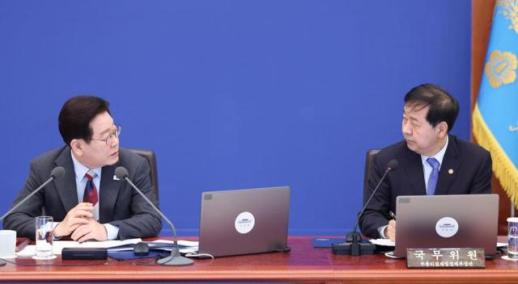 South Korea to crack down fuel price collusion amid Middle East tensions SEOUL, March 5 (AJP) - The government will crack down on price collusion and other unfair practices, and strict measures will be taken against any violations, Deputy Prime Minister and Finance Minister Koo Yoon-cheol said on Thursday. His remarks came as domestic fuel prices were already surging even before the impact of escalating tensions in the Middle East caused by last week's U.S.-led airstrikes against Iran under the military operation dubbed "Operation Epic Fury" was fully felt in the local market. Speaking at an emergency Cabinet meeting chaired by President Lee Jae Myung at Cheong Wa Dae, Koo said "We are seeing an excessive hike in gasoline and other petroleum prices," vowing to conduct intensive inspections to punish any collusion and implement corrective measures in cooperation with relevant industries. Koo said energy prices had climbed approximately 13 percent as of early Thursday morning, outlining contingency measures that include securing energy supplies beyond the Middle East, exercising pre-emptive purchase rights and tapping strategic oil reserves if necessary. Turning to the broader economic fallout, Koo said that about 49 small and medium-sized exporters had reported difficulties including shipping disruptions, delayed payments, and rising logistics costs. To support them, the government plans to provide 20.3 trillion Korean won (US$14 billion) in funding through interest rate cuts and expanded loans, along with tax relief measures for affected firms. Lee then ordered the immediate injection of 100 trillion won ($68.3 billion) into capital and financial markets to counter the fallout from the Middle East conflict. "Our first priority must be to actively address the increased market volatility across financial sectors, including equities and exchange rates," he said. If the Middle East conflict drags on and disrupts oil shipments through the Strait of Hormuz, a critical chokepoint for roughly one‑fifth of the world's oil supply, the government will help cover rising freight costs and deploy emergency response teams to monitor supply chains for goods heavily dependent on the perennially volatile region. Some 38 South Korean vessels are currently operating in and around the strategically vital waterway including 26 within the strait itself, with no incidents or damage reported so far. Meanwhile, Foreign Minister Cho Hyun said that a total of 18,472 South Korean nationals including some 4,935 short-term visitors, are currently in 14 Middle Eastern countries. Regarding their safety, Cho said, "There have been no casualties among our nationals so far," adding that evacuations to neighboring countries have been carried out with support from local diplomatic missions. Lee urged ministers to respond swiftly and thoroughly, stressing that the safety of South Korean nationals overseas should be treated as a matter of utmost priority. 2026-03-05 15:01:16
 -
 Hyundai Motor-Kia AVP Chief Park Min-woo Urges Staff to Embrace Conflict as 'One Team' Park Min-woo, head of Hyundai Motor and Kia’s AVP division, urged employees to keep a “one team” mindset even when disagreements arise. Hyundai Motor Group said Thursday that Park, who took office Feb. 23, met employees in a town hall meeting and told them, “There will be countless clashes and differences of opinion, but let’s not avoid them.” He added that conflict can be “positive friction” aimed at building the most complete product. Park stressed collaboration as “One Team,” saying real innovation will begin when the AVP division and 42dot work closely and when teams across the group — including R&D, design and product — actively share information and communicate. He urged employees to focus on “the best technology that helps people,” not technology for its own sake. The town hall, held at Pangyo Tech One, the AVP division’s research hub, was themed “Vision & Direction” and shared Park’s strategic direction. About 150 employees attended in person, and more than 500 joined a live online broadcast from Namyang Research & Development Center, overseas research centers and other sites. “True mobility innovation happens when scalable hardware and strong software capabilities are fully integrated,” Park said. He called on the division to become an “execution” organization that applies its technology to mass-produced vehicles without error, and asked employees to practice three priorities: expertise, persistence and agile execution. He also emphasized flexible culture and faster decision-making. Park said he would work with teams to build a flexible collaboration system, while reducing unnecessary hierarchy and complicated decision steps to stay focused on goals and speed up execution. On leadership, Park said his philosophy is “measurable and transparent goal-setting and building trust based on predictability.” He said it is important to set clear success standards, align all teams to those standards and maximize collaboration efficiency across the organization. Park added that employees should join efforts to help Hyundai Motor Group become a leading company in next-generation intelligent mobility that balances technology and people.* This article has been translated by AI. 2026-03-05 14:27:26
 -
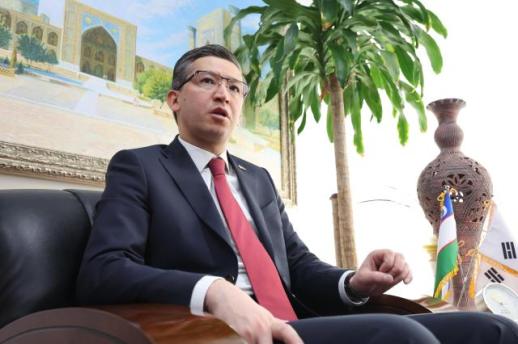 Uzbekistan targets Central Asian hub status through South Korea partnership: envoy SEOUL, March 05 (AJP) - Uzbekistan is positioning itself as a central transport and logistics hub in Central Asia by leveraging its geographic location and expanding infrastructure partnerships with South Korea, a top envoy said. "True diplomacy is when political dialogue turns into production chains, investments and jobs," Uzbekistan Ambassador Alisher Abdusalomov told AJP in an exclusive interview Wednesday. Without direct access to the sea, the country relies heavily on railway networks for Eurasian freight and passenger transport. That strategy has recently advanced with the arrival of a high-speed train manufactured by South Korean defense and rolling stock producer Hyundai Rotem. The train, named Jaloliddin Manguberdi, is currently undergoing test runs for the Tashkent–Khiva line. "High-speed rail is not only the speed of movement. It is the speed of economic transformation," Abdusalomov said, adding that the government is looking beyond simple procurement toward establishing comprehensive service centers capable of technical maintenance, major repairs and localized assembly of train components. "Purchasing equipment is the first step. Forming industrial competence is the strategic goal," the envoy said. "Whoever maintains the infrastructure becomes its strategic center. We are not just looking to operate modern trains but to become part of the global railway industry." This infrastructure overhaul anchors the Uzbekistan-2030 strategy, a national development plan aimed at elevating the country into the world's top 50 economies. Achieving its economic and social welfare targets requires extensive digital transformation, prompting the government to propose expanding South Korea's e-government, intelligent logistics and big data solutions across Central Asia. The collaboration also extends to physical infrastructure through public-private partnerships, highlighted by the ongoing modernization of Urgench International Airport with Incheon International Airport Corporation. Abdusalomov said the project will serve as a regulatory model for the planned New Tashkent International Airport and future smart city systems. "Modern infrastructure starts not with concrete, but with management philosophy," he said. As global economies transition toward digital and green technologies, demand for critical minerals such as copper and lithium has surged. South Korea currently chairs the Minerals Security Partnership Forum, or FORGE initiative, aimed at strengthening global supply chains. Uzbekistan possesses vast reserves of these minerals but is rejecting the traditional raw-material export model in favor of building full-cycle industrial clusters. The foundation for this effort was laid in 2019 with the establishment of a joint rare metals research center in Uzbekistan, developed in cooperation with the Korea Institute for Rare Metals. "The technological future begins with sustainable access to resources," Abdusalomov said. "We are not discussing abstract prospects — we are already building a joint scientific and production infrastructure." Resource integration is expected to be a key agenda item at the inaugural Korea–Central Asia Summit, which aligns with South Korea's initiative aimed at connecting the regions through technological and industrial networks. South Korea ranked among the top four foreign direct investors in Uzbekistan around 2017 but has since slipped to around 10th place following a surge of capital inflows from China, Russia, Turkey and European Union countries. Restoring South Korea to a top-three position is now a key objective for the Uzbek embassy. To attract investment, Abdusalomov outlined a range of institutional incentives for foreign businesses, including broad tax exemptions, reduced customs fees and state support for infrastructure development. He also highlighted Uzbekistan's macroeconomic stability, predictable exchange rates and its status as the most populous country in Central Asia. He added that political agreements expected at the upcoming summit require long-term vision. "Strong states are recognized not by the loudness of their declarations, but by their ability to think decades ahead and consistently implement the decisions they make," he said. Officials from both countries are currently drafting the financial and institutional mechanisms required to implement the proposed industrial, digital and transport projects ahead of the inaugural summit, scheduled for the second half of this year. 2026-03-05 14:02:45
 -
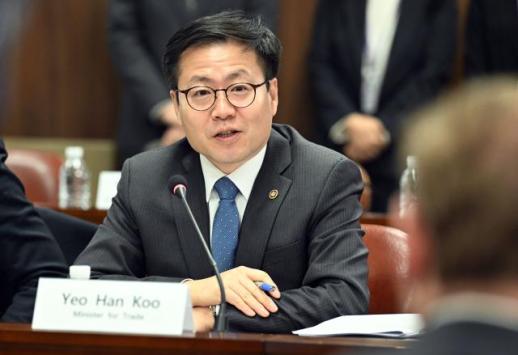 Trade chief seeks stronger ties with Mercosur countries amid global uncertainty SEOUL, March 5 (AJP) - Trade Minister Yeo Han-koo on Thursday met with ambassadors from four Mercosur countries to discuss ways to enhance cooperation. Formed in 1991, Mercosur is a South American trade bloc comprising Argentina, Brazil, Paraguay and Uruguay. Thursday's talks follow President Lee Jae Myung's summit with Brazilian President Luiz Inácio Lula da Silva in Seoul late last month, as South Korea looks to expand economic and trade ties with the bloc. Citing Mercosur's abundant critical minerals such as lithium and nickel, Yeo called the bloc a "very important partner" as global trade faces "unprecedented" shifts amid rising protectionism and the strategic use of resources. Yeo said that strengthening trade ties with South America's largest economic bloc, home to about 270 million people with a combined gross domestic product of US$2.9 trillion, is essential for boosting investment and exchanges, as well as for providing companies with a stable, forward-looking business environment. He also warned that overreliance on specific regions for trade exposes the global economy to significant risks, stressing the need to diversify supply chains. With the four Mercosur countries also facing growing pressure to navigate challenges including U.S. tariff measures, he added that closer cooperation with South Korea would be needed. He also called for support for South Korean companies operating in Mercosur including steelmaker POSCO's lithium plant in Argentina. 2026-03-05 13:58:39
 -
 YouTuber Kim Seon-tae Says Impostor X Account Is Using His Name Kim Seon-tae, who was known as “Chungju Man,” said he has been targeted by an impersonator on X. Kim wrote on his social media on March 5, “This is an impersonation X account. Please report it,” and posted a photo showing the account. The impersonating account had 4,526 followers. Online commenters reacted with posts such as “What happened?” “An impersonation account is a sign of success,” and “How far does his influence reach?” Kim opened his YouTube channel, “Kim Seon-tae,” on March 2. As of March 5, it had about 962,000 subscribers. A video he posted March 3 titled “I’m Kim Seon-tae” had 5.63 million views. The surge in attention has raised expectations that he will reach 1 million subscribers through his personal channel, a milestone he had hoped to achieve while working as a Chungju city government employee. The report said companies have also been flooding him with advertising inquiries. 2026-03-05 13:48:16
 -
 BTS to Livestream Gwanghwamun Comeback Show Worldwide on Netflix BTS will meet fans worldwide from Seoul’s Gwanghwamun Square, a landmark at the center of South Korea’s modern civic life, in a comeback performance that will be livestreamed on Netflix. “BTS Comeback Live: Arirang (ARIRANG),” set for March 21 at Gwanghwamun Square, will be broadcast live to more than 190 countries via Netflix. Organizers and tourism officials say the event is expected to showcase Korean cultural identity to a global audience and potentially translate interest into travel. Gil Gi-yeon, CEO of the Seoul Tourism Organization, said at a Seoul tourism business briefing held on the 24th that because BTS’ comeback show will be livestreamed on Netflix, “Seoul will likely become more widely known,” and he signaled plans to use the exposure to expand global tourism demand. The draw, the article said, is Netflix’s reach. Subscribers can watch without additional fees on mobile devices and TVs, allowing fans to join simultaneously under the same subscription model rather than being limited by venue capacity or ticket access. Netflix demonstrated the scale of its live streaming in 2024 with the boxing live event “Jake Paul vs Mike Tyson,” which it said drew 65 million concurrent connections. Netflix has also argued that viewing can lead to visits. In a survey it conducted in seven countries — Brazil, France, the United States, India, Indonesia, Thailand and Japan — Netflix was the main service through which overseas viewers encountered Korean content. Among foreigners who watched Korean content on Netflix, 72% said they intended to visit South Korea, compared with 37% among nonviewers. BTS’ livestream announcement has already fueled interest in the venue among overseas fans. On social media, users posted comments such as, “I’m excited for a stage at Gwanghwamun,” and, “A performance with Gyeongbokgung Palace as the backdrop is symbolic.” Some fans have shared historical context about the area and exchanged information about Korean culture, reflecting how real-time streaming can broaden curiosity about the host city and its cultural sites. The article also pointed to broader economic spillover effects tied to global platforms, including tourism, dining and cultural industries. According to the Ministry of Culture, Sports and Tourism and the Korea Culture Information Service Agency’s “2025 Global Hallyu Trend Analysis Report,” reservations for K-pop experience packages rose 80% during the travel off-season from June to August after the success of “K-pop Demon Hunters.” It added that after the release of “When Life Gives You Tangerines,” international passengers at Jeju Airport hit a record 2.8 million. It also said Korean food featured in productions such as “Culinary Class Wars” and “Squid Game” drew renewed attention, with keywords including “kimchi” and “chef” frequently cited in overseas media coverage related to K-food. An industry official said the BTS livestream will help imprint both the current state of K-culture and South Korea’s appeal on viewers in more than 190 countries, adding that with global attention focused on Gwanghwamun, the economic and cultural ripple effects across related industries could be significant. With Netflix as its global distribution channel, the Gwanghwamun performance is expected to serve as a high-profile invitation for fans to look beyond the screen toward South Korea itself. 2026-03-05 13:36:23
 -
 Seoul hires legal advisers as U.S. Coupang investors move toward arbitration SEOUL, March 05 (AJP) -South Korea has recruited legal advisers to respond to a notice of intent to arbitrate filed by U.S. investors in e-commerce giant Coupang, the Ministry of Justice said Thursday, marking the first formal step in a potential investor–state dispute under the Korea–U.S. Free Trade Agreement. The ministry said it selected South Korean law firm Peter & Kim and U.S.-based Arnold & Porter Kaye Scholer LLP to represent the government during the initial phase of the dispute. Officials said the firms were chosen for their experience in international investment arbitration, including their previous representation of South Korea in the high-profile dispute with U.S. private equity firm Lone Star over the sale of Korea Exchange Bank. The legal teams will assist the ministry during the 90-day “cooling-off period” that follows a notice of intent under the Korea–U.S. Free Trade Agreement (KORUS FTA), during which the parties may attempt consultations before formal arbitration can be filed. The dispute was triggered after Greenoaks Capital Partners LLC and Altimeter Capital Management LP, U.S. investment firms holding shares in Coupang, submitted a notice of intent to arbitrate on Jan. 22. The investors argue that South Korea’s regulatory and political response to a major personal data leak at Coupang violated protections for foreign investors under the bilateral trade agreement. In the notice, the investors claim Seoul’s actions amounted to “discriminatory, disproportionate, and pretextual” measures against the company and damaged U.S. investments worth billions of dollars. The filing states that the investors collectively hold more than $1.5 billion worth of Coupang shares, and alleges that government actions — including investigations and regulatory measures following the data breach — threaten further losses. The dispute centers on a cybersecurity incident disclosed by Coupang in November 2025 involving the leak of over 30 million customer accounts. The breach sparked a wave of regulatory probes, parliamentary hearings and public criticism from Korean officials. Coupang, founded in 2010 and dubbed as the “Amazon of Korea,” operates primarily in South Korea but is incorporated in Delaware and listed on the New York Stock Exchange. Its shareholder base is dominated by U.S. investors, placing the case within the scope of the investment protections contained in the KORUS FTA. Under the treaty’s investor–state dispute settlement provisions, foreign investors can seek damages through international arbitration if they believe government actions violated treaty obligations such as fair and equitable treatment or protection from expropriation. Additional notices of intent were filed in February by other investors, including Foxhaven Capital GP LLC, Durable Capital Associates LLC and Abrams Capital LLC, expanding the group of claimants considering arbitration. The Justice Ministry said its international investment dispute response team will work with the appointed advisers to review the claims and prepare the government’s response during the consultation period. If arbitration proceeds, the case could become one of South Korea’s most closely watched investment disputes since the long-running Lone Star case, which tested the country’s defenses under international investment treaties. 2026-03-05 13:03:03