
Journalist

AJP
-
 'The Man Who Lives With the King' Tops 10 Million Moviegoers in South Korea The film 'The Man Who Lives With the King' has surpassed 10 million admissions. Distributor Showbox said the movie’s cumulative audience topped 10 million as of 6:30 p.m. on its 31st day in theaters. It is the 34th domestic release in South Korea to reach the milestone. The achievement comes as overall theater attendance has fallen sharply. It is the first domestic release in two years to draw 10 million moviegoers. The period drama follows the deposed King Danjong, Yi Hong-wi (Park Ji-hoon), during his final days in exile in Gwangcheonggol, Yeongwol, Gangwon Province, where he mixes with local residents. The story centers on village chief Eom Heung-do (Yoo Hae-jin), tasked with protecting and monitoring the exile, as he forms a bond with Yi that transcends status and age. The film reached 1 million admissions on its fifth day, 2 million on its 12th, and 3 million on Lunar New Year’s Day on Feb. 17, its 14th day in release. It passed 4 million the next day. On March 1, it drew about 817,000 viewers in a single day, its biggest daily total since opening, and went on to exceed 10 million in 31 days. It is the fourth period film to reach 10 million admissions, following 'The King and the Clown' (2005), 'Masquerade' (2012) and 'The Admiral: Roaring Currents' (2014). * This article has been translated by AI. 2026-03-06 18:51:19
 -
 SC First Bank Net Profit Plunges 57% on Hong Kong H-Index ELS Provision, One-Off Costs SC First Bank said its net profit plunged last year, hit by one-time costs including a provision tied to sanctions over Hong Kong H-index equity-linked securities (ELS) and expenses for a special retirement program. The bank said Thursday that net profit for the year totaled 141.5 billion won, down 57.3% from 331.1 billion won a year earlier. The decline was driven largely by sizable one-off charges. In the fourth quarter, the bank booked 88.0 billion won in special retirement costs and set aside 151.0 billion won in provisions related to sanctions over Hong Kong H-index ELS. Net interest income fell as the net interest margin narrowed amid lower market rates. Net interest income came to 1.2076 trillion won, down 2.0% from 1.2321 trillion won the previous year, and the net interest margin dropped 0.16 percentage points over the period. Noninterest income also declined. While wealth management performed well, gains from securities and foreign-exchange derivatives fell, pulling noninterest income down 8.0% to 311.2 billion won from 338.3 billion won. Selling and administrative expenses rose on special retirement costs and higher labor and inflation-related expenses. The bank reported 1.0754 trillion won in such costs, up 17.7% from 913.6 billion won a year earlier. By contrast, total expected credit losses and other provisions fell 16.9% to 106.7 billion won from 128.4 billion won. Assets expanded. Total assets stood at 92.2781 trillion won at the end of last year, up 7.5% from 85.8409 trillion won a year earlier. Profitability indicators weakened. Return on assets was 0.15%, down 0.23 percentage points, and return on equity was 2.56%, down 3.53 percentage points. The ratio of nonperforming loans rose 0.14 percentage points to 0.56%. The bank also said its board approved a year-end dividend of 125.0 billion won and will submit it as an agenda item for a regular shareholders meeting on the 30th. After the dividend, the bank said its BIS total capital ratio was 18.59% and its common equity Tier 1 ratio was 15.65% as of the end of last year, remaining above regulatory requirements.* This article has been translated by AI. 2026-03-06 18:04:16
 -
 South Korea to Unveil First Mass-Production KF-21 Fighter This Month South Korea will unveil the first mass-production KF-21 Boramae fighter jet later this month, a milestone expected to start reshaping an Air Force fleet long centered on U.S.-made aircraft. Industry officials said Friday that a rollout ceremony for the first production aircraft will be held in the final week of this month at Korea Aerospace Industries (KAI) headquarters in Sacheon, South Gyeongsang province. Government and other key officials are expected to attend. The aircraft to be unveiled will undergo ground and flight testing before being delivered to the Air Force in the second half of this year. The Air Force plans to introduce 40 domestically built KF-21s in stages by 2028. It aims to secure 80 more by 2032, for a total fleet of 120. Deliveries of the KF-21 are expected to affect the Air Force’s fighter mix, including replacing aging F-4 and F-5 jets and reducing reliance on U.S. technology. Most of the Air Force’s main fighters, including F-16s and stealth aircraft, are produced in the United States, making the development of the supersonic KF-21 a significant step, officials said. South Korea’s push to develop indigenous combat aircraft gained momentum in December 2005, when the first mass-produced T-50 supersonic advanced trainer was delivered. In December 2015, the country began development of the KF-21, moving toward an independent fighter production system. Expectations are also rising for export growth, with Southeast Asian countries such as Indonesia and the Philippines, as well as Middle Eastern nations, cited as potential customers. Supporters point to the T-50’s exports to those markets as evidence of performance, and say additional orders are possible. The article said President Lee Jae-myung has also engaged in direct defense sales efforts with those countries, adding to export optimism. KAI plans to secure 6.544 trillion won — 62.7% of its overall order target this year — through exports of complete aircraft such as the KF-21. “The KF-21 project began with a feasibility review during President Kim Dae-jung’s administration in 2001, and full-scale development started in December 2015,” a KAI official said. “We expect both domestic adoption of the KF-21 and expanded exports.” 2026-03-06 18:03:25
 -
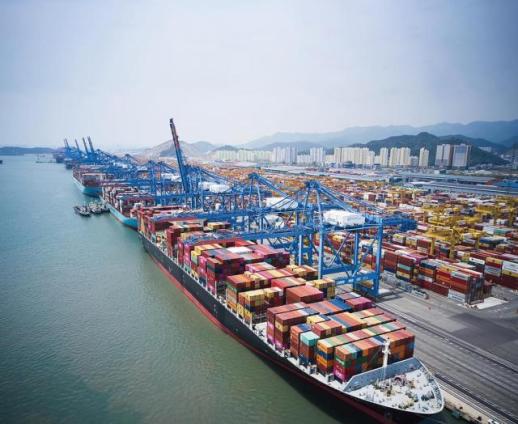 Middle East crisis deepens divide between South Korean industries SEOUL, March 6 (AJP) - A triple whammy of high oil prices, a weakening Korean won and rising raw-material costs is casting darkening clouds across South Korean industries following U.S.‑led airstrikes on Iran, as markets and companies grapple with the fallout from the escalating Middle East conflict. Energy-intensive sectors are seeing production costs soar due to rising oil and petroleum prices, with traditional manufacturing sectors including petrochemicals and steel facing the heaviest pressure as costs climb and demand weakens, according to industry insiders. As of early this week, international oil prices briefly surged to over US$80 a barrel. For a heavily export-driven country like South Korea, which depends on imports for more than 90 percent of its energy, higher oil prices translate directly into increased manufacturing costs. The South Korean currency has also been fluctuating, trading near 1,500 won against the greenback, further increasing the cost of importing raw materials. But not every sector is feeling the pinch. AI-driven industries including semiconductors, defense, and shipbuilding, are benefiting from strong global demand, creating a growing divide between sectors. The rising adoption of AI is giving the semiconductor industry fresh growth momentum. According to a forecast by market research Gartner, the global semiconductor market is expected to grow by about 16 percent this year from a year earlier, fueled by increasing investment in data centers and AI infrastructure, boosting demand for memory chips. Defense and shipbuilding sectors are also benefiting from a shifting global security environment. South Korea's defense exports have held at more than $10 billion in recent years, and shipbuilders have secured roughly three years' worth of orders as demand rises for LNG carriers and eco-friendly vessels. Experts warn that divides between sectors could widen further if the ongoing conflict in the Middle East drags on. "Some South Korean industries have been steadily losing ground to China, and crises like the Iran conflict would further expose their vulnerabilities," said Lee Bu-hyung of the Hyundai Research Institute. He emphasized the need for a long-term strategy to overhaul the country's industrial structure. 2026-03-06 17:54:10
 -
 Yeocheon NCC Declares Force Majeure as Hormuz Disruption Hits Naphtha Supply U.S. and Israeli airstrikes on Iran have heightened tensions in the Middle East, sending shock waves through South Korea’s petrochemical industry. With disruptions in naphtha feedstock supply after the closure of the Strait of Hormuz, Yeocheon NCC has declared force majeure, raising concerns among domestic companies that rely on its ethylene supplies. Industry officials and foreign media reported on Thursday that Yeocheon NCC notified major customers on March 4 that product deliveries could be delayed or adjusted and declared force majeure after it could no longer secure naphtha due to the Hormuz closure. The move followed a halt in imports of Middle East-origin naphtha, including from Saudi Arabia, amid the impact of Iran’s drone attacks and the strait’s shutdown. Yeocheon NCC is a joint venture of Hanwha Solutions and DL Chemical and is South Korea’s largest single ethylene production hub, with annual capacity of 2.285 million tons. As restructuring continues across the sector, its third plant has been shut down, leaving only Plants 1 and 2 operating. Hanwha Solutions confirmed reports of the force majeure declaration. The company was reported to have told some customers that contract performance could be temporarily delayed or revised due to disruptions in Middle East naphtha supply following the outbreak of war between the United States and Iran. In a letter to customers, Yeocheon NCC said it was declaring force majeure because the Middle East crisis had disrupted feedstock supply. It said it had no choice but to run all production facilities at minimum capacity starting March 4, outlining plans to cut operating rates. “As geopolitical tensions in the Middle East have suddenly and sharply escalated, we are experiencing severe disruptions in raw material procurement,” it said, adding that the Hormuz closure had significantly delayed the arrival of naphtha feedstock scheduled for delivery in March. Naphtha prices have risen more than 20% since the crisis began. Force majeure is a contract clause that can exempt a seller from liability when performance becomes difficult due to events beyond its control, such as natural disasters or war. The declaration is expected to directly affect Hanwha Solutions and DL Chemical, Yeocheon NCC’s major shareholders and key customers. Yeocheon NCC has supplied the two companies with ethylene and other basic feedstocks through pipelines. For ethylene, it supplies 1.4 million tons a year to Hanwha Solutions and 735,000 tons a year to DL Chemical. Analysts said the situation could worsen if the disruption drags on and inventories run down. NICE Credit Rating said that, considering cargoes shipped before late February and existing stockpiles, major domestic naphtha cracking centers appear to have about one month of reserves. It said companies are likely to respond by lowering operating rates, adjusting maintenance schedules and securing alternative sources to manage supply uncertainty.* This article has been translated by AI. 2026-03-06 17:39:29
 -
 Asian markets end first war week edgy, KOSPI most volatile SEOUL, March 6 (AJP) — Asian stock markets wrapped up one of their most volatile weeks in recent years as escalating tensions in the Middle East rattled global financial markets and pushed oil prices higher. The wildest swings were seen in Seoul, where panicky selling and frantic bargain-hunting traded places throughout the four-session, war-dominated week. The benchmark KOSPI closed at 5,584.87, down more than 10 percent from a week earlier before the strikes on Iran and 11 percent below its historic high of 6,347.41 on Feb. 26. In the first two sessions following the outbreak of hostilities, the KOSPI plunged 19 percent, before rebounding roughly 10 percent on Thursday. On Friday, the index barely stayed positive after swinging between 5,381.27 and 5,609.98 during the session. The tech-heavy KOSDAQ fared slightly better, edging up 0.43 percent to close at 1,154.67. Defense shares outperformed as investors bet on rising geopolitical demand. LIG Nex1 jumped 9.31 percent to 834,000 won on expectations for additional orders of missile interceptor systems deployed along Middle Eastern borders near Iran. Hanwha Aerospace rose 7.24 percent to 1,481,000 won, while Hanwha Systems gained 5.37 percent to 158,900 won and Hanwha Ocean climbed 3.77 percent to 126,700 won. Chipmakers, however, were primary targets for profit-taking. Samsung Electronics fell 1.77 percent to 188,200 won, while SK hynix slipped 1.81 percent to 924,000 won. Automakers and battery makers traded higher. Hyundai Motor rose 0.91 percent to 553,000 won, and Kia gained 0.36 percent to 167,000 won. LG Energy Solution added 1.62 percent to 377,500 won, while Samsung SDI jumped 4.59 percent to 410,500 won. Energy-related shares also advanced. Doosan Enerbility surged 8.29 percent to 98,000 won, and HD Hyundai Electric climbed 2.78 percent to 444,000 won. Internet and brokerage stocks posted gains as well. NAVER rose 1.14 percent to 222,500 won, while Mirae Asset Securities advanced 2.91 percent to 67,100 won. Financial shares were mixed. KB Financial slipped 1.07 percent to 147,400 won, Shinhan Financial declined 1.18 percent to 91,800 won, and Samsung Life Insurance fell 1.87 percent to 210,000 won. Among other large caps, Samsung Biologics dipped 0.18 percent to 1,644,000 won, while Samsung C&T dropped 3.24 percent to 283,500 won. SK Square declined 2.30 percent to 553,000 won, and Korea Zinc edged down 0.40 percent to 1,752,000 won. Retail investors dominated trading during the turbulent week, with net purchases totaling 2.95 trillion won ($2 billion). Foreign investors and institutions were net sellers, offloading 1.94 trillion won and 1.11 trillion won, respectively. Elsewhere in Asia, markets showed more moderate swings. Japan’s Nikkei 225 rose 0.62 percent to close at 55,620.84 on Friday, trimming part of the week’s losses. The benchmark index, however, remained down about 4.06 percent over the past five sessions, reflecting persistent caution among investors. China’s Shanghai Composite gained 0.38 percent to 4,124.19 on Friday, but the index still fell roughly 0.66 percent over the past five days, signaling a cautious recovery as investors weighed geopolitical risks and global market volatility. Separately, the Hurun Global Rich List reported that China — including Hong Kong, Macau and Taiwan — once again hosts the world’s largest number of billionaires, with 1,110 out of the global total of 4,020. Rupert Hoogewerf, founder of the Hurun Global Rich List, said the surge was partly driven by global stock market gains and the rapid expansion of artificial intelligence industries, with new billionaires emerging from Chinese AI firms such as MiniMax and Zhipu AI. 2026-03-06 17:32:19
 -
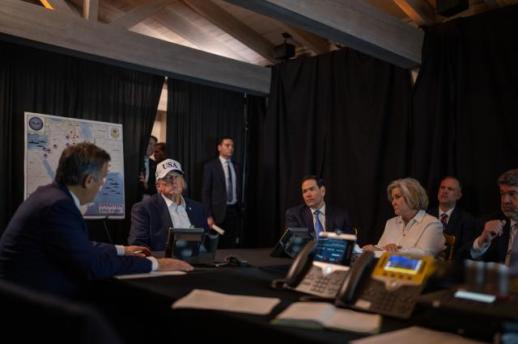 Day 7 Middle East War: Trump's Iran war exposes fractured alliances and global ripples SEOUL, March 06 (AJP) - The U.S.-Israeli strikes on Iran under Operation Epic Fury have done more than cripple Tehran’s leadership and military infrastructure. They have also exposed deep fractures in the Western alliance system and revived questions about the future of the post–World War II international order. The campaign began with the assassination of Iranian Supreme Leader Ayatollah Ali Khamenei on Feb. 28 — a dramatic opening move that President Donald Trump framed as a decisive effort to dismantle Iran’s military and nuclear capabilities. Yet the manner in which the operation unfolded — executed without meaningful consultation with traditional allies — has underscored a striking shift in Washington’s approach to global security: rapid unilateral action first, alliance management later. As Iranian missiles and drones struck Gulf targets, including near Dubai’s airport, the war quickly illustrated the unpredictable consequences of that approach. Italy’s defense minister Guido Crosetto, who happened to be vacationing in Dubai when retaliation hit the United Arab Emirates, later acknowledged that even analysts had not expected Iranian strikes on Gulf commercial hubs. Allies left in the dark Europe’s major powers — long pillars of the transatlantic alliance — were largely excluded from pre-strike deliberations, forcing governments into awkward post-facto positioning. French President Emmanuel Macron publicly acknowledged Paris had been “neither informed nor involved,” a rare and pointed rebuke that echoed across Europe. The European Union eventually convened an emergency security meeting more than two days after the strikes began, highlighting the continent’s discomfort with a war initiated outside its consultation structures. Even Britain, traditionally Washington’s closest military partner, found itself politically divided. Prime Minister Keir Starmer had earlier denied U.S. access to the British-controlled Diego Garcia base in the Indian Ocean. His subsequent cautious endorsement of the strikes drew criticism from both Labour’s anti-war wing and Conservative hawks demanding stronger support for Washington. The diplomatic confusion extended across the Middle East as well. Gulf states condemned violations of their airspace while simultaneously bracing for Iranian retaliation across the region. Saudi Arabia, the United Arab Emirates and other Gulf monarchies have since faced waves of drone and missile attacks on civilian and energy infrastructure. Russia, meanwhile, has limited its response largely to rhetoric. Foreign Minister Sergei Lavrov condemned the strikes as aggression following talks with Iranian officials, but Moscow has offered little tangible assistance. The muted response reflects Russia’s weakened position after years of geopolitical setbacks, including heavy losses in Ukraine and the collapse of allied governments in parts of the Middle East. No coalition for ground war Security experts say the structure of the operation itself suggests Washington is not seeking a multinational ground campaign similar to those in Iraq or Afghanistan. Andrew Gordon of Harvard University said Trump’s decision to launch the war without building an international coalition will likely deter allied participation in any potential invasion. “No one expects multiple countries to join a U.S. intervention sending troops into Iran,” he said. Instead, analysts say the operation appears designed as an air- and cyber-heavy campaign aimed at weakening the Iranian state without occupying the country. Chiara Redaelli of the University of Geneva described the strategy as a shift toward coercive regime pressure conducted largely from the air. “The operation signals a move from limited strikes toward sustained military pressure without the political burden of occupation,” she said. Several analysts also expect the conflict to remain relatively short. Muhamed H. Almaliky of Harvard argues Iran’s missile and drone stockpiles could be depleted within several weeks if the country receives no outside assistance. He added regarding Iran: "Iran does not have partners or allies of the type willing to endure the risk and consequences of joining it. Apart from the proxies in Lebanon, Iraq and Yemen who are not expected to have a substantial impact on the course of the war." European participation is likely to remain limited to defensive naval deployments protecting shipping lanes, according to historian Jeremy Friedman of Harvard. A short war — but lasting disruption Even if the fighting ends quickly, analysts warn the geopolitical and economic disruptions could persist far longer. Christian Bueger of the University of Copenhagen notes that insurance premiums, shipping routes and global energy markets often remain unstable well after military operations subside. “The conflict itself may last weeks, but disruptions to trade and maritime security can last much longer,” he said. Bueger added, "U.S. leadership continues to be unpredictable. For Korea, stable regional and international partnerships become ever more important. That includes the relationship to Japan, but also ASEAN and the EU." Kenneth Rogoff, the Harvard economist, adds that the war’s strategic lessons will be closely watched by other states. He said regarding the possibility of other countries joining the war: "the US will almost certainly get some other countries to join in, though probably it will require exerting considerable leverage to do so." North Korea, already armed with nuclear weapons, may draw the conclusion that nuclear deterrence remains the ultimate protection against external intervention. Strains on the rules-based order Operation Epic Fury also raises broader questions about the future of the international system built around U.S. alliances and multilateral institutions. Jeffrey Frankel of Harvard Kennedy School said the unilateral nature of the intervention represents another blow to the post-war global framework Washington helped build. “It’s another blow to the 80-year structure of alliances and multilateral rules that the United States itself created,” he said. Redaelli similarly warned that the growing gap between Western rhetoric about a “rules-based order” and the willingness to use unilateral force risks weakening the credibility of international law. For South Korea, the war’s most immediate impact is economic rather than military. The country relies heavily on Middle Eastern energy supplies, with much of its oil passing through the Strait of Hormuz, a strategic chokepoint now under heightened risk. South Korean lawmakers have warned that even a short disruption could ripple through domestic industries ranging from petrochemicals and shipping to aviation and semiconductors. “If the Strait of Hormuz issue is not resolved promptly, Korea will inevitably be affected across all industries,” said Democratic Party lawmaker Maeng Seong-gyu, chairman of the National Assembly’s transport committee. Others see a deeper shift in the global security environment. People Power Party lawmaker Kim Ki-woong, a former vice minister of unification, argued the conflict reflects a broader transformation in international politics. “The era of norms, order and morality has ended,” he said. “We have entered an era where power is openly displayed.” As Operation Epic Fury enters its second week, its military trajectory remains uncertain. But the geopolitical implications are already clear. Trump’s strategy of decisive, alliance-light military action may weaken adversaries quickly. Yet it also risks reshaping alliances, challenging global norms and deepening geopolitical fault lines far beyond the Middle East. For countries like South Korea — deeply tied to global energy flows and U.S. security guarantees — the conflict is a stark reminder that wars fought thousands of miles away can still reshape the strategic landscape at home. 2026-03-06 17:03:18
 -
 Volkswagen Group EV Deliveries Top 4 Million, Plans 20-Plus New Models This Year Volkswagen Group said Thursday that cumulative deliveries of its battery-electric vehicles have surpassed 4 million. On the back of that milestone, the automaker said it holds about 27% of Europe’s EV market. Of the 4 million EVs delivered, 77% were built in Europe. Volkswagen Group has 11 production sites there: Emden, Zwickau, Hanover, Bratislava, Mlada Boleslav, Ingolstadt, Neckarsulm, Leipzig, Zuffenhausen, Munich and Sodertalje. Two additional plants set to begin operating this year — Pamplona and Martorell — will produce the Core Brand Group’s city EV family models. The Wolfsburg plant, Volkswagen’s main production hub, and Bentley’s plant in Crewe, England, are also preparing for EV production, the company said. About 20% of the group’s EVs are currently produced in China, where it has four production sites: Anting, Foshan, Hefei and Changchun. Volkswagen Group said 95% of its EV deliveries are concentrated in three key markets — Europe, China and the United States. Europe accounted for 68%, followed by China at 20% and the U.S. at 8%. Other markets made up about 5%. Compact-class vehicles were the most popular segment, representing about 70% of deliveries. Key models include the Volkswagen ID.3 and ID.4, the Skoda Enyaq, the Cupra Born and the Audi Q4 e-tron. By body type, SUVs and crossover-style models accounted for more than half of demand. The group’s first mass-produced EV model was the VW e-up, launched in 2013, followed by the VW e-Golf in 2014. Since 2019, it has rolled out cross-brand models based on its dedicated EV platform, MEB (Modular Electric Drive Matrix). About 3 million MEB-based vehicles have been delivered, the company said. Over the past two years, Volkswagen Group said it has refreshed its portfolio with about 60 new models, about one-third of them fully electric. In passenger cars alone, it now offers more than 30 battery-electric models, ranging from small cars to luxury SUVs. It has also expanded its lineup to include battery-electric trucks and buses from TRATON brands including Scania, MAN, International and Volkswagen Truck & Bus. Volkswagen Group said it plans to add more than 20 new models this year, about half of them fully electric. The rollout includes new EVs aimed at China and an entry-segment “city EV family” of four models for Europe. * This article has been translated by AI. 2026-03-06 16:48:19
 -
 Jay Park Says He Felt Only Sorry When He Left 2PM Singer Jay Park has spoken about leaving the K-pop group 2PM. Park appeared on the YouTube channel "Eyes Magazine" on March 5. "At the time I left the team, I only felt sorry and apologetic," he said, adding that he had caused "disrespect and harm" to many people. He said he did not feel anxious. "I really live by accepting things as they come," Park said. "I’m the type to do my best in the situation I’m given, so I wasn’t anxious." Park also described a cover video he posted from Seattle after leaving 2PM, calling it "the reason I was able to come back." He said YouTube was surging at the time and it was popular for Asian Americans to upload cover videos. He said he filmed the clip in a bathroom on a MacBook he had received as a gift to share his musical tastes, and it reached 3 million views in a day. He said that led to offers and allowed him to resume activities. Park, who was promoting with 2PM, left the group in 2009 and returned to the United States after posts he had left on U.S. social media became controversial amid claims they criticized South Korea. He later debuted as a solo singer and is currently a singer and the head of an agency.* This article has been translated by AI. 2026-03-06 16:39:19
 -
 Kwon Noh-kap to Hold Book Launch for ‘Kwon Noh-kap: 100-Year Biography’ at National Assembly Museum Kwon Noh-kap, chairman of the Kim Dae-jung Foundation (96) and a standing adviser to the Democratic Party, will hold a publication ceremony on March 6 at the National Assembly Museum in Yeouido for his book, “Kwon Noh-kap: 100-Year Biography,” which sums up his political life. The book features comments on Kwon from 117 people, ranging from presidents and first ladies to National Assembly speakers, prime ministers, ministers, political allies and juniors, rivals and friends. It is both a tribute to a veteran politician and a record of modern South Korean political history. Congratulatory messages (to be read on behalf of the speakers) are scheduled from President Lee Jae-myung, former first lady Kwon Yang-sook and former President Moon Jae-in. Video messages are also planned from National Assembly Speaker Woo Won-shik and Democratic Party leader Jung Cheong-rae. Prime Minister Kim Min-seok, former National Assembly speakers, the head of the National Assembly Alumni Association and other senior political figures are expected to attend and offer remarks. The book is divided into four parts. Part 1 includes recollections of Kwon by figures such as Moon, Woo and Kim. Part 2 traces an era marked by industrialization and democratization, division and solidarity, portraying Kwon as guided not by power but by what he believed was the right direction. Part 3 describes years of hardship endured in the struggle for democratization and persistent preparations aimed at a change of government. Part 4 focuses on Kwon’s present, depicting him as someone who, even as he nears 100, chooses to keep learning rather than to teach. Kwon said, “I cannot fully express my gratitude to the colleagues and juniors who wrote for this book.” * This article has been translated by AI. 2026-03-06 16:31:13