
Journalist

AJP
-
 Hyeri’s Agency Denies Report She Listed Samseong-dong Building for 14.5 Billion Won Hyeri, an actress and former member of the group Girl’s Day, has denied a report that she put her building in Seoul’s Samseong-dong neighborhood up for sale for 14.5 billion won. Her agency, Sublime, said on March 4 that the report about a real estate sale was “completely untrue.” It said there was no fact that the property had been listed and that it had not even heard of the price cited in the article. The agency also expressed “deep regret” that unverified claims were spreading as if they were true, and asked that speculative reporting and the distribution of false information stop. Earlier that day, Korea Economic TV reported exclusively that Hyeri had listed the Samseong-dong building last month for 14.5 billion won. The outlet said that if a deal were completed at that asking price, it would amount to an estimated 4 billion won gain, based on a simple calculation, about four years after the purchase.* This article has been translated by AI. 2026-03-04 18:21:18
 -
 War Risk Insurance for Hormuz Shipping Seen Surging as U.S.-Iran Tensions Rise U.S. strikes on Iran have heightened tensions in the Middle East, fueling expectations that war risk insurance for ships transiting the Strait of Hormuz could rise sharply. The market is discussing a jump from about 0.01% of a vessel’s value to as high as 2% to 3%. If that happens, costs would spread beyond shipping lines to cargo owners, weighing on South Korean industry more broadly. According to the shipping industry on Tuesday, global reinsurers are reviewing whether to raise reinsurance rates for war risk coverage on vessels passing through the strait. Some observers had speculated that global marine insurers were pulling war risk coverage and halting related reinsurance. Industry sources said the issue is not a suspension but potential increases in reinsurance rates. War risk insurance is an add-on policy, separate from standard liability coverage, that ships typically buy when entering areas where conflict is possible. Premiums are generally calculated as a percentage of a ship’s value. While rates vary by vessel, they are typically about 0.01% in normal times, but can surge when military tensions rise. During last year’s Red Sea crisis, war risk premiums climbed to about 1% of ship value, nearly 100 times the usual level. For ships transiting the Strait of Hormuz, war risk reinsurance rates are currently said to be about 1% of vessel value. Depending on the risk level by port of call, rates could rise to 2% to 3%. For a ship valued at 100 billion won, that would mean up to 3 billion won in additional premiums. Industry officials said the burden would largely fall on shipping companies. While marine insurance contracts are signed directly between carriers and insurers, the terms are heavily influenced by reinsurers’ decisions. The industry expects higher premiums to push up ocean freight costs and, over time, raise crude oil import costs and add to energy price uncertainty. Analysts said countries like South Korea, which rely heavily on imported crude, are especially exposed to swings in transport costs on Middle East routes. President Trump early Tuesday mentioned providing military protection for tankers passing through the Strait of Hormuz and raised the possibility of insurance and guarantee support for energy transport vessels in the Gulf region through the U.S. International Development Finance Corp. Industry officials said the remarks appeared largely political and were unlikely to translate into policy. South Korea’s government is also monitoring the situation and preparing responses. The Ministry of Oceans and Fisheries and other agencies are checking in real time the locations and safety conditions of South Korean-flagged ships operating in Middle Eastern waters, according to industry officials. About 40 South Korean-flagged vessels are believed to be operating near waters around the Strait of Hormuz. They have moved to nearby safer waters as a precaution. Still, anxiety among crews remains significant, sources said. While most sailors are continuing their duties calmly, they are reporting heavy psychological stress amid uncertainty over how long the situation will last. “Given the limits on food and supply replenishment due to the nature of shipping, swift government action and support are needed to relocate vessels in the area,” one industry official said. “If tensions around the Strait of Hormuz drag on, we cannot rule out risks to ship safety and possible disruptions to crude oil transport.” 2026-03-04 18:05:02
 -
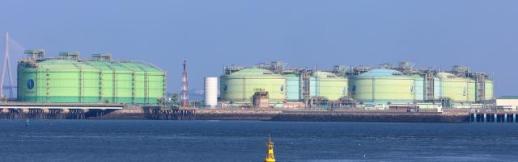 LNG Price Spike Threatens Power-Rate Relief for Steel, Petrochemical Sectors Ahead of K-Steel Law A surge in liquefied natural gas prices following the outbreak of war involving the United States and Israel and Iran is expected to deepen concerns in South Korea’s electricity-intensive steel and petrochemical industries, which are highly sensitive to power costs. The jump in fuel costs could strengthen the government’s reluctance to expand electricity-rate relief, potentially disrupting steelmakers’ carbon-neutral plans and the petrochemical sector’s efforts to consolidate naphtha cracking capacity. Industry officials said on the 4th that the Ministry of Trade, Industry and Energy and the Ministry of Climate, Energy and Environment began consultations this month to draft an enforcement decree for the Special Act to Strengthen Steel Industry Competitiveness and Support the Transition to Carbon Neutrality, known as the K-Steel law, which takes effect in June. A key issue is whether the decree will include provisions to cut electricity rates. As domestic steelmakers accelerate a shift from coal-fired blast furnaces to lower-carbon electric arc furnaces in line with the government’s 2030 carbon-neutral policy and the European Union’s Carbon Border Adjustment Mechanism, electricity prices have become a major driver of production costs. The National Assembly and the industry ministry are said to be supportive of rate relief through the decree. But the climate ministry, which holds authority over electricity pricing, is negative. Experts cite Korea Electric Power Corp.’s heavy debt burden as a major reason. KEPCO had total debt of 206 trillion won and borrowings of 130 trillion won as of last year, leaving its finances under strain. KEPCO posted operating profit of 13.5248 trillion won last year, helped by four years of increases in industrial electricity rates to 181.9 won per kilowatt-hour and lower fuel costs as global LNG prices fell. However, with LNG prices rising sharply since the start of the year due to the Iran war, it is unclear whether strong results will continue this year. Industry officials expect that, amid firm opposition from the climate ministry, electricity-rate relief is likely to be excluded from the K-Steel law decree. If the anticipated relief does not materialize, major steelmakers such as POSCO and Hyundai Steel would likely have to revise their carbon-neutral road maps. The industry is expected to recalibrate domestic investment in electric arc furnaces and speed up plans to build an integrated electric arc furnace steel mill in Louisiana, where electricity costs are said to be 30% to 40% lower than in South Korea. The petrochemical industry says conditions are even tougher. Higher LNG prices threaten to blunt the impact of previously announced power-support measures, while prices for Middle Eastern crude oil and naphtha — key feedstocks for petrochemical products — have continued to rise. On Feb. 25, the government announced a support package for petrochemical integration, including financial, tax and cost measures, in exchange for cuts in commodity petrochemical output such as ethylene through the consolidation of naphtha cracking centers. HD Hyundai Chemical and Lotte Chemical at the Daesan industrial complex were named as the first beneficiaries. The package includes a plan to designate the Daesan complex as a distributed energy special zone, allowing companies to buy electricity directly from private power producers instead of KEPCO, addressing the difficulty of providing direct rate cuts to the petrochemical sector given KEPCO’s accumulated losses. The aim is to reduce distribution steps and transmission costs so petrochemical firms can use electricity at prices 4% to 5% lower than the general grid. But because most private generators rely on LNG, their power prices are highly sensitive to fuel costs. Unlike the general grid, where KEPCO can partially absorb fuel-cost shocks through measures such as freezing rates, companies worry that LNG price increases would translate directly into higher electricity bills on private networks. A petrochemical industry official said the spike in raw material prices tied to the Iran war was a severe blow for companies that had been getting some relief from higher commodity product prices. The official warned that if the war drags on, more firms may be unable to withstand mounting losses and could halt plant operations.* This article has been translated by AI. 2026-03-04 18:03:24
 -
 Hair-Loss Drug Market Grows as Companies Race to Develop Longer-Lasting Treatments The hair-loss treatment market is expanding rapidly, and drugmakers are stepping up efforts to develop new medicines that address the limits of existing therapies. With options narrowed by the burden of long-term daily use, side-effect concerns and restrictions by sex, demand is rising for safer, more sustainable treatments. According to global research firm Research Nester, the hair-loss drug market is projected to grow from $11.44 billion in 2025 to $33.07 billion in 2035. Population aging and greater interest in appearance are cited as key drivers. Even so, treatment choices in clinics remain limited. The most widely used therapies are oral finasteride and dutasteride and topical minoxidil. Finasteride and dutasteride work by suppressing DHT, a male hormone linked to hair loss, but their use is restricted for women of childbearing age. Patients also face the burden of taking the drugs daily. To overcome those constraints, companies are pursuing drugs that target new pathways beyond hormone suppression, as well as long-acting formulations designed to sharply reduce dosing frequency. JW Pharmaceutical is developing JW0061, a first-in-class candidate involved in the proliferation of hair follicle cells. Because it does not directly suppress hormones, it could also be used for women. Development of injectable treatments aimed at improving convenience is also accelerating. Chong Kun Dang is developing CKD-843, an improved drug that converts oral dutasteride into an intramuscular injection given once every three months. Daewoong Pharmaceutical and Inventage Lab are jointly developing IVL3001, a long-acting injectable based on oral finasteride, designed for monthly dosing with effects lasting up to three months. Expectations have also risen after discussions resurfaced on reviewing national health insurance coverage for hair-loss drugs, following an instruction by President Lee Jae-myung. Still, analysts say the market outlook should distinguish between conditions: receding-hairline and crown hair loss are hormone-related cosmetic conditions, while alopecia areata stems from immune-system abnormalities and requires a different approach. Alopecia areata patients worldwide are estimated at about 147 million. With more young patients, surveys show 40% of men experience some level of hair loss by age 35. In South Korea, Eli Lilly’s Olumiant (baricitinib) is approved, but patients face heavy costs because it is not covered under the special reimbursement program. Kim Hyun-jung, a dermatology professor at Gachon University Gil Medical Center, said severe alopecia areata is a condition in which immune cells attack hair follicles, making Janus kinase, or JAK, inhibitors essential. She added that studies have also reported benefits from a JAK inhibitor with a different mechanism, upadacitinib, in patients who did not respond to existing treatments. “It should not stop at a single drug,” she said, calling for the entry of more follow-on medicines alongside reimbursement discussions."* This article has been translated by AI. 2026-03-04 17:57:00
 -
 Boryung Licenses Blood Cancer Drug Xpovio; Dong-A, Daewoong and GC Wellbeing Updates Boryung signs license-in deal for blood cancer drug Xpovio Boryung said Tuesday it has signed a license-in agreement with Antengene, a China-based oncology drug developer, for the blood cancer drug Xpovio (selinexor). Under the deal, Boryung secured exclusive rights in South Korea, including sales, distribution and regulatory approval. The company began full-scale domestic supply in February. Xpovio, developed by Antengene, is a treatment for multiple myeloma and diffuse large B-cell lymphoma. It is described as the world’s first-in-class selective inhibitor of XPO1, a nuclear export protein. By inhibiting nuclear export, tumor suppressor and growth-regulating proteins are retained in the cell nucleus, where they accumulate and activate, inducing cancer cell death. Multiple myeloma often becomes resistant to existing drugs as treatment continues, creating demand for therapies with different mechanisms. Boryung said Xpovio is drawing attention as an additional option for patients with relapsed or refractory multiple myeloma who have limited choices. It is an oral formulation, not an injection, which can improve convenience for long-term treatment. Xpovio is reimbursed for combination therapy with dexamethasone for fifth-line or later treatment. Starting March 1, reimbursement was also expanded to combination therapy with bortezomib and dexamethasone for second-line or later treatment. Dong-A Pharm launches Panpyrin Time powder cold medicine that dissolves without water Dong-A Pharm said Tuesday it has launched Panpyrin Time powder, a cold medicine designed to dissolve in the mouth without water. The powder can be taken anytime and anywhere when cold symptoms appear, the company said. It contains acetaminophen, chlorpheniramine, riboflavin, tipepidine and DL-methylephedrine, which it said may help relieve runny nose, sore throat, fever, cough and muscle aches. Dong-A Pharm said it does not add sugar, coloring, caffeine or preservatives, and includes vitamin B2 to help support recovery from cold symptoms. The product applies the company’s patented OD!FS formulation technology, designed to dissolve quickly with a small amount of saliva. Dong-A Pharm said it uses a fine-particle structure and special surface treatment to minimize bitterness, and adds a lemon flavor. The stick-type powder is designed for portability and can be taken by people ages 2 and older, including seniors, the company said. Daewoong says Phase 3 results for CleanCol tablets published in SCI-indexed journal Daewoong Pharmaceutical said Tuesday that Phase 3 results for its next-generation tablet bowel preparation, CleanCol, were published in the SCI-indexed World Journal of Gastroenterology. Daewoong said CleanCol reduces sulfate ingredients by 25% compared with existing products and cuts the number of tablets to 20 to ease the burden of dosing. It also adds picosulfate, an ingredient that helps promote bowel movements. In the study, CleanCol maintained a similar level of bowel-cleansing efficacy compared with an existing bowel preparation, the company said. The overall rate of adverse drug reactions was significantly lower at 18.10% for CleanCol, compared with 33.02% for the existing bowel preparation. The paper was based on a multicenter, randomized Phase 3 trial involving 215 adults at seven university hospitals in South Korea. Principal investigator Park Dong-il, a professor at Kangbuk Samsung Hospital, said, “It will help reduce the burden patients experience during colonoscopy preparation and improve medication adherence.” GC Wellbeing receives Chungcheongbuk-do governor’s citation for fire response GC Wellbeing said Tuesday it received a citation from the governor of Chungcheongbuk-do for helping prevent the spread of a fire and supporting firefighting efforts. The award was presented at a ceremony held Monday at the provincial government complex. The company said the citation formally recognizes its disaster-response efforts during a fire at the Hybaro plant. Chungcheongbuk-do Gov. Kim Young-hwan presented the award to Park Dong-hwan, head of production at GC Wellbeing, according to the company. GC Wellbeing said it did not suffer direct facility damage from the fire, but incurred losses from suspended operations, lost workdays, and disposal costs for raw and subsidiary materials. The province highly evaluated the company’s proactive response to help protect community safety and its close cooperation with the public response system, it said.* This article has been translated by AI. 2026-03-04 17:48:00
 -
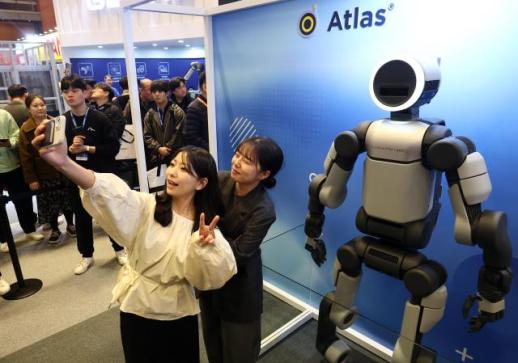 AW 2026 opens as showcase of AI-native manufacturing innovation SEOUL, March 04 (AJP) - The present and future of manufacturing innovation led by autonomous manufacturing and physical AI gathered in one place. AW 2026 (Smart Factory & Automation World) opened at COEX in Samseong-dong, Seoul, on March 4, presenting the largest-ever exhibition with 453 companies from 24 countries and 2,300 booths. From humanoid robots and smart logistics to AI factory special pavilions, the event showcasing a convergence of intelligent automation technologies is drawing attention as a practical stage for the industrial field declaring a shift to "AI-native manufacturing." This year's exhibition features major Korean robotics and logistics companies including Hyundai Motor Group Robotics LAB, Hyundai Glovis, Hyundai Movex, Robotis, Eugene Robot, and Wonik Robotics. The exhibition runs through March 6. 2026-03-04 17:47:29
 -
 Asian markets in second rout while Seoul bourses suffer worst collapse SEOUL, March 04 (AJP) - The spiraling war in the Middle East sent shockwaves across Asian markets Wednesday, triggering a historic collapse on the Seoul bourse. Global energy markets remained volatile as tensions centered on the Strait of Hormuz — a critical artery for global oil shipments — fueled fears of supply disruptions and renewed inflation pressure. The narrow waterway carries roughly one-fifth of the world’s seaborne crude and serves as a key route for energy supplies bound for Asia. U.S. President Donald Trump said Washington was prepared to intervene to protect shipping lanes in the region. “If necessary, the United States Navy will begin escorting tankers through the Strait of Hormuz,” Trump said, adding that the government would also provide political risk insurance for maritime trade to ensure the “free flow of energy to the world.” The war abruptly ended this year’s fastest and steepest rally in Korean equities, sending stocks tumbling for a second consecutive session in one of the sharpest market collapses in decades. The benchmark KOSPI plunged 12.06 percent, or 698.37 points, to close at 5,093.54, after already falling 7.24 percent the previous day. The two-day slide wiped out nearly 19 percent of the index’s value. The index briefly dropped to an intraday low of 5,059.45 before closing near session lows, pushing the market back toward levels seen earlier this year. The scale of the decline was extraordinary by historical standards. The drop surpassed the 12.02 percent plunge recorded on Sept. 12, 2001, in the aftermath of the Sept. 11 attacks, when the KOSPI fell 64.97 points to close at 475.64. The latest selloff therefore ranks among the steepest single-day declines in the history of the Korean stock market. Selling pressure intensified shortly after the open. The index began the session 3.44 percent lower at 5,592.59, before losses rapidly accelerated across the board. According to the Korea Exchange, circuit breakers were triggered as the selloff deepened. Trading was halted on the KOSDAQ at 11:16:33 a.m., followed by the KOSPI at 11:19:12 a.m., after both indices fell more than 8 percent from the previous close. The mechanism halted trading for 20 minutes in an effort to curb panic selling. It marked the seventh circuit breaker in KOSPI history and the eleventh for the KOSDAQ, and the first such halt since Aug. 5, 2024. Trading activity surged as volatility intensified. Turnover on the KOSPI jumped to about 62.6 trillion won ($42.6 billion), sharply higher than 52.8 trillion won the previous day. Losses were widespread across the Korean market, with major exporters and technology firms leading the decline. Samsung Electronics dropped 11.74 percent to 172,200 won, while SK hynix fell 9.58 percent to 848,000 won, extending losses from the previous session. Automakers and industrial stocks also suffered steep declines. Hyundai Motor plunged 15.8 percent, Kia slid 14.04 percent, and LG Energy Solution fell 11.58 percent. Heavy industry and shipbuilding shares were similarly hit, with HD Hyundai Heavy Industries dropping 13.39 percent. Even defense stocks — which had surged a day earlier amid rising geopolitical tensions — reversed sharply. Hanwha Aerospace, Hyundai Rotem, and Hanwha Systems all posted significant losses. The tech-heavy KOSDAQ also recorded a historic decline. The index plunged 14 percent, or 159.26 points, to 978.44, breaking below the psychologically important 1,000 level after opening at 1,112.08. Major growth stocks fell sharply across the board, including EcoPro, Alteogen, EcoPro BM, Samchundang Pharm, and Rainbow Robotics, all posting double-digit losses. Elsewhere in Asia, markets also declined as investors moved away from risk assets, though the scale of losses was far less severe than in Korea. Japan’s Nikkei 225 fell 3.6 percent to 54,245.5, while the broader TOPIX dropped 3.7 percent. In Greater China, declines were more moderate. Hong Kong’s Hang Seng Index fell 2.3 percent, while the Shanghai Composite slipped 1 percent. The comparison underscored the magnitude of Korea’s selloff, which far exceeded declines across other major Asian markets. Currency markets also reflected growing risk aversion. The Korean won traded near crisis-era levels at 1,476.2 per dollar, highlighting investor concerns about capital outflows and rising energy costs. With tensions in the Middle East unresolved and energy markets highly sensitive to developments around the Strait of Hormuz, volatility across global markets is likely to remain elevated. Market watchers note that after surging nearly 50 percent this year as of last week, the KOSPI may still face further downside risks if geopolitical tensions persist. 2026-03-04 17:47:01
 -
 Cheongung-II's maker survives worst-ever rout in Seoul as it debuts on Iranian borders SEOUL, March 04 (AJP) - The bombshell from the 2026 Middle East conflict has flown to Seoul and crashed the party in a big way — sending the benchmark KOSPI plunging a record 12 percent and the KOSDAQ 14 percent. One stock, however, defied the sweeping rout: LIG Nex1, the maker of the Cheongung-II. The sudden spotlight came after the missile defense system reportedly saw its first real combat use intercepting Iranian missiles over the Gulf, a development that instantly thrust South Korea’s defense technology into the center of a widening regional war. The geopolitical shock triggered both panic and dark humor in Seoul’s retail trading circles. A viral meme circulating among Korean day traders shows Kim Seung-youn and his son Kim Dong-kwan beckoning investors to board a flight amid the spiraling Middle East war, captioned: “No time to explain — just get in.” Behind the jokes lies a stark reality: defense companies are increasingly under the spotlight as geopolitical tensions intensify globally, from the Russia–Ukraine War to rising instability in the Middle East following joint strikes by the United States and Israel on Iran. Korean missile shield tested in real combat The Middle East escalation provided an unexpected proving ground. Iran’s retaliatory missile and drone attacks on Gulf states hosting U.S. military assets reportedly triggered interceptions by the Cheongung-II system deployed in the United Arab Emirates, marking what analysts view as the first known combat use of a Korean-exported missile defense system. The UAE integrates Cheongung-II into a multilayered defense network alongside the Patriot missile system and Israel’s Arrow missile defense system. According to UAE defense data, 161 out of 174 Iranian ballistic missiles were intercepted, along with all eight cruise missiles and 645 out of 689 drones — an interception rate exceeding 90 percent across categories. Cheongung-II reportedly delivered comparable performance within the network. Often described as a Korean counterpart to Patriot, the system uses a hit-to-kill interceptor capable of destroying targets by direct impact. Its missiles travel at roughly five times the speed of sound and can intercept aircraft and ballistic missiles at altitudes of around 15–20 kilometers. Analysts say battlefield validation could significantly strengthen confidence in the system globally. “While defense stocks may fluctuate in the short term due to geopolitical developments, the industry’s fundamentals point to a structurally upward trajectory,” said Choi Jung-hwan, a defense analyst at Daishin Securities. “The fact that Cheongung-II has now gained operational experience in an actual conflict could strengthen trust in the system.” The Gulf conflict highlights a broader transformation in modern warfare, where missile barrages and drone swarms increasingly dominate the battlefield. “Missile defense is ultimately a probability game,” Choi said. “Ballistic missiles follow predictable trajectories, but drones are far harder to track and intercept.” He added that the economics of drone warfare also challenge traditional air defense strategies. “Drones are relatively cheap, while the systems designed to intercept them are expensive. In prolonged conflicts, that imbalance can weigh heavily on defenders.” The dynamic is expected to accelerate demand for counter-drone systems and next-generation air defenses — sectors where South Korea is rapidly expanding capabilities. Investors pile into defense names The battlefield headlines quickly translated into investor enthusiasm. Shares of LIG Nex1 surged nearly 30 percent Tuesday after reports of Cheongung-II’s operational use. Other defense contractors also rallied sharply. Hanwha Aerospace jumped about 20 percent to close at 1,432,000 won, while Hanwha Systems climbed more than 29 percent to 146,700 won. Both stocks retreated the following day as profit-taking set in, with Hanwha Aerospace slipping 7.6 percent and Hanwha Systems dropping about 21 percent. LIG Nex1 which soared around 20 percent during the broad retreat managed to end Wednesday up 1.8 percent at 673,000 won. Ryu Youn-seung, professor of defense industrial security at Myongji University, said the Middle East conflict could ultimately boost global demand for missile defense systems. “With Iran and Israel exchanging missile attacks, many countries may seek to strengthen their air defense capabilities,” he said. “The Cheongung-II’s performance could serve as a valuable opportunity for South Korea’s defense industry to gain greater recognition in global arms markets.” Korea’s defense exports have expanded rapidly since the Ukraine war reshaped global arms demand. According to the Stockholm International Peace Research Institute, South Korea ranked 10th among global arms exporters between 2019 and 2023, accounting for roughly 2 percent of global exports. The country’s competitive pricing and rapid delivery timelines have helped drive major deals, including Poland’s $12 billion purchase of Korean tanks, artillery and fighter jets in 2022. Analysts say the industry’s next phase will broaden beyond land systems such as tanks and artillery to include platforms like the KF 21 Boramae and advanced missile defense systems. “Defense is a long-cycle industry operating on timelines of a decade or more,” Choi said. “Korea’s strong manufacturing base — from steel to chemicals — gives it a structural advantage that is difficult for competitors to replicate.” If Cheongung-II’s combat debut proves successful, analysts say it could accelerate South Korea’s rise as a major supplier in the global defense market — not only as a cost-efficient exporter, but increasingly as a credible security partner. 2026-03-04 17:14:03
 -
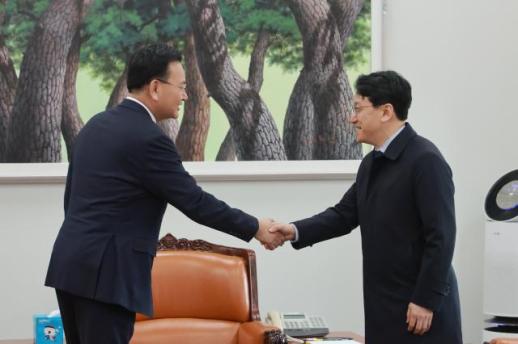 Rival parties agree to pass bill this week to clear way for US investment under trade deal SEOUL, March 4 (AJP) - A bill outlining South Korea's massive investment pledges to the U.S., a follow-up measure to a tariff-related deal between the two countries is expected to pass at the National Assembly later this week. Lawmakers from the ruling Democratic Party (DP) and the main opposition People Power Party (PPP) met on Wednesday to discuss the bill and agreed to put it to a vote at a parliamentary session on Thursday. "If all goes as planned, we expect the bill to pass," the DP's Cheon Jun-ho told reporters. "We put the broader national interest first, mindful that further delays could invite even harsher U.S. tariff measures," said the PPP's Yoo Sang-beom. In January, U.S. President Donald Trump threatened to raise reciprocal tariffs on South Korea back to 25 percent from 15 percent, complaining about delays in Seoul's legislative process for the trade deal that was reached during his visit to South Korea last fall. Meanwhile, the two rival parties failed to reach a consensus on another bill to merge several central and southern provinces including Daejeon and Daegu, as each side weighs what advantages it might gain ahead of local elections slated for early June. 2026-03-04 17:11:39
 -
 Cha Biotech Names Vice Chairman Cha Won-tae as CEO Cha Biotech said its board met on Tuesday and appointed Cha Won-tae, vice chairman of the CHA Hospital and Cha Bio Group and chief sustainability officer at Cha Biotech, as CEO. Cha is the eldest son of Cha Kwang-ryul, global research institute director at CHA Hospital and Cha Bio Group and the group’s founder, and the grandson of the late Cha Kyung-seop, honorary chairman of CHA University and CHA Hospital, the company said. He earned a bachelor’s degree in biological anatomy from Duke University, a master of public health from Yale University, an MBA from the Massachusetts Institute of Technology, and a doctorate in health science from Yonsei University. He previously served as chief operating officer of CHA Health Systems, which runs Hollywood CHA Hospital in Los Angeles, and as chief strategy officer at Hollywood CHA Hospital, and later was president of CHA University. In September last year, he was named vice chairman of the CHA Hospital and Cha Bio Group and CSO at Cha Biotech. In January, he was appointed an inside director as part of efforts to strengthen accountable management and raise corporate value.* This article has been translated by AI. 2026-03-04 17:10:19