
Journalist

AJU PRESS
-
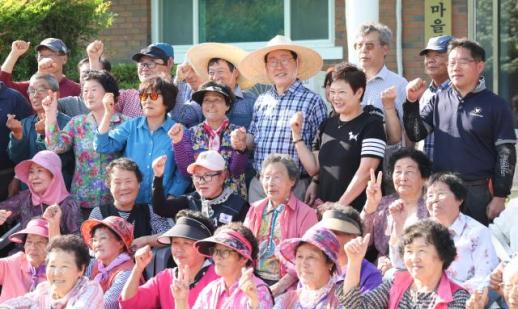 President Lee Engages with Community Through Rice Planting and Lunch with Former Teacher President Lee Jae-myung continued his community engagement efforts on May 15, traveling between his hometown of Andong in Gyeongbuk and Gunwi-gun in Daegu.On the occasion of Teacher's Day, President Lee had lunch with his former elementary school teacher, Park Byeong-gi, and alumni from Samgye Elementary School in Andong before visiting Umusil Village in Gunwi-gun.Dressed casually in beige pants and a checkered shirt, President Lee arrived at the village, donned a straw hat and boots, and participated in rice planting using a rice transplanter after receiving instructions.As he loaded seedlings onto the transplanter, local residents cheered, prompting him to respond, "I’m doing better than I thought."President Lee drove the transplanter alone for over 100 meters to plant the seedlings. While jumping over a muddy path, he joked, "It feels like I’ve worked hard," as mud splattered on his face.He also observed a demonstration of drone pest control and remarked, "This is much better than what I did," eliciting laughter from those present.Before the planting experience, he welcomed residents who requested photos, smiling as he said, "This is all part of farming too."During a break, he sat under a zelkova tree with farmers, sharing dishes like banquet noodles, tofu kimchi, and makgeolli while holding an impromptu meeting.Additionally, President Lee engaged residents in conversation about the market for agricultural products and the income of the local community."Having planted rice myself, I can feel how much effort farmers put in on-site," he said, expressing hopes for a bountiful harvest.Before his visit to Gunwi-gun, President Lee inspected the construction site for the Daegu-Gyeongbuk Integrated New Airport in Gunwi-gun and Uiseong-gun, reviewing the progress and conditions of the project, according to Deputy Spokesperson Ahn Gwi-ryeong in a written briefing.The site visit was arranged to hear about the challenges in the ongoing process of the Daegu-Gyeongbuk Integrated New Airport, a major regional issue. President Lee received updates on the project's progress from officials of Daegu City, the Ministry of National Defense, and the Ministry of Land, Infrastructure and Transport.Daegu City officials reported that excessive financial costs have arisen in the process of securing funding for relocating the urban military airport for the new airport, warning that risks associated with the prolonged project are concentrated on the city and requesting national-level support.* This article has been translated by AI. 2026-05-16 00:52:44
 -
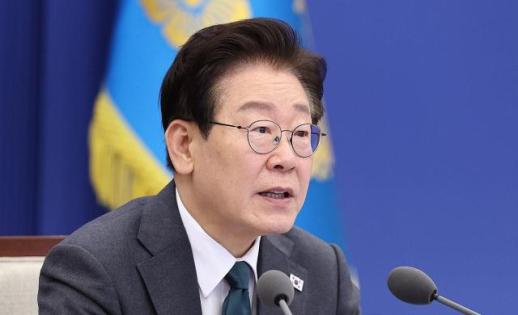 President Lee's Approval Rating Drops to 61% Amid Controversy President Lee Jae-myung's approval rating has slightly decreased to 61%. This decline follows discussions within the Democratic Party regarding granting the special prosecutor investigating allegations of manipulated investigations and prosecutions the authority to dismiss charges. According to a survey released by Gallup Korea on May 15, 61% of respondents rated President Lee's job performance positively, a decrease of 3 percentage points from the previous survey, which recorded a 64% approval rating. Meanwhile, the disapproval rating rose by 2 percentage points to 28%, with 11% of respondents remaining undecided. The primary reasons for the positive evaluations included 'economy and livelihood' at 26%, followed by 'diplomacy' at 10%, and 'overall performance' at 7%. On the other hand, the main reasons for disapproval were 'excessive welfare and livelihood support' and 'issues of morality and evasion of personal trials,' each cited by 10% of respondents. This was followed by 'economy, livelihood, and high exchange rates' at 9%, and 'overall poor performance' at 8%. In terms of party support, the Democratic Party's approval rating fell by 1 percentage point to 45%. The People Power Party saw an increase of 2 percentage points, reaching 23%. While the Democratic Party maintained higher support in most regions, the People Power Party led in Daegu and North Gyeongsang Province with 41% compared to the Democratic Party's 23%. The survey was conducted through interviews with randomly selected wireless phone numbers, with a margin of error of ±3.1 percentage points at a 95% confidence level and a response rate of 12.5%. For more details, please refer to the Central Election Survey Deliberation Commission's website.* This article has been translated by AI. 2026-05-16 00:50:15
 -
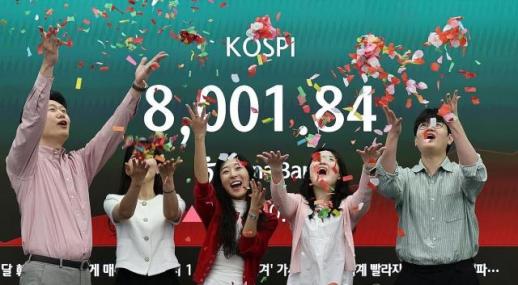 KOSPI Surpasses 8000 Points, Setting New Records in Trading and Market Capitalization The KOSPI index has reached a historic milestone by surpassing 8000 points for the first time, establishing a new chapter in market history. Key indicators such as market capitalization, trading volume, investor deposits, and margin loan balances are also setting record highs. According to the Korea Exchange, the KOSPI, which started the year at 4214.17, closed at 7493.18 on May 15, marking a 77.81% increase since the beginning of the year. After a remarkable 75% rise last year, which made it the top-performing major stock market globally, the KOSPI continues its strong upward trend this year. Analysts attribute this bullish market to the capital market reforms initiated by the administration of Lee Jae-myung, which include amendments to commercial laws, enhanced protection for minority shareholders, and increased stock buybacks. Additionally, improvements in the semiconductor sector since September of last year have led to a significant upward revision in earnings forecasts for KOSPI-listed companies, driving the market's rise. By sector, the electronics industry has recorded the highest increase, rising 134.07% since the start of the year. This is followed by construction (109.10%), manufacturing (95.30%), and securities (94.17%). Notably, securities stocks have emerged as key beneficiaries of the trading volume surge and the bullish market sentiment. The market capitalization of KOSPI-listed companies has also reached unprecedented levels. On May 14, the KOSPI market capitalization hit a record high of 653.67 trillion won, surpassing 6500 trillion won for the first time. This marks an increase of nearly 3000 trillion won from the 347.78 trillion won recorded at the end of last year, achieved in just over five months. The KOSPI market capitalization first crossed the 4800 mark on January 16, surpassing 4000 trillion won, and exceeded 5000 trillion won on February 25. It then crossed the 6000 trillion won mark on March 6 and reached 7000 trillion won on April 6, reflecting a steady expansion in market size alongside the index's rise. The global standing of the Korean stock market has also improved significantly, now ranking sixth among major global stock markets, surpassing Taiwan. The domestic market overtook the UK on April 27, Canada on May 7, and Taiwan on May 11. At the end of last year, the Korean stock market was ranked around tenth. Investor enthusiasm is reaching a fever pitch. On May 12, the KOSPI recorded its highest daily trading volume ever at 67.115 trillion won. From May 1 to May 15, the average daily trading volume for the KOSPI was 52.615 trillion won, significantly higher than the monthly averages of January (27.056 trillion won), February (32.234 trillion won), March (30.143 trillion won), and April (29.551 trillion won). The amount of idle funds in the stock market has surged as well. According to the Korea Financial Investment Association, investor deposits have remained above 130 trillion won for seven consecutive trading days from May 6 to May 14. This is a sharp increase compared to 57.58 trillion won at the beginning of last year and 89.52 trillion won at the start of this year. Margin trading has also reached unprecedented levels. The balance of margin loans in the domestic stock market exceeded 35 trillion won for the first time on April 23 and surpassed 36 trillion won on April 29. As of May 14, the margin loan balance reached a record high of 36.4698 trillion won. The share of foreign investment has also increased. Foreign ownership of KOSPI market capitalization has recently surpassed 37%, reaching its highest level in nearly six years. This influx is attributed to significant global passive fund investments in sectors such as semiconductors, finance, and holding companies. However, concerns about volatility are rising as the market level increases rapidly, with a concentration of investments in major stocks like Samsung Electronics and SK Hynix. These two companies account for nearly 48% of the total KOSPI market capitalization. On May 15, the KOSPI opened at 7951.75, down 29.66 points (-0.37%) from the previous trading day, but briefly surpassed 8000 points due to strong individual investor buying. However, profit-taking led to a sharp decline of 488.23 points (-6.12%), closing at 7493.18. The KOSPI experienced extreme volatility on May 12, when it briefly soared to 7999 points before plummeting to 7421.71. On this day, the KOSPI 200 Volatility Index (VKOSPI) reached 74.71, marking the third-highest level in the past year. The VKOSPI has remained above 70 for four consecutive trading days since May 12, indicating a simultaneous increase in overheating and anxiety in the market.* This article has been translated by AI. 2026-05-16 00:47:18
 -
 Chinese 'Table Diplomacy' Message Through Kung Pao Chicken and Jajangmyeon In international diplomacy, state dinners are often referred to as "food diplomacy" because each dish served carries a message and consideration for the other country. This is why food is called the oldest language of diplomacy. The menu presented by China during President Donald Trump's visit naturally conveyed such messages. The highlight of the working lunch on May 15 at Zhongnanhai, where President Xi Jinping and Trump met for the last time, was Kung Pao Chicken, a classic Sichuan dish. China had also featured this dish during Trump's first visit in 2017. Kung Pao Chicken, made with chicken stir-fried with peanuts and chili peppers, is a representative dish from the Sichuan region. Some interpretations suggest that the choice was a nod to the connection between Trump's Chinese name, "Chuanfu," and Sichuan cuisine, or "Chuan Cai." Kung Pao Chicken also resonates with the history of U.S.-China exchanges. It was one of the favorite dishes of Chinese immigrant laborers who worked on railroads, in mines, and on farms in the U.S., symbolizing the integration of Chinese culinary culture into American society. The theme of food diplomacy continued at the welcome state dinner for Trump on May 14 at the Great Hall of the People in Beijing. The menu was carefully crafted to reflect traditional Chinese cuisine while considering Trump's tastes and Western preferences. The dinner included Peking Duck, a dish known for its crispy skin and tender meat, frequently served at state banquets for foreign leaders. Other dishes included Cantonese lobster soup, crispy beef, and slow-cooked salmon with mustard sauce. The meal also featured Chinese-style crispy dumplings, conch-shaped pastries, and Italian tiramisu. The combination of Eastern and Western flavors in the meal was seen as a representation of the mutual respect and compromise emphasized in U.S.-China relations. The music played during the dinner also reflected careful consideration, mixing American and Chinese songs. Notably, "YMCA," a song frequently used by Trump during his campaign rallies, was played, interpreted as a gesture of respect from the Chinese side. China's approach to food diplomacy was also highlighted earlier this year during South Korean President Lee Jae-myung's visit. During a state dinner, President Xi served Beijing-style Jajangmyeon and encouraged President Lee to taste the differences from Korean Jajangmyeon, fostering a warm atmosphere for conversation on a shared topic. In diplomatic relations with culturally vibrant France, a more refined "cultural diplomacy" is emphasized. During French President Emmanuel Macron's visit last year, Xi highlighted the cultural connections between French wine and Chinese tea. Additionally, at dinners with Russian President Vladimir Putin, known for his fondness for alcohol, the table always features China's representative liquor, Maotai, alongside Russian vodka. This reflects the friendship between the two leaders, who have met over 40 times since taking office, symbolizing the bond between China and Russia. The upcoming welcome dinner for President Putin during his state visit to China on May 19-20 is expected to showcase similar elements of food diplomacy, symbolizing the close relationship between the two countries. 2026-05-16 00:45:30
 -
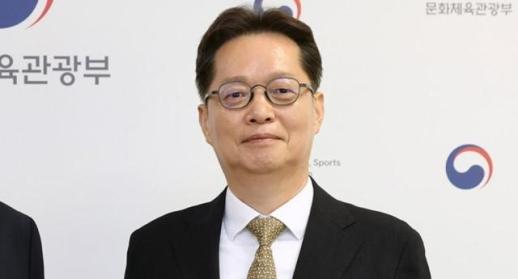 Prosecutors Seek 5-Year Sentence for Former KTV Chief Over Censorship Charges Lee Eun-woo, the former chief of the Korea Policy Broadcasting (KTV), has been sentenced to five years in prison for allegedly ordering the removal of broadcast subtitles that criticized the constitutionality and legality of the martial law declared on December 3. According to Yonhap News on May 15, the special prosecutor's team, led by Cho Eun-seok, requested this sentence during the final hearing of Lee's case at the Seoul Central District Court, presided over by Judge Oh Se-yong. The prosecution stated, "As the head of programming and a public servant, the defendant had a duty to provide fair and balanced information regarding the martial law declaration, which threatens the existence of the state and the basic rights of citizens, yet he failed to do so. The defendant's actions not only increased public confusion but also amounted to promoting and endorsing unconstitutional and illegal martial law." In his closing argument, Lee's attorney contended, "Considering the nature of KTV, the application of fairness under broadcasting law should be relaxed. Even if deemed illegal, it is questionable whether actions contrary to broadcasting fairness warrant criminal punishment." Lee also stated in his final remarks, "KTV is not a typical media outlet that checks and criticizes power; it exists solely as a government agency under the Ministry of Culture, Sports and Tourism to promote government policies. Broadcasting political disputes without editing violates the political neutrality expected of public servants." The court has set June 26 as the date for its ruling. Lee was indicted for abuse of authority for allegedly instructing news department staff to delete reports criticizing the martial law while serving as KTV chief on December 3, 2024. He was accused of directing the broadcast editing team leader, Choo Mo, to remove news related to politicians' statements, political parties, the National Assembly, and the judiciary, stating, "These do not align with KTV's broadcasting principles; only include factual information about the president and proclamations." When freelance subtitle specialist Ji Mo refused to comply, Lee contacted the head of the broadcasting department, Park Mo, to ensure the subtitles were deleted. As a result, some subtitles were removed.* This article has been translated by AI. 2026-05-16 00:42:00
 -
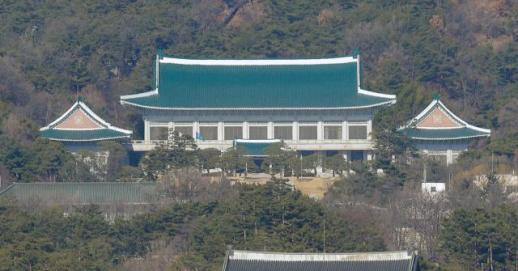 South Korea's Blue House Protests Bloomberg's AI Profit Distribution Report The Blue House has confirmed that it sent an official letter to Bloomberg protesting the news agency's interpretation of Policy Chief Kim Yong-beom's proposal for a 'citizen dividend' as a distribution of 'excess profits' from artificial intelligence (AI) companies.In the letter sent the previous day, the Blue House expressed serious concerns about how Bloomberg reported Kim's personal social media post.The Blue House stated that Bloomberg's 'inaccurate framing' has caused 'substantial confusion in the market' and has had a clearly negative impact on investor sentiment. It demanded that Bloomberg acknowledge this and issue a formal apology for the adverse effects on the market.The Blue House clarified that Kim's remarks were about how to allocate 'excess tax revenue' from corporate taxes, not about distributing 'excess profits' from companies, which it described as a 'serious misunderstanding.'The Blue House requested a correction of Bloomberg's report, which suggested that Kim initially spoke about profit distribution and later clarified his comments. However, Bloomberg has yet to respond to the Blue House's request.In the letter, the Blue House emphasized that Kim has never advocated for the redistribution of corporate profits, proposed a windfall tax on companies, or suggested directly transferring private sector profits.Earlier, on May 12, Kim mentioned in a Facebook post that 'the fruits of the AI infrastructure era are not solely the result of specific companies' and referred to the 'citizen dividend system' to return these benefits to the public. The post included a suggestion to consider how to utilize any excess tax revenue that may arise.Bloomberg previously reported Kim's comments under the headline 'South Korea Floats Citizen Dividend Using AI Profits.'* This article has been translated by AI. 2026-05-16 00:40:09
 -
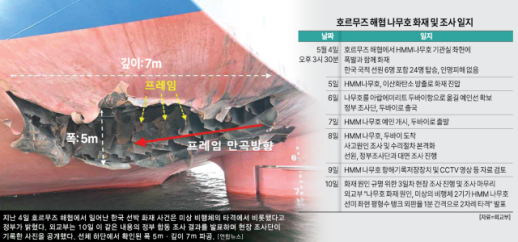 Debris from Drone Strike on South Korean Ship Arrives in Country for Analysis Debris from the drone that struck the South Korean vessel Namooho in the Hormuz Strait has arrived in South Korea. The Ministry of Foreign Affairs announced on May 15 that the debris was transported via air after consultations with the United Arab Emirates (UAE) government and that a detailed analysis will be conducted by specialized institutions. The debris was reportedly transported in a diplomatic pouch on a commercial flight from Abu Dhabi to Incheon. A senior official from the Foreign Ministry stated the day before, "Once we have the debris, I believe our defense ministry's investigative agency will thoroughly examine it and uncover all necessary details." The debris consists of the engine section of the drone. The government plans to conduct a thorough investigation to determine whether the object is a drone or a missile and to confirm if Iran was indeed the attacking party. Meanwhile, an explosion and fire occurred on the South Korean ship HMM Namooho on May 4 while it was in the Hormuz Strait. The vessel had a total of 24 crew members on board, including six South Koreans.* This article has been translated by AI. 2026-05-16 00:36:45
 -
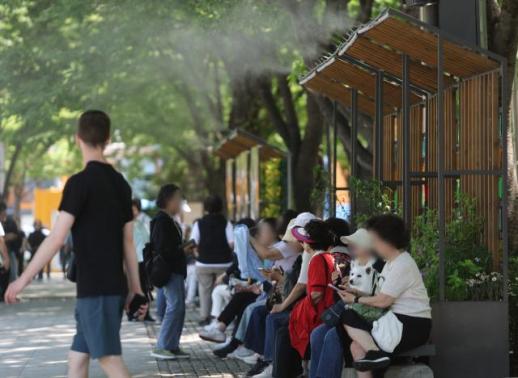 Weekend Weather Forecast: Early Summer Heat with Temperatures Above 30 Degrees On Saturday, temperatures are expected to exceed 30 degrees Celsius in most regions of South Korea, continuing the early summer heat. Morning lows are forecasted to be between 12 and 18 degrees Celsius, while daytime highs will range from 23 to 32 degrees Celsius. Notably, Daegu is expected to reach a high of 32 degrees Celsius, indicating a significant heat event, particularly in inland areas. Most regions, including the capital area, will experience generally clear weather. However, the temperature difference between day and night could reach around 15 degrees Celsius, necessitating attention to health and well-being. The expected morning lows across the country are as follows: Seoul 18 degrees, Incheon 16 degrees, Suwon 16 degrees, Chuncheon 15 degrees, Gangneung 17 degrees, Cheongju 15 degrees, Daejeon 15 degrees, Sejong 14 degrees, Jeonju 14 degrees, Gwangju 15 degrees, Daegu 14 degrees, Busan 14 degrees, Ulsan 12 degrees, Changwon 14 degrees, and Jeju 16 degrees. Daytime highs are projected to be: Seoul 31 degrees, Incheon 29 degrees, Suwon 30 degrees, Chuncheon 31 degrees, Gangneung 28 degrees, Cheongju 31 degrees, Daejeon 31 degrees, Sejong 30 degrees, Jeonju 31 degrees, Gwangju 31 degrees, Daegu 32 degrees, Busan 25 degrees, Ulsan 28 degrees, Changwon 28 degrees, and Jeju 24 degrees. Wave heights in the seas will be between 0.5 to 1.0 meters in the East and South Seas, and around 0.5 meters in the West Sea. Offshore wave heights are expected to be 0.5 to 1.5 meters in the East and South Seas, and 0.5 to 1.0 meters in the West Sea.* This article has been translated by AI. 2026-05-16 00:36:00
 -
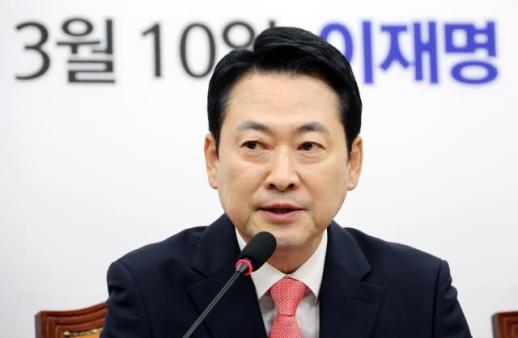 Jang Dong-hyuk Attends 5·18 Memorial Ceremony for First Time as Party Leader Jang Dong-hyuk, the leader of the People Power Party, will attend the 5·18 Democracy Movement memorial ceremony for the first time since taking office. Democratic Party leader Jeong Cheong-rae is also expected to attend, marking a potential meeting of the two party leaders.According to the People Power Party on May 15, Jang and the party leadership plan to participate in the 46th anniversary memorial ceremony at the 5·18 Democracy Square in Gwangju on May 18.The party stated that Jang's attendance is intended to honor the spirit of the 5·18 movement. A key party official emphasized that attending the ceremony signifies respect for the noble sacrifices of the martyrs and the need to heal various wounds and conflicts in society across generations.The official added, "I hope this is not interpreted as a political move to win votes during the election period. I don’t believe that attending the 5·18 event will change the atmosphere, just as visiting the National Cemetery for the Korean War memorial does not change anything. It is appropriate to attend the 5·18 memorial ceremony as well."This will be Jang's second visit to Gwangju since November of last year. In that visit, Jang and the party leadership attempted to pay respects at the National 5·18 Democracy Cemetery but were blocked by citizens.Meanwhile, Jeong plans to attend the pre-event for the 5·18 People's Uprising memorial on May 17 and will continue with a visit to the National 5·18 Democracy Cemetery the following day. This suggests that both party leaders will attend the memorial ceremony together.At last year's 5·18 Democracy Movement memorial ceremony, presidential candidates Lee Jae-myung of the Democratic Party, Lee Jun-seok of the Reform Party, and Kwon Young-guk of the Democratic Labor Party were present. Kim Moon-soo, the People Power Party candidate, visited the 5·18 cemetery the day before but did not attend the ceremony.* This article has been translated by AI. 2026-05-16 00:31:35
 -
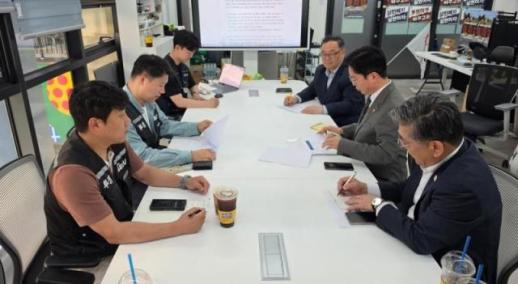 Samsung Electronics Union Signals Willingness to Resume Talks After Meeting Labor Minister Ahead of a total strike by the Samsung Electronics labor union, Labor Minister Kim Young-hoon visited the Pyeongtaek campus to persuade the union, which indicated a possibility of resuming negotiations. On May 15, the Supercorporate Labor Union Samsung Electronics Branch (Supercorporate Union) announced in a post titled "Update on Meeting with the Labor Minister" that "Minister Kim Young-hoon and officials from the Ministry of Employment and Labor visited the Supercorporate Union office." They explained the progress of negotiations, Samsung Electronics' business structure, and key issues at this time, and had an open discussion about the overall status of negotiations with Minister Kim. The union added, "The minister expressed deep understanding of our position and stated he would clearly convey our intentions to the management." The Supercorporate Union outlined conditions for resuming negotiations, stating, "We request the replacement of the management's chief negotiator and a substantial change in the management's position as prerequisites for resuming talks. If negotiations resume, we will engage in a responsible and sincere manner." Earlier that same day, the leadership of Samsung Electronics' semiconductor (DS) division also visited the Pyeongtaek campus for a separate meeting with the union. The executives, including Vice Chairman Jeon Young-hyun, spoke with Chairman Choi for about 40 minutes starting at 2:20 PM, but it is reported that there was no significant change in their position. With both labor and management maintaining a hardline stance, the involvement of the labor minister appears to be a last-minute intervention to prevent the total strike. The union has announced plans for an 18-day total strike from May 21 to June 7, demanding transparency and institutionalization of performance bonuses. If the strike occurs, it is projected to result in damages amounting to 100 trillion won.* This article has been translated by AI. 2026-05-16 00:30:13