
Journalist

AJU PRESS Business Team
-
 Jung Won-oh Proposes Housing Solutions for Youth and Newlyweds Jung Won-oh, the Democratic Party's candidate for Seoul mayor, announced on May 18 that he plans to reduce initial costs for newlywed housing and expand rent support for young people. During a press conference in front of Seoul City Hall in Jung-gu, Jung unveiled his "Three Major Housing Stability Measures for Youth and Newlyweds." According to his proposal, 10,000 affordable homes for newlyweds and 30,000 public rental units will be made available. The affordable homes will include equity accumulation, profit-sharing, and land lease types to lower initial costs. The equity accumulation model allows buyers to pay 15-25% of the equity upfront and then acquire the remaining shares over 20-30 years while adjusting rent and lease terms as needed. An additional budget of 800 billion won will increase the number of youth eligible for rent support from 20,000 to 50,000. This funding will be sourced from cuts to projects initiated by Oh Se-hoon’s administration, such as the Han River Bus and the audit of the city’s workforce. Furthermore, Jung plans to provide 50,000 housing units for young people, including 7,000 university dormitories, 20,000 affordable shared housing units with reduced rent, and 23,000 public rental homes. He stated, "We operate a shared housing facility near Hanyang University in Seongdong-gu, which is well-received by students, landlords, and residents alike. We plan to expand this model throughout Seoul." To address the ongoing rental crisis, Jung aims to accelerate housing supply. By next year, he plans to complete the construction of 67,000 units, including 60,000 from redevelopment projects and 7,000 from public rental housing reconstruction, along with 20,000 new purchase rental homes. After the announcement, Jung spoke to reporters regarding the missing rebar issue in the GTX-A section at Samsung Station, asserting, "There is evidence that Oh Se-hoon, the candidate from the People Power Party, is responsible." He criticized attempts to dismiss the issue as a "rebar myth," stating, "Avoiding and hiding from the problem reflects a lack of safety awareness, which is why accidents occur."* This article has been translated by AI. 2026-05-18 18:20:36
 -
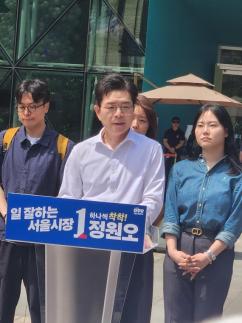 Jung Won-oh Promises 87,000 Housing Units by Next Year Amid Housing Crisis Jung Won-oh, the Democratic Party's candidate for Seoul mayor, unveiled a comprehensive housing stability plan targeting youth and newlyweds on May 18, directly addressing the city's housing challenges. The key components of the plan include expanding rent support for young people, providing tailored public housing for newlyweds, increasing the supply of rental housing for youth, and committing to the early construction of 87,000 housing units by 2027. At a press conference in front of Seoul City Hall, Jung stated, "We will ensure that the youth and newlyweds of Seoul no longer have to postpone their futures due to housing issues," adding that he aims to rectify the housing administration that has faltered under the current mayor, Oh Se-hoon. A notable aspect of this pledge is the emphasis on immediate support for young people and the expansion of public-led housing supply. Jung announced plans to increase the scale of rent support for young people from the current 20,000 beneficiaries per year to 50,000, providing 200,000 won per month for 12 months. This initiative will target a total of 200,000 individuals during his term. For newlyweds, the plan includes the provision of 10,000 affordable homes using shared equity, profit-sharing, and land lease models, along with 30,000 public rental units. The shared equity model allows residents to pay only 15% to 25% of the initial sale price and acquire the remaining equity over time. In terms of housing for youth, Jung outlined plans for 7,000 university dormitory units, 20,000 shared housing units, and 23,000 public rental units, totaling 50,000 units. He also proposed expanding the shared housing model he initiated during his tenure as the head of Seongdong District to all of Seoul. This model involves cost-sharing between the city, schools, and local governments to reduce rental burdens for young people. A significant focus of this pledge is the redefinition of the role of the Seoul Housing and Communities Corporation (SH). Jung remarked, "SH's involvement in projects like the Seoul Ring and Han River Bus has diluted its housing welfare functions. We will restore it as a specialized housing welfare agency." This statement is seen as a clear differentiation from Oh Se-hoon's emphasis on expanding private redevelopment and reconstruction projects. While Oh has prioritized private supply through rapid integrated planning and easing reconstruction regulations, Jung is focusing on expanding public housing and tailored supply for youth and newlyweds. However, there are concerns regarding the feasibility of these policies. Jung has promised to supply 87,000 units by next year, but many of these are based on the commencement of construction rather than completion. The plan includes targeting early construction of 60,000 units from redevelopment projects and 7,000 units from the reconstruction of aging public rental housing, with an additional 20,000 units to be supplied through newly acquired rental housing. The challenge lies in the timeline for actual supply. Redevelopment and reconstruction projects require complex processes, including resident consent, association management, review procedures, relocation, and construction, which typically take several years. The reconstruction of permanent rental complexes also faces challenges related to resident relocation plans and financial issues, making rapid progress difficult. Given that SH is central to this initiative, its financial capacity and project execution ability remain critical variables. SH is already engaged in both public housing supply and urban development projects. Jung's team stated, "We will manage housing administration based on construction commencement to accelerate supply speed," but there are calls for more detailed explanations regarding where, when, and how the supply will occur. While this pledge has clarified the policy direction and distinctiveness aimed at youth and newlyweds, the ambitious target of supplying 87,000 units by next year will likely face scrutiny regarding administrative feasibility and execution capability.* This article has been translated by AI. 2026-05-18 18:18:00
 -
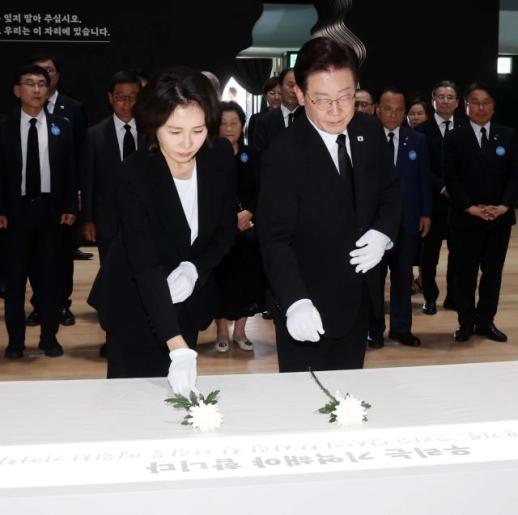 President Lee Promises Constitutional Inclusion of May 18 Spirit and New Registration System President Lee Jae-myung pledged on May 18 to include the spirit of the May 18 Democratic Movement in the Constitution and to establish a new registration system to address the gaps for democratic heroes. He reiterated the government's unwavering responsibility towards victims of state violence.President Lee made these key policy announcements during the 46th anniversary commemoration of the May 18 Democratic Movement held at the May 18 Democracy Square in front of the former Jeonnam Provincial Office in Gwangju.In his commemorative speech, President Lee emphasized the need to enshrine the spirit of May 18 in the Constitution.He urged bipartisan cooperation, stating, "This is a promise to the people that transcends political interests, and I earnestly ask for the cooperation and determination of both ruling and opposition parties." He stressed, "The democratic ideals of the May 18 Democratic Movement must be firmly inscribed in the Constitution of the Republic of Korea."President Lee also announced the introduction of the 'May 18 Democratic Heroes Registration System' as part of veterans' policies. He referenced the case of the late Yang Chang-geun, who was not recognized as a hero due to the absence of direct family members to apply for registration, saying, "We will establish a registration system to ensure that not a single sacrifice is overlooked."He declared, "From now on, the government will become a family for each victim of state violence," and assured, "The state will fulfill its responsibilities to the end."The President also outlined government support for symbolic spaces related to May 18. He referred to the recently restored former Jeonnam Provincial Office as "the last bastion of citizen resistance against illegal state violence" and vowed to make it a living shrine of K-democracy where citizens from around the world can learn and remember.President Lee identified the 'May spirit' as a source of strength to overcome the complex crises currently facing South Korea, including weakened growth potential, deepening inequality, upheaval in international order, and regional decline.He remarked, "I see hope in Gwangju, where joy was shared even under the oppressive rule of a dictatorship armed with guns and swords."The President's speech connected the resistance in Gwangju in 1980 to the preservation of constitutional order by citizens during the December 3, 2024, martial law crisis.He stated, "The December 3 insurrection was still an unanswered question from May," and noted, "Just as the citizens of Gwangju confronted the martial law troops in May 1980, the people of South Korea in 2024 stood against armed martial law troops with their bare hands."He emphasized, "In 1980, in that fleeting moment when the unjust power withdrew, Gwangju gathered all its strength to bloom the 'Great Unity World,' which in 2024 revived as the 'Light Revolution' protecting democracy through the warmth of each other on that harsh winter night."This year's May 18 commemoration was only the second held in front of the former Jeonnam Provincial Office since the government designated the day as a memorial in 1997. Approximately 3,000 people attended the ceremony, including May 18 Democratic heroes, their families, government officials, and citizens.Before the event, President Lee and First Lady Kim Hye-kyung visited the National May 18 Democratic Cemetery in Gwangju. The couple paid respects at the graves of martyrs Park In-bae, Yang Chang-geun, and Kim Myung-sook, comforting grieving family members.After the ceremony, they visited the restored former Jeonnam Provincial Office to celebrate its opening and view a special exhibition.The former Jeonnam Provincial Office is a symbolic site of the May 18 Democratic Movement, where citizens of Gwangju fought to protect democracy in May 1980. Throughout the exhibition, First Lady Kim showed special consideration for Kim Gil-ja, the mother of the late Moon Jae-hak, who inspired the novel 'A Boy Comes.'President Lee then visited the mayor of Namgu in Gwangju, listening to the voices of citizens and merchants over lunch. The Namgu mayor highlighted the traditional market centered around the former Namgwangju Station, known for its fresh seafood arriving every dawn from the southwestern coast.The presidential couple enjoyed a meal of dried radish and cod fish at a market restaurant, engaging with the merchant association president, Son Seung-ki, about the local economy and market conditions.* This article has been translated by AI. 2026-05-18 18:12:38
 -
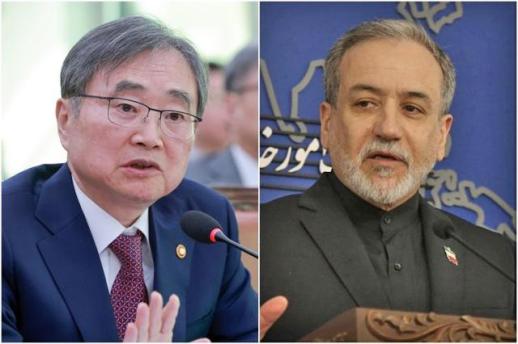 Iran stays silent on HMM Namu in call with Seoul SEOUL, May 18 (AJP) - Iran’s foreign minister blamed the U.S. and Israel for instability in the Middle East during a phone call with South Korean Foreign Minister Cho Hyun, while Tehran made no mention of a recent attack on a Korean vessel in the Strait of Hormuz, according to Iran’s foreign ministry. The call, reportedly requested by Seoul, was the first between Cho and Iranian Foreign Minister Abbas Araghchi since the HMM Namu was attacked near the Strait of Hormuz in early May. It marked their fourth phone conversation since the U.S.-Iran war broke out in February. Iran’s Foreign Ministry said on Sunday via its official Telegram account that Araghchi held talks with Cho and explained Tehran’s view of the situation in the Persian Gulf and the Strait of Hormuz. The ministry said Araghchi referred to the history of friendly relations between the two countries and stressed the importance of developing bilateral ties. It also said Araghchi briefed Cho on current conditions in the Persian Gulf and the Strait of Hormuz, arguing that instability imposed on the Middle East and its global consequences were caused by what it called acts of aggression by the U.S. and the “Zionist regime,” referring to Israel. South Korea’s Foreign Ministry said earlier that Cho asked Iran to state its position on the recent attack on the HMM Namu in the Strait of Hormuz. Cho also explained that Seoul is conducting an additional investigation into the incident and emphasized the importance of the safety of all vessels, including Korean ships, and freedom of navigation in the strait. The HMM Namu had been anchored near the Strait of Hormuz in early May when two unidentified flying objects struck the port side near the stern of the vessel twice, about one minute apart, according to South Korean authorities. Debris from the flying objects that struck the HMM Namu later arrived in South Korea from Dubai last Friday for additional examination. Iran’s Embassy in Seoul has denied involvement in the incident. 2026-05-18 18:10:52
 -
 Seonggeumwon Eases Debt Repayment Burden for Sunshine Loan Borrowers 서민금융진흥원이 햇살론 구상채무자의 재기를 돕기 위해 분할상환 조건을 한시적으로 완화한다. Seonggeumwon announced on May 18 that it will temporarily ease the repayment conditions for borrowers of the Sunshine Loan to assist them in their recovery. The "Sunshine Loan Debtor Support Special Campaign" will run until June 26. The program targets borrowers who have been unable to repay their principal and interest on the Sunshine Loan, for whom Seonggeumwon has made payments to banks and other financial institutions. However, those currently undergoing personal rehabilitation, bankruptcy proceedings, or debt adjustment through the Credit Recovery Commission are excluded from this support. During the campaign, applicants for installment repayment will see a reduction in the initial payment burden. Previously, the minimum amount required at the start of an installment repayment agreement was 100,000 won, but this will be lowered to 50,000 won during the campaign period. The repayment period will also be extended from a maximum of 10 years to 12 years. Seonggeumwon aims to support debtors who may struggle to gather a large sum of money immediately by allowing them to establish a feasible repayment plan. Once an installment repayment agreement is signed, information regarding subrogation will be immediately released, and no penalty fees will be charged during the repayment period. For those already using installment repayment but facing difficulties, a readjustment process will allow them to maintain their agreement. If the agreement is canceled due to delinquency, credit assessment information may be re-registered, but by applying for readjustment, borrowers can modify their repayment period and amounts without canceling the agreement. Kim Eun-kyung, head of Seonggeumwon, stated, "In the current challenging economic conditions, the debt burden on vulnerable groups is increasing. Through this campaign, we aim to reduce the burden on those who have the will to repay but have found it difficult to obtain opportunities, helping them return to economic activity as soon as possible."* This article has been translated by AI. 2026-05-18 18:09:53
 -
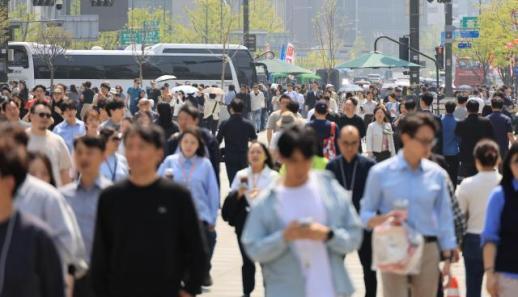 Differences Between Memorial Day and Constitution Day Holidays Interest is growing regarding the application of holidays surrounding Memorial Day in June and Constitution Day in July. This year, Memorial Day falls on a Saturday, but a substitute holiday will not be observed. In contrast, Constitution Day has been designated as a public holiday for the first time in 18 years, allowing for a three-day weekend from Friday, July 17, through Sunday. It is important to examine the legal nature of these two days and the applicability of substitute holidays. Memorial Day, observed annually on June 6, is a statutory holiday; however, it does not generate a substitute holiday when it coincides with the weekend. The current regulations regarding public holidays do not apply substitute holidays to all holidays but rather specify that a substitute holiday is granted only when certain conditions are met for designated holidays. According to the regulations, substitute holidays apply to national holidays such as Independence Day, Liberation Day, National Foundation Day, Hangeul Day, Children's Day, Buddha's Birthday, and Christmas when they fall on a Saturday or Sunday. The Lunar New Year and Chuseok holidays can also lead to substitute holidays if they overlap with a Sunday or another public holiday. The law distinguishes the applicability of substitute holidays by specific provisions. The exclusion of Memorial Day is related to the nature of the holiday itself. Memorial Day is a day of remembrance for those who sacrificed their lives for the country. Since June 6 falls on a Saturday this year, it does not qualify for a substitute holiday, meaning June 8 will not be a day off. On the other hand, Constitution Day has been reinstated as a public holiday starting this year. The Ministry of Personnel Management announced that a revision to the regulations regarding public holidays, designating Labor Day and Constitution Day as public holidays, was approved at a Cabinet meeting on April 28. As a result, Labor Day and Constitution Day are now recognized as public holidays, with Constitution Day returning after being removed from the holiday list in 2008. Constitution Day commemorates the promulgation of the Constitution of the Republic of Korea. Even if it coincides with a weekend or another public holiday, it is guaranteed a substitute holiday. However, since Constitution Day falls on Friday, July 17, this year, it will create a three-day weekend from July 17 to 19 without a separate substitute holiday.* This article has been translated by AI. 2026-05-18 18:07:36
 -
 AstraZeneca's New Hypertension Drug Approved in the U.S., Expected to Generate $7 Billion in Annual Revenue AstraZeneca's new hypertension treatment has been approved in the United States. This combination therapy is intended for patients whose blood pressure remains uncontrolled despite taking multiple medications. It is considered a new treatment option as it targets a hormone that raises blood pressure. On May 18, The Wall Street Journal reported that AstraZeneca received approval from the U.S. Food and Drug Administration (FDA) for its hypertension drug, Baxfendy, which was previously known as baxdrostat during development. The approval is aimed at adult hypertension patients. It is not a standalone treatment but is used in conjunction with other blood pressure medications. Late-stage clinical trials confirmed that adding Baxfendy to patients already taking two or more blood pressure medications resulted in a reduction in blood pressure. Baxfendy targets aldosterone, a hormone involved in regulating sodium and fluid levels in the body. When it acts excessively, it can raise blood pressure. Baxfendy works by inhibiting this action to lower blood pressure. AstraZeneca is promoting Baxfendy as a "new approach to treatment." Hypertension affects a large number of patients, and it is not uncommon for individuals to fail to reach their target blood pressure despite using multiple medications. Rud Doever, AstraZeneca's Vice President of BioPharmaceuticals, stated, "We are providing a new treatment option for a condition that has seen limited progress in treatment over the past 20 years." This approval is also significant for AstraZeneca's revenue structure. The company’s key product in the cardiovascular, renal, and metabolic disease sectors, the diabetes drug Farxiga, recently lost patent protection in the U.S. Farxiga has been AstraZeneca's best-selling drug. Baxfendy is seen as a key candidate in the company's strategy to develop new revenue sources following the expiration of Farxiga's patent. Baxfendy was acquired by AstraZeneca when it purchased Syncor Pharma in 2023. The company is expanding its lineup of new drugs in the cardiovascular, renal, and metabolic disease sectors, including Baxfendy and the obesity treatment under development, Elecoglifron. AstraZeneca anticipates that Baxfendy could generate annual sales exceeding $5 billion (approximately 7.4 trillion won). The company aims to achieve $80 billion (approximately 118.4 trillion won) in revenue by 2030, planning to launch 20 new drugs before then.* This article has been translated by AI. 2026-05-18 18:04:59
 -
 Daebang Construction Wins $682 Million Contract for Gwacheon Public Housing Project Daebang Construction has secured a contract for the "Gwacheon Public Housing District Development Project, Section 1."According to the construction industry on May 18, Daebang Construction submitted a bid of 68.26 billion won (approximately $682 million), which is 91.10% of the estimated price, and was selected as the top bidder in a recent comprehensive bidding process. A total of 10 construction companies participated in the bidding.The project involves land development over an area of approximately 963,217 square meters (about 239 acres) in Gwacheon, Gyeonggi Province, covering the neighborhoods of Gwacheon-dong, Juam-dong, and Makgye-dong. The total contract amount is about 68.26 billion won, and the construction period is set for 63 months from the start date.Daebang Construction stated, "This contract reflects our technical expertise and construction capabilities being recognized once again in the public sector. We will focus on creating a foundation for the residents of Gwacheon to enjoy a safe and pleasant living environment."Meanwhile, Daebang Construction continues to expand its housing business under its premium residential brand, 'Dietre.' Following last year's sales of projects like 'Buksuwon Imok District Dietre The Richet II,' the company plans to continue launching projects in key locations, starting with 'Okjeong Central Station Dietre' in Yangju this year.A representative from Daebang Construction remarked, "Winning this large civil engineering contract from the Korea Land and Housing Corporation (LH) has solidified our position in the public works sector. We plan to actively leverage our construction technology and competitiveness in future projects commissioned by LH and other government and public institutions to continuously expand our capabilities in the public sector."* This article has been translated by AI. 2026-05-18 18:03:00
 -
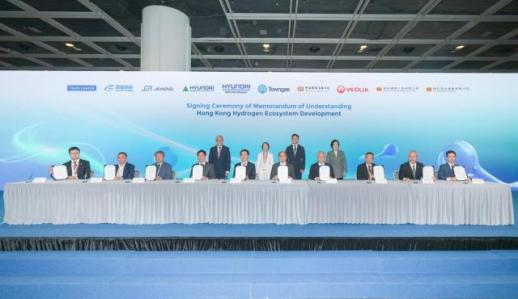 Hyundai Motor Group signs multilateral MOU to build hydrogen ecosystem in Hong Kong SEOUL, May 18 (AJP) - Hyundai Motor Group said Monday it has signed a multilateral memorandum of understanding with nine other companies to create a hydrogen ecosystem in Hong Kong, positioning the city as a gateway for the group's broader push into the Asia-Pacific hydrogen market. Hyundai Motor and Hyundai Engineering & Construction signed the agreement during the International Hydrogen Development Symposium 2026 at the Hong Kong Convention and Exhibition Centre. The agreement involves 10 companies, including South Korean firms Hyundai Motor, Hyundai Engineering & Construction and JING, as well as Hong Kong, Chinese and international partners including Towngas, Veolia, China Certification & Inspection Group, Guofu Hydrogen Energy, Templewater, Chun Wo Construction and Chun Wo Bus. Under the agreement, the companies will work to develop waste-to-hydrogen facilities that produce low-carbon hydrogen from landfill gas, build liquid hydrogen refueling stations and introduce hydrogen-powered mobility services. Liquid hydrogen refueling stations can store more hydrogen per unit volume than gaseous hydrogen stations, making them better suited for areas with limited available land. Hyundai Motor Group said the project is designed to support Hong Kong’s energy transition by creating a local hydrogen value chain that connects production, charging and mobility use. Hong Kong has limited land available for renewable energy production and relies heavily on imported energy. According to the city’s Census and Statistics Department, its dependence on imported primary energy stood at about 98.7 percent last year. The project comes as the Hong Kong government, which redefined its hydrogen roadmap in 2024, has been supporting hydrogen commercial vehicles and refueling infrastructure through the New Energy Transport Fund. Hyundai Motor will oversee the broader hydrogen ecosystem project, including hydrogen production, refueling infrastructure and the supply of hydrogen mobility. Hyundai Engineering & Construction will design and build waste-to-hydrogen facilities optimized for Hong Kong’s hot and humid climate. Hyundai Motor Group has been expanding its hydrogen business in South Korea and overseas. The group has built biogas-based clean hydrogen production facilities in Cheongju and Paju and began applying a similar waste-to-hydrogen model in Indonesia last year. In 2023, it established HTWO Guangzhou, its first overseas hydrogen fuel cell system production base, as part of efforts to expand in the Greater China market. Shin Seung-kyu, executive vice president in charge of energy and hydrogen policy at Hyundai Motor Group, said the agreement was signed to support Hong Kong’s hydrogen policy and build a local hydrogen ecosystem based on the group’s hydrogen business capabilities and experience. He said Hyundai Motor Group will continue to expand cooperation and business opportunities across the Asia-Pacific hydrogen market, starting with Hong Kong. 2026-05-18 18:00:10
 -
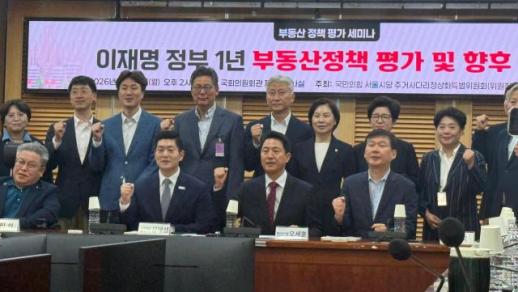 Oh Se-hoon Calls for Supply-Centric Real Estate Policy Amid Criticism Oh Se-hoon, the candidate for mayor of Seoul from the People Power Party, criticized the real estate policies of the Lee Jae-myung administration, emphasizing the need for a supply-centered approach. He dismissed allegations regarding construction errors in the GTX (Great Train Express) A line as politically motivated attacks. Speaking at a seminar on the evaluation of the Lee Jae-myung government's real estate policy and future tasks, held at the National Assembly, Oh stated, "The solution to real estate policy is not complicated. First, supply; second, supply; the key is simply to increase supply." He added that only sustainable and rapid supply, rather than excessive regulations that stifle the market, can provide a solution. Oh criticized the current state of the real estate market, describing it as "very dire." He pointed out that excessive lending regulations have dismantled the housing mobility ladder for citizens and that recent proposals to alter long-term holding tax exemptions have further confused the market. He noted that spontaneous market intervention comments from President Lee on social media have led to increased uncertainty and anxiety among the public. He also highlighted Seoul's commitment to a supply-centered policy, asserting, "While the government has shaken the market with regulations, Seoul has consistently pursued supply policies. I, Oh Se-hoon, will ensure housing stability for Seoul citizens through planning and execution." Regarding the GTX allegations, Oh referred to them as a "farce," suggesting that the Democratic Party is feeling threatened by fluctuating support for their candidate. He criticized the campaign atmosphere of Democratic candidate Jeong Won-o, indicating a willingness to use the rebar incident as a campaign issue. He remarked, "As revealed in the morning committee meeting, this is truly absurd. The situation was handled according to manuals and principles, but it turned into a farce as they tried to force it into a cover-up allegation." Oh intensified his criticism of the Democratic Party, stating, "They cannot erase the suspicions surrounding this critical election. We are currently discussing safety measures after discovering construction errors during the project. Their efforts to manipulate the election in their favor are truly petty and unbecoming of the ruling party." Meanwhile, Jeong continues to press the issue of construction errors, including missing rebar, on the GTX-A line. The Democratic Party claimed during a meeting of the Administrative Safety Committee that the Seoul city government failed to report these issues to the Ministry of Land, Infrastructure and Transport immediately, attributing responsibility to Oh.* This article has been translated by AI. 2026-05-18 17:57:44