
Journalist

AJU PRESS Business Team
-
 Korea Investment & Securities Raises PSK Target Price by 21% Amid Strong Growth Korea Investment & Securities announced on May 18 that PSK is expected to experience strong performance growth momentum this year and in the medium to long term, as both top-line and bottom-line figures continue to grow. The firm raised its target price for PSK to 160,000 won, an increase of 21%, while maintaining a "buy" rating. Kim Yeon-jun, a researcher at Korea Investment & Securities, stated, "This year, we can expect benefits from the capital expenditures of Samsung Electronics, SK Hynix, and Micron, as well as the resumption of investments by China's CXMT." He added, "This trend is likely to lead to new fab investments, further strengthening PSK's performance growth momentum." Additionally, he noted, "As demand for AI inference spreads into the CPU market, Intel, which has been conservative with its capital expenditures, may increase its CapEx. Intel has signed a consulting contract with Tesla, which is pursuing a terafab, suggesting a strong connection between Intel's value chain and Tesla's terafab value chain." Kim also analyzed that, given PSK's long-standing partnership with Intel, the company is likely to seek additional opportunities through Intel. According to Korea Investment & Securities, PSK's revenue for the first quarter of this year was 156.6 billion won, with an operating profit of 47.2 billion won, exceeding consensus estimates by 19.8% and 46.5%, respectively. The operating profit margin reached 30.1%, an increase of 7.9 percentage points year-on-year and 14.8 percentage points quarter-on-quarter. Kim explained, "With steady orders from domestic and overseas clients, the top line has grown, and the proportion of high ASP clients in the U.S. and China has improved the operating profit margin. The share of overseas clients is expected to remain similar to that of the first quarter throughout the year, indicating that operating profit margins will continue to improve annually." He also stated, "This year, top-line growth is expected to exceed the average growth rate of 30% for the World Federation of Exchanges, along with improvements in profitability due to the increased share of overseas clients."* This article has been translated by AI. 2026-05-18 08:42:00
 -
 Bitcoin Fluctuates Around $77,000 Amid U.S. Inflation Concerns Bitcoin is showing weakness, trading around $77,000 as concerns over inflation in the U.S. rise following a sharp increase in the Producer Price Index (PPI). This surge in inflation has led to a spike in U.S. government bond rates, dampening investor sentiment towards riskier assets. According to CoinMarketCap, Bitcoin was trading at $77,937, down 0.28% from the previous day as of 8 a.m. on May 18. Major altcoins also experienced declines. At the same time, Ripple (XRP) fell 0.23% to $1.41, Ethereum decreased by 0.07% to $2,178.03, and Solana (SOL) dropped 0.41% to $86.15. Market analysts attribute the downturn to rising U.S. government bond rates and inflation concerns. The U.S. PPI for April saw a seasonally adjusted increase of 1.4% compared to the previous month, marking the largest rise since March 2022, nearly four years ago. As inflation fears grow, U.S. government bond rates have surged. As of May 15, the yield on the 10-year Treasury note rose by 0.138 percentage points to 4.597%. The yield on the 30-year Treasury bond also increased by 0.11 percentage points to 5.12%. This is the first time the 30-year bond yield has exceeded 5% since just before the global financial crisis in 2007. Typically, rising U.S. government bond rates lead to a stronger preference for safe-haven assets, which can negatively impact riskier assets like Bitcoin. Meanwhile, on the domestic exchange Bithumb, Bitcoin was trading at approximately 116.17 million won ($77,552), down 0.14% from the previous day. The so-called 'Kimchi Premium,' which reflects the difference between domestic and international prices, was recorded at -0.509%, indicating that domestic prices are lower than overseas prices.* This article has been translated by AI. 2026-05-18 08:31:14
 -
 GIST Develops VR Technology to Reduce Motion Sickness in Vehicles Researchers in South Korea have developed a virtual reality (VR) technology that converts physical sensations experienced during vehicle acceleration and turns into visual effects, aiming to reduce motion sickness and enhance immersion. On May 18, the Gwangju Institute of Science and Technology (GIST) announced that a research team led by Professor Kim Seung-jun from the AI Convergence Department has created 'Force Mapping' technology, which transforms the actual movements of vehicles into visual and spatial changes in a VR environment. The findings were presented at the prestigious ACM CHI 2026 conference in April, focusing on human-computer interaction. Force Mapping utilizes an Inertial Measurement Unit (IMU) device and GPS module to detect real-time vehicle movements, including acceleration, deceleration, rotation, and road vibrations. These movements are then represented in the VR environment through effects such as falling objects, spatial shaking, waves, and ripples. Previous VR research for vehicles primarily focused on aligning the vehicle's travel path with virtual scenes to mitigate motion sickness. However, this approach failed to bridge the gap between the physical sensations of acceleration and rotation felt by the body and the virtual space displayed on the screen, resulting in a passive content experience. The research team conducted comparative experiments between the traditional method of simply reflecting vehicle movements on the screen and the Force Mapping approach. The results showed that the Force Mapping condition significantly improved immersion and situational awareness while statistically reducing motion sickness. Notably, emphasizing directionality and intensity rather than merely replicating physical forces led to a greater sense of alignment with bodily sensations. The effects of ground tilt and spatial shaking were particularly pronounced in enhancing immersion during acceleration and deceleration scenarios. This research highlights the potential for VR technology in vehicles to go beyond merely alleviating motion sickness, suggesting that it could transform travel time into an opportunity for gaming, entertainment, education, and remote collaboration through various extended reality (XR) content experiences. As the era of autonomous driving becomes more tangible, the commercial value of this technology is expected to grow significantly. Professor Kim Seung-jun stated, "We plan to further develop sophisticated and diverse environmental feedback technologies to expand vehicle movement itself into an immersive interface, considering future autonomous driving environments."* This article has been translated by AI. 2026-05-18 08:28:23
 -
 Hanwha Investment Upgrades Kolon Target Price Amid Chinese Consumer Recovery Hanwha Investment & Securities maintained its "buy" rating for Kolon and raised its target price to 100,000 won, citing a significant improvement in Kolon Sports China's performance due to the recovery of Chinese consumer spending. Lee Jin-hyup, an analyst at Hanwha Investment & Securities, reported that Kolon's consolidated revenue for the first quarter reached 1.5188 trillion won, a 5% increase compared to the same period last year, while operating profit surged by 149% to 98.8 billion won. He attributed this strong performance to improved profitability in both Kolon Global's construction sector and Kolon Mobility Group's retail sector. On a standalone basis, revenue and operating profit were 34.1 billion won and 25.6 billion won, respectively, reflecting decreases of 15% and 20% year-on-year. However, the performance of consolidated subsidiaries showed significant improvement. Kolon Global's operating profit increased by 100% to 21.7 billion won, while Kolon Mobility Group's profit rose by 71% to 20.9 billion won. Notably, Kolon Sports China exhibited remarkable growth, with first-quarter revenue of 362.8 billion won and net profit of 99.9 billion won, marking increases of 66% and 101% year-on-year, respectively. The net profit margin rose by 5 percentage points to 28%. Lee noted, "With a solid brand presence in China and the recent recovery of the Chinese consumer market, Kolon Sports China continues to experience high growth, exceeding our previous forecasts." As a result, Hanwha Investment & Securities has also revised its annual performance outlook for Kolon Sports China, projecting revenue of 1.4724 trillion won and net profit of 335.2 billion won for the year, representing increases of 61% and 98% compared to last year. These estimates are 9% and 11% higher than previous projections. Lee added, "The current market capitalization of approximately 800 billion won is significantly undervalued. Even when excluding the value of Tissue Jin, there is ample room for further growth based on a conservative NAV calculation that discounts Kolon Sports China's value by 50%."* This article has been translated by AI. 2026-05-18 08:27:19
 -
 Study Links Urban Green Spaces to Gentrification in Africa A study has found that climate adaptation policies, such as the creation of parks and wetland restoration, can lead to rising property values and an influx of residents, potentially displacing low-income native populations—a phenomenon referred to as the "gentrification paradox." KAIST announced on May 18 that a research team led by Professor Kim Seung-kyum from the Department of AI Future Studies, in collaboration with researchers from Peking University and New York University Shanghai, has empirically identified this paradox by analyzing urban areas across 32 African countries. The team tracked changes in 5,503 administrative units across 221 urban areas from 2005 to 2024. They found that the overall gentrification index in areas with climate adaptation facilities rose by an average of 41% compared to areas without such developments. The findings were published in the international journal Nature Cities on April 13. Gentrification refers to the phenomenon where environmental improvements inadvertently lead to the displacement of native residents. As urban redevelopment and facility investments increase local property values, economically vulnerable groups may find it difficult to afford rising housing costs, leading them to leave their communities. The research team employed satellite imagery analysis combined with socioeconomic data and applied a difference-in-differences method to verify the causal effects of climate adaptation policies. This is the first study to empirically demonstrate the causal relationship between climate adaptation and gentrification on a continental scale in Africa. The analysis revealed that housing prices in areas with climate adaptation facilities increased by approximately 13%, and there was a significant rise in the influx of external populations. This indicates that facilities created for citizen protection may paradoxically exacerbate housing insecurity for economically vulnerable groups. The research team emphasized that climate adaptation policies should not merely focus on infrastructure development but also address the distribution of benefits and burdens. They recommend implementing measures for housing stability, including land ownership protection, public housing supply, and the recovery of development profits, alongside the expansion of green and blue spaces. Professor Kim Seung-kyum stated, "While climate adaptation policies can make cities safer, they can also lead to rising housing costs and population displacement, increasing housing insecurity for existing residents. Future climate policies must consider not only environmental improvements but also the protection of vulnerable groups and housing stability." This research was conducted as part of a project supported by the Ministry of Science and ICT, focusing on the development of an AI-based integrated assessment model for climate-human interactions.* This article has been translated by AI. 2026-05-18 08:22:24
 -
 Hanwha Investment Securities Raises Korean Re's Target Price Following Record Performance Hanwha Investment Securities announced on May 18 that Korean Re achieved its highest-ever performance due to the absence of major claims and improved investment results. The firm raised its target price from 12,500 won to 19,000 won and upgraded its investment recommendation to "buy." Kim Do-ha, a researcher at Hanwha Investment Securities, stated, "In the first quarter, net profit reached 209.5 billion won, a 131% increase compared to the same period last year, marking the highest level ever recorded." He noted that unlike the previous year, which saw significant incidents such as the earthquake in Myanmar, wildfires in Los Angeles, and fires in the Yeongnam region, this quarter did not have any noteworthy major claims. He added, "The profit from the Premium Allocation Approach (PAA) reached an all-time high, driving an earnings surprise, and both incurred insurance claims and adjustments to claim factors showed positive trends. The effects of the profitability-focused portfolio adjustments that have been ongoing for several years are also becoming evident." Kim further explained, "Investment income also rose by 136% year-on-year due to improved stock management results, with stock returns showing a strong performance nearing annual levels alongside an increase in managed assets." He projected, "With the upgraded credit rating and improved profitability, it will be possible to expand volumes starting in 2027. Considering the complete retirement of treasury shares and the continuation of a high dividend policy, the attractiveness of shareholder returns is expected to increase."* This article has been translated by AI. 2026-05-18 08:21:29
 -
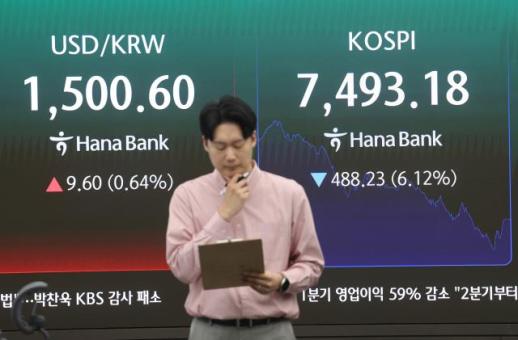 KOSPI Attempts Recovery Amid U.S. Interest Rates and NVIDIA Earnings Concerns Following a sharp decline in U.S. stock markets and a significant drop in the KOSPI, attention turns to whether the domestic market can attempt a rebound this week. External factors such as rising long-term U.S. interest rates, geopolitical risks from the Middle East, and concerns over NVIDIA's earnings are expected to increase market volatility. On May 18, the Korea Exchange reported that the KOSPI closed at 7493.18, down 488.23 points (-6.12%) from the previous trading day. The index briefly surpassed 8000 during the session but experienced significant fluctuations as profit-taking emerged. This week, the KOSPI is expected to continue its high volatility as it reacts to U.S. interest rate trends, comments from Federal Reserve officials, and NVIDIA's earnings report. Kiwoom Securities has projected a weekly KOSPI range of 7150 to 7700. Analysts are also considering the possibility of a technical rebound following the recent sharp decline. The KOSPI's drop of over 6% last Friday has led to perceptions that the recent losses were excessive. The rapid rise of major global stock markets, driven by an AI rally, is also seen as a factor for correction. From the beginning of this month until May 14, the KOSPI surged 21.0%, while the Nasdaq rose 7.0% and Japan's Nikkei 225 increased by 5.7%. The biggest focus this week will be NVIDIA's earnings. The company is set to release its first-quarter results on May 21 at approximately 5 a.m. Korean time. Market participants are keenly watching how NVIDIA's revenue and profitability will compare to expectations. The current market consensus anticipates revenue of $78 billion and a gross profit margin (GPM) of 75.0%. Key variables include demand for the Blackwell (B200) and the production schedule for the next-generation Rubin (R100), as well as the impact of sales to China. These factors are directly linked to the earnings outlook for domestic semiconductor companies like Samsung Electronics and SK Hynix. Analysts believe that if NVIDIA exceeds market expectations with its earnings and guidance, it could reverse the recent negative sentiment in global markets affected by concerns over interest rates and inflation. Additionally, this week will see comments from key Federal Reserve officials, the release of the April FOMC minutes, U.S. May inflation expectations data, and Japan's April Consumer Price Index (CPI), all of which are likely to heighten market sensitivity to macroeconomic events. In South Korea, the planned strike by Samsung Electronics' labor union on May 21 is also seen as a potential variable. If negotiations fail, the possibility of an actual strike and the government's consideration of emergency mediation could impact investor sentiment in the domestic market. Han Ji-young, an analyst at Kiwoom Securities, stated, "While we may see a technical buying trend due to perceptions of excessive short-term losses early this week, macroeconomic uncertainties are likely to persist." Meanwhile, as of 8:09 a.m., major large-cap stocks are showing weakness in pre-market trading. Samsung Electronics is trading down 0.55% at 269,000 won, while SK Hynix (-1.65%), Hyundai Motor (-1.71%), and Kia (-1.31%) are also experiencing declines. Stocks related to shipbuilding and nuclear power, which had recently seen significant gains, are also facing notable declines. HD Hyundai Heavy Industries is down 3.44%, and Doosan Enerbility has dropped 3.34%. SK Square is also down 3.10%. Additionally, most of the top market capitalization stocks, including LG Energy Solution (-1.68%), Samsung Electro-Mechanics (-0.89%), and Samsung Biologics (-0.35%), are showing downward trends.* This article has been translated by AI. 2026-05-18 08:18:33
 -
 Google's Developer Conference Set to Unveil New Gemini Model and Agent Platform Google's annual developer conference is set to take place, with the AI industry closely watching for updates on the new Gemini model and agent platform strategy. OpenAI confirmed the mobile expansion of Codex, while Microsoft’s AI chief issued a stark warning about white-collar automation. According to the IT industry, Google I/O 2026 will kick off on May 19-20 (local time) at the Shoreline Amphitheater in Mountain View, California. The two-day event will feature updates on Gemini, Android, Chrome, and Google XR glasses, along with keynote speeches, demonstrations, and developer sessions. New Gemini Model 'Spark' Agent to Be Revealed The biggest focus in the industry is the new Gemini model. This upcoming model aims to reach the level of OpenAI's latest GPT-5.5, although it is expected to be a gradual upgrade that may not match the leading-edge systems in the market. Google's last major model, Gemini 3, was released in November 2025 and briefly topped benchmarks. A new agent platform is also expected to be unveiled. Google is adding advanced agent capabilities to the Gemini app, branding it as 'Gemini Spark.' This feature, previously known as 'Gemini Agent,' allows AI to proactively manage tasks across apps and services without user prompts. Android XR smart glasses are also anticipated to be a key announcement at this year's I/O. Google is developing two types of AI glasses in collaboration with Samsung, Gentle Monster, and Warby Parker: one without a display and another with an in-lens display, both based on the Android XR operating system. OpenAI Integrates Codex into Mobile App with 4 Million Weekly Users OpenAI integrated its coding agent Codex into the ChatGPT mobile app the previous day. Users can now directly coordinate coding tasks from their smartphones, with weekly active users of Codex surpassing 4 million. This move aligns with OpenAI's efforts to consolidate ChatGPT, Codex, and the Atlas browser into a single desktop super app, responding to competition from Anthropic in the enterprise and developer markets. Microsoft AI Chief Warns of White-Collar Automation in 12-18 Months Mustafa Suleyman, Microsoft AI's CEO, issued a strong warning in an interview with the Financial Times. He stated that most white-collar jobs, including those of lawyers, accountants, project managers, and marketers, will be fully automated by AI within the next 12 to 18 months. Suleyman defined Microsoft AI's core goal as achieving 'superintelligence' and emphasized the company's focus on reducing reliance on OpenAI while developing its own foundational models.* This article has been translated by AI. 2026-05-18 08:15:51
 -
 India Day Celebrated at Yeouido Hangang Park with Dance and Cuisine On May 16, under a clear blue sky and the bright sun of early summer, the aroma of rich curry, tandoori chicken, and masala wafted through Yeouido Hangang Park. Families gathered under the shade of trees, sharing spiced dishes while enjoying leisurely conversations. The park transformed into a vibrant 'Mini India' for the first India Day festival, with attendees dressed in colorful saris and lively music filling the air. Organized by the Indian Embassy and the Indian Cultural Center in Korea, this large outdoor festival is not just a one-time event. It is a tangible outcome of the agreement made during President Lee Jae-myung's state visit to India last month, aimed at enhancing cultural exchanges between the two nations. The event showcased the ongoing efforts of both countries to strengthen their special strategic partnership through cultural dialogue. The event attracted over 1,500 visitors from diverse backgrounds, showcasing the 'Unity in Diversity' of India's 28 states and 8 union territories. Attendees marveled at marble crafts from Rajasthan, watched artisans weave pashmina shawls from Kashmir, and explored local specialties. The Indian Coffee Board presented five varieties of GI-certified Arabica coffee, while the Marine Products Export Development Authority (MPEDA) showcased a variety of agricultural and seafood products, tantalizing the taste buds of festival-goers. Long lines formed at food trucks as attendees eagerly awaited to sample street foods from different regions. Cultural exchange proved to be a powerful force that transcends borders and language barriers. Park Nam-seok, 40, from Gangseo-gu, attended the festival with his family after being invited by his son’s Indian friend, Swapran. “I didn’t have high expectations for the first year, but it’s larger and more organized than I thought. It’s a great festival for kids,” he said, smiling. “I tried Indian food for the first time, and it’s really delicious.” Naina, 38, originally from Bengaluru and now living in Korea, brought her American friends along. “I wanted them to experience Indian dance and food firsthand,” she said. “I’m proud to showcase India’s rich culture and cuisine, and seeing my foreign friends enjoy it makes this first event a great success.” As the afternoon heat intensified, Indian Ambassador to Korea Gaurang Lal Das delivered a speech that resonated with the attendees. He remarked, “Like the Ganges River, which has witnessed thousands of years of civilization, today, two great stories meet at the Han River, which has seen Korea’s recovery and transformation.” He declared that Yeouido Hangang Park had transformed into 'Han Ganga Park' for the day. He emphasized the power of culture to unite people in ways that politics cannot, clearly articulating the Korean phrase “We understand each other.” Kwak Young-gil, chairman of Aju News Corporation, followed with a forward-looking vision, stating, “India is one of the world’s oldest civilizations and a dynamic nation leading the AI era. Now, our two countries are opening a new era of cooperation beyond culture, into AI, semiconductors, content, and youth exchanges.” The vision of 'youth exchange' was further highlighted during the awards ceremony for the 'Korea-India Cultural Innovation Contest' (essay and video). Ambassador Das personally awarded the grand prize in the AI video category to Kim Dong-hee. The essay category winner, Sonali Ray, who submitted 'One Frame, Two Worlds,' was represented on stage by Deputy Ambassador Nishi Kant Singh, while Im Kyu-jin, president of Aju News Corporation, presented the award with a bright smile. The elegant performances by the Odissi dance troupe, the RAAS Dance Company, and K-pop group Blackswan drew the loudest cheers from the audience as the sun began to set over the Han River. However, the true finale of the festival began just after sunset. As DJ Paresh Mundade's upbeat beats filled the air, over a hundred participants of different nationalities, ages, and languages eagerly left their mats to join a massive dance party under the fading light. Koreans, Indians, and attendees from around the world danced joyfully together. As Ambassador Das noted, music needs no translation, and smiles exchanged between people require no interpretation. The evening of May 16, with the flowing waters of the Han and the exotic aroma of curry, perfectly blended with the lively Bollywood beats, created a world where hearts truly connected.* This article has been translated by AI. 2026-05-18 08:08:38
 -
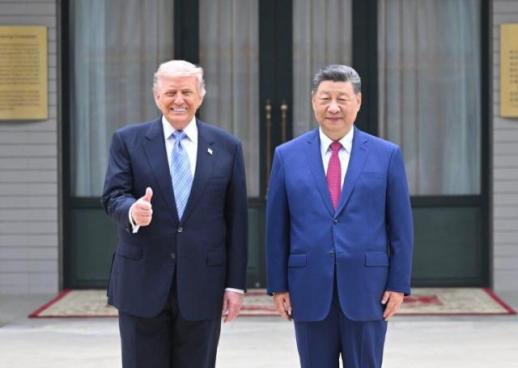 Trump Associates Warn of Potential Chinese Invasion of Taiwan Within Five Years Donald Trump's recent visit to China has heightened concerns within the U.S. administration regarding the risks associated with Taiwan. While the atmosphere of the summit appeared friendly, some of Trump's associates believe that China may consider invading Taiwan within the next five years. According to Axios on May 17, some of Trump's close aides view the most significant outcome of the U.S.-China summit as an increased risk of a Chinese invasion of Taiwan. They also expressed concerns that such an action could disrupt the semiconductor supply chain critical for the artificial intelligence (AI) industry. During his visit to Beijing, Trump reportedly felt satisfied with the ceremonial treatment he received. However, his associates noted the messages conveyed by China during the trip. One aide told Axios that Xi Jinping's attitude suggested, "China is no longer an emerging power but an equal to the United States, and it is trying to establish a new position that Taiwan belongs to China." The aide assessed that the visit signaled a significantly increased likelihood of the Taiwan issue coming to the forefront within the next five years. He added, "The U.S. economy is not prepared for this, and the semiconductor supply chain is far from self-sufficient." The Taiwan issue is also directly linked to the AI competition. Taiwan is a key hub for advanced semiconductor production. If China were to pressure Taiwan or take military action, U.S. companies could face disruptions in the supply of chips necessary for AI operations. The aide emphasized, "There is no more urgent issue for CEOs and the economy as a whole than the semiconductor supply chain." Taiwan has also expressed its vigilance. President Tsai Ing-wen recently stated, "Taiwan will not be sacrificed or used as a bargaining chip," asserting that the future of Taiwan should be determined by its people. He also emphasized that U.S. arms sales to Taiwan are a commitment under the Taiwan Relations Act.* This article has been translated by AI. 2026-05-18 08:04:41