
Journalist

AJU PRESS Business Team
-
 Anthropic Shares AI-Detected Cyber Vulnerabilities with Global Financial Authorities U.S. artificial intelligence company Anthropic has decided to share cyber defense vulnerabilities identified by its latest AI model with major financial authorities and central banks worldwide. The Financial Times reported, citing two sources familiar with the matter, that Anthropic plans to brief member countries of the Financial Stability Board (FSB) on the capabilities of its latest AI model, Claude Mythos Preview. This briefing is reportedly in response to a request from Andrew Bailey, the Governor of the Bank of England and FSB Chair. The FSB is a global financial oversight body that includes finance officials, central bank representatives, and securities regulators from the Group of 20 (G20) nations. In South Korea, the Bank of Korea and the Financial Services Commission are active members of the FSB, raising the possibility that the country will assess the performance of Mythos during this opportunity. Last week, Michael S. Cellioto, Anthropic's Global Policy Lead, visited South Korea to discuss issues related to Mythos with domestic authorities. Many FSB member countries are concerned that Mythos and AI models from other U.S. tech firms may expose vulnerabilities in the cyber defenses of lending institutions, potentially creating new risks for the global financial system. Last month, Anthropic reported that Mythos had identified thousands of high-risk vulnerabilities across all major operating systems and web browsers, warning that exploitation of these vulnerabilities could have severe implications for the economy, public safety, and national security. Due to the risk of misuse, Mythos has primarily been disclosed only to select institutions within the United States. This has raised concerns among companies and regulators outside the U.S. about varying levels of cyber defense across regions, according to the Financial Times. In response, the FSB is preparing a report outlining 'sound practices' necessary for the integration of AI into the financial system. The FSB plans to release this report next month and seek public feedback. However, it remains uncertain whether international cooperation on AI threats will be effectively achieved amid geopolitical tensions. Earlier this month, the International Monetary Fund (IMF) urged policymakers to strengthen international collaboration to address the cybersecurity vulnerabilities revealed by the latest AI models. The IMF warned that new AI models could elevate cyber risks to potential macroeconomic shocks, emphasizing that cyber threats do not respect borders and that emerging and developing countries with limited resources may be more exposed to attackers targeting vulnerable regions.* This article has been translated by AI. 2026-05-18 20:18:00
 -
 KOSPI Recovers from Early 4% Drop to Close Slightly Higher at 7510 On May 18, the KOSPI index initially plunged more than 4% but managed to recover, closing slightly higher at 7510, bolstered by a rebound in semiconductor stocks. According to the Korea Exchange, the KOSPI finished up 22.86 points (0.31%) at 7516.04. The index opened at 7443.29, down 49.89 points (0.67%) from the previous session. During the early trading session, the KOSPI experienced a sharp drop of over 4%, triggering a sell-side circuit breaker around 9:19 a.m. The sell-side circuit breaker is activated when KOSPI 200 futures fall more than 5% compared to the previous trading day and remain at that level for one minute. This measure temporarily halts program trading for five minutes to ease market overheating. Lee Kyung-min, a researcher at Daishin Securities, noted, "The KOSPI fell to the 7140 level after the sell-side circuit breaker was triggered, but it turned bullish thanks to a rebound in Samsung Electronics. The semiconductor sector saw a surge in bargain buying, while other sectors generally remained weak." In the main stock market, individuals and institutions recorded net purchases of 22.087 billion won and 13.912 billion won, respectively, while foreign investors sold a net 36.492 billion won. Among the top market-cap stocks, Samsung Electronics rose by 3.88%, SK Hynix by 1.15%, Samsung Electro-Mechanics by 2.08%, and Doosan Enerbility by 1.17%. In contrast, SK Square fell by 0.46%, Hyundai Motor by 5.29%, and LG Energy Solution by 2.16%. The KOSDAQ index closed down 18.73 points (1.66%) at 1111.09, starting the day at 1122.57, down 7.25 points (0.64%) from the previous session. In the KOSDAQ market, foreign investors purchased a net 2.372 billion won, while individuals and institutions sold 750 million won and 2.55 billion won, respectively. Among the top stocks by market capitalization, Alteogen fell by 3.12%, EcoPro BM by 0.05%, EcoPro by 1.86%, Rainbow Robotics by 7.90%, Kolon TissueGene by 2.87%, and Samchundang Pharm by 3.74%. In contrast, JW Engineering surged by 29.96%.* This article has been translated by AI. 2026-05-18 20:15:26
 -
 President Lee Warns Samsung Union: Respect for Labor Rights Must Align with Management Rights President Lee Jae-myung stated on May 18 that in South Korea, which adopts a free democratic order and capitalist market economy, both labor and management must be respected. He emphasized that labor rights should be honored as much as management rights.This is the first time President Lee has directly addressed the Samsung Electronics union. With a strike planned for May 21, attention is focused on how his comments may influence negotiations between the company and its labor force.In a post on X (formerly Twitter), President Lee stressed that workers should receive fair compensation for their labor, while shareholders who bear risks and losses should also share in corporate profits.He noted that at one time, the Constitution included a provision for workers' equitable distribution of corporate profits, which was removed during the 1962 constitutional amendment process.President Lee hinted at the possibility of invoking 'emergency arbitration,' stating that while the current Constitution guarantees basic rights for all citizens, these rights can be limited for public welfare as long as the essence is not violated. If emergency arbitration is enacted, strikes would be prohibited for 30 days.He remarked, "Where there is light, there is shadow; where there is a high mountain, there is a deep valley," and referenced the concepts of 'excess leads to deficiency' and 'extremes lead to reversals.' His comments are interpreted as a response to the Samsung union's demands to eliminate the cap on performance bonuses, which they seek to formalize as 50% of annual salary and to allocate 15% of operating profit for bonuses.President Lee called for dialogue between labor and management, stating, "Being strong does not mean having more or being happier; a new future for South Korea is one where we support each other and live well together."Labor Minister Kim Young-hoon responded to the President's social media message, stating that he would ensure labor negotiations contribute to the healthy development of the national economy.Minister Kim remarked, "The spirit of solidarity shown during the May 1980 Gwangju uprising is more relevant today than ever," and pledged to work towards fair compensation and addressing polarization in the economy through labor negotiations.On the same day, the business community issued a joint statement urging the Samsung union to withdraw its strike plans and requesting immediate emergency arbitration if a strike occurs. Six business organizations, including the Korea Employers Federation and the Korea Chamber of Commerce and Industry, expressed deep concern that the union is sticking to its existing position despite government and labor committee efforts, stating that a strike would undermine the foundation of a key national industry and urging the union to resolve issues through dialogue.The business community emphasized that the issue of performance bonuses is more a matter of management judgment than a subject for collective bargaining, warning that excessive demands from some unions could deepen the dual structure of the labor market and increase social discord.* This article has been translated by AI. 2026-05-18 20:13:00
 -
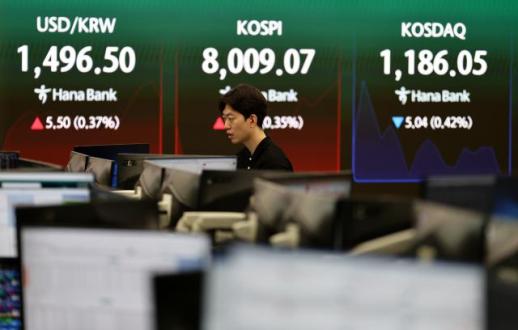 Short Selling Increases Despite Decrease in Short Positions Following the KOSPI's surge past the 8,000 mark, the volume of short selling transactions has risen to approximately 2.8 trillion won. However, during the same period, the balance of securities lending has significantly decreased, indicating a trend that diverges from simple bearish betting. According to the Korea Exchange, as of May 15, the total value of short selling transactions reached 28.558 trillion won, marking a consecutive two-day record above 28 trillion won, following 28.383 trillion won on May 14. The short selling volume had been around 24.597 trillion won on May 13 but showed an upward trend on the 14th and 15th. Foreign investors led the short selling activity, accounting for about 70% of the total with a transaction value of 19.298 trillion won on May 15. For four consecutive days from May 12 to 15, foreign short selling remained around 19 trillion won, indicating an increase in hedging transactions at high price levels. Institutional short selling also saw a resurgence. After a decline to 4.807 trillion won on May 13, institutional short selling values increased again to 8.240 trillion won on May 14 and 8.977 trillion won on May 15. Analysts suggest that this reflects adjustments in positions in anticipation of increased volatility following the KOSPI's rise above 8,000. However, the trend in securities lending appears different from typical early bearish market patterns. According to the Korea Financial Investment Association, the number of shares returned in securities lending on May 15 was 99.16 million, significantly exceeding the number of shares lent out, which was 39.51 million. Consequently, the balance of securities lending dropped from 182.4304 trillion won on May 14 to 170.2727 trillion won on May 15, a decrease of about 12 trillion won. Market analysts note that typically, when confidence in a market downturn strengthens, both short selling and securities lending balances increase. However, in this instance, while short selling has been active, the actual cumulative short positions have decreased, raising the possibility of profit-taking or short covering by existing short sellers. Looking ahead, market observers believe that the trends in foreign futures positions and securities lending balances will serve as additional variables. A securities industry official stated, "The current trend is more about responding to short-term volatility at high levels of the KOSPI rather than aggressive bearish betting. If the decline in securities lending continues, the possibility of a short covering rally cannot be ruled out."* This article has been translated by AI. 2026-05-18 20:10:23
 -
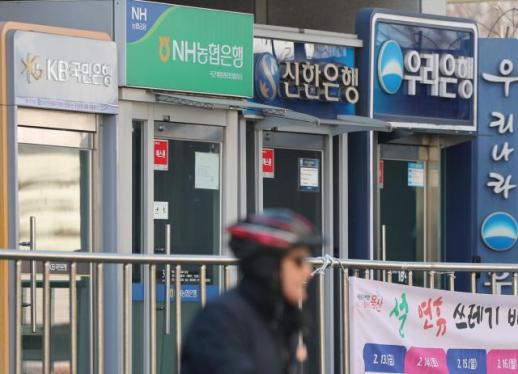 NH Nonghyup Bank Raises Bar for Home Loans Starting May 20 Last month, the balance of home mortgage loans saw its largest increase in eight months, prompting NH Nonghyup Bank to tighten its lending criteria for household loans, particularly mortgages. This move is interpreted as a measure to strengthen total loan management amid a resurgence in mortgage growth within the banking sector. According to financial sources on May 18, NH Nonghyup Bank will temporarily restrict refinancing for face-to-face mortgage loans from other banks starting May 20. The bank stated that this action aims to enhance stable management of household loan volumes and to focus on lending for genuine demand. Additionally, starting the same day, there will be temporary restrictions on face-to-face mortgage insurance (MCI) for home loans in non-metropolitan areas. However, group loan payments will be exempt from this restriction. MCI is an insurance policy that borrowers must obtain when executing a mortgage loan. Without this insurance, financial institutions can only lend amounts excluding small rental deposits, effectively reducing the borrowing limit for the borrower. Thus, even if loans are not completely halted, the actual threshold for borrowing becomes significantly higher. Previously, on May 6, NH Nonghyup Bank had already limited MCI subscriptions for mortgage loans in metropolitan areas. Meanwhile, household loans in the banking sector have recently shown an upward trend, particularly in mortgages. This increase is attributed to a surge in housing transactions during the first quarter, which is now being reflected in the market ahead of the expiration of the capital gains tax exemption on May 9. According to the Bank of Korea's financial market trends, as of the end of April, the balance of mortgage loans at deposit banks reached 937.6 trillion won, an increase of 2.7 trillion won from the previous month. This marks the largest increase since August of last year. The total balance of household loans at deposit banks also rose to 1,174.9 trillion won at the end of April, up 2.1 trillion won from the previous month, marking two consecutive months of growth.* This article has been translated by AI. 2026-05-18 20:07:45
 -
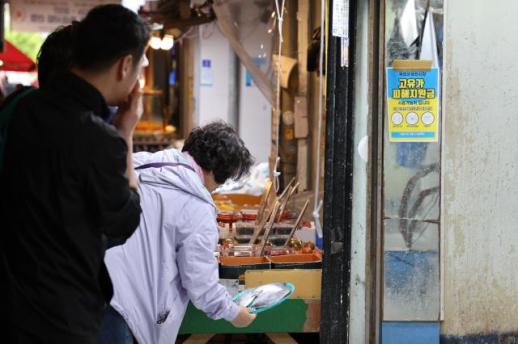 Senior Consumers Drive Growth in Seoul's Traditional Markets Seoul's commercial landscape is undergoing a transformation. While the growth of areas once dominated by young consumers, such as Hongdae and Sinchon, has slowed, traditional markets like Cheongnyangni, Jongno 3-ga, and Suyu are rapidly expanding, driven by a significant increase in spending from consumers aged 60 and older. Analysts suggest that the era of youth-driven consumer trends is giving way to a renewed focus on senior consumers and the rediscovery of established commercial districts. An analysis of data from the Seoul City Commercial Analysis Service on May 18 revealed a notable increase in sales in areas with a high proportion of consumers aged 60 and above. Traditional markets, long-established businesses, and sectors such as healthcare, jewelry, and essential services are experiencing growth based on senior consumer spending. A prime example is the area around Cheongnyangni Station, where the proportion of consumers aged 60 and older is 34.1%, one of the highest among major commercial districts analyzed. During the same period, sales in the Cheongnyangni area surged by 228%. Historically recognized for its significant middle-aged and elderly consumer base, Cheongnyangni is now emerging as a key commercial hub in northeastern Seoul, bolstered by mixed-use developments and improved transportation networks. Suyu Traditional Market has also shown impressive growth, with sales increasing by 302% over the past five years. Similarly, the Jongno 3-ga area experienced a 71% increase during the same timeframe. These regions share a commonality in their strong demand for sectors catering to middle-aged and elderly consumers, including jewelry, traditional medicine, and dining options. In contrast, the growth of areas traditionally favored by younger consumers has stagnated. The Hongdae area saw a mere 16% increase in sales, while Sinchon experienced an 8% decline. Although both areas still attract a significant number of visitors in their 20s and 30s, they are no longer driving explosive growth in consumer spending as they once did. This shift is attributed to changes in demographics and consumer behavior. Over the past five years, the population of individuals in their 20s in Seoul has decreased from 1.63 million to 1.49 million, a decline of 8.6%. Additionally, the movement of consumer spending from offline to online platforms has contributed to the slowdown in growth for youth-oriented commercial areas. Conversely, the consumer base aged 60 and older is expanding rapidly. As the baby boomer generation enters retirement, the phenomenon of "active seniors" is becoming more pronounced. This demographic is increasingly engaged in dining out, health management, and leisure activities, demonstrating strong loyalty to the offline markets they have frequented for years. Particularly in areas like Cheongnyangni, Jongno 3-ga, and Suyu Traditional Market, these long-established districts serve as vital consumer hubs, offering not just retail options but also healthcare, pharmacies, traditional markets, restaurants, and essential services. This aligns well with the senior consumer pattern of wanting to see, buy, and enjoy their purchases while addressing healthcare, food, and dining needs all in one visit. Moreover, the trend of "retro consumption" among younger consumers is contributing to a reevaluation of these older commercial areas. Once considered outdated, traditional markets and long-standing businesses are being reinterpreted as "hip" spaces among younger crowds. The stable consumer base of seniors, combined with the influx of younger visitors, is broadening the appeal of these districts. However, not all older commercial areas are thriving. For senior consumer spending to translate into growth, factors such as transportation accessibility, diversity of businesses, density of essential services, and residential demand must be present. Cheongnyangni benefits from integrated transport development, while Jongno 3-ga maintains specialized sectors like jewelry, healthcare, and dining. Suyu Traditional Market plays a strong role in capturing local consumer spending. Song Seung-hyun, CEO of Urban and Economy, noted, "Consumers aged 60 and older have accumulated extensive experience using traditional offline markets, which influences their preference for direct purchasing, dining, and enjoyment." He added, "Old commercial areas like Cheongnyangni and Jongno are not just retail spaces; they also evoke nostalgia for seniors through offerings like fresh produce, seafood, and traditional medicine. Markets like Cheongnyangni and Gwangjang are regaining competitiveness by maintaining structures that allow for both wholesale and retail activities."* This article has been translated by AI. 2026-05-18 20:05:05
 -
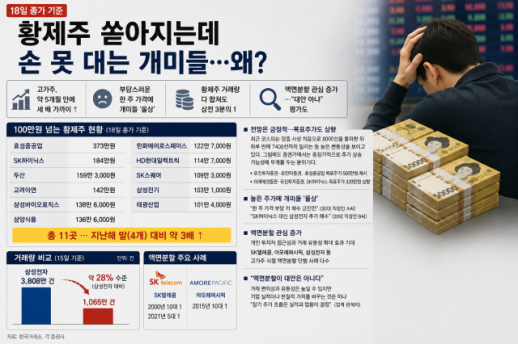 Rising Stock Prices Leave Individual Investors Struggling to Keep Up As the KOSPI index continues to reach record highs, the number of so-called "emperor stocks," which have prices exceeding 1 million won, has also surged. However, the soaring prices have made these stocks less accessible for individual investors. According to the Korea Exchange, as of May 18, the closing prices for companies such as Hyosung Heavy Industries, SK Hynix, Doosan, Korea Zinc, Samsung Biologics, Samyang Foods, Hanwha Aerospace, HD Hyundai Electric, SK Square, Samsung Electro-Mechanics, and Taekwang Industrial have reached a total of 11 companies. This marks an increase from four companies at the end of last year, nearly tripling in just five months, which is the highest level on record. Market analysts are optimistic about the potential for further gains among these emperor stocks. Eugene Investment & Securities and Yuanta Securities have set a target price of 5 million won for Hyosung Heavy Industries, citing an expansion in new orders. Mirae Asset Securities and Eugene Investment & Securities have raised their target price for SK Hynix to 3.2 million won, based on improvements in the memory market and increased profitability. However, not all individual investors view the rising stock prices positively. A 30-year-old office worker, referred to as A, stated, "Many predict that SK Hynix will continue to rise, but the price per share is daunting. I find myself only contemplating buying without making a decision." Another office worker in their 20s, B, mentioned, "I can't afford to buy SK Hynix right now, so I opted to purchase more Samsung Electronics instead." This trend is reflected in trading volumes as well. As of May 15, Samsung Electronics had a trading volume of 38.08 million shares, while the combined trading volume of the 11 emperor stocks was only about 10.65 million shares. This means that the total trading volume of emperor stocks was only about 28% of that of Samsung Electronics. Due to these circumstances, there is growing interest in the possibility of stock splits. A stock split increases the number of shares without changing the company's value or market capitalization, effectively lowering the price per share. This is seen as a way to enhance accessibility for individual investors and increase trading liquidity. Notable examples of companies that have executed stock splits during high price periods include SK Telecom (10-for-1 in 2000 and 5-for-1 in 2021), Amorepacific (10-for-1 in 2015), and Samsung Electronics (50-for-1 in 2018). However, some market participants caution against placing too much significance on stock splits. While they can improve trading convenience and liquidity, they do not alter a company's performance or intrinsic value. An industry insider remarked, "A stock split does not change the fundamentals of a company. Ultimately, long-term stock price trends are determined by performance and market conditions."* This article has been translated by AI. 2026-05-18 20:03:00
 -
 KOSPI Defies Rising Interest Rates, Only Global Index to Rise Despite fears of soaring interest rates, the KOSPI managed to maintain its upward momentum. As U.S. Treasury yields surged, stock markets around the world experienced declines, but the KOSPI was the only index to rise, buoyed by strong earnings expectations for Samsung Electronics and SK Hynix.<related articles on page 4> According to the Korea Exchange, the KOSPI closed at 7,516.04, up 22.86 points (0.31%) from the previous trading day. Initially, the index plummeted more than 4%, dropping to 7,142.71. However, as the afternoon progressed, buying interest in semiconductor stocks helped reverse the trend. Notably, major semiconductor companies like Samsung Electronics and SK Hynix supported the market, with Samsung rising 3.88% and SK Hynix increasing 1.15%. In contrast, stock markets worldwide fell due to the spike in U.S. Treasury yields. On May 15, the Dow Jones Industrial Average dropped 1.07%, the S&P 500 fell 1.24%, and the Nasdaq Composite declined by 1.54%. Asian and European markets also continued their downward trend. As of 3:30 PM, Japan's Nikkei 225 was down 0.97%, Hong Kong's Hang Seng Index fell 1.56%, and Taiwan's TAIEX decreased by 0.68%. The Shanghai B-Share Index dropped 2.56%, while the Shenzhen B-Share Index fell 1.10%. The Shanghai Composite and Shenzhen Composite indices also declined by 0.46% and 0.35%, respectively. Essentially, the KOSPI was the only major index showing an upward trend. Market analysts predict that the surge in bond yields will lead to significant volatility in the stock market for the foreseeable future. Concerns over the prolonged conflict in the Middle East and rising international oil prices have reignited inflation fears, pushing the yield on 10-year U.S. Treasury bonds above 4.5% and the 30-year bonds over 5%. Worries about the Federal Reserve's prolonged tightening measures have also resurfaced. Bond yields in major European countries such as the UK, Germany, and France, as well as in Japan and Taiwan, are also on the rise. The increase in interest rates is also raising borrowing costs for companies and putting pressure on growth stock valuations, triggering a sell-off in tech stocks. Reuters reported that the 12-month forward price-to-earnings ratio (P/E) for the S&P 500 is significantly above its long-term average, with rising rates exacerbating concerns about overvaluation. Lee Kyung-min, an analyst at Daishin Securities, stated, "The yield on 10-year U.S. Treasury bonds has risen to the 4.6% level, continuously dampening risk appetite. However, the inflow of bargain hunting in the semiconductor sector has led to a strong performance for the KOSPI."* This article has been translated by AI. 2026-05-18 20:00:33
 -
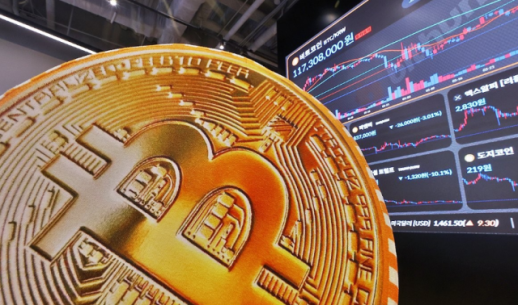 Korbit Sells $8.2 Million in Bitcoin and Ethereum Amid Profitability Struggles Korbit, a South Korean cryptocurrency exchange, has sold approximately 10.4 billion won (about $8.2 million) worth of Bitcoin and Ethereum over the past four months. This move comes as the exchange faces declining trading volumes and worsening profitability, prompting the need to secure operational funds.According to a disclosure from the Digital Asset Exchange Alliance (DAXA) and Korbit on May 18, the sales occurred between February 5 and May 11. During this period, Korbit sold 25 Bitcoins from February 5 to March 31, followed by an additional 65 Bitcoins and 300 Ethereums from March 6 to May 11, totaling 10.471 billion won.In both disclosures, Korbit stated that the purpose of the sales was to cover "operational costs such as labor expenses." DAXA guidelines restrict exchanges from selling their assets to three reasons: tax payments, operational cost coverage, and unavoidable liquidity crises.Industry analysts believe that Korbit's declining profitability is a key factor behind the asset sales. Last year, the exchange recorded a net loss of 15.759 billion won, a stark contrast to a profit of 9.8 billion won the previous year. Notably, investment gains from cryptocurrencies plummeted from 34.4 billion won to a loss of 5 billion won, while valuation losses on cryptocurrencies also expanded, severely impacting its financial performance. Additionally, deposits and cash equivalents have decreased, increasing financial pressure.The situation worsened with sanctions from the Financial Intelligence Unit (FIU). In December, Korbit was fined 2.73 billion won for violations related to anti-money laundering obligations and received an institutional warning. Korbit paid 2.18 billion won, reduced by 20%, within the legal deadline in January, which represents about 22% of its operating revenue of 9.761 billion won last year.The combination of a larger-than-expected fine and deteriorating performance has heightened the need for operational funding, leading to the decision to liquidate its cryptocurrency holdings. However, Korbit has indicated that it does not plan any further sales in the near term and will focus on stabilizing operations with the funds secured from this sale.Korbit's Struggles Reflect Broader Issues for Smaller ExchangesKorbit's situation is not an isolated issue; many smaller cryptocurrency exchanges are also facing declining trading volumes and profitability. For instance, the operator of Gopax, Streami, reported a 46.1% drop in revenue last year, totaling 4.326 billion won. Coinone also saw its operating loss widen to 6.343 billion won compared to the previous year.The challenge is that a market rebound is not expected in the near term. With the recent surge in the domestic stock market, investor funds have shifted toward equities, leading to a decline in cryptocurrency trading volumes. Exchanges rely heavily on trading fees for revenue, so reduced trading activity directly impacts their financial results.The influx of new investors has also slowed. According to a survey by the Financial Services Commission, the growth rate of users able to trade on won-based cryptocurrency exchanges was 21% in the first half of 2024, 25% in the second half, and 11% in the first half of last year, but it dropped significantly to 3% in the second half of last year.Industry experts argue that diversifying revenue structures through regulatory reforms and attracting institutional funds is essential. Recently, the FIU has requested exchanges to submit readiness reports for the second phase of the "Corporate Participation Roadmap" to expand institutional and corporate investor participation in the cryptocurrency market.An industry insider noted, "The specific timing and methods for expanding corporate participation are likely to emerge after the local elections, and there is a possibility that it will be pursued alongside discussions on the second phase of cryptocurrency legislation, so we are monitoring the situation closely."* This article has been translated by AI. 2026-05-18 19:55:43
 -
 Why Asia's Spirituality Matters in the Age of AI Humanity stands at the threshold of a significant civilizational shift in the 21st century. Artificial intelligence (AI) has begun to learn human language and thought, while robots and algorithms are taking over much of human labor and decision-making. Although humanity is living in the most prosperous era in history, it is simultaneously entering a period of profound spiritual unease. The economy has grown, but communities have weakened; technology has advanced, yet humanity seems to be withering. This sense of crisis is spreading across the globe. Wars continue unabated. In the Middle East and Eastern Europe, human lives are being lost even as we speak, while the climate crisis and ecological destruction threaten the very fabric of human civilization. Extremism, hatred, isolation, and depression are spreading in both developed and developing countries. In this context, humanity is returning to the most ancient questions. "What does it mean to be human?""Where is civilization headed after technology?""How will the value of life and spirit be preserved?" And the world is once again looking to Asia. Asia is not merely the world's factory or a vast market; it is a significant source of human spiritual history. For thousands of years, this continent has explored the relationship between human existence, the universe, nature, and community.From Hinduism and Buddhism to Confucianism and Taoism, as well as Islam, Cheondogyo, Daejonggyo, Won Buddhism, and Jeungsan-do in Korea, Asia has been a continent deeply engaged in exploring the spirituality of human life and its connection to heaven and nature. In light of this awareness, Aju Business Daily and the Asian English news agency AJP are launching the 'Spiritual Asia' series. This series is not just a simple introduction to religions; it is a humanities and civilization project that reexamines the direction of human civilization in the post-AI era. It aims to reinterpret the spiritual heritage of Asian civilization in contemporary language and connect it to future civilizations. Today, much of the global media focuses on politics, markets, war, and power. However, humans do not live by economic means alone. We seek meaning, question the reasons for life, and imagine what comes after death. Ultimately, civilization is about what humans value most. Asian religions and philosophies have long explored the themes of human life, harmony, community, and the spiritual world. Hinduism is one of the oldest religions in humanity. Developed around the Vedas and Upanishads, Hinduism contains profound insights about the unity of human beings and the universe. Brahman represents the absolute principle of the universe, while Atman signifies the inner soul of humanity. The idea that "Atman is Brahman" illustrates an ontological worldview where humans and the universe are ultimately one. The concepts of reincarnation and karma view human life not as a singular existence but as part of a long process within the cosmic order. The globally popular practices of yoga and meditation are also deeply connected to the spiritual world of Hindu civilization. Buddhism began with the enlightenment of Siddhartha Gautama in the 6th century BCE. Its core teaching identifies the causes of human suffering as greed and attachment. The Four Noble Truths, the Eightfold Path, the Middle Way, and the philosophy of compassion have evolved into a healing system for the human spirit, transcending mere religious doctrine. Although Buddhism originated in India, it has become a major pillar of Asian civilization, spreading throughout China, Korea, Japan, and Southeast Asia. Particularly, Zen Buddhism has significantly influenced modern Western mental culture, psychology, and meditation practices. As the AI era deepens, Buddhism's concepts of mindfulness and compassion are being recognized as vital alternatives for restoring humanity. Confucianism is an ethical civilization of East Asia centered on the teachings of Confucius. Its core values include benevolence, propriety, filial piety, and community order. Confucianism is more of an ethical philosophy aimed at creating a humane society than a simple religion. The essence of Confucianism is that humans do not exist in isolation but in relationships with others. It has profoundly influenced the political and educational systems of the Joseon Dynasty, as well as the social orders of China and Japan. Today, traces of Confucian traditions remain in Korea's education-centered culture and sense of family community. Taoism, rooted in the philosophies of Laozi and Zhuangzi, emphasizes a nature-centered worldview. Its core principle is wu wei, or non-action, which advocates living in harmony with the natural order rather than forcing it. Taoism has significantly influenced Chinese medicine, qi culture, feng shui, martial arts, and longevity philosophies. As the climate crisis and ecological civilization become pressing contemporary issues, Taoism's nature-friendly philosophy is being reexamined as a potential alternative civilization. Islam originated in the Middle East but is fundamentally a significant part of Asian civilization. From the Middle East to Central Asia, India, and Southeast Asia, Islamic civilization has formed a vast cultural sphere. The essence of Islam is that humans must be humble before the one God. The Qur'an emphasizes justice, communal responsibility, charity, and moderation. Medieval Islamic civilization achieved world-class advancements in mathematics, astronomy, medicine, and philosophy, significantly influencing the European Renaissance. Today, understanding Islam solely through the lens of conflict is a narrow perspective; Islam is also a civilization rich in spirituality and community ethics. Cheondogyo emerged at the center of modern Korean popular history. Originating from Donghak, it centers on the idea that "human beings are heaven" (Innae Cheon). This philosophy, which posits that humanity itself is sacred, has become one of the spiritual foundations of Korean democracy and the people's movements. The Donghak Peasant Revolution was not merely a farmers' uprising but a people's revolution advocating human dignity and equality. Daejonggyo is a Korean ethnic religion centered on the spirit of Dangun and the Hongik Ingan philosophy. It was modernized by figures like Na Cheol and is deeply connected to the independence movements during Japanese colonial rule. The idea of "benefiting humanity widely" remains an important spiritual legacy in Korean society today. Won Buddhism, founded by Park Chung-bin, is a modern Korean religion that reinterprets Buddhism for contemporary times, emphasizing "practice in daily life" and the harmony of material and spiritual awakening. It is regarded as a modern religion that contemplates how faith can harmonize with reality in an industrialized age. Jeungsan-do, developed around the philosophy of Gang Jeungsan, is a Korean ethnic religion that emphasizes the interconnectedness of humans, nature, and the spiritual world through the concepts of post-heavenly transformation and mutual growth. Particularly, the philosophy of mutual growth is interpreted as a new communal philosophy in a society where competition and conflict are intensifying. Shinto is Japan's indigenous nature worship, believing that mountains, rivers, trees, and ancestors possess divinity. Japan's unique aesthetic appreciation for nature and community culture is deeply connected to Shinto spirit. Sikhism, originating in the Punjab region of India, values human equality, labor, and community service. Sikhs are known for their strong sense of solidarity and culture of service, playing significant roles in Indian diaspora communities worldwide. Zoroastrianism, which began in ancient Persia, developed a worldview centered on the duality of good and evil, light and darkness, and has influenced the formation of Judaism, Christianity, and Islam. Although it is not a large religion, its significance in the history of human spirituality is profound. Thus, the religions and philosophies of Asia, while diverse, share a common message: humans are not merely material beings. We are interconnected with the universe, and life exists in relationships. Korean religious thinker Ryu Yeong-mo deeply explored these Eastern and Western religions, stating, "Truth is one, but the paths are many." He did not set the Bible against the Buddhist scriptures, nor did he oppose Laozi and Confucius, Jesus and Buddha. He believed that humanity, the universe, life, and truth ultimately flow within a single great current. This aligns with Korea's indigenous philosophy of Cheonjiin (Heaven, Earth, and Humanity), which posits that heaven, earth, and humanity are not separate entities but interconnected within a single order of life. Today, the world stands at another crossroads of civilization. The AI and technological revolution can make life more convenient. However, technology alone cannot resolve human loneliness, hatred, war, and greed. Therefore, humanity is once again seeking spirituality. And at the heart of that journey lies Asia's ancient wisdom. The 'Spiritual Asia' series is not merely a collection of explanations about past religions. It is a monumental project questioning why humanity must remain human in the post-AI era. And it is not just a question for Asia; it is a question for the future of all humanity.* This article has been translated by AI. 2026-05-18 19:42:54