
Journalist

AJU PRESS Business Team
-
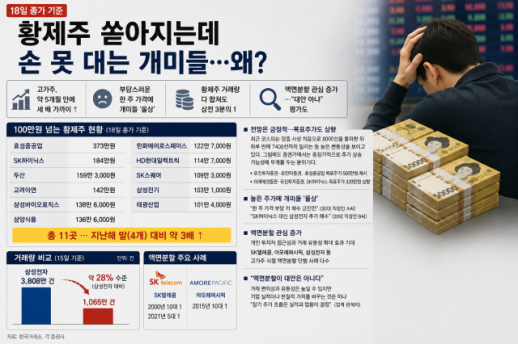 Rising Stock Prices Leave Individual Investors Struggling to Keep Up As the KOSPI index continues to reach record highs, the number of so-called "emperor stocks," which have prices exceeding 1 million won, has also surged. However, the soaring prices have made these stocks less accessible for individual investors. According to the Korea Exchange, as of May 18, the closing prices for companies such as Hyosung Heavy Industries, SK Hynix, Doosan, Korea Zinc, Samsung Biologics, Samyang Foods, Hanwha Aerospace, HD Hyundai Electric, SK Square, Samsung Electro-Mechanics, and Taekwang Industrial have reached a total of 11 companies. This marks an increase from four companies at the end of last year, nearly tripling in just five months, which is the highest level on record. Market analysts are optimistic about the potential for further gains among these emperor stocks. Eugene Investment & Securities and Yuanta Securities have set a target price of 5 million won for Hyosung Heavy Industries, citing an expansion in new orders. Mirae Asset Securities and Eugene Investment & Securities have raised their target price for SK Hynix to 3.2 million won, based on improvements in the memory market and increased profitability. However, not all individual investors view the rising stock prices positively. A 30-year-old office worker, referred to as A, stated, "Many predict that SK Hynix will continue to rise, but the price per share is daunting. I find myself only contemplating buying without making a decision." Another office worker in their 20s, B, mentioned, "I can't afford to buy SK Hynix right now, so I opted to purchase more Samsung Electronics instead." This trend is reflected in trading volumes as well. As of May 15, Samsung Electronics had a trading volume of 38.08 million shares, while the combined trading volume of the 11 emperor stocks was only about 10.65 million shares. This means that the total trading volume of emperor stocks was only about 28% of that of Samsung Electronics. Due to these circumstances, there is growing interest in the possibility of stock splits. A stock split increases the number of shares without changing the company's value or market capitalization, effectively lowering the price per share. This is seen as a way to enhance accessibility for individual investors and increase trading liquidity. Notable examples of companies that have executed stock splits during high price periods include SK Telecom (10-for-1 in 2000 and 5-for-1 in 2021), Amorepacific (10-for-1 in 2015), and Samsung Electronics (50-for-1 in 2018). However, some market participants caution against placing too much significance on stock splits. While they can improve trading convenience and liquidity, they do not alter a company's performance or intrinsic value. An industry insider remarked, "A stock split does not change the fundamentals of a company. Ultimately, long-term stock price trends are determined by performance and market conditions."* This article has been translated by AI. 2026-05-18 20:03:00
 -
 KOSPI Defies Rising Interest Rates, Only Global Index to Rise Despite fears of soaring interest rates, the KOSPI managed to maintain its upward momentum. As U.S. Treasury yields surged, stock markets around the world experienced declines, but the KOSPI was the only index to rise, buoyed by strong earnings expectations for Samsung Electronics and SK Hynix.<related articles on page 4> According to the Korea Exchange, the KOSPI closed at 7,516.04, up 22.86 points (0.31%) from the previous trading day. Initially, the index plummeted more than 4%, dropping to 7,142.71. However, as the afternoon progressed, buying interest in semiconductor stocks helped reverse the trend. Notably, major semiconductor companies like Samsung Electronics and SK Hynix supported the market, with Samsung rising 3.88% and SK Hynix increasing 1.15%. In contrast, stock markets worldwide fell due to the spike in U.S. Treasury yields. On May 15, the Dow Jones Industrial Average dropped 1.07%, the S&P 500 fell 1.24%, and the Nasdaq Composite declined by 1.54%. Asian and European markets also continued their downward trend. As of 3:30 PM, Japan's Nikkei 225 was down 0.97%, Hong Kong's Hang Seng Index fell 1.56%, and Taiwan's TAIEX decreased by 0.68%. The Shanghai B-Share Index dropped 2.56%, while the Shenzhen B-Share Index fell 1.10%. The Shanghai Composite and Shenzhen Composite indices also declined by 0.46% and 0.35%, respectively. Essentially, the KOSPI was the only major index showing an upward trend. Market analysts predict that the surge in bond yields will lead to significant volatility in the stock market for the foreseeable future. Concerns over the prolonged conflict in the Middle East and rising international oil prices have reignited inflation fears, pushing the yield on 10-year U.S. Treasury bonds above 4.5% and the 30-year bonds over 5%. Worries about the Federal Reserve's prolonged tightening measures have also resurfaced. Bond yields in major European countries such as the UK, Germany, and France, as well as in Japan and Taiwan, are also on the rise. The increase in interest rates is also raising borrowing costs for companies and putting pressure on growth stock valuations, triggering a sell-off in tech stocks. Reuters reported that the 12-month forward price-to-earnings ratio (P/E) for the S&P 500 is significantly above its long-term average, with rising rates exacerbating concerns about overvaluation. Lee Kyung-min, an analyst at Daishin Securities, stated, "The yield on 10-year U.S. Treasury bonds has risen to the 4.6% level, continuously dampening risk appetite. However, the inflow of bargain hunting in the semiconductor sector has led to a strong performance for the KOSPI."* This article has been translated by AI. 2026-05-18 20:00:33
 -
 Korbit Sells $8.2 Million in Bitcoin and Ethereum Amid Profitability Struggles Korbit, a South Korean cryptocurrency exchange, has sold approximately 10.4 billion won (about $8.2 million) worth of Bitcoin and Ethereum over the past four months. This move comes as the exchange faces declining trading volumes and worsening profitability, prompting the need to secure operational funds.According to a disclosure from the Digital Asset Exchange Alliance (DAXA) and Korbit on May 18, the sales occurred between February 5 and May 11. During this period, Korbit sold 25 Bitcoins from February 5 to March 31, followed by an additional 65 Bitcoins and 300 Ethereums from March 6 to May 11, totaling 10.471 billion won.In both disclosures, Korbit stated that the purpose of the sales was to cover "operational costs such as labor expenses." DAXA guidelines restrict exchanges from selling their assets to three reasons: tax payments, operational cost coverage, and unavoidable liquidity crises.Industry analysts believe that Korbit's declining profitability is a key factor behind the asset sales. Last year, the exchange recorded a net loss of 15.759 billion won, a stark contrast to a profit of 9.8 billion won the previous year. Notably, investment gains from cryptocurrencies plummeted from 34.4 billion won to a loss of 5 billion won, while valuation losses on cryptocurrencies also expanded, severely impacting its financial performance. Additionally, deposits and cash equivalents have decreased, increasing financial pressure.The situation worsened with sanctions from the Financial Intelligence Unit (FIU). In December, Korbit was fined 2.73 billion won for violations related to anti-money laundering obligations and received an institutional warning. Korbit paid 2.18 billion won, reduced by 20%, within the legal deadline in January, which represents about 22% of its operating revenue of 9.761 billion won last year.The combination of a larger-than-expected fine and deteriorating performance has heightened the need for operational funding, leading to the decision to liquidate its cryptocurrency holdings. However, Korbit has indicated that it does not plan any further sales in the near term and will focus on stabilizing operations with the funds secured from this sale.Korbit's Struggles Reflect Broader Issues for Smaller ExchangesKorbit's situation is not an isolated issue; many smaller cryptocurrency exchanges are also facing declining trading volumes and profitability. For instance, the operator of Gopax, Streami, reported a 46.1% drop in revenue last year, totaling 4.326 billion won. Coinone also saw its operating loss widen to 6.343 billion won compared to the previous year.The challenge is that a market rebound is not expected in the near term. With the recent surge in the domestic stock market, investor funds have shifted toward equities, leading to a decline in cryptocurrency trading volumes. Exchanges rely heavily on trading fees for revenue, so reduced trading activity directly impacts their financial results.The influx of new investors has also slowed. According to a survey by the Financial Services Commission, the growth rate of users able to trade on won-based cryptocurrency exchanges was 21% in the first half of 2024, 25% in the second half, and 11% in the first half of last year, but it dropped significantly to 3% in the second half of last year.Industry experts argue that diversifying revenue structures through regulatory reforms and attracting institutional funds is essential. Recently, the FIU has requested exchanges to submit readiness reports for the second phase of the "Corporate Participation Roadmap" to expand institutional and corporate investor participation in the cryptocurrency market.An industry insider noted, "The specific timing and methods for expanding corporate participation are likely to emerge after the local elections, and there is a possibility that it will be pursued alongside discussions on the second phase of cryptocurrency legislation, so we are monitoring the situation closely."* This article has been translated by AI. 2026-05-18 19:55:43
 -
 Why Asia's Spirituality Matters in the Age of AI Humanity stands at the threshold of a significant civilizational shift in the 21st century. Artificial intelligence (AI) has begun to learn human language and thought, while robots and algorithms are taking over much of human labor and decision-making. Although humanity is living in the most prosperous era in history, it is simultaneously entering a period of profound spiritual unease. The economy has grown, but communities have weakened; technology has advanced, yet humanity seems to be withering. This sense of crisis is spreading across the globe. Wars continue unabated. In the Middle East and Eastern Europe, human lives are being lost even as we speak, while the climate crisis and ecological destruction threaten the very fabric of human civilization. Extremism, hatred, isolation, and depression are spreading in both developed and developing countries. In this context, humanity is returning to the most ancient questions. "What does it mean to be human?""Where is civilization headed after technology?""How will the value of life and spirit be preserved?" And the world is once again looking to Asia. Asia is not merely the world's factory or a vast market; it is a significant source of human spiritual history. For thousands of years, this continent has explored the relationship between human existence, the universe, nature, and community.From Hinduism and Buddhism to Confucianism and Taoism, as well as Islam, Cheondogyo, Daejonggyo, Won Buddhism, and Jeungsan-do in Korea, Asia has been a continent deeply engaged in exploring the spirituality of human life and its connection to heaven and nature. In light of this awareness, Aju Business Daily and the Asian English news agency AJP are launching the 'Spiritual Asia' series. This series is not just a simple introduction to religions; it is a humanities and civilization project that reexamines the direction of human civilization in the post-AI era. It aims to reinterpret the spiritual heritage of Asian civilization in contemporary language and connect it to future civilizations. Today, much of the global media focuses on politics, markets, war, and power. However, humans do not live by economic means alone. We seek meaning, question the reasons for life, and imagine what comes after death. Ultimately, civilization is about what humans value most. Asian religions and philosophies have long explored the themes of human life, harmony, community, and the spiritual world. Hinduism is one of the oldest religions in humanity. Developed around the Vedas and Upanishads, Hinduism contains profound insights about the unity of human beings and the universe. Brahman represents the absolute principle of the universe, while Atman signifies the inner soul of humanity. The idea that "Atman is Brahman" illustrates an ontological worldview where humans and the universe are ultimately one. The concepts of reincarnation and karma view human life not as a singular existence but as part of a long process within the cosmic order. The globally popular practices of yoga and meditation are also deeply connected to the spiritual world of Hindu civilization. Buddhism began with the enlightenment of Siddhartha Gautama in the 6th century BCE. Its core teaching identifies the causes of human suffering as greed and attachment. The Four Noble Truths, the Eightfold Path, the Middle Way, and the philosophy of compassion have evolved into a healing system for the human spirit, transcending mere religious doctrine. Although Buddhism originated in India, it has become a major pillar of Asian civilization, spreading throughout China, Korea, Japan, and Southeast Asia. Particularly, Zen Buddhism has significantly influenced modern Western mental culture, psychology, and meditation practices. As the AI era deepens, Buddhism's concepts of mindfulness and compassion are being recognized as vital alternatives for restoring humanity. Confucianism is an ethical civilization of East Asia centered on the teachings of Confucius. Its core values include benevolence, propriety, filial piety, and community order. Confucianism is more of an ethical philosophy aimed at creating a humane society than a simple religion. The essence of Confucianism is that humans do not exist in isolation but in relationships with others. It has profoundly influenced the political and educational systems of the Joseon Dynasty, as well as the social orders of China and Japan. Today, traces of Confucian traditions remain in Korea's education-centered culture and sense of family community. Taoism, rooted in the philosophies of Laozi and Zhuangzi, emphasizes a nature-centered worldview. Its core principle is wu wei, or non-action, which advocates living in harmony with the natural order rather than forcing it. Taoism has significantly influenced Chinese medicine, qi culture, feng shui, martial arts, and longevity philosophies. As the climate crisis and ecological civilization become pressing contemporary issues, Taoism's nature-friendly philosophy is being reexamined as a potential alternative civilization. Islam originated in the Middle East but is fundamentally a significant part of Asian civilization. From the Middle East to Central Asia, India, and Southeast Asia, Islamic civilization has formed a vast cultural sphere. The essence of Islam is that humans must be humble before the one God. The Qur'an emphasizes justice, communal responsibility, charity, and moderation. Medieval Islamic civilization achieved world-class advancements in mathematics, astronomy, medicine, and philosophy, significantly influencing the European Renaissance. Today, understanding Islam solely through the lens of conflict is a narrow perspective; Islam is also a civilization rich in spirituality and community ethics. Cheondogyo emerged at the center of modern Korean popular history. Originating from Donghak, it centers on the idea that "human beings are heaven" (Innae Cheon). This philosophy, which posits that humanity itself is sacred, has become one of the spiritual foundations of Korean democracy and the people's movements. The Donghak Peasant Revolution was not merely a farmers' uprising but a people's revolution advocating human dignity and equality. Daejonggyo is a Korean ethnic religion centered on the spirit of Dangun and the Hongik Ingan philosophy. It was modernized by figures like Na Cheol and is deeply connected to the independence movements during Japanese colonial rule. The idea of "benefiting humanity widely" remains an important spiritual legacy in Korean society today. Won Buddhism, founded by Park Chung-bin, is a modern Korean religion that reinterprets Buddhism for contemporary times, emphasizing "practice in daily life" and the harmony of material and spiritual awakening. It is regarded as a modern religion that contemplates how faith can harmonize with reality in an industrialized age. Jeungsan-do, developed around the philosophy of Gang Jeungsan, is a Korean ethnic religion that emphasizes the interconnectedness of humans, nature, and the spiritual world through the concepts of post-heavenly transformation and mutual growth. Particularly, the philosophy of mutual growth is interpreted as a new communal philosophy in a society where competition and conflict are intensifying. Shinto is Japan's indigenous nature worship, believing that mountains, rivers, trees, and ancestors possess divinity. Japan's unique aesthetic appreciation for nature and community culture is deeply connected to Shinto spirit. Sikhism, originating in the Punjab region of India, values human equality, labor, and community service. Sikhs are known for their strong sense of solidarity and culture of service, playing significant roles in Indian diaspora communities worldwide. Zoroastrianism, which began in ancient Persia, developed a worldview centered on the duality of good and evil, light and darkness, and has influenced the formation of Judaism, Christianity, and Islam. Although it is not a large religion, its significance in the history of human spirituality is profound. Thus, the religions and philosophies of Asia, while diverse, share a common message: humans are not merely material beings. We are interconnected with the universe, and life exists in relationships. Korean religious thinker Ryu Yeong-mo deeply explored these Eastern and Western religions, stating, "Truth is one, but the paths are many." He did not set the Bible against the Buddhist scriptures, nor did he oppose Laozi and Confucius, Jesus and Buddha. He believed that humanity, the universe, life, and truth ultimately flow within a single great current. This aligns with Korea's indigenous philosophy of Cheonjiin (Heaven, Earth, and Humanity), which posits that heaven, earth, and humanity are not separate entities but interconnected within a single order of life. Today, the world stands at another crossroads of civilization. The AI and technological revolution can make life more convenient. However, technology alone cannot resolve human loneliness, hatred, war, and greed. Therefore, humanity is once again seeking spirituality. And at the heart of that journey lies Asia's ancient wisdom. The 'Spiritual Asia' series is not merely a collection of explanations about past religions. It is a monumental project questioning why humanity must remain human in the post-AI era. And it is not just a question for Asia; it is a question for the future of all humanity.* This article has been translated by AI. 2026-05-18 19:42:54
 -
 Homeplus Stores Temporarily Close, Affecting Tenants' Sales On May 18, at the Homeplus store in Jamsil, Songpa District, Seoul, the cart storage area was empty, and a sign reading "Hygienic Homeplus Carts" was torn and fluttering in the wind. The usually bustling store was quiet following the closure announcement. Tenants operating within the store expressed their frustration, with one restaurant owner, identified as A, stating, "Since the supermarket closed, the few customers we had have noticeably decreased."As of July 3, Homeplus has temporarily closed 37 stores nationwide, significantly impacting the tenants. While some restaurants and photo studios remain open, customers perceive the entire store as closed, leading to a sharp decline in foot traffic.A, the restaurant owner, reported, "Since the store's closure, our sales have dropped by about half." Other tenants echoed similar sentiments. Another tenant, B, sighed, saying, "We are still operating, but if foot traffic disappears, closing is just a matter of time."Kim Byeong-guk, president of the Homeplus Tenant Association, stated, "Although the leased stores are said to be operating normally, in reality, it is almost like being closed. Customers already perceive that the entire Homeplus store is shut down."Many customers were unaware that some leased stores were still open. A 30-something visitor, Park, remarked, "I assumed Homeplus was closed when I heard about the shutdown. I only realized some stores were still operating after seeing a few people coming in and out."The uncertainty surrounding the reopening of the stores adds to the tenants' concerns. Homeplus has announced the temporary closure of 37 stores until July 3, but if funding issues persist, the closure could be extended. A Homeplus representative stated, "Currently, if we cannot secure liquidity due to internal and external conditions, it will be difficult to proceed."Leased store owners are bearing the financial losses from the temporary closure. However, Homeplus has reportedly not established a separate compensation plan, citing that leased stores can continue operating. An industry insider noted, "Shopping involves not just products but also the store atmosphere, layout, and customer experience. If the main store is closed, it will be challenging to attract customers to the leased stores, leading to greater losses for them."Meanwhile, Homeplus is seeking bridge loans and emergency operational funding from its largest creditor, Meritz Financial Group, as part of its restructuring efforts. However, negotiations have stalled due to significant differences over loan conditions.Meritz has recently indicated it may consider a short-term operational loan of 100 billion won for 2-3 months, but has set conditions including immediate repayment upon the sale of Homeplus Express, an annual interest rate of 6%, and personal guarantees from major shareholders and management. However, Homeplus has expressed difficulty in accepting these terms, as the sale of Homeplus Express is already contracted to conclude by the end of June, meaning the actual loan period would only be about a month.* This article has been translated by AI. 2026-05-18 19:37:38
 -
 VIP Marketing Evolves into High-End Experiences The landscape of VIP benefits in the retail industry is changing. Services that once focused on convenience, such as parking privileges and exclusive lounge access, are evolving into tailored private experiences that encompass travel, fine dining, and cultural arts. This shift aims to enhance brand loyalty by offering top-tier customers unique experiences that cannot be purchased with money. According to industry sources, Shinsegae Department Store's VIP-exclusive curation platform, 'The Showcase,' has attracted over 50,000 VIP customers since its launch in November 2024. The average transaction value is approximately 20 million won, which is seven times higher than the average of 3 million won in the luxury category. Notably, 63% of users are in their 30s and 40s, indicating success in engaging younger high-spending consumers in the online space. Through 'The Showcase,' Shinsegae is offering limited-edition Lamborghini supercars. A portion of the vehicle purchase price counts toward VIP spending, and customers can also access luxury yacht viewing tickets for the Yeouido Fireworks Festival. Additionally, the store is showcasing the highest-end line of the Swedish royal bed brand, Hästens, known to be priced around 1 billion won. Lotte Department Store has revamped its existing 'Avenue L Points' system into 'Avenue L Curation,' enhancing its content-focused VIP services. Avenue L Curation allows customers to experience luxury lifestyle content at over 100 partner locations across six categories, including luxury hotels, fine dining, and golf and leisure activities. A highlight of this program is an exclusive tour of Ulleungdo for Avenue L customers scheduled for next month. This event will feature private course dining by Chef Jeong Ho-young, breakfast, and wine pairing by Lotte's sommelier Han Hee-soo, all set against the backdrop of the luxury resort 'Cosmos Villasome.' The program also includes a scenic drive along Ulleungdo's coastal roads in a BMW 7 Series and local sightseeing tours. The focus on VIP experience marketing comes as recent sales performances have increasingly depended on VIP customers and foreign spending. In the first quarter of this year, Shinsegae Department Store reported an operating profit of 141 billion won, a 30.7% increase from the previous year. Lotte Department Store saw a 47.1% rise to 191 billion won, while Hyundai Department Store's operating profit grew by 39.7% to 135.8 billion won, largely driven by luxury consumption and VIP sales. Last year, VIP customers accounted for 50% of total sales at major department stores. Shinsegae led with 47%, while Lotte and Hyundai both recorded 46%. At Shinsegae's flagship store in Gangnam, VIP sales exceeded 50% of total revenue. In this context, duty-free shops and the beauty industry are also expanding VIP experiences into cultural and artistic realms. On May 13, Shinsegae Duty-Free invited its top SVIP customers to the Youngin Literary Museum in Pyeongchang-dong, Seoul, where they viewed the late Lee Eo-ryeong's study and participated in a literary salon led by Director Kang In-sook. Amorepacific also hosted its 'All About Amore' event on May 7 at its headquarters in Yongsan, inviting over 500 VIP customers from Amore Mall along with 240 product planners from Naver, Kakao, and Coupang for a brand experience event. An industry insider noted, "While past VIP benefits focused on discounts and convenience, they are now evolving toward designing customer preferences and experiences. The competition for lifestyle platforms that encompass rarity, experience, and community will become even more intense in the future."* This article has been translated by AI. 2026-05-18 19:32:10
 -
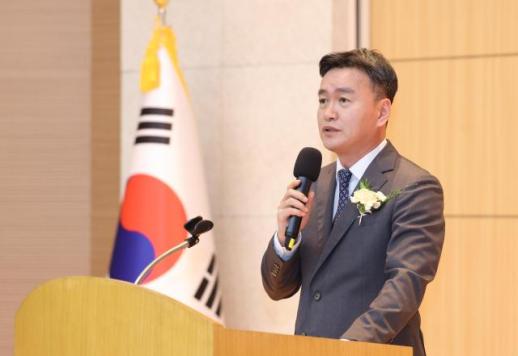 New Customs Chief Lee Jong-wook Announces Overhaul of Border Monitoring System Lee Jong-wook, the newly appointed Customs Commissioner, stated on May 18 that he plans to completely redesign the border monitoring system to safeguard citizens from transnational crimes such as drug trafficking and gun smuggling. He also pledged to develop multifaceted and effective policies to support exports and imports. During his inauguration ceremony at the Daejeon government complex, Lee highlighted ongoing challenges, including supply chain disruptions due to the Middle East crisis, uncertainties in global trade barriers, and the spread of transnational crimes like drug trafficking. He emphasized the growing public demand for strict law enforcement to support export-import businesses and eradicate unfair practices in society. Lee outlined plans to reconstruct the monitoring and enforcement network based on entry routes, enhance the collection and utilization of domestic and international crime information, expand international joint enforcement systems, and develop sophisticated risk analysis techniques to elevate inspection protocols. He stressed the need to bolster organization, personnel, and equipment to create a robust and impenetrable border against smuggling. Regarding export-import support, he committed to swiftly implementing comprehensive measures to protect small and medium-sized manufacturing enterprises and provide focused support for advanced technology industries, such as semiconductors, which are vital for the future national economy. He also promised to address minor inconveniences and challenges faced by businesses on the ground and to boldly innovate unreasonable regulations to enhance the business environment. Additionally, Lee announced plans to establish a law enforcement system capable of combating economic crimes related to trade and foreign exchange transactions. He vowed to take strict action against malicious tax evasion and to achieve a significant transformation in customs administration through artificial intelligence and digital innovation. He reiterated his commitment to providing all necessary support in customs administration to overcome the economic shocks caused by the ongoing Middle East crisis and to enhance the resilience of the national economy. Lee quoted the famous Japanese warlord Takeda Shingen, saying, "People are the castle, the walls, and the moat." He emphasized that excellent policies and systems must be backed by the strength of those who implement them, aiming to create a healthy customs service characterized by communication, cooperation, and a balance of results and accountability.* This article has been translated by AI. 2026-05-18 19:26:41
 -
 International Oil Prices Remain Above $100, Pressuring Inflation and Domestic Demand International oil prices have remained above $100 per barrel for an extended period, intensifying accumulated inflationary pressures. While the government has managed to suppress immediate price increases, there are concerns that rising import costs may eventually impact the domestic economy. As of May 18, Brent crude for July delivery rose 1.98% to $111.42 per barrel, while West Texas Intermediate (WTI) for June delivery increased by 2.43% to $107.98, marking the highest price this month. International oil prices averaged $128.52 per barrel in March and $105.70 in April, and they have continued to hover around the $100 mark in May. Brent crude has been above $100 since April 23, and WTI has remained at that level since May 11. The prolonged high oil prices are gradually amplifying inflationary pressures. Although import prices temporarily decreased last month, the overall inflation burden remains significant. According to the Bank of Korea, the import price index for April was 168.12, down 2.3% from the previous month. However, this decline was largely due to a base effect from a 16.1% surge in March. Compared to the same month last year, April's import prices were still 20.2% higher. With oil prices maintaining above $100 in May, analysts suggest that the accumulated import cost burden is likely to be reflected in consumer prices with a time lag. The government has implemented measures such as a cap on oil prices and a reduction in fuel taxes to mitigate short-term inflationary pressures, but companies are gradually facing increased cost burdens. The Korea Development Institute (KDI) has indicated that rising oil prices due to transportation uncertainties could elevate this year's consumer price inflation rate by 1.0 to 1.6 percentage points, with the possibility of high inflation persisting into next year. The Bank of Korea is also expected to revise its inflation rate forecasts upward in its upcoming economic outlook. The central bank has projected consumer price inflation rates of 2.2% for this year and 2.0% for next year. Earlier, KDI significantly raised its inflation forecast for this year from 2.1% in February to 2.7% this month. High oil prices are anticipated to exert pressure not only on inflation but also on the current account balance. As a major oil-importing country, South Korea faces increased dollar expenditures for the same volume of crude oil, leading to a heightened energy import burden. This is likely to result in a reduced trade surplus. Additionally, since most oil transactions are conducted in dollars, the increased demand for dollars by companies is also a concern. If rising fuel and electricity prices coincide, it could lead to a decrease in real household income, increased cost burdens for businesses, and a potential slowdown in investment, heightening the risk of domestic economic contraction. Analysts warn that prolonged high oil prices could trigger stagflation, characterized by simultaneous inflation and economic slowdown. Kim Jin-sung, a researcher at Heungkuk Securities, stated, "Private consumption is influenced by a complex interplay of factors, including expectations for economic recovery, policy support, inflationary pressures, and geopolitical uncertainties. If conflicts in the Middle East persist, the economic shocks following rising oil prices are likely to intensify."* This article has been translated by AI. 2026-05-18 19:24:00
 -
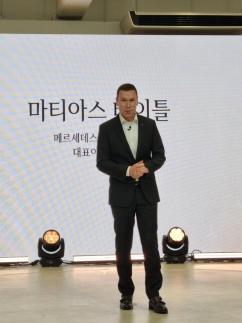 Mercedes-Benz Korea Opens Fifth Global Studio in Seongsu-dong, Plans to Launch 11 New Models Mercedes-Benz Korea is set to open its fifth global brand lifestyle experience space in Seoul. This initiative aims to enhance customer engagement while moving away from traditional brand images, coinciding with a series of new vehicle launches planned for the near future.On May 19, Mercedes-Benz Korea will officially open the 'Mercedes-Benz Studio Seoul' and announced that studios will be established in 18 major cities worldwide.The Mercedes-Benz Studio serves as a space for connecting with customers and sharing brand values and lifestyle experiences. Seoul will be the fifth location, following Copenhagen, Stockholm, Tokyo, and Prague.Matthias Baitel, CEO of Mercedes-Benz Korea, stated, "Korea is one of the most important markets for Mercedes-Benz globally, which is why we are opening this studio. We will also unveil new vehicles here, allowing customers to experience our brand's future direction and vision firsthand." Mercedes-Benz Korea plans to introduce 11 new models to the Korean market in the second half of this year.The first models to be officially launched in the third quarter are the updated 'The New Mercedes-Benz S-Class' and 'The New Mercedes-Maybach S-Class.' Both models will feature the Mercedes-Benz Operating System (MB-OS), with pre-orders starting today. The New Mercedes-Benz S-Class will be displayed at the Seongsu-dong studio for customers to view.Additionally, the 'Mercedes-Benz The All-New CLA,' which will be the first model equipped with MB-OS, is expected to launch in Korea in the second half of this year. It will be available in hybrid and fully electric versions, having already received positive feedback after its European market debut last year.As a result, Mercedes-Benz Korea's strategy for Software Defined Vehicles (SDV) is expected to begin with the S-Class and Maybach S-Class. With these models leading the way, the introduction of The All-New CLA featuring MB-OS will significantly expand Mercedes-Benz's lineup of vehicles based on its proprietary operating system in Korea.Furthermore, Baitel commented on the 'Retail of the Future (RoF)' initiative, which began on April 13, stating that over time, it will prove to be a change suited to Korean customers. He noted, "A single price and a unified inventory system represent a significant change for us, and customer satisfaction has greatly improved in all countries where RoF has been implemented." RoF is a direct sales model that consolidates vehicle pricing and inventory management, which previously varied by dealer, allowing Mercedes-Benz Korea to manage it directly.* This article has been translated by AI. 2026-05-18 19:21:29
 -
 Japanese Prime Minister to Visit South Korea with State-Level Honors Ahead of Japanese Prime Minister Sanae Takaichi's visit to South Korea, Japanese media are highlighting that the South Korean side will welcome her with "state-level honors." The Korea-Japan summit will take place in Andong, the hometown of President Yoon Suk Yeol, and is seen by Japan as a continuation of the "hometown mutual visits" and a demonstration of shuttle diplomacy following the meeting held in Nara, Takaichi's hometown, in January. Japanese outlets, including the Nihon Keizai Shimbun (Nikkei), Jiji Press, and Kyodo News, reported on May 18, citing the Blue House, that Takaichi will visit South Korea for a two-day stay starting May 19. The summit will be held in Andong, where the Blue House plans to greet Takaichi with "state-level honors." President Yoon will personally welcome Takaichi at the hotel entrance, and a ceremonial guard and military band will be present. The symbolism of the ceremonial welcome has been particularly emphasized by Japanese media. When President Yoon visited Nara in January, Takaichi personally visited his accommodation to greet him. This time, Takaichi will visit Yoon's hometown of Andong. Nikkei noted that this will mark the sixth Korea-Japan summit since Yoon took office, with the two leaders meeting face-to-face again after four months. The Blue House also released details about the dinner and social events planned, which will feature local specialties from Andong, including Andong soju, as well as sake from Nara Prefecture, Takaichi's home region. After dinner, there will be a program at the UNESCO World Heritage site Hahoe Village, showcasing pansori (traditional Korean music) and a traditional fireworks display. Jiji Press described this as a production wishing for harmony and friendship between the two countries. However, there has been little political reaction in Japan regarding Takaichi's visit. While sensitive issues such as historical grievances remain, both countries have managed to avoid escalating these conflicts. The uncertainty in U.S.-China relations, the North Korean situation, and developments in the Middle East have increased regional security and supply chain risks, making it difficult for the two nations to remain at odds solely over historical issues. The Japanese government views this visit as an opportunity to reaffirm the importance of Korea-Japan relations and trilateral cooperation with the United States. Chief Cabinet Secretary Hirokazu Matsuno stated, "Under the current strategic environment, the importance of Korea-Japan relations and the trilateral cooperation among Korea, Japan, and the U.S. has increased significantly," adding that this visit will be a crucial opportunity for close communication. NHK reported that discussions will include strengthening cooperation in areas closely related to the economy and public safety, as well as international issues, including the situation in the Middle East. Jiji Press and others mentioned that the outcomes of the U.S.-China summit and the situation in Iran would also be on the agenda. On the surface, the Andong summit is a reciprocal visit by Takaichi and an extension of shuttle diplomacy between the two leaders' hometowns. However, underlying this meeting is the critical point of how far Korea and Japan can align their strategic perceptions amid uncertainties in U.S.-China relations, the situation in the Middle East, North Korea, and supply chain risks.* This article has been translated by AI. 2026-05-18 19:15:32