
Journalist

Abe Kwak
-
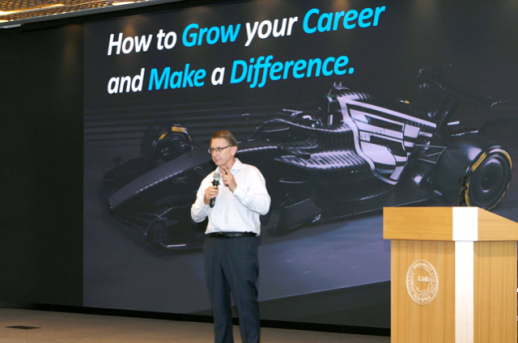 GMTCK president emphasizes passion and leadership at Kookmin University lecture SEOUL, May 12 (AJP) - Brian McMurray, president of GM Technical Center Korea, delivered a special lecture at Kookmin University on the importance of passion-driven career strategies and leadership in a rapidly changing industrial landscape, the university said Thursday. Speaking to students at the university's academic conference hall on May 7, McMurray addressed the theme of how to grow a career and make a difference. He shared personal insights from his journey as an engineer and executive across seven countries, encouraging students to design their careers based on individual values. McMurray highlighted that following one's passion provides the resilience necessary to overcome professional challenges. He noted that as companies increase investment in artificial intelligence, young professionals face both new risks and opportunities. He urged students to maintain a mindset of continuous learning and inquiry to remain competitive in an increasingly automated job market. The president also discussed the necessity of organizational cultures that embrace failure as a prerequisite for innovation. McMurray cited the "No Watermelons" campaign at GMTCK, an initiative designed to encourage employees to share problems openly rather than hiding them under a green exterior of feigned success. He further cautioned against the potential for misunderstandings in text-based communication, advocating for direct dialogue and empathy. "Leadership is about inspiring trust and providing inspiration rather than relying on titles or backgrounds," McMurray said. He explained that technical competence must be paired with an attitude that respects and fosters the growth of others. The session concluded with a question-and-answer segment covering career concerns and the global industrial environment. McMurray advised students to challenge themselves without fear of making mistakes and to strive toward making a positive impact on the world. The event marked the 665th installment of the Kookmin University Thursday Lecture series, a regular credit course that has hosted approximately 670 prominent figures from politics, science, and the arts over the past 30 years. Previous speakers include former South Korean President Roh Moo-hyun and film director Park Chan-wook. 2026-05-12 15:28:04
 -
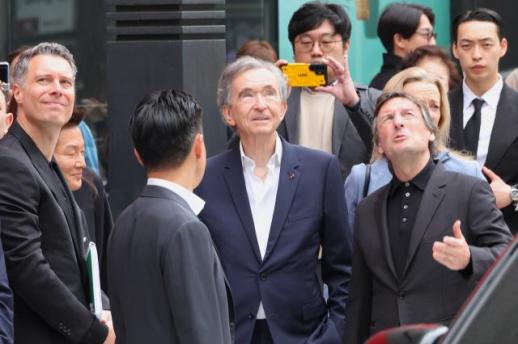 Arnault family tours Seoul luxury landmarks as Korea cements status as key LVMH market SEOUL, May 12 (AJP) -Bernard Arnault, chairman of luxury conglomerate LVMH, toured South Korea’s leading department stores Monday in his first visit to the country in three years, underscoring Korea’s growing importance to the global luxury industry even as demand slows elsewhere. The billionaire chairman began his Seoul itinerary at Shinsegae Department Store Main Branch, where he briefly spoke with executives and Louis Vuitton officials before entering “The Reserve,” home to “Louis Vuitton Visionary Journey Seoul,” the brand’s largest such space worldwide. Accompanying him was Delphine Arnault, daughter of Bernard Arnault and chief executive of Christian Dior, along with other senior LVMH executives. The delegation later toured Lotte Department Store Main Branch, Lotte Department Store Jamsil Branch and Shinsegae Department Store Gangnam Branch, inspecting flagship boutiques including Louis Vuitton, Dior, Loro Piana and Bulgari. Industry observers viewed the trip as a high-level inspection of one of the world’s most resilient luxury markets. South Korea has emerged as a crucial growth driver for global luxury houses, powered by younger consumers and strong spending among affluent Gen Z and millennial shoppers despite a broader slowdown in China and other major markets. 2026-05-12 15:08:14
 -
 KAIST researchers develop self-adjusting light sensor to improve autonomous driving safety SEOUL, May 12 (AJP) - Researchers at the Korea Advanced Institute of Science and Technology developed a sensor capable of adjusting its own response to light to overcome the limitations of current autonomous driving vision systems, the prominent institute said Tuesday. Standard image sensors primarily detect light brightness, which can make it difficult for autonomous vehicles to distinguish between objects with similar reflectivity, such as water and asphalt at night. The new "self-reconfigurable" sensor array instead utilizes polarization, which is the direction in which light vibrates, to identify the surface structure and orientation of objects. Korea Advanced Institute of Science and Technology (KAIST) Professor Seo Jun-ki and his team in the Department of Chemical and Biomolecular Engineering used a combination of tellurium and rhenium disulfide to create a specialized structure. This arrangement allows the sensor to change its operational state based on incoming light waves without requiring external electrical signals. The team employed a precise manufacturing process called epitaxial atomic layer deposition to stack these materials at the atomic level. This method ensures the crystal structures align correctly, providing higher stability and more reliable performance compared to existing 2D material layering techniques. This technology is designed for in-sensor computing, where the device processes visual data directly rather than sending it to a separate processor. In laboratory tests, the system achieved over 95 percent accuracy in recognizing moving objects while maintaining high energy efficiency. "This research presents a new foundation for artificial intelligence vision technology that can secure richer visual information by using polarization," Professor Seo said. He noted that the technology is expected to play a significant role in developing low-power AI systems for autonomous driving and medical diagnostics. Researchers Wenxuan Zhu and Kim Chang-hwan participated as lead authors of the study. The findings were published in the journal Nature Sensors on April 14, 2026. (Reference Information) Journal/Source: Nature Sensors Title: Self-reconfigurable polarization perception in dual-anisotropy heterostructures for high-dimensional in-sensor computing Link/DOI: https://bit.ly/4dkdYHE 2026-05-12 15:07:00
 -
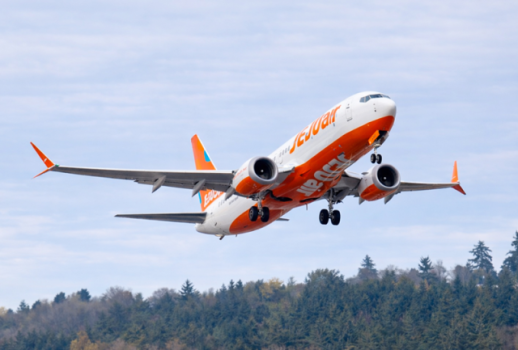 Jeju Air launches trial route to make Jeju more accessible to international visitors SEOUL, May 12 (AJP) - Jeju Air has begun trial operations on a route linking Incheon and Jeju, the low-cost carrier said on Tuesday. The airline will operate the route twice a week for three months on a trial basis to gauge demand, aiming to make it easier for foreign tourists arriving from overseas to reach the southern resort island. The first flight for the route departed from Jeju International Airport at 9:45 a.m. earlier in the day and arrived in Incheon at 11 a.m. Flights will be available on Tuesdays and Saturdays through the end of this month, then switch to Mondays and Fridays starting next month. Until now, foreign tourists arriving in Incheon had to travel to a separate airport such as Gimpo to fly to Jeju. The new route makes travel to Jeju more convenient for international passengers. The number of foreign tourists to Jeju has been rising rapidly. According to the Jeju Tourism Big Data Service Platform, 2.24 million foreign tourists visited Jeju last year, up 17.7 percent from 1.91 million a year earlier. The number of foreign visitors in the first quarter of this year also rose 29.3 percent from the same period last year. The route could also be good news for Jeju residents. Amid growing demand for long-haul international flights, travelers departing from Jeju, particularly those heading to Europe or the U.S. would no longer need to make an extra trip to Gimpo, saving time and reducing travel hassle. "Foreign arrivals to Jeju are on the rise, and we hope this new route will support balanced regional tourism growth while improving travel convenience for Jeju residents," a Jeju Air spokesperson said. 2026-05-12 14:49:35
 -
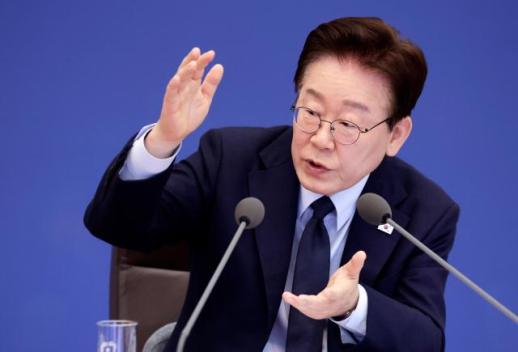 Seoul hints at fiscal expansion for H2 and 2027, sending bond yields to hike-cycle highs SEOUL, May 12 (AJP) — President Lee Jae Myung on Tuesday openly challenged the long-held policy rationale for fiscal tightening to rein in South Korea’s highly leveraged economy, signaling a more expansionary fiscal stance for the second half of this year and 2026 as growth concerns deepen amid prolonged Middle East tensions. “This is a time for investment to bolster growth potential,” Lee said during an emergency cabinet meeting, ordering the government to draft an “aggressive fiscal” strategy in next year’s budget and the supplementary spending plans for the second half. Lee defended proactive government spending, arguing that stimulus coupons distributed last year generated additional consumption of roughly 430,000 won ($310) per recipient, which he said demonstrated that fiscal support can meaningfully revive the economy. He also pushed back against concerns over the country’s debt burden, claiming South Korea’s actual government debt level remained only around 10 percent of gross domestic product. The remark appeared to reference an International Monetary Fund calculation that estimated South Korea’s net debt at 10.3 percent of GDP. However, the IMF figure excludes substantial liabilities such as pension obligations and debt held by state-run enterprises. According to the Ministry of Economy and Finance, South Korea’s broader national debt measure, known as D1 and encompassing both central and local government debt, recently stood at around 49 percent of GDP. Public sector debt, or D3 — which also includes non-financial public institutions — is estimated at roughly 68 percent. Markets interpreted Lee’s comments as a clear signal of fiscal expansion as the government braces for slowing growth and mounting uncertainties from the prolonged conflict in the Middle East. Bond yields, already revisiting levels last seen during the 2023 tightening cycle, rose further on expectations of increased debt issuance tied to fiscal expansion. The benchmark three-year government bond yield climbed 4.6 basis points to 3.644 percent on Tuesday, while the 10-year yield rose 5.2 basis points to 4.002 percent — returning to levels seen in November 2023, when the Bank of Korea’s policy rate stood at 3.5 percent during the height of post-pandemic inflation fighting. Liquidity conditions, however, remain ample. According to the Bank of Korea, the growth rate of broad money supply, or M2, recently expanded about 4.9 percent from a year earlier, relatively elevated compared with other major economies such as the United States and Japan. At the same time, the money multiplier under the revised M2 standard stood at 13.56 as of February, well below levels above 20 seen before the 2008 global financial crisis. The money multiplier — calculated by dividing M2 by the monetary base — measures how effectively central bank liquidity circulates through the economy via deposits and lending. The figures suggest liquidity itself may not be the core problem, but rather weak transmission into actual consumption and investment. Some economists argue that improving the distribution and circulation of capital through structural reforms and targeted policy measures may be more effective than relying solely on debt-financed fiscal expansion. The Bank of Korea is scheduled to release its March money supply data on Wednesday. 2026-05-12 14:27:20
 -
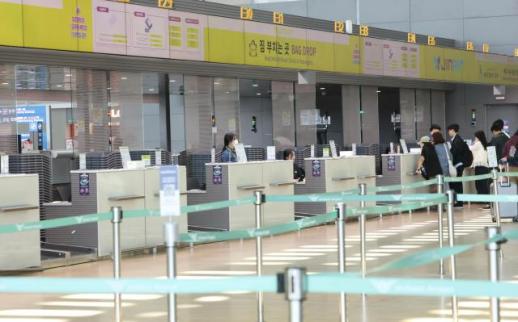 Fuel shock pushes Korean LCCs back into pandemic-like survival mode SEOUL, May 12 (AJP) - A spike in fuel prices, war-related travel restrictions and passenger jitters are pushing South Korea's budget carriers back into pandemic-era survival mode, forcing them to delay hiring as well as streamlining payrolls and flights as they try to ride out the Gulf crisis. Jin Air, a low-cost carrier under Korean Air, has informed 50 newly hired cabin crew members that they will start work in the fall instead of this week as originally planned, citing "emergency management conditions" caused by the Middle East-driven energy crisis. The airline hired 100 cabin crew members in the first half of the year, half of whom have already begun work. Despite the last-minute delay, Jin Air said it remains committed to honoring the hires. The carrier has already introduced a series of emergency cost-cutting measures, including an indefinite delay in annual safety bonus payments for employees. It has also cut 176 round-trip flights through this month to reduce fuel costs, trimming routes to destinations such as Guam and Phu Quoc Island in Vietnam. Further reductions are expected once June schedules are finalized. Low-cost carriers, whose overseas networks are heavily concentrated on Southeast Asian leisure routes, have cut around 1,000 international round-trip flights over the past two months amid the Middle East conflict. The pressure has intensified as Singapore jet fuel prices, the benchmark for Asia's aviation industry, surged to an average of $214.71 per barrel between March 16 and April 15, about 2.5 times higher than prewar levels. Airlines are increasingly concerned that higher fuel surcharges could weaken summer travel demand as operating costs continue to climb. Other budget carriers have also begun introducing unpaid leave and other belt-tightening measures. Jeju Air, the country's largest low-cost carrier, began accepting applications this week for voluntary unpaid leave among cabin crew members for June. T'way Air introduced unpaid leave for cabin crew for May and June, while Aero K, a smaller budget airline, offered voluntary unpaid leave to all employees for May. The Ministry of Employment and Labor held an emergency meeting late last month to assess postwar labor market conditions and worried that the airline industry could face broader restructuring if the conflict drags on. 2026-05-12 14:16:26
 -
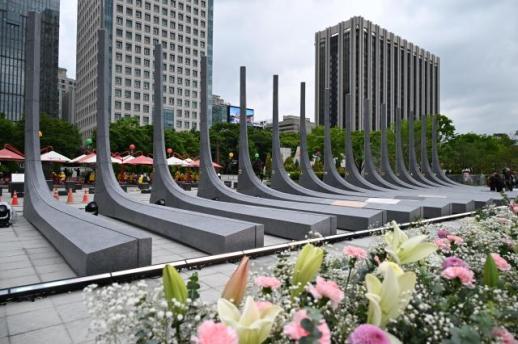 Seoul's Gwanghwamun Square gets Korean War memorial garden SEOUL, May 12 (AJP) - A memorial garden dedicated to soldiers who died in the Korean War was opened to the public at Gwanghwamun Square in central Seoul, the Seoul Metropolitan Government said on Tuesday. Earlier in the day, a ceremony celebrating its completion was held, attended by war veterans and ambassadors from the 22 countries that sent troops and provided support during the 1950–53 Korean War. According to the city government, the space dubbed the "Garden of Gratitude" aims to make the square, which draws about 27 million visitors a year, a place to reflect on the values of freedom and peace in daily life, and a symbolic space for South Korea's liberal democracy. Construction began in November last year and wrapped up in about six months, despite a temporary halt over procedural issues and controversy surrounding its rifle-shaped sculptures. The garden features a 6.25-meter-tall installation consisting of 23 rifle-shaped sculptures, which symbolize the dedication of countries that provided assistance during the war to defend freedom and peace. The installation was created using granite donated by seven countries including Belgium, Germany, Greece, India, Luxembourg, the Netherlands, and Norway, as a reflection of solidarity and cooperation with the international community. Stone from five additional countries including Australia, Sweden, Thailand, Turkey, and the U.S. is scheduled to be added by the end of this year. The garden also includes an underground exhibition hall for remembrance and reflection. A nighttime lighting show will run six times a day, every 30 minutes, with each session lasting 10 minutes and featuring lights projected from the 23 sculptures. Guided tours of the garden will be offered starting Wednesday. They will also be available in English. "The Garden of Gratitude will be more than a landmark in the capital as it will be a place of memory and connection that links the world and generations," said acting Seoul Mayor Kim Seong-ho. He added that the city will continue to uphold the values of freedom and peace and fulfill its role and responsibilities as part of the international community in working toward a better world. 2026-05-12 14:14:50
 -
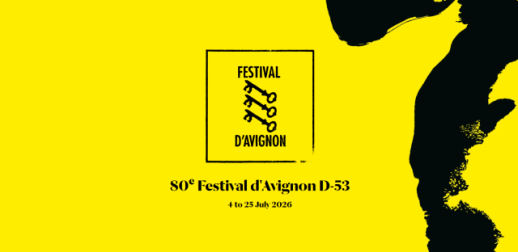 Avignon Festival to spotlight Korean language and contemporary performing arts SEOUL, May 12 (AJP) - The Avignon Festival, one of the world’s leading performing arts festivals, will spotlight the Korean language and contemporary Korean productions during its 80th edition in July, marking the first time an Asian language has been selected as the festival’s official invited language. The Korean-language spotlight program coincides with the 140th anniversary of diplomatic relations between South Korea and France, highlighting the growing cultural exchange between the two countries beyond the global popularity of K-pop, film, and television dramas. Held annually in the southern French city of Avignon, the festival runs from July 4 to 25 and is regarded as one of Europe’s most influential theater and live performance events. Founded in 1947 by French actor and director Jean Vilar, the festival is known for presenting contemporary and experimental productions in historical venues across the city. This year’s program also marks the first time the festival has centered on a single national language as part of its invited language initiative, which highlights the arts and culture of a selected linguistic community each year. English, Spanish, and Arabic were previously featured in 2023, 2024, and 2025, respectively. A total of nine Korean productions will be presented in the festival’s official "In" program, the main section featuring curator-selected works staged across the festival’s principal venues. Among the featured productions is "Oiseau," a staged reading based on Nobel Prize-winning author Han Kang’s novel "We Do Not Part." The performance will take place at the Cour d’Honneur of the Palais des Papes, the festival’s signature venue, and will star French actress Isabelle Huppert alongside Korean actress Lee Hye-young. Other Korean works include playwright and director Jaha Koo’s "Cuckoo," "Haribo Kimchi" and "The History of Korean Western Theatre." Additional productions explore themes ranging from Jeju Island’s haenyeo culture and the Jeju April 3 uprising to the climate crisis and contemporary Korean identity. They include “MULJIL,” "Island Story," "1 Degree Celsius," "KIN: Yeonhee Project I" and "Snow, Snow, Snow." The lineup reflects the expanding global reach of contemporary Korean performing arts as Korean-language productions continue to gain visibility on major international stages. 2026-05-12 13:59:29
 -
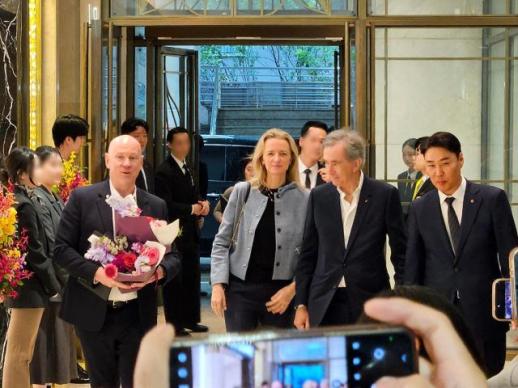 Arnault Seoul tour signals Dior reckoning in split luxury market SEOUL, May 12 (AJP) - Just 30 centimeters behind LVMH Chairman Bernard Arnault during his closely watched Seoul tour walked the executive many luxury insiders believed was carrying the real assignment of the trip: Delphine Arnault, tasked with reassessing Christian Dior’s position in one of the world’s most influential — and increasingly polarized — luxury markets. While cameras followed the world’s most powerful luxury executive through Seoul’s flagship department stores and high-end retail districts, industry attention centered on whether Dior could regain footing in South Korea after losing momentum in a market that once symbolized the global luxury boom. Korea remains the world’s highest per-capita spender on personal luxury goods, with consumers spending roughly $325 annually per person on luxury products, according to Morgan Stanley — higher than consumers in the United States or China. Morgan Stanley analysts noted that “South Korean buyers' demand for luxury goods is due to both an increase in purchasing power and an external desire to show off their social status.” The country’s luxury market, valued at more than $16 billion, has become strategically indispensable for global brands not only because of spending power but because Seoul increasingly functions as a trend laboratory for younger Asian consumers. Yet beneath the headline figures, the Korean luxury market has undergone a sharp structural shift. “Brand performance remained highly polarized in 2025,” Bain & Company noted in a recent global luxury report, adding that “the absolute luxury tier continued to hold strong,” while aspirational luxury demand weakened amid deteriorating consumer sentiment. That polarization has become especially pronounced in South Korea. Luxury spending has increasingly split into a two-speed market: recession-resistant VVIP consumers continue concentrating purchases on heritage houses such as Hermès, Chanel and Louis Vuitton, while younger buyers in their 20s and 30s — once the engine of Korea’s luxury boom — are retreating under high interest rates, inflation, weak wage growth and a housing market that has drifted out of reach. Nam Sung-hyun, an analyst at IBK Investment & Securities, described the widening divide bluntly: “While lower-income brackets see reduced spending power, the upper classes, who can increase income through assets, have even greater spending capacity.” That divergence has created clear winners and losers across the luxury sector. While ultra-premium houses continued posting record sales growth in Korea, brands positioned closer to aspirational luxury have struggled to maintain momentum as discretionary spending weakens. Industry analysts say Dior became particularly exposed because of its aggressive expansion among Korea’s MZ generation — millennials and Gen Z — through celebrity ambassadors, social media marketing and entry-level luxury products. The strategy thrived during the post-pandemic “flex” consumption boom. But the same younger consumers who fueled Korea’s luxury surge have now become the most vulnerable to economic pressure. Higher borrowing costs, slowing growth and mounting household burdens have begun eroding aspirational consumption, leaving brands dependent on trend-sensitive younger buyers increasingly exposed. Meanwhile, wealthy VVIP consumers have consolidated spending further toward the most established heritage houses with the strongest exclusivity and resale value. Against that backdrop, Delphine Arnault’s detailed inspection of Seoul department stores and flagship operations drew outsized industry attention. As CEO of Dior Couture and a central figure in the future leadership of LVMH, her visit was widely interpreted within the industry as more than ceremonial succession optics. Instead, it was viewed as part of a broader strategic reassessment of how Dior positions itself in Korea at a time when the market increasingly rewards ultra-premium exclusivity over mass aspirational desirability. For global luxury groups, South Korea is increasingly serving as an early indicator of broader shifts likely to spread across Asia: younger consumers remain culturally influential and digitally powerful, but sustaining luxury demand now requires balancing social-media-driven accessibility with the exclusivity demanded by high-net-worth clientele. In that sense, the Seoul trip was not simply about Korea. It was about the future direction of the global luxury industry itself. 2026-05-12 13:57:58
 -
 Google says it blocked AI-assisted cyberattack plot, warns of North Korean hacking activity SEOUL, May 12 (AJP) - Google claimed it had preemptively blocked hackers who were preparing large-scale cyberattacks using artificial intelligence and identified North Korean state-linked hacking activities leveraging AI to refine cyber operations. According to its report published on the Cloud Security blog, Google’s Threat Intelligence Group (GTIG) uncovered a threat actor believed to have used AI in preparations for a “zero-day” attack campaign. Google said the actor appeared to be planning broad operations, but the company’s early intervention likely prevented the attacks from being executed. A zero-day attack exploits previously unknown software vulnerabilities before developers can issue security patches, making such intrusions especially difficult to defend against. The disclosure adds to mounting concerns in the cybersecurity industry that rapid advances in AI-assisted vulnerability detection could accelerate the discovery and weaponization of software flaws. According to the report, the attackers sought to exploit vulnerabilities to bypass two-factor authentication systems. Google stressed there was no evidence its own AI model, Gemini, had been used in the operation. While Google did not identify the actor behind the attempted attacks, it separately warned that state-backed hacking groups linked to China and North Korea are showing “particular interest” in applying AI to cyber operations. The company said such groups are adopting increasingly sophisticated AI-assisted techniques for vulnerability discovery and exploitation, including integrating specialized, high-quality security datasets into their workflows. Google specifically highlighted North Korean hacking group APT45, saying there were indications the group had conducted automated research by repeatedly submitting thousands of prompts to analyze vulnerabilities and validate exploit code. “Attackers are not hesitating to experiment and innovate, and neither are we,” Google said in the report, adding that it is sharing research findings and defensive measures across the cybersecurity and AI communities to stay ahead of evolving threats. The warning comes amid broader concerns over AI-powered cyber threats following Anthropic’s recent announcement of “Claude Mitos,” an AI model reportedly capable of expert-level vulnerability discovery. Anthropic said access to the model would initially be restricted to selected companies and institutions because of security concerns. Security experts have also warned that threat actors may be able to assemble comparable cyber capabilities by combining already publicly available AI models. Meanwhile, OpenAI recently introduced “GPT-5.5-Cyber,” a cybersecurity-focused AI model reportedly accessible only to a limited group of researchers and organizations. 2026-05-12 13:55:35