
Journalist

Ahn Young-jip
-
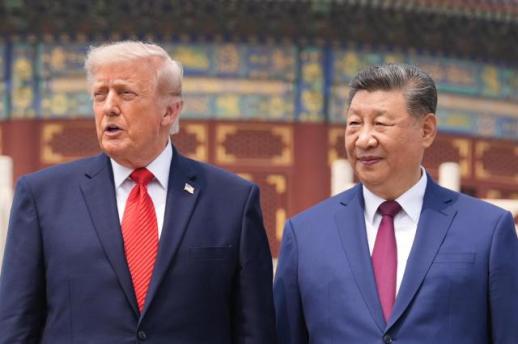 Trump Calls Meeting with Xi 'Good,' Remains Silent on Taiwan Issues Donald Trump positively assessed his meeting with Chinese President Xi Jinping but refrained from discussing specific topics, including Taiwan. On May 14, Trump visited Tian Tan Park in Beijing and responded to reporters' questions about the meeting, saying, "It was good." He added, "It's a wonderful place. Amazing. China is beautiful." According to the Associated Press, Trump's comments about the meeting were limited to his positive remark. When asked whether Taiwan was discussed, he did not provide an answer. In contrast to Trump's silence, Xi directly addressed the Taiwan issue during their meeting, issuing a warning. According to China's state-run Xinhua News Agency, Xi stated, "The Taiwan issue is the most important issue in US-China relations." He emphasized that if handled well, the relationship could maintain overall stability, but mishandling it could lead to confrontation or even conflict, pushing the US-China relationship into a very dangerous situation. Xi also strongly mentioned the issue of Taiwan independence, stating, "'Taiwan independence' and 'peace in the Taiwan Strait' cannot coexist like water and fire," and asserted that maintaining peace and stability in the Taiwan Strait is in the common interest of both countries. Earlier, the two leaders held their summit from 10:15 a.m. to 12:30 p.m., lasting over two hours. This is notably longer than the approximately 100 minutes of the US-China summit held in Busan last October.* This article has been translated by AI. 2026-05-14 16:03:00
 -
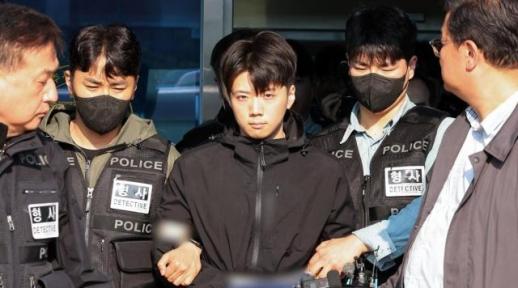 Gwangju High School Murder Suspect Jang Yoon-ki Did Not Submit Apology Letter Jang Yoon-ki, 23, the suspect in the murder of a high school student in Gwangju, expressed remorse to reporters by saying, "I am sorry," but he has not submitted a written apology or reflection letter. According to Yonhap News on May 14, the Gwangju Gwangsan Police Station announced the results of their investigation during a press briefing after Jang was transferred to prosecutors on charges of murder, attempted murder, and conspiracy to commit murder. Before being transferred to the prosecution on the morning of May 14, Jang stood before the media and repeated, "I am sorry," twice. However, it was confirmed that he had not submitted a handwritten reflection letter or apology to the police even nine days after the crime. During police questioning, Jang also stated, "I am sorry," but he did not clarify whether he was expressing remorse for the victims, who were either deceased or injured high school students, or if he regretted his actions. The police concluded that Jang's actions, including disposing of his phone and weapon to evade tracking by investigators, as well as washing his blood-stained clothes after the crime, indicated that the incident was a meticulously planned crime. They also determined that it did not fall under the category of a random crime. A police official stated, "Although Jang expressed remorse during the investigation, he has not submitted any objective materials such as a reflection or apology letter. Given the circumstances of attempting to destroy evidence, it is also unclear whether he had any intent to commit suicide." Jang is accused of murdering a 17-year-old female high school student in a secluded walkway in Wolgye-dong, Gwangsan-gu, at 12:11 a.m. on May 5, and also attacking a 17-year-old male student from another school with a weapon. He has been under investigation and was transferred on this day.* This article has been translated by AI. 2026-05-14 16:01:17
 -
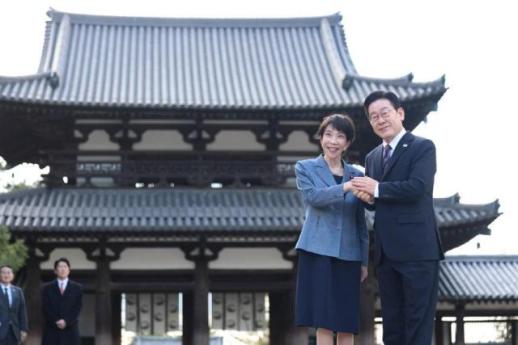 ASIA INSIGHT: Lee to meet Japanese PM in Andong where history meets diplomacy SEOUL, May 14 (AJP) - Diplomacy, at its best, has a sense of place. When Japanese Prime Minister Sanae Takaichi arrives in Andong, North Gyeongsang Province next week for a summit with President Lee Jae Myung, it will be more than just another date on the diplomatic calendar. It will be one of those rare moments where history, culture, and politics come together in a way that goes beyond routine diplomatic ritual. Takaichi's upcoming visit to the southern historic city of Andong, which is also Lee's hometown, would be a reciprocal gesture after Lee visited Takaichi’s hometown of Nara in Japan earlier this year. That kind of symmetry matters in diplomacy. It signals not just courtesy but mutual respect, a reminder that good neighborly relations are built as much on gestures as on treaties. The two leaders first met last fall on the sidelines of the Asia-Pacific Economic Cooperation (APEC) summit in Gyeongju, where they committed to shuttle diplomacy between the neighboring countries. Lee then traveled to Nara in January, and during the meeting, proposed that the next summit be held in Andong. Known as the spiritual and cultural capital of South Korea, Andong breathes history as home to Hahoe Village, one of the country’s most remarkable living repositories of Joseon-era heritage, as well as Byeongsan Seowon, a Confucian academy designated a UNESCO World Heritage Site. In 1999, Queen Elizabeth II visited Hahoe Village, where she was honored with a birthday feast, watched a traditional mask dance performance, and drew global attention to the provincial town that, at the time, many outsiders had never heard of. The effect was electric. Tourist arrivals to the village surged past one million that year, and the ripple effects lasted for two decades. That is the power of a single high-profile visit to the right place. Since then, however, visitor numbers have fallen sharply to around 500,000, hit by the coronavirus pandemic and shifting tourism trends. Andong, for all its magnificence, has struggled to recapture that global spotlight. This summit could change that. Lee and Takaichi are expected to discuss various topics including bilateral cooperation, particularly in sectors such as energy and critical mineral supply chains, amid the prolonged conflict in the Middle East. But the setting will do its own quiet work. Foreign leaders do not often venture 190 kilometers away from Seoul into inland areas. When they do, the world takes notice - and so do travel editors, tourism boards, and curious travelers around the world. A business forum is also being planned in Andong to coincide with the summit, suggesting that both countries understand this is about more than a mere photo-op. It would also be a boost for a city that deserves a closer look as part of balanced regional development. The shuttle diplomacy pattern between the two neighboring countries - Gyeongju, Nara, now Andong - is noteworthy. These are not capital cities. They are places rich in history, where layers of heritage give meetings a weight and texture that no glass-and-steel conference center ever could. Nara, with its ancient temples and roaming deer, and Andong, with its Confucian academies and traditional mask dances, share more in common than their leaders perhaps realize. For Andong, the opportunity is enormous but only if it is seized. The Queen's visit about three decades ago did not promote itself. It took deliberate effort to turn that royal visit into a tourism boom. The same formula could work again here. Some cities wait for history to find them, and Andong is ready when it does. 2026-05-14 16:00:06
 -
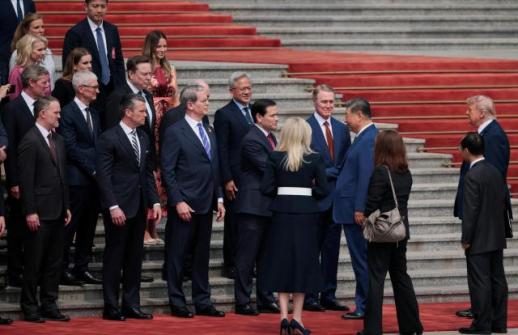 Xi Jinping Tells U.S. Business Leaders China Will Further Open Its Market Chinese President Xi Jinping expressed his commitment to further opening China's market during a meeting with prominent U.S. business leaders accompanying President Donald Trump on May 14, according to state-run People's Daily. During a summit at the Great Hall of the People, Trump introduced each of the American business leaders present, stating, "I have brought with me outstanding representatives of the U.S. business community. They all respect and value China, and I encourage them to expand cooperation with China." The U.S. business leaders emphasized their strong interest in the Chinese market and expressed a desire to deepen their operations in China and enhance cooperation. In response, Xi noted, "U.S. companies are currently deeply involved in China's reform and opening up, and both sides benefit from this engagement. China's opening will only expand further." He added, "China welcomes the U.S. to strengthen mutually beneficial cooperation, and I believe U.S. companies will have broader development prospects in China." The U.S. business leaders who attended the summit reportedly left with a sense of satisfaction. According to The Wall Street Journal, Jensen Huang, CEO of NVIDIA, remarked to reporters as he exited the Great Hall, "President Xi and President Trump were fantastic." Elon Musk, CEO of Tesla, also responded positively when asked about the summit's outcomes, stating, "There were many good things." Trump's delegation included nearly 20 key American business leaders, including Jensen Huang, Elon Musk, and Tim Cook, CEO of Apple.* This article has been translated by AI. 2026-05-14 15:59:44
 -
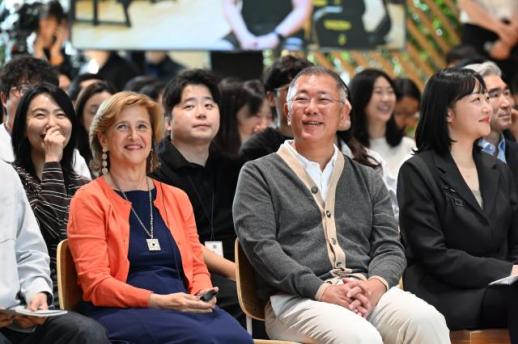 Hyundai's Chung Eui-sun: Labor Conflicts Must Consider National and Corporate Interests As labor unions across various industries, including semiconductors, shipbuilding, biotechnology, and automotive, demand a portion of operating profits as performance bonuses, Chung Eui-sun, Chairman of Hyundai Motor Group, stated that labor disputes should be evaluated considering multiple factors such as national development, shareholders, and the company's growth direction. Speaking to reporters before a renovation event at Hyundai's Yangjae headquarters on May 14, Chung remarked, "Labor and management have had a long-standing relationship. Despite ups and downs, I believe that choosing the right path is essential for the company's efficient growth. We must consider various elements, including shareholder and national development, in our decisions." The Hyundai labor union is demanding that 30% of last year's net profit be distributed as performance bonuses during this year's wage negotiations. They are also calling for a transition to a full monthly salary system instead of an hourly wage to accommodate reduced working hours due to robot implementation, as well as retirement age extensions and a 4.5-day workweek. Similarly, the Kia labor union is advocating for a 30% performance bonus, a 100 million won childbirth incentive, and retirement age extensions. Hyundai Mobis is seeking compensation proposals similar to Hyundai's, along with job security amid controversies surrounding the sale of its ramp division. In this context, demands for primary negotiations from newly established union sub-organizations are also increasing. Chung noted, "Our country has not experienced capitalism for long since the Korean War, so we are currently going through various challenges. I believe we are in a transitional period, and if we navigate this wisely, it could present opportunities for us to lead globally." Regarding robot development, Chung stated, "Hyundai has primarily focused on automobiles and has not ventured into robotics, so we are progressing while learning from our mistakes. Since software is crucial for robots, we are working to balance hardware, and it is essential that the emotional and cultural aspects of our employees are well integrated, which we are paying close attention to." He added, "It is our role as a company to create an environment where talented individuals from engineering and science fields can join and express their ideas. We aim to minimize trial and error and quickly overcome errors to deliver better products swiftly." Chung also expressed concerns about the prolonged conflict in the Middle East. Hyundai began construction of its Saudi Arabian production facility (HMMME) within the King Abdullah Economic City (KAEC) automotive industrial complex last year, aiming for operational readiness in the fourth quarter. Saudi Arabia, which accounts for 35% of total automotive sales in the Middle East, saw Hyundai closely pursue the local leader, Toyota Group, with 140,000 units sold last year. Chung remarked, "As the Iran conflict prolongs, the completion of our Saudi factory may be delayed. While we are worried about a potential decline in Middle Eastern sales, we will prepare thoroughly to ensure we can sell well once the war ends." He emphasized the importance of developing new technologies and improving corporate structure during this highly competitive global automotive market. "It is crucial for Hyundai to excel in developing new technologies and enhancing our capabilities. We will learn from any company that has something to teach us and strive to create products that provide greater customer satisfaction, ensuring we have confidence in the technologies we develop and improving their quality," he stated. Chung reiterated that safety would remain the top priority in the competition for autonomous driving technology. He acknowledged that companies like Tesla and Waymo are advancing rapidly in this area, stating, "Hyundai will also deploy 200 vehicles in Gwangju as a preliminary step. While we can address technological shortcomings, the most important factor is safety. We will focus on customer safety in our development, even if it means being a bit slower." * This article has been translated by AI. 2026-05-14 15:57:48
 -
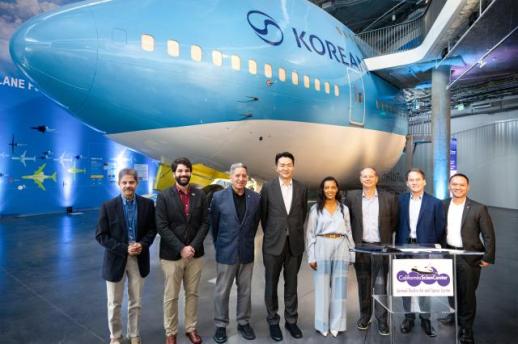 Korean Air and Asiana Airlines Begin Merger Process Amid Stock Surge Shares of Korean Air and Asiana Airlines rose following news that the two airlines have initiated their merger process. As of 2:26 PM on May 14, Asiana Airlines was trading at 7,730 won, up 14.86% (1,000 won) from the previous trading day. Hanjin KAL rose 4.28% to 117,000 won, while Korean Air increased by 3.30% to 26,600 won. On May 13, both Korean Air and Asiana Airlines held regular board meetings and approved the merger agreement. The two companies have set December 17 as the launch date for the merged Korean Air. The merger ratio has been determined at 1 to 0.2736432, which is expected to increase Korean Air's capital by approximately 101.7 billion won. The signing of the merger agreement comes five years and six months after the new stock subscription agreement between Korean Air and Asiana Airlines on November 17, 2020. Following approval from Asiana Airlines' shareholders, the merger is scheduled for December 16, with new shares expected to be listed on January 4, 2027. Jeong Yeon-seung, a researcher at NH Investment & Securities, stated, "Post-merger, the integration of overlapping infrastructures such as aircraft maintenance, ground operations, in-flight meals, and overseas sales networks will be possible. This is expected to lead to significant fixed cost reductions and economies of scale." He added, "Expectations for synergies will gradually increase starting in the fourth quarter, when some operational effects of the merger will be reflected. The merged entity will establish itself as the dominant number one player in the South Korean aviation market." However, Jeong noted that the number of new shares issued during the acquisition of Asiana Airlines by Korean Air will only account for 5.5% of the total shares, which is not expected to significantly dilute shareholder value.* This article has been translated by AI. 2026-05-14 15:55:46
 -
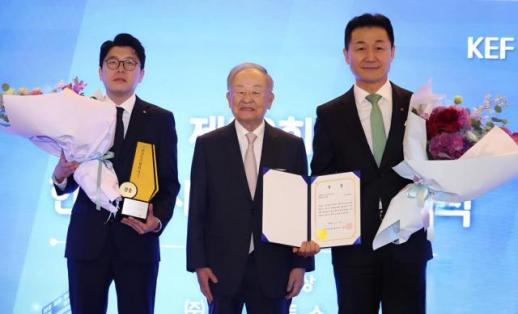 LX Pantos Wins Grand Prize at Korean Labor-Management Cooperation Awards LX Pantos has been awarded the Grand Prize in the large enterprise category at the Korean Labor-Management Cooperation Awards for its achievements in fostering a cooperative labor-management culture.The company announced on May 14 that it received the prestigious award during the 38th Korean Labor-Management Cooperation Awards ceremony held at the Four Seasons Hotel in Jongno, Seoul.Key figures in attendance included Minister of Employment and Labor Kim Young-hoon, Chairman of the Economic, Social and Labor Council Kim Ji-hyung, Chairman of the Korea Employers Federation Son Kyung-sik, and Chairman of the Korean Confederation of Trade Unions Kim Dong-myung. LX Pantos was represented by CEO Lee Yong-ho, worker representative Park Cha-jun, and Chief Human Resources Officer Kim Sung-wook.The Korean Labor-Management Cooperation Awards, organized by the Korea Employers Federation, recognize companies that contribute to the national economy by establishing a desirable labor-management culture through mutual cooperation. The evaluation criteria include trust-building between labor and management, fostering a culture of coexistence, and organizational stability.LX Pantos was particularly praised for maintaining stable labor-management relations without disputes or strikes for nearly 50 years since its founding in 1977. Despite significant external changes in the logistics industry, such as shifts in the global supply chain and fluctuations in cargo volume, the company has sustained a cooperative organizational culture.The company has also received positive recognition for operating various communication channels, including labor-management councils, junior boards, and industrial safety and health committees, which systematically gather employee feedback. This proactive approach to building a labor-management culture focused on prevention rather than merely resolving conflicts after they arise was highlighted.As the importance of managing labor-management conflict risks grows in the current business environment, LX Pantos has worked to strengthen internal communication through regular town hall meetings and management forums. The company is also focused on fostering bonds among employees through family invitation events and expanding organizational culture programs.In terms of ESG (Environmental, Social, and Governance) management, LX Pantos continues its efforts to build a sustainable organizational culture. The company is implementing maternal protection policies, expanding employment for people with disabilities, and engaging in social contribution activities, demonstrating its commitment to corporate social responsibility.In a rapidly changing business environment marked by global economic slowdowns and supply chain uncertainties, stable labor-management relations are increasingly recognized as a key factor in corporate competitiveness. This is especially true for comprehensive logistics companies with a high proportion of global clients, where organizational stability and operational efficiency directly impact business competitiveness.Lee Yong-ho, CEO of LX Pantos, stated, "We are deeply honored to have our employees' efforts in building a cooperative labor-management culture recognized through this award. We will continue to develop a healthy organizational culture based on mutual trust and communication, and achieve sustainable growth."* This article has been translated by AI. 2026-05-14 15:53:01
 -
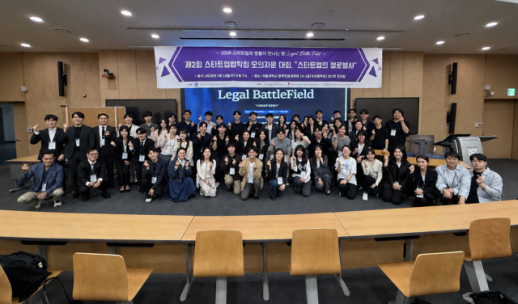 Seum Hosts Startup Investment Negotiation Competition for Law Students Seum, a law firm specializing in startups, hosted a mock consultation competition for law students to experience practical startup investment negotiations. This initiative comes as the demand for legal advice in the growing AI startup sector increases, sparking interest among aspiring legal professionals in the startup legal field. On May 13, Seum announced it conducted the "2026 Night Where Startups Meet Law - Legal Battle Field" for students from Seoul National University’s Startup Law Society. The event took place at the Woochan Law Building at Seoul National University, attracting over 100 participants, including students from other law schools. The competition was structured around a hypothetical AI startup, with students engaging in negotiations at various stages of investment acquisition. They assumed the role of legal advisors for the startup, negotiating with different types of investors, including angel investors, venture capitalists, private equity firms, and strategic investors from large corporations. Practicing lawyers took on the role of investors. The competition comprised four rounds, covering the startup growth process from the Seed stage to Pre-Series A, Series A, and Pre-IPO. Lawyers from Seum served as mentors for about a month, guiding student teams in contract structuring and negotiation strategies. Attorney Moon Han-kyu, who oversaw the event, noted, "Students found it particularly challenging to identify 'compromise points' during the actual negotiation process." He emphasized that beyond constructing legal arguments, practical skills in reaching realistic agreements between startups and investors were crucial. Recent changes in the startup market were also reflected in the event's theme. Seum explained, "There has been a noticeable increase in legal inquiries related to AI during the startup consultation process." Consequently, this year's event was centered around investment negotiations for AI startups. Interest among law students has reportedly increased compared to previous years. Attorney Moon remarked, "Attendance has grown compared to last year, and discussions with students reveal a heightened interest in the startup legal field." The event featured Jung Ho-seok, the representative attorney of Seum, as the head judge, with support from the Startup Division of the Korean Corporate Counsel Association (KICA) and the Young Entrepreneurs Network Prism Mentorship Club.* This article has been translated by AI. 2026-05-14 15:52:05
 -
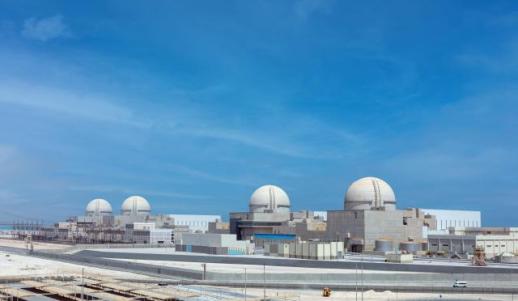 South Korea Streamlines Nuclear Power Export Strategy The South Korean government has decided to unify its nuclear power export efforts, which have been divided between Korea Electric Power Corporation (KEPCO) and Korea Hydro & Nuclear Power (KHNP). A government-affiliated committee will oversee the projects, while KEPCO and KHNP will collaborate on implementation. The formal integration of export agencies will be determined through legislative discussions. On May 14, the Ministry of Trade, Industry and Energy held the first nuclear export strategy council meeting at the Korea Trade Insurance Corporation, where it announced a plan for "efficiency in the nuclear export system." The ministry presented the export efficiency plan in two parts: immediate measures and plans to be pursued within the year. As part of the immediate measures, a public-private joint "Export Planning Committee" will be established under the nuclear export strategy council. The committee, chaired by the ministry's nuclear strategy planning director, will lead negotiations, planning, and coordination for nuclear exports while enhancing reviews and consultations on economic viability and risks. This move comes as most nuclear export contracts have been conducted through direct negotiations. A ministry official stated, "Since 2010, there have been over 20 nuclear exports globally, and with the exception of the Czech Republic, most have been conducted through direct negotiations between governments." The official emphasized the importance of government involvement, noting that these projects are not merely issues between public enterprises but involve government-to-government agreements and national projects. Countries where KEPCO and KHNP previously operated separately will now be managed collaboratively. While both companies will jointly undertake overseas nuclear project development and main contracts, KEPCO will handle external negotiations and equity investments due to its financial strength and recognition. KHNP will lead the construction and operation sectors. This restructuring aims to resolve conflicts between KEPCO and KHNP, which divided nuclear export functions in 2016. KEPCO was assigned to countries that did not require changes to the design of Korean nuclear reactors, while KHNP took on countries needing design modifications. For instance, KEPCO managed the Barakah Nuclear Power Plant in the UAE, while KHNP was responsible for the Dukovany Nuclear Power Plant in the Czech Republic. However, disputes arose between the two companies regarding additional construction costs for the Barakah plant. The Board of Audit and Inspection recently pointed out that inefficiencies in bidding and negotiations were caused by insufficient cooperation in sharing key information, negotiation experience, and support for personnel and technical information. It also noted that a lack of consistency in external negotiations and responses has undermined national credibility. Currently, KHNP will take the lead in ongoing or visible projects in the Czech Republic and the Philippines. KHNP is also responsible for the export of innovative small modular reactors (i-SMR), which it is currently developing. Additionally, the ministry plans to advance the "Nuclear Export Promotion Act" within the year. This proposed legislation will include provisions for the ministry's oversight of public institutions involved in overseas nuclear projects, the establishment of a comprehensive nuclear export agency, and legal grounds for export support measures. During the legislative discussions, the establishment of a comprehensive nuclear export agency will also be considered. The ministry intends to explore the possibility of a unified nuclear export agency, in addition to KEPCO and KHNP. Addressing concerns that the government may interfere in the management of public institutions, a ministry official clarified, "Rather than participating in management, we see it as managing specific projects or economic risks. It is a process where both the public and private sectors seek optimal negotiation and competitive strategies for projects involving counterparts." On the same day, KEPCO President Kim Dong-cheol and KHNP President Kim Hoe-cheon signed a "Strategic Partnership Agreement for Nuclear Exports," agreeing to strengthen cooperation at each stage of nuclear export projects and enhance information and personnel exchanges. They also agreed to modify contracts to change the arbitration of the ongoing UAE nuclear project from the London International Arbitration Court to the Korean Commercial Arbitration Board. Minister of Trade, Industry and Energy Kim Jeong-kwan stated, "To effectively respond to current nuclear export issues in the U.S., Czech Republic, and Vietnam, we will refine the K-nuclear export system as a unified team." He emphasized that ultimately, the government support will be strengthened through legislation. He added, "To seize opportunities in the global nuclear renaissance, we will bolster the competitiveness of the existing Korean nuclear industry, consolidate the capabilities of domestic institutions, and enhance our economic and risk management systems."* This article has been translated by AI. 2026-05-14 15:49:01
 -
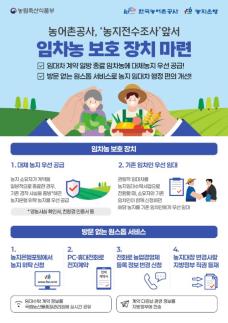 Rural Development Administration Implements Protections for Tenant Farmers Ahead of Nationwide Land Survey The Rural Development Administration announced on May 14 that it has established measures to minimize potential harm to tenant farmers ahead of the government's nationwide land survey. The agency will prioritize the supply of alternative farmland to tenant farmers whose lease agreements have been unilaterally terminated. If a landowner ends a contract without mutual agreement, tenant farmers can receive priority access to land managed by the Land Bank, provided they can prove their previous cultivation. Protections are also in place for those transitioning from traditional lease agreements to the land leasing trust program. Tenant farmers who have been farming without a contract through the agency can apply for the land leasing trust program with the landowner, ensuring that the land is leased to the existing tenant first. With an increase in landowners and tenants expected to participate in the land leasing trust program ahead of the survey, the agency is enhancing its digital services. Landowners can now apply for land leasing through the Land Bank portal without visiting their local office. Additionally, lease agreements can be executed electronically via computers or mobile devices, allowing for remote contract signing. Lee Jeong-moon, Director of Land Management at the Rural Development Administration, stated, "We will continue to actively pursue improvements to the system to protect tenant farmers. We aim to establish the land leasing trust program as a convenient system for both landowners and tenants, creating a foundation for efficient land use and a stable leasing environment." Meanwhile, the Ministry of Agriculture, Food and Rural Affairs will conduct a nationwide land survey over the next two years to eliminate land speculation and assess actual land use. A special maintenance period for normalizing land leases will also be in effect from May 18 to July 31.* This article has been translated by AI. 2026-05-14 15:48:00