
Journalist

Avidan Kent
-
 South Korea Chicken Market Shifts to bhc Lead as BBQ, Kyochon Battle for No. 2 South Korea’s chicken franchise market is increasingly taking on a “one leader, two challengers” structure centered on bhc. With bhc pulling further ahead on sales, BBQ and Kyochon Chicken are locked in a close fight for second place. As of April 23, industry officials said Dining Brands Group, which operates bhc, posted 614.7 billion won in standalone sales last year, becoming the first in the sector to surpass 600 billion won in annual revenue. Sales rose 19.9% from 512.7 billion won a year earlier, while operating profit increased 23% to 164.5 billion won. The company’s momentum has been driven by successful new menu items. “Quasak King,” launched last year, topped 7 million in cumulative sales in about a year, matching the popularity of its signature “Bburinkle.” “Sweet Chili King” also exceeded 1 million units within three months of launch. bhc also benefited from maintaining a stable supply system for fresh and cut chicken despite external supply uncertainty, supporting franchisee profitability. BBQ, which had long competed with bhc for the top spot, saw growth slow and the gap widen again. In 2024, BBQ narrowed the sales gap to 6.6 billion won and aimed to reclaim No. 1, but last year its sales rose just 4.3% to 527.8 billion won. Operating profit fell 19.4% to 69.0 billion won. The sales gap with bhc expanded to about 86.9 billion won. BBQ said the results reflected upfront spending tied to its 30th anniversary marketing, overseas expansion and logistics infrastructure. BBQ now operates about 700 stores in 57 countries, including the United States, and is focusing on strengthening its competitiveness abroad. Kyochon Chicken, in third place, rebounded and closed in on BBQ. Kyochon F&B posted 517.4 billion won in sales last year, up 7.6% from a year earlier, returning to the 500 billion won range for the first time in three years. Operating profit jumped 126.2% to 34.9 billion won. The sales gap with second-place BBQ narrowed to about 10.4 billion won from 22.4 billion won in 2024. Kyochon attributed the improvement to new products such as Mala Red, growth in subscribers to its app, and stronger demand tied to rising interest in professional sports. Industry watchers said the key storyline this year is likely to be the battle between BBQ and Kyochon for No. 2, rather than a fight for the top spot. Each company is refining its strategy. bhc is maintaining a plan to launch two new products a year, introduced “Soy Garlic King” in March, and is focusing on efficiency by deploying its automated frying robot, “T-bot.” BBQ is emphasizing “execution and results,” pursuing AI-centered management innovation and strengthening its global strategy with the United States, Europe and China as key hubs. Kyochon plans to bolster growth by developing new menu items and expanding new businesses such as sauces and craft beer. An industry official said, “With uncertainties growing at home and abroad — including rising raw material prices and intensifying competition in the delivery market — marketing and new-product competition is likely to become even fiercer.”* This article has been translated by AI. 2026-04-23 17:28:24
 -
 Bank of Korea to Issue Up to 6.6 Trillion Won in Monetary Stabilization Bonds in May The Bank of Korea said on the 23rd it plans to issue up to 6.6 trillion won ($) in Monetary Stabilization Bonds next month. It will sell 6 trillion won through competitive bidding and 500 billion to 600 billion won through subscription-based sales. Competitive auctions will be held seven times: four auctions for 91-day bills (May 4, 11, 18 and 26) and one each for 1-year (May 13), 2-year (May 6) and 3-year (May 20) maturities. The subscription auction is set for May 27. For early redemptions, the central bank will auction 1 trillion won on May 8 and 2 trillion won on May 19.* This article has been translated by AI. 2026-04-23 17:27:15
 -
 Hyundai E&C, DL E&C tout design and financing in Seoul Apgujeong 5 redevelopment bid Hyundai Engineering & Construction and DL E&C, both bidding for the redevelopment of Apgujeong District 5 in Seoul’s Gangnam district, have unveiled their proposed terms. Hyundai E&C is emphasizing a luxury residential complex featuring AI-based services and panoramic river-view design, while DL E&C is pitching a construction cost of 11.39 million won per 3.3 square meters and what it calls the industry’s lowest interest rate. Hyundai E&C said April 23 it proposed the name “Apgujeong Hyundai Galleria” for the complex. The company said the name combines “Apgujeong Hyundai,” long seen as a symbol of top-tier housing, with “Galleria,” a department store it described as a landmark for upscale lifestyle in the area. Hyundai E&C said it will work with Hyundai Motor Group to apply advanced robotics across the site, including demand-responsive transport, or DRT. It said residents would be able to call an unmanned DRT shuttle from their homes as part of a mobility system linking Apgujeong “like a single city.” The proposal also includes nano-mobility support, porter robots and robo-stations for contactless deliveries, parking and EV-charging robots for a smart parking system, and unmanned firefighting robots. On design, Hyundai E&C said it would go beyond 100% Han River views for all units by offering “Zero Wall” wide panoramic views extending up to 240 degrees, and apply a 3-meter coffered ceiling height to enhance openness. It also proposed upscale amenities, including a large community facility called “Club Apgujeong,” described as 12 pyeong per household, and a “The Circle 420” loop-style community space it said would be the first of its kind in Korea. Hyundai E&C said it plans to work with Hanwha so residents can access services through a dedicated membership, including use of VIP lounges at Galleria’s luxury store, shopping benefits and exclusive programs. A Hyundai E&C official said Apgujeong is an area where preference and expectations for “Apgujeong Hyundai” are high beyond Districts 2 and 3, where the existing complex stands. The official said the company will carry forward District 5’s identity while completing “Apgujeong Hanyang” as a new “Apgujeong Hyundai.” DL E&C proposed the name “ACRO Apgujeong,” applying its high-end ACRO brand, and highlighted what it described as more predictable and stable construction and financing terms. It said it made a firm offer of 11.39 million won per 3.3 square meters, more than 1 million won below the estimated construction cost presented by the association, and offered a “zero burden from price increases” solution aimed at insulating the project from inflation spikes. DL E&C said it proposed a “zero added margin” rate for essential project financing, calling it among the lowest rates in recent redevelopment projects. It also set a construction period of 57 months, four months shorter than Apgujeong District 2, to reduce interest costs on members’ relocation loans and project financing, it said. The company also proposed an unusual loan-to-value ratio of 150% for relocation financing, saying it was a response to tighter lending rules and higher borrowing costs that have made relocation funding harder to secure. On profitability, DL E&C proposed “zero” construction costs for commercial facilities and offered to expand retail space to 5,069 pyeong (about 16,730 square meters) from the association’s original plan. It said that would increase commercial sales revenue by 660 million won per household. It also said it would increase usable area per household by 1,535 pyeong (about 5,065 square meters) to maximize members’ asset value. A DL E&C official said the company included multiple fixed terms to minimize members’ burden and risk, calling them conditions rarely seen in other redevelopment projects. The official said DL E&C also concentrated its product design capabilities to deliver Apgujeong District 5 as a high-end residential complex aiming to be the best in South Korea. Apgujeong District 5, a redevelopment of Apgujeong Hanyang Apartments Phases 1 and 2, is being 추진되고 있다 under Seoul’s fast-track integrated planning program. Once completed, it is set to include 1,397 households across eight buildings, from five basement levels to 68 stories above ground. It is the only Apgujeong redevelopment project being contested through competitive bidding. * This article has been translated by AI. 2026-04-23 17:25:04
 -
 Prime Minister Kim Min-seok Visits Yeosu Petrochemical Complex to Review Naphtha Supply Prime Minister Kim Min-seok visited LG Chem’s plant at the Yeosu National Industrial Complex in South Jeolla Province on the 23rd, toured its naphtha cracking center (NCC) and urged steady production and supply of petrochemical products to help stabilize domestic supply chains. After receiving a briefing from LG Chem officials on global naphtha supply and demand, Kim shared concerns about the crisis facing the petrochemical industry, including instability in naphtha supplies linked to the Middle East, and discussed steps to stabilize supply. An LG Chem official said petrochemical products make up about 70% of everyday items people use, adding that the number of products totals about 50,000. The petrochemical industry said it will actively cooperate with government policy by working to expand naphtha imports and by doing its best to ensure smooth supplies of basic feedstocks such as ethylene and propylene, as well as key products including polyethylene (PE) and polypropylene (PP). Kim also instructed the Ministry of Trade, Industry and Energy to make every effort to stabilize naphtha supply by maintaining a close coordination system with petrochemical companies. The government said it will keep its emergency economic response system in place and respond with full force to minimize industrial damage stemming from developments in the Middle East. * This article has been translated by AI. 2026-04-23 17:24:16
 -
 South Korea’s People Power Party Moves to Seek Unification Minister Jeong Dong-young’s Dismissal South Korea’s People Power Party decided to make it party policy to submit a National Assembly motion recommending the dismissal of Unification Minister Jeong Dong-young over his remarks about a “North Korean Kusong nuclear facility.” The party said the comments could damage trust between South Korea and the United States. The party adopted the plan at a lawmakers’ meeting on the 23rd at the National Assembly. Afterward, party leader Jang Dong-hyeok convened a closed-door meeting with People Power Party lawmakers who chair the Assembly’s foreign affairs and unification, defense and intelligence committees. Speaking to reporters after the meeting, Jang said Jeong was committing a “serious act of self-harm” to diplomacy and security by leaking information. “I think this is a matter that warrants impeachment, but we agreed first to submit a dismissal motion as party policy,” he said. Floor leader Song Eon-seok, who had called a day earlier for Jeong to be replaced, again urged his dismissal. Intelligence Committee Chairman Shin Seong-beom said a minister’s remarks carry different weight than comments by private institutions or researchers. “Personally, I think Jeong’s repeated remarks about North Korea’s nuclear program may have raised doubts on the U.S. side,” Shin said. Defense Committee Chairman Seong Il-jong said it was a serious problem that trust in the South Korea-U.S. alliance had been shaken. He said the committee held a full meeting that morning, but the Democratic Party did not attend. “It’s very regrettable. We recessed rather than adjourned so they can still come in,” he said. Jeong rejected the party’s criticism as political and harmful to the national interest. Speaking to reporters at Cheondogyo’s Suun Hall in Seoul’s Jongno district, he said those who stirred the issue likely had their own motives. “It may be entertaining to keep amplifying the controversy, but it will harm the national interest,” he said. Jeong said it was not the first time the United States had limited intelligence sharing on North Korea, but the dispute was being portrayed as an “unprecedented situation.” He also said the place name “Kusong” had been mentioned in a U.S. congressional report. “The essence is that the North Korean nuclear issue is serious,” he said, adding that sanctions, pressure and blockade have not worked and that a shift to dialogue and negotiations is needed.* This article has been translated by AI. 2026-04-23 17:19:13
 -
 South Korea Raises Fines Fivefold for Illegal Fishing in EEZ, Allows Forced Removal of Abandoned Ships Foreign vessels caught fishing illegally in South Korea’s exclusive economic zone will face fines up to five times higher under legislation passed by the National Assembly. The government will also be able to forcibly remove long-idled ships left without authorization at port facilities. The Ministry of Oceans and Fisheries said revisions to the Act on the Exercise of Sovereign Rights over Foreign Fishing in the Exclusive Economic Zone, along with amendments to the Port Act and other related bills, cleared the National Assembly’s plenary session on the 23rd. The EEZ fishing sovereignty law revision is aimed at tougher enforcement against illegal fishing by foreign vessels by sharply raising maximum fines. For unlicensed vessels, the cap rises fivefold to 1.5 billion won from 300 million won, a move intended to strip away the financial incentive for illegal operations and strengthen deterrence. The ministry said it is also tightening on-site enforcement. Fisheries management teams and the Korea Coast Guard have formed joint mobile task units to strengthen responses, including seizures. For serious violations such as operating without a license or intruding into territorial waters, authorities are handing vessels over at sea to the Chinese coast guard so they can face penalties in both countries, the ministry said. Oversight of long-term non-operating ships abandoned at port facilities will also be strengthened. Under the revised Port Act, port authorities can order restoration to the original condition, and if an owner fails to comply, the authorities may carry out an administrative enforcement action directly. Revisions to the Act on the Entry and Departure of Ships will apply the same tugboat business registration and related standards to tugboats operating at port facilities outside designated port zones as those working inside port zones. The ministry said the change is expected to close gaps in tugboat oversight and supervision. Also passed were amendments to the Marine Waste and Marine Contaminated Sediment Management Act, clarifying that measures to block marine inflows of waste include waste collection activities, and revisions to the Port Transportation Business Act, specifying that mayors and provincial governors who operate locally managed ports may sign pier operation contracts. Minister of Oceans and Fisheries Hwang Jong-woo said the government will continue enforcement and institutional improvements to eradicate illegal fishing, adding that it will move to update subordinate regulations and ensure smooth implementation of the bills passed in the plenary session.* This article has been translated by AI. 2026-04-23 17:18:19
 -
 South Korea Passes Law to Shift Science and R&D Policy Power to Regions South Korea’s Ministry of Science and ICT said a bill to enact the Act on Promoting Region-Led Science and Technology Innovation passed the National Assembly’s plenary session on the 23rd. The measure is intended to institutionalize a region-centered science and technology policy framework and to decentralize research and development authority and funding to local governments to strengthen regional innovation capacity. Key provisions include building region-led governance and dedicated agencies; promoting block-funding-style, region-directed R&D and wider-area, multi-province projects; developing innovation actors to boost local research capability; and expanding investment and support for regional science and technology. Under the law, mayors and governors of cities and provinces will draw up five-year regional science and technology innovation plans, and the central government will provide administrative and financial support. Major policies will be reviewed through regional science and technology advisory councils under the mayors and governors. The law also creates a basis to designate and establish dedicated agencies by region after consultation with the ministry. The legislation introduces an R&D system aimed at greater local autonomy. The government will designate certain national R&D programs as regional R&D projects, considering their links to regional policy, and will operate them under an evaluation system tailored to that purpose. Cities and provinces will be able to pursue not only their own R&D projects but also wider-area projects in cooperation with neighboring local governments. Support to strengthen regional research capacity will be expanded, including fostering local public research institutes, designating hub research institutions, and establishing a basis to support regional universities and corporate research labs. The government will also promote the revitalization of science and technology clusters such as R&D special zones and cooperation among clusters. The law includes measures to encourage voluntary investment by local governments. Mayors and governors may set and announce regional R&D investment targets based on their fiscal conditions, and the government plans to provide administrative and financial support to local governments with strong performance in meeting targets or delivering results. The bill is scheduled to take effect on Jan. 1, 2027, after Cabinet approval and promulgation. The government said it will support implementation through follow-up steps, including drafting an enforcement decree. Deputy Prime Minister and Science and ICT Minister Bae Kyung-hoon said the law will allow local governments to set the direction of R&D investment with greater autonomy. He said the government will communicate closely with local governments and stakeholders while preparing subordinate regulations and related measures, so regions can foster strategic industries over the long term and drive innovation on their own, he said. * This article has been translated by AI. 2026-04-23 17:14:00
 -
 Lotte Cultureworks Revamps ‘Inside the Play’ With Immersive Show Tied to Yeon Sang-ho’s ‘Gunche’ Lotte Cultureworks is relaunching its immersive, interactive performance brand, INSIDE THE PLAY, starting with a new production created in collaboration with director Yeon Sang-ho's film 'Gunche'. The brand is designed to pull audiences into a story world beyond the screen. Viewers take part directly, interacting with actors in real time and helping complete the narrative, rather than watching from the outside. The project is built around 'Gunche,' which was officially invited to the Midnight Screenings section of the 79th Cannes International Film Festival. The film centers on survivors trapped inside a sealed building during an unidentified outbreak, facing infected people who evolve in unpredictable ways. Thierry Fremaux, the festival's executive director, previously introduced Yeon's 'Gunche' as “a horror zombie genre film set inside a sealed building,” noting that audiences would imagine “various narrative devices and storytelling possibilities” within that setup. Lotte Cultureworks said it aims to expand the film's world into an offline space, blurring the line between cinema and live performance. By translating the story's claustrophobic fear and psychological pressure into an immersive format, the audience becomes a participant inside the incident. Unlike productions that follow a fixed route, this show uses a multi-ending system in which each audience member's choices and movement can affect the outcome as situations change in real time. 'Inside the Play: Gunche' opens May 21 at Lotte Cinema Sindebang. Tickets go on sale at 5 p.m. April 24 through Ticketlink and Naver Booking. “We planned this performance to build a fully immersive show in which the audience leads the narrative,” said Yoon Se-in, head of Lotte Cultureworks' live business division. “'Inside the Play' with the film 'Gunche' will be a chance to deliver thrills audiences have not experienced before.”* This article has been translated by AI. 2026-04-23 17:13:11
 -
 South Korea Passes Bills to Tighten Oversight of High-Risk Sex Offenders, Aid Illegal Lending Victims South Korea’s National Assembly passed revisions aimed at tightening oversight of high-risk sex offenders and strengthening protections for victims of illegal private lending, the Justice Ministry said. According to the ministry on the 23rd, amendments to the law governing electronic monitoring cleared the Assembly’s plenary session that day. The changes expand the scope of cases eligible for one-on-one supervision by a dedicated probation officer for high-risk sexual violence offenders. Previously, such dedicated supervision was allowed only when the victim was under 19 and the offender was deemed at high risk of reoffending. Under the revision, the measure will apply to high-risk sexual violence offenders subject to electronic monitoring regardless of the victim’s age, enabling closer oversight, the ministry said. The ministry said it expects the change to improve prevention by building a system that selects and intensively manages those at highest risk of reoffending. Lawmakers also passed amendments to the Act on Confiscation of Criminal Proceeds from Corruption Crimes. The revision adds illegal private lending offenses to the list of crimes for which illicit profits can be recovered and returned to victims. Current law allows confiscation or collection of criminal proceeds and their return to victims only for certain fraud-related crimes — including criminal organizations, illegal fundraising schemes, pyramid schemes and voice phishing — as well as embezzlement and breach of trust. Under the revision, proceeds from violations of the Money Lending Business Act, including charging interest above the legal limit or profits obtained by illegal private lenders, will also be eligible for return. The revision also creates a legal basis for the state to confiscate or collect criminal proceeds and return them to victims when victims have difficulty seeking repayment on their own, the ministry said, adding it expects the change to make recovery more effective. Justice Minister Jeong Seong-ho said the ministry will "continue to improve the system so that management and supervision of violent crime are strengthened, and recovery of criminal proceeds and victim restitution are carried out effectively."* This article has been translated by AI. 2026-04-23 17:10:31
 -
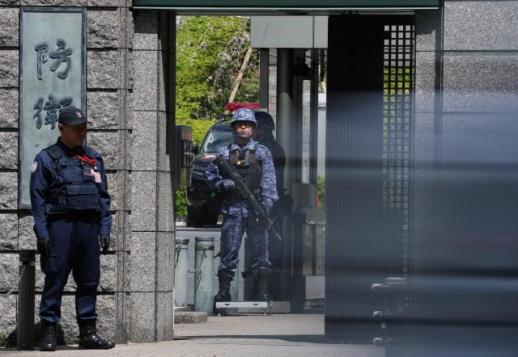 Japan's arms export shift tests Korea's security calculus amid regional buildup SEOUL, April 23 (AJP) - Japan’s decision to allow exports of lethal weapons for the first time since World War II marks a decisive step in Asia’s quiet arms buildup, raising both strategic opportunities and deep-seated concerns for South Korea as regional security dynamics shift. The government of Prime Minister Sanae Takaichi this week revised its “Three Principles on Transfer of Defense Equipment and Technology,” expanding exports beyond non-lethal categories to include fully developed weapons systems. The move builds on Tokyo’s accelerated military expansion, including bringing forward its target to raise defense spending to 2 percent of GDP to fiscal year 2025. Analysts say the policy signals a gradual but unmistakable shift toward a more conventional military posture. “This latest decision on lethal arms exports is a preparatory step toward revising Article 9 of the Constitution and turning the Self-Defense Forces into a de facto national army,” said Hosaka Yuji, a special professor at Korea University. While Japan’s Self-Defense Forces (SDF) have long operated as a functional military, the current debate centers on formalizing that reality — a move critics argue would mark a symbolic departure from postwar pacifism. Recent public opinion suggests growing acceptance. A joint poll by Sankei Shimbun and Fuji News Network found that 59.3 percent of respondents support explicitly recognizing the SDF in the Constitution. From a strategic standpoint, Japan’s expanded role could bolster deterrence across the Indo-Pacific. By supplying maritime patrol aircraft, missiles and naval assets to Southeast Asian and Pacific nations, Tokyo may help counter China’s growing naval presence and secure critical sea lanes. For South Korea, however, the implications are more complex. The country remains heavily dependent on Middle Eastern energy shipments that pass through chokepoints such as the Strait of Hormuz, the Malacca Strait, and the South China Sea — meaning any regional conflict would likely have immediate spillover effects on the Korean Peninsula. “If a war with China were to break out under such conditions, it would be extremely difficult for South Korea to accept being drawn into a conflict that could literally turn the Korean Peninsula into a sea of fire,” Hosaka said. This highlights a central paradox: while Japan’s growing military role may help stabilize sea lanes and strengthen deterrence, it could also shift the front line closer to Korea, increasing the risk of entanglement in a broader conflict. Historical memory adds another layer of sensitivity. For many South Koreans, Japan’s rearmament evokes the legacy of its 1910–45 colonial rule and wartime aggression, reinforcing persistent distrust of a “war-capable Japan.” Prime Minister Takaichi has sought to reassure neighbors, emphasizing that Japan will continue to uphold its identity as a peace-oriented nation even as it adapts to a harsher security environment. Experts note that Japan’s actual posture remains cautious, particularly regarding high-risk overseas deployments. “Japan intends to remain cautious. There are legal constraints, and as long as active combat continues, it is extremely difficult to imagine the SDF being deployed before hostilities have ended,” said Ryo Sahashi, a professor at the University of Tokyo. Domestic opinion in South Korea reflects similar ambivalence. While 56.4 percent of respondents expressed a favorable view of Japan in a late-2025 survey, perceptions diverge sharply in the security domain, with a significant share still viewing Japan as a potential threat. At the same time, the policy shift is reshaping trilateral cooperation among South Korea, the United States and Japan. Experts say deeper coordination in missile defense, anti-submarine warfare and advanced weapons production could enhance interoperability and strengthen deterrence against North Korea and China. Yet the strategic balance remains delicate. How far Japan moves toward becoming a “war-capable” nation — and how closely South Korea aligns with an expanded trilateral security framework — will determine whether this shift ultimately strengthens regional stability or adds a new layer of strategic risk for Seoul. 2026-04-23 17:10:10