
Journalist

Avidan Kent
-
 LG Display Q1 Operating Profit Jumps 338%, Extends Profit Streak to Three Quarters LG Display said Thursday it posted first-quarter consolidated revenue of 5.534 trillion won and operating profit of 146.7 billion won. Operating profit surged 338% from a year earlier on cost-cutting technologies and improved operating efficiency, marking a third straight profitable quarter. Earnings before interest, taxes, depreciation and amortization (EBITDA) came to 1.141 trillion won, with a margin of 20.6%. Despite the seasonal off-peak period, organic light-emitting diode (OLED) products accounted for 60% of revenue, up 5 percentage points from a year earlier. As a result, the average selling price per area rose 55% year over year. By revenue, the sales mix was 16% TV panels, 37% IT panels such as monitors and laptops, 37% mobile panels and other products, and 10% automotive panels. The company said it is strengthening competitiveness around OLED while accelerating cost innovation and operational efficiency to build a sustainable profit structure. In its small-panel business, LG Display said it plans to use its production infrastructure more efficiently, supported by technology leadership and stable supply capabilities, while continuing preparations for the future. For large panels, it said it will bolster its premium lineup based on what it called world-leading and first-to-market technologies, while expanding products with improved price competitiveness. It added that in monitors, where the shift to OLED is accelerating, it will broaden its gaming lineup using proprietary technologies to maximize opportunities and win customers. Kim Seong-hyeon LG Display CFO said the company is strengthening competitiveness in high-spec products where it has an advantage, raising technological barriers as well. “Through companywide efforts, we will reinforce technological differentiation to secure financial soundness and strive to deliver sustainable results that meet the expectations of the market and customers,” he said.* This article has been translated by AI. 2026-04-23 13:36:16
 -
 Lee Jae-myung to Attend Korea-Vietnam Business Forum in Hanoi With Top CEOs President Lee Jae-myung on April 23 (local time) is set to attend the Korea-Vietnam Business Forum in Hanoi to discuss ways to expand economic cooperation between the two countries. The event, held on the occasion of Lee’s state visit to Vietnam, is expected to draw about 500 participants from both countries, including government officials, public institutions and business leaders. South Korea’s economic delegation includes 109 companies. In a keynote address, Lee is expected to underscore the close Korea-Vietnam partnership built on trade and investment. He is also expected to mention cooperation in responding to recent global uncertainty linked to the war in the Middle East. From South Korea, about 250 business leaders are to attend, including Samsung Electronics Chairman Lee Jae-yong; SK Group Chairman Chey Tae-won, who also heads the Korea Chamber of Commerce and Industry; LG Chairman Koo Kwang-mo; Lotte Group Chairman Shin Dong-bin; POSCO Holdings Chairman Chang In-hwa; HD Hyundai Vice Chairman Chung Ki-sun; GS Chairman Huh Tae-soo; CJ Chairman Sohn Kyung-shik, who also heads the Korea Employers Federation; Hyosung Chairman Cho Hyun-joon; and Doosan Enerbility Chairman Park Jie-won. Vietnamese business leaders listed as attending include PVN Chairman Le Ngoc Son; EVN Chairman Dang Hoang An; Sun Group Chairman Dang Minh Truong; THACO Group Chairman Tran Ba Duong; and FPT Group Chairman Truong Gia Binh. At the forum, Samsung Electronics, SK Innovation, the Korea Institute of Science and Technology, and the Korea Institute for International Economic Policy are to present on the parts industry, building ecosystems for the power and AI industries, and training talent for science, technology and advanced industries. More than 70 memorandums of understanding are expected to be signed between companies from the two countries across sectors including advanced technology, consumer goods, infrastructure, energy and finance. Earlier on April 23, Lee met with Prime Minister Le Minh Hung, Vietnam’s No. 2 official, to discuss ways to strengthen bilateral cooperation. A day earlier, Lee met with To Lam, Vietnam’s top official and Communist Party general secretary and state president, and discussed cooperation in supply chains and infrastructure, including energy such as nuclear power plants. Lee is also scheduled to meet with Vietnamese National Assembly Chairman Tran Thanh Man. Separately, a poll showed Lee’s job approval held at 69% for a third consecutive week. In the National Barometer Survey released April 23, 69% of respondents said Lee was doing a good job, while 21% gave a negative assessment, down 1 percentage point from the previous survey. The poll was conducted April 20-22 among 1,005 adults ages 18 and older by Embrain Public, Kstat Research, Korea Research and Hankook Research. The survey was conducted through telephone interviews using a 100% mobile phone virtual number sample. The margin of error was plus or minus 3.1 percentage points at the 95% confidence level, and the response rate was 17.7%. More details are available on the website of the National Election Survey Deliberation Commission.* This article has been translated by AI. 2026-04-23 13:34:09
 -
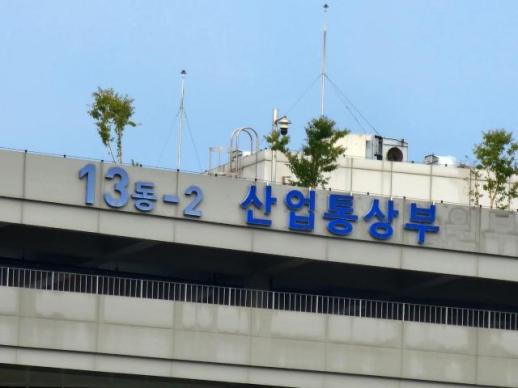 South Korea, Oman LNG Discuss LNG and Helium Cooperation as Mideast Risks Rise The South Korean government is moving to strengthen energy cooperation with Oman as geopolitical risks in the Middle East grow. The Ministry of Trade, Industry and Energy said Vice Minister Moon Shin-hak met April 23 with a delegation from Oman LNG at the Westin Josun Seoul hotel in central Seoul to discuss ways to expand cooperation. Hamed Al Namani, CEO of Oman LNG, attended. The meeting followed a visit to Oman on April 9 by a strategic economic cooperation delegation led by Kang Hoon-sik, the president’s chief of staff, serving as a special envoy. During that trip, the delegation met with Oman’s Deputy Prime Minister for Economic Affairs Theyazin bin Haitham Al Said, Energy and Minerals Minister Salim Al Aufi and others to discuss cooperation on energy resources such as crude oil and naphtha in response to deepening geopolitical risks in the region. Oman LNG also agreed at the time to hold additional talks with the ministry in April to strengthen cooperation in the gas sector. At the Seoul meeting, the two sides focused on potential liquefied natural gas cooperation, citing Oman’s geographic advantage outside the Strait of Hormuz and its relative insulation from regional geopolitical risks. They also held in-depth talks on possible cooperation tied to Oman’s new helium project, aimed at ensuring stable supplies of helium gas, a key resource for South Korea’s semiconductor industry. Moon said that as uncertainty in global energy supply chains increases, Oman’s strategic location outside the Strait of Hormuz offers a key opportunity for South Korea to diversify its energy supply lines. He said the government plans to review its energy supply chain in the wake of the current Middle East war and maintain a policy of diversifying suppliers to reduce geopolitical risks. * This article has been translated by AI. 2026-04-23 13:33:05
 -
 Hyundai Glovis Q1 2026 Operating Profit Rises 3.9% to 521.5 Billion Won Hyundai Glovis said Wednesday that its first-quarter 2026 operating profit rose 3.9% from a year earlier to 521.5 billion won on a consolidated basis. Revenue increased 8.2% to 7.8127 trillion won, and the operating margin was 6.7%. By business, the logistics segment posted revenue of 2.4902 trillion won and operating profit of 164.0 billion won. Revenue rose 1.3% as domestic shipments of electric vehicles and large models increased, but operating profit fell 17.3% as weaker container freight rates weighed on global logistics growth. In shipping, revenue climbed 15.5% to 1.4522 trillion won and operating profit jumped 40.5% to 192.6 billion won. The company cited an increase in high-freight, non-affiliate volumes, including from Chinese local automakers, and continued cost improvements from more efficient fleet operations. The company said concerns tied to Middle East risks, including potential volume declines and one-off costs from a strait closure, were tempered by growth in non-affiliate volumes such as Chinese vehicle export shipments. Hyundai Glovis said it expects worries over car-carrier volumes from Middle East risks to remain limited given the trend in China-led export growth. In distribution, revenue rose 10.3% to 3.8703 trillion won, while operating profit slipped 1.0% to 164.9 billion won. The company attributed growth to expanded supply volumes of completely knocked down, or CKD, kits to technical-support assembly plants in emerging markets. A Hyundai Glovis official said uncertainty in the global trade environment persisted in the first quarter, but stable operations helped the company post results that exceeded market concerns across all business segments.* This article has been translated by AI. 2026-04-23 13:15:44
 -
 Samsung SDS Q1 Operating Profit Falls 70.8% on One-Time Severance Charge Samsung SDS said its first-quarter operating profit fell sharply from a year earlier after it booked a one-time severance-related expense. In a regulatory filing on the 23rd, the company reported preliminary consolidated operating profit of 78.3 billion won, down 70.8% year over year. Revenue slipped 3.9% to 3.3529 trillion won. Samsung SDS said the results reflected a one-off 112 billion won retirement benefit expense tied to a change in severance calculation standards. By business, IT services revenue edged up to 1.6105 trillion won. Within that, cloud revenue rose 5.8% to 690.9 billion won, making it the largest share of IT services revenue, ahead of ITO (IT outsourcing). In cloud, the CSP business based on the Samsung Cloud Platform (SCP) grew 12% from a year earlier, supported by rising demand for public-sector AX projects, increased GPU-as-a-service (GPUaaS) use and expanded cloud network services. The managed services (MSP) business increased 4% on higher sales in finance and the public sector and stronger global partnerships. Logistics revenue fell 7.8% to 1.7424 trillion won. Sales from its digital logistics platform, Cello Square, rose more than 30%, but overall cargo volumes declined and freight rates fell, the company said. Samsung SDS forecast a recovery starting in the second quarter, citing growing public-sector demand for GPUaaS, expanding sales in financial services and wider adoption of intelligent AI services across government, which it expects to support cloud growth. Over the mid-to-long term, the company said it will accelerate a shift to an AI-centered business structure under an “AI full-stack” strategy spanning AI infrastructure, AX and AI services, and AI platforms and solutions. It plans to invest a total of 10 trillion won through 2031. Specifically, it will invest 5 trillion won in AI infrastructure to expand new facilities including the Gumi AI data center and the National AI Computing Center, and 1 trillion won to strengthen competitiveness in AX and AI services and platforms. The remaining 4 trillion won will be used for strategic mergers and acquisitions to secure new growth engines and expand globally. Separately, Samsung SDS said its data center build-and-operate (DBO) business is gaining momentum after winning a conceptual design contract for a data center project led by a major domestic asset manager.* This article has been translated by AI. 2026-04-23 13:10:07
 -
 Lotte Fine Chemical Says It Commercialized Ammonia Marine Fuel in World First Lotte Fine Chemical said April 23 it has become the first company to commercialize ammonia marine fuel, marking the first commercial case of a supply chain using hydrogen and ammonia produced with renewable energy as ship fuel. The company said it bunkered green ammonia that day into the world’s first ammonia-powered vessel built by HD Hyundai Heavy Industries. While demonstrations have been conducted for research, it said this was the first commercial supply. To support the project, the Ministry of Oceans and Fisheries and its Ulsan Regional Office, the Ulsan Port Authority and the Korean Register helped establish and back related systems, including an eco-friendly marine fuel supply demonstration program, registration of ammonia marine fuel suppliers and guidelines for approving self-safety management plans. Lotte Fine Chemical said it completed South Korea’s first registration as an ammonia marine fuel supplier last year, leveraging what it described as Asia’s largest ammonia terminal infrastructure near Ulsan Port. It said it then imported green ammonia made with 100% renewable energy — wind and solar — through what it called the world’s first cross-border trade of such fuel in March, and used that green ammonia for bunkering into the ammonia-powered ship. The company said it is working with global companies and institutions in multiple regions on cooperation and demonstrations to build a global clean ammonia supply chain. It said it plans to build a multi-channel sales platform and grow into “Asia’s No. 1 clean ammonia hub.” Ammonia (NH3), a carbon-free fuel, can be stored in low-temperature tanks at minus 33 degrees Celsius when liquefied and already has a global distribution network, the company said. It added that ammonia has 1.7 times the storage density of liquid hydrogen, drawing attention as a carrier for large-scale, long-distance transport and storage of hydrogen (H2). Because it can be burned directly, the company said demand is expected to expand for use as an eco-friendly marine fuel and a carbon-free fuel for power generation. Chief Executive Jeong Seung-won said, “The world’s first commercialization of ammonia marine fuel has historic significance for humanity in that it replaces fossil fuels in the era of climate crisis and makes a global carbon-free energy supply chain a reality.” He added, “This is an achievement made together by the government, institutions and companies, and I hope it becomes a hopeful precedent not only for the emerging marine fuel market but for the entire hydrogen economy.”* This article has been translated by AI. 2026-04-23 13:09:17
 -
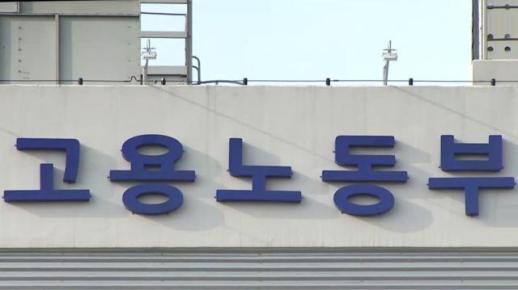 South Korea Labor Ministry Steps Up Regional-Industry Workforce Training Coordination The government is moving to better link regional and industry workforce training systems to respond to artificial intelligence and digital transformation, as well as regional population decline. The plan is to connect region-specific labor demand with needs from worksites to reduce mismatches and build a more effective vocational training system. The Ministry of Employment and Labor and the Human Resources Development Service of Korea said they are holding a two-day “2026 Integrated Human Resources Development Workshop” in Gyeongju starting on the 23rd to strengthen cooperation between regional and industry human resources development councils. In its third year, the event brought together about 240 staff members from 17 regional skills councils (RSCs) and 21 industry skills councils (ISCs). Participants shared best practices from last year, identified new joint projects between regions and industries, and took part in programs aimed at strengthening expertise in training and employment. With broader cooperation emphasized under the government’s “five hubs and three special zones” balanced growth drive, the workshop also discussed developing cross-regional projects that go beyond individual provinces and single industries by linking multiple related regions and sectors. The Gyeonggi regional council, for example, said it will form a working-level consultative body with the electronics, textile and materials industry councils to identify demand for AI convergence by sector. They plan a joint survey of AI technology needs and related training demand in each field. The Daejeon and North Gyeongsang regional councils will work with the environmental industry council to develop AI-use training courses for environmental industry workers. They also plan to pursue ways to reflect “environment-AI convergence” jobs in the National Competency Standards, based on skills needed at worksites. The North Chungcheong and Gangwon regional councils said they will analyze core competencies and technology demand in the bio industry with the chemical and bio industry councils and build regional training-demand data based on the findings. Pyeon Do-in, director general for vocational skills policy at the ministry, said industrial sites are changing faster than ever amid the “huge wave” of AI and digital transformation, making it necessary for RSCs and ISCs to work together to drive fundamental improvements in education and training systems. He urged participants to develop practical human resources development measures so that young people “do not lose their dreams” in a rapidly changing technology environment. * This article has been translated by AI. 2026-04-23 13:03:16
 -
 POSCO International Issues South Korea’s First Digital Bond by a Nonfinancial Firm POSCO International said April 23 it has issued a blockchain-based “digital bond,” the first such issuance by a nonfinancial company in South Korea. A digital bond uses blockchain technology across the full process — issuance, registration, trading and settlement — a structure the company said can strengthen security, shorten settlement times and broaden access for global investors compared with conventional bonds. The bond was issued through a private placement totaling about 1.4 trillion won, or about HK$780 million, the company said. HSBC served as sole arranger. The company said it is the second digital bond case in South Korea after Mirae Asset Securities, and the first by a nonfinancial firm. POSCO International said the issuance shortened the settlement period for its foreign-currency bonds to three business days from five. The company said it expects faster settlement to improve cash turnover and operating efficiency, while expanding investor access as a global trading company. It also said it expects lower funding costs through a temporary issuance-cost subsidy program offered by Hong Kong financial authorities to promote digital bonds. POSCO International, a global trading company focused on energy, materials and food, said stable foreign-currency funding is critical to its business. It said it will use the issuance to accelerate the digitalization of finance and respond proactively to developments in smart contracts and the security token offering (STO) market. POSCO International and HSBC held a signing ceremony April 16 at HSBC’s headquarters in Jung-gu, Seoul. Attendees included Jeong Gyeong-jin, head of POSCO International’s management planning division, and Lee Sang-ho, CEO of HSBC Securities. The two sides said they will strengthen cooperation in digital finance, including adopting blockchain and digital financial technologies, improving funding efficiency and advancing digital transformation. “This issuance is a milestone that realizes digital transformation in funding, following last year’s introduction of a blockchain-based global payment system,” Jeong said. “Based on our DX master plan, we are pushing forward a full-scale digital shift, and we will respond proactively to changes in the digital finance environment, including the STO market, to strengthen our funding competitiveness in global markets.”* This article has been translated by AI. 2026-04-23 12:27:20
 -
 Samgu I&C Earns Korea Record Institute Certification for Largest 60th-Birthday Banquet Samgu I&C said on the 23rd it has received certification from KRI, the Korea Record Institute, for holding a large-scale 60th-birthday banquet for employees. The outsourced management services company said it held nine banquets last year for 1,134 employees born in 1965, staging events by region including the Seoul metropolitan area, Chungcheong, Gyeongsang and Jeolla. On April 22, it invited 131 employees from the metropolitan area and Jeolla who are turning 60 and held its first banquet of the year. Family members were also invited, the company said. Samgu I&C said it promotes a family-friendly workplace culture and operates welfare policies including child-rearing support for large families, flexible work arrangements during pregnancy and child care, and family-care leave and time off. The company said it has also received a “family-friendly certification” from the Ministry of Gender Equality and Family and previously won a health and welfare minister’s award after being selected as a company supportive of raising children. Koo Bon-hoon, chair of Samgu I&C’s environmental, social and governance (ESG) committee, said the certification made the event “even more special.” “Based on our corporate philosophy of putting people first, we organized this to express thanks to employees working at sites across the country,” Koo said. He added that the company plans to hold celebrations this year for a total of 1,180 people.* This article has been translated by AI. 2026-04-23 12:09:15
 -
 S. Korea fines six paper makers 338.3 billion won for printing paper price-fixing The Fair Trade Commission said it will fine six paper makers a total of 338.325 billion won for colluding on printing paper prices and ordered them to independently reset prices. It also decided to refer two of the companies to prosecutors. According to the commission, Hansol Paper and five other companies, including Moorim SP, met at least 60 times over 3 years and 10 months from February 2021 to December 2024 and agreed on printing paper prices seven times. During that period, they raised list prices at least twice and reduced discount rates five times. The commission said the companies tried to conceal the collusion by avoiding phones registered in their own names and instead using restaurant phones and other methods. It added they also agreed on the order in which they would notify customers of price increases to avoid backlash concentrating on any one firm. The commission said the companies secured stable operating profits through the cartel while shifting the harm to consumers. It said the six firms held an average market share close to 81%, giving them direct influence on the market, and that the collusion led to an average 71% rise in printing paper selling prices. The commission said the conduct violated Article 40(1) of the Monopoly Regulation and Fair Trade Act and imposed fines totaling 338.325 billion won. The penalties were: Hansol Paper 142.58 billion won; Moorim P&P 91.957 billion won; Hankook Paper 49.057 billion won; Moorim Paper 45.846 billion won; Hongwon Paper 8.538 billion won; and Moorim SP 347 million won. It decided to refer Hankook Paper and Hongwon Paper to prosecutors. The total is the fifth-largest fine the commission has imposed in a cartel case and the largest ever in a collusion case involving paper makers. Citing the fact that list prices have not changed since the last price-fixing agreement, the commission ordered the companies to reset prices on their own and report any changes every six months for the next three years. Nam Dong-il, the commission’s vice chairman, said the action is expected to ease burdens on printing and publishing companies and small distributors, and help stabilize household costs such as education expenses and book purchases. He said the commission will continue to strengthen monitoring of collusion in sectors closely tied to daily life. * This article has been translated by AI. 2026-04-23 12:07:08