
Journalist

Avidan Kent
-
 Samgu I&C Earns Korea Record Institute Certification for Largest 60th-Birthday Banquet Samgu I&C said on the 23rd it has received certification from KRI, the Korea Record Institute, for holding a large-scale 60th-birthday banquet for employees. The outsourced management services company said it held nine banquets last year for 1,134 employees born in 1965, staging events by region including the Seoul metropolitan area, Chungcheong, Gyeongsang and Jeolla. On April 22, it invited 131 employees from the metropolitan area and Jeolla who are turning 60 and held its first banquet of the year. Family members were also invited, the company said. Samgu I&C said it promotes a family-friendly workplace culture and operates welfare policies including child-rearing support for large families, flexible work arrangements during pregnancy and child care, and family-care leave and time off. The company said it has also received a “family-friendly certification” from the Ministry of Gender Equality and Family and previously won a health and welfare minister’s award after being selected as a company supportive of raising children. Koo Bon-hoon, chair of Samgu I&C’s environmental, social and governance (ESG) committee, said the certification made the event “even more special.” “Based on our corporate philosophy of putting people first, we organized this to express thanks to employees working at sites across the country,” Koo said. He added that the company plans to hold celebrations this year for a total of 1,180 people.* This article has been translated by AI. 2026-04-23 12:09:15
 -
 S. Korea fines six paper makers 338.3 billion won for printing paper price-fixing The Fair Trade Commission said it will fine six paper makers a total of 338.325 billion won for colluding on printing paper prices and ordered them to independently reset prices. It also decided to refer two of the companies to prosecutors. According to the commission, Hansol Paper and five other companies, including Moorim SP, met at least 60 times over 3 years and 10 months from February 2021 to December 2024 and agreed on printing paper prices seven times. During that period, they raised list prices at least twice and reduced discount rates five times. The commission said the companies tried to conceal the collusion by avoiding phones registered in their own names and instead using restaurant phones and other methods. It added they also agreed on the order in which they would notify customers of price increases to avoid backlash concentrating on any one firm. The commission said the companies secured stable operating profits through the cartel while shifting the harm to consumers. It said the six firms held an average market share close to 81%, giving them direct influence on the market, and that the collusion led to an average 71% rise in printing paper selling prices. The commission said the conduct violated Article 40(1) of the Monopoly Regulation and Fair Trade Act and imposed fines totaling 338.325 billion won. The penalties were: Hansol Paper 142.58 billion won; Moorim P&P 91.957 billion won; Hankook Paper 49.057 billion won; Moorim Paper 45.846 billion won; Hongwon Paper 8.538 billion won; and Moorim SP 347 million won. It decided to refer Hankook Paper and Hongwon Paper to prosecutors. The total is the fifth-largest fine the commission has imposed in a cartel case and the largest ever in a collusion case involving paper makers. Citing the fact that list prices have not changed since the last price-fixing agreement, the commission ordered the companies to reset prices on their own and report any changes every six months for the next three years. Nam Dong-il, the commission’s vice chairman, said the action is expected to ease burdens on printing and publishing companies and small distributors, and help stabilize household costs such as education expenses and book purchases. He said the commission will continue to strengthen monitoring of collusion in sectors closely tied to daily life. * This article has been translated by AI. 2026-04-23 12:07:08
 -
 1 in 5 South Korean Wage Workers Earn 2 Million Won or Less a Month, Data Show Employment in the second half of last year was concentrated in service industries such as residential care facilities and restaurants, and 1 in 5 wage workers earned 2 million won or less per month, according to official data. The National Data Agency said in its report, “2025 second-half regional employment survey: characteristics of employed persons by industry and occupation,” that as of October in the second half of last year, residential care facilities were the largest of 234 detailed industry categories, with 1.77 million workers, or 6.1% of the total. Restaurants followed with 1.692 million workers (5.8%), and crop cultivation ranked third with 1.297 million (4.5%). Compared with a year earlier, employment rose most in residential care facilities, up 177,000, followed by hospitals, up 47,000, and clinics, up 39,000. The biggest declines were in crop cultivation, down 109,000, building construction, down 65,000, and interior construction and building finishing, down 33,000. By age, restaurants accounted for the largest share of employment among young people ages 15-29 (10.6%) and those ages 30-49 (4.6%). Among those 50 and older, residential care facilities had the largest share (9.8%). By employment status, regular employees were most concentrated in manufacturing (21.9%), followed by health and social welfare services (12.4%) and wholesale and retail trade (9.5%). For temporary and daily workers, the largest shares were health and social welfare services (19.5%), accommodation and food services (13.9%) and construction (9.7%). For nonwage workers, the largest shares were agriculture, forestry and fishing (20.9%), wholesale and retail trade (16.8%) and accommodation and food services (13.0%). The number of wage workers totaled 22.488 million in the second half of last year, up 311,000 from a year earlier, the agency said. By monthly pay, 9.8% earned less than 1 million won, 10.0% earned 1 million to less than 2 million won, 30.0% earned 2 million to less than 3 million won, 22.3% earned 3 million to less than 4 million won, 11.5% earned 4 million to less than 5 million won, and 16.5% earned 5 million won or more. From a year earlier, the share earning 5 million won or more rose 1.1 percentage points. The shares earning 4 million to less than 5 million won and 3 million to less than 4 million won each rose 0.4 points, and the share earning less than 1 million won rose 0.2 points. The shares earning 2 million to less than 3 million won and 1 million to less than 2 million won fell 1.6 points and 0.5 points, respectively, suggesting a widening gap between low- and high-wage workers. The share of workers earning 1 million won or less a month was highest in health and social welfare services (29.2%), accommodation and food services (23.5%), and public administration, defense and social security administration (18.4%). The share earning 5 million won or more was highest in finance and insurance (38.0%), professional, scientific and technical services (35.8%), information and communications (34.8%), and manufacturing (24.0%).* This article has been translated by AI. 2026-04-23 12:06:17
 -
 South Korea’s tax agency to pilot AI chatbot for income tax, tax credits The National Tax Service will begin a pilot program next month for a tax-focused artificial intelligence chatbot designed to help taxpayers with comprehensive income tax filings and applications for tax credits. The agency said April 23 it will introduce a “generative AI chatbot” service starting May 1, offering interactive, conversational guidance. The rollout expands AI-based assistance beyond value-added tax filings and year-end tax settlement to include comprehensive income tax and the earned income and child tax credits. Through HomeTax and Mobile HomeTax, taxpayers will be able to ask in real time whether they need to file, how to file, and what requirements apply for deductions and tax relief during the filing process. With the addition of mobile access, users can receive help regardless of time and location. The chatbot will generate answers based on consultation cases and filing manuals verified by the tax agency. The NTS said it will quickly reflect newly revised tax laws and administrative interpretations to provide information that is more accurate and consistent than general-purpose AI. The agency said it has also applied safety measures, or guardrails, to block questions unrelated to tax law and prevent inaccurate responses. The chatbot screen will also provide practical resources, including sample return-writing cases, a tax credit simulation calculator and videos explaining electronic filing. The NTS previously operated an AI chatbot in the VAT and year-end settlement areas in January and February. It said users increased by about 20% and the number of questions per user fell, indicating improved efficiency. The agency said it will use the pilot to build AI consultation infrastructure and later develop tailored tax guidance linked to each taxpayer’s assessment information. Over the longer term, it plans to expand functions to include AI-assisted e-filing and an AI tax consultant to improve taxpayer convenience. * This article has been translated by AI. 2026-04-23 12:05:28
 -
 NH Financial Targets Senior Market With ‘NH All One Wonderful’ Platform As South Korea moves deeper into a super-aged society, financial firms are intensifying competition for older customers. Banks are rolling out senior brands that go beyond deposits and loans to offer broader services such as trusts, inheritance, pensions and long-term care. Hong Sun-ok, executive vice president for business strategy at NH Financial Group, said in an interview Thursday at the company’s headquarters in Seoul that senior-focused business is “no longer a choice but a sign of the times,” adding that the senior market’s economic influence is growing. Hong said South Korea’s retirement pension reserves totaled about 500 trillion won as of the end of last year, rising more than 10% annually over the past three years. She added that annual asset transfers through inheritance and gifts have exceeded 120 trillion won. “We will build the ‘NH All One Wonderful’ brand not as a set of financial products, but as a platform that takes responsibility for customers’ lives overall,” she said. NH Financial launched the senior-focused brand in November, aiming to support customers preparing for the second stage of life, including financial needs and broader daily-life services, while also considering their children’s generation. In the near term, Hong said the group will expand product offerings to meet demand during “income cliff” periods, including funding for children’s wedding costs and education expenses. Over the medium to long term, she said, the platform will link to nonfinancial areas such as health care, nursing care and re-employment to broaden the customer experience. With competition rising across the financial sector, Hong pointed to NH Financial’s nationwide network as a key differentiator. She said the group plans to provide close-to-home services by leveraging about 12 million senior customers across the group and its regional base. “Aging is not a problem of one generation but a structural change across society,” she said. “NH Financial is expanding its role as a financial partner that systematically supports seniors’ lives beyond simply offering products.” Hong said the group will pursue a strategy of “nearby, long-lasting finance” using infrastructure that extends beyond the Seoul area to smaller regional cities. She said NH Financial plans to develop 100 branches nationwide as senior comprehensive counseling hubs offering retirement planning and tailored asset management. She also said the group plans to expand into health care through initiatives such as senior day care centers inside Hanaro Mart stores and cooperative projects for dementia management. Hong said last year focused on laying the groundwork for the senior business through the NH All One Wonderful brand, while this year is significant because the group has built a dedicated system to coordinate efforts across affiliates. She said the group will continue developing life-stage products and services so that “every moment” of seniors’ lives after retirement can be “filled in a wonderful way.”* This article has been translated by AI. 2026-04-23 12:04:35
 -
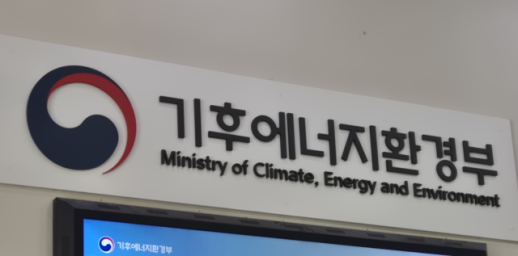 South Korea Begins Building Infrastructure for Carbon-Emissions Futures Market 정부가 온실가스 배출권 시장 고도화에 나선다. 현물 거래 중심으로 운영되며 가격 변동 대응에 한계가 있다는 지적이 이어지면서 배출권 선물시장 도입을 위한 기반시설 구축 작업에 본격 착수한 것이다. The South Korean government is moving to upgrade its greenhouse gas emissions trading market, launching work to build the infrastructure needed to introduce an emissions-permit futures market as criticism grows that the spot-focused system has limited tools to cope with price swings. The Ministry of Climate, Energy and Environment said it will hold an “advanced greenhouse gas emissions market meeting and memorandum of understanding ceremony” on the morning of April 24 at the Korea Exchange’s Seoul office in Yeongdeungpo-gu, Seoul. The ministry said it will review the outlook for the fourth phase of the emissions market and discuss future development steps, including building infrastructure for an emissions futures market. The event was arranged to discuss mid- to long-term policy directions for South Korea’s emissions trading system, known as K-ETS, and to set up a cooperation framework among related agencies in advance for building the computerized systems that would underpin a futures market. South Korea’s emissions trading market has largely operated through spot transactions, making it difficult for companies to prepare for long-term price volatility. Experts have said that introducing an emissions futures market — similar to major overseas markets such as the European Union — could provide companies with a more efficient hedging tool and improve market stability by strengthening price-discovery and forecasting functions. In the first session, experts from the financial and industrial sectors and related institutions will discuss key tasks for the market going forward. Ha Sang-seon, a division head at Ecoeye, will present on “the characteristics and outlook of the fourth phase of the emissions trading system market.” Yoo Jong-min, a professor at Hongik University, will offer recommendations on the “need for an emissions futures market and expected effects” from a long-term perspective. A subsequent discussion will address the need for a futures market to help companies manage price volatility, along with measures to ensure detailed market design and system stability. In the second session, the ministry, the Korea Exchange, the Greenhouse Gas Inventory and Research Center, and Koscom will sign an agreement to build infrastructure for an emissions futures market. The four organizations plan to cooperate on developing smooth links among their existing systems, building the human and physical foundations needed to operate futures trading, and sharing information to foster a sound emissions-related financial market. Oh Il-young, director general for climate and energy policy at the ministry, said stable introduction of an emissions futures market requires “a solid system buildout and a cooperative framework among related institutions.” He said the agreement will be used as an opportunity to lay the groundwork for upgrading the market.* This article has been translated by AI. 2026-04-23 12:03:44
 -
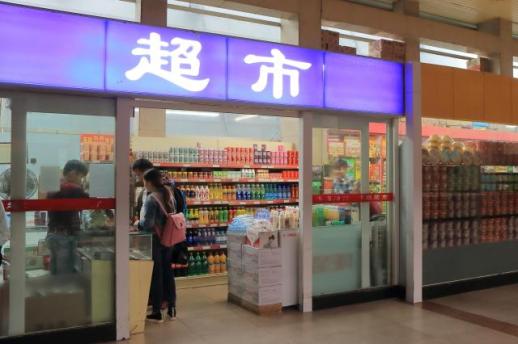 China Convenience Store Top 100 Chains Surpass 208,000 Stores China’s top 100 convenience store brands operated a combined about 208,000 outlets at the end of 2025, up about 11,000 stores, or 5.6%, from a year earlier, according to the 2026 edition of the “China Convenience Store Top 100” compiled by the China Chain Store & Franchise Association (CCFA). The number of chains with at least 1,000 stores was unchanged from the previous year at 38 brands. Meiyijia ranked No. 1 by store count, expanding to 40,147 outlets, an increase of 2,204 from a year earlier. The rest of the top 10 were: Yijie with 28,689 (up 54); Kunlun Haoke with 19,814 (up 114); Tianfu with 7,718 (up 197); Lawson with 7,068 (up 416); Zuolin Youshe and Shenghuo Yizhan with 6,238 (up 928); Furong Xingsheng with 5,940 (up 102); 7-Eleven with 5,565 (up 926); Shizu and Zhishang with 4,217 (down 164); and Jianfu with 3,680 (up 645). The top five rankings were unchanged from the previous year.* This article has been translated by AI. 2026-04-23 12:03:15
 -
 HD Hyundai Signs MOUs at SAS 2026 to Expand Unmanned Vessel Push in U.S. HD Hyundai is moving to secure an early foothold in the future unmanned vessel market in the United States. The company said April 23 that it signed a series of memorandums of understanding at the Sea-Air-Space Exposition (SAS 2026) underway in Washington, D.C., including agreements with defense AI company Anduril and the American Bureau of Shipping (ABS), to expand cooperation in its naval ship business. HD Hyundai said it signed an MOU with Anduril on April 22 to jointly develop an advanced unmanned underwater vehicle (UUV) system. The company said the deal expands cooperation beyond the unmanned surface vessel (USV) development already underway with Anduril, as the partners step up efforts to target the U.S. and global markets. According to U.S.-based market research firm Market Research Future, the global UUV market is expected to grow at an average annual rate of 16.6%, from $5.5754 billion in 2025 to $25.8989 billion in 2035. HD Hyundai also said it signed a separate three-party MOU the same day with ABS and Anduril to develop an autonomous maritime systems framework, including related regulations and certification. Under the agreement, the three sides plan to establish demonstration and certification procedures considered essential for development and commercialization of unmanned vessels, and to work together on rules tied to unmanned operations. HD Hyundai said it aims to lead the global unmanned vessel market by combining what it called the world’s top shipbuilding technology with AI-based unmanned systems capabilities. Joo Won-ho, CEO of HD Hyundai Heavy Industries, said unmanned vessels are a central issue for the future global naval ship market and a field the company must lead. He said cooperation with Anduril and ABS will help demonstrate the company’s technology in the global unmanned vessel market. * This article has been translated by AI. 2026-04-23 11:57:17
 -
 Samsung Heavy Industries Hits 52-Week High on Strong Q1 Earnings Outlook Samsung Heavy Industries shares rose more than 6% on expectations of strong first-quarter results. As of 11:42 a.m. on April 23, the stock was up 2,050 won, or 6.45%, from the previous session at 33,850 won, according to the Korea Exchange. It climbed as high as 35,350 won intraday, marking a 52-week high. Investor buying appeared to follow upbeat forecasts ahead of the company’s first-quarter earnings release. FnGuide estimates Samsung Heavy’s consolidated operating profit for the quarter at 340.1 billion won and net profit at 238.8 billion won, up 176.34% and 164.94%, respectively, from a year earlier. Kim Yong-min, an analyst at Yuanta Securities, said his operating profit estimate above the consensus of 340 billion won reflects a higher share of revenue recognized from higher-priced work in the first quarter, even though the number of operating days did not change much from the previous quarter. He cited deliveries in the fourth quarter of last year of four low-priced LNG carriers and two container ships, which he said increased the proportion of higher-priced sales recognized in the first quarter. He also said the normalization of one-off wage-related costs booked in the fourth quarter of last year had a positive effect. * This article has been translated by AI. 2026-04-23 11:54:15
 -
 China Sees Surge in New-Car Launch Events Ahead of Beijing Auto Show M6 and All-New M9, Shangjie Z7, and Zhijie V9. Those were among the models Huawei’s smart-driving ecosystem alliance, Hongmeng Zhixing, unveiled at a product event on April 22. That same day also brought debuts or launches of about 10 models, including Avatr’s 06T, Shanghai GM Buick’s Zhijing E7, Cadillac’s VISTIQ and BMW’s iX3 long-wheelbase model. In the four days leading up to the Beijing Auto Show’s opening on the 24th, from April 20 to 23, there were 30 new-car-related events alone. Chinese market research firm Gasgoo called it “inflation” in new-car launch events. Reports said more than 100 new-car events were held or scheduled this month, with about three to four news conferences a day. More than 80 such events were held in March. The industry expects more than 170 new models to be launched in China this year — roughly one new model every two days. As launch cycles shorten, the number of events for a single model has grown. A rollout can now span five to six stages, from technology briefings to exterior and interior reveals, pre-sales promotions, official launches, delivery ceremonies and livestreamed driving tests. Companies are trying to keep a model from being quickly overshadowed by the next debut. A South Korean industry official said about 180 models will make their world debut at this year’s Beijing Auto Show. “With so many models coming out at once, each brand is trying to draw attention through separate events,” the official said. The rapid spread of electric vehicles is also cited as a driver. As EV lineups diversify, companies feel more pressure to make each model stand out. As of the end of March, China had 19,977 EV models registered as eligible for purchase-tax reductions, with 391 new models added in March alone. If the replacement cycle for internal-combustion vehicles was typically five years, the EV era has made one year a new benchmark, the report said. Development cycles have shortened to 12 to 15 months, and companies are trying to keep interest alive even after launch. Pricing tactics are shifting, too. Amid intense price competition, more automakers are using pre-sales to gauge demand, then adjusting prices and revealing final pricing at the official launch. Newer EV brands such as Xiaomi, which have yet to fully establish market trust, are also staging events such as long-distance driving tests or livestreamed vehicle teardowns to win over consumers. Marketing competition has intensified. Automakers are increasingly hiring celebrities as brand ambassadors. Under Hongmeng Zhixing, the Shangjie brand tapped actor Xiao Zhan. Zeekr hired He Rundong, and Chery hired actor Yu Shi. Other brands cited include Zhijie (Liu Yifei), Denza (Daniel Craig), and Li Auto (Yi Yangqianxi). The pace has fueled criticism of “overheated competition” in China’s EV market, with frequent launches adding to consumer fatigue while raising companies’ marketing burdens. A single new-car launch event typically costs from 2 million yuan to 10 million yuan (about 2.17 billion won), the report said. Gasgoo said average automaker marketing costs rose 18% a year from 2023 to 2025, while the potential-customer conversion rate fell from 8.2% to 4.7%. The cost to acquire each potential customer jumped from 200 yuan to 580 yuan. Xiaomi’s auto sales and promotion costs rose 30% to 33.2 billion yuan last year from 25.4 billion yuan in 2024, the report said. Great Wall Motor’s selling expenses also rose 44% last year from the previous year, it said. 2026-04-23 11:50:04