
Journalist

Avidan Kent
-
 Korean Card Issuers Face Profit Squeeze as Mid-Rate Loans Rise and Card Loans Are Curbed Korean card issuers are being squeezed as they are pressed to expand mid-rate lending while facing tighter limits on card loans, a key profit driver. The policy mix is forcing companies to grow lower-margin loans and rein in higher-margin products, increasing strain across the industry. In the first quarter, card issuers’ mid-rate loan originations totaled 2.5708 trillion won, the highest quarterly figure on record, according to the financial sector on Tuesday. The rise contrasted with a declining share of mid-rate loans at commercial banks and a roughly 40% year-on-year drop in originations at savings banks, leaving card issuers as the main lenders expanding this segment. The increase has been driven largely by regulators’ policy direction. Authorities have repeatedly called for more mid-rate lending to improve access to credit for mid- and low-credit borrowers. As a result, card issuers’ mid-rate loan originations in 2025 rose 43% from a year earlier to 7.9190 trillion won. But profitability remains a concern: mid-rate loans carry relatively lower interest rates and higher risk, limiting returns for card issuers. At the same time, card loans — a major source of earnings — are under scrutiny. In the first quarter, the outstanding balance of card loans at nine card issuers (Lotte, BC, Samsung, Shinhan, Woori, Hana, Hyundai, KB Kookmin and NH NongHyup Card) reached a record 42.9942 trillion won. Financial authorities are reported to have capped this year’s growth in card issuers’ household lending balances at about 1% to 1.5% from the end of last year, citing household debt management. That is less than half last year’s target range of 3% to 5%. Industry officials say the combination is weighing on both profitability and asset management. With bank lending standards tightening, demand from mid- and low-credit borrowers has been flowing to card issuers, they said. If card loans are also constrained, issuers’ capacity to supply credit could shrink, raising concerns about overall lending operations. Regulators say they plan to offer incentives to encourage more mid-rate lending, but the industry argues the additional impact may be limited because volumes have already been expanded. “We have already increased mid-rate loans in line with the policy direction,” a card industry official said. “If card loans are regulated at the same time, it could make loan management itself difficult.” * This article has been translated by AI. 2026-04-22 15:57:00
 -
 New Books: Hormones Behind Short-Video Addiction and Sleep, Plus Two More Titles Science That Can Change Your Day=Written by Ullim, Dongasia. If you keep watching short videos and still want more — or if you have ever bought enzymes after seeing a social media ad for melting bread — this book is aimed at you. The author, a science communicator, looks at everyday topics such as stress, sleep, exercise, short-video addiction and love through a scientific lens, encouraging readers to rethink routines and make better choices. The book focuses on hormones. It explains that repeatedly watching shorts and reels can build tolerance to dopamine, pushing viewers to seek stronger stimulation in a self-reinforcing cycle. It also offers a remedy, highlighting the role of serotonin — often called a “happiness hormone” — and providing practical tips to promote its release. Sleep, exercise and love are also tied to hormones, the author says. To benefit from fasted aerobic exercise, readers should avoid excessively triggering cortisol, a stress hormone. On love, the book argues that hormones shift as relationships mature, citing phenylethylamine and endorphins. Readers can choose sleep methods, workouts and diets suited to their own circumstances. "In today’s world, dopamine is actually very easy to get without going through the process of dating and adjusting to each other. You can easily satisfy dopamine just by watching stimulating content like shorts or reels. In other words, we already have many ways to satisfy dopamine easily, anytime and anywhere, so dating is no longer the only channel for dopamine. Dating requires a lot of time and energy, yet it’s hard to predict a sure dopamine reward, and you never know when it might fall apart." (p. 190) A Sad Murder=Written by Jonathan Rosen, translated by Park Dasom, Munhakdongne. This memoir and nonfiction work centers on a real person, Michael Laudor. The author closely traces how Laudor, a childhood friend, lived with schizophrenia and, in his 30s, ended up committing murder. Laudor was a celebrated elite: He graduated first in his class from Yale University in three years and joined a top-tier management consulting firm. Behind the résumé, however, was schizophrenia. Once seen as a symbol of hope for overcoming the illness, he shocked the United States in 1998 when he killed his fiancée. Rosen writes his friend’s life in a restrained tone while examining the 1980s U.S. culture of elitism and family environments that prized intellectual achievement — factors he suggests helped worsen Laudor’s symptoms. He also points to the tragedy that can follow when appropriate intervention for mental illness disappears, and to the effects on individuals of a social climate that emphasizes performance while ignoring pressure and stress. "Just as Michael himself had been a symbol of hope, Michael’s film was also seen as a symbol of hope. I had no idea, until the murder happened, what Michael meant to the hundreds of thousands of people who desperately wanted their existence to be recognized and made visible in society. I also didn’t know how much despair his downfall brought to so many individuals. The journal Psychiatric Times titled its article on the case, ‘From a publicity poster to a wanted poster.’" (p. 624) Grand Prince Suyang=Based on an original work by Kim Dong-in, edited by Lee Jeong-seo, Saeum. This edition adapts Kim Dong-in’s “Daesuyang” for modern readers. Without undermining the original form and intent, the editor revises sentences for clarity, adds titles to each chapter and explains difficult Chinese characters. The novel follows events from King Sejong’s reign through King Munjong’s death, when King Danjong took the throne at age 12 and, at 15, handed it to Grand Prince Suyang. It depicts officials who belittled the young king while trying to secure their own power, and a court that effectively neglected state affairs such as border defense and institutional reform. Through this, it questions the familiar image of Suyang as a “cruel uncle who killed his nephew,” offering a more layered view of the era’s power structure and political realities. “‘They say a lion will kill its own cub if it seems the cub can’t live as a lion, but people can’t do that, which is truly pitiful.’ Hearing this lament from his younger brother (Sejong) every time they met, Yangnyeong lowered his head and stayed silent for a long while before finally replying. ‘Your Majesty, it cannot be helped. It seems an era is coming when the qilin sleeps and the lynx (Munjong) dances …’ ‘Then I suppose you, elder brother, must watch over that lynx and guide him so he does not dance too wildly.’" (p. 49) 2026-04-22 15:55:52
 -
 Thailand’s SSP to Sell Stake in Yamaga Solar Plant in Japan’s Kumamoto Thailand-based solar power company SSP (Sermsang Power Corporation) said its board on the 9th approved a plan to sell the Yamaga Solar Power Plant it operates in Japan’s Kumamoto prefecture. According to a filing with the Stock Exchange of Thailand (SET), SSP will sell its 90% stake in the plant, held through subsidiaries Sergi Energy and S Global Power, to a Japanese renewable energy power producer. The sale price is expected to be about 4.976 billion yen, and the transaction is set to be completed during the second quarter (April-June). The Yamaga plant has capacity of 34,500 kilowatts. It began operating May 30, 2020, and sells electricity to Kyushu Electric Power under a contracted capacity of 30,000 kW on a 20-year term.* This article has been translated by AI. 2026-04-22 15:55:06
 -
 Construction Industry’s AI Adoption Stalls Amid Data Gaps and Unclear Rules South Korea’s construction industry is not adopting artificial intelligence as quickly as expected, largely because jobsite data are scattered in nonstandard formats and rules remain unclear, industry officials said. Analysts also point to a lack of supporting infrastructure as another obstacle to AI-driven change. Industry sources said on the 22nd that many domestic construction sites still lack the data foundation AI systems need to learn and make decisions. Design documents, photos, inspection logs and process data are often stored in different formats, making them difficult for systems to read and use at once. Companies sometimes describe such unstructured material as data “piled up like a stack of drawings.” To improve training data quality, they say, the first step is standardizing dispersed, unstructured records — a task that has fueled calls for government-level guidelines. The Korea Research Institute for Construction Policy said AI bottlenecks include difficulties in standardization and data accumulation, along with fragmented data management. It recommended pursuing a public-private data linkage platform, improving data consistency, establishing security systems and advancing institutional reforms. While construction and engineering firms are trying to expand AI use, efforts often remain at the individual level rather than becoming organizationwide change. According to the Korea Technology and Information Promotion Agency for SMEs, 80% of construction companies with annual revenue of 500 million won or more do not even collect data, underscoring the sector’s low data maturity. Regulation has also struggled to keep pace with changes on the ground. South Korea’s “Framework Act on the Development of Artificial Intelligence and the Establishment of a Foundation of Trust” is in effect, but an AI implementation framework tailored to construction remains unclear. Issues repeatedly raised at construction sites — including data responsibility, liability when AI makes an incorrect judgment, and standards for pilot applications — still require more detailed follow-up rules. Jeon Young-jun, a research center director at the institute, said much of the data held by construction companies is stored as scanned PDFs of drawings or documents, which is not suitable for AI training. “It looks like text on the surface, but it is actually an image, so AI has difficulty recognizing and learning it properly,” he said. He said data must be structured and standardized first, and called for government standards for building a common data environment, or CDE. He added that companies should develop technology under those shared standards. Overseas, results are already emerging in administration and site management. Qatar officially announced last year that it introduced an AI-based intelligent building permit system, cutting average permit processing time from 30 days to about 120 minutes. The system automatically reads design documents and checks compliance, reducing review backlogs. The case has drawn attention because lower permitting uncertainty can make start dates easier to forecast and speed up financing such as project finance, or PF. Singapore is also accelerating jobsite digitalization. The Building and Construction Authority, or BCA, has identified data-driven collaboration and digital transformation as core tasks in its industry transformation strategy. Its Site Management Platform, or SMP, serves as a central digital hub that gathers and manages information generated at sites. BCA is linking SMP with its Site Management Data Standard, or SMDS, to standardize safety, productivity, quality, schedule and cost data — an effort aimed at aggregating site-generated databases into a common data environment and laying the groundwork for AI use. At home, industry participants cited expanding regulatory sandboxes and preparing in advance for predictable risks as key steps to improving AI infrastructure in construction. An industry official said the demonstration process should be simplified so technology can take hold at sites first. The official said adoption will continue to lag unless standards are set in advance for AI misjudgments and safety issues, protection of personal information and trade secrets, and responsibility in procurement and permitting processes. 2026-04-22 15:52:39
 -
 Special counsel again seeks 15 years for Lee Sang-min in martial law insurrection appeal Special counsel prosecutors on Tuesday again asked an appeals court to sentence Lee Sang-min, former minister of the Interior and Safety, to 15 years in prison for allegedly taking part in insurrection-related acts during the Dec. 3 martial law declaration. At the closing hearing in Lee’s appeal at the Seoul High Court’s Criminal Division 1, the special counsel team led by Cho Eun-seok urged the court to impose the same 15-year term it sought at trial on charges including performing key duties in an insurrection. Arguments concluded Tuesday, leaving the court to rule. Prosecutors said Lee played a central role in carrying out the alleged insurrection by relaying orders to cut electricity and water to media outlets. They argued the aim was to “completely paralyze” specific news organizations, block coverage critical of martial law and shape favorable public opinion. Calling the case “terror against South Korea’s democracy,” prosecutors said insurrection is a grave crime that can draw heavy punishment even at the planning stage. They argued that the absence of casualties or the fact the alleged acts were not completed should not reduce the sentence, adding that strict punishment is needed to prevent a repeat. Prosecutors also disputed Lee’s claims about intent, saying that as a former judge he was in a position to recognize the unconstitutionality and illegality of martial law but still participated. They cited his phone call with former Defense Minister Kim Yong-hyun on the day martial law was declared and said he remained at the presidential office with former Prime Minister Han Duck-soo, raising the possibility he knew of the plan in advance. The special counsel team further alleged Lee denied the power-and-water cutoff orders to investigators and at the Constitutional Court and committed perjury. They also said he was uncooperative during the investigation and trial, which should be considered at sentencing. Lee was indicted on allegations that he aided Yoon Suk Yeol’s martial law declaration and contacted former National Fire Agency Commissioner Heo Seok-gon and others to order electricity and water cutoffs targeting specific media outlets. Prosecutors also said that as the minister overseeing the government’s martial law-related administration, he failed to stop an illegal declaration and instead joined its execution. In the first trial, the court sentenced Lee to seven years in prison, finding he took part in some acts as a member of an insurrection group. The court said responsibility could be recognized even if the power-and-water measures were not ultimately carried out. The appeals court is expected to decide whether to increase the sentence in line with prosecutors’ request or uphold the lower court’s ruling.* This article has been translated by AI. 2026-04-22 15:52:01
 -
 Lotte Chairman Shin Dong-bin Eyes Faster Expansion in Vietnam During State Visit Shin Dong-bin, chairman of Lotte Group, is traveling to Vietnam as part of an economic delegation accompanying President Lee Jae-myung on a trip to India and Vietnam, drawing attention to whether the group will accelerate its local expansion. Lotte has long positioned Vietnam as a key overseas base to overcome growth limits in its domestic retail business. Industry officials said April 22 that Shin is expected to strengthen ties with Vietnamese political and government figures and personally review the group’s priority projects. One focus is the Thu Thiem Eco Smart City project in Ho Chi Minh City, with investment of about 20.1 trillion dong (about 1.1296 trillion won). The project sits in the 2A functional zone, a core area of the Thu Thiem new urban district, on a 74,513-square-meter site. Lotte received a 50-year operating right in 2017 to build a financial center, mixed-use commercial facilities and housing, but the project was stalled for eight years due to a Vietnamese government audit and delays in land-price calculations. Recently, the Ho Chi Minh City People’s Committee was reported to have accepted part of Lotte’s request, approving an adjustment of the equity structure among affiliates and a transfer of up to 35% to a third party, signaling progress. Lotte’s strategy in Vietnam centers on building a “lifestyle platform” that combines department stores, hypermarkets and mixed-use shopping malls. The company is expected to push beyond expanding store networks toward building a broader platform ecosystem aimed at Vietnamese consumers’ daily lives. Lotte Mall West Lake Hanoi, which opened in July last year, spans about 354,000 square meters — roughly the size of 50 soccer fields — and includes global beauty brands such as Hermes and Chanel, along with an aquarium and KidZania. In less than a year, cumulative sales topped 300 billion won, with an average of 50,000 visitors a day and total visitors surpassing 25 million. Lotte Center Hanoi, marking its 10th anniversary this year, is also undergoing a full renovation to reinforce its landmark status. Retail and food-service affiliates are also supporting the broader push. Lotteria, which entered Vietnam in 1998, operates 260 stores with menus tailored to local tastes and has posted annual sales of more than 100 billion won each year since 2022, maintaining the top spot in the franchise sector. Lotte Mart, which runs 15 stores, reported operating profit up 24.3% last year from a year earlier. Lotte’s footprint in Vietnam is extending into logistics and culture. Hotel Lotte (three locations), Lotte Duty Free (three locations) and Lotte World (aquarium) have built out tourism infrastructure. Lotte Global Logistics plans to start operating its Dong Nai cold-chain center next month to upgrade supply chains. Lotte Cultureworks, which operates 44 cinemas, has introduced locally tailored premium theaters, and Lotte Ventures is active as Vietnam’s first foreign venture investment firm. A Lotte official said the group views Vietnam as a core growth market and plans to steadily expand existing businesses while continuing to seek new opportunities. 2026-04-22 15:48:20
 -
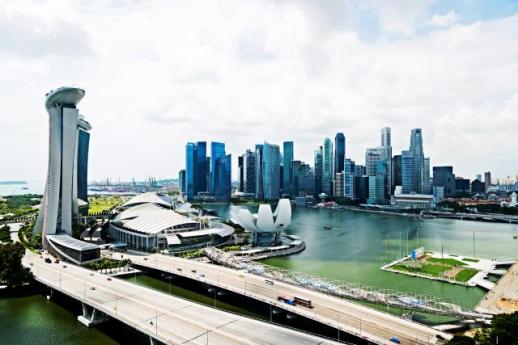 Survey: Over 90% of Singapore Firms Face Higher Costs From Middle East Tensions More than 90% of Singapore companies are facing higher costs as Middle East tensions push up energy prices, according to a survey by the Singapore National Employers Federation, or SNEF. Many companies cited rising utility bills and fuel costs. Among firms that have taken steps to cope, hiring freezes or delays in expansion plans were common. SNEF surveyed companies across a wide range of industries and received responses from 210 firms. Information and communications, finance, insurance, professional services, education and social services made up the largest share at 37%. Manufacturing accounted for 32%, hospitality, food and wholesale 15%, and transport and warehousing 10%. A total of 96% said they were facing higher costs due to a surge in energy prices linked to worsening conditions in the Middle East. The most common response was that business costs rose 11% to 25% (41%), followed by 1% to 10% (36%) and more than 25% (19%). By category, utilities and fuel were cited most often, at 70% each. Raw materials and consumables were named by 59%, and air and sea freight costs by 53%. Asked whether they were reviewing staffing and workplace deployment because of the energy price spike, 83% said no. SNEF said, “Many companies are exploring whether operational adjustments are possible before taking measures that directly affect employees.” Among those that said yes, the most common actions (multiple responses allowed) were hiring freezes or postponing plans to add staff, at 67%. Redeployment and cross-training, and headcount reductions through attrition, were each cited by 33%. Bonus and allowance cuts were reported by 25%, and reduced working hours, including overtime, by 19%. As support measures to address rising costs (multiple responses allowed), companies most often called for tax-related support such as tax cuts (83%), subsidies for energy costs (77%), and delaying the implementation of employment policies related to manpower (55%).* This article has been translated by AI. 2026-04-22 15:43:08
 -
 Harim skips preliminary bid, emerges as preferred bidder for Homeplus Express Harim Group has jumped into the final bidding for Homeplus Express after skipping the preliminary round and has been named the preferred bidder, industry officials said. The move is widely seen as part of a broader shift in Harim’s distribution strategy. According to the industry on the 22nd, Homeplus, which is undergoing corporate rehabilitation proceedings, selected NS Home Shopping, an affiliate of Harim Group, as the preferred negotiating partner for the sale of its corporate supermarket (SSM) unit, Homeplus Express. A preferred bidder is the candidate that offers the most favorable terms in a competitive process and is granted an exclusive period to negotiate. Homeplus has said it aims to move quickly toward a final contract, though due diligence and further reviews remain. Harim did not submit a letter of intent in last month’s preliminary bidding, appearing to step back. It entered late in the final round, however, after weighing price and business viability and concluding it had a strong chance, the officials said. If Harim completes the acquisition, it would secure a nationwide network of about 300 stores, potentially strengthening links with its existing food businesses, including meat processing, home meal replacements and fresh foods. NS Home Shopping previously operated an SSM chain, NS Mart, before selling it to E-Mart in 2012; the deal would mark its return to the SSM business after 14 years. The potential purchase also aligns with Harim Chairman Kim Hong-kuk’s emphasis on “fresh” food. At the NS Food Festa in Iksan, North Jeolla Province, in September last year, Kim said, “For consumers in the Seoul metropolitan area to experience the freshest food, we need logistics centers within the city.” Of Express’ 293 stores, 223 have quick-commerce capabilities, and 76% of all locations are seen as able to serve as urban logistics hubs, the officials said. Harim could use the network to support its fresh-food supply chain and instant-delivery infrastructure. Some in the market also expect logistics efficiency gains if the stores are linked with Harim Group’s Yangjae urban advanced logistics center being built in Seoul’s Seocho district. The market has estimated the sale price at around the 200 billion won range. Given Harim Holdings’ operating cash flow of about 1.1411 trillion won last year, the funding burden is expected to be relatively limited, the officials said. NS Home Shopping has taken a cautious stance, noting talks are still underway. “Our participation is a strategic decision to strengthen competitiveness across online and offline channels,” a company official said. “We also expect to create mutual synergies by offering existing Express tenants new growth opportunities through our online and mobile channels.” The official added, “If the acquisition is completed, we will combine the strengths of both sides to build integrated omnichannel competitiveness.” 2026-04-22 15:40:11
 -
 JWorld Industry’s Alzip Mat Begins China CCC Certification Factory Audit JWorld Industry, a maker of playroom mats and blocks, has begun the process to obtain China’s compulsory certification, known as CCC, for its premium infant mat brand Alzip Mat. The company said the Alzip Mat production plant in Hwaseong, south of Seoul, underwent a two-day on-site audit from April 20 to 21 as part of the CCC process. The review covered raw-material controls, production processes, finished-product inspections and the overall quality management system. CCC is a mandatory Chinese government certification program intended to ensure the safety and quality of products sold in China. Without it, sales and imports in China are restricted. The system requires not only document screening but also factory inspections and follow-up oversight. Infant mat products fall under child safety rules and must be evaluated on multiple criteria, including material safety, control of harmful substances and shock-absorption performance. In South Korea, infant products must also obtain KC certification under the Special Act on the Safety of Children’s Products, and the company said China’s CCC is viewed as a similar safety framework. JWorld Industry said the audit is intended to verify consistency in its manufacturing process and its quality controls, laying groundwork for entry into the Chinese market, where safety certification is widely seen as a key factor for distribution. The company cited industry views that the infant mat market has continued to grow as interest rises in reducing noise between floors and improving indoor safety. Demand has also been increasing for mats using high-density foam and products with antibacterial and water-resistant features. “This CCC audit is a process to have our product quality confirmed against global standards,” a company official said, adding that the company plans to consider expanding overseas markets, including China, after obtaining certification. JWorld Industry produces and sells infant mats and play products centered on Alzip Mat and operates a quality management system based on domestic production.* This article has been translated by AI. 2026-04-22 15:39:20
 -
 Noryangjin Redevelopment Premiums Jump as New-Home Prices Hit $25 Million Won Level "With Noryangjin Zone 6 (Ra Clarte Zide Fine) posting a 2.5 billion won presale price for a standard-sized unit, expectations are rising for Zone 1 as well. Most Zone 1 listings were gone by last week, and inquiries keep coming in from buyers trying to secure the few units that can still be transferred," said the head of a real estate office in Noryangjin-dong. Banners hung across Seoul’s Noryangjin New Town redevelopment area on April 22 after Noryangjin Zone 1 received approval of its management and disposition plan from Dongjak-gu on April 21. Zone 3 received the same approval in February. Large contractor banners promoting high-end brands were also visible, and brokerage windows were covered with flyers advertising imminent approvals and low initial cash requirements. Momentum has been building as projects move through permits and approvals, following strong demand for Zone 6’s general presales despite a price of 76 million won per 3.3 square meters. Zone 1 has been among the slower-moving projects in the New Town. Although it was designated a redevelopment promotion district in 2003, it faced setbacks and only secured the management and disposition approval this year. Local industry officials said listings in Zone 1 were quickly snapped up through mid-April even with premiums in the mid-1 billion won range. According to the Transport Ministry’s public real estate transaction system, a detached home on 172 square meters of land in Zone 1 sold for 3.29 billion won on April 7. A small villa on 27.91 square meters of land changed hands for 1.95 billion won on April 8. On April 17, a multi-family home with 72.59 square meters of floor area and a 49-square-meter land share sold for 2.2 billion won. In Zone 3, which received approval earlier this year, a 23.5-square-meter villa sold for 1.8 billion won on Feb. 19, just ahead of the Feb. 26 public notice date. A broker at a Zone 1 office said villa appraisals are typically 300 million to 400 million won, but many deals added premiums of at least 1.5 billion won. Brokers said the approval blocks transfers of cooperative membership status, but premiums on the limited number of transferable units in Zones 1 and 3 are still expected to rise by at least several hundred million won. A broker near Zone 3 said Zone 6’s sales helped cement the idea that “new Noryangjin apartments cost 2.5 billion won,” and predicted transferable units would trade at prices several hundred million won above the existing 1.5 billion won premium. The broker added that transferable villas in approved Zone 3 have risen by about 100 million to 200 million won over the past two months. Zone 6’s presale price for an 84-square-meter unit reached as high as 2.5532 billion won. The cooperative-member price for the same size is 671 million won, a gap of more than 1.8 billion won. Cooperative-member prices for 84-square-meter units in Zones 1 and 3 are said to be around 1.08 billion won and 1.03 billion won, respectively, implying a roughly 1.5 billion won “safety margin” versus general presale prices. A broker said buyers can still calculate that paying a 1.5 billion won premium secures move-in rights below general presale prices, and that asking prices for those rights tend to rise as presale prices climb. Brokers also pointed to last-minute competition for properties eligible for “1+1 move-in rights,” which allow two cooperative-member allotments when a property’s appraisal exceeds a set threshold. A flyer seen at a brokerage listed a Zone 1 “1+1” package for 84 and 59 square meters with an initial cash requirement of 2.1 billion won on a 3.2 billion won purchase price. Brokers said the structure can amplify gains because price appreciation could apply to both units once market prices form after move-in. A representative at a brokerage near Noryangjin Station said about half of Zone 1 cooperative members applied for “1+1” units, reflecting demand from retired, cash-rich buyers who plan to live in one smaller unit and rent out the other as an income-producing asset. The representative added that recent transactions have been active, led by middle-aged buyers with substantial cash holdings. * This article has been translated by AI. 2026-04-22 15:35:44