
Journalist

Avidan Kent
-
 Asian stocks slip as Middle East tensions offset truce optimism SEOUL, April 09 (AJP) -Asian stocks edged lower Thursday as the celebratory mood over a temporary truce between the U.S. and Iran faded just a day after the agreement. The benchmark KOSPI fell 1.61 percent, or 94.33 points, to close at 5,778.01, after trading between a high of 5,862.41 and a low of 5,757.49. Foreign investors led the selling, offloading 874.7 billion won ($590 million), while retail and institutional investors bought a combined 504.8 billion won. Among large-cap stocks, Samsung Electronics fell 3.1 percent to 204,000 won, while SK hynix dropped 3.4 percent to 998,000 won. Hyundai Motor declined 3.6 percent, and Kia lost 5.5 percent. Sector performance was broadly negative, with transport equipment, electronics and insurance shares leading declines, while defensive sectors such as telecommunications and chemicals posted gains. The tech-heavy KOSDAQ fell 1.3 percent to 1,076.00, after moving between 1,091.38 and 1,068.82 during the session. Retail investors led buying on the KOSDAQ, purchasing 931.2 billion won, while foreign and institutional investors sold 423.9 billion won and 512.0 billion won, respectively. Market sentiment remained fragile despite a Pakistan-mediated two-week truce between Washington and Tehran, as uncertainty over its durability grew. Tensions escalated after Israel launched large-scale airstrikes across Lebanon on Wednesday (local time), even as the truce was being announced. According to Lebanese authorities, at least 182 people were killed and 890 injured, with casualties expected to rise. Lebanon’s prime minister condemned the attacks and declared a national day of mourning, raising concerns over potential disruptions to shipping through the Strait of Hormuz. U.S. President Donald Trump said American forces would remain deployed in the region until the agreement is fully implemented, warning of escalation if negotiations fail. Japan’s Nikkei 225 fell 0.7 percent, while China’s Shanghai Composite and Hong Kong’s Hang Seng Index declined 0.7 percent and 0.3 percent, respectively. The Korean won weakened in tandem, with the dollar rising to 1,482.0 won. Oil prices moved higher, with Brent crude gaining 3.0 percent to $97.7 per barrel and West Texas Intermediate rising 3.1 percent to $97.3. Market volatility eased, with the VIX falling 17.2 percent, while the Philadelphia Semiconductor Index surged 6.3 percent. 2026-04-09 17:38:19
 -
 SK Bioscience Symposium, GC Pharma FDA Plasma Approval, Kolon Cancer Data, Korea Bio Response Hub SK Bioscience holds 2026 Sky Vision Symposium SK Bioscience said it held its “2026 Sky Vision Symposium” on April 4-5 at the Oakwood Premier hotel in Songdo, Incheon. The sessions were chaired by Lee Jeong-yong, president of the Korean Association of Internal Medicine, and Gwak Gyeong-geun, president of the Seoul Association of Internal Medicine, with infectious-disease specialists and community physicians presenting. In the first-day vaccine session, speakers highlighted the benefits of cell-based influenza vaccines. Lee Jae-gap, a professor at Hallym University Kangnam Sacred Heart Hospital, said the cell-based method is less affected by viral mutations than egg-based vaccines and has higher antigen matching, citing the rationale behind recommendations in global guidelines, including those in the U.K., and real-world evidence of preventive effects. Noh Ji-yoon, a professor at Korea University Guro Hospital, presented on shingles vaccination strategies, citing recent findings on the long-term preventive effect of live shingles vaccines, reduced risk among people with chronic diseases such as diabetes, and links to dementia and cardiovascular disease. On the second day, discussions turned to patient-tailored nutrition therapy. Kang Han-uk, director of Jeong Internal Medicine Clinic, and Hwang Deok-won, director of Chamdeundeun Internal Medicine Clinic, presented on clinical use of three-chamber nutritional infusions and immune-strengthening strategies using omega-3 fatty acids, respectively. Lee Jeong-yong said, “As we enter an era of aging, the roles of vaccination and nutrition therapy have become more important than ever,” adding that the symposium provided practical information physicians could use immediately in clinics. GC Pharma’s Laredo plasma center wins FDA approval GC Pharma said its U.S. subsidiary ABO Plasma received U.S. Food and Drug Administration approval for its Laredo plasma center in Texas. The company said the approval came more than three months earlier than expected, citing ABO Plasma’s operating expertise and the Laredo center’s rapid process stabilization. With the approval, ABO Plasma has secured FDA clearance for all seven plasma centers it operates in the United States. In the U.S., only plasma collected at FDA-approved centers can be sold commercially or used as raw material for pharmaceuticals. ABO Plasma plans to open an eighth center in Eagle Pass, Texas, within the year. GC Pharma said it aims to raise utilization across all centers to 100% by 2028 and to self-procure 80% of the source plasma needed to produce its blood-product new drug, “Aliglo.” GC Pharma CEO Hur Eun-cheol said, “Based on a solid business structure, we will strengthen competitiveness in the U.S. plasma fractionation business.” Kolon Life Science to unveil head and neck cancer preclinical data at AACR Kolon Life Science said it will present, for the first time publicly, preclinical results for its anticancer gene-therapy candidate KLS-3021 in head and neck squamous cell carcinoma, or HNSCC, at the American Association for Cancer Research’s AACR 2026 meeting in San Diego from April 17-22 local time. The company said KLS-3021 showed antitumor effects in the HNSCC preclinical study regardless of PD-L1 expression levels. It also shifted the tumor microenvironment toward conditions favorable for anticancer immunity, supporting its potential as a next-generation immuno-oncology viral therapy, the company said. KLS-3021 is built on a recombinant vaccinia virus engineered for greater cancer-cell selectivity and carries therapeutic genes PH-20, IL-12 and sPD1-Fc. Kolon said it is designed to combine direct tumor killing with breakdown of tumor stroma and induction of anticancer immune responses. In the study, KLS-3021 showed antitumor efficacy across multiple orthotopic HNSCC tumor models. In a high PD-L1 expression model, a single intratumoral dose produced greater tumor suppression than the standard immunotherapy “anti-PD-1,” the company said, suggesting a new treatment possibility for patients with high PD-L1 expression. Kolon Life Science said it will continue to strengthen HNSCC research for KLS-3021 and use the AACR presentation to highlight its development potential and broader applicability as a next-generation oncolytic virus platform to global researchers. CEO Lee Han-uk said, “We will further refine our development strategy centered on cancers with high unmet needs and move to fully scale up global R&D cooperation.” Korea pharma-bio group launches emergency hub over Middle East war supply risks The Korea Pharmaceutical and Bio-Pharma Manufacturers Association said it has set up an emergency response headquarters to address drug supply-chain instability stemming from the Middle East war. The headquarters is led by Vice Chairman Lee Jae-guk, the association said. The organization will operate with a first deputy head, Eom Seung-in, and a second deputy head, Hong Jeong-gi, and will be divided into three teams: an overall situation team led by Deputy Head Joo Eun-young; an external cooperation team led by Director Lee Hyeon-woo; and a field communication team led by Manager Kim Myeong-jung. The association noted that naphtha is a key feedstock for ethylene production, and ethylene is a basic material for plastics. It said the pharmaceutical and biotech industry relies heavily on plastic-based materials. The overall situation team will monitor domestic drug supply and demand and review support measures. The external cooperation team will share trends in drug imports and exports and overseas developments. The field communication team will collect member companies’ difficulties and, if needed, activate an emergency contact network with company executives. The association said it will hold weekly headquarters-level meetings to respond quickly to developments in the Middle East. The association said it will closely monitor companies’ import, production and supply conditions and assess broader industry impacts. For items expected to face supply instability, it said it will work with the government on countermeasures and also coordinate with the government to check and respond to longer-term risks. Chairman Noh Yeon-hong said the domestic pharma-bio industry is facing compounded difficulties from drug price cuts and a weak won, now worsened by instability in the Middle East. “We will build a rapid response system related to the Middle East situation to ensure stable drug supply and minimize damage to the industry,” he said.* This article has been translated by AI. 2026-04-09 17:22:04
 -
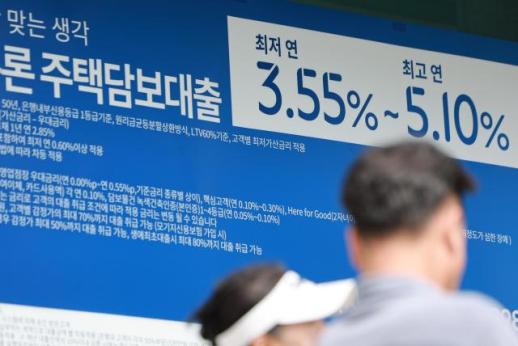 Surging non-bank lending raises PF scare in Korea SEOUL, April 9 (AJP) — South Korea’s non-bank lending is expanding again as tighter bank regulations and elevated borrowing costs push credit demand into less-regulated sectors, demanding scrutiny amid fragile market conditions. Financial authorities took notice and moved to curb subprime lending growth as rising market yields and exchange rate pressures are increasingly straining vulnerable households and businesses. According to the Financial Services Commission (FSC), total household debt across all financial sectors rose by 2.9 trillion won ($2 billion) in February and bigger 3.5 trillion won in March. The increase was driven largely by the secondary banking sector, which added 3.3 trillion won in February and 3 trillion won in March. Within this segment, the mutual finance industry accounted for 3.1 trillion won and 2.7 trillion won in the respective months, sustaining growth of around 3 trillion won for two consecutive months. Bank loans in contrast added just 500 billion won in March following a contraction in February, as stricter debt service ratio (DSR) rules and high interest rates curbed supply. The phenomenon owes to the revival of the so-called “balloon effect,” where credit demand shifts to the non-bank sector when bank lending is constrained — a pattern that authorities warn could amplify structural risks, particularly as stress from real estate project financing (PF) lingers. MG Community Credit Cooperatives led the March increase in mutual finance lending, accounting for 600 billion won. Its cumulative household loan growth reached 2.4 trillion won in the first quarter, prompting authorities to order zero growth from this week. The Financial Supervisory Service (FSS) has also warned of potential on-site inspections if excessive expansion continues. The risks are closely tied to the PF market, where loans are repaid through property sales. A cooling real estate market has delayed sales and increased unsold inventory, undermining repayment capacity. Total PF exposure stands at around 174 trillion won, with about 14.7 trillion won — more than 8 percent — classified as “at-risk” or “concerning,” indicating significant latent distress beyond official delinquency rates. While the overall PF delinquency rate has eased to 3.88 percent from a peak of 4.7 percent in mid-2024, analysts say the improvement may reflect restructuring and maturity extensions rather than a recovery in underlying cash flows. More than 30 PF projects still rely on extensions or restructuring, raising doubts about the sustainability of the apparent stabilization. “If the interest rate upward cycle returns, distress is likely to materialize, centered on vulnerable borrowers,” said Yoon Yeo-sam, a researcher at Meritz Securities. The trend mirrors broader concerns over the expansion of “shadow banking” risks, as credit increasingly flows outside the traditional banking system. Globally, the private credit market has grown to around $3 trillion, with rising borrowing costs adding pressure. The Secured Overnight Financing Rate (SOFR), a key benchmark, has climbed sharply, increasing repayment burdens. In response, some lenders have resorted to extending maturities or restructuring loans, while practices such as Payment-in-Kind (PIK) structures and covenant-lite lending have become more prevalent — allowing risks to accumulate without immediately appearing as delinquencies. Korean insurers hold about 29 trillion won in overseas private credit exposure, roughly 2 percent of their total assets, adding another layer of vulnerability. The International Monetary Fund (IMF) has warned that shifts in capital flows toward non-bank financial institutions could heighten systemic risks and require closer monitoring. FSS Governor Lee Chan-jin also cautioned that while current exposure levels remain manageable, a deterioration in global credit conditions could amplify risks, including potential misselling issues. 2026-04-09 17:06:03
 -
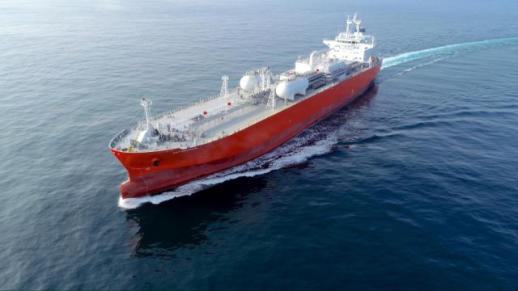 HD Hyundai Heavy builds first ammonia-powered vessel, signaling shift in green shipping fuel race SEOUL, April 09 (AJP) - HD Hyundai Heavy Industries has built the world’s first ammonia-powered gas carriers, marking a significant step toward commercializing next-generation eco-friendly vessels. According to shipbuilding industry sources Thursday, HD Hyundai Heavy Industries held a naming ceremony at its Ulsan shipyard for two 46,000-cubic-meter medium-sized gas carriers equipped with dual-fuel engines. The vessels are designed to run on ammonia and liquefied petroleum gas (LPG), representing the first commercial-scale ammonia-fueled ships. The ships are equipped with safety systems including ammonia leak detection and recovery technologies, highlighting that ammonia-powered vessels are moving beyond experimental development and entering the commercialization phase. Pressure to decarbonize shipping has intensified in recent years as the International Maritime Organization (IMO) tightens emissions regulations and major cargo owners increase environmental, social and governance (ESG) requirements. Shipping companies are increasingly seeking alternatives to fossil fuel-based vessels to maintain long-term competitiveness. Liquefied natural gas (LNG) has served as a transitional fuel, while methanol-powered ships have recently gained traction. However, LNG still produces carbon emissions, and methanol is not considered fully carbon-free. As a result, ammonia and hydrogen have emerged as leading candidates for zero-carbon maritime fuels. Ammonia is widely viewed as the most viable next-generation fuel due to its higher storage density compared with liquefied hydrogen and the ability to store it under less extreme conditions. It also produces no carbon dioxide emissions during combustion, making it a zero-carbon fuel. The International Energy Agency (IEA) projects that ammonia could account for up to 46 percent of shipping fuel by 2050, reflecting its technical and economic advantages. The company has also collaborated with global energy and shipping firms such as Exmar and Trafigura, securing not only technology validation but also early demand for ammonia-powered vessels. Challenges remain, however. Ammonia’s high toxicity makes safety a key concern, while the development of fuel supply infrastructure and cost competitiveness will determine the pace of adoption. Industry watchers say the focus of shipbuilding competition is shifting from order volume to commercialization of eco-friendly fuel technologies. As the transition moves from LNG to methanol and now ammonia, companies that secure early technological leadership are expected to gain an advantage. 2026-04-09 16:53:49
 -
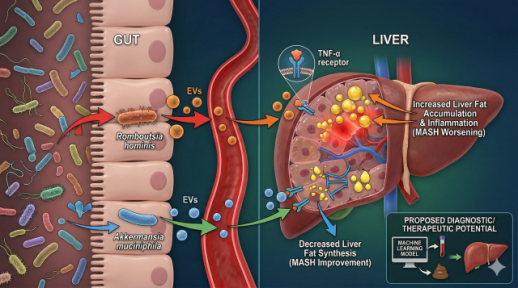 KMU professor identifies gut-liver mechanism for diagnosing and treating fatty liver disease SEOUL, April 09 (AJP) - Professor Kwak Min-jin at Kookmin University's Department of Forest Biomaterials Engineering has identified how gut microbes and their secretions affect metabolic dysfunction-associated steatohepatitis (MASH), the prominent university in Seoul said Thursday. The study, which introduces a high-precision diagnostic technology using extracellular vesicles (EVs), was published in the international journal Pharmacological Research. Fatty liver disease caused by metabolic imbalance is a growing concern in South Korea and across the globe. MASH is a critical stage of the condition that requires active management before it can progress to more severe issues like liver cirrhosis or liver cancer. Because current diagnostic methods often rely on invasive procedures like liver biopsies, there has been a steady demand for non-invasive strategies based on the interaction between the gut microbiome and the liver. Using animal models for longitudinal analysis, the researchers tracked the changing roles of specific gut microbes as MASH develops. The study found that the bacterium Romboutsia hominis increases as the disease progresses, worsening fat accumulation and inflammation in the liver through the tumor necrosis factor-alpha (TNF-alpha) signaling pathway. In contrast, the bacterium Akkermansia muciniphila and its derived EVs were found to reduce liver fat accumulation. This effect is achieved by suppressing the expression of genes associated with fat synthesis. The research is significant for demonstrating that EVs released by bacteria can cross the intestinal barrier to directly regulate liver metabolism. The team also developed a machine-learning diagnostic model that combines gut microbial data with blood information. This model demonstrated the potential to screen for MASH non-invasively with an accuracy rate exceeding 90 percent. Such technology could eventually be expanded into next-generation diagnostic services that manage liver health using stool or blood samples. The findings offer a new approach that targets both the diagnosis and treatment of liver disease by precisely interpreting the link between the gut ecosystem and liver health. KMU researchers are expected to continue their work in the bio-health sector to further refine these diagnostic and treatment technologies. 2026-04-09 16:21:39
 -
 Fire breaks out on submarine at shipyard in Ulsan, leaving one missing SEOUL, April 9 (AJP) - A fire broke out at a shipyard in the southeastern city of Ulsan on Thursday, leaving one person missing, firefighters said. The fire occurred on a Navy submarine undergoing maintenance at HD Hyundai Heavy Industries' shipyard at around 1:58 p.m., prompting about 40 workers inside the vessel to evacuate. Authorities immediately dispatched firefighters and rescue officials with roughly 30 pieces of equipment, managing to contain the main blaze in about 30 minutes. They are still searching for one missing worker in her 60s. 2026-04-09 16:10:13
 -
 HMM union moves toward industrial action over headquarters relocation SEOUL, April 09 (AJP) - Labor-management negotiations at HMM over the planned relocation of its headquarters have collapsed, raising the prospect of industrial action by the union. HMM’s land-based workers’ union said Thursday that talks with management regarding the headquarters relocation had broken down. The union added it plans to begin procedures for industrial action, including filing for mediation with the labor authorities. In a statement released the same day, the union expressed regret over the collapse of negotiations, blaming what it described as the company’s unilateral push to relocate the headquarters. “It is deeply regrettable that negotiations collapsed due to the company’s unilateral attempt to proceed with the headquarters relocation,” the union said. “Filing for mediation is an unavoidable step to protect the rights of our members.” Despite moving toward industrial action, the union emphasized that it remains open to continued dialogue with management. “Applying for mediation does not mean a breakdown in communication,” the union said. “We are always ready to sit down with management with an open attitude and seek a reasonable solution.” The union also urged the company to take a “sincere and forward-looking approach” in future negotiations. The breakdown in talks is expected to intensify labor-management tensions over the headquarters relocation. Depending on the outcome of mediation by the labor commission and whether the union secures legal grounds for industrial action, the dispute could escalate into collective actions such as strikes. The conflict comes as the headquarters relocation appears to be nearing finalization. On March 31, HMM’s board approved amendments to the company’s articles of incorporation to relocate its headquarters to Busan. The move is backed by major shareholders including Korea Development Bank, which holds a 35.42 percent stake, and Korea Ocean Business Corp., which owns 35.08 percent, giving them a combined stake exceeding 70 percent. Meanwhile, the recently enacted “Yellow Envelope Law” — revisions to Articles 2 and 3 of the Trade Union and Labor Relations Adjustment Act — designates workplace relocation as a mandatory subject for labor-management negotiations. This has increased the likelihood that the relocation could trigger labor disputes if pursued without agreement. Industry observers are also watching closely, noting that the dispute could extend beyond a simple relocation issue and impact the broader shipping sector. As HMM is South Korea’s largest national shipping company, prolonged labor tensions could potentially lead to disruptions in logistics operations, they added. 2026-04-09 16:04:38
 -
 All KBO Games Canceled Nationwide Due to Spring Rain; To Be Rescheduled Spring rain across the country forced the cancellation of all professional baseball games. The Korea Baseball Organization said Thursday that all five games scheduled for 6:30 p.m. were called off: Kiwoom Heroes vs. Doosan Bears (Jamsil), Hanwha Eagles vs. SSG Landers (Incheon), kt wiz vs. Lotte Giants (Busan), LG Twins vs. NC Dinos (Changwon), and Samsung Lions vs. KIA Tigers (Gwangju). The canceled games will be rescheduled later. * This article has been translated by AI. 2026-04-09 16:03:00
 -
 Shinhan Bank to Build Wealth Management Hub in Apgujeong With Hyundai Engineering & Construction Shinhan Bank said Thursday it has signed a strategic partnership with Hyundai Engineering & Construction to introduce a new wealth management model that links housing and financial services, centered on Apgujeong redevelopment complexes. The agreement ties Hyundai E&C’s high-end housing brand, The H, with Shinhan Financial Group’s wealth management brand, Shinhan Premier, to provide residents with tailored financial services. Shinhan Bank said it will work with Hyundai E&C to build a wealth management hub for residents inside Apgujeong redevelopment complexes. The plan includes resident-only consultation space connected to community facilities, along with programs such as wealth management seminars and market outlook lectures. Services will be run under a “One-Team” structure combining specialists from Shinhan Bank and Shinhan Investment Corp. The Shinhan Premier Pathfinder team will offer solutions spanning investment, taxes, real estate, inheritance and gifts. The bank said it also plans to strengthen family office-style services aimed at ultra-high-net-worth clients for family-level wealth succession. Shinhan Bank said it will expand the housing-linked wealth management model beyond Apgujeong to other Hyundai E&C high-end complexes, including Banpo and Cheongdam. “This agreement is a new attempt to connect customers’ living spaces with financial services,” a Shinhan Bank official said, adding the bank will continue to broaden Shinhan Premier’s wealth management offerings across high-end residential complexes.* This article has been translated by AI. 2026-04-09 15:57:00
 -
 Jeon Woo-yong Named Head of King Sejong Institute Foundation; Kim Seung-su to Lead Korea Publishing Agency The Ministry of Culture, Sports and Tourism said Thursday it appointed Jeon Woo-yong as chair of the King Sejong Institute Foundation and Kim Seung-su as president of the Korea Publishing Industry Promotion Agency. Both terms are three years. Jeon is a historian who earned a doctorate in Korean history from Seoul National University. He has served as a research fellow at the University of Seoul’s Institute of Seoul Studies, a research professor at Hanyang University’s Institute of East Asian Cultures, and a visiting professor at the Academy of Korean Studies. The ministry said he has also communicated with the public through social media, columns and broadcasts. Kim has worked to strengthen local publishing ecosystems and expand book culture, serving as mayor of Jeonju and as the first chair of the National Association of Book-Reading Cities. During his tenure as mayor, he declared Jeonju a “city of books” and promoted reading and local bookstores by introducing the Jeonju Book Love Point program, “Bookkung 20,” and building library infrastructure, among other policies. In recognition of those efforts, he received a special prize in 2021 from the Korean Publishers Association’s “Publisher of the Year” awards. * This article has been translated by AI. 2026-04-09 15:48:15