SEOUL, April 09 (AJP) - Professor Kwak Min-jin at Kookmin University's Department of Forest Biomaterials Engineering has identified how gut microbes and their secretions affect metabolic dysfunction-associated steatohepatitis (MASH), the prominent university in Seoul said Thursday. The study, which introduces a high-precision diagnostic technology using extracellular vesicles (EVs), was published in the international journal Pharmacological Research.
Fatty liver disease caused by metabolic imbalance is a growing concern in South Korea and across the globe. MASH is a critical stage of the condition that requires active management before it can progress to more severe issues like liver cirrhosis or liver cancer. Because current diagnostic methods often rely on invasive procedures like liver biopsies, there has been a steady demand for non-invasive strategies based on the interaction between the gut microbiome and the liver.
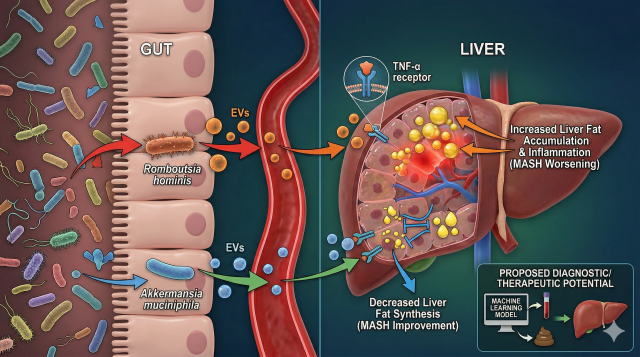
Using animal models for longitudinal analysis, the researchers tracked the changing roles of specific gut microbes as MASH develops. The study found that the bacterium Romboutsia hominis increases as the disease progresses, worsening fat accumulation and inflammation in the liver through the tumor necrosis factor-alpha (TNF-alpha) signaling pathway.

In contrast, the bacterium Akkermansia muciniphila and its derived EVs were found to reduce liver fat accumulation. This effect is achieved by suppressing the expression of genes associated with fat synthesis. The research is significant for demonstrating that EVs released by bacteria can cross the intestinal barrier to directly regulate liver metabolism.
The team also developed a machine-learning diagnostic model that combines gut microbial data with blood information. This model demonstrated the potential to screen for MASH non-invasively with an accuracy rate exceeding 90 percent. Such technology could eventually be expanded into next-generation diagnostic services that manage liver health using stool or blood samples.
The findings offer a new approach that targets both the diagnosis and treatment of liver disease by precisely interpreting the link between the gut ecosystem and liver health. KMU researchers are expected to continue their work in the bio-health sector to further refine these diagnostic and treatment technologies.

Copyright ⓒ Aju Press All rights reserved.