
Journalist

BAE IN SUN
-
 Demand for Premium Family Dining Surges During Family Month As Family Month unfolds, the dining industry is witnessing a notable increase in demand for premium family dining experiences. Consumers are increasingly seeking special outings with parents or family members, leading to significant growth in high-end Korean beef dining and family restaurant performance. According to data from Naver Data Lab on May 14, the search volume for the keyword "dining" peaked at 100 on Children's Day, May 5, and recorded 94 on Parents' Day, May 8. This metric reflects the highest search volume during the observation period, normalized to a scale of 100. In fact, Dining Brands Group's premium Korean beef dining brand, Warehouse 43, reported a 152% increase in sales during the Parents' Day holiday from May 8 to 10 compared to the same period last year. The number of customers also rose by 139%. Notably, locations in residential areas with a high proportion of family households, such as Mokdong, Pangyo, and Jamsil, showed remarkable growth. Among the popular menu items were the "Warehouse Special," featuring tenderloin and sirloin, the rare cut "Special Tenderloin," and the "Korean Beef Masterpiece Set" aimed at family customers. The sales share of course menus, including the five-course "Midam" and the seven-course "Four Seasons," also expanded compared to last year. This trend is attributed to the growing demand for premium dining experiences as a way to treat parents. Family restaurants have shown a similar trend. Outback Steakhouse reported approximately a 20% increase in sales during the Golden Holiday period from May 1 to 5 compared to the same time last year. The highest number of visitors was recorded on Children's Day, May 5. The boost in performance is attributed to menu items that enhance the dining experience. The signature "Black Label Sizzling Edition" features steaks served on a 230-degree hot plate, emphasizing sound, aroma, and visual effects. Outback Steakhouse explained that this approach not only focuses on taste but also creates an engaging dining experience that resonates with family customers. The semi-course structure, which includes salad, main dishes, and desserts, is also cited as a factor in its popularity. Industry experts note that dining consumption is shifting from a focus on food alone to an emphasis on the overall experience, making ambiance, presentation, and experiential elements increasingly important. An industry insider stated, "During Family Month, even if there is a price burden, consumers are definitely looking to gift special experiences to their parents or families. The demand for premium dining that includes ambiance, service, and menu composition is continuing to grow."* This article has been translated by AI. 2026-05-14 19:57:14
 -
 Song Eon-seok: Jung Won-oh Unfit for Seoul Mayor Due to Assault Allegations On May 14, Song Eon-seok, the floor leader of the People Power Party, criticized Jung Won-oh, the Democratic Party's candidate for Seoul mayor, for failing to directly address allegations of assault. He urged the Democratic Party to replace Jung, stating, "A candidate with such allegations is unfit for the position of Seoul mayor." In a Facebook post, Song, who also serves as a co-chair of the party's election committee, remarked, "While Busan mayoral candidate Jeon Jae-soo could not deny receiving a Cartier watch, Jung also fails to clearly state that he did not coerce a female employee into an overnight stay or threaten a cafe owner." He emphasized the seriousness of the allegations, describing them as involving violence, coercion, intimidation, and deceit. "Without a clear explanation from Jung, we will consider this an admission of guilt regarding the criminal allegations," he stated. Song accused Jung of exploiting the May 18 Democratic Movement to glamorize violence. He questioned, "Did Jung assault police officers and civilians unrelated to the May 18 movement? Using the May 18 movement to embellish his crimes is an affront to its legacy." He further pointed out that Democratic Party candidates Woo Sang-ho and Song Young-gil had previously engaged in inappropriate behavior during the May 18 commemorative events, with Woo allegedly grabbing former lawmaker Im Soo-kyung and hurling insults at her. "From Woo to Jung, violence and assault seem to be part of the Democratic Party's DNA," he concluded. * This article has been translated by AI. 2026-05-14 19:55:16
 -
 K-Beauty Drives Record Online Exports for South Korean SMEs in Q1 Domestic small and medium-sized enterprises (SMEs) achieved record online export figures in the first quarter, driven by the strong performance of the K-beauty industry, according to a report released on May 14 by the Ministry of SMEs and Startups. The report, titled "2026 Q1 Online Export Trends for SMEs (Preliminary)," revealed that online exports from SMEs surpassed $300 million for the first time in the first quarter. SMEs accounted for 70.0% of total online exports, with the number of SMEs engaged in online exports increasing by 14.4% year-on-year to 2,735, marking the highest number recorded for the first quarter. Cosmetics, which represent the largest share at 65.8%, saw a remarkable 74.2% increase compared to the previous year, totaling $200 million and achieving the highest quarterly performance ever. Analysts attribute this success to the growing popularity of K-beauty and the effects of the "K-beauty Support Measures" announced last year. Export figures by country showed significant growth, with the United States at $90 million (+60.8%), China at $19 million (+90.8%), the United Kingdom at $18 million (+282.8%), Japan at $16 million (+25.3%), and the Netherlands at $15 million (+133.8%). The strong performance of cosmetics, a key product for SMEs, is also reflected in offline sales. In a report released on April 29, the Ministry of SMEs and Startups noted that cosmetics exports reached $2.18 billion in the first quarter, setting a new record for quarterly performance. Shim Jae-yoon, Director of Global Growth Policy at the Ministry of SMEs and Startups, stated, "The online market is a sector where SMEs have strengths, and the effects of policy support are leading to successful overseas expansion for domestic companies. We will actively support domestic businesses to expand into overseas markets and move beyond online sales to establish a local presence."* This article has been translated by AI. 2026-05-14 19:54:25
 -
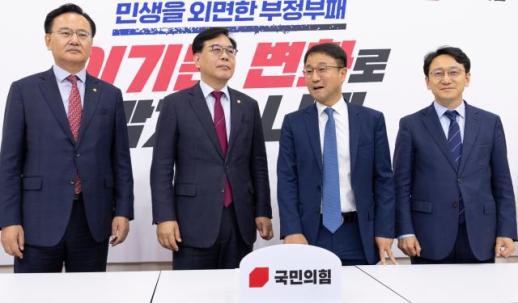 Korean Parties Discuss Legislative Agenda After Han Byeong-do's Election The Democratic Party and the People Power Party met on May 14 for their first official meeting since the election of Han Byeong-do as floor leader. They discussed the timing for a plenary session to elect the next leadership but did not reach an agreement. Han stated, "We agreed to continue meeting to reach a consensus." During the meeting held in the National Assembly, representatives from both parties discussed various legislative schedules and current issues for the month. Attendees included Han Byeong-do and Cheon Jun-ho from the Democratic Party, and Song Eon-seok and Yoo Sang-beom from the People Power Party. Before the formal discussions began, Han explained, "With local elections approaching, I hope we can cooperate to ensure the National Assembly operates smoothly. Today is a courtesy visit." Song also congratulated Han on his election, saying, "I hope that even if there are disagreements during the local election period, we can work together to ensure the National Assembly runs smoothly. I will do my best to facilitate this during the remaining term until June 16." Following their discussions on the overall legislative agenda for May, including the schedule for the upcoming leadership elections, the two parties were unable to reach a consensus. After the meeting, Han told reporters, "We discussed the May legislative schedule with Song, but we have not yet reached an agreement. We will continue to meet to finalize the agenda."* This article has been translated by AI. 2026-05-14 19:50:20
 -
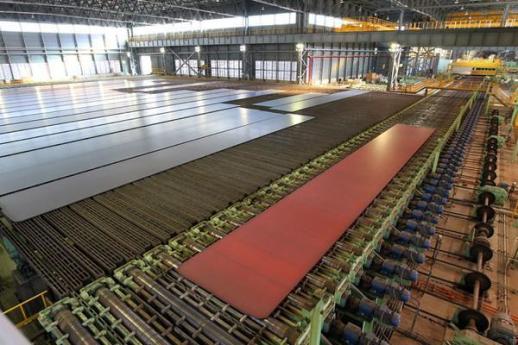 Steel and Shipbuilding Industries Agree on Mid-2026 Plate Prices The steel and shipbuilding industries have reached a final agreement on the supply price of thick plates for the first half of 2026, settling at a mid-800,000 won per ton level. This marks a slight increase from the low 800,000s recorded in the fourth quarter of last year. According to a report by Aju Economy on May 14, the negotiations for the first half of 2026 have recently concluded. The discussions typically proceed with POSCO finalizing agreements with the three major shipbuilders, after which other steel companies, including Hyundai Steel, complete their negotiations. While negotiations are usually held quarterly, this year’s talks extended over a longer period, culminating in a price agreement that encompasses both the first and second quarters. Thick plates, which are steel products with a thickness of 6 mm or more, play a significant role in ship manufacturing, accounting for 20% to 30% of shipbuilding costs. This round of negotiations was prolonged due to the opposing stances of the steel and shipbuilding sectors. Heightened global uncertainties, stemming from conflicts in the Middle East and tariff risks from the U.S., made it difficult for both sides to concede. The steel industry has maintained that, considering the rising costs of raw materials, industrial electricity rates, and logistics, a price increase was unavoidable. In fact, recent surges in iron ore prices, oil prices, and shipping costs have exacerbated cost pressures each year. Conversely, the shipbuilding industry has expressed concerns over rising costs, advocating for price freezes or reductions. Although profitability has significantly improved due to a recent surge in orders, they argue that increases in plate prices directly impact shipbuilding costs, necessitating minimal price hikes. Industry analysts view this agreement as a realistic compromise given the significant burdens faced by both sides. While the steel industry has succeeded in defending prices to a certain extent, it did not achieve the expected level of increases, and the shipbuilding sector could not completely avoid rising cost pressures. Following the conclusion of the first half negotiations, the steel and shipbuilding industries are reportedly set to begin discussions for the second half of 2026 immediately. With ongoing external variables such as fluctuations in iron ore prices, exchange rates, and global trade uncertainties, the outlook for the second half negotiations is expected to be challenging.* This article has been translated by AI. 2026-05-14 19:48:20
 -
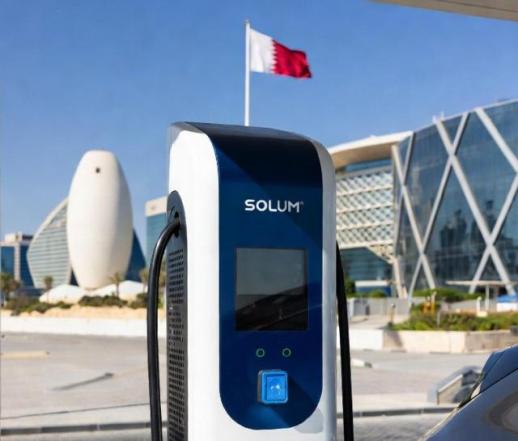 Solum to Participate in Qatar Electricity Authority EV Charger Pilot Project, Targeting GCC Market Solum is participating in a pilot project for electric vehicle chargers with the Qatar Electricity Authority (Kahramaa), marking its entry into the Middle East's electric vehicle charging infrastructure market. According to industry sources on May 14, the Gulf Cooperation Council (GCC) region has similar public procurement structures and energy policies among its member states. As a result, previous business experience or pilot projects with public institutions in one country often influence market entry in neighboring countries. Solum plans to leverage its reference from the Qatar Electricity Authority to gradually expand its operations into Saudi Arabia, the UAE, Kuwait, and other GCC nations. This initiative is being carried out in collaboration with VIM Automotive, a local automotive company in Qatar that operates a public and private network for electric vehicles and sustainable mobility. Solum's participation in the Qatar Electricity Authority project is based on this local partnership. The Middle East market is considered a region where establishing local networks and business partnerships is crucial. An industry insider noted, "Collaboration with local companies is nearly essential for public projects in the Middle East, and access to public institutions through local partners significantly impacts business expansion." Solum is also exploring additional collaborations for business expansion and establishing a local procurement system following this pilot project. Both companies are reportedly discussing the potential for expanding electric vehicle charging infrastructure projects within the GCC market. Currently, the electric vehicle charging infrastructure market in the GCC region is in its early stages but is viewed as having significant growth potential. As energy transition policies led by governments, such as Saudi Arabia's Vision 2030 and the UAE's decarbonization initiatives, gain momentum, the demand for public charging infrastructure is also increasing. Notably, Middle Eastern countries are accelerating investments in related infrastructure as they push for sustainable mobility and smart city development. Industry experts suggest that securing references from initial pilot projects could influence future market leadership. The domestic charging industry is also increasingly focusing on the Middle East as a new market and is expanding local business opportunities. Lee Chang-seop, head of Solum's Middle East division, stated, "Based on this reference, we will deepen our collaboration with local partners and gradually build a business model suitable for the GCC market."* This article has been translated by AI. 2026-05-14 19:46:31
 -
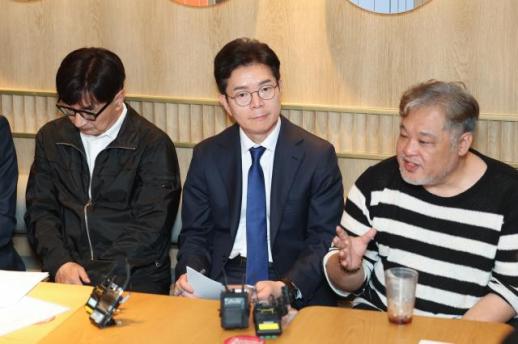 Jung Won-oh Promises Housing Supply Expansion Focused on Business Viability Jung Won-oh, the Democratic Party's candidate for Seoul Mayor, announced on May 14 that he aims to enhance the viability of redevelopment and reconstruction projects to increase housing supply. Speaking at a forum hosted by the Korean Newspaper and Broadcasting Editors Association in the Seoul Chamber of Commerce, Jung emphasized, "We must concentrate all our efforts on expanding housing supply," adding that he would prioritize business viability over public interest to boost supply. He outlined plans to shorten redevelopment and reconstruction timelines and adjust the purchase prices for rental housing to stimulate the real estate market. Jung also mentioned initiatives to expand public housing options, including rental housing near transit stations and the low-cost dormitory pilot program currently operating in Seongdong-gu. Jung pledged to provide a total of 360,000 housing units by 2031, including 302,000 apartments from redevelopment projects, 10,000 permanent rental apartments, and 50,000 purchase rental units. Regarding the long-term capital gains tax exemption for homeowners, he stated, "I consistently believe in protecting the rights of one-household, one-homeowners," and promised to work closely with the government to ensure citizen rights are prioritized if he is elected. He also indicated that he would review whether to include financial and rental income earners in the temporary property tax reduction plan for homeowners without income, which he had promised the day before, after the local elections. Jung clarified, "The fundamental principle of this pledge is to support one-household, one-homeowners without employment or business income," and noted that details regarding age, inclusion of financial and rental income earners, and eligibility thresholds would be determined in consultation with experts and local governments after the election. Additionally, Jung announced a plan to develop 20 commercial districts into 'Second Seongsu' areas. Through the 'Seoul Brand Commercial District Development Project,' he aims to analyze foot traffic, sales trends, rental prices, and industry changes in each district to provide tailored growth strategies for small businesses. He plans to assign a commercial district growth manager to each area to assist with store operations, marketing, and expanding online sales channels. During a meeting with small business owners at a cafe in Jung-gu, Jung stated, "Just as we succeeded in Seongsu-dong, we will create similar commercial districts across 20 locations in Seoul," adding that the city would review and support plans developed collaboratively by residents and merchants in each district. Meanwhile, Jung reiterated his refusal to participate in a one-on-one debate as urged by his opponent, Oh Se-hoon of the People Power Party. At the forum, he remarked, "During the People Power Party's primary, Oh said that TV debates are not everything and refused to debate," expressing discomfort with the inconsistency in his stance. He emphasized, "There are still two more debates and one joint debate left, so the number of debates is sufficient," and asserted the importance of engaging directly with citizens over participating in debates.* This article has been translated by AI. 2026-05-14 19:43:52
 -
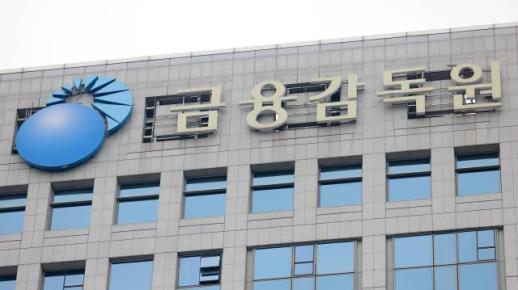 Hong Kong ELS Penalty May Be Reduced as Financial Supervisory Chief Hints at Possibility The penalty for the improper sale of Hong Kong equity-linked securities (ELS) is entering a phase of reconsideration, with the Financial Commission rejecting the Financial Supervisory Service's (FSS) proposal. FSS Chief Lee Chan-jin has also hinted at the possibility of further reductions, making it unlikely that the original penalty will be finalized as is. On May 14, financial sources reported that Lee suggested the potential for a reduction in the penalty during a press briefing regarding the Hong Kong ELS. The FSS is expected to complete its supplementary review by the end of this month and resubmit its findings to the Financial Commission. Previously, during its ninth regular meeting, the Financial Commission discussed the results of inspections on banks and securities firms related to the Hong Kong ELS and requested the FSS to review its findings due to some factual inaccuracies and legal interpretations. This marks the first time in eight years that the Financial Commission has publicly rejected a proposal from the FSS, following the Samsung Biologics accounting scandal. However, the nature of the two cases differs significantly. In the Samsung Biologics case, the core issue was whether accounting fraud occurred and the judgment of accounting violations. After the review, the penalties actually increased. In contrast, the current focus regarding the Hong Kong ELS is on how to justify the large penalty based on applicable standards and legal principles rather than the facts of improper sales. The FSS had previously decided on a total penalty of approximately 1.4 trillion won against five banks, including KB Kookmin, Shinhan, Hana, NH Nonghyup, and SC First Bank. Initially, penalties were discussed at around 4 trillion won, but this was reduced to about 2 trillion won, reflecting the banks' voluntary compensation efforts, and further decreased through the sanction review process. The possibility of additional reductions arises from concerns that the existing calculation method could be contested in future litigation. Under the Financial Consumer Protection Act, penalties are determined based on various factors, including the scale of sales, the degree of violations, efforts for victim restitution, and the responsibility of each seller. The banking sector has already undertaken significant voluntary compensation and may argue that the current penalty is excessive, given the varying sales amounts and levels of improper sales among different sellers. Additionally, this case represents the first major penalty imposed on the banking sector for improper sales since the implementation of the Financial Consumer Protection Act. The financial sector anticipates that the FSS will reorganize the basis for penalties and the degree of violations by each seller during the supplementary review process before submitting an adjusted proposal. If a penalty in the hundreds of billions of won is confirmed, the likelihood of administrative lawsuits from the banking sector increases, prompting authorities to enhance their legal defenses before the final decision is made.* This article has been translated by AI. 2026-05-14 19:41:49
 -
 Samsung Life and Samsung Fire Report Strong Q1 Results Driven by Samsung Electronics Samsung Life and Samsung Fire reported solid performances for the first quarter of this year. The increase in sales of health insurance products, improvements in investment income, and gains from the rising stock price of Samsung Electronics contributed to significant enhancements in their capital soundness. According to the Financial Supervisory Service's electronic disclosure system on May 14, Samsung Life's net profit attributable to shareholders for the first quarter reached 1.2036 trillion won, marking an 89.5% increase compared to the same period last year. The rise in investment income, which increased by 125.5% to 1.2729 trillion won, was bolstered by dividend income, increased profits from subsidiaries, and the reversal of a provision worth approximately 400 billion won following a legal victory in an immediate annuity lawsuit last year. Samsung Fire also saw a slight increase in net profit, supported by stable earnings from long-term insurance. However, the auto insurance sector reported a loss of 9.6 billion won due to premium reductions and an increase in claims. Samsung Fire anticipates improvements in auto insurance loss ratios with the upcoming implementation of the '8-week rule' aimed at curbing excessive medical treatments for patients. Both companies benefited from the positive impact of Samsung Electronics' stock performance on their financial capabilities. Notably, Samsung Life, the largest shareholder of Samsung Electronics, saw its equity rise from 64.8 trillion won at the end of last year to 83.3 trillion won by the end of March this year, with the increase attributed to 16.6 trillion won in evaluation gains related to Samsung Electronics. As a result, Samsung Life's K-ICS (solvency) ratio stood at 210% as of the end of March, up 12 percentage points from the end of last year. Samsung Fire also maintained a stable K-ICS ratio in the 270% range, continuing to demonstrate the highest capital strength in the industry. Samsung Life plans to leverage its increased capital strength to enhance shareholder returns while expanding into new business areas. Iwan Sam, Chief Financial Officer of Samsung Life, stated, "Since the K-ICS for the first quarter exceeded our target level, we plan to actively utilize surplus funds to enhance shareholder value and as investment resources. We are also considering expanding into new business areas, including overseas mergers and acquisitions in insurance and asset management, as well as healthcare and senior living sectors."* This article has been translated by AI. 2026-05-14 19:39:59
 -
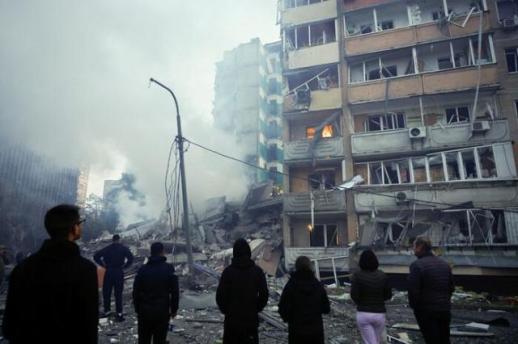 Russia Launches Major Drone and Missile Attack on Kyiv Amid Trump-Xi Talks Russia has launched a large-scale drone and missile attack across Ukraine, including the capital Kyiv. This assault coincided with discussions between U.S. President Donald Trump and Chinese President Xi Jinping in Beijing regarding the war in Ukraine, prompting Ukraine to criticize the attack as evidence of Russia's lack of willingness for peace negotiations. According to the Kyiv Post and CNN, the Ukrainian Air Force reported that Russia fired a total of 731 aerial weapons overnight, including 675 drones and 56 missiles. The primary target of the attack was Kyiv. Russia deployed Kinzhal air-launched ballistic missiles, Iskander-M ballistic missiles, Kh-101 cruise missiles, Shahed-type attack drones, and decoy unmanned aerial vehicles. The Ukrainian Air Force stated that it intercepted or suppressed 693 targets, including 41 missiles and 652 drones. However, 15 missiles and 23 drones struck 24 locations, and debris from intercepted missiles fell in 18 areas. Damage in Kyiv was significant. Mayor Vitali Klitschko reported that part of a nine-story apartment building in the Darnytskyi district was destroyed. Eighteen apartments collapsed, and rescue teams managed to save 11 residents from the rubble. Oleksii Kuleba, Ukraine's Minister of Regional Development, confirmed that one person died in Kyiv. CNN, citing Mayor Klitschko, reported that 32 people were injured, including a one-month-old baby. Damage was also reported in several areas of Kyiv. In the Obolonskyi district, debris from intercepted missiles fell on residential buildings, causing fires. Damage to residential buildings, roads, parked vehicles, and non-residential facilities was reported in the Dniprovskyi, Holosiivskyi, and Solomianskyi districts. The timing of the attack is noteworthy. CNN reported that explosions were heard in Kyiv while President Trump and President Xi were meeting in Beijing. Ukrainian Foreign Minister Dmytro Kuleba criticized on Telegram, stating, "While the world expects peace, predictability, and cooperation, Putin launched hundreds of drones and ballistic and cruise missiles at the Ukrainian capital at the very time the leaders of great powers met in Beijing." He added that "President Trump and President Xi have sufficient influence to tell Putin to end the war." According to Chinese state media, Presidents Trump and Xi discussed the Ukraine war during their meeting, although specific details of their discussions were not immediately disclosed. This attack is interpreted as a saturation strategy aimed at depleting Ukraine's air defense capabilities rather than just a large-scale bombing. Ukrainian officials believe that Russia aimed to weaken air defense munitions and surveillance systems by deploying drones in multiple waves, thereby enhancing the effectiveness of missile strikes. The Kyiv Post noted that Russia had launched approximately 800 drones at Ukraine the previous day, describing this assault as one of the longest and largest continuous bombardments since the war began. Ukrainian officials analyzed that Russia seeks to exert psychological pressure not only through military damage but also on civilians. The attack, coinciding with the Trump-Xi meeting, appears intended to project an impression of Russian superiority on the battlefield to the international community. This airstrike is expected to further highlight the issue of the Ukraine war during the Beijing talks. Ukraine is demanding that the U.S. and China exert substantial pressure on Russia.* This article has been translated by AI. 2026-05-14 19:37:47