
Journalist

Becky Alexis-Martin
-
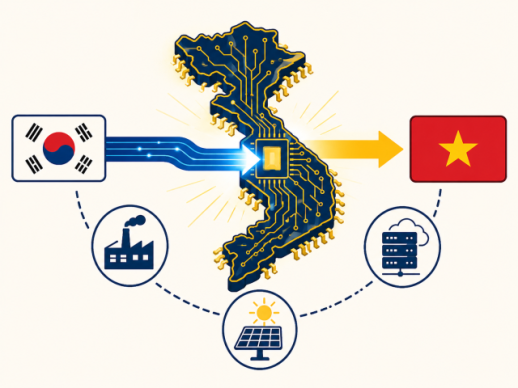 Vietnam No Longer a Low-Cost Base: South Korea's Investment Shifts to Integrated Manufacturing and Services Hub South Korea's foreign direct investment (FDI) in Vietnam is undergoing structural changes amid global value chain (GVC) restructuring and trends toward digital and green transitions. South Korean capital, which accounts for about 18% of total FDI in Vietnam, is moving from a manufacturing focus to high-tech and value-added sectors, significantly impacting Vietnam's industrial structure and supply chains. On May 15, local time, Vietnamese media outlet Cong Thuong reported that a research team led by Professor Do Thi Minh Hue at the National Economics University in Hanoi analyzed these trends in their paper titled "South Korean Direct Investment in Vietnam: Trends and Strategic Business Implications." The team examined changes in the scale, structure, and strategies of South Korean FDI based on secondary data from domestic regulatory agencies and international organizations, drawing implications for businesses and policies. According to the research, as of the end of 2024, Vietnam's cumulative FDI is expected to reach approximately $502.8 billion, with 42,002 projects. Last year, new registered capital of about $38.4 billion was added, projecting the cumulative total to rise to around $540 billion. South Korea is identified as a key investor, with a notable concentration in the processing and manufacturing sectors. Approximately 75% of South Korean FDI is concentrated in this area, leading to the establishment of large-scale production and export clusters focused on electronics, textiles, supporting industries, and chemicals. Major projects from companies like Samsung and LG have transformed regions such as Bac Ninh, Thai Nguyen, Hai Phong, and Ho Chi Minh City into global production hubs for electronics and mobile devices. There is a clear trend of investment being concentrated in areas with well-developed industrial and logistics infrastructure. However, the research notes that some capital is beginning to shift to new regions, considering land availability, labor costs, and infrastructure connectivity. This movement is interpreted as a strategic effort to diversify risks and optimize costs. The nature of investments is also rapidly changing. South Korean FDI, which traditionally focused on assembly and textiles, is now expanding into high-tech electronics, semiconductors, renewable energy, data centers, and finance and logistics sectors. The researchers view this as a signal that Vietnam is evolving from a simple low-cost production base to a strategic regional hub that integrates manufacturing and services. However, deep connections between South Korean and Vietnamese companies remain limited. Many South Korean firms prioritize existing regional supply chains due to factors such as technological gaps, quality standards, delivery capabilities, and financial capacity, which ultimately hinders the level of localization. Institutional support programs for suppliers are also noted to be insufficiently systematic. The research suggests that Vietnamese companies need to move beyond simple subcontracting and more clearly define their roles within the value chain, including components, semi-finished products, supporting services, and research and development (R&D). It emphasizes the need for active investment in technological capabilities, quality management systems, digital transformation, and human resource development. The government is also urged to shift from a quantitative approach focused solely on attracting investment to a "selective FDI strategy" that prioritizes high-tech and high-value projects and connections with domestic companies.* This article has been translated by AI. 2026-05-15 22:30:00
 -
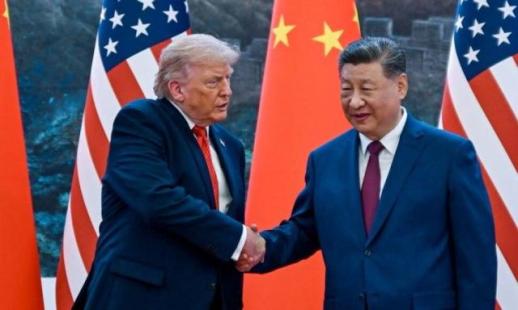 Xi Jinping Emphasizes Stability in U.S.-China Relations During Trump Visit Xi Jinping, the President of China, emphasized the importance of stable development in U.S.-China relations during a meeting with U.S. President Donald Trump at Zhongnanhai. His remarks underscored the need to implement agreements reached during their previous summit and to manage conflicts that could destabilize the bilateral relationship. According to China Central Television (CCTV) on May 15, Xi described Trump's visit as "historic and symbolic." He noted that the two countries had reached significant consensus on stabilizing economic and trade relations, expanding practical cooperation, addressing mutual concerns, and enhancing communication on international and regional issues. Xi stated, "Both sides must accurately set the direction and eliminate obstacles to promote the stable development of U.S.-China relations," indicating the need to translate the agreements confirmed during their May 14 meeting into actionable policies and cooperation. During the previous day's talks, Xi outlined a broader framework for U.S.-China relations, asserting, "The two countries should be partners, not adversaries," and emphasized the need for mutual achievement and shared prosperity. He proposed a new standard for U.S.-China relations: a "constructive strategic stable relationship." On economic and trade issues, Xi stressed the importance of maintaining negotiations. He remarked, "The essence of U.S.-China economic and trade relations is mutual benefit and win-win cooperation," adding that equal negotiations are the only correct choice when faced with disagreements and friction. He also noted that the economic and trade teams from both countries had achieved balanced and positive results overall, urging both sides to maintain the favorable momentum they have gained. Xi raised the stakes regarding the Taiwan issue, stating, "The Taiwan issue is the most important issue in U.S.-China relations." He warned that while proper handling could stabilize bilateral relations, mishandling could lead to conflict and put the entire U.S.-China relationship in jeopardy. He added, "'Taiwan independence' and peace in the Taiwan Strait cannot coexist," urging the U.S. to handle the Taiwan issue with caution. CCTV reported that the two leaders also discussed international and regional issues, including the situation in the Middle East, the war in Ukraine, and matters concerning the Korean Peninsula. They agreed to support each other in successfully hosting the upcoming Asia-Pacific Economic Cooperation (APEC) summit and the Group of Twenty (G20) summit this year.* This article has been translated by AI. 2026-05-15 22:27:54
 -
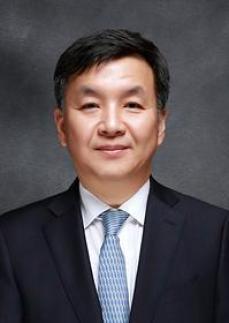 New Bank of Korea Monetary Policy Committee Member Kim Jin-il Pledges to Leverage U.S. Experience Kim Jin-il, the newly appointed member of the Bank of Korea's Monetary Policy Committee, stated on May 15 that he will do his utmost to contribute to achieving the central bank's monetary policy goals by leveraging his accumulated experience. In his inaugural speech, Kim expressed a strong sense of duty in taking on this significant role during a critical time. He officially took office in a ceremony that afternoon, succeeding Shin Sung-hwan, whose term has ended. The term for a member of the Monetary Policy Committee is four years. Kim assessed the current policy environment as complex, noting that inflation concerns have intensified due to rising oil prices stemming from conflicts in the Middle East. He acknowledged that while the economic situation is improving, particularly in the IT sector, uncertainties regarding global investments remain high, and issues of polarization continue domestically. He also highlighted ongoing challenges in financial stability, including household debt and housing price issues, as well as increased vigilance regarding risks associated with capital inflows and outflows due to greater global interconnectedness. "Under these complicated domestic and international conditions, I realize how challenging it is to achieve the central bank's fundamental policy objectives," he emphasized. Kim pledged to apply his research experience in macroeconomics and his background working at the U.S. Federal Reserve to help meet the monetary policy goals. He was recommended by the Korea Federation of Banks on May 11. Kim holds a bachelor's and master's degree in economics from Seoul National University and earned his Ph.D. in economics from Yale University. He served as an economist at the Federal Reserve Board from 1996 and later as a senior economist before becoming a professor of economics at Korea University in 2010. Additionally, he has held various roles, including member of the Financial Development Committee of the Financial Services Commission, non-executive director of the Korea Deposit Insurance Corporation, and chair of the Macroeconomic Division of the Presidential Economic Advisory Council.* This article has been translated by AI. 2026-05-15 22:25:43
 -
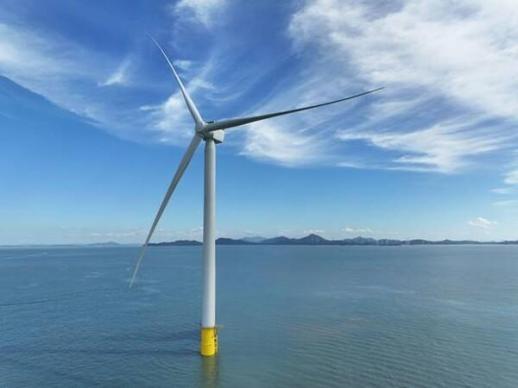 Government to Establish Joint Connection System to Expand Offshore Wind Power The South Korean government is set to address the grid connection issues that have hindered the expansion of offshore wind power by establishing a joint connection system. On May 15, the Ministry of Climate, Energy, and Environment held a signing ceremony and meeting for the promotion of joint offshore wind connections at the Korea Electric Power Corporation's Gyeongin Construction Headquarters. This initiative follows the announcement last December of plans to expand and promote offshore wind infrastructure. At that time, the government outlined a goal to increase the current offshore wind capacity of 0.35 gigawatts (GW) to 10.5 GW by 2030, raising it by 4 GW annually. The government decided to focus on enhancing key infrastructure for offshore wind construction, including ports, installation vessels, and financing. It also aimed to streamline the military operational consultations, which are crucial for project approvals, and to announce plans for long-term supply bidding more promptly. Additionally, a new offshore wind power promotion team at the director level was established, with plans to conduct site bidding starting in 2029, reducing the average project duration from about 10 years to 6.5 years. Previously, offshore wind projects were pursued through individual connections, with each developer building separate lines to land substations. However, as offshore wind farms have grown larger, this has led to increased costs from redundant transmission lines and grid shortages. In response, the government plans to proactively establish a joint connection facility, allowing multiple offshore wind developers to connect at public hubs on islands or coastal areas for rapid integration and expansion. This approach is expected to reduce connection costs, thereby lowering the cost of offshore wind power generation and decreasing Korea Electric Power Corporation's (KEPCO) electricity purchasing expenses. Furthermore, in areas where KEPCO's shared network and offshore wind connection lines are adjacent, integrated facilities are anticipated to lower KEPCO's investment costs in the grid. During the event, a memorandum of understanding (MOU) was signed between KEPCO and offshore wind developers in the Haenam region, which is one of nine candidate sites for joint connections. As a result, the total length of connection lines is projected to decrease from 703 km to 287 km, a reduction of 59%. The total investment is expected to drop by 3.6 trillion won compared to individual connections, with an anticipated average reduction of 20 won per kilowatt-hour in offshore wind generation costs. Following the signing ceremony, the Ministry of Climate and KEPCO introduced detailed plans for the joint connection initiative during a subsequent meeting. The government aims to expand joint connections in areas densely populated with offshore wind projects through consultations among developers by the third quarter of this year. To facilitate this, they will gather opinions on cost-sharing plans that harmonize institutional support with principles of public benefit and beneficiary burden. Minister of Climate, Energy, and Environment Kim Seong-hwan stated, "The expansion of renewable energy is a core issue of energy security that is vital for the nation's survival. The promotion of offshore wind power must be approached from the perspective of national infrastructure management. The government will be a strong ally in breaking down the uncertainties of grid connections and the barriers to permits faced by offshore wind developers."* This article has been translated by AI. 2026-05-15 22:20:37
 -
 KOBA 2026: The Era of High-Quality Video Production The KOBA 2026 exhibition, South Korea's largest broadcasting and video equipment showcase, is no longer just a platform for broadcasters and film production companies. With the rapid growth of short-form content on platforms like YouTube, TikTok, and Instagram Reels, everyday consumers and individual creators have emerged as key players in the professional video production market.Held from May 12 to 15 at COEX in Samseong-dong, Seoul, KOBA 2026 featured numerous booths from global camera manufacturers, including Canon, Sony, and Nikon. This year's exhibition prominently showcased the evolution of video cameras. While previous events focused on photography capabilities, this year's event highlighted video-centric cameras and AI-based video solutions.The audience has also changed. The proportion of general consumers and individual creators producing vlogs and short-form content has significantly increased, alongside traditional broadcasting professionals and cinematographers. Long lines formed at booths where attendees could try out filming equipment, and areas demonstrating vertical video shooting and live streaming attracted many young visitors.Notably, Canon Korea launched a new video-focused mirrorless camera during the exhibition. On May 14, Canon held a press conference at Studio 159 in COEX, unveiling the video-specialized full-frame mirrorless camera, the EOS R6 V, along with the power zoom lens RF20-50mm F4 L IS USM PZ.This new product reflects the rapid shift in the camera market from photography to video. As platforms like YouTube and TikTok grow, the demand for high-quality video production among everyday consumers has surged, prompting camera manufacturers to accelerate the democratization of professional video equipment.Nikon and Sony also emphasized their professional video equipment and cinema cameras in line with the expanding video market. Nikon Imaging Korea operated a joint booth themed "Nikon in KOBA 2026 with RED," featuring the American digital cinema camera company that Nikon acquired. Attendees could experience the latest cinema cameras and mirrorless products firsthand. The "Z CINEMA," showcased for the first time since RED became a subsidiary, particularly attracted independent filmmakers.A Nikon Imaging Korea representative noted, "Visitor numbers increased by 1.5 times compared to last year, especially among younger audiences, indicating a clear rise in demand for video cameras." They added, "With prices around 2 million won, there is growing interest in video cameras among college students and young people." Sony Korea emphasized AI-based video production and a network-centric live production ecosystem. They showcased features like AI auto framing and automatic tracking technology, which adapt camera angles based on the speaker's movements, proving useful in sports, education, and corporate content production.The exhibition confirmed that high-quality video production is no longer confined to a select group of professionals. The camera market is rapidly shifting towards video, as the performance of smartphone cameras has leveled up, leading to a decline in demand for simple photography while the demand for high-quality video production continues to rise due to the popularity of short-form content and reels. The advancement of AI technology is also expected to accelerate the expansion of the video equipment market. With the rapid commercialization of AI-based autofocus, subject tracking, automatic framing, and virtual production technologies, individual creators can now produce professional-level content more easily.An industry insider stated, "The video equipment market, once centered on broadcasters and film production companies, is now rapidly expanding to include everyday consumers and individual creators. The democratization of high-performance video equipment will accelerate further with the growth of AI technology and video platforms."* This article has been translated by AI. 2026-05-15 22:18:00
 -
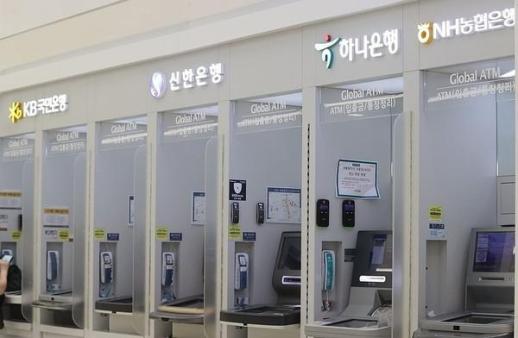 COFIX Rises After a Month, April Rate Up 0.08% Banking sector variable mortgage rates, determined by the COFIX (Cost of Funds Index), have risen after a month. The Korea Federation of Banks reported on May 15 that the new COFIX for April was 2.89%, an increase of 0.08 percentage points from March's rate of 2.81%.The balance-based COFIX also rose from 2.85% to 2.87%, an increase of 0.02 percentage points. COFIX represents the weighted average interest rate of funds raised by eight domestic banks. An increase in COFIX indicates that banks are paying higher interest rates to secure funds.The new balance-based COFIX, introduced in June 2019, increased from 2.45% to 2.49%. This new index includes rates for other deposits, borrowings, and transaction funds.With COFIX rising after a month, mortgage rates are expected to increase as well. Amid stricter household loan regulations making it difficult to obtain mortgages, the rising interest rates are likely to heighten the financial burden for actual borrowers.* This article has been translated by AI. 2026-05-15 22:15:17
 -
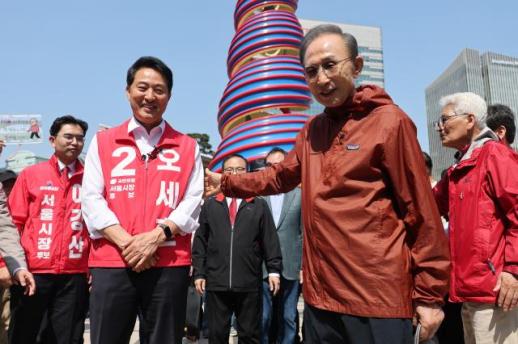 Oh Se-hoon Visits Cheonggyecheon with Lee Myung-bak on Teacher's Day Oh Se-hoon, the People Power Party candidate for Seoul mayor, expressed his happiness on May 15 while walking along Cheonggyecheon with former President Lee Myung-bak, whom he referred to as his "mentor in my heart." The two walked along Cheonggyecheon from Cheonggye Plaza to Gwangtonggyo Bridge, sharing their thoughts during the stroll. While walking, Lee stated, "This is no longer just our Seoul; it is a Seoul for the world," emphasizing the need to create works that reflect this global identity. Oh responded, "You have built this hardware very well, and I will ensure that the software enhances its visibility." After their meeting, Oh spoke to reporters, recalling that he had celebrated the 20th anniversary of Cheonggyecheon’s completion at the same location with Lee last autumn. He noted that there had been much praise for Lee's contributions in adding rich cultural content to the infrastructure, helping to elevate Seoul to a world-class city. Oh added that Lee is pleased that Cheonggyecheon has become a beloved space for Seoul citizens. He quoted Lee as saying that the transformation of urban space and design initiated by Cheonggyecheon should continue, aiming to create a space that is admired by foreigners and meets global standards. Oh concluded by stating, "I will keep those words in mind and aim to upgrade Cheonggyecheon into a space where the quality of life for Seoul citizens is felt and can be benchmarked by foreigners." He remarked that the insights gained from the Cheonggyecheon project have been pivotal in the transformative changes seen in Seoul, expressing his gratitude for the opportunity to walk with his mentor, Lee Myung-bak, along Cheonggyecheon.* This article has been translated by AI. 2026-05-15 22:12:00
 -
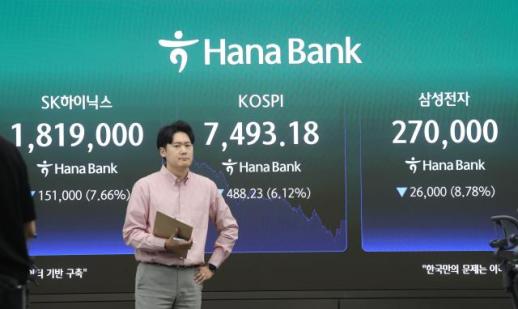 KOSPI Hits 8,000 Before Plummeting to 7,400 The KOSPI index briefly surpassed the 8,000 mark for the first time but then fell sharply due to profit-taking. The sell-off in the stock market intensified, triggering a trading halt for the first time in nearly a month. According to the Korea Exchange, the KOSPI closed at 7493.18, down 488.23 points (-6.12%) from the previous trading day. The index opened at 7951.75, down 29.66 points (-0.37%), but managed to rise to 8046.78, breaking the 8,000 barrier early in the session. However, profit-taking by foreign investors quickly erased those gains, leading to a significant decline as the session progressed, pushing the index down to the 7,400 range. At 1:28:49 PM, a trading halt was triggered due to a sudden fluctuation in the KOSPI 200 futures index, stopping program sell orders for five minutes. This was the first trading halt in the KOSPI market since April 2. Lee Kyung-min, a researcher at Daishin Securities, noted, "The sharp decline in the KOSPI today reflects the overheating concerns following a short-term surge, compounded by heightened anxiety over interest rate hikes and rising bond yields, which acted as triggers for the reversal and further decline. The end of the first-quarter earnings season also contributed to profit-taking sentiment as expectations peaked." Han Ji-young, a researcher at Kiwoom Securities, added, "After the conclusion of the U.S.-China summit, attention has shifted to the ongoing negotiations between the U.S. and Iran, which are causing persistent noise. Additionally, the U.S. 10-year Treasury yield has surpassed 4.5%, and the recent inflation shocks from the U.S. Consumer Price Index (CPI) and Producer Price Index (PPI) are causing ripples in the market." "In a similar vein, Japan's inflation shock this morning has prompted rising interest rates in Japan, influencing other countries' rates as well. The surge in the dollar-won exchange rate, which has climbed back to around 1500 won, has led to increased foreign selling. The KOSPI's 20.9% surge since May 1 has also raised concerns about the pace of that increase and the extreme concentration in a few sectors," she added. In the stock market, individual investors bought a net 7.1943 trillion won, attempting to support the index. In contrast, foreign and institutional investors sold a net 5.6195 trillion won and 1.7396 trillion won, respectively, focusing on profit-taking. Major stocks also experienced declines. Samsung Electronics fell 7.77%, SK Hynix dropped 6.65%, SK Square decreased 5.81%, Hyundai Motor was down 1.69%, LG Energy Solution fell 5.66%, Samsung Electro-Mechanics dropped 0.39%, Doosan Enerbility decreased 5.29%, HD Hyundai Heavy Industries fell 5.37%, and Kia was down 5.17%. The KOSDAQ index also closed sharply lower, finishing at 1129.82, down 61.27 points (5.14%). The index opened higher at 1197.23 but quickly turned downward as investor sentiment weakened. In the KOSDAQ market, foreign investors bought a net 363.4 billion won, while individuals and institutions sold a net 144.6 billion won and 167.2 billion won, respectively. Most major stocks in the KOSDAQ also showed weakness, including Alteogen (-3.90%), EcoPro BM (-8.52%), EcoPro (-8.92%), Rainbow Robotics (-3.80%), Kolon TissueGene (-2.36%), Samchundang Pharm (-4.44%), Rino Technology (-10.95%), Ligand Pharmaceuticals (-2.35%), HLB (-2.44%), and ABL Bio (-5.10%).* This article has been translated by AI. 2026-05-15 22:09:28
 -
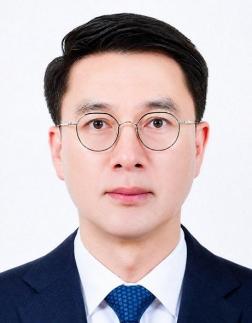 Moon Seong-yo Appointed Head of Saemangeum Development Agency Moon Seong-yo was appointed as the head of the Saemangeum Development Agency on May 15. Moon, who hails from Jeju and graduated from Jeju High School and Korea University with a degree in English literature, also holds a master's degree in economics from the University of Illinois in the United States. He entered public service in 1994 after passing the 37th National Civil Service Examination and has held various positions, including Director of Housing Welfare Planning at the Ministry of Land, Infrastructure and Transport, Head of the Public Housing Promotion Division, Director of the Infrastructure Bureau at the Administrative City Construction Agency, and Head of the Urban Regeneration Planning Division at the Ministry of Land. He later served as Deputy Director and Director of the Ministry's Urban Affairs Office and Planning and Coordination Office, retiring in December of last year as an expert in urban planning. During a briefing, Lee Gyu-yeon, Senior Secretary for Public Relations and Communication at the Blue House, described Moon as a seasoned bureaucrat in the field of land and urban development, noting his leadership in establishing infrastructure for the Administrative City and developing the Busan-Ulsan-Gyeongnam master plan. Lee expressed expectations that Saemangeum will play a significant role in becoming a hub for future advanced industries such as robotics, hydrogen, and AI. Moon's appointment comes amid a prolonged leadership vacancy that has stalled internal development projects in Saemangeum and key issues in the Jeonbuk region. A Ministry of Land official stated, "The decision to appoint a proven practical bureaucrat aims to quickly stabilize the organization following a long vacancy and to transform Saemangeum into a hub for future advanced industries like AI and robotics." Additionally, the Blue House announced other appointments at the vice-ministerial level and chairpersons of various committees. Hyun Soo-yeop, the current spokesperson for the Ministry of Health and Welfare, was appointed as the First Vice Minister, while Lee Jong-wook, the current Deputy Commissioner of the Korea Customs Service, was promoted to Commissioner. Hong Mi-young, Chairperson of 'People Opening a New Daily Life,' was appointed as the chair of the National Sustainable Development Commission, and Baek Jong-woo, a professor at Kyung Hee University College of Medicine, was named Vice Chair of the National Life Safety Commission. Additionally, Kim Ki-young, a professor at Yonsei University, was appointed as the chair of the National Library Committee.* This article has been translated by AI. 2026-05-15 22:06:23
 -
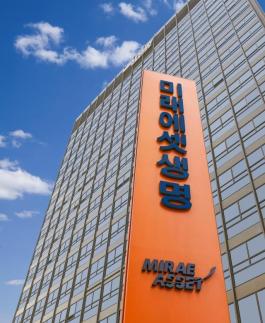 Mirae Asset Life Reports 534 Billion Won in Q1 Profit, Driven by Growth in Protection Insurance Mirae Asset Life has more than doubled its net profit in the first quarter of this year, thanks to an expansion in protection insurance sales. The company reported improvements in its health insurance product portfolio and continued growth in commission-based businesses such as variable insurance and retirement pensions. On May 15, Mirae Asset Life announced that its consolidated net profit for the first quarter reached 534 billion won, marking an increase of approximately 115% compared to the same period last year. This growth is attributed to a focus on profitability-driven sales strategies and risk management amid uncertain domestic and international conditions. Notably, the growth in new contracts for protection insurance was significant. The annualized premium equivalent (APE) for new protection insurance contracts in the first quarter was 1.01 trillion won, a 34.6% increase from the previous year. The company also saw an increase in its insurance contract margin (CSM), a key indicator of future profitability. The CSM for new contracts in the first quarter was 1.507 trillion won, up 6.8% year-on-year, while the CSM for existing contracts rose to 21.506 trillion won, a 4.5% increase from the end of last year. The CSM for protection insurance increased by 9.7%, and the CSM for health and injury insurance grew by 10.9%. The revenue structure remained stable, with insurance profit recorded at 7.7 billion won and investment profit at 586 billion won. Total assets were reported at 32.3 trillion won, with equity capital amounting to 24 trillion won. Commission-based businesses, including variable insurance and retirement pensions, continued to show growth. The reserve for variable insurance in the first quarter reached 13.3 trillion won, a 15.0% increase from the same period last year, while commission income from variable insurance rose by 15.7% to 14.3 billion won. Overall fee-based business performance expanded to 191.7 billion won compared to the previous year. A representative from Mirae Asset Life stated, "Despite the uncertain domestic and international environment, we focused on improving our product portfolio and risk management to achieve sustainable profit generation. We have achieved stable earnings based on solid fundamentals."* This article has been translated by AI. 2026-05-15 22:04:05