

Journalist

Burhanettin Duran
-
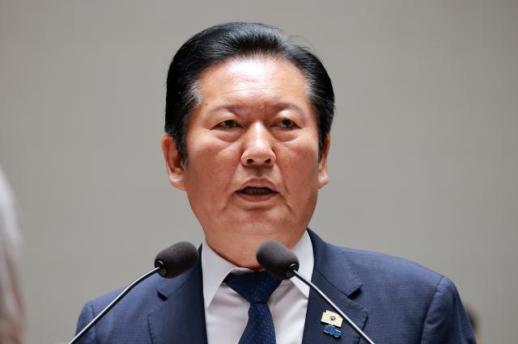 Local Elections Show Mixed Results for South Korea's Major Parties The results of the June 3 local elections indicate that while the ruling Democratic Party of Korea won a majority, many of the so-called "My Pick" candidates, favored by President Lee Jae-myung, were defeated. The party secured 12 out of 16 metropolitan mayoral positions and 17 out of 25 district mayors in Seoul, but failed to reclaim the capital, leading to assessments of a hollow victory. Political analysts suggest that public sentiment has delivered a reprimand to both major parties in these local and National Assembly by-elections. Voters expressed discontent with the dominant ruling party and the opposition's inability to distance itself from former President Yoon Suk-yeol. A significant blow for the Democratic Party was the defeat of candidate Jeong Won-oh in Seoul. Pre-election polls and exit surveys indicated he was leading against People Power Party's Oh Se-hoon. Oh, the incumbent mayor, even stated he would campaign with the determination of a challenger. However, when the votes were counted, Oh emerged victorious. Analyzing the overall election results in Seoul, it is difficult to conclude that public sentiment has shifted entirely toward conservatism. Compared to four years ago, the number of districts won by the Democratic Party increased from eight to 17, and they secured 80 out of 118 seats in the city council. This suggests a pattern of cross-voting, where the mayoral position went to the People Power Party while district mayors and council members were elected from the Democratic Party, indicating a desire to check the power of the Lee Jae-myung administration and the ruling party. In a similar vein, the defeat of candidate Ha Jung-woo in the Busan North Gap by-election was notable. Although the People Power Party won the mayoral race in Busan, they lost their only parliamentary seat in the region. This reflects a sentiment among voters to rein in the dominant ruling party, as evidenced by the losses of favored candidates. The outcomes in the Seoul mayoral and Busan North Gap elections present a challenging scenario for the People Power Party's leadership under Jang Dong-hyuk. Oh Se-hoon, who won the mayoral race, distanced himself from Jang during the campaign. Some party members are already calling for accountability from Jang regarding the election results in Seoul and Busan. In Busan North Gap, independent candidate Han Dong-hoon defeated the People Power Party's Park Min-sik, overcoming a situation where conservative votes were split. Han's entry into the National Assembly is expected to intensify competition for leadership within the party. Political observers believe that the upcoming floor leader election scheduled for June 9 will serve as a precursor to this internal rivalry.* This article has been translated by AI. 2026-06-06 09:03:00
 -
 SpaceX Signs $30 Billion Cloud Lease with Google Ahead of IPO SpaceX has signed a cloud service lease agreement with Google ahead of its upcoming initial public offering (IPO). According to a report by Yonhap News Agency on June 6, SpaceX disclosed to the U.S. Securities and Exchange Commission (SEC) that it has entered into a cloud service contract with Google, granting access to 110,000 NVIDIA graphics processing units (GPUs), along with central processing units (CPUs) and memory resources. Under the agreement, Google will pay $920 million per month, starting in October 2026 and continuing through June 2029. The total payment over the contract period is projected to reach approximately $30 billion. A discounted rate will apply until September, the resource expansion period. If SpaceX fails to provide the agreed number of GPU accesses by the end of September, Google may terminate the contract or request a fee reduction. This marks SpaceX's second data center lease with a prominent artificial intelligence (AI) company. Earlier, in early May, it leased computational capacity exceeding 220,000 GPUs to Anthropic through the 'Colossus1' data center in Memphis, Tennessee. SpaceX's recent moves to secure substantial data center leases ahead of its IPO are seen as a strategy to enhance its investment value by leveraging the asset value of its data centers. Unlike Anthropic, Google operates as a major hyperscaler among the world's top three cloud service providers, positioning SpaceX as a company that provides data centers to hyperscalers.* This article has been translated by AI. 2026-06-06 09:03:00
 -
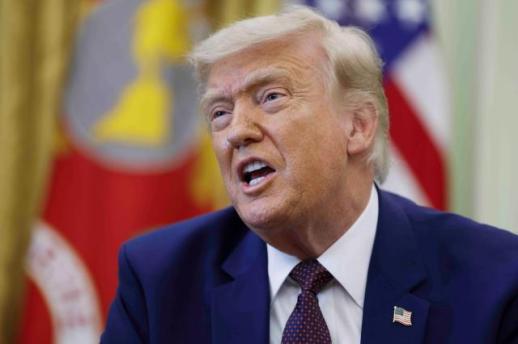 Trump: U.S. Nearing Exit from Iran, Either Through Agreement or Force President Donald Trump stated on June 5 that the United States is at a point where it can exit Iran very quickly. According to Yonhap News Agency, during a visit to Chippewa Falls, Wisconsin, where he met with agricultural leaders, Trump remarked, "It will either be a very strong agreement or the opposite. It will be either a document of agreement or a very tough approach." He added, "A very tough approach might actually be the easier way, but we will get out, and then fertilizer prices will drop significantly. Gas prices will also fall considerably." Trump's comments suggest that the U.S. may soon reach an agreement with Iran or resume military action. Previously, the U.S. had reached a broad consensus with Iran to open the Strait of Hormuz alongside a ceasefire and to engage in nuclear negotiations over the next 60 days. However, they have yet to agree on the timing for the release of Iran's frozen assets. Additionally, Trump commented on unexpectedly strong employment figures for May, describing them as results emerging amid "private conflicts," stating, "I wouldn't call it a war, but I would refer to it as military conflict." According to the U.S. Department of Labor, non-farm employment increased by 172,000 jobs in May compared to the previous month. 2026-06-06 08:30:00
 -
 Rep. Hwang Jeong-ah Discusses South Korea's Future in AI and Space Technology South Korea stands at a significant turning point. Artificial intelligence (AI) is reshaping industrial rules, while semiconductors and data centers have become crucial infrastructure for national competitiveness. The space industry has evolved from a dream of scientists to a strategic sector that determines national security and future resources. The United States and China have entered a new power competition centered on AI and space, prompting countries worldwide to mobilize in an era where technology equates to national strength. In the midst of this transformation, what choices should South Korea make? Rep. Hwang Jeong-ah of the Democratic Party is one of the few politicians capable of answering this question. A former lead researcher at the Korea Astronomy and Space Science Institute, he spent over 20 years studying satellites and cosmic radiation. Currently, he serves on the National Assembly's Science, Technology, Information, Broadcasting, and Communications Committee, leading initiatives such as the AI Data Center Special Act, expansion of national R&D, and policies for nurturing scientific talent. The scientist who once contemplated the nation's future in a lab is now designing South Korea's industrial strategy in the National Assembly. Throughout the interview, Rep. Hwang emphasized, "Ultimately, it is science and technology that can protect South Korea." His vision for becoming one of the top three countries in AI and one of the top five in science and technology transcends mere industrial policy, approaching a survival strategy for the nation. "Ultimately, it is science and technology that can protect South Korea" Rep. Hwang initially had no intention of entering politics. He was a scientist developing satellite payloads and researching space at the Korea Astronomy and Space Science Institute. His decisive moment came in 2023 when the government cut research and development (R&D) budgets. Researchers in the field were shocked, witnessing halted projects and a destabilized research environment for future generations. He thought, "Someone must represent the voices of scientists in the National Assembly." He stated, "If we consider the long-term future of South Korea, science and technology policy should not waver with each administration." His awareness of the issue that society pushes scientists into a cartel-like situation also motivated his political participation. Since entering politics, he has focused on legislative solutions to long-standing issues in the science and technology sector, such as establishing a Vice Minister of Science and Technology position, creating a national scientist system, expanding R&D budgets, and abolishing PBS. He defines politics as a matter of changing direction, asserting that creating an environment conducive to research is also a crucial role of the state. South Korea is already a space power Rep. Hwang disagrees with the prevailing notion in society that questions whether South Korea can succeed in space. He believes the country already possesses world-class space capabilities. South Korea successfully launched the Nuri rocket and is one of only seven nations capable of sending domestically produced satellites into space using its own launch vehicle. Recently, a South Korean satellite was included in NASA's Artemis lunar exploration project, signifying that South Korea is recognized as a key partner in global space cooperation. Rep. Hwang does not view space solely as a scientific domain. He emphasizes, "Space is security and economy." Today, satellites are essential infrastructure for national operations, encompassing communication, internet services, military reconnaissance, climate monitoring, and disaster response. In the future, industries such as space data centers, space internet, and space logistics are likely to emerge. He warns, "Without securing space capabilities, we risk falling behind in the competition for future resources." Why basic science is important Rep. Hwang identifies "short-term performance orientation" as the biggest problem in South Korea's science policy. He argues that a structure demanding results within one, three, or five years makes it difficult to produce innovations that can change the world. He cites Nobel Prize-winning research as an example, noting that it typically takes an average of 19 years from the start of research to actual results, and nearly 30 years when including academic validation. Yet, South Korea remains fixated on short-term evaluations and results. He likens the situation to a tree with abundant leaves but weak roots. While it may appear to have many achievements, a weakened foundation in basic science ultimately undermines national competitiveness. The golden time for South Korea in the AI era Rep. Hwang emphasizes AI as a critical area. He describes the next two to three years as a golden time for determining South Korea's AI competitiveness. In the AI era, GPUs and data centers serve as the railroads and highways of technology. Without data centers, AI cannot thrive. This necessity led him to spearhead the AI Data Center Special Act, which aims to streamline the permitting process for AI data centers and accelerate construction through the designation of special zones outside the capital and support for power supply. He asserts, "The AI competition is ultimately a race for speed." The first country to establish its infrastructure will dominate the market, making it difficult for latecomers to catch up. AI data centers as the "AI highway" Rep. Hwang refers to AI data centers as the "AI highway." Just as the Gyeongbu Expressway during the Park Chung-hee administration drove industrialization and the high-speed internet network during the Kim Dae-jung administration established South Korea as an IT powerhouse, data centers will become the foundation of national competitiveness in the AI era. He specifically defines AI data centers as a national strategic SOC (social overhead capital). While roads and railways facilitate logistics, data centers will drive AI and data movement. Future national competitiveness will hinge on the ability to secure AI infrastructure. Survival strategy in the era of U.S.-China technological hegemony Rep. Hwang views the U.S.-China technological power struggle as an opportunity rather than a crisis, given South Korea's world-class semiconductor technology. In particular, memory semiconductors are strategic assets needed by both the U.S. and China. He states, "The key is to enhance our technological competitiveness without becoming dependent on either side." He believes South Korea has a strong chance of success in areas such as AI semiconductors, manufacturing AI, and physical AI. The biggest problem in South Korea's education system Rep. Hwang identifies the lack of scientific talent as rooted in the education system. Currently, students who excel academically tend to pursue medicine, while science careers are often overlooked. He points out that many students who wish to study physics are unable to do so due to entrance exam pressures. "There are too many students who want to pursue science but cannot," he says. He emphasizes that scientists must be socially respected and able to lead stable lives to attract talent, asserting that the issue lies not in education but in societal choices. The most important virtue of a politician is listening As a scientist-turned-politician, Rep. Hwang identifies listening as the most important virtue for a politician. Politics ultimately involves balancing diverse interests. A policy that benefits one group may disadvantage another. Thus, he believes politicians must listen to people's stories and mediate conflicts. He presents rationality, practicality, humility, and communication skills as core values for politicians. "AI and science and technology will determine South Korea's future," he concludes. Rep. Hwang sees AI as the greatest opportunity for South Korea in the next decade, while the biggest risk lies in technological dependency and loss of competitiveness. He emphasizes, "What can protect South Korea is, first, technology; second, technology; and third, technology." Even amid U.S.-China tensions and global supply chain crises, possessing unique technology will lead the world to rely on South Korea. This, he asserts, is the essence of national strength and security. Rep. Hwang Jeong-ah is a space scientist and member of the Democratic Party, formerly a lead researcher at the Korea Astronomy and Space Science Institute. He has contributed to the advancement of South Korea's space technology through over 20 years of research in cosmic radiation and satellite payloads. Currently, he serves on the National Assembly's Science, Technology, Information, Broadcasting, and Communications Committee, the Budget and Accounts Special Committee, and as the chair of the Democratic Party's Special Committee on Science and Technology Innovation, as well as the secretary of the AI Powerhouse Committee. Drawing on his experience in scientific research, he is advancing a national strategy centered on science and technology, focusing on expanding national R&D, the AI Data Center Special Act, the national scientist system, and the establishment of a Vice Minister of Science and Technology. He aims to create a country where children who dream of becoming scientists do not hesitate, emphasizing the nurturing of scientific talent and improving the treatment of researchers as his political mission.* This article has been translated by AI. 2026-06-06 08:27:00
 -
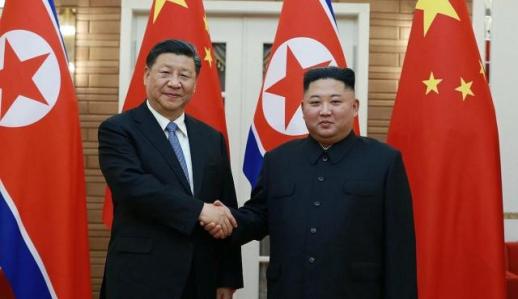 Xi Jinping to Visit North Korea on June 8-9 North Korea has reported that Chinese President Xi Jinping will visit the country on June 8-9. According to Yonhap News on June 6, the ruling Workers' Party's newspaper, Rodong Sinmun, published an article on its second page stating, "Comrade Xi Jinping, General Secretary of the Communist Party of China and President of the People's Republic of China, will visit the Democratic People's Republic of Korea at the invitation of Comrade Kim Jong Un, General Secretary of the Workers' Party of Korea and Chairman of the State Affairs Commission, on June 8-9." During Xi's previous visit to North Korea in 2019, the newspaper published an editorial the day before his arrival titled, "Let us carry on the friendship between China and North Korea and continue to write a new chapter of the era." However, this time, the report only confirmed Xi's visit without any additional welcoming commentary or editorial. Xi's upcoming visit marks his first trip to North Korea since June 20-21, 2019. The day before, North Korea's state media, Korean Central News Agency, reported the news of Xi's visit simultaneously with the Chinese Foreign Ministry.* This article has been translated by AI. 2026-06-06 08:18:00
 -
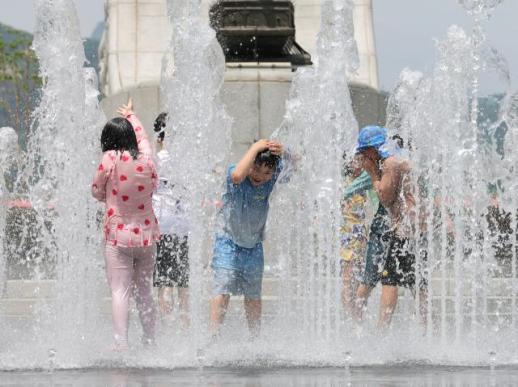 Weather Forecast: Clear Skies and Early Summer Heat on Memorial Day On June 6, Memorial Day and a Saturday, clear skies are expected nationwide, with daytime temperatures reaching as high as 30 degrees Celsius (86 degrees Fahrenheit), indicating early summer weather. According to the Korea Meteorological Administration, morning lows are forecasted to be between 11 and 18 degrees Celsius (52 to 64 degrees Fahrenheit), while daytime highs will range from 23 to 30 degrees Celsius (73 to 86 degrees Fahrenheit). Expected temperatures in major regions include: △Seoul 16-28°C (61-82°F) △Incheon 16-27°C (61-81°F) △Suwon 14-28°C (57-82°F) △Chuncheon 12-27°C (54-81°F) △Gangneung 16-26°C (61-79°F) △Cheongju 15-29°C (59-84°F) △Daejeon 13-28°C (55-82°F) △Sejong 13-28°C (55-82°F) △Jeonju 13-29°C (55-84°F) △Gwangju 14-29°C (57-84°F) △Daegu 15-29°C (59-84°F) △Busan 18-26°C (64-79°F) △Ulsan 16-26°C (61-79°F) △Changwon 16-27°C (61-81°F) △Jeju 17-25°C (63-77°F). The skies will generally remain clear. In the central region, including the capital area, clear weather is expected to continue until the afternoon, but clouds will gradually increase from late evening. The southern regions are anticipated to see more clouds from the morning. Thick fog is expected in parts of the central region from early morning to the morning hours, so caution is advised for traffic safety. Air quality is expected to be at 'good' to 'moderate' levels across all regions. Waves in the sea are expected to reach 0.5 to 1.5 meters in the East and South Seas, while the West Sea will see waves around 0.5 meters. In the offshore waters (about 200 kilometers from the coastline), wave heights are expected to be 0.5 to 2.0 meters in the East Sea, 0.5 to 1.0 meters in the West Sea, and 0.5 to 1.5 meters in the South Sea.* This article has been translated by AI. 2026-06-06 08:03:00
 -
 Significance of Xi Jinping's Second State Visit to North Korea Xi Jinping, General Secretary of the Communist Party of China and President of China, will make a state visit to North Korea from June 8 to 9 at the invitation of Kim Jong Un, General Secretary of the Workers' Party of Korea and Chairman of the State Affairs Commission. This marks Xi's second visit to North Korea as the top Chinese leader since June 2019. It is also the first time a Chinese leader has made two state visits to North Korea. The significance of this visit is underscored by its formal nature. Previous visits by former Presidents Jiang Zemin in 2001 and Hu Jintao in 2005 were categorized as 'official friendly visits.' In contrast, both Xi's 2019 visit and this upcoming visit are classified as 'state visits,' indicating that North Korea will welcome the Chinese leader with the highest level of national protocol. Although the visit is brief, lasting just two days, its diplomatic weight is substantial. However, the approach to creating a favorable atmosphere differs from 2019. During Xi's 2019 visit, Song Tao, head of the International Liaison Department of the Communist Party, and Luo Zhaohui, Deputy Minister of Foreign Affairs, provided detailed briefings to the press about the significance and key agenda of the visit. They notably announced the itinerary for visiting the China-North Korea Friendship Tower, emphasizing the historical and friendly ties on the 70th anniversary of diplomatic relations. This time, the announcement has been limited to a spokesperson from the International Liaison Department, suggesting that the current state of North Korea-China relations is at a different stage compared to the close interactions seen in 2018 and 2019, when Kim and Xi met five times within 15 months. Xi's 2019 visit was meticulously staged, with the Rodong Sinmun publishing an op-ed by Xi on its front page the day before his arrival—an unusual occurrence for a foreign leader. North Korea welcomed Xi at the Kim Il Sung Square in front of the Kumsusan Palace of the Sun, marking the first time this space was opened for a foreign leader. The Kumsusan Guesthouse, where Xi stayed, was also revealed for the first time during that visit. Another noteworthy moment was the group photo taken in front of the Workers' Party headquarters. Kim invited Xi and his wife to the headquarters, where they posed for a commemorative photo with 32 members of the Politburo. This unprecedented invitation for a foreign leader into a core power space, accompanied by the entire party leadership, was significant. During this upcoming visit, it will be crucial to observe which spaces North Korea opens and what kind of protocol is displayed. This visit also holds significance as Xi's first overseas trip of the year. In 2019, after Kim made four visits to China, Xi traveled to Pyongyang. This time, Xi's visit comes relatively quickly after Kim's trip to Beijing last September, indicating that North Korea's strategic value has risen again in China's view. It also serves to bolster Kim's diplomatic standing. The international context surrounding this visit is also important. Xi's 2019 trip occurred just before the G20 summit in Osaka, Japan, where he utilized the Pyongyang card amid complex U.S.-China tensions and North Korean nuclear diplomacy. This visit follows recent U.S.-China and China-Russia summits, suggesting a different character. While it may outwardly emphasize North Korea-China friendship and strategic cooperation, it appears to have a stronger focus on China's 'management' of North Korea. China cannot completely push North Korea toward Russia, nor can it ignore North Korea's unpredictable actions. Following the Ukraine war, North Korea has strengthened military and economic cooperation with Russia, increasing its leverage. In this context, China needs to realign its relationship with Kim by visiting Pyongyang. This visit can be seen not merely as a friendly gesture but as a diplomatic effort to keep North Korea within China's strategic orbit. For South Korea, this is a development that cannot be taken lightly. The North Korea-China summit will impact security on the Korean Peninsula, the North Korean nuclear issue, North Korea-China-Russia relations, U.S.-China competition, and inter-Korean relations. Particularly, as North Korea seeks to solidify its status as a nuclear power, the messages China conveys will be crucial. Key points of observation will include how often the term 'denuclearization' is mentioned and the extent to which phrases like 'strategic cooperation' and 'joint response' are emphasized during the talks. Ultimately, Xi's second state visit to North Korea carries three significant meanings: first, North Korea's strategic value is rising again; second, China aims to manage and coordinate with North Korea; and third, the Korean Peninsula issue is once again at the intersection of U.S.-China competition and North Korea-China-Russia cooperation. While the 2019 visit symbolized the restoration of North Korea-China relations, this upcoming visit serves as a test of how China will handle North Korea amid a rapidly changing international order. * This article has been translated by AI. 2026-06-06 07:51:00
 -
 Honoring Sacrifice: The Future of South Korea on Memorial Day On Memorial Day, we once again ask ourselves: What sustains South Korea? Is it economic growth, advanced technology, or the power of K-content that astonishes the world? All of these are important. However, the foundation of these achievements lies in the sacrifices made by patriots who willingly gave themselves for their country. Without the veterans who fought on the battlefield to protect democracy, the soldiers who dedicated their youth to the nation, and the families who quietly supported them, today's South Korea would not exist. A nation stands on memory. A community that forgets its memories loses its direction, and a society that forgets its sacrifices loses its future. In this sense, honoring veterans is not merely a commemoration of the past but a preparation for the future. The '2026 Aju Economic Veterans Literary Contest,' hosted by Aju Economy on June 30, also stems from this awareness. This event, which invites participation from youth, university students, military personnel, veterans' families, and the general public, is not just a literary competition. It is a social project aimed at sharing the value of honoring veterans with the next generation and connecting the spiritual assets that sustain the national community to the future. As time passes, wars become events in history books. The generation of veterans is dwindling, and the memories of war are pushed further into the past. For today's youth, the Korean War often remains just dates and images in textbooks. However, humans do not remember through numbers. We remember through stories. A soldier's letter, a mother's tears, a veteran's recollection of lost comrades, and the lives of ordinary citizens who dedicated themselves to the nation leave behind emotions and lessons that statistics cannot explain. This is why literature is important. Literature has the power to keep memories alive. While the sounds of gunfire and smoke may fade, poetry, essays, short stories, and personal narratives resonate across generations and move people's hearts. The expansion of this year's Veterans Literary Contest to include poetry, essays, short stories, and personal accounts of veterans, as well as a special section for youth, reflects this understanding. Honoring veterans is not just the story of a specific generation; it is the story of all of South Korea. Particularly, the process of youth interpreting and expressing the meaning of honoring veterans is a crucial task in preparing for the future of the national community. Memory holds value only when it is passed down. Honoring veterans is not about the past; it is about the future. In our society, there remains a perspective that views honoring veterans as a past issue. However, this reflects a misunderstanding of the essence of honoring veterans. The United States honors veterans as national heroes. Israel prioritizes national security and community spirit as core educational values. Similarly, the United Kingdom and France integrate respect for those who dedicated themselves to the nation into their cultural fabric. The more advanced a country, the more it values honoring veterans. This is because honoring veterans is not merely a welfare policy but a key means of maintaining national identity and community consciousness. Today, South Korea is engaged in fierce global competition in AI, semiconductors, defense, nuclear energy, biotechnology, and space industries. The visit of Jensen Huang, CEO of NVIDIA, has garnered significant attention as AI has become a determinant of national competitiveness. However, no matter how advanced the technology, a nation cannot endure without a spirit of community preservation. Technology can advance, but patriotism cannot be created automatically. The economy can grow, but a sense of community can only be sustained through education, culture, and memory. In this sense, honoring veterans is also linked to future industrial competitiveness. A strong economy, robust security, and a healthy community ultimately grow from the same roots. The significance of this year's Aju Economic Veterans Literary Contest lies not only in soliciting works but also in connecting award-winning pieces to serialized publications, content creation, broadcasting, and special forums on honoring veterans. Today's youth are more accustomed to video than to printed books. They learn about the world through short content and form their values through digital platforms. Therefore, the message of honoring veterans must also be conveyed in new ways. Where commemorative ceremonies once took center stage, content should now take precedence. The values of honoring veterans should be translated into the language of younger generations and disseminated through digital platforms. In the age of AI, human stories become even more important. As technology produces information, narratives of emotion, value, sacrifice, and dedication wield even greater power. Honoring veterans content is not merely a reflection on the past; it is future-oriented educational content that explains the values upon which the community of South Korea stands. South Korea is currently facing new challenges, including low birth rates, regional extinction, security threats, and competition for technological supremacy. In times like these, we must return to the basics. The foundation is memory. The principle is gratitude. The common sense is that a society that does not forget its sacrifices is a healthy society. The Veterans Literary Contest is not just a literary event. It is a social commitment to pass on the values and spirit that have sustained South Korea to the next generation. The economy may experience cycles of growth and recession. Technology will continually evolve. However, only a community that remembers those who sacrificed for the nation can create a sustainable future. The significance of the 2026 Aju Economic Veterans Literary Contest lies in this very aspect: preserving memories as records, expanding those records into content, and connecting with the next generation through that content. This is not merely an event; it is a preparation for the future of South Korea. The question that Memorial Day leaves us with is ultimately one: How will we pass on the South Korea that our forebears protected to the next generation? The answer begins with preserving memory. The Veterans Literary Contest will serve as a valuable bridge in continuing that memory. * This article has been translated by AI. 2026-06-06 07:15:00
 -
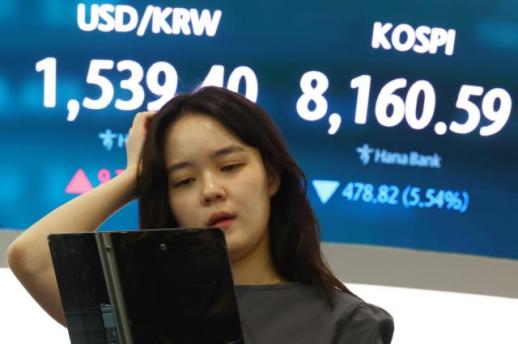 KOSPI Experiences Sharp Decline After Hitting Record High Amid Semiconductor Adjustments Domestic stock markets have entered a phase of heightened volatility following a record high. The KOSPI index briefly surpassed the 8900 mark, driven by optimism surrounding artificial intelligence (AI) semiconductors. However, profit-taking in semiconductor stocks, foreign capital outflows, and a surge in exchange rates led to a sharp decline later in the week. Analysts are now focusing on next week’s Apple Worldwide Developers Conference (WWDC), the U.S. Consumer Price Index (CPI), and the European Central Bank (ECB) monetary policy meeting, speculating on the potential for a rotation in leading stocks centered around semiconductors. According to the Korea Exchange, the KOSPI index closed at 8160.59, down 478.82 points (5.54%) from the previous trading day. Over the week (June 1-5), the KOSPI and KOSDAQ fell by 3.72% and 6.73%, respectively. Notably, the KOSPI surged by 3.68% on June 1 and, on June 2, briefly crossed the 8900 mark for the first time. However, it subsequently dropped for two consecutive days, ultimately falling below 8100. This week, the stock market exhibited extreme volatility as expectations and concerns surrounding semiconductors fluctuated. Early in the week, optimism regarding NVIDIA's AI PC prospects and expectations for CEO Jensen Huang's visit to South Korea boosted investor sentiment, leading to increased buying in Samsung Electronics and SK Hynix. However, Broadcom's disappointing AI chip revenue guidance and news of Micron's CEO selling shares triggered widespread profit-taking across the semiconductor sector. Foreign selling pressure and rising exchange rates also contributed to the market's struggles. The dollar-won exchange rate soared to 1547 won, marking a 17-year high. Concerns over additional tariffs from the U.S. and potential capital shifts ahead of SpaceX's IPO heightened foreign investors' aversion to risk assets. Internally, signs of a reduction in the concentration of semiconductor stocks emerged. The insurance, retail, and software sectors showed relative strength, while buying interest in semiconductor materials, components, and equipment stocks on the KOSDAQ, which had seen significant declines, began to increase. Next week, several major global events are scheduled. The Apple WWDC 2026 will take place from June 8 to 12, with the market keenly observing how Apple integrates AI features into its operating systems and device ecosystem. Additionally, the U.S. CPI for May and the Bank of Canada (BOC) monetary policy meeting are set for June 10, followed by the ECB meeting on June 11. If inflation comes in higher than expected, concerns about prolonged tightening by the Federal Reserve may grow. The ECB is also expected to consider a 0.25 percentage point increase in interest rates in response to signs of accelerating core inflation. SpaceX's anticipated Nasdaq listing on June 12 is another significant variable. With an expected valuation exceeding $170 billion, this massive IPO is likely to impact global market liquidity. Some analysts have even suggested the possibility of early inclusion in the Nasdaq-100 index. Short-term volatility is expected to continue, according to analysts. While the semiconductor sector's earnings momentum remains strong, upward revisions to earnings estimates may slow ahead of the July earnings season. Consequently, there is speculation that buying interest may shift from recently surging semiconductor stocks to financial and dividend stocks or sectors that have been relatively neglected. Lee Jae-won, a researcher at Yuanta Securities, stated, "The justification for future adjustments should be sought in the rise of price-to-earnings ratios (PER) due to stock concentration in May, rather than factors like war or oil prices. The key in June remains not the exit of leading stocks but the expansion of rotation within leading stocks." Labor Gil, a researcher at Shinhan Investment Corp., noted, "The June stock market has entered a seasonal off-peak period where upward revisions to earnings per share (EPS) are slowing. If price adjustments occur, defensive stocks may perform well, while if there is a period of adjustment, sectors that have lagged may see a gap-filling rally." However, from a medium- to long-term perspective, the trend of expanding AI investments remains strong. While short-term volatility is inevitable due to macroeconomic variables such as U.S. inflation, interest rates, and Middle Eastern tensions, the ongoing investment in AI infrastructure and increasing demand for memory semiconductors suggest that the flow of leading stocks is unlikely to be disrupted. Therefore, analysts believe that a selective approach focusing on the AI value chain and semiconductor sector during this short-term adjustment phase is advisable.* This article has been translated by AI. 2026-06-06 07:03:00
 -
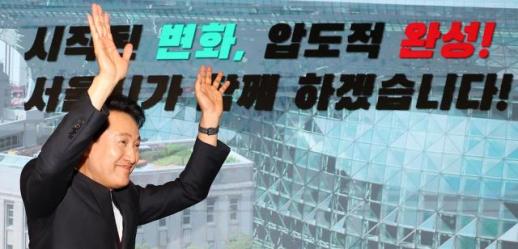 Election Results Highlight Economic Challenges Ahead The election may be over, but public sentiment continues to resonate. Regardless of the outcome, voters sent a clear message to the ruling party. While there was no outright rejection of the government, there was also no unconditional trust. This sentiment, particularly evident in major regions like Seoul, reflects a mix of expectations and dissatisfaction regarding economic policies. Since the inauguration of the Yoon Suk Yeol administration, South Korea's economy has seen notable achievements. The KOSPI index has approached record highs, and exports, particularly in semiconductors, have shown signs of recovery. Corporate performance has also improved, and the international community has recognized the resilience of the South Korean economy. At least based on macroeconomic indicators, there is some justification for the government's claims of success. However, elections assess not just economic indicators but the lived experiences of citizens. Rising stock prices do not necessarily translate to improved living conditions. Many citizens still grapple with high housing costs, rental burdens, unstable jobs, and soaring education and living expenses. The gap between asset holders and those without assets continues to widen, making it difficult for many to feel assured that their lives have improved, despite better statistics. The situation among young people is particularly noteworthy. In this election, the political choices of the 2030 generation displayed a different trend compared to previous years. This shift reflects not just a change in ideology but a manifestation of anxiety about the future. Good job opportunities are dwindling, and the dream of homeownership feels increasingly distant. Marriage and childbirth have become burdens rather than choices. Young people are seeking concrete alternatives to improve their lives rather than mere promises of growth. The government must be cautious about overconfidence in numerical data. Indicators suggesting economic improvement do not automatically equate to public support. Historically, no administration has gained public favor solely through economic growth rates and rising stock prices. What matters more is who benefits from economic growth and how widely those benefits are distributed. The most pressing issue facing South Korean society today is polarization. The divide between metropolitan and rural areas, regular and irregular workers, asset holders and non-homeowners, and large corporations and small businesses is growing. As perceptions strengthen that the fruits of growth are concentrated among specific groups, social conflicts are likely to intensify. This is why the goals of economic policy must extend beyond merely increasing growth rates. The results of this election should not be interpreted solely through a political lens. Voters acknowledge the government's achievements while demanding more. They call for not just growth but also equitable distribution, not just stock market gains but also improvements in daily life, and not just numbers but tangible experiences. This is the true message left by this election. The government must now move to the next phase. Policies supporting corporate investment and export expansion should continue. However, there must also be greater focus on policies that young people, the middle class, and small business owners can feel in their daily lives. Without addressing structural issues such as housing insecurity, education costs, regional disparities, and retirement anxieties, no economic success will resonate with the public. While the election is over, the evaluation of public sentiment continues. The economic challenges left in the wake of this election are clear. Equally important as accelerating growth is ensuring that the warmth of that growth is widely shared. Growth that the public cannot feel will ultimately struggle to gain political support. What the government must heed from this election is not just the outcome but the warnings and expectations expressed by the public. This should guide the direction of future economic policies.* This article has been translated by AI. 2026-06-06 07:03:00