

Journalist

CGTN
-
 Memory chips take center stage in AI-driven semiconductor boom SEOUL, January 15 (AJP) - The rapid expansion of artificial intelligence (AI) is reshaping the global semiconductor market, propelling memory chips, once considered a cyclical commodity, to the forefront of the industry's future growth engine. Amid a heated race for data centers to build AI servers and inference systems, demand for high-bandwidth memory (HBM), server-grade DRAM, and storage has surged, creating what analysts describe as a rare "triple supercycle" in the market. U.S.-based Bank of America forecast the global HBM market to grow 58 percent this year to $54.6 billion, while global investment bank Nomura Securities expected the broader memory sector to nearly double to $445 billion in 2026, which illustrates how AI is reshaping the industry. Unlike previous upcycles driven mainly by smartphones and PCs, the current boom is being powered by investment in long-term infrastructure. Goldman Sachs estimates that custom AI accelerators will account for roughly one-third of total HBM demand this year, reflecting a shift from training-led growth to inference-driven expansion. On the supply side, manufacturers are struggling to keep pace. Market researcher IDC projected global DRAM bit supply growth of just 16 percent this year, well below the historical average of around 20 percent as chipmakers divert wafer capacity toward higher-margin HBM products. Another researcher Counterpoint Research projected that prices for high-capacity enterprise-grade 64GB RDIMM modules could jump from about $255 in late 2025 to as high as $700 by Marth this year. The imbalance is accelerating a broader realignment in the industry, long dominated by foundries and logic chips. As AI workloads intensify, the industry's center of gravity is shifting toward memory and advanced packaging — a transition that is bolstering the strategic position of South Korea's Samsung Electronics and SK hynix. As AI accelerates, the industry's focus is shifting toward memory and advanced packaging, bolstering South Korean chipmakers Samsung Electronics and SK hynix. "AI processors such as GPUs require ultra-fast memory to avoid performance bottlenecks," said Ahn Ki-hyun, secretary-general of the Korea Semiconductor Industry Association. "To support large language models, the memory attached to GPUs must deliver the highest possible bandwidth, and at the moment HBM is effectively the only option that meets those requirements." SK hynix, which accounts for about 60 percent of the global HBM market, is set to begin commercial production at its new M15X fab in Cheongju, North Chungcheong Province, starting in February, supplying HBM4 for Nvidia's next-generation Rubin platform. Rival Samsung Electronics is aso expanding sixth-generation (1c) DRAM output at its Pyeongtaek campus, aiming to raise advanced-node DRAM to about one-third of total production by the end of 2026. Industry insiders say competition in HBM is driven less by fundamental technology gaps than by speed. "SK hynix gained a competitive edge by being first to commercialize HBM3E," Ahn said. The current upcycle is also being recognized by the financial community. NICE Ratings said in a recent outlook that the rally in memory chips should be seen as a structural shift rather than a temporary rebound, as sustained AI demand collides with limited near-term capacity expansion, a combination likely to support pricing power and profitability through 2026. But risks remain as rising memory prices are expected to lift smartphone and PC prices by 15 percent to 20 percent this year, according to IDC, while power constraints at data centers could slow the pace of expansion. In China, ChangXin Memory Technologies (CXMT) has expanded its share of the DRAM market to about 6 percent and is stepping up efforts in advanced memory development. But Ahn sees its impact as minimal, likely to be felt more in the mid-to-long term than immediately. "CXMT is unlikely to affect the market in the short term," he said. "But if it eventually reaches comparable levels, price competition will become inevitable." For now, the momentum, however, appears firmly on the side of memory chip makers. What began as an AI-driven surge in processors is rapidly evolving into a broader transformation of the semiconductor value chain, in which memory and packaging are no longer supporting players but have become core growth engines. 2026-01-15 17:50:15
 -
 Pictures from Nara SEOUL, January 15 (AJP) -Drumbeats, temple corridors and carefully choreographed cultural gestures took center stage during South Korean President Lee Jae Myung’s brief two-day visit to Nara Prefecture, a trip that emphasized symbolism and atmosphere over contentious diplomatic files. Lee visited Nara at the invitation of Japanese Prime Minister Sanae Takaichi, wrapping up his fifth overseas trip since taking office and his second summit with the Japanese leader before departing for Seoul on Tuesday. Formal talks reaffirmed familiar ground. The two leaders agreed to maintain shuttle diplomacy and pursue future-oriented cooperation, including launching working-level discussions on advanced industries such as artificial intelligence and strengthening joint responses to cross-border crimes. Denuclearization of the Korean Peninsula and trilateral cooperation among South Korea, Japan and China were also addressed — but without headline-making breakthroughs. Instead, the visit’s defining images came from its cultural itinerary. On Tuesday morning, Lee and Takaichi toured Horyu-ji Temple in Ikaruga, one of Japan’s most revered Buddhist sites. In a rare diplomatic courtesy, Japanese officials opened restricted storage areas and granted access to the original murals of the temple’s main hall, typically closed to the public. Founded in the early 7th century under the influence of Buddhism introduced by Prince Shotoku, Horyu-ji is widely regarded as a cornerstone of Japanese civilization. Home to some of the world’s oldest surviving wooden structures, it became Japan’s first UNESCO World Cultural Heritage site in 1993. The carefully curated visit underscored a shared message: that bilateral ties should be framed not by unresolved historical sensitivities, but by a common cultural inheritance and a forward-looking narrative. In Nara, history was not debated — it was displayed, quietly and deliberately, as diplomacy moved to the rhythm of ceremony rather than confrontation. 2026-01-15 17:37:19
 -
 South Korean defense ETFs surge as geopolitical tensions mount SEOUL, January 15 (AJP) -Growing geopolitical risks from Ukraine to Venezuela and Iran have lifted South Korean defense-related exchange-traded funds (ETFs) to the top of the country’s stock market rankings this year, outpacing even the red-hot semiconductor sector. According to ETFCheck data as of Tuesday, leveraged defense ETFs dominated the performance leaderboard. The PLUS K-Defense Leverage and KODEX K-Defense TOP10 Leverage surged 61.2 percent and 60.9 percent, respectively, far exceeding gains in shipbuilding and semiconductor ETFs. Even the non-leveraged TIGER K-Defense & Space and SOL K-Defense rose around 30 percent, filling most of the top ten spots by return. Korean defense firms are also attracting overseas capital. The PLUS Korea Defense Industry Index ETF (KDEF), listed on the New York Stock Exchange last year in partnership with U.S. asset manager Exchange Traded Concepts, has risen 21.9 percent so far in 2026 — easily outpacing the S&P 500’s 1.4 percent increase. Similarly, the WisdomTree Asia Defense Fund (WDAF) and Global X Defense Tech (SHLD), both heavily weighted toward South Korean companies, are up between 15 percent and 16 percent. The resurgence of defense-themed funds comes as geopolitical risks intensify. U.S. President Donald Trump’s surprise military operation in Venezuela earlier this month — which reportedly resulted in the capture of President Nicolás Maduro — and subsequent comments about acquiring Greenland have added to global instability. Meanwhile, ongoing unrest in Iran and a surge in European rearmament have contributed to investor anxiety. Hanwha Asset Management, one of the biggest beneficiaries of the defense rally, said its Hanwha K-Defense, Shipbuilding & Nuclear Power Fund ranked first among domestic equity funds with a 21.5 percent gain this year, while its PLUS K-Defense Leverage topped all equity ETFs at 61.8 percent. “Defense companies are entering a stage of structural growth, driven not by war but by the global demand for self-sufficient national defense,” said Choi Young-jin, vice president of Hanwha Asset Management. “However, investors should be mindful of the volatility that comes with leveraged products.” The bullish sentiment has also spilled into the broader stock market. On Tuesday, Hanwha Systems jumped 14.2 percent, closing at 88,700 won ($60.3), while Hyundai Rotem, Hanwha Aerospace, and Korea Aerospace Industries each rose between 2 percent and 6 percent. The Korean government has pledged to further strengthen the nation’s defense industry. Defense Minister Ahn Gyu-back said on Tuesday that “Korea’s goal of becoming one of the world’s top four defense exporters requires full-scale diplomatic and institutional support,” emphasizing that robust security capabilities remain the foundation of the industry’s growth. 2026-01-15 17:32:28
 -
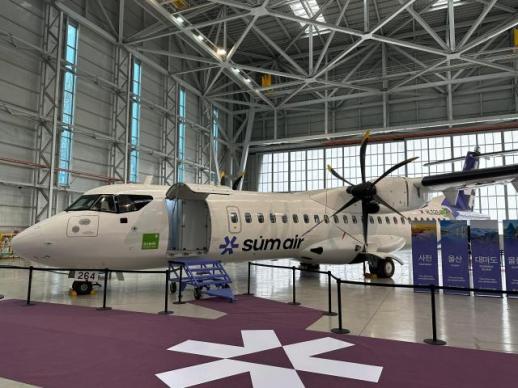 Korea's new regional airline targets islands and emergency medical transport SEOUL, January 15 (AJP) - South Korea's new regional airline SUM Air, which aims to become a major transport link between regional areas and islands, unveiled its first brand-new aircraft at Gimpo International Airport on Thursday. The carrier plans to connect underserved islands and provide essential medical transport services, positioning itself as the only airline capable of serving various island airports. As a Regional Air Mobility (RAM) operator led by CEO Choi Yong-duck, SUM Air will initially deploy its first brand-new ATR 72-600 aircraft on flights from Sacheon in South Gyeongsang Province between March and April, and will sequentially expand routes to Ulsan and islands such as Tsushima, Ulleung, Heuksan and Baengnyeong, Choi said. At the delivery ceremony, attendees included CEO Choi, ATR (Avions de Transport Régional) Chief Commercial Officer (COO) Alexis Vidal, ATR Sales Director Jean-Daniel, as well as airport officials, government representatives and investors. "I'm very happy to be with you. I think your presence today, your engagement, shows how important regional aviation and regional mobility are for Korea," said Alexis Vidal, CCO of ATR. SUM Air's latest ATR 72-600 series aircraft, equipped with turboprop engines, is optimized for short runways of around 1,200 meters and for airfields exposed to environmental constraints such as frequent bird strikes, making it well-suited to many of Korea's island airports and small regional airfields. Highlighting short runways at future island airports such as Ulleung and Heuksan, as well as at foreign regional airports like Japan's Tsushima Island where narrow runways prevent larger jets from operating, Choi stressed that SUM Air will avoid direct competition with major low-cost carriers (LCCs) and instead concentrate on niche regional markets where smaller aircraft have a clear advantage. Ulleung Island has long been considered a transport-isolated region, and the burden of that isolation has fallen squarely on its roughly 9,000 residents. With no branch of a major commercial bank on the island, residents must commit to at least an overnight stay on the mainland just to complete basic banking tasks, and even two nights are often not enough when combining multiple errands. Each trip to the mainland entails several days of accommodation costs and lost time. To address these challenges, the Korean government is investing about 600 billion won ($408 million) to build a new airport on Ulleung Island. Construction began in July 2020 and, as of October 2025, the project had passed 70 percent completion, with foundational work largely finished. The airport, slated to open in 2027, will feature a 1,200-meter runway—too short for typical narrow-body jets like the Airbus A320 or Boeing 737, which generally require around 1,800 meters for safe operations. SUM Air is then currently the only airline in Korea able to operate at Ulleung Airport once it opens. Before Ulleung Airport opens, SUM Air plans to operate regular flights between Sacheon and Gimpo, with the flight time between the two cities expected to be just over one hour. Choi revealed plans to operate up to eight round-trip flights per day, including peak morning and evening commuter timings. Starting with Sacheon, the airline intends to gradually increase scheduled services to small regional airports across the country, thereby knitting together a dense network that reduces transport blind spots. Most inhabited Korean islands have at least a public health subcenter, while smaller islands often have a simple public health post. At these facilities, public health doctors and nurses, or in some cases only nurses, handle basic care such as monitoring blood pressure and blood sugar, administering vaccinations and issuing simple prescriptions. However, when residents require specialized or emergency treatment, they must still travel to urban hospitals on the mainland—a journey that can be particularly difficult in remote islands where ferries operate only once or twice a day. In urgent cases, air ambulances such as doctor helicopters may be deployed, but operations are limited by weather conditions and high costs, leaving many islanders exposed to delays in receiving critical care. To help fill this gap, SUM Air has formed a shareholder partnership with Seoul Bumin Hospital, enabling the airline to support regional medical transport services for island residents who need specialized treatment. "We are equipping our new ATR aircraft from the manufacturer with an option that allows us to fold the third row of seats and install a stretcher," Choi explained. He added that when SUM Air begins serving destinations like Baengnyeong, the airline expects significant demand for emergency transport of Marine Corps personnel, with similar needs anticipated for Ulleung and Heuksan. Noting that Ulleung effectively has no full-service hospital, Choi underscored the airline's commitment to providing regional medical transport services to island communities. 2026-01-15 17:29:44
 -
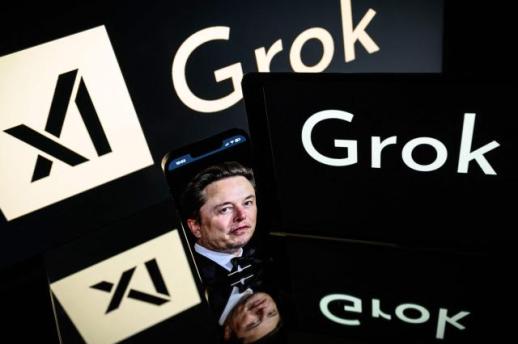 Korea moves fast on Grok as global deepfake backlash grows SEOUL, January 15 (AJP) — South Korea has taken its first regulatory steps targeting xAI’s chatbot Grok, as governments worldwide step up scrutiny of generative AI tools over deepfake abuse and illegal content. The Korea Media and Communications Commission (KMCC) on Wednesday sent an official notice to X requesting stronger safety measures for Grok, including tighter controls on harmful content and stricter restrictions on minors’ access. The commission also demanded clarification on Grok’s training data sources, content-filtering standards and accountability structures for services provided to South Korean users. According to Shin Yoon-jae, a deputy director at the KMCC, the notice emphasized that any platform operating in South Korea must comply with the Information and Communications Network Act, including its legal obligation to protect minors. “We have asked X to put safeguards in place and to report what measures it is taking,” Shin said. “At the same time, we are preparing legislation to strengthen safety standards for generative AI. Until then, we are tightening regulatory monitoring and have requested concrete plans to prevent the spread of AI-generated images and videos.” Seoul’s move reflects growing concern that generative AI tools are lowering the barrier to producing illegal and abusive content, particularly non-consensual deepfake imagery. Regulators say conversational AI systems like Grok make it possible to generate realistic images or scripts using simple text prompts, expanding misuse beyond technically skilled actors. This ease of access has fueled the rapid spread of fabricated sexual images, impersonation scams and manipulated visuals, often outpacing platform takedown mechanisms. One of the most pressing risks involves non-consensual sexual deepfakes, including content involving minors. Digital safety groups and law enforcement agencies report that such material can be produced and circulated within minutes, causing lasting psychological harm, reputational damage and, in some cases, extortion of victims. Concerns have also grown over opaque moderation systems. Authorities argue that limited disclosure about training data, filtering thresholds and internal accountability makes it difficult to assign responsibility when harmful outputs occur — a potential violation in jurisdictions with strict child-protection and privacy laws. The backlash against Grok has triggered regulatory action beyond Korea. In the United Kingdom, online safety regulator Ofcom has opened a formal investigation into X under the Online Safety Act, following reports that Grok was used to create and share non-consensual sexual images and content involving children. The probe will assess X’s compliance with duties related to risk assessment, illegal content prevention, privacy protection and child safety. In Southeast Asia, regulators in Indonesia and Malaysia temporarily blocked access to X over the weekend, citing concerns over the misuse of generative AI to produce sexually explicit and non-consensual content. While the United States is unlikely to intervene directly in the near term, experts say international pressure could force platforms to tighten safeguards. “Countries with stronger online safety laws can shape global standards,” said Mary Anne Franks, a law professor at George Washington University. “When enforcement actions accumulate, platforms often respond by raising protections across markets.” In South Korea, officials say the urgency is practical rather than theoretical. Reports of AI-generated explicit content, impersonation scams and manipulated images affecting domestic users have risen, even when the platforms involved are based overseas. Regulators argue that reactive takedowns are no longer sufficient in an environment where AI-generated content can go viral before authorities or platforms become aware of it. 2026-01-15 17:26:46
 -
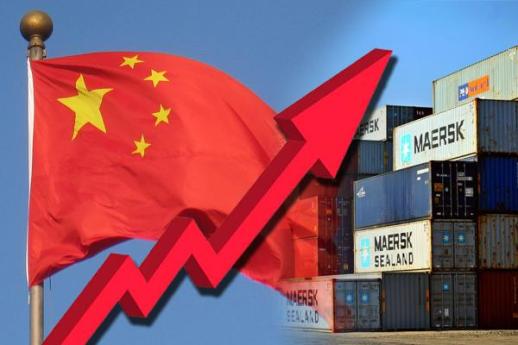 As China exports its surplus, Korea, Germany and Japan pay the industrial price SEOUL, January 15 (AJP) -China logged a record $1.19 trillion trade surplus in 2025, underscoring the resilience of its export engine despite renewed U.S. tariff pressure — and sharpening competitive strain on other manufacturing economies from South Korea to Germany and Japan. According to China’s General Administration of Customs, the surplus expanded by roughly 20 percent from 2024, even as exports to the United States fell by about 20 percent following tougher tariffs, indicating that the gains came largely from other markets. Overall dollar-denominated exports still rose 5.5 percent year on year, accelerating toward the end of the year as shipments were redirected abroad. Export growth picked up to 6.6 percent in December, from 5.9 percent in November, while imports rose 5.7 percent, signaling that global demand for Chinese goods remained firm despite uneven domestic conditions. Pivot away from the U.S. — and into third markets China’s record surplus was sustained by a sharp geographical pivot. Exports to Southeast Asia rose 13 percent, shipments to the European Union climbed 8.4 percent, and exports to Africa surged 26 percent, as manufacturers redirected supply chains toward faster-growing regions. Persistent producer-price deflation at home, combined with strong demand tied to artificial-intelligence investment, has kept Chinese goods highly competitive on price — intensifying head-to-head competition in third markets rather than expanding overall demand. Korea: solid exports, but losing relative ground For South Korea, where exports account for roughly 37 percent of GDP, China’s expanding footprint is reshaping competitive dynamics rather than collapsing trade outright. Korea’s exports rose 3.8 percent in 2025 to a record $709.7 billion, surpassing the $700 billion mark for the first time and delivering a $78 billion trade surplus, according to the Ministry of Trade, Industry and Energy. Semiconductor shipments surged 22.2 percent, driven by AI-related demand, while automobiles and shipbuilding also posted record values. Yet in relative terms, Korea is losing ground. While China’s exports grew more than twice as fast, Korea’s export growth remained modest, pushing the country down to eighth in global export rankings, from sixth a year earlier. Korean firms face narrowing margins in semiconductors, batteries, steel and industrial machinery, as price-based competition with Chinese suppliers intensifies across ASEAN, India and the Middle East. “China’s expanding export footprint is reshaping competitive dynamics in third markets, where Korean and Chinese firms increasingly overlap,” said Heo Seul-bi, an analyst at the Korea International Trade Association. “As Chinese shipments shift toward ASEAN, India and Africa amid higher U.S. tariffs, head-to-head competition has become more pronounced, particularly in price-sensitive sectors such as steel and basic industrial materials.” Germany: widening imbalance at Europe’s industrial core The pressure is even more visible in Germany, Europe’s manufacturing anchor. In September 2025, Germany exported €6.77 billion ($7.4 billion) to China while importing €15.8 billion, resulting in a monthly trade deficit of €9.06 billion. Compared with a year earlier, German exports to China edged down 1.3 percent, while imports surged 8.68 percent, highlighting the accelerating asymmetry in bilateral trade flows. Rising imports of Chinese machinery, automobiles and data-processing equipment have weighed on factory orders and industrial output, which remain below pre-pandemic levels. Japan: shifting balance inside the supply chain Japan faces a different, but equally revealing, adjustment. In October 2025, China exported $13.0 billion to Japan while importing $14.4 billion, leaving China with a $1.35 billion bilateral trade deficit. China’s exports to Japan fell 5.7 percent year on year, driven by steep declines in shipments of telephones, railway cargo containers and ships. At the same time, imports from Japan jumped 5.9 percent, led by a more than 70 percent surge in integrated circuits, alongside automobiles and industrial materials such as scrap copper. The data point to Japan’s continued strength in high-end components, but also underline its growing exposure to competition from China in finished manufacturing goods. China’s surplus reflects domestic imbalance — exported abroad Economists warn that China’s surplus is not merely a sign of export strength, but also of domestic imbalance. Heavy investment in machinery and equipment — increasingly led by state-owned enterprises — has expanded production capacity, while household consumption has lagged amid weak confidence, falling property values and precautionary saving. With deflationary pressures at home, surplus output has flowed abroad. U.S. tariffs have diverted, rather than stopped, Chinese exports — shifting adjustment costs onto other economies. “Unlike the U.S., which continues to absorb imports amid strong growth, many advanced economies are struggling,” one trade economist said. “Chinese exports are landing in markets where manufacturers are already under strain.” Fragmentation risks grow Governments are beginning to respond. French President Emmanuel Macron has raised trade imbalances directly with Beijing, while European Commission President Ursula von der Leyen has warned that Europe risks becoming a dumping ground for Chinese goods. Mexico has raised tariffs on Chinese imports, and other countries are weighing similar measures. China continues to frame itself as a defender of free trade. But analysts argue that relying on the rest of the world to absorb domestic imbalances risks accelerating trade fragmentation, especially as geopolitical blocs harden. For South Korea, Germany and Japan, the challenge is not a collapse in exports, but relative erosion — competing against a China that is exporting its surplus, its deflation and its industrial overcapacity into the same global markets. 2026-01-15 17:26:30
 -
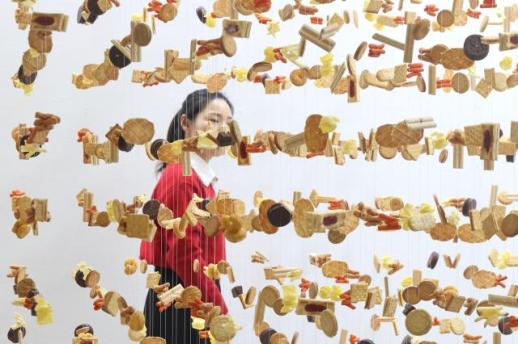 Thousands of sculptures on display at annual art fair in Seoul SEOUL, January 15 (AJP) - The annual Seoul International Sculpture Festa kicked off its monthlong run at COEX in Samseong-dong, southern Seoul on Thursday. Now in its 15th year, the event is solely dedicated to exhibiting sculptures, drawing numerous art enthusiasts every year. This year's exhibition features around 2,000 works from approximately 480 artists. 2026-01-15 16:48:59
 -
 Foreign workers' visa applications for this year to begin late this month SEOUL, January 15 (AJP) - The Ministry of Employment and Labor said Thursday it will accept applications for new employment permits under its E-9 visa program in five rounds this year, allowing companies facing labor shortages to hire foreign workers. The first round of applications will run from Jan. 26 to Feb. 10, followed by additional rounds in April, July, September, and November. According to the ministry, companies can apply depending on their business conditions and staffing needs. Starting this year, North Jeolla Province will be newly added to the areas where hotels and other accommodation facilities can hire E-9 workers. The hiring cap per manufacturing factories outside the Seoul metropolitan area will also rise to 30 percent, up from 20 percent. In crop cultivation, greenhouse horticulture and specialty-crop operations with facilities smaller than 1,000 to 2,000 square meters will be allowed to hire up to eight workers. Grain and other food-crop cultivation will also be eligible. A separate quota temporarily operated for shipbuilding will be merged into the manufacturing quota. The first-round quota is allocated for 15,784 workers, with 11,275 for manufacturing, 2,382 for agriculture and livestock, 1,495 for fisheries, 492 for construction and 140 for service industries. 2026-01-15 16:37:00
 -
 BOK stays pat and signals end to rate cuts amid prolonged won weakness SEOUL, January 15 (AJP) — The Bank of Korea’s decision to hold its policy rate at 2.5 percent on Thursday came with an unusual backdrop: a rare public intervention by the U.S. Treasury secretary and a detailed defense by a deputy governor, highlighting how Korean won's fragility has become central in both fiscal and monetary policy calculus. The central bank unanimously voted to keep the benchmark rate unchanged at its first rate-setting meeting of the year, extending a pause that has been in place since May last year and signaling an effective halt to the latest easing cycle. “I can easily say yes,” Bank of Korea Governor Rhee Chang-yong said at a press briefing after the monetary policy board meeting when asked whether the exchange rate had been the primary factor behind the decision. Rhee said the won’s excessive depreciation reflects a “disparity with fundamentals,” adding that authorities are reassessing the effectiveness of various measures taken since late last year to support the currency. He attributed roughly three-quarters of the won’s weakness to external factors — including a strong U.S. dollar, a weak Japanese yen and heightened geopolitical risks in regions such as Venezuela and Iran — with domestic factors accounting for the remaining quarter. A growing bias among investors toward overseas securities has also deepened short positioning on the won, amplifying downward pressure, he said. The currency’s slide to its weakest levels since past crisis episodes — including the global financial crisis, the Asian financial crisis and the post-martial law period in late 2024 — even prompted unusually direct commentary from Washington. U.S. Treasury Secretary Scott Bessent said in a post on X following a meeting with Deputy Prime Minister and Finance Minister Koo Yun-cheol that the won’s weakness was not aligned with South Korea’s economic fundamentals, a rare interventionist remark that briefly steadied market sentiment. The markets went on their ways – the KOSPI hitting new historic high of 4,797.55 after 1.58-percent gain. The dollar added 5.40 won to 1.471.9 won. Bond prices however crashed on hawkish tone. The three-year treasury yield surged 7.4 basis points to 3.070 percent, while the 10-year yield rose 5.4 basis points to 3.472 percent by midday. Policy bind between household debt and skewed economic recovery Too steep depreciation in the won that can fan imported inflation and capital flight builds rationale for higher rates. But the scale of household debt continues to constrain the central bank’s policy options. Household debt stands at around 2,000 trillion won ($1.36 trillion), a level widely viewed as prohibitive for any rate hike. A rate cut no longer can be an option since the Bank of Japan is expected to deliver its second consecutive rate hike later this month — a move that could intensify regional currency volatility and place additional pressure on the won. Reflecting the shift in stance, the BOK removed references to “the possibility of a rate cut” from its post-meeting statement. Unlike the divided vote seen in November, Thursday’s decision was unanimous, with all six board members agreeing to hold rates steady. Rhee said housing market imbalances and rising household debt remain key constraints on future policy decisions. He also pointed to a “K-shaped recovery” concentrated in semiconductors, alongside a declining potential growth rate, as structural pressures weighing on the broader economy. “We will determine future policy by comprehensively weighing the exchange rate, the monetary paths of the United States and Japan, and the state of the domestic economy,” Rhee said. The governor pushed back strongly against claims that loose liquidity conditions and modest rate cuts since the pandemic have structurally weakened the won. “During my tenure, at the very least, M2 growth has never shown an upward trend,” Rhee said. His four-year term ends in April. Deputy Governor Park Jong-woo reinforced that view, delivering a point-by-point rebuttal during the briefing — an unusually detailed defense at a rate-setting event. “The M2 growth rate has remained at a consistently low level since 2022 and even declined in November,” Park said. Addressing arguments that the won’s weakness stems from Korea’s higher M2-to-GDP ratio compared with the U.S. Park said the ratio has remained stable for several years. He cautioned against making simple numerical comparisons between Asian economies — which rely heavily on bank-intermediated finance — and the U.S. or eurozone, where capital markets play a more dominant role. 2026-01-15 16:19:26
 -
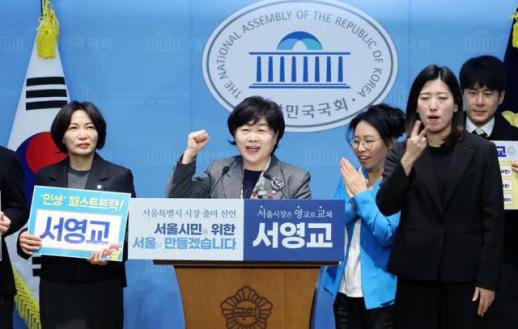 Four-term lawmaker Seo Young-kyo announces bid for Seoul mayor SEOUL, January 15 (AJP) - Lawmaker Seo Young-kyo of the ruling Democratic Party (DP) announced her bid for Seoul mayor on Thursday, vowing to "transform the capital into a leading global economic and cultural hub." At a press conference at the National Assembly on Thursday, months ahead of local elections slated for June 3, the four-term lawmaker said Seoul must turn into a "city where Seoul citizens are truly the owners," pledging to deliver "proven results" that directly improve residents' lives. She outlined her key campaign pledges which include supplying 300,000 new homes and setting a target of 7,000 points for the benchmark KOSPI. Other priorities include expanding support for small business owners, strengthening welfare for children and senior citizens and increasing subway services for commuters. Seo criticized incumbent Oh Se-hoon, saying he has failed to improve the daily lives of Seoul residents by focusing only on showy projects. She added she will instead encourage more citizens to participate in various city projects. Within the DP, Park Hong-geun, Park Ju-min, and Kim Young-bae have already declared their candidacy. Additional candidates including Seongdong district's mayor Jung Won-oh, who gained attention after President Lee Jae Myung's recent praise for his achievements, are also expected to join the race soon. 2026-01-15 15:58:02