

Journalist

CGTN
-
 Gas Prices Decline for Two Consecutive Weeks, Average Price at 2011 Won Domestic gasoline and diesel prices at gas stations have reported a slight decline for the second consecutive week. According to Yonhap News and the Korea National Oil Corporation's oil price information system, Opinet, the average selling price of gasoline at nationwide gas stations for the fourth week of May (May 24-28) fell by 0.2 won from the previous week to 2011.1 won per liter. In terms of regional prices, Seoul, which has the highest prices, saw a decrease of 0.6 won to 2050.8 won, while Daegu, with the lowest prices, recorded a drop of 0.8 won to 1993.6 won. By brand, SK Energy stations had the highest average price at 2015.4 won, while discount gas stations reported the lowest average price at 1996.6 won. The average selling price of diesel also fell by 0.2 won to 205.7 won. The price of Dubai crude oil, a benchmark for imported crude, decreased by $7.4 to $98.4. International gasoline prices dropped by $11.8 to $121.9, while international diesel prices fell by $18.4 to $142.8. Changes in international oil prices typically reflect in domestic gas station prices with a delay of about two to three weeks. The government has frozen the sixth round of maximum oil prices, which took effect on May 22. As a result, gasoline prices will remain at 1934 won per liter, diesel at 1923 won, and kerosene at 1530 won, consistent with the fifth round of maximum prices.* This article has been translated by AI. 2026-05-30 20:03:00
 -
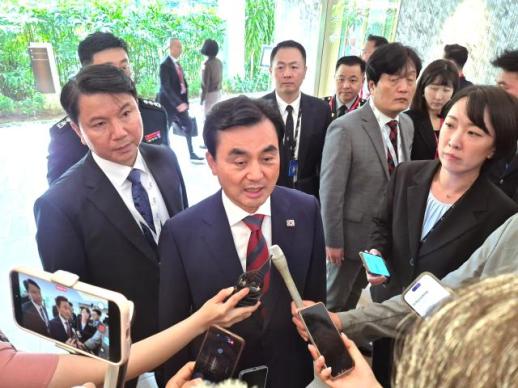 South Korea and Japan to Conduct Joint Search and Rescue Exercise on July 7 The South Korean Navy and the Japan Maritime Self-Defense Force will hold a joint search and rescue exercise (SAREX) on July 7. This marks the first such training since 2017, raising hopes for the restoration of defense cooperation between the two countries. According to Yonhap News on May 30, South Korean Defense Minister An Kyung-bae announced the exercise during a bilateral meeting with Japanese Defense Minister Shinjiro Koizumi at the 23rd Shangri-La Dialogue, a multilateral security conference in Singapore. Minister An stated, "The resumption of the exercise after nine years carries symbolic and declarative significance. The two countries should further develop and deepen this cooperation." The Korea-Japan search and rescue exercise is designed to review procedures for joint responses to maritime distress incidents near the Korean Peninsula. Initiated in 1999, the training was conducted biennially until 2017, when it was halted due to defense exchange disruptions stemming from the 'Rising Sun Flag' controversy and conflicts over patrol aircraft. Last year, both countries aimed to resume the training, but it was canceled due to issues related to the Black Eagles' refueling support. Following ongoing discussions to restore defense exchanges, the two nations agreed to resume the exercise during a defense ministerial meeting earlier this year and have been coordinating the timing. Minister Koizumi emphasized, "Given the current challenging security environment, cooperation between our two countries is essential. South Korea and Japan must take the lead in efforts to ensure peace and stability in the Indo-Pacific region."* This article has been translated by AI. 2026-05-30 19:54:00
 -
 Finance Minister Koo Yoon-cheol Addresses Concerns Over Market Bubble Koo Yoon-cheol, Deputy Prime Minister and Minister of Economy and Finance, recently addressed concerns regarding a potential bubble in the South Korean capital market, stating, "Such worries arise when there is a lack of innovative efforts." According to a report by Yonhap News on May 30, Koo expressed these views during an appearance on the YouTube channel Sampro TV, responding to fears that the KOSPI index might drop below the 8,000 mark. He emphasized that the government would promote structural reforms and a rebound in potential growth rates through its economic growth strategy for the second half of the year. In response to suggestions that structural reforms could lead to price stability in the stock market, Koo added, "The government has outlined a direction for advancing towards a super-innovative economy, focusing on workforce development in artificial intelligence (AI) and green transformation, as well as supporting youth entrepreneurship." He further stated, "If we implement these substantive efforts, I believe the market will reassess our stock market." Regarding the growth rate forecast to be announced in the upcoming second-half economic growth strategy, Koo remarked, "I am curious about it as well." On the outlook for tax revenue due to strong semiconductor performance, he noted, "It is clear that there will be additional excess tax revenue," but he refrained from providing specific figures, stating that they would be confirmed with the corporate tax interim payment in August. Koo also commented on the fiscal tightening under the Yoon Suk-yeol administration, saying, "The previous government reduced research and development (R&D) budgets, leading to decreased tax revenue and increased fiscal deficits. In this era of AI transformation, we must boldly invest in solid items. Please observe how national debt and deficits will look next year."* This article has been translated by AI. 2026-05-30 19:48:00
 -
 Early Voting for National Assembly By-Elections Sees 24.12% Turnout, Lowest in Daegu Dalseong Early voting for the National Assembly by-elections, held alongside the June 3 local elections, concluded on May 30 with a final turnout of 24.12%. According to the National Election Commission, 546,757 out of 2,267,121 eligible voters participated in early voting, which took place from 6 a.m. on May 29 to 6 p.m. on May 30. Among the 14 electoral districts nationwide, Jeonbuk Gunsan, Gimje, and Buan recorded the highest turnout at 42.59%. This was followed by Chungnam Gongju, Buyeo, and Cheongyang at 30.16%, and Jeonbuk Gunsan, Gimje, and Buan Gap at 29.71%. In contrast, Daegu Dalseong reported the lowest early voting turnout at 17.56%. The competitive district of Gyeonggi Pyeongtaek also fell below the national average with a turnout of 18.39%. The early voting rate in Busan Buk-gap, considered a key battleground, was 25.57%, surpassing the national average. In this district, candidates include Ha Jung-woo from the Democratic Party, Park Min-sik from the People Power Party, and independent candidate Han Dong-hoon. In Gyeonggi Pyeongtaek, attention is focused on the main candidates: Kim Yong-nam from the Democratic Party, Yoo Ui-dong from the People Power Party, and Jo Guk from the Justice Party, as the results of the main voting approach.* This article has been translated by AI. 2026-05-30 19:33:00
 -
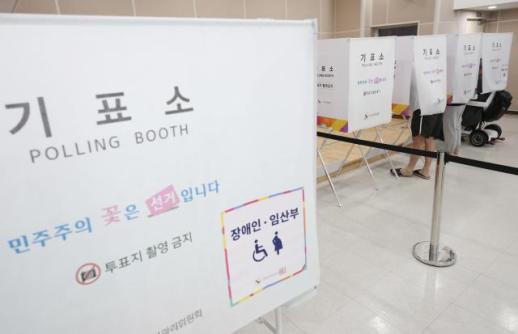 Early Voting Rate for Local Elections Reaches Record High of 23.51% The early voting rate for the 9th nationwide local elections reached a record high of 23.51%. According to the National Election Commission on May 30, a total of 10,498,411 out of 44,649,908 eligible voters participated in early voting over the two days from May 29 to 30. This figure is 2.89 percentage points higher than the early voting rate of 20.62% recorded in the previous local elections in 2022. However, it remains 13.42 percentage points lower than the all-time high of 36.93% seen during the 2022 presidential election. By region, Jeonnam had the highest turnout at 38.95%, followed by Jeonbuk at 35.05%, Gwangju at 27.83%, Sejong at 27.67%, and Gangwon at 27.05%. In contrast, Daegu reported the lowest turnout at 18.65%, followed by Gyeonggi at 20.96%, Busan at 21.29%, and Incheon at 21.62%. Seoul's turnout was recorded at 23.84%. The daily early voting rates were 11.6% on the first day, May 29, and 11.91% on the second day, May 30. On the main voting day, June 3, voters can only cast their ballots at their designated polling stations based on their registered addresses. Polling station locations can be checked on the National Election Commission's website or by calling the representative hotline at 1390.* This article has been translated by AI. 2026-05-30 19:15:00
 -
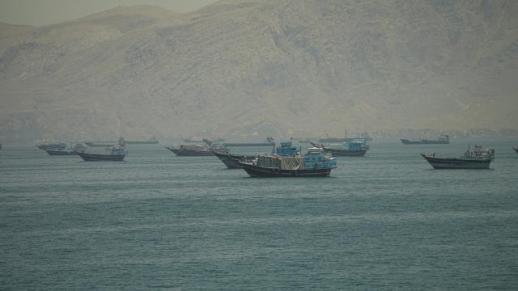 U.S. Military Supports 'Dark Transit' as Ships Navigate Hormuz Strait As Iran continues its blockade of the Hormuz Strait, some vessels are reportedly navigating the waterway with their Automatic Identification Systems (AIS) turned off, a practice known as "dark transit," while receiving support from the U.S. military, according to a report by The Wall Street Journal on May 29. The report indicates that in recent weeks, supertankers and LNG carriers transporting crude oil and liquefied natural gas have been taking risks to pass through the Hormuz Strait. Dark transit involves minimizing ship lighting and disabling AIS to reduce the risk of detection and attack by Iran. However, operating without AIS makes it difficult to determine the positions of nearby vessels, increasing the risk of collisions and requiring skilled navigation. The Wall Street Journal reported that the U.S. military is communicating with these ships, advising them on when to disable AIS and how to respond to Iranian threats. The issue of navigation through the Hormuz Strait has become a key point in ongoing ceasefire negotiations between the U.S. and Iran. The U.S. maintains that the strait should be open to all vessels under international law, while Iran asserts its right to control the strait and collect tolls. On May 27, the U.S. Treasury Department's Office of Foreign Assets Control (OFAC) added the Persian Gulf Shipping Association (PGSA), established by Iran, to its sanctions list, aiming to curb Iran's attempts to impose tolls. Despite some vessels successfully navigating the strait through dark transit, overall traffic remains significantly below pre-war levels. The risk of war has driven insurance costs for ships to rise between 2.5% and 4% of their value, increasing the burden on vessels remaining in the Persian Gulf, according to The Wall Street Journal.* This article has been translated by AI. 2026-05-30 19:12:00
 -
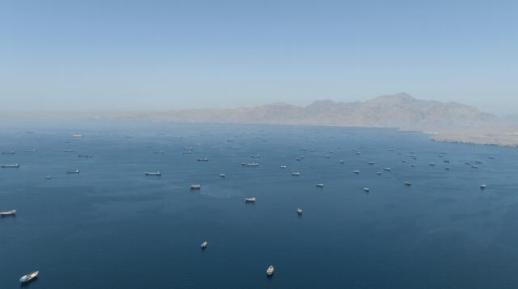 Iran's PGSA Claims U.S. Sanctions Validate Control Over Hormuz Strait The Iranian government established the Persian Gulf Shipping Authority (PGSA) on May 7, claiming it was a measure to manage traffic through the Hormuz Strait. Following the U.S. Treasury Department's designation of PGSA as a target of sanctions, the agency asserted that this recognition affirms its control over the strait. On May 29, PGSA condemned the U.S. sanctions via its X account, stating, "The sanctions imposed by a nation that prides itself on piracy are evidence of our positive achievements." The agency further claimed, "The U.S. will never gain control over the Hormuz Strait through sanctions, which it could not achieve on the battlefield or diplomatic front." PGSA noted that while the U.S. is escalating tensions in the Persian Gulf and the Sea of Oman, it continues to facilitate smooth navigation for non-hostile vessels by processing inspections and issuing transit permits. The agency announced plans to release statistics on its activities in its first month soon. Earlier, on May 27, the U.S. Treasury Department's Office of Foreign Assets Control (OFAC) added PGSA to its Specially Designated Nationals (SDN) list under an executive order aimed at combating terrorist financing and support. OFAC characterized PGSA as an organization established in collusion with the Islamic Revolutionary Guard Corps (IRGC) to extort money from commercial vessels passing through the Hormuz Strait. It also claimed that the tolls collected by PGSA are funneled to the IRGC, which the U.S. designates as a foreign terrorist organization (FTO). Consequently, the U.S. has stated that shipping companies must not provide any form of compensation—whether cash, goods, virtual assets, offset transactions, informal swaps, or indirect donations—to PGSA in order to obtain transit permits for the Hormuz Strait.* This article has been translated by AI. 2026-05-30 17:48:00
 -
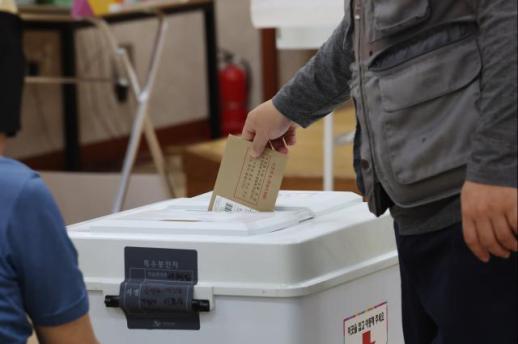 Early Voting Rate Reaches 22.16%, Surpassing Previous Record As of 5 p.m. on May 30, the second day of early voting for the 9th nationwide local elections, the national average voter turnout has reached 22.16%. This figure marks a new record for early voting in local elections. According to the National Election Commission, from 6 a.m. on May 29, when early voting began, a total of 989,233 ballots were cast out of 44,649,908 eligible voters. The current turnout of 22.16% exceeds the previous record of 20.62% set during the 2022 8th local elections by 1.54 percentage points. It is also 2.72 percentage points higher than the turnout of 19.44% at the same time during the last local elections. Regionally, South Jeolla Province recorded the highest turnout at 37.42%, followed by North Jeolla Province at 33.46%, Gwangju at 26.28%, and Gangwon Province at 25.82%. In contrast, Daegu had the lowest turnout at 17.52%, followed by Gyeonggi Province at 19.66%, Busan at 20.11%, and Incheon at 20.34%. Seoul's turnout was 22.22%, slightly above the national average. Early voting, which began at 6 a.m. on May 29, will continue until 6 p.m. on May 30 at 3,571 polling stations nationwide. Voters wishing to participate in early voting must bring an identification card, such as a resident registration card, driver's license, or passport, to their nearest early voting site. Polling station locations can be confirmed on the National Election Commission's website or by calling the main hotline at 1390.* This article has been translated by AI. 2026-05-30 17:27:00
 -
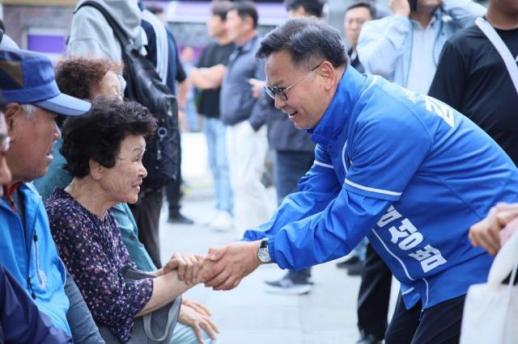 Kim Seong-beom Aims to Diversify Seogwipo's Economy with AI, Bio, and Healing Industries Kim Seong-beom, the Democratic Party candidate for the Seogwipo City National Assembly by-election, has announced plans to diversify the tourism-dependent economy of Seogwipo by focusing on AI, bio, and healing industries. He emphasized, "The Seogwipo economy must change to a sustainable structure that is not shaken by external variables," adding, "I will devote all my efforts to creating a city where young people do not leave." A native of Seogwipo, Kim graduated from Seogwipo High School and has had a 32-year career in public service after passing the civil service exam. He has served as the Vice Minister and Acting Minister of the Ministry of Oceans and Fisheries and is recognized as a prominent economic and administrative bureaucrat. The Democratic Party has described him as a "master of administration" upon his recruitment. In an interview with Aju Economy, Kim stated, "The Jeju economy has long depended on primary industries and tourism services. The COVID-19 pandemic and the restructuring of global trade have revealed that the current economic structure can be significantly affected by external factors." He further noted, "The reality that it is difficult to provide quality jobs for young people to build careers and grow has intensified youth outflow. It is urgent to reform the structure of the Jeju economy." Kim proposed fostering new industries linked to the policy direction of the Lee Jae-myung administration as a key solution. He stated, "I will cultivate future industries in Seogwipo, such as AI, bio, and healing industries, and change the economic structure of Seogwipo based on my experience of turning the promises of the Lee Jae-myung administration into actual results." He particularly emphasized the need to shift the tourism industry’s direction. Kim said, "Seogwipo tourism must transition from simple sightseeing to high-value wellness tourism centered on 'healing and stay,'" adding, "I will reduce the negative effects of over-tourism associated with quantitative growth and create a structure that genuinely benefits the local economy." He proposed the establishment of a 'marine healing and forest recreation tourism belt' utilizing Seogwipo's pristine natural environment as a key pledge. He also explained plans to normalize the long-delayed Donghong-dong healthcare town project in collaboration with the Jeju International Free City Development Center (JDC) and to attract large cruise ships and expand nighttime tourism content to ensure that tourism spending benefits local businesses. Kim expressed his commitment to enhancing transportation and medical infrastructure. He stated, "I will work closely with the government and airlines to secure stable flight seats and rationalize airfares," and added, "I will significantly strengthen the essential and emergency medical capabilities of Seogwipo Medical Center and reinforce the emergency medical network in rural and island areas." Additionally, he stated, "I will create a Seogwipo where all citizens can enjoy residential welfare without exclusion through the introduction of a national responsibility system for care, bridging the gap in public education, and establishing regional arts centers and barrier-free sports spaces." Kim identified his extensive central administrative experience and execution capabilities as his strengths. He noted, "Having worked as a senior official and vice minister in economic departments, I have collaborated with the National Assembly and central ministries during the legislative and budgetary processes," and added, "I have experience participating in cabinet meetings as Acting Minister and turning the president's key promises into actual results." He continued, "To bring Seogwipo's share and take care of citizens' lives, we must connect the central government, National Assembly, and local government organically," emphasizing that "administrative experience and policy networks are my greatest competitive advantages." During his campaign, the most frequently heard concerns from residents were about economic recession and worsening livelihoods. Kim said, "Many citizens have expressed that the Seogwipo economy is struggling and life is tough," recalling, "Especially, the words of the elderly who asked me to revive the economy and livelihoods, saying, 'I have high expectations because you are a worker trusted by President Lee Jae-myung,' remain most memorable." He added, "I feel a sense of responsibility to meet the expectations placed upon me," stating, "Just as I turned the president's promises into results as the first Vice Minister of Oceans and Fisheries in the Lee Jae-myung administration, I will surely revive the Seogwipo economy." In conclusion, Kim urged, "This election is not just about electing a single member of the National Assembly; it is a crucial choice that will determine the future direction of Seogwipo." He emphasized, "I was born and raised in Seogwipo and have always paid attention to local issues while in central government. Now is the time for action rather than words." Kim stated, "I will create new growth engines in AI, bio, and healing industries to take responsibility for the livelihoods and future of Seogwipo. Please give the prepared worker Kim Seong-beom the opportunity to work." * This article has been translated by AI. 2026-05-30 16:48:00
 -
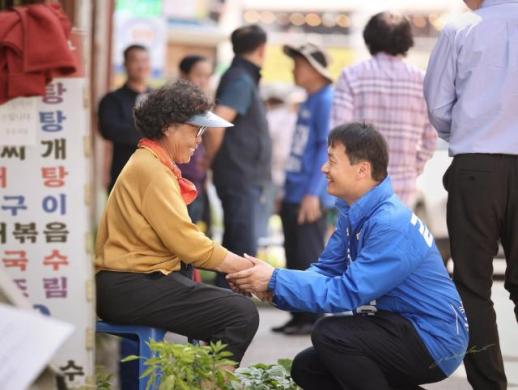 Kim Young-bin Aims to Revitalize Gongju, Buyeo, and Cheongyang for Youth Kim Young-bin, the Democratic Party candidate for the Gongju, Buyeo, and Cheongyang parliamentary by-election, has proposed expanding healthcare and welfare services and creating jobs for young people as key solutions to address the region's declining population and aging issues. He emphasized the importance of developing a sustainable tourism industry leveraging the Baekje cultural heritage, stating, "We will create a region where anyone can visit and want to stay." A native of Gongju, Kim graduated from Gyodong Elementary School, Gongju Middle School, and Gongju National University of Education. He has served as a prosecutor and a policy advisor to the Minister of Justice, gaining experience in policy and legal affairs at the central government level. He also worked as Chief Legal Officer at Dunamu, highlighting his dual experience in policy and the real economy as a strength. In a phone interview with Aju Economy on May 29, Kim stated, "Gongju, Buyeo, and Cheongyang are experiencing rapid population decline and aging, but the healthcare and welfare infrastructure remains insufficient. We must improve the reality where elderly individuals struggle to receive timely medical services when they are ill." He proposed expanding the functions of the Cheongyang County Health Center as one of his key pledges. Kim said, "We will construct new emergency and inpatient rooms and promptly establish a geriatric ward and dialysis unit, enhancing accessibility to healthcare and addressing gaps in the welfare and medical systems." He added, "As important as elderly welfare is the education and care of children. Creating a city where parents can raise their children and build families with peace of mind is a core task in responding to the population extinction crisis." Kim also stressed the need to address youth employment issues, stating, "The painful reality of young people leaving the region due to a lack of good jobs is a serious problem. Young people are leaving because there are no jobs, while companies cannot find workers, creating a vicious cycle." He outlined plans to foster tourism and cultural industries utilizing the Baekje cultural heritage. He aims to develop the Baekje cultural area into a national tourism and industry project in connection with the 'Baekje Historic Areas Special Act,' which passed the National Assembly in May, and the National Institute of Historical and Cultural Area Promotion, which is pursuing the establishment in Buyeo. Kim stated, "We can establish a national project system that goes beyond simple research and surveys to include restoration, tourism, and industrialization. We will create jobs and attract population influx through revitalizing the nighttime economy and expanding sustainable tourism." He also mentioned plans for tailored support at the National Assembly level to help young entrepreneurs sustain their businesses. Comparing himself to the People Power Party's Yoon Yong-geun, Kim highlighted his strengths in policy planning and the advantages of being a ruling party candidate. He said, "I have directly designed policies and coordinated laws while working at the Seoul Central District Prosecutor's Office and the Minister of Justice's policy advisory office. My experience in both public and private sectors makes me a versatile candidate." He emphasized the importance of close cooperation with the central government for regional development, stating, "I am a strong candidate from the ruling party who can secure budgets and address current issues in line with the Lee Jae-myung administration." Kim recalled a memorable moment during his campaign when he held a policy discussion with local youth. He said, "I was deeply impressed by the 30 or so college students and young people who presented their policy proposals with a clear sense of the issues. I realized again that resolving youth employment and housing and education issues is essential to responding to the population extinction crisis." He added, "I gain great strength when residents welcome me with 'You’ve come well.' I will continue to listen to the voices of residents directly in markets, alleys, and parks, and realize policies based on their input." Finally, Kim stated, "Gongju, Buyeo, and Cheongyang are not places for transient politicians. The person who has thought about the region from the beginning will ultimately be able to take responsibility for it until the end." He emphasized, "As someone who graduated from elementary, middle, and high school in Gongju, I will work with the Chungnam governor, mayors, and the Democratic Party to ensure tangible regional development." He concluded by stating, "I will be a worker who can create real change rather than just political slogans," appealing for support.* This article has been translated by AI. 2026-05-30 16:48:00