

Journalist

CGTN
-
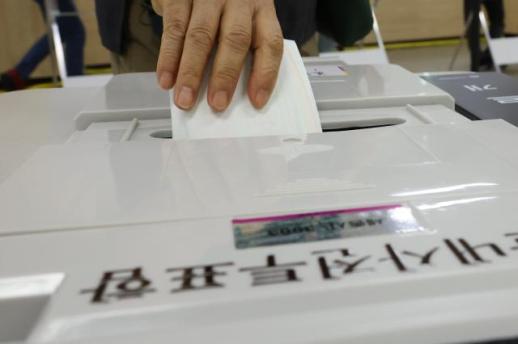 Early Voting for Local Elections Sees Record Turnout at 10.39% As of 5 p.m. on May 29, the first day of early voting for the 9th nationwide local elections, the national voter turnout reached 10.39%. This marks the highest early voting rate recorded since the June 4, 2014 local elections. According to the National Election Commission, from 6 a.m. to 5 p.m. on this day, 463,981 voters out of a total of 44,649,908 registered voters participated in early voting. This turnout is 1.19 percentage points higher than the same time during the early voting for the 2022 local elections, which recorded a 9.2% turnout. The region with the highest turnout so far is Jeonnam, with 20.5%. It is followed by Jeonbuk at 17.63% and Gangwon at 13.05%. Seoul's turnout was recorded at 9.93%, while Daegu had the lowest turnout at 8.09%. Early voting will continue for two days at 3,571 polling stations nationwide, operating from 6 a.m. to 6 p.m. Voters must bring identification to participate, and polling station locations can be confirmed on the election commission's website or by calling the representative hotline at 1390. 2026-05-29 17:42:00
 -
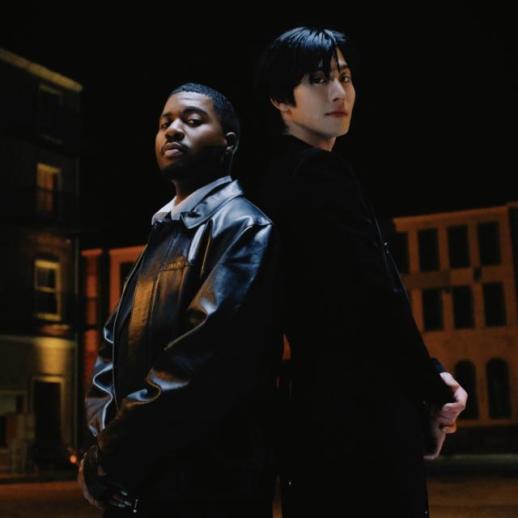 Ahn Hyo-seop teams up with Khalid for debut single 'Something Special' SEOUL, May 29 (AJP) - South Korean actor Ahn Hyo-seop has released his debut solo single "Something Special," a collaboration with Grammy-nominated American R&B artist Khalid. The single was released through FANDOM on major streaming platforms on Friday, with Musicow planning to unveil an official music video in June. Musicow is a music equity platform that lets fans co-own royalty revenue from their favorite artists' songs, and FANDOM is its debut project — an album series featuring U.S. and K-pop artist collaborations where fans can share in the music's financial journey. The release marks the 31-year-old's first official single as a solo recording artist and Khalid's first collaboration with a Korean artist. Ahn recently drew wider global attention for voicing Jinwoo, the leader of the demon boy band Saja Boys, in Netflix's animated film "KPop Demon Hunters." "Something Special" is an R&B-leaning track that brings together Ahn's growing music profile and Khalid's established sound. The song was produced by Woo "RAINSTONE" Rhee, known for his work on Wonder Girls' "Nobody," and co-produced by Grammy-winning producer Troy "R8DIO" Johnson, who contributed to Solange's "A Seat at the Table." The release follows FANDOM's January collaboration "Two Car Garage" by Jon Bellion and Swae Lee, as the platform continues to develop music projects involving artists from different markets. "Something Special" is available on major streaming platforms. 2026-05-29 17:39:01
 -
 NCSOFT to Launch 'Lineage 2M' in China on June 24 with 4.95 Million Pre-Registrations NCSOFT will begin the Chinese service of its MMORPG 'Lineage 2M' on June 24. With this launch, Lineage 2M will become the only mobile game that NCSOFT currently offers in the Chinese market. The company already provides PC games such as 'Lineage,' 'Lineage 2,' and 'Blade & Soul' in China. On May 29, NCSOFT announced that its local publisher, Tencent Games, revealed the service schedule for China on its official website. The Chinese service will be titled 'Heaven 2: Pact.' Tencent Games will support cross-play between mobile and PC platforms. Before the official launch, NCSOFT and Tencent Games conducted a closed beta test (CBT) with approximately 50,000 participants. They are focusing on localization efforts based on user feedback from the test, which includes improvements to user experience (UX) and user interface (UI), enhancements to party dungeons, and the addition of a 'social appearance' feature for character profiles. Currently, over 4.95 million users have signed up for pre-registration. Leading up to the launch of Lineage 2M, NCSOFT will host events such as an offline pop-up 'Aden Throne Parade' and a 'Return of the Lord' photo-sharing campaign on TikTok.* This article has been translated by AI. 2026-05-29 17:39:00
 -
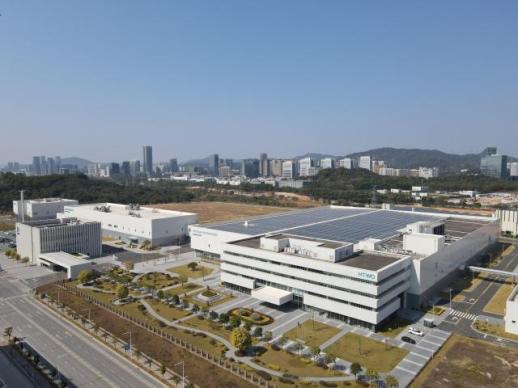 Hyundai Motor's HTWO Guangzhou named hydrogen industry leader in China SEOUL, May 29 (AJP) - Hyundai Motor Group's HTWO Guangzhou has been named a hydrogen industry leader by the southern Chinese city, becoming the only foreign-invested company among 96 firms selected under the city's strategic industry cluster program. According to the automaker, its first overseas production base for hydrogen fuel cell systems in China was selected by the Guangzhou municipal government as a leading enterprise in the hydrogen energy sector. The city has selected and fostered leading companies across 14 strategic industries including new energy, intelligent connected vehicles, artificial intelligence, and semiconductors with the aim of strengthening local supply chains, building industrial ecosystems and expanding cooperation in key technologies. With the designation, HTWO Guangzhou will take on a larger role in local hydrogen industry planning, supply-chain development, and technology cooperation, along with support and other benefits. The selection comes as China continues to expand its hydrogen industry as part of a broader energy transition. Beijing has set goals of reaching peak carbon emissions by 2030 and carbon neutrality by 2060, and has identified hydrogen as a key part of its future energy system. China's first long-term national hydrogen plan, released in 2022, called for establishing a hydrogen technology innovation system by 2030 and building a more diversified hydrogen application ecosystem by 2035. Under a 2021 program to promote hydrogen fuel cell vehicles, China designated five regional clusters, including Guangdong, with aims to deploy about 35,000 hydrogen vehicles by 2025. Guangdong led the five clusters by deploying more than 7,000 vehicles during the period, while Guangzhou operated more than 4,300, making it one of China's largest hydrogen vehicle markets. HTWO Guangzhou sold more than 900 hydrogen commercial vehicles in China in 2025, ranking third in the overall market and first among foreign-invested companies in a field of more than 60 competitors. "This selection recognizes HTWO Guangzhou's contribution to the development of Guangzhou's hydrogen industry and its local cooperation ecosystem," said Choi Doo-ha, general manager of HTWO Guangzhou. "We will continue contributing to the development of China's hydrogen industry and the expansion of its ecosystems. Choi added that the company plans to expand its participation in hydrogen energy demonstration projects scheduled to begin in China in the second half of this year and strengthen cooperation with local governments and partners. 2026-05-29 17:34:56
 -
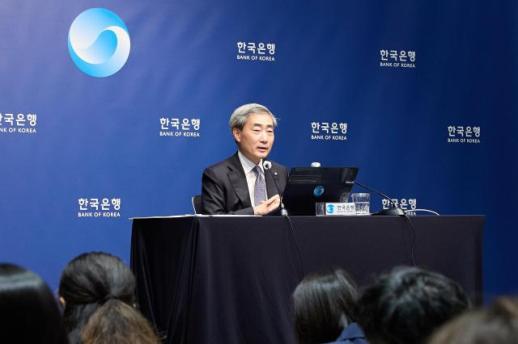 Stock leverage, not typical housing as BOK's policy headache SEOUL, May 29 (AJP) — More than 60 trillion won ($39.9 billion) of leverage tied to South Korea’s stock market frenzy is emerging as a risk factor for both equities and the foreign-exchange market after the central bank all but signaled at least one rate hike in the second half. “While demand curves typically slope downward, heavy debt-fueled investment could reverse that pattern, as forced liquidations are triggered and funds are withdrawn when prices decline,” Bank of Korea Governor Shin Hyun-song said Thursday after the central bank left its benchmark rate unchanged at 2.50 percent for a full year. For ordinary investors, the message was straightforward: excessive leverage can accelerate capital flight and magnify market losses when sentiment turns. The vicious cycle created by debt-financed investing can also hurt investors who have committed only their own funds. Shin’s remarks suggested that leveraged trading is no longer merely a retail-investor issue but a potential complication for monetary policy and financial stability. The Bank of Korea’s latest dot plot, which contains three six-month rate projections from each board member, showed 10 dots at 3.00 percent, seven at 2.75 percent and two at 3.25 percent. Only two projected the benchmark rate remaining at 2.50 percent. The distribution leaves room for as much as 75 basis points of additional tightening in the second half, a prospect that coincides with record borrowing in the domestic stock market. As of Wednesday, outstanding margin loans had surpassed 36 trillion won, setting a new record. Stock-backed loans, in which investors borrow against existing holdings, also exceeded 25 trillion won, bringing retail investors’ total stock market-linked debt exposure to roughly 61 trillion won. At the same time, borrowing costs have climbed sharply. Maximum margin-loan rates at major brokerages are already in the mid-to-high 9 percent range, with Samsung Securities charging as much as 9.6 percent and Mirae Asset Securities up to 9.5 percent. Those elevated rates could weigh on investor sentiment and erode borrowers’ ability to service interest payments even before stock prices begin falling. Early warning signs are already appearing in the short-term credit market, where forced liquidations have been rising in the three-day settlement segment. Over the past six months, the ratio of forced liquidations to unpaid balances exceeded 2 percent on 20 trading days. The figure typically hovers around 1 percent in stable market conditions, but its six-month average has risen to 1.45 percent and spiked to 7.6 percent on May 20. Market participants worry that stress in the short-term credit segment could spill over into the broader margin-loan and stock-backed lending market. If share prices fall, collateral values would decline, potentially triggering margin calls and forced selling by investors unable to meet collateral requirements. Analysts also warn that debt-fueled positions could amplify volatility. “Margin trading volumes are expanding too rapidly at a time when stock market volatility is also rising, pushing daily forced liquidations above 10 billion won,” said Lee Hyo-seop, a senior research fellow at the Korea Capital Market Institute. “We need to monitor whether forced liquidations at one brokerage could spread to other firms and further increase volatility,” Lee said, warning that retail losses could evolve into broader market selling pressure. The risk is heightened by the narrow nature of the KOSPI rally. Much of the index’s recent advance has been concentrated in a handful of semiconductor heavyweights, including Samsung Electronics and SK hynix, creating what some analysts describe as an index illusion that leaves leveraged investors more vulnerable if leadership stocks retreat. The BOK’s tightening signal also carries implications for the foreign-exchange market. In theory, higher domestic rates should support the won by narrowing interest-rate differentials with major economies. Shin separately addressed currency markets, warning against one-sided moves in the won. “We will respond firmly to excessive one-sided movements in the exchange rate,” he said. “We will not tolerate herd behavior in the currency market. We have the tools, the will and various ways to respond.” Yet if monetary tightening coincides with a sharp equity correction, the currency effect could become more complicated. Even as domestic rates rise, foreign investors may cut risk exposure, sell Korean stocks and increase demand for dollars. That dynamic was visible following the BOK’s hawkish signal on May 28. In the bond market, the three-year government bond yield rose 5.5 basis points to 3.766 percent, while the 10-year yield climbed 4.5 basis points to 4.147 percent. Stocks also came under pressure. The KOSPI tumbled more than 4 percent intraday, briefly testing the 8,000 threshold, while the won weakened to close at 1,505.80 per dollar. Despite the governor’s hawkish rhetoric, markets continued to move in the opposite direction on Friday. The won lost another 5.1 won to close at 1,507.9 per dollar as foreign investors dumped more than 1 trillion won worth of KOSPI shares amid a stronger U.S. Dollar Index fueled by expectations of a U.S.-Iran peace deal. For that reason, investors increasingly view Shin’s message as more than a warning about retail leverage. It underscored how rising stock market debt has become a policy burden for the central bank, as tighter monetary policy, narrow market leadership and exchange-rate volatility can reinforce one another during a correction. Shin signaled that the BOK would take those risks into account when determining the pace of tightening. “The timing and pace of interest rate hikes will be decided based on incoming data, as we assess the expansion of inflationary pressures, the path of economic recovery and broader financial stability conditions,” he said. 2026-05-29 17:33:37
 -
 KOSPI Surges Past 8400 as National Pension Fund Raises Domestic Stock Target to 20.8% The National Pension Fund has significantly raised its target allocation for domestic stocks from 14.9% to 20.8% in response to the recent explosive growth in the domestic stock market. On May 29, the KOSPI index reached a record high, alleviating fears of mass sell-offs by pension funds. Despite the impact of the Middle East conflict earlier this year, the National Pension Fund achieved a solid 4.42% return in the first quarter, surpassing 1500 trillion won in reserves. Fund Committee Raises Domestic Stock Target from 14.9% to 20.8% The National Pension Fund Management Committee held its fifth meeting on May 28, chaired by Minister of Health and Welfare Jeong Eun-kyeong, to discuss the realistic target allocations for this year and the medium-term asset allocation plan for 2027 to 2031. Initially, the target allocation for domestic stocks was set at 14.4%, but it was raised to 14.9% in January due to the KOSPI's upward trend. However, as the domestic market, particularly semiconductor stocks, experienced an unprecedented rally, the actual allocation for domestic stocks had already surged to 24.5% (approximately 395 trillion won) by the end of February. This situation would have required the fund to sell up to 155 trillion won in domestic stocks to align with the previous target. Market Sees Relief from Forced Sell-off Concerns On May 29, the KOSPI soared by 290.86 points (3.55%) to close at 8476.15, marking a new all-time high. This surge likely increased the National Pension Fund's holdings further. Consequently, the Fund Committee decided to raise the target allocation to 20.8% just four months after the previous adjustment, allowing for a maximum combined strategic and tactical asset allocation of up to 25.8%, thereby easing concerns about a massive sell-off. The committee stated, "We considered the structural changes in the domestic stock market and the fund's long-term profitability and stability. By adjusting the target allocation, we aim to reduce the mechanical selling pressure and mitigate the impact on the domestic stock market." The new allocation will take effect at the end of next month, when the rebalancing grace period ends. Additionally, to respond flexibly to increased market volatility, the committee temporarily expanded the allowable range for strategic asset allocation in domestic stocks and reduced the maximum daily rebalancing size. Lee Jae-won, a researcher at Yuanta Securities, noted, "The National Pension Fund's target allocation for domestic stocks has been realistically set at 20.8% for this year and next, alleviating concerns about forced sell-offs. This is a significant change that could positively influence the direction of the domestic stock market, which has been a major source of fear for investors." Strong Performance Drives Allocation Changes The adjustment in asset allocation is backed by the National Pension Fund's impressive performance. According to preliminary figures released by the fund's management headquarters, the fund's reserves reached 1526.1 trillion won at the end of the first quarter, an increase of 68 trillion won from the end of last year. The return on investment during this period was 4.42% (based on a money-weighted return). This performance stands in contrast to major overseas pension funds, such as Norway's GPFG (-1.9%) and the Netherlands' ABP (-0.5%), which recorded negative returns during the same period. The fund has demonstrated its global competitiveness, overcoming previous concerns about talent loss and weakened operational capabilities. The first quarter returns by asset class were 21.67% for domestic stocks, -0.11% for overseas stocks, -2.03% for domestic bonds, 4.98% for overseas bonds, and 5.27% for alternative investments. As indicated, domestic stocks were the primary driver of overall returns. Despite a decline in global stock markets due to deteriorating investor sentiment following the outbreak of the U.S.-Iran conflict in late February, domestic stocks surged by 19.89%, contributing to a double-digit (21.67%) return for the National Pension Fund. In the bond market, rising interest rates due to inflation concerns led to a decline in the value of domestic bonds, while overseas bonds maintained positive returns due to favorable exchange rate effects. Kim Sung-joo, the CEO of the National Pension Service, stated, "While the return on investment in the first quarter was slightly adjusted due to the impact of the Middle East conflict, we are quickly recovering and maintaining good performance. As a long-term investor responsible for the public's retirement, we will continue to focus on enhancing returns through a steadfast investment philosophy and thorough risk management, regardless of challenging circumstances." Expansion of Overseas and Alternative Investments Proves Beneficial The National Pension Fund's remarkable performance is not solely due to short-term factors. After recording an 8.22% loss during the global asset downturn in 2022, the fund has steadily increased its allocations to overseas and alternative investments according to its long-term asset allocation strategy. This has resulted in a sharp rebound in returns, with 13.59% in 2023, 15% in 2024, and 18.82% last year. In particular, while many overseas pension funds faced significant losses due to high interest rates and rising vacancy rates, the alternative investment sector (17.09% in 2024, 8.03% last year) has shown resilience. Investments in U.S. tech stocks related to artificial intelligence and the strong dollar have paid off, with the National Pension Fund's investments in key office buildings in Seoul, such as the Grand Seoul in Gwanghwamun and the Centerfield in Teheran-ro, benefiting from solid tenant demand and low vacancy rates. Additionally, overseas real estate assets previously considered at risk, such as the CIBC Square Tower 2 in Toronto (100% leased before completion) and the Causeway Bay Tower 535 in Hong Kong (96% leased), have gradually normalized, restoring asset health. The National Assembly Budget Office has projected that if the National Pension Fund can maintain an average annual return of around 6.5%, it could delay the fund's depletion date from the previously estimated 2057 to 2090. Warnings Persist Amid Success While the fund has successfully balanced supply stability and high returns, concerns remain. Although the KOSPI's breakthrough past 8400 has temporarily alleviated immediate sell-off shocks, there are warnings against misusing the National Pension Fund's resources as a tool for propping up high-risk emerging market stocks. The trauma from the 2021 "Donghak Ant Movement," when the KOSPI first surpassed 3000 points, is still fresh. At that time, the National Pension Fund was pressured by public opinion and political forces to increase its domestic stock allocation but missed the opportunity to realize profits at the peak, resulting in significant losses in the following year (2022) of -22.76% for domestic stocks and -8.22% for the overall fund. If unexpected shocks lead to a rapid market correction, the National Pension Fund could bear the brunt of the increased allocation. In response to critical perspectives, CEO Kim Sung-joo firmly rejected the notion that the National Pension Fund is being used to support domestic stocks or is swayed by political demands. He stated, "It is not correct to say that we are using the National Pension Fund to prop up domestic stocks or to respond to policy demands. We are generating profits because the market is favorable, and we cannot abandon this opportunity to invest in a declining bond market. The National Pension Fund is fulfilling its role as a long-term investor." Meanwhile, the Fund Committee has reaffirmed its commitment to expanding overseas and alternative investments to diversify risks. According to the confirmed medium-term asset allocation plan for 2027 to 2031, the target allocation by the end of 2031 will be approximately 55% for stocks, 30% for bonds, and 15% for alternative investments. To ensure ongoing monitoring of market conditions, the target allocation for domestic stocks will remain at the same level of 20.8% as this year. Minister Jeong Eun-kyeong stated, "This medium-term asset allocation plan is a decision made to maximize the fund's long-term profitability and stability while considering the impact on the domestic financial market in light of recent rapid market changes. We will continue to closely monitor the market to ensure that our fund management balances principles and flexibility."* This article has been translated by AI. 2026-05-29 17:33:00
 -
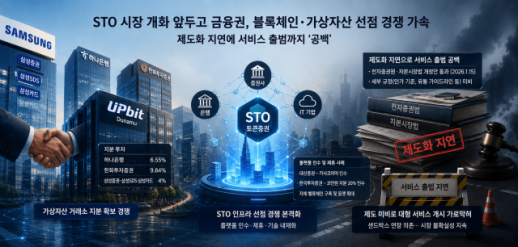 Dunamu's Valuation Soars as Securities Firms and Banks Compete for Partnerships As the token securities (STO) market prepares for significant growth, domestic securities firms and banks are ramping up investments to secure blockchain infrastructure and partnerships with virtual asset operators. However, despite the proactive investment efforts from the financial sector, the market continues to face delays in the implementation of regulatory frameworks following the passage of relevant legislation. According to the financial investment industry on May 29, Samsung Securities, Samsung SDS, and Samsung Card held a board meeting on May 28 and resolved to acquire a 4% stake (1.39 million shares) in Dunamu, the operator of South Korea's leading virtual asset exchange, Upbit, for 612.8 billion won. With this move, Samsung Group joins Hana Financial Group and Hanwha Investment & Securities in investing in Dunamu, mobilizing its financial and IT affiliates. Earlier, Hana Financial Group announced on May 15 that it would acquire a 6.55% stake in Dunamu for approximately 1.03 trillion won, while Hanwha Investment & Securities increased its stake to 9.84% on May 20, becoming the third-largest shareholder. The substantial investments from major financial firms, which previously distanced themselves from the virtual asset industry due to regulatory uncertainties, are seen as efforts to secure a foothold in the future digital finance ecosystem. Particularly, as discussions in the National Assembly lean towards separating issuance and distribution in digital asset regulations, financial firms have determined that partnering with Dunamu, which possesses extensive experience in handling large traffic and blockchain technology, is more efficient than building their own infrastructure. The actions of institutional financial firms to gain a foothold in the STO market extend beyond just investing in virtual asset exchanges. Daishin Securities has already taken proactive steps by acquiring management rights in Casa Korea, the country's first real estate fractional investment platform, thereby internalizing its token business infrastructure. Daishin Securities is recognized for combining its ability to select high-quality real estate with Casa Korea's distributed ledger technology platform, effectively completing its own value chain from issuance to distribution of real estate STOs. As financial firms accelerate their market entry by acquiring their own platforms or forming alliances with major operators, competition for securing infrastructure is intensifying. Korea Investment & Securities has also decided to acquire a 20% stake in the domestic virtual asset exchange Coinone, indicating a growing trend of alliance-building across the financial sector. However, despite the enthusiasm for proactive investments, the pace of regulatory development necessary to support actual business operations has not met market expectations. The amendments to the Electronic Securities Act and the Capital Markets Act, aimed at establishing the STO framework, drifted for over a year after being submitted to the National Assembly, finally passing the plenary session on January 15. Yet, several months later, the establishment of specific approval criteria and distribution guidelines remains delayed, hindering the launch of practical services by companies. Although financial firms have poured funds into securing stakes in virtual assets and tokenization platforms this month, they lack the legal guidelines necessary to operate their businesses, relying instead on extensions of the Innovative Financial Services (regulatory sandbox) designation, which has stalled the launch of major services. A representative from the financial investment industry stated, "Countries like Hong Kong and Japan have already completed their STO-related regulations and entered activation phases years ago. Given that domestic financial firms are taking risks and making large-scale investments while building alliances, it is urgent for authorities to provide clear and swift detailed regulations to alleviate market investment stagnation and regulatory uncertainties."* This article has been translated by AI. 2026-05-29 17:33:00
 -
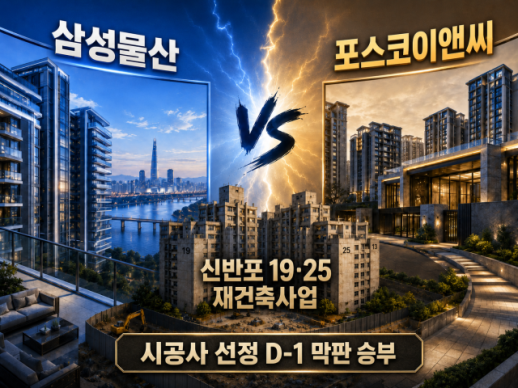 Samsung and Posco Engage in Final Bidding for Shinbanpo Reconstruction Project As the selection meeting for the construction company for the integrated reconstruction of Shinbanpo 19 and 25 approaches, competition between Samsung C&T and Posco E&C is heating up. Samsung C&T is promoting its 'Raemian' brand and a design that highlights views of the Han River, while Posco E&C is focusing on its high-end brand 'Otier' and financial support for union members to sway votes. According to the construction industry on May 29, the Shinbanpo 19 and 25 integrated reconstruction union will hold a meeting on May 30 to finalize the construction company. This project involves the integrated reconstruction of Shinbanpo 19 and 25 and Hanshin Jinil and Jamwon CJ in the area of 61-1, Jamwon-dong, Seocho-gu, Seoul. It will consist of seven buildings with 614 units, rising from four underground floors to 49 above ground, with an estimated construction cost of about 443.4 billion won. At a briefing held in February, nine construction companies attended. The final bidding has since narrowed down to a two-way competition between Samsung C&T and Posco E&C. Samsung C&T is emphasizing its extensive construction experience in the Banpo area. It highlights its work on major projects like Raemian One Bailey and Raemian One Pentas, promoting the idea of completing a 'Banpo Raemian Town.' A key selling point is the view of the Han River. Samsung C&T has proposed a design that offers 'permanent Han River views,' reflecting developments from nearby Shinbanpo 16 and 27 reconstruction projects. According to Samsung C&T, approximately 87% of the 616 units, or 533 units, will have views of the river. The types of views include panoramic views for 163 units, wide views for 128 units, and partial views for 242 units. Posco E&C is countering with financial conditions. It has proposed the name 'The Banpo Otier' for the project. Posco E&C is attempting to differentiate itself from Samsung C&T by emphasizing conditions that reduce the financial burden on union members. The most significant aspect is the financial support for union members. Posco E&C has proposed a financial support package of 200 million won per unit for all 446 households, totaling 89.2 billion won. They promise early support after the construction company is selected, aiming to alleviate the financial burden on union members. However, there are concerns regarding the legality of the financial support conditions. Posco E&C maintains that these conditions have been officially proposed after review by the Seocho District Office and the union's board and delegates. In contrast, discussions within the union regarding the feasibility and legal risks of the financial support have reportedly continued as the meeting approaches. This bidding competition also has a 'rematch' aspect, as Samsung C&T and Posco E&C previously faced off in the redevelopment project of Busan Citizens Park in 2024, where Posco E&C secured the construction rights over Samsung C&T. Industry insiders view the Shinbanpo 19 and 25 project as significant, not because of its size but due to its prime location along the Han River and within the Banpo living area. They suggest that the outcome of this bidding could influence the strategies of major construction companies in ongoing competitive reconstruction projects in the Gangnam area. An industry source stated, "Samsung C&T is emphasizing brand and design stability, while Posco E&C is focusing on financial support conditions, which may lead to differing criteria for union members' decisions. The atmosphere is so competitive that it is difficult to predict the outcome even until the meeting day."* This article has been translated by AI. 2026-05-29 17:27:00
 -
 In South Korea, campaigns move indoors SEOUL, May 29 (AJP) -The streets used to shake. Candidate trucks blaring jingles, jackets every color of the rainbow, rallies spilling across every intersection. Growing up, elections were the noisiest thing Korea did. You knew one was coming before you checked the calendar — you could hear it. That was then. Now, with 4,227 seats on the line — governors, mayors, district chiefs, council seats, education offices — and a clutch of by-elections for lawmakers alongside the June 3 local vote, the campaign is louder than ever. You just can't hear it on the street. Seongsu-dong, a neighborhood of converted factories turned coffee shops, on a Thursday morning: a single row of candidate posters lines a brick wall between a specialty roaster and a nail salon. Nobody stops. Two women walk past without a glance. In the old playbook, this wall would have been fought over. The real war is happening in vertical video. Candidates produce Reels and Shorts the way they once printed leaflets — daily, disposable, precisely targeted. Ko Geum-ran runs a YouTube live channel. Lee Jae-jeong drops Shorts. Oh Se-hoon has a channel. Yong Hye-in has a dance challenge. Candidates who once measured success by how many hands they shook now track watch-time and comment sentiment. Young voters don't read the platform documents first. They watch the Shorts. Then they read the comments. A single slip in a debate becomes a clip in four hours. TV Hongka Cola — Hong Joon-pyo's long-running YouTube channel — pioneered the long-form political format that turned a politician's off-script moments into recurring content. The lesson was not lost on rivals. Every candidate now has someone in the room whose only job is to watch for the moment that will live forever as a screencap. This is what politics looks like when it crosses into entertainment. Park Seong-min and Kim Jae-seop — one from the Democratic Party, one from People Power — appeared together on Wavve's reality show Ideology Verification Zone: The Community. A few years ago that would have been unthinkable. Now it's a primary campaign channel. They talked about their daily lives, shared personal anecdotes, and let their guard down in ordinary conversation. For the first time, ordinary viewers could easily encounter the human side of their politicians. Proximity has become the whole strategy. Voters — especially younger ones — aren't just evaluating policy. They're asking: what kind of person is this? Political identity has stopped being an opinion and become a personality trait. Break from your candidate and you risk the group chat. Watching this election from the ground, what strikes me is how closely it resembles a K-pop fandom cycle. Candidate merchandise is collected. Support compilations are uploaded. Opposing fandoms clash in comment sections with the ferocity of stans. The algorithm, not the party machine, decides who goes viral. And yet. Anyang, Gyeonggi Province, a Thursday afternoon. A candidate's team is working a shopping-district corner with the old toolkit — jackets, handheld signs, a small speaker. Three women in their sixties stop and take a flyer. A man in his seventies photographs the banner with his phone. The crowd is almost entirely over fifty. For voters who cannot navigate kiosks or mobile authentication — and in a country where digital literacy drops sharply past seventy — the shift to online campaigning is not democratization. It is exclusion wearing a new brand identity. Banpo, southern Seoul, the morning of May 29. A man in his mid-forties stands outside a convenience store, thumbs working. He is searching for early-voting locations for the June 3 election. He doesn't look up. He finds what he needs. He puts the phone away and walks on. That's the election, right there. Quiet, individual, invisible to everyone around him. More young Koreans talk about politics than they did a decade ago. Whether they understand more is a harder question. What's certain is that the candidate who wins next week will have been decided, in large part, by an algorithm none of the voters can see and none of the candidates fully control. The trucks still drive the streets. The songs still play. But nobody's window is open. 2026-05-29 17:26:44
 -
 Youth Designers Tackle Community Issues Through Public Design Lab A new initiative called the 'Public Design Lab' is set to launch, allowing youth to identify and address local and societal issues through public design. On May 29, the Ministry of Culture, Sports and Tourism and the Korea Craft and Design Foundation announced that eight universities and affiliated research institutes were selected for this year's program, which focuses on the theme of connecting communities and daily life through public design. The Public Design Lab is a project where university students interested in public issues discover problems within their communities and develop design solutions. The proposed ideas will be implemented in various forms, including spaces, visual materials, campaigns, and workshops, serving as testbeds to validate their effectiveness through community participation. The goal is to establish a youth-led experimental public design platform. The eight selected teams will showcase public design projects that connect contemporary issues, culture, and local characteristics, focusing on experiences that citizens can feel in their daily lives. The projects will be unveiled during the Public Design Festival, scheduled from October 23 to November 1. Kongju National University plans to create community-specific spaces and facilities to revitalize urban areas, while Korea Maritime and Ocean University will design collection structures to address the issue of disposable takeout cup waste. Hoseo University will introduce a rest area that encourages physical activity to prevent drowsiness, and both Gangnam University and Yonsei University will develop tailored guidance systems reflecting the needs of children and the elderly. Baekseok Arts University will implement a nudging design and campaign for a walking path that accommodates both pet owners and non-pet owners. Sejong University will create public furniture that encourages natural interactions in urban settings, and Kyung Hee University will present a resource recycling experiential play space. Kim Kyung-bae, director of the Korea Craft and Design Foundation, stated, "As the fresh perspectives and experiences of youth accumulate, the ecosystem of public design will also grow. We will continue to disseminate excellent examples of public design that citizens can experience through collaboration among diverse stakeholders." The detailed operational schedule for each project will be announced later on the Public Design Festival website.* This article has been translated by AI. 2026-05-29 17:24:00