

Journalist

CGTN
-
 Korean Air and Asiana Conduct Joint Emergency Evacuation Drill Korean Air is verifying the safety response capabilities of its cabin crew ahead of the launch of the integrated airline. On May 29, Korean Air announced that it successfully completed a joint emergency evacuation drill with Asiana Airlines the previous day.This drill is part of the implementation plan for the integrated Air Operator Certificate (AOC) that both airlines have been collaborating on under the supervision of the Ministry of Land, Infrastructure and Transport for the past two years. It aimed to comprehensively assess whether cabin crew from both airlines can perform safety duties at the same level.The drill involved two aircraft types: the Boeing 787-9 and the Boeing 737-900. This marked the first instance of conducting a drill with two different aircraft types simultaneously. A total of 28 cabin crew members, 14 from each airline, participated, with eight operational crew members from Korean Air providing support.The drill consisted of four main components. First, at the Korean Air cabin training center, crew members underwent verbal assessments on emergency landing and flotation devices, followed by a lifeboat boarding drill. Under the supervision of Ministry officials, the cabin and operational crew demonstrated their ability to use emergency equipment and perform procedures for boarding lifeboats and requesting rescue after an emergency landing.Next, at Korean Air's headquarters hangar, the crew conducted aircraft-specific emergency evacuation drills using actual aircraft. For the Boeing 737-900, they simulated an aborted takeoff due to an engine fire, testing the procedures for opening doors and guiding passengers to evacuate. Additionally, they performed an evacuation drill simulating an emergency water landing with the Boeing 787-9.A Korean Air official stated, "This drill confirmed that the crew from both airlines can respond reliably in an integrated operational environment. We plan to continue systematic training and verification, prioritizing safety as our utmost value after the launch of the integrated airline."Meanwhile, Korean Air is accelerating its final preparations for the integrated airline set to launch in December.* This article has been translated by AI. 2026-05-29 09:00:00
 -
 Snowflake Acquires Natoma to Strengthen Governance in AI Systems Global AI data cloud company Snowflake announced on May 29 that it has acquired Natoma, a company specializing in the Enterprise Model Context Protocol (MCP) platform. This acquisition aims to establish a governance layer for the integrated management of AI agents' access to corporate systems. With this acquisition, Snowflake will embed a native identity governance and access management framework into its platform, which will govern how AI agents access applications, databases, APIs, and tools within organizations. The MCP serves as a standard protocol for AI agents to connect and interact with external systems, rapidly gaining traction in enterprise AI environments. However, as agents become more interconnected with corporate systems, concerns about governance fragmentation, shadow AI, and data leakage risks have been raised. A recent survey by Snowflake revealed that 96% of companies face challenges in scaling AI across their enterprises. Natoma's platform provides reliability, visibility, and audit tracking for agent access across various enterprise environments, including SaaS, cloud, VPC, and on-premises setups. It also supports integration with a range of business systems such as Slack, email, CRM, and Jira. The Natoma team possesses expertise in MCP, gateway infrastructure, and privileged access management (PAM), having already supplied agent systems to major global corporations in operational environments. Snowflake plans to integrate Natoma's capabilities into its AI data cloud, establishing an enterprise-grade control system across its AI platforms, including Cortex Agent, Snowflake Intelligence, and Cortex Code. The timeline for customer rollout following the acquisition will be announced later. Pratiyus Panayak, co-founder and CEO of Natoma, stated, "For AI agents to be truly utilized at an enterprise level, organizations must secure governance over how agents operate across systems, applications, and tools. Natoma and Snowflake will work together to build a governance and connectivity layer that allows companies to leverage AI safely and at scale."* This article has been translated by AI. 2026-05-29 08:58:00
 -
 New Book Explores the Art of Communication in Business and Everyday Life New Book Explores the Art of Communication in Business and Everyday Life=Written by Baek Joo-hwan, Snowfox Books P. Baek Joo-hwan, currently the Director of Public Relations at OB Beer, has compiled his 20 years of experience in corporate communication into a new book. Drawing from his experiences navigating numerous crises and addressing challenging questions, he proposes a novel approach to applying corporate communication strategies to everyday conversations and speaking engagements. The book begins with the question, "Why do we handle corporate messaging so strategically, yet invest less effort in our personal speaking?" From there, Baek integrates the techniques of corporate communication into various everyday scenarios, such as interviews, presentations, and unexpected questions. Readers can refine their communication skills through the strategies presented in the book. Baek asserts that the ways individuals and corporations communicate are fundamentally similar. He states, "We face moments where we must respond to sharp questions, clarify misunderstandings, and prove our worth. From how corporations manage these significant challenges, we can learn a powerful framework for communication applicable in both personal and professional contexts." The book also delivers a message to practitioners quietly working in corporate public relations. It emphasizes the importance of each choice made in crafting press releases or hesitating over a single line during a phone call, highlighting how these decisions can significantly influence outcomes. "Each of those choices may seem inconspicuous, but they are undoubtedly shifting the direction of situations bit by bit. The line you choose to say today may be protecting more than you realize." * This article has been translated by AI. 2026-05-29 08:58:00
 -
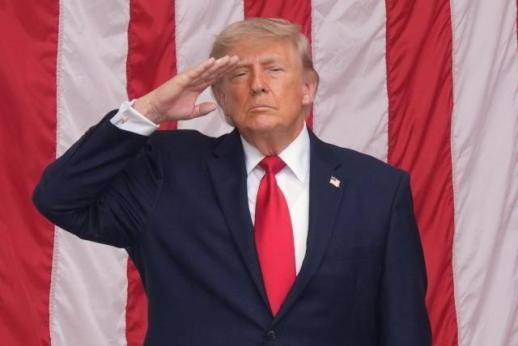 Trump Shares Draft Agreement to End War with Iran with Allies President Donald Trump has shared a draft agreement aimed at ending the war with Iran with allied nations, including Israel. This marks a significant step as discussions on a ceasefire move into the document review phase. However, the draft does not immediately resolve the Iranian nuclear issue and retains control over the Strait of Hormuz, suggesting that final agreement may face challenges. According to The Guardian on May 28, the ceasefire proposal was shared with allies amid concerns that further violations could derail negotiations. The U.S. and Iran continue to engage in talks mediated by Pakistan and Qatar. Pakistani Foreign Minister Mohammad Ishaq Dar is scheduled to meet with U.S. Secretary of State Marco Rubio in Washington on May 29. The key focus of the agreement is the normalization of the Strait of Hormuz. The draft includes provisions to reopen the strait to commercial shipping and lift U.S. port blockades on Iran. It also allows Iran access to up to $12 billion in frozen assets held abroad due to sanctions. The goal is to restore commercial operations to pre-war levels within 30 days. The nuclear issue has been set aside for separate negotiations. The draft outlines a plan for discussions lasting up to 60 days regarding the future of Iran's nuclear program. Topics include stockpiles of enriched uranium, a temporary halt on further enrichment, oversight by the International Atomic Energy Agency (IAEA), and Iran's commitment not to pursue nuclear weapons. For Israel, the terms are difficult to accept. The draft does not demand immediate and definitive nuclear commitments from Iran and reportedly includes Lebanon within the scope of a permanent ceasefire, placing a significant burden on Israel. The scope of sanctions relief remains unclear. The Guardian reported that the draft is less specific than Iran's proposals regarding the lifting of oil and petrochemical export sanctions. Iran insists on the unconditional release of frozen assets. The issue of tolls in the Strait of Hormuz also presents a point of contention. The draft reportedly allows for passage through Hormuz without tolls. However, Iran is negotiating separately with Oman to impose fees under the guise of 'navigation services.' President Trump has publicly warned of a strong response if Oman reaches an agreement with Iran that includes tolls. The U.S. has placed sanctions on Iran's maritime organization, the Persian Gulf Maritime Authority. Treasury Secretary Scott Besant has warned that countries involved in toll collection, including Oman, could face sanctions. The Iranian Revolutionary Guard Corps (IRGC) has reaffirmed its control over the Strait of Hormuz. The IRGC stated, "In the last 24 hours, we have granted passage to 26 commercial and oil tankers," and warned that any unauthorized navigation would be considered a hostile act. They also reported intercepting four vessels attempting to pass while turning off their Automatic Identification Systems (AIS) the previous night. The ceasefire remains unstable. The U.S. has reported striking Iranian drone operations near Hormuz, while Iran has targeted U.S. bases in Kuwait. Limited clashes between the two sides have not yet halted indirect communications. However, there are concerns that if shipping companies attempt to transit Hormuz without Iranian permission, the ceasefire established on April 8 could collapse. While sharing the ceasefire proposal has advanced negotiations, key issues blocking a final agreement remain unresolved. The nuclear issue has been deferred to future discussions, and the control of Hormuz, tolls, the scope of sanctions relief, and the inclusion of Lebanon in the ceasefire have yet to be clarified.* This article has been translated by AI. 2026-05-29 08:56:00
 -
 Samsung Electronics Makes Strategic Investment in Anthropic, Boosting Foundry Prospects Samsung Electronics has made a significant investment in Anthropic, the developer of the artificial intelligence model 'Claude.' This investment not only enhances Samsung's potential to supply advanced high-bandwidth memory (HBM) but also lays the groundwork for securing big tech clients in its foundry business. On May 28, Anthropic announced it raised $65 billion in its Series H funding round. This capital infusion values the company at $965 billion, making it the most valuable AI startup in the world, surpassing its competitor OpenAI, which is valued at $852 billion. Notably, Samsung Electronics, along with SK Hynix and Micron, has been named a 'strategic infrastructure partner.' In its official statement, Anthropic noted, "The technologies of these companies play a crucial role in the global supply of memory, storage, and logic chips," formalizing their collaboration to expand its computing capabilities. Industry observers are particularly focused on Anthropic's mention of 'logic chips.' Unlike SK Hynix and Micron, which specialize in memory, Samsung operates its own foundry division based on advanced process technology. This suggests that Samsung's foundry may produce the core chips needed for Anthropic's next-generation Claude AI model. Recently, Samsung has successfully secured contracts for AI chips from major global tech firms, establishing a strong foundation for its foundry revival. This includes contracts for Tesla's next-generation AI chips, 'AI5' and 'AI6,' as well as collaboration on NVIDIA's inference-specific language processing unit (LPU) 'Grok' chip. If Samsung's foundry secures Anthropic as a client, it could further validate its advanced process technology and strengthen its position in the global foundry market. 2026-05-29 08:56:00
 -
 Anthropic Becomes World's Most Valuable AI Startup with $965 Billion Valuation Anthropic has closed a $65 billion Series H funding round, achieving a valuation of $965 billion (approximately 1,444 trillion won) and surpassing OpenAI to become the world's most valuable AI startup. According to the IT industry on May 29, this funding round, led by Altimeter Capital with participation from Dragoneer, Greenoaks, and Sequoia Capital, is considered one of the largest private funding rounds in tech startup history. OpenAI's recent valuation stands at $730 billion, putting Anthropic approximately 32% ahead. Industry experts believe this round may be Anthropic's last pre-IPO funding before going public. On the same day, Anthropic also unveiled its latest flagship model, Claude 4.8. This rapid upgrade, just 41 days after the release of Claude 4.7, features improved benchmark performance in areas such as agentic coding, financial analysis, and reasoning, while maintaining the same pricing. The fast mode (2.5 times speed) is now three times cheaper than the previous model, and the Claude code includes a new 'dynamic workflow' feature that allows multiple sub-agents to run in parallel. ByteDance Considers Up to $70 Billion Investment in AI Infrastructure Bloomberg reported that ByteDance is considering up to $70 billion in capital expenditures this year for data center and AI infrastructure development. This amount is 2.8 times last year's spending of approximately $25 billion. ByteDance plans to fund a significant portion of this investment with an estimated net profit of around $50 billion in 2025. While this figure does not match Amazon's annual capital expenditures of over $130 billion or Alphabet's $185 billion, it is substantial compared to Chinese competitors like Tencent ($12 billion) and Alibaba ($19 billion), indicating ByteDance's ambition to challenge for global AI dominance. The monthly active users of its AI assistant, Douyin, reached 345 million as of March this year. OpenAI Launches AI Consulting Subsidiary Valued at $4 Billion On May 11, OpenAI established an independent subsidiary, OpenAI Deployment Company (DeployCo), after raising over $4 billion from 19 companies, including TPG, Goldman Sachs, McKinsey, Bain Capital, and Capgemini. The subsidiary adopts a Palantir-style model by deploying field deployment engineers (FDEs) directly within companies to build and operate AI systems. This move is seen as a response to OpenAI's market share in the corporate API sector, which is projected to drop from about 50% in 2023 to around 25% by mid-2025. Three of the Big Four accounting firms—Deloitte, PwC, and KPMG—have integrated Anthropic's Claude into their enterprise platforms, strengthening their supply chains with Anthropic.* This article has been translated by AI. 2026-05-29 08:52:00
 -
 KB Securities Raises SK Hynix Target Price to 3.8 Million Won Amid HBM Price Surge KB Securities announced on May 29 that it has raised its target price for SK Hynix from 3 million won to 3.8 million won, citing a significant increase in high-bandwidth memory (HBM) prices and a growing demand for artificial intelligence (AI) memory. The firm maintained its "buy" rating on the stock. Kim Dong-won, a researcher at KB Securities, stated, "Currently, the fulfillment rate of memory demand from clients is only about 50%, indicating that the memory supply shortage is likely to persist until at least 2028. We expect HBM prices to rise by more than 100% compared to the previous year in 2027." He added, "With the expansion of agentic AI, token usage is projected to increase sevenfold over the next year, leading to sustained demand for AI servers and increased memory capacity. New investments will also focus on expanding HBM production capacity, limiting the supply of general-purpose memory." Kim further noted, "The memory supply and demand situation in 2027 is likely to be more severe than this year, with the supply shortage from 2026 potentially contributing to additional demand in 2027. Negotiations on HBM prices are progressing smoothly, reflecting a narrowing margin gap with general-purpose DRAM." He concluded, "As global tech giants invest 1,000 trillion won annually in AI infrastructure, competition for securing memory semiconductors is intensifying. The next-generation Vera Rubin platform from NVIDIA is expected to significantly increase the cost share of memory, marking the beginning of a substantial upward trend for SK Hynix's stock price."* This article has been translated by AI. 2026-05-29 08:52:00
 -
 Shinhan Securities Raises Hanall Biopharma Target Price by 171% Amid Promising Drug Developments Shinhan Investment Corp. announced on May 29 that it has raised its target price for Hanall Biopharma from 48,000 won to 130,000 won, a 171% increase, citing the company's progress in developing a treatment for refractory rheumatoid arthritis (D2T RA) and expectations for substantial royalty revenues. The firm maintained its "buy" rating on the stock. Analyst Eom Min-yong noted, "This is the first time globally that the FcRn mechanism has shown potential for success in D2T RA," adding that it is a pivotal moment to focus on anticipated royalty income and the potential for expanding indications. Shinhan Investment Corp. also assessed that Hanall Biopharma's partner, Immunovant, has secured superior efficacy with its drug IMVT-1402 compared to competing global treatments. Notably, Johnson & Johnson has withdrawn its drug nipocalimab from D2T RA clinical trials, and Azenex's Vivgart has also failed to demonstrate efficacy in this indication, positioning IMVT-1402 as a likely frontrunner and leading treatment option. IMVT-1402 has been evaluated to show a relative improvement effect of 2 to 3 times compared to nipocalimab on key rheumatoid arthritis indicators such as ACR20, ACR50, and ACR70. Despite Azenex's setbacks in some clinical trials for expanding indications, Shinhan Investment Corp. expects the company to generate $4.2 billion in revenue this year solely from myasthenia gravis (MG) and chronic inflammatory demyelinating polyneuropathy (CIDP). In contrast, IMVT-1402 is anticipated to gain an advantage over competing drugs across various indications, including thyroid eye disease (TED), membranous nephropathy (MN), pemphigus, and immune thrombocytopenia (ITP). Shinhan Investment Corp. highlighted the potential for IMVT-1402 to become the first and only approved treatment for Graves' disease (GD), D2T RA, and cutaneous lupus erythematosus (CLE). The firm estimates that even without revenue from D2T RA, sales from other indications could exceed $5.1 billion by 2032. Applying a mid-teens royalty rate, Hanall Biopharma could potentially receive annual royalties of around 1 trillion won. Additionally, there are expectations for intensified merger and acquisition discussions involving Immunovant by major global pharmaceutical companies. Eom emphasized, "It is the only treatment capable of achieving an 80% reduction in immunoglobulin G (IgG) levels through the FcRn mechanism, making it difficult for latecomers to achieve additional efficacy improvements." He added, "According to U.S. CMS guidelines, price protection can be maintained for 13 years, and patents are protected until 2043. The final clinical results for D2T RA scheduled for the second half of this year will be a key momentum."* This article has been translated by AI. 2026-05-29 08:50:00
 -
 Market Preview: Easing War Risks and AI Strength—Will KOSPI Rally Again? U.S. stock markets continue to reach record highs, buoyed by easing geopolitical risks in the Middle East and a surge in artificial intelligence (AI) stocks, raising questions about the sustainability of the domestic market's upward trend. However, with the KOSPI already at historic highs, there are concerns about potential profit-taking in the short term. On May 28, the S&P 500 and Nasdaq Composite indices rose by 0.58% and 0.91%, respectively, setting new all-time highs. The Dow Jones Industrial Average also gained 0.05%, closing slightly higher. The market rally was driven by optimism surrounding the easing of tensions in the Middle East. Reports indicated that the U.S. and Iran are finalizing a memorandum of understanding (MOU) to end hostilities, pending final approval from President Donald Trump, which improved investor sentiment. AI stocks also showed strong performance. Snowflake, a cloud data company, saw its shares soar by 36.48% after raising its annual revenue forecast and securing a long-term contract with Amazon Web Services (AWS). This led to gains in major semiconductor stocks, including Nvidia (up 0.78%) and AMD (up 4.55%), while the Philadelphia Semiconductor Index rose by 1%. The domestic market is expected to open higher, following the positive momentum from U.S. tech stocks, particularly in the semiconductor sector. Notably, after the U.S. market closed, Dell Technologies reported earnings that exceeded market expectations, causing its stock to surge over 38% in after-hours trading, which is likely to positively influence investor sentiment in the domestic semiconductor industry. As of 8:03 a.m. on May 29, shares of Samsung Electronics were trading at 307,000 won, up 2.5% from the previous day, while SK Hynix rose 3.41% to 2,367,000 won. Additionally, SK Square increased by 3.07%, and Samsung Electro-Mechanics gained 6%, indicating a broad buying trend across semiconductor and AI-related stocks. Han Ji-young, a researcher at Kiwoom Securities, stated, "Today, the domestic market is expected to rebound due to renewed expectations surrounding U.S.-Iran negotiations, the strong performance of KOSPI 200 futures, and the impact of Dell's after-hours stock surge, which will bolster recovery in sectors that experienced significant declines yesterday. However, the recent rapid rise of the KOSPI to historic highs raises concerns about a potential slowdown in upward momentum. Market participants will closely monitor foreign investor activity and profit-taking as key factors influencing the market's direction in the coming days." 2026-05-29 08:34:00
 -
 Samsung Electronics Faces Controversy Over Employee Turnover Rates Some analyses suggest that Samsung Electronics has a significantly higher employee turnover rate than SK Hynix, prompting debate within the semiconductor industry over differing comparison standards. Samsung's figures include global personnel from overseas production subsidiaries, while SK Hynix's data focuses primarily on domestic employees, raising concerns about the validity of direct comparisons. According to industry sources, the five-year average turnover rate from 2020 to 2024, based on sustainability reports, indicates that Samsung's rate stands at 2.1%, lower than SK Hynix's 2.3%. Notably, when examining only the semiconductor sector, Samsung's Device Solutions (DS) division reportedly has a turnover rate in the 1% range, widening the gap with SK Hynix. Recent surveys have suggested that Samsung's turnover rate for 2024 could be in the double digits, while SK Hynix's is projected to remain in the single digits. However, industry experts argue that these figures are not directly comparable, as Samsung's data encompasses all employees globally, while SK Hynix's figures are limited to domestic staff. When focusing solely on semiconductor employees, Samsung's DS division is said to have a turnover rate in the 1% range, further increasing the disparity with SK Hynix. Samsung operates large production facilities in countries like Vietnam and India, where local labor market conditions lead to higher turnover rates among production staff, thus inflating the global turnover rate. In contrast, to assess job stability in domestic semiconductor research and production roles, comparisons should be made within the same scope and job categories, experts suggest. Internally, Samsung has indicated that the demand for personnel in High Bandwidth Memory (HBM) and advanced packaging has increased, and the actual turnover of key staff in the DS division is being managed at a rate lower than the overall global turnover. Industry observers view this controversy as indicative of the competitive sensitivity surrounding talent acquisition in the semiconductor sector. As competition intensifies in HBM and advanced foundry processes, employee retention is closely tied to corporate competitiveness. In response, Samsung stated, "Samsung's figures include all domestic and international employees, while Hynix calculates only domestic staff, leading to apparent discrepancies. Given Samsung's extensive production lines in Vietnam and India, the frequent turnover among overseas production staff contributes to a higher global turnover rate." 2026-05-29 08:34:00