

Journalist

CGTN
-
 BHC Opens First Food Court Location at H Mart in San Francisco Dining Brands Group announced on May 27 that BHC has opened a new store in the food court of H Mart in San Francisco. This marks BHC's first location in the San Francisco area and the company's first food court-style store in the United States. H Mart is an Asian supermarket chain operating over 100 stores across the U.S., serving as a key distribution channel for K-food among both the local Korean community and American consumers. The new store occupies approximately 12.5 pyeong (about 415 square feet) within H Mart. It is the first food court model introduced after previously launching restaurant and fast-food formats in the U.S. The store features a counter and kiosk ordering system to enhance accessibility and convenience. The menu reflects local consumer preferences, focusing on wings and tenders. It includes BHC's signature items such as fried, hot fried, and various dipping sauces like Machoking, Red King, Hot Puring Mayo, and Puringcle Mayo. Additionally, it offers Korean dishes like kimchi fried rice, ramen, fish cake soup, cheese buldak, and chicken rice bowl to attract local consumers interested in K-food. The store has received positive feedback since its opening, with lines forming outside shortly after it launched in early May. Weekend sales reportedly exceeded 10 million won. Brian Shin, head of BHC's U.S. operations, stated, "By opening in a highly accessible large supermarket, more consumers can experience BHC's menu in their daily lives. We plan to expand our brand experience in the U.S. market by reflecting local food culture and consumer trends." Currently, BHC operates 47 stores across eight countries, including the United States, Canada, Hong Kong, Thailand, Singapore, and Indonesia. The company entered the U.S. market in 2023 with its first location in the Farmers Market in Los Angeles and now has eight stores in the country.* This article has been translated by AI. 2026-05-28 14:32:00
 -
 39% of South Koreans Have Used ChatGPT as AI Adoption Grows A recent survey found that 39% of South Koreans have used generative artificial intelligence (AI) tools like ChatGPT. This marks a continuous increase in usage over the past three years, alongside growing concerns about the potential for misinformation and criminal misuse. The Broadcasting and Media Commission and the Korea Institute for Information and Communications Technology Promotion released the findings of the "2025 Intelligent Information Society User Panel Survey" on May 28. According to the survey, 38.9% of respondents reported having experience with generative AI, an increase of 14.9 percentage points from the previous year and 26.6 percentage points from 2023. Users spend an average of 49.6 minutes per day using generative AI. Notably, 68% of respondents reported using generative AI for more than 30 minutes daily. The primary reasons for using generative AI include its efficiency in information retrieval (86%), assistance in time management (72.6%), support for learning activities (68.2%), help with complex problem-solving (64.8%), and aid in routine tasks (64.8%). However, concerns about the negative impacts of generative AI have also risen. The survey indicated significant increases in worries about misinformation dissemination (+9.6 percentage points), criminal misuse (+9.0 percentage points), and the generation of content that is difficult to verify (+8.9 percentage points) compared to the previous year. Other concerns, such as job replacement, decreased creativity, copyright infringement, and the creation of biased or discriminatory content, have also grown. Among those who do not use generative AI, 63.5% cited a lack of knowledge about how to use it or difficulty in learning. Other reasons included the cost of services being burdensome (59.2%), difficulty in selecting suitable services (59.1%), concerns about privacy and personal data breaches (59%), and ethical issues (59%). The survey emphasized the need for responsible service operations to protect user rights by both generative AI providers and AI recommendation service providers. For generative AI service providers, 81.3% of respondents indicated that measures should be established to prevent users from generating content that infringes on others' rights, such as internal checks or reporting procedures. Regarding AI recommendation service providers, 79.3% of respondents stated that users should be informed about the criteria used by AI algorithms to select content. Additionally, about 75% of respondents believed that government intervention is necessary when related services contradict the public interest. Meanwhile, a survey by WiseApp and Retail reported that as of April, the monthly active users of ChatGPT in South Korea reached 23.45 million, the highest ever recorded. This figure represents an increase of approximately 6 million from the previous year's 17.49 million. Google's Gemini and Anthropic's Claude also saw significant growth, with user numbers increasing by about tenfold and twelvefold, respectively, to 8.45 million and 2.41 million compared to the previous year.* This article has been translated by AI. 2026-05-28 14:32:00
 -
 CJ OnStyle Accelerates AI Commerce, Customer Engagement Quadruples with ChatGPT CJ OnStyle is rapidly transitioning to AI-driven commerce, utilizing platforms like ChatGPT. The company reported on May 28 that from May 1 to 25, traffic to its app and website via conversational AI platforms such as ChatGPT and Gemini increased more than fourfold compared to the same period last January. Earlier, on May 15, CJ OnStyle launched a dedicated app within ChatGPT, allowing customers to search for products and check broadcast information before being directed to the official CJ OnStyle app. Users can ask questions like, "Recommend beauty products around 50,000 won suitable for gifts" or "Suggest rain boots for this summer," and receive related product and broadcast information. CJ OnStyle has optimized AI for 600,000 products within its dedicated ChatGPT app, with plans to expand this to 1 million by the end of the year. This data will also enhance search and recommendation services in its own app. The company is already seeing positive results from AI recommendations in its app. CJ OnStyle analyzed customer purchase, search, and click data using AI to provide personalized product and video recommendations, resulting in a 37% increase in sales from the recommendation section of the app in the first four months of this year compared to the same period last year. Since last year, CJ OnStyle has been restructuring its product data and content to be more understandable for AI. The company explained that through Generative Engine Optimization (GEO), it has enhanced data structures to ensure accurate display and citation of brand and product information when AI generates responses. CJ OnStyle plans to expand its integration with various AI platforms, starting with ChatGPT. A company representative stated, "We will continue to enhance product data and commerce capabilities to strengthen our AI-driven commerce competitiveness." Meanwhile, CJ OnStyle reported a revenue of 378.5 billion won in the first quarter of this year, a 4.5% increase compared to the same period last year. The company aims to maintain its growth momentum in the second quarter by leveraging fandom IP and premium product competitiveness.* This article has been translated by AI. 2026-05-28 14:30:00
 -
 Jensen Huang Joins Tsinghua University Advisory Board Led by Tim Cook Jensen Huang, CEO of NVIDIA, is set to join the advisory board of Tsinghua University, which is chaired by Apple CEO Tim Cook. Huang is intensifying efforts to penetrate the Chinese artificial intelligence (AI) chip market through this advisory role. The Financial Times reported on May 28, citing multiple sources, that Huang accepted an invitation to join the advisory board of Tsinghua University's School of Economics and Management (SEM) after accompanying President Donald Trump on his recent visit to China. Located in Beijing, Tsinghua University is one of China's top science and engineering institutions, and it counts Chinese President Xi Jinping among its alumni. The SEM advisory board aims to strengthen the international network of the business school and support long-term strategic planning. In addition to Cook, the advisory board includes prominent figures from the U.S. tech industry such as Elon Musk, Michael Dell, Satya Nadella, CEO of Microsoft, and Mark Zuckerberg, CEO of Meta. Financial leaders like Jamie Dimon, CEO of JPMorgan, Larry Fink, CEO of BlackRock, and Jane Fraser, CEO of Citigroup, are also members. From China, notable participants include Jack Ma, founder of Alibaba, Pony Ma, chairman of Tencent, and Li Yanhong, CEO of Baidu. The FT noted that Huang's participation comes as NVIDIA faces ongoing restrictions on semiconductor exports to China, highlighting his efforts to maintain connections with Chinese academia and industry. Since April of last year, NVIDIA has faced significant limitations in the Chinese market. At that time, the Trump administration banned the export of NVIDIA's AI chip H20, developed for China, in accordance with existing export regulations. Earlier this year, limited sales of the more advanced H200 chip to select Chinese customers were approved, but the Chinese government imposed import restrictions to protect its domestic semiconductor industry. In a recent interview with CNBC, Huang stated that U.S. export controls have effectively ceded the Chinese market to local competitors like Huawei. He noted that China once accounted for over 20% of NVIDIA's global revenue but cautioned against expecting any short-term approvals for advanced chip sales, saying, "Don't expect anything." However, Huang reaffirmed his commitment to returning to the Chinese market, stating, "We would be very happy to serve that market. There are many customers and partners there, and we have been there for 30 years." The SEM advisory board was established in 2000 by former Chinese Premier Zhu Rongji. It is considered a rare high-level exchange channel for leaders from both the U.S. and China to meet amid escalating technological and economic tensions. Advisory board members typically hold annual meetings in Beijing, serving as a behind-the-scenes communication channel between Chinese policymakers and global business leaders. 2026-05-28 14:28:00
 -
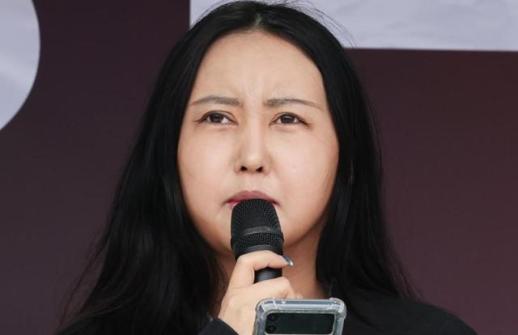 Jeong Yu-ra Appeals for Help Amid Mother's Health Crisis Jeong Yu-ra, the daughter of Choi Soon-sil, who is currently imprisoned on fraud charges amounting to tens of millions of won, has spoken out about her mother's serious health condition. On May 28, Jeong posted on her Facebook, stating, "(My mother) has weakened during her ten years of imprisonment and is suffering from Cushing's syndrome and sepsis. The doctor said it would not be surprising if she were to experience 'lower limb paralysis' tomorrow." She added, "I applied for a stay of execution, but the designated hospital told me to go to the hospital where the surgery was performed, and that hospital said they wouldn't accept her unless I pay. Is this really a death sentence?" Jeong expressed her frustration, saying, "All the co-defendants in my mother's case have been pardoned, and Samsung has been acquitted, yet my mother is the only one still serving time. I worry if she will survive until the retrial." Furthermore, Jeong stated, "I will manage on my own. I just want help for my mother. In return, I will compensate for her with my own body. I feel so sad that the only thing I can do for my mother is to lower my pride." Jeong also directed her comments toward Ahn Min-seok, a candidate for the Gyeonggi Provincial Education Superintendent, saying, "I have yet to receive compensation from Ahn Min-seok for spreading false information," and she shared a donation account to seek assistance. Earlier, on May 10, Jeong hinted at legal action, stating, "Ahn, the Supreme Court ruling has been finalized, so please give me the compensation. Are you forcing me to take legal action while you campaign for the education superintendent?" Ahn had previously appeared on a broadcast in 2016, amid controversy over Choi being a shadowy figure in the Park Geun-hye administration, claiming, "The money deposited in a Swiss secret account is linked to Choi, and the German prosecution is estimating Choi's assets in Germany, with the money laundering scale reaching trillions of won." Choi subsequently filed a defamation lawsuit against Ahn for spreading false information. As a result, the Supreme Court confirmed on April 14 that Ahn must pay Choi 20 million won in damages for defamation.* This article has been translated by AI. 2026-05-28 14:26:00
 -
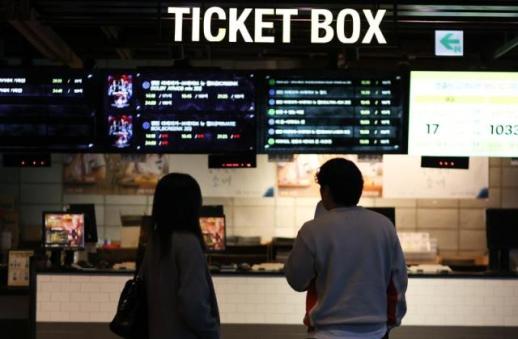 One Year into Lee Jae-myung's Administration: South Korean Film Industry Sees Increased Support but Faces Ongoing Challenges One year into Lee Jae-myung's administration, the South Korean film industry is experiencing both signs of recovery and structural challenges. Successful films such as "The King’s Affection," "Salmon," and "Goonch" have emerged, while titles like "Hope" and "Goonch" were invited to the Cannes Film Festival, reaffirming the presence of Korean cinema. However, issues such as the holdback controversy, a decrease in the number of productions, and a lack of trust in the Film Promotion Committee remain unresolved.Over the past year, the government's film policy has focused on crisis response and increased support. The Ministry of Culture, Sports and Tourism allocated an additional budget of 65.6 billion won to help revive the stagnant film industry. This funding aims to support mid-budget film production, independent art films, and advanced technology production, injecting capital into a production environment that has been weakened by COVID-19. The distribution of movie discount vouchers to encourage theater attendance has also been implemented.Since May 13, the Ministry and the Film Promotion Committee have distributed 2.25 million movie discount vouchers worth 6,000 won each. This is half of the 4.5 million vouchers secured through the supplementary budget. The vouchers were made available through major multiplex websites and apps, with an additional 2.25 million set to be distributed in July during the summer peak season.Minister of Culture, Sports and Tourism Choi Hwi-young highlighted some recovery in the film industry during a press conference marking the first anniversary of Lee's government. He noted that theater attendance increased from 20.82 million in the first quarter to 31.90 million, and the number of films with production budgets exceeding 2 billion won rose from 26 last year to 40 this year. He stated that these indicators suggest that "escaping the film crisis is possible."This year, the box office has indeed shown positive trends. Director Jang Hang-jun's "The King’s Affection" successfully attracted family audiences and fans, while the horror film "Salmon" surpassed its break-even point and established a long-term box office trend. Director Yeon Sang-ho's "Goonch" was invited to the Midnight Screenings section of the 79th Cannes Film Festival and quickly surpassed 2 million viewers domestically. Director Na Hong-jin's "Hope" marked the first Korean film in four years to compete at Cannes, while Director Jeong Joo-ri's "Dora" was also invited to the Directors' Fortnight.However, the success of individual films does not necessarily indicate a full recovery for the industry. The total number of moviegoers, which exceeded 200 million in 2019 before the pandemic, has significantly declined, and the production of mid-sized commercial films continues to be stifled. Concerns are growing that the reduction of mid-budget films, which have traditionally served as a gateway for new directors and actors, is leading to a rigid production ecosystem.In the field, there are ongoing discussions about the direction and execution of government support. The mid-budget film support program has faced criticism for being misaligned with production realities, despite the budget increase. Film and drama productions often take years to complete, but government funding must be utilized within the fiscal year, leading to situations where funds must be returned if additional investment is not secured after selection.Minister Choi is aware of this issue. He previously stated at a meeting of the Cultural Arts Policy Advisory Committee's Film and Video Division that "asking works to be created according to the government budget schedule is a reversal of the order," emphasizing that funding should be provided according to the production cycle that allows for the best works to be made. His remarks align with calls from the field to adjust annual support programs to better match actual production timelines.A major issue facing the film industry is the holdback. Holdback refers to the grace period between a film's theatrical release and its transition to subsequent platforms such as OTT and IPTV. There is ongoing debate between those advocating for the restoration of theatrical value and those arguing that prolonged restrictions on subsequent distribution make it difficult for investors and distributors to recoup their funds.Some government and National Assembly members have discussed limiting OTT releases for a certain period after theatrical premieres to encourage theater attendance. However, investors, distributors, and some film organizations strongly oppose a six-month legislative mandate, arguing that extended delays in transitioning to subsequent platforms would lengthen the period for recouping funds and further stifle production and investment structures.During a press conference marking the first anniversary of the people's sovereignty government, Minister Choi announced the establishment of a 22-member public-private consultative body for the film industry, aiming to reach a conclusion by the end of August. He stated, "We all understand each other. We know each position on the issues. What is now needed is to reach a conclusion, whether it be a gradual or fundamental one."He added, "We are currently in a crisis and difficult times, and while there may be a slight tailwind, the film industry is not yet in a normalized state. I believe all participants in the film industry—production, investment, distribution, and theaters—are united in the sincerity of finding a solution." He also expressed the government's willingness to participate if there is a need for policy and budgetary roles.Distrust surrounding the Film Promotion Committee remains a challenge for the film policies of Lee Jae-myung's first year. At a meeting in Jeonju in April, strong concerns were raised by industry professionals regarding the committee's lack of communication, understanding of current issues, operational methods, and expertise. Some attendees criticized the committee's chair for not adequately listening to industry voices compared to the frequency with which the Minister meets with filmmakers.The distrust in the film industry goes beyond mere communication issues. Complaints have accumulated regarding the committee's failure to adequately represent industry demands during discussions on the normalization of the Gender Equality Center, the imposition of ticket fees, and the budget restoration process. The film industry coalition has criticized the committee for not fulfilling its role as a policy executor, stating that industry professionals are directly persuading the National Assembly during the legislative and budgetary processes.The government has also outlined plans to elevate the K-culture industry as a national growth engine. Minister Choi announced at the press conference that the target size of the K-culture industry would be raised from 300 trillion won to 400 trillion won by 2030. The export target for K-culture is also set to increase from $35 billion to $110 billion. The film industry will inevitably be addressed within this broader K-culture expansion strategy.However, what the film industry demands is not merely an increase in industry size but a restructuring of the distribution framework that allows production, investment, distribution, theaters, and OTT to operate cohesively. Recovery of theater attendance, subsequent platform revenues, and production cost recovery structures must align for mid-budget films and new projects to thrive once again.The film policies of Lee Jae-myung's first year have shown a commitment to crisis response. The supplementary budget allocation, distribution of discount vouchers, expansion of mid-budget film support, and the establishment of a public-private consultative body on holdback have all elevated the stagnant film industry to a policy agenda. However, there are still strong calls for structural reforms following the budgetary infusion.Ultimately, the key to the second year of film policy will be the conclusions and execution capabilities of the consultative body. If discussions on holdback favor one side—whether theaters, investors, distributors, producers, or OTT—conflict is likely to recur. Conversely, if realistic guidelines reflecting changed audience consumption patterns and platform environments are developed, it could mark the starting point for the recovery of Korean cinema.Minister Choi stated, "The first year was a time of running swiftly to meet many people and establish direction. The second year will focus on execution. I will concentrate on practical measures to ensure that we can feel the effectiveness of our policies." The film industry is now at a stage where it awaits not just confirmation of support but also specific institutional improvements and implementation.* This article has been translated by AI. 2026-05-28 14:22:00
 -
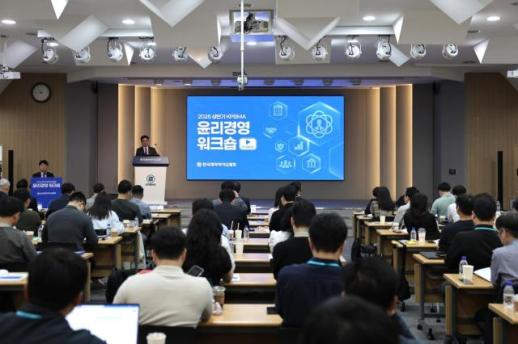 Increased Importance of Compliance and Ethical Management in Pharma Industry Concerns have been raised that the turmoil in the contract sales organization (CSO) management market is undermining trust in the pharmaceutical industry. Some companies have reportedly engaged in questionable contracts, such as compensating CSO commissions later to avoid price reductions by aligning with research and development (R&D) cost ratios. In response, the Korea Pharmaceutical and Bio-Pharma Manufacturers Association (KPBMA) held a workshop to discuss potential improvements.On May 27, the KPBMA hosted the "2026 KPBMA Ethical Management Workshop" at its headquarters in Seocho-gu, Seoul, aimed at establishing order in drug distribution and strengthening ethical management.The workshop addressed key topics currently affecting the pharmaceutical sector, including drug price reductions, CSO management, and amendments to fair competition regulations.Key presentations included: △ Drug Price Reduction and CSO Risks (Kim Ki-ho, Executive Director of HK Inno.N) △ Interim Report on Strengthening CSO Management and Oversight (Kang Han-cheol, Lee Hwan-beom, Kwon Hyuk-chan, Attorneys at Kim & Chang) △ Compliance Issues Related to Patient Support Programs (Yoo Sung-wook, Kim Hyun-ok, Attorneys at Hwawoo Law Firm).During the event, attorney Lee In-seok shared insights on recent investigations targeting pharmaceutical companies, emphasizing the importance of effective management. He stated, "In the future, simply having internal compliance programs, training, and signed pledges will not suffice for immunity. Companies must prepare objective evidence that demonstrates effective management oversight through rational and accurate expenditure reports."The research project aimed at enhancing the CSO management and oversight system was commissioned by the KPBMA to establish distribution order and improve industry transparency, with completion expected by the end of June.The domestic CSO market has faced management challenges, with over 15,000 registered companies since the implementation of a reporting system in October 2024, significantly exceeding initial government estimates. Notably, about 70% of these are identified as sole proprietorships with only one employee.The average commission rate for these companies is reported to be around 37%, with some demanding excessively high rates nearing 50%.KPBMA President Noh Yeon-hong emphasized, "As the importance of compliance and ethical management grows due to changes in drug pricing systems and strengthened CSO management, I hope this serves as an opportunity for companies to review their ethical management systems and enhance their compliance capabilities."* This article has been translated by AI. 2026-05-28 14:22:00
 -
 Kakao Shares Hit 52-Week Low Amid Union Strike Concerns Kakao's stock price fell to a 52-week low during trading on concerns over a potential strike by its headquarters union. This decline was compounded by downward revisions of target prices by analysts, dampening investor sentiment. According to the Korea Exchange, as of 2:12 PM, Kakao shares were trading at 39,250 won, down 1,250 won (-3.09%) from the previous trading day. The stock opened at 40,000 won and briefly rose to 41,300 won before giving back those gains and dropping to 38,500 won, marking a new 52-week low. The drop in stock price is attributed to the Kakao union's decision to hold a large rally in Pangyo, Seongnam, on June 10, signaling the start of formal collective action. The union reportedly continued mediation discussions with the Gyeonggi Provincial Labor Relations Commission until 11 PM the previous day but failed to reach an agreement. Analysts' adjustments to target prices also appear to have weighed on investor sentiment. Daol Investment & Securities revised its target price for Kakao in a report released today. Daol Investment & Securities stated, "Kakao is in the process of simplifying its governance structure by reducing stakes in non-core subsidiaries," adding that it views the company's focus on core businesses like KakaoTalk and artificial intelligence positively. However, the firm noted, "Building partnerships takes time, and given the large user base, the current phase is focused on enhancing quality," while maintaining a 'buy' rating but slightly lowering its earnings estimates and valuations.* This article has been translated by AI. 2026-05-28 14:22:00
 -
 Korean Film 'Gunchae' Surpasses 2 Million Viewers, Eyes Global Success Gunchae, the latest film by director Yeon Sang-ho, has surpassed 2 million viewers domestically and is showing promising signs of success in international markets. The film secured overseas distribution rights in 124 countries prior to its release, and in Malaysia, it quickly climbed to the top ranks of all-time Korean film box office hits. With approximately 800,000 viewers remaining to reach its break-even point, there is growing interest in whether Yeon’s K-zombie genre can create a sustainable revenue model through both domestic box office sales and international rights.According to the Korean Film Council's integrated ticketing system, Gunchae recorded a cumulative audience of 2,000,005 by the afternoon of May 25. As of May 26, the total audience count stands at 2,169,097. The film set a record for the fastest 2 million viewers among 2026 releases, surpassing popular films such as The King’s Affection, Salmokji, and Project Hail Mary.Gunchae had a strong opening, achieving the highest box office score of the year on its first day. It continued to break records, reaching 1 million viewers in the shortest time and now 2 million, outpacing the previous record set by the 2025 hit, Zombie Daughter, by one day.From a profitability perspective, Showbox reports that Gunchae's break-even point is approximately 3 million viewers, based on confirmed domestic revenue. With the current cumulative audience of 2,169,097, it has about 800,000 viewers left to reach that threshold. The film has maintained its position at the top of the box office, suggesting that the timeline to reach break-even could be accelerated based on weekend attendance trends.Internationally, the response to Gunchae has been swift. The film was pre-sold to 124 countries before its release. As it prepares for its world premiere in the Midnight Screening section at the 79th Cannes Film Festival, it has already garnered interest from overseas distributors. North American distributor Well Go cited Yeon Sang-ho's proven track record with films like Train to Busan as a key reason for their acquisition, while Taiwanese distributor Movie Cloud highlighted the film's unique portrayal of infected individuals as evolving intelligent beings rather than mere zombies.In Malaysia, Gunchae has shown remarkable early success. Released on May 22, the film grossed 7 million ringgit by May 25. On its third day, it surpassed 5.75 million ringgit, exceeding the final box office total of 5.5 million ringgit for the 2024 film, The Grave. Currently, the top two all-time Korean film box office hits in Malaysia are Yeon Sang-ho's Train to Busan and Peninsula, with Gunchae now joining the ranks, indicating a strong consumer interest in Yeon's zombie universe in the local market.The international rollout continues, with Gunchae opening in Taiwan and Malaysia on May 22, followed by releases in France, Singapore, and the Philippines on May 27, Australia and New Zealand on June 11, and North America on August 28. A release in Japan is also scheduled for 2027. The film's domestic box office revenue, pre-sold rights, and key international market performances are creating a robust financial structure.A Showbox representative stated, "Director Yeon Sang-ho is a well-known creator in international markets. There was significant interest at Cannes, with numerous requests for interviews from foreign media, and the overseas response has been enthusiastic. Distributors in the U.S. and France have also given positive evaluations of the film. Although Malaysia is still in the early stages of release, the rapid box office performance is promising, and we look forward to the reactions from other countries as they release."In an interview, Yeon expressed his relief at the domestic success, stating, "I’m glad. If we reach break-even quickly, I’ll be able to relax, but since the break-even point is 3 million, I think we’ll have more leeway once we surpass that."He also shared his thoughts on audience reactions, saying, "I watched it in 4DX with my daughter yesterday, and it was lively. When I made the film 'Face', I met viewers who engaged deeply, but this time, it definitely felt like a blockbuster with a lively atmosphere. I’m glad to feel that vibe."Regarding the reactions at Cannes, Yeon noted, "The audience at the Cannes Film Festival can’t be considered typical viewers. The festival is a gathering of film enthusiasts and has a celebratory atmosphere, making it hard to gauge general reactions. However, it was nice to meet Korean audiences right after returning from Cannes. It feels like ages ago that Cannes was just last week."Gunchae depicts isolated survivors in a quarantined building facing off against infected individuals that evolve in unpredictable ways due to a mysterious infection. This film is the latest from Yeon Sang-ho, who has expanded the K-zombie genre with Train to Busan and Peninsula, featuring actors Jeon Ji-hyun, Koo Kyo-hwan, Ji Chang-wook, Shin Hyun-bin, and Kim Shin-rok.With its rapid domestic success, international pre-sales, and strong early performance in Malaysia, Gunchae is being highlighted as a case study in the revenue structure of Korean genre films. As it approaches its break-even point with about 800,000 viewers remaining, there is keen interest in how far Yeon’s K-zombie franchise will extend its success in both domestic and international markets.* This article has been translated by AI. 2026-05-28 14:18:00
 -
 LS Shares Drop for Second Consecutive Day Following Revised Earnings Report LS Corp. is experiencing a decline in stock prices for the second consecutive day due to the impact of a revised quarterly report. As of 2:07 PM on May 28, the company’s shares were trading at 458,500 won, down 9.74% (49,500 won) from the previous trading day. This follows an 8.14% drop in the stock market the day before, indicating a continuing downward trend. The recent decline is attributed to a correction in the first-quarter order backlog figures. LS announced on May 27 that it would reissue its quarterly report to correct some calculation errors made in the report submitted on May 15. Following the revision, LS's total order backlog decreased from 18.2681 trillion won to 16.7390 trillion won, a reduction of approximately 1.5291 trillion won. The company stated that this change was due to a simple clerical error. The order backlog is considered a key indicator for predicting future revenue and performance, and the correction has negatively affected investor sentiment. Notably, the stock price had surged in the short term following the previous report due to heightened expectations for orders, leading to a reversal of those gains. Market analysts view this adjustment not as a sign of deteriorating performance or a fundamental issue with the orders themselves, but rather as a temporary decline in confidence and supply-demand instability resulting from the correction process. However, since the order backlog is directly linked to future performance visibility, investors are keen to monitor upcoming disclosures and performance trends to assess the resolution of uncertainties.* This article has been translated by AI. 2026-05-28 14:14:00