

Journalist

CGTN
-
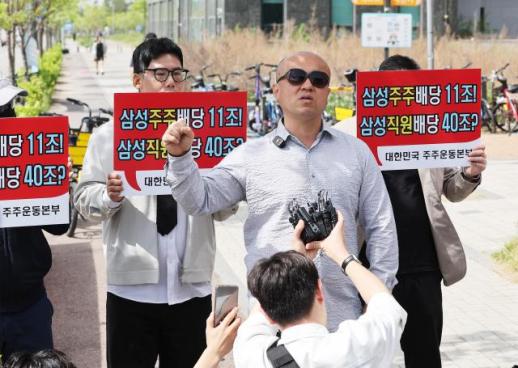 Korea’s Q1 Growth Masks Deeper Risk as Potential Growth Slips to 1% Range South Korea’s economy posted faster-than-expected growth in the first quarter. Major investment banks have raised their full-year forecasts, and the government has pointed to policy effects in a more upbeat assessment. On the surface, it looks like a recovery signal. But the picture is less reassuring on closer review. The gain may largely reflect base effects and external factors such as a semiconductor boom and the exchange rate, suggesting a temporary rebound. A more fundamental concern is that South Korea’s potential growth rate — a measure of the economy’s underlying capacity — has fallen to the mid-1% range. Potential growth is the maximum pace an economy can sustain by mobilizing labor, capital and productivity without stoking inflation. A lower figure signals weaker foundations, meaning even strong headline growth may not last. Major institutions have broadly pointed to the same drivers behind the decline. With a shrinking and aging population, labor supply is falling. Investment capacity is also weakening, and productivity gains have not met expectations. As these pillars erode at the same time, the current upswing looks more dependent on favorable conditions than on improved resilience. The semiconductor upturn has helped obscure those weaknesses. Exports led by SK hynix and Samsung Electronics have lifted overall growth, underscoring competitiveness in a key industry. But heavier reliance on a single sector also increases vulnerability. If the chip cycle turns, overall growth could drop sharply. In such conditions, tensions across the economy tend to rise. As the growth base weakens, conflicts over profits surface more easily. Recent labor-management disputes and shareholder clashes involving Samsung Electronics should not be seen only as isolated incidents. In high-growth periods, such frictions are more readily absorbed; in a low-growth environment, they can intensify — another sign of weakening economic stamina. The policy direction, the article argues, is clear: focus on lifting potential growth. Demographic trends are hard to reverse quickly, so the emphasis should be on capital formation and productivity. That includes developing new growth engines and accelerating technological innovation, with particular attention to building an advanced-industry ecosystem centered on artificial intelligence. A balanced view is needed, however. Semiconductors are not merely an “illusion”; they are core infrastructure for the AI era. The problem is not the chip industry itself but a growth model overly dependent on its cycle. The growth base should be broadened across advanced industries, including semiconductors. Reform of the service sector also cannot be delayed, the article says. With domestic demand constrained by population decline, services should shift toward exports. Health care, tourism, content and education are cited as areas that can compete globally, helping offset weaker demand at home. Execution remains the obstacle. Regulatory reform and industrial upgrades have long been discussed but delayed by conflicts of interest and political costs. The article calls for institutional mechanisms to break the logjam, such as a standing consultative body to coordinate stakeholders and approaches that bundle regulatory changes to spread political risk. Declarations alone, it argues, will not deliver change. The first-quarter result is a welcome signal, but it should not obscure the underlying issue. What matters is not the headline number but the economy’s capacity. As long as potential growth remains in the 1% range, South Korea’s economy will be prone to large swings from even small shocks, the article says. Growth is an outcome; potential growth is a cause. Without addressing the cause, the outcome will not last, it concludes.* This article has been translated by AI. 2026-04-27 08:39:20
 -
 Suspected North Korea-Linked Hack Exposes 100,000 Golf Club Records, Prompting Cybersecurity Review Police have opened an investigation after about 100,000 customer records were leaked from a golf course in Gapyeong, Gyeonggi province. The data reportedly included sensitive information such as names, dates of birth, gender, user IDs, passwords, phone numbers, email addresses and home addresses. Investigators are considering the possibility that a North Korean hacking group was involved. Authorities should not treat it as a routine private-sector breach; it should be seen as a warning for national security, public safety and industrial competitiveness. Golf courses are often used by influential figures, corporate executives, public officials and professionals. When membership details are combined with entry logs, payment information and personal networks, the result can become targeting intelligence, not just personal data. Such material could help track who met whom and when, and even infer daily patterns. If a state-backed hacking group obtained it, the goal could extend beyond financial theft to intelligence gathering, blackmail, network mapping and a foothold for further intrusions. North Korea has long been identified as one of the most persistent cyber threats. Its tactics have grown more sophisticated, including cryptocurrency theft, attempts to penetrate the defense, diplomacy and security sectors, malicious email campaigns and supply-chain hacking. For North Korea, cyberattacks are a low-cost, high-impact tool to offset conventional military disadvantages, capable of disrupting national functions without firing a shot. A key problem is that South Korea’s response remains focused on cleanup after incidents occur. After major leaks, companies typically say they are “investigating,” and authorities form joint teams only later. Victims are left to change passwords and protect themselves. If post-incident responses and blame-shifting continue to outweigh prevention and early blocking, hackers will keep viewing South Korea as an easy target. A comprehensive national review is needed. First, security standards for personal data at heavily used private facilities and membership-based businesses should be strengthened substantially. Golf courses, resorts, hospitals, private academies and platform companies that hold large volumes of personal data should be required to build security systems appropriate to their size and sector. Second, reporting times for intrusions should be sharply shortened, with strong penalties for concealment; delayed disclosure increases secondary harm. Third, real-time coordination should be improved among the National Intelligence Service, police, the Ministry of Science and ICT and the Korea Internet & Security Agency. Fourth, regular public-private drills should be institutionalized to prepare for threats linked to North Korea. Companies also need to change how they view security. It is not merely a cost but an investment in survival. Hiring one more security specialist can matter more than adding another server. Management that prioritizes outward growth while pushing information protection down the list will eventually pay a higher price. The starting point should be recognizing that personal data is not a corporate asset but a public right. Cyber conflict is already underway, and the battlefield is not a border but server rooms, smartphones, corporate networks and everyday data. A leak of 100,000 records is not just a number; it reflects the size of a hole in society’s defenses. Government and business should not dismiss this as another hacking case but redesign national cybersecurity from the ground up. Without action now, the next breach may not stop at 100,000. 2026-04-27 08:36:18
 -
 Ham Jeong-woo wins Asian Tour Singapore Open, earns spot in The Open Ham Jeong-woo won the Asian Tour Singapore Open to secure a berth in men’s golf major championship The Open. Ham finished at 16-under 268 at Sentosa Golf Club’s Serapong Course (par 71) in Singapore, where the tournament ended April 26. He beat Cameron John of Australia (14-under 270) by two strokes in the $2 million event. Ham, the 2023 KPGA Tour player of the year and a four-time winner in South Korea, claimed his first title on an overseas regular tour. He earned $360,000 in prize money (about 550 million won). The victory also earned Ham a spot in the 154th Open Championship, to be played in July at Royal Birkdale Golf Club in England. “I think trying to focus only on my play until the end led to the win,” Ham said. “I started the final round with a four-shot lead. Since I began from a good position, I felt a strong sense of responsibility.” He added, “This win means a lot to me personally. I’m even happier because it feels like the experience and preparation I’ve built up paid off. Using this win as a stepping stone, I want to become a player who can confidently contend for titles on bigger stages. I will remember this feeling for a long time and continue to do my best.” Moon Do-yeob, who also played in the event, finished sixth at 8-under 276. Wang Jeong-hun tied for 26th at 4-under 280, Choi Seung-bin tied for 52nd at 1-over 285, and Kim Hong-taek tied for 56th at 2-over 286.* This article has been translated by AI. 2026-04-27 08:32:03
 -
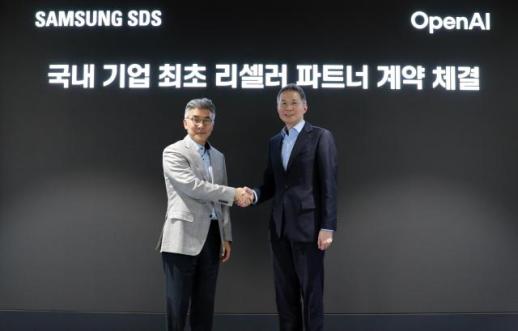 Samsung SDS Expands OpenAI Partnership to Sell ChatGPT Edu to Schools Samsung SDS said Sunday it is expanding cooperation with OpenAI as it moves to target the education market for generative artificial intelligence. The company said it has secured additional sales rights for ChatGPT Edu and will step up efforts to provide a safer environment for AI use in education. ChatGPT Edu is an AI service for schools, publishers and other education organizations. Samsung SDS said it applies a “non-training policy,” meaning user conversations and responses are not used as AI training data, strengthening data privacy and security. It also supports functions including text generation, coding, data analysis, web browsing, document summarization and building customized chatbots, using the latest GPT-5-based language model, the company said. OpenAI designed ChatGPT Edu based on experience with ChatGPT Enterprise at major universities worldwide, Samsung SDS said, adding that it is being used at the University of Oxford, the University of London, the Wharton School and the National University of Singapore. Samsung SDS said it plans to broaden the service for institutions seeking to adopt generative AI in education and research. It is conducting a proof of concept with Korea National Open University, which it said has about 90,000 members, and plans to discuss a formal rollout. In the corporate market, Samsung SDS said it has continued to add customers since signing its OpenAI reseller partner agreement, offering tailored AI transformation strategies and expanding across industries. It said it recently signed contracts to supply ChatGPT Enterprise to major companies in the public, finance, manufacturing, distribution and service sectors, including Nexen Tire. Samsung SDS said Nexen Tire is pursuing the tool to improve efficiency in tasks such as knowledge search and document drafting, and chose Samsung SDS to build an environment with enterprise-level security and data management. Samsung SDS said it provides end-to-end AI transformation services through a “One-Team” structure spanning AI consulting, development and operations, cloud and security. It said it supports the full process from strategy and AI full-stack design to deployment, companywide expansion and operational upgrades, and provides a stable service environment through its own cloud and GPU-based AI infrastructure. “ChatGPT Edu will help create an environment where generative AI can be used more safely in education,” said Lee Jung-heon, executive vice president and head of Samsung SDS’ Strategic Marketing Office. “Based on our cooperation with OpenAI, we will strengthen our role as an AX partner that goes beyond simple reselling to design and scale enterprise AI operating systems.” * This article has been translated by AI. 2026-04-27 08:31:15
 -
 Oil Rises as U.S.-Iran Talks Stall; U.S. Stock Futures Edge Lower International oil prices opened the week higher as efforts to restart peace talks over the Iran war remained stalled. According to Bloomberg, as of 8:17 a.m. Korea time on the 27th, June Brent crude futures were up 1.71% at $107.13 a barrel, while June West Texas Intermediate futures rose 1.69% to $96.00. Both benchmarks were up more than 2% earlier before paring gains. The move followed disappointment after a second round of U.S.-Iran talks that had drawn attention over the weekend again ended without results. President Donald Trump canceled a planned weekend visit by senior envoys to mediator Pakistan, and Iran said it would not negotiate as long as threats continued. A ceasefire posture has largely held since early April, but the Strait of Hormuz remains effectively closed after both the United States and Iran blocked it, cutting off passage through the strategic chokepoint. The disruption is affecting supplies of oil, fuel, natural gas and even fertilizer, raising concerns about mounting inflation pressure. Mona Yacoubian, director of the Middle East program at the Center for Strategic and International Studies, said both sides want to avoid an all-out clash but the strait remains shut. “Right now, the standoff is continuing without a clear solution,” she said. The Iran war has entered its ninth week, pushing up energy prices and triggering shortages of key fuels such as liquefied petroleum gas in India. Airlines have also cut flights, and the International Energy Agency has said the conflict is causing the largest supply shock in history. Markets are increasingly weighing the possibility that oil prices could become entrenched above $100 a barrel. “As time goes on, the likelihood of a short-term agreement is getting lower,” said Robert Yawger, a managing director at Mizuho Securities. “Oil is likely to trade above $100.” Traders say if the Strait of Hormuz closure persists, demand will have to fall to match supply that is down at least 10%. A supply loss of about 1 billion barrels is already seen as unavoidable, more than double the emergency reserves countries had released. The U.S. military has continued maritime interdictions, including blocking sanctioned vessels in the Arabian Sea. U.S. Central Command said 37 ships have changed routes since the blockade began. U.S. stock index futures were slightly lower amid uncertainty over the U.S.-Iran talks. Dow Jones futures were at 49,280.00, down 0.23% from the previous session, while S&P 500 futures fell 0.17% to 7,178.25. Nasdaq 100 futures were down 0.20% at 27,380.00. 2026-04-27 08:25:36
 -
 Kenya’s Sabastian Sawe Breaks 2-Hour Marathon Barrier in London, Sets World Record Kenya’s Sabastian Sawe crossed the line at the London Marathon in 1:59:30, becoming the first runner to officially break two hours for the full marathon distance in a sanctioned race. The 2026 London Marathon was held on the 26th (local time) in London. Sawe maintained an average pace of 2:50 per kilometer over the two hours and finished in 1:59:50. The time shattered the previous world record of 2:00:35 set by Kelvin Kiptum by more than a minute. Eliud Kipchoge previously ran under two hours in an unsanctioned event, but this was the first time the barrier was broken in an official race. Sawe was not the only sub-2 finisher. Runner-up Yomif Kejelcha also went under two hours, clocking 1:59:41, making it the first race to produce two sub-2 marathoners. As the news spread, users on South Korean online communities also focused on the shoes Sawe wore during the race, the Adidas Adizero Adios Pro Evo 3. Some users said the retail price was 900,000 won, while expressing surprise at what they described as the shoe’s philosophy and technology. In an interview with The Guardian, Sawe said, “I feel so good. I’m really happy,” adding, “Today is a day to remember. I proved that nothing is impossible.” 2026-04-27 08:24:49
 -
 GS E&C Wins $2.1 Billion Seongsu 1 Redevelopment Contract, Tops $4 Billion in 2026 Orders GS E&C has been selected to build the Seongsu Strategic Redevelopment Zone 1 project in Seongdong-gu, Seoul, a redevelopment valued at about 2.1 trillion won. With the deal, the company’s urban renewal orders this year have topped 4 trillion won. According to the redevelopment industry on April 27, the Seongsu 1 redevelopment association approved GS E&C as the contractor at a regular general meeting held April 25. GS E&C was the sole bidder in two rounds of bidding held in February and March. Under Korea’s Urban and Residential Environment Improvement Act, competitive bidding is the rule, but if a tender fails at least twice due to a single bidder, the project can shift to a negotiated contract. GS E&C proposed the complex name ‘RIVENIQUE XI’ (RIVENIQUE XI). The name combines the French word for river, ‘Rivière,’ and ‘Unique,’ meaning something special. The Seongsu 1 redevelopment will build 17 apartment towers, from four basement levels up to 69 stories, with 3,014 households and ancillary and welfare facilities on a 194,398-square-meter site in Seongsu-dong 1-ga. The construction cost is 2.154 trillion won, the largest among Seongsu districts 1 through 4. GS E&C previously secured contracts including the Songpa Hanyang 2nd reconstruction project in Songpa-dong, Songpa-gu (685.6 billion won) and the Gaepo Woosung 6th reconstruction project in Gaepo-dong, Gangnam-gu (215.4 billion won). With the Seongsu 1 deal, its order total for this year reached 4.0259 trillion won. 2026-04-27 08:24:19
 -
 Samsung Electronics Launches Samsung Wallet Trips to Manage Travel Details in One App Samsung Electronics said Sunday it will launch “Samsung Wallet Trips,” a service aimed at improving travel planning and management for Galaxy users. The feature lets users manage travel items — including airline boarding passes, hotel reservations, and tickets for theme parks and sporting events — in a single Samsung Wallet app. Samsung said the service brings together travel information that had been spread across multiple apps and platforms, improving convenience. After creating a travel entry in Samsung Wallet, users can use the “Trip Timeline” to manage itineraries organized by time and location. Users can also add detailed schedule items and use a memo function to save related links or information for more structured planning. Samsung said it is working with global partners so users can add hotel and flight booking confirmations and activity tour tickets directly to Samsung Wallet, and it plans to expand those partnerships to offer broader travel information. The company said it protects user data through its Samsung Knox security platform, using encryption and biometric authentication so only the device owner can access travel information. Chae Won-cheol, vice president and head of the Digital Wallet Team in Samsung’s MX Business, said the service will help Galaxy users manage travel information more smartly and focus on enjoying their trips.* This article has been translated by AI. 2026-04-27 08:21:37
 -
 Fire Breaks Out at Livestock Barn in Eumseong County, Heavy Smoke Reported A fire broke out at a livestock barn in Eumseong County, North Chungcheong Province. Eumseong County said in a disaster safety text alert that the fire started at about 6:45 a.m. Sunday at a barn in Hosan-ri, Geumwang-eup, and that heavy smoke was still being reported. The county urged nearby residents to use caution for their safety.* This article has been translated by AI. 2026-04-27 08:21:12
 -
 IBK Securities Raises Hotel Shilla Target Price on Duty-Free Stabilization, Hotel Gains IBK Investment & Securities on the 27th raised its target price for Hotel Shilla to 81,000 won from 64,000 won, citing stabilization in its duty-free business and improving results in its hotel division. It maintained its “buy” rating. In a report released the same day, IBK analyst Nam Seong-hyeon said he expects the earnings improvement to continue. Nam said Hotel Shilla posted first-quarter consolidated revenue of 1.0535 trillion won, up 8.4% from a year earlier, and operating profit of 20.4 billion won. He said the results “far exceeded” market expectations. He said the duty-free unit returned to profitability in the quarter, while profit growth also widened in the hotel and leisure businesses. The hotel division posted operating profit of 8.2 billion won, up 228% from a year earlier, which he attributed to operating leverage. Nam said the first quarter is typically a slower season and occupancy at Seoul hotels fell, but a sharp rise in the average daily rate helped drive results, calling it meaningful. He said the ADR increase suggests demand remains strong and that profit leverage could accelerate as performance improves at the Jeju hotel. He also said duty-free operating results are likely to stabilize as the company exits Incheon International Airport. Nam added that while first-quarter results beat expectations due to temporary factors, the outlook remains positive given easing fixed-cost burdens and the likelihood of more stable earnings.* This article has been translated by AI. 2026-04-27 08:18:15