

Journalist

CGTN
-
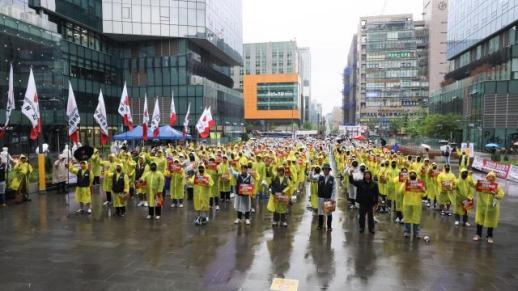 Kakao CEO apologizes to staff as union secures strike right after talks collapse SEOUL, May 28 (AJP) - Kakao CEO Chung Shin-a offered a public apology to employees as the company's union secured the legal right to strike following the collapse of a second mediation session, raising the prospect of the tech giant's first-ever headquarters walkout. Chung issued the apology through an internal notice Thursday, saying she was "sincerely sorry" for failing to quickly dispel growing uncertainty within the company. "Negotiations have dragged on, and I take seriously the fact that our crew members have had to wait this long," she said, using Kakao's in-house term for employees. The CEO struck a conciliatory tone, stressing that labor and management ultimately share the same direction and must work through their differences through dialogue. She also hinted at a partial organizational reshuffle, saying the company needed to reestablish a stable operational framework and reset its service priorities. Mediation talks at the Gyeonggi National Labor Relations Commission broke down late Wednesday after running until 11 p.m., leaving both sides without an agreement. The failure hands the union the legal standing to launch strike action, with about 1,200 union members set to march through the Pangyo Station area on June 10. The union said in a statement that it would not entirely close the door on further dialogue, but added it could "no longer resolve the matter through waiting and patience alone," and would move ahead with preparations for a June strike. The union accused management of passive bargaining, unilaterally paying out bonuses mid-negotiation and repeatedly swapping its lead representatives — moves it said had eroded trust. The central dispute centers on whether Kakao's annual 5-million-won restricted stock unit grants should count as performance pay, a classification the union firmly rejects. Kakao said it would keep communication channels open with the union even after the mediation process concluded. Shares of Kakao traded at 38,700 won per stock on 1:22 p.m., 4.44 percent lower than a day before and roughly 37 percent lower than earlier this year. 2026-05-28 13:29:26
 -
 Bank Contributions Exceed 2 Trillion Won, Focus on Community and Financial Support As the government emphasizes inclusive finance to support vulnerable groups, the banking sector's social contributions surpassed 2 trillion won last year. This increase is attributed to expanded spending on community public projects and financial support for low-income individuals. According to the "2025 Bank Social Contribution Activity Report" published by the Korea Banking Association on May 28, the total amount of social contributions by banks reached 2.156 trillion won, an increase of 262.6 billion won (13.9%) from the previous year's 1.8934 trillion won. The scale of social contributions in the banking sector was 351.4 billion won when first recorded in 2006. After surpassing 1 trillion won for the first time in 2019, contributions have steadily increased, achieving the 2 trillion won mark for the first time in six years. Over the past five years, the banking sector's social contribution totals are as follows: 1.0617 trillion won in 2021, 1.238 trillion won in 2022, 1.6349 trillion won in 2023, 1.8934 trillion won in 2024, and 2.156 trillion won in 2025, amounting to a total of 7.984 trillion won. By sector, the "community and public interest" category accounted for the largest share at 1.435 trillion won, or 66.6% of the total. This was followed by "financial support for the underprivileged" at 538.9 billion won (25.0%), "academic and educational" contributions at 73.9 billion won (3.4%), "cultural, artistic, and sports" contributions at 68.4 billion won (3.2%), "global" contributions at 29.2 billion won (1.3%), and "environmental" contributions at 10.6 billion won (0.5%). The Korea Banking Association's report also includes a separate section on the "New Leap Fund." The banking sector contributed 360 billion won to this fund to help small businesses and vulnerable groups rebuild their foundations. The New Leap Fund is a program that purchases non-performing loans of 50 million won or less that have been overdue for more than seven years, providing debt relief. Cho Yong-byeong, chairman of the Korea Banking Association, stated, "I hope this report serves as a transparent and effective means to communicate the banking sector's commitment to social responsibility and genuine efforts to the public. We will lead positive changes in our society based on the values of coexistence and inclusivity."* This article has been translated by AI. 2026-05-28 13:24:00
 -
 Iran's Revolutionary Guard Claims Attack on U.S. Airbase in Response to Airstrikes The Iranian Revolutionary Guard Corps (IRGC) announced that it attacked a U.S. airbase in retaliation for American airstrikes near Bandar Abbas. This response came after the U.S. targeted Iranian facilities, citing drone threats in the Strait of Hormuz. However, the specific target and extent of damage remain unverified. According to Reuters on May 28, the IRGC released a statement through the semi-official Tasnim news agency, claiming, "The U.S. conducted airstrikes near Bandar Abbas airport in southern Iran," and added, "We responded at 4:50 a.m. local time." The IRGC characterized this action as a retaliatory measure. Prior to this, the U.S. had conducted operations targeting Iranian drones near Hormuz. Citing U.S. officials, Reuters reported that American forces shot down four Iranian attack drones that posed a threat to U.S. military and commercial vessels. Additionally, they struck a ground control center in Bandar Abbas that was preparing to launch a fifth drone. The U.S. described the operation as a defensive measure to protect its military and commercial ships. Iran, however, views this as an infringement on its territory and has justified its response. The situation has led to heightened military tensions, with the U.S. framing its actions as defensive and Iran labeling them as retaliatory. The IRGC warned that it would respond more forcefully if further attacks occurred. In its statement, it said, "If aggression is repeated, a more resolute response will follow," adding that the responsibility for escalating tensions lies with the aggressor. The IRGC did not disclose details regarding the means of attack, launch sites, target base names, or the scale of damage. The key takeaway from this announcement is that Iran has officially expressed its intent to retaliate, even as the specifics of the targets and damage remain unclear. This situation further complicates the prospects for resuming navigation through the Strait of Hormuz and any ceasefire negotiations. 2026-05-28 13:24:00
 -
 Defense Minister Ahn to attend Shangri-La Dialogue, meet Japanese counterpart SEOUL, May 28 (AJP) - South Korean Defense Minister Ahn Gyu-back will attend the 23rd Asia Security Summit in Singapore from May 29 to 31 and hold talks with defense ministers from several countries, the Ministry of National Defense said Thursday. The Asia Security Summit, also known as the Shangri-La Dialogue, is an annual security forum hosted by the International Institute for Strategic Studies in Singapore, bringing together defense ministers and senior officials for multilateral and bilateral talks. During the forum, Ahn is scheduled to hold a bilateral meeting with Japanese Defense Minister Shinjiro Koizumi. It will be their first in-person meeting since January, when Ahn visited Japan and held talks with Koizumi in Yokosuka, Kanagawa Prefecture. The two ministers are expected to discuss ways to expand defense exchanges between Seoul and Tokyo, which have recently gained momentum. In particular, they may discuss plans to hold a Korea-Japan search and rescue exercise, or SAREX, which had been suspended for about nine years before the two sides agreed to resume it during the Yokosuka meeting. Seoul and Tokyo are reportedly in the final stages of coordinating the schedule for the exercise. Momentum for closer defense exchanges between the two countries is expected to continue, as Koizumi’s bilateral visit to South Korea is also being discussed following the Shangri-La meeting. However, it remains unclear whether there will be progress on Japan’s push for an Acquisition and Cross-Servicing Agreement, or ACSA, with South Korea, as Seoul has maintained a cautious stance on the issue. U.S. Secretary of Defense Pete Hegseth is also set to attend this year’s Shangri-La Dialogue. A separate bilateral meeting between Ahn and Hegseth is considered unlikely, as the two already held talks during Ahn’s visit to the U.S. on May 11. Still, if the two meet on the sidelines of the forum, Ahn may again explain Seoul’s recently announced basic plan for a nuclear-powered submarine and discuss its progress. Attention is also focused on whether the defense chiefs of South Korea, the U.S. and Japan will hold a trilateral meeting during the forum. Ahn is also scheduled to meet delegations from the U.S. Senate and House of Representatives, as well as the defense ministers of Australia, Norway, the Philippines and Thailand, to discuss ways to expand defense and defense industry cooperation. On May 30, Ahn will deliver a speech during a plenary session of the Shangri-La Dialogue under the theme, “Regional Security Challenges and the Republic of Korea’s Strategic Response.” Through the speech, Ahn is expected to explain the government’s defense policy in response to the rapidly changing security environment, the ministry said. 2026-05-28 13:09:27
 -
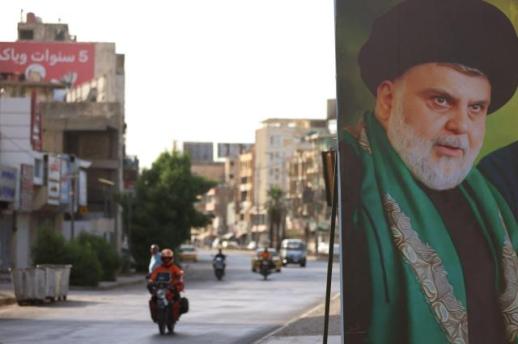 AJP DEEP INSIGHT: Hormuz's final tug-of-war — nuclear stakes, civilizational fault lines, and a new world order in the AI age SEOUL, May 28 (AJP) - In late May 2026, the world is watching the Middle East once again with unflinching attention. Explosions continue to echo across the Strait of Hormuz. The United States and Iran are simultaneously pursuing negotiations and military action. The White House signals "progress." Yet in the same breath, President Donald Trump warns that he could "finish it again" if necessary. Iran insists it intends to uphold the ceasefire, while condemning limited American airstrikes as violations of it. What the world is witnessing is a strange kind of war. Not a full-scale conflict, but not genuine peace either. Neither a ceasefire nor a true end to hostilities. Negotiations proceed even as the guns keep firing. This is the defining character of the 21st-century gray zone war. But its essence runs deeper than any conventional military clash. Beneath the surface lie nuclear ambitions and oil, the dollar system and the U.S.–China rivalry for global supremacy, the collision of Islamic and Jewish civilizations, and the contest over supply chains in the age of artificial intelligence. The Strait of Hormuz has become more than a body of water. It is the fault line of the entire world order. The most striking feature of the current crisis is that war and diplomacy are advancing in parallel. Washington and Tehran are reportedly discussing a memorandum of understanding toward an end to hostilities, and both sides have sent signals that progress is being made. The U.S. State Department and White House have indicated that negotiations have not collapsed entirely, and Iran has officially kept the door to a diplomatic resolution open. Yet simultaneously, U.S. forces launched fresh airstrikes on Iranian military installations near the Strait of Hormuz within days of the latest exchange. Washington described the strikes as defensive, citing the interception of four Iranian drones and the destruction of a ground control station preparing to launch a fifth. On the surface, it appears a limited confrontation. Yet global financial markets and the international community do not view it that way. The reason is simple: the Strait of Hormuz is the heart of the world's oil supply chain. A critical share of the world's seaborne crude passes through this narrow passage each day. It is the energy lifeline of manufacturing nations such as South Korea, China, and Japan. Any prolonged blockade or sustained instability here would send oil prices surging, fracture global logistics, and risk reigniting inflation. Washington understands this better than anyone. Trump has cultivated the image of a president who does not drag out wars. His preferred method is coercion and negotiation punctuated by limited military action — a strategy designed to bend adversaries without committing to full-scale conflict. But Iran does not operate on an American timetable. Where the United States wants speed, Iran deploys time itself as a weapon. That is an ancient Persian survival strategy. America is a young superpower, barely 250 years old. Iran is a civilization with 5,000 years of memory. It has learned, across centuries of foreign pressure and imperial domination, how to endure. And so, as American military pressure intensifies, Iran's response is not frontal confrontation but a strategy of delay and psychological attrition. In the current crisis, rather than launching immediate large-scale retaliation, Tehran has pursued managed tension. It knows the dangers of total war all too well. The Iranian economy has been hollowed out by sanctions. Youth unemployment, rising prices, and deep systemic fatigue have accumulated at home. But Washington, too, has no appetite for a full war. The American economy has not fully escaped inflationary pressure. For Trump, with domestic politics always in view, a prolonged conflict carries serious political risk. The result is a dangerously balanced standoff in which neither side can deliver a decisive blow nor easily back down. Four Fault Lines at the Heart of the Negotiations The current U.S.–Iran negotiations revolve around four core disputes. The first, and most fundamental, is the nuclear question. Trump has repeatedly and unequivocally stated that Iran acquiring a nuclear weapon is an absolute red line. Washington's most acute concern is Iran's stockpile of approximately 440 kilograms of uranium enriched to 60 percent purity. Nuclear experts generally define weapons-grade uranium as enriched to around 90 percent, but material at 60 percent is already considered a significant danger threshold — technically, further enrichment to weapons-grade levels is achievable within a short window. The United States sees no path to a post-war settlement without eliminating or placing that material under verifiable control. From Tehran's perspective, however, nuclear capability is not merely a weapon. It is an insurance policy for regime survival. The fate of Libya's Muammar Gaddafi — who dismantled his nuclear program only to see his government collapse and himself killed — remains a defining trauma for Iran's leadership. No Iranian government can lightly surrender that leverage. The second dispute concerns the handling of enriched uranium. Washington has expressed strong reluctance to allow China or Russia to take custody of Iran's highly enriched stockpile. The logic is straightforward: both are American strategic rivals. The more realistic alternative may be third-country management. Pakistan presents a particularly intriguing option. It is the Muslim world's first nuclear-armed state, maintains a strategic relationship with China, is not fully hostile to the United States, and has deep ties with Saudi Arabia. A model under which some portion of Iran's highly enriched uranium is stored temporarily in an internationally co-managed facility on Pakistani soil — under International Atomic Energy Agency supervision — could allow Washington to address its proliferation concerns while offering Tehran a face-saving exit. Diplomacy, after all, is ultimately the art of creating an off-ramp for the other side without demanding their complete humiliation. The third issue is the Strait of Hormuz itself. This is not merely a shipping lane. It is a vein of modern civilization. The global economy still runs on oil and liquefied natural gas. The AI age has arrived, but semiconductor fabrication plants and data centers consume extraordinary quantities of energy. AI is, at its core, a massive energy consumer. The data centers, chip factories, cloud server farms, and hyperscale AI computing systems that power the new economy require energy on a scale that strains the imagination. That is precisely why America's big tech companies are racing to secure nuclear power, LNG, and renewable energy sources. The AI age is less an era "after oil" than an era of energy power restructuring. The Strait of Hormuz will therefore remain a critical variable in the global economy for the foreseeable future. For China in particular, Hormuz is a lifeline. China is the world's largest manufacturing economy and one of its largest crude oil importers. Its factories, logistics networks, cities, and industrial zones run on Middle Eastern energy flows. A prolonged disruption to Hormuz would deliver a potentially crippling blow to the Chinese economy. Washington understands this clearly. The American strategy in the region therefore extends beyond pressuring Iran. It also functions as a means of exerting leverage over China's energy supply chain — linking the Middle East crisis directly to the broader U.S.–China contest for global primacy. China, in turn, has deepened its strategic ties with Iran, as has Russia. Meanwhile, the United States seeks to build a new regional order centered on Saudi Arabia, the UAE, and Israel. The Middle East is becoming the intersection of a new cold war. If the original Cold War was a clash between liberalism and communism, the present contest is far more complex. AI supremacy and semiconductor supply chains, control over energy and maritime logistics, the dollar system and digital finance, religion and civilization — all of these are simultaneously in play. The dollar question is particularly important. The United States has used dollar dominance to exert control over the global economy. The SWIFT payment system and the international financial architecture are, in practice, American-centered structures. Sanctions against Iran were ultimately a financial blockade executed through that dollar system. Yet China, Russia, and certain Middle Eastern states have been quietly expanding their use of alternative arrangements — renminbi-denominated payments, gold transactions, and energy trades settled in local currencies. None of this yet threatens dollar hegemony. But Washington senses the risk. The reason is that one of the foundational pillars of dollar primacy has always been the petrodollar system — the convention by which Middle Eastern oil is priced and settled in dollars. If the Middle East order shifts from American dominance toward a multipolar framework, the dollar system itself will face long-term structural pressure. Beyond the Abraham Accords: The Case for a 'Noah Covenant' The conflicts now tearing through the Middle East are not simply clashes of national interest. They carry within them the collision of Jewish and Islamic civilizations, the rivalry between Shia and Sunni power blocs, and the confrontation between an American-led order and a multipolar alternative. The Trump era's Abraham Accords opened a new current in the region — the emergence of a pragmatic framework for coexistence centered on Israel, the UAE, and Saudi Arabia. But Iran remains outside that framework. That absence matters enormously. The path forward must go beyond the Abraham Accords toward something that might be called a "Noah Covenant." Judaism, Christianity, and Islam ultimately share a common root. Among the descendants of Noah in the biblical tradition, the line of Shem — the Semitic lineage — connects to the spiritual origins of the Jewish, Arab, and Persian worlds. The region's genuine peace can only begin from the honest recognition that "the other side cannot be completely eliminated." Coexistence is not defeat. It is survival. Three Axes Moving Global Financial Markets Global financial markets are currently moving along three great axes. The first is the AI revolution. The second is the U.S.–China rivalry for supremacy. The third is Middle East risk. Until now, global equity markets have been driven by the AI rally. American AI semiconductor companies and big tech firms remain the dominant force. But the Middle East variable represents the single greatest risk capable of destabilizing that trajectory at any moment. If Washington and Tehran achieve a limited agreement and Hormuz stability is preserved, global markets will likely resume their AI-led advance. But if negotiations collapse entirely and the Hormuz crisis escalates in earnest, international oil prices could spike sharply and global inflation could re-emerge. The U.S. Federal Reserve would be unable to cut interest rates freely. The world economy would face the prospect of stagflation. Chinese manufacturing and European industry would absorb severe damage — and South Korea would not be spared. What This Means for South Korea South Korea is geographically distant from the Middle East, but it sits in no safe zone. The Korean economy is export-driven and heavily dependent on energy imports. Instability in the Strait of Hormuz translates directly into higher costs for Korean industry. Companies such as Samsung Electronics and SK hynix ultimately grow atop a foundation of global financial and energy stability. A surge in international oil prices and geopolitical turbulence would weigh on the entire Korean equity market. South Korea must therefore pursue three objectives simultaneously: diversification of its energy supply chain, reinforcement of its competitive industrial capabilities in AI and semiconductors, and a strategy of calibrated diplomatic balance in the Middle East. The world today does not move on military force alone. This is an era in which energy and AI, finance and supply chains, civilization and geopolitics all move together. The Strait of Hormuz is not simply a body of water. It is a microcosm of the entire 21st-century world order. And at this moment, humanity is testing that order on the surface of that sea. What is needed is not a balance of war, but an architecture of coexistence. Not the terror of nuclear weapons, but a system of trust and verifiable management. Not the transactional pragmatism of the Abraham Accords alone, but the civilizational imagination to move toward a Noah Covenant. That may be the only path through which the Middle East — and the world — survives what comes next. 2026-05-28 12:48:30
 -
 Labor Minister Kim Young-hoon Addresses Controversy Over Excess Profit Distribution Kim Young-hoon, the Minister of Employment and Labor, stated on May 28 that there are misconceptions suggesting the government intends to seize and redistribute profits from large corporations. He emphasized, "The government has neither the authority nor the intention to forcibly intervene in legitimate corporate profits." In a post on his social media, Minister Kim addressed the ongoing debate regarding the distribution of excess profits by large companies, asserting that it misinterprets the government's concerns and the essence of social dialogue. Earlier, during a meeting with reporters, Kim mentioned the need for social discussions on how to redistribute excess profits from large corporations. He announced plans for an urgent discussion hosted by the ministry next week, aiming to explore a 'Korean-style social solidarity wage' for the redistribution of excess profits. He added, "The success of Samsung Electronics today is the result of the dedicated efforts of labor and management, combined with support from the state and local communities. If we agree that this redistribution should also occur socially, then the solution must come through social dialogue." However, some critics argue that this approach represents excessive government intervention. The ruling People Power Party expressed concerns through a statement by Choi Bo-yun, head of the party's central election committee, describing it as a "dangerous state intervention that undermines the foundations of a free market economy." They noted that no other country has a government defining what constitutes 'normal profit' versus 'excess profit' for social distribution. Minister Kim acknowledged that while the wage agreement between Samsung Electronics and its labor union has been finalized, significant challenges remain for society. He pointed out that in the era of artificial intelligence (AI), various voices have emerged regarding the fairness of performance-based pay distribution, conflicts among labor, management, and shareholders, and risks in the capital market. This indicates a high level of public interest in these issues. He remarked, "The essence of this is a pressing question about 'how to live well together' in our society. I believe the solution lies in social dialogue, where we listen to diverse voices from the public, empathize with their concerns, and collaboratively seek alternatives and solutions. This is why I proposed the urgent discussion." Kim stressed that the widening gap among workers cannot be ignored, reflecting the will of the sovereign people. He called for labor, management, and the government to unite in wisdom to create a society where all can grow together through cooperation between primary and subcontractors. "We must listen and engage in dialogue with unwavering passion," he concluded. He further stated, "There are no companies without workers, and no unions created for companies to fail. Ultimately, we must live together."* This article has been translated by AI. 2026-05-28 12:33:00
 -
 AJP Watch: BOK's strongest-yet hike signal rattles markets SEOUL, May 28 (AJP) - After sitting on the benchmark at 2.50 percent for a full year, the Bank of Korea on Thursday issued the strongest-yet signal of a shift towards hikes of between 25 to 75 basis points, splashing cold waters on chip-blind stock frenzy. New Governor Shin Hyun-song, presiding over his first rate-setting meeting and media briefing, could hardly have been blunter about the direction ahead. "All the signs — price pressure, the growth trajectory, the exchange rate and the real estate market — point in one clear direction," Shin said, adding that the case for the rate path was so "exceptionally clear" that there could be little conflict in policymaking. Shin framed the policy debate around three questions — “when,” “how fast,” and “how far” rates may rise, pointing to the latest dot plot as guidance for the second-half policy path. "The BOK will manage all the factors feeding into prices by raising the base rate," he said. On the same day, the Bank of Korea sharply revised up both its growth and inflation forecasts for this year, reflecting stronger-than-expected chip demand and the prolonged Gulf crisis. Shin said the upgraded growth outlook reflected not only stronger semiconductor exports but also an exceptional improvement in Korea’s terms of trade, noting that first-quarter gross domestic income surged 12.3 percent from a year earlier. Policymakers, however, deemed it premature to judge the full scope of inflationary shocks. “Everyone broadly shared the same recognition about inflation, growth and financial stability risks,” Shin said. “The differences were more strategic — about timing rather than direction.” According to the central bank’s updated six-month rate outlook, or “dot plot,” released after the Monetary Policy Board meeting, 10 of the 21 projected policy-rate dots submitted by the seven board members pointed to a benchmark rate of 3.00 percent within six months. Seven projected 2.75 percent, two indicated 3.25 percent and only two suggested rates would remain at 2.50 percent. The distribution implies the board’s strongest consensus now leans toward two additional quarter-point hikes — or 50 basis points in total — over the next six months. The smaller cluster at 3.25 percent suggests some policymakers see room for a third hike should inflation and financial imbalances worsen. The latest projections marked a dramatic reversal from February, when 16 of the 21 dots pointed to rates remaining unchanged at 2.50 percent and four suggested a cut to 2.25 percent. Internally, the earnings and stock-market boom spilling over into wage and bonus increases was also adding to inflationary pressure, according to the BOK chief. Apart from inflationary risks, the won’s persistent weakness also remains a concern for authorities, Shin said, vowing to respond firmly to excessive one-sided market moves. “We will not tolerate disorderly herd behavior in the exchange rate,” he said, adding that offshore non-deliverable forward (NDF) trading could at times amplify volatility in the domestic market. The clearest signal yet of a monetary-policy shift was enough to shake capital markets that had been fixated on the chip rally. Bond yields jumped after the central bank’s hawkish guidance. The three-year government bond yield rose 4.1 basis points to 3.752 percent, while the 10-year yield climbed 2.9 basis points to 4.131 percent by midday. Stocks tumbled, with the KOSPI retreating nearly 3 percent and the KOSDAQ falling more than 4.6 percent. The won weakened 5.1 won to 1,507.10 against the U.S. dollar. 2026-05-28 12:29:49
 -
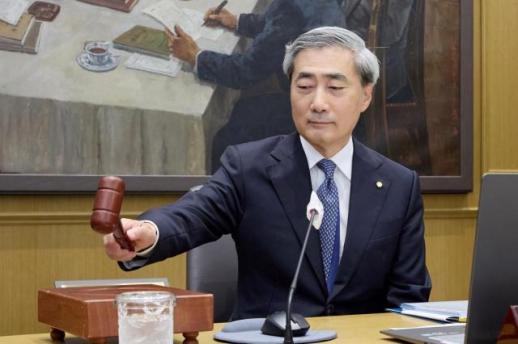 Bank of Korea Governor Shin Hyun-sung: Semiconductor Boom to Benefit All Citizens Bank of Korea Governor Shin Hyun-sung stated on May 28 that the ongoing semiconductor boom will lead to increased benefits for all citizens through fiscal measures. During a press conference following the Monetary Policy Committee meeting, Shin noted that the bonuses distributed due to the semiconductor boom will be subject to income tax, contributing to a trickle-down effect. He anticipates that these benefits will materialize through government spending next year. He added, "While the semiconductor sector will initially reap the most benefits, it is inaccurate to say there will be no trickle-down effects. The positive impact will extend to wage increases, facility investments, construction investments, and overall consumption in the economy." Regarding the significant rise in Gross Domestic Income (GDI) in the first quarter of this year, Shin explained, "The increase in GDI compared to Gross Domestic Product (GDP) is largely due to the price effect from export prices rising more than costs. Even though oil prices have increased, the substantial rise in semiconductor prices has led to a higher GDI increase this time." The Bank of Korea has revised its economic growth forecast for this year upward from 2.0% to 2.6% due to the semiconductor boom. Despite downward pressure on the economy from the conflict in the Middle East, analysts believe growth will expand thanks to the strong semiconductor market. Shin remarked, "The conflict in the Middle East is expected to lower the growth rate by 0.4 percentage points, but the stronger-than-expected semiconductor market and the resulting increase in IT exports will raise the growth rate by about 0.7 percentage points. Additionally, government supplementary budgets and a booming stock market are projected to contribute 0.2 and 0.1 percentage points to growth, respectively." He also mentioned the potential inflationary pressures arising from Samsung's bonuses, stating, "The bonuses from Samsung could lead to increased demand through higher purchasing power, which may create inflationary pressures."* This article has been translated by AI. 2026-05-28 12:21:00
 -
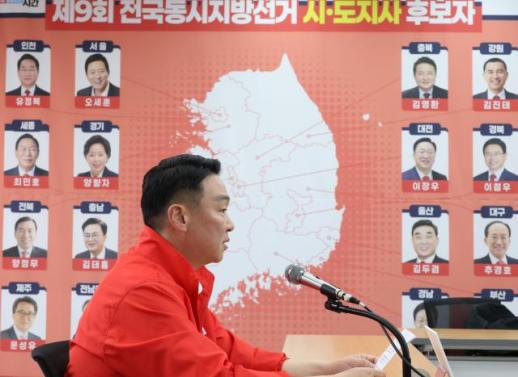 People Power Party Reports Competitive Races Ahead of Local Elections People Power Party officials classified Daegu and Gyeongbuk as strongholds and identified Seoul, Daejeon, Chungcheong, Busan, Ulsan, and Gyeongnam as competitive regions on May 28, one day before early voting for the June 3 local elections and National Assembly by-elections. For the by-elections, they deemed Daegu's Dalseong County a stronghold, while Ulsan's Nam-gu and Chungnam's Gongju, Buyeo, and Cheongyang were seen as competitive areas.Jung Hee-yong, the party's secretary-general, held a press briefing at the party's headquarters in Yeouido, Seoul, stating, "The official campaign led by Representative Jang Dong-hyuk, which began with support rallies in Daejeon and Chungnam, was primarily focused on targeting public sentiment in the central region and spreading that momentum nationwide."He added, "The passionate campaigning by our candidates, combined with recent support from former President Park Geun-hye, has led to a consolidation of our base, resulting in highly competitive races in various areas."Jung categorized the gubernatorial races as strongholds in Gyeongbuk and Daegu, while labeling Seoul, Busan, Gangwon, Chungnam, Daejeon, Ulsan, and Gyeongnam as competitive regions. For the National Assembly by-elections, he reiterated that Dalseong County in Daegu is a stronghold, while Ulsan's Nam-gu and Chungnam's Gongju, Buyeo, and Cheongyang are competitive areas.He emphasized, "Our candidates will do their utmost to regain the support of the public in every region until the very last moment. Each vote from our supporters can create a turning point for us." He also urged voters to participate in the upcoming elections, stating, "Voting begins tomorrow. Please support the People Power Party candidate, number 2, and rest assured that we will meticulously oversee the entire early voting process."Regarding candidate unification in Pyeongtaek, he mentioned, "I heard that candidates Yoo Yi-dong and Hwang Kyo-ahn communicated yesterday. If there is a role for the central party to facilitate finding common ground between the two candidates, we will approach it with a flexible and open attitude." On the Ulsan mayoral election, he called on independent candidate Park Maeng-woo to respond to the citizens' wishes and urged for unification.On the candidate unification in Busan's Buk-gu Gap, he stated, "The central party respects the candidates' positions and will work closely with the candidates for district chief, city council, and district council, including Park Min-sik, to conduct a vigorous campaign together."He concluded, "The essence of this election is clear. It is a battle to uphold the spirit of the Constitution and the rule of law against attempts to cancel the trial of the president's crimes, and to protect my home, my property, and my salary from the arrogant Lee Jae-myung administration. It is also an election to defend our regions from morally and incompetently unqualified candidates."Jung criticized the Democratic Party's candidates, stating, "The candidates presented by the Democratic Party, such as the candidate who avoids debates in Seoul, the candidate involved in power abuse allegations in Busan, the candidate facing allegations of prostitution in Ulsan, the parachute candidate in Gangwon who is unfamiliar with his own region, and the candidate linked to loan sharking in Pyeongtaek, are at a level where basic qualifications for public office are hard to expect." He urged voters to check the arrogant Lee Jae-myung administration and to deliver a stern judgment on the unqualified Democratic Party candidates through their votes.* This article has been translated by AI. 2026-05-28 12:18:00
 -
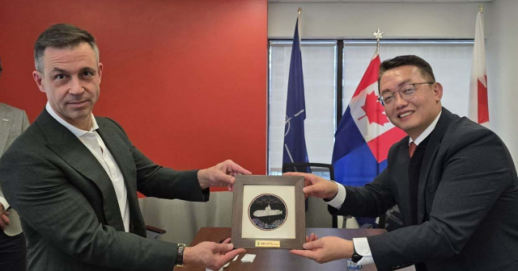 HD Hyundai Heavy Industries Intensifies Efforts to Secure Canadian Submarine Contract HD Hyundai Heavy Industries is ramping up efforts to secure a contract for the Canadian submarine acquisition project by expanding collaboration with local shipyards. On May 28, the company announced that executives from both HD Hyundai Heavy Industries and Davie Shipyard met on May 26 at Davie's Ottawa office to discuss strengthening strategic cooperation across shipbuilding and naval operations. The meeting included Park Yong-yeol, head of HD Hyundai Heavy Industries' naval business division, and James Davies, CEO of Davie Shipyard. During the discussions, HD Hyundai Heavy Industries highlighted its status as the world's leading shipbuilder and showcased the excellence of its K-Submarine technology. They exchanged in-depth opinions on potential collaboration to contribute to the development of Canada's shipbuilding industry. Davie Shipyard, located in Quebec, is Canada's largest shipyard, established in the early 19th century, with a track record of building various types of vessels, including icebreakers, offshore plants, and military support ships. Davie also owns a subsidiary in Helsinki, Finland, which is expected to enhance the partnership between HD Hyundai Heavy Industries and Davie Shipyard, combining HD Hyundai's technological expertise with Davie's local infrastructure to develop a long-term strategic partnership that spans the Arctic market. Additionally, on May 23, HD Hyundai Heavy Industries President Joo Won-ho, along with other executives, participated in the welcoming ceremony for the entry of the Dosan Ahn Chang-ho submarine at the Esquimalt naval base in British Columbia, Canada, and attended a reception hosted by the South Korean ambassador to Canada, further supporting their bid for the contract. Notably, HD Hyundai Heavy Industries is enhancing its competitiveness by proposing offset trade initiatives that include not only the export of naval vessels but also the expansion of imports of Canadian crude oil, technology transfer, and collaboration with the local shipbuilding industry. This move is seen as an effort to strengthen the solid partnership between the two countries ahead of the expected decision in June regarding the selection of a contractor for the Canadian Patrol Submarine Project (CPSP), which is valued at up to 60 trillion won. HD Hyundai Heavy Industries is participating in the CPSP project as part of a 'one team' effort with Hanwha Ocean. Joo Won-ho stated, "We are committed to sharing capabilities and expanding business areas with leading Canadian shipyards like Davie and Irving. We will do our utmost to secure the Canadian submarine project as part of the K-defense one team." 2026-05-28 12:18:00