

Journalist

CGTN
-
 Lee to meet Polish PM in Seoul next week SEOUL, April 10 (AJP) - President Lee Jae Myung will hold a meeting with Poland's Prime Minister Donald Tusk next week, Cheong Wa Dae said on Friday. In a written press briefing, presidential spokesperson Kang Yu-jung said Tusk is scheduled to arrive in Seoul on Sunday for talks with Lee. It will be the first visit by a Polish leader in 27 years and Tusk's first trip to a non-European country since taking office in December 2023. Lee and Tusk will sit down for talks on Monday, followed by an official luncheon. The two leaders are expected to discuss a wide range of issues, while highlighting bilateral cooperation in addressing global challenges including the prolonged conflict in the Middle East. Poland, a key member state of the European Union and the North Atlantic Treaty Organization (NATO) is one of central Europe's major economies and a strategic gateway to the European market. Thanks to its strategic geopolitical location between western and eastern Europe, Poland has emerged as a key production and investment hub, while also expanding its presence in future-oriented industries. South Korea and Poland have strengthened cooperation in the defense sector in recent years. With growing economic and trade relations between the two countries, about 400 South Korean companies operate in Poland, mainly in batteries and auto parts for electric vehicles, while people-to-people exchanges reach about 100,000 per year. Kang said Tusk's visit is expected to help advance bilateral relations, which have steadily developed since the establishment of diplomatic relations in 1989, toward a more future-oriented and strategic partnership. 2026-04-10 10:57:02
 -
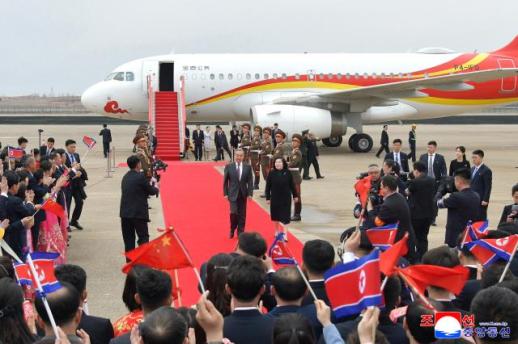 North Korean, Chinese FMs agree to strengthen ties during talks in Pyongyang SEOUL, April 10 (AJP) - The foreign ministers of North Korea and China agreed to strengthen bilateral ties during their meeting in Pyongyang, state media reported on Friday. According to the state-run friendship is a valuable common asset formed in the revolutionary struggle and persistently develops in the course of socialist construction," expressing thanks for the North's "warm hospitality." He also said the "historic meeting" of Chinese President Xi Jinping and North Korean leader Kim Jong-un in September last year "opened a new chapter of the friendly and cooperative relations" between the two countries. Wang's visit came just ahead of U.S. President Donald Trump's planned trip to Beijing next month, though neither side mentioned whether it came up in their talks. 2026-04-10 10:15:30
 -
 FSS puts brake on Hanwha Solutions' rights offering despite owner backing SEOUL, April 10 (AJP) - The rights offering plan by Hanwha Solutions to raise 2.4 trillion won to lessen its debt load drew a correction order from authorities despite the owner family offering to share the burden. The Financial Supervisory Service said it had requested the company to submit a revised securities filing, citing incomplete formal requirements and insufficient or unclear disclosure of key information that could hinder investors' decision-making. The filing has not been accepted and its effectiveness has been suspended, meaning the subscription schedule and overall issuance process could change. If the company fails to submit a corrected filing within three months, the plan will be considered withdrawn. Hanwha Solutions said it would "take the request seriously" and prepare a revised filing that reflects feedback from shareholders and the market, emphasizing that it would prioritize shareholder value. Shares rose nearly 1 percent as investors approved of the regulatory move. The company on March 26 announced the plan to issue 72 million new shares to raise 2.4 trillion won, and more than half - 1.5 trillion won – was earmarked for debt repayment and the remainder for investment. The scale of the issuance - equivalent to roughly 42 percent of existing shares - and the heavy allocation toward debt reduction have triggered strong backlash from investors, who argue that the plan shifts the burden of financial restructuring onto shareholders. Shares of Hanwha Solutions fell more than 20 percent over two sessions following the announcement. The controversy has since widened into governance concerns, including whether the move could constitute a breach of directors' fiduciary duties under the revised Commercial Act. The Korea Corporate Governance Forum criticized the timing of the board decision, noting it came shortly after a shareholders' meeting, raising questions over whether independent directors had sufficient time for proper review. Retail investors have also begun mobilizing. On the Act platform, minority shareholders have requested access to the shareholder registry and are seeking to build a coalition aimed at securing a 10 percent stake, which would enable them to call an extraordinary general meeting or pursue management changes. They have also called on the National Pension Service to take a more active role, arguing that passive management amid falling share prices could undermine its fiduciary duty. Political criticism has added to the pressure. Rep. Ahn Cheol-soo said allocating a majority of the proceeds to debt repayment effectively transfers the consequences of management decisions onto shareholders. The regulator has classified the case as a priority review, typically applied to large-scale offerings or those with a significant portion of proceeds used for debt repayment. While the FSS does not have the authority to block the deal outright, it can demand revisions - as seen in a similar case involving Hanwha Aerospace last year. The latest development comes despite efforts by the group to shore up investor confidence. The parent firm, Hanwha Corp., which holds about 36.7 percent of Hanwha Solutions, has decided to fully subscribe to its allocated shares and take up an additional 20 percent in oversubscription, committing about 843.9 billion won. The move is widely seen as an attempt by the owner family to signal support and share the financial burden, as minority shareholder resistance intensifies. Hanwha Solutions has defended the capital increase as necessary to stabilize its balance sheet amid weakening performance in its solar and chemical businesses. Its net debt stood at about 12.2 trillion won at the end of last year, with its net debt-to-EBITDA ratio rising to 29.1 times, highlighting mounting leverage pressures. The company has also faced covenant-related risks, having received a waiver on overseas borrowings after failing to meet certain financial conditions. It said the capital raise is aimed at preventing a credit rating downgrade, easing refinancing pressure and supporting continued investment, including in solar technologies. Still, market attention remains focused on the broader question - not just how much capital is being raised, but why the company’s financial position deteriorated to the point where such a large-scale rights offering became necessary, and how the burden should be shared among management, controlling shareholders and minority investors. 2026-04-10 10:10:32
 -
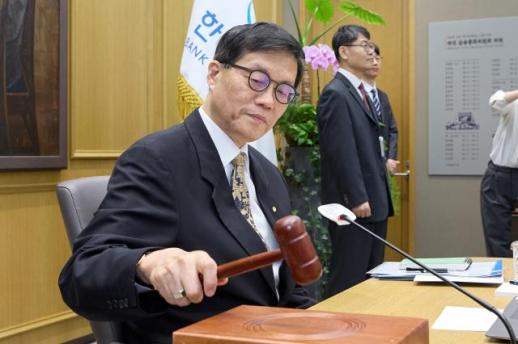 BOK holds rate at 2.5% as inflation risks clash with slowing growth SEOUL, April 10 (AJP) — The Bank of Korea on Friday kept its benchmark interest rate unchanged at 2.5 percent as widely expected, caught between rising import-driven inflation and a slowing economy amid prolonged disruptions from Middle East conflicts. The policy decision reflects a growing dilemma for the central bank, as energy supply constraints tied to the Gulf tensions continue to feed price pressures while weighing on growth. Consumer prices rose 2.2 percent in March from a year earlier, accelerating from 2.0 percent in the previous two months. While still within the central bank’s target range, the composition points to mounting underlying pressure. Energy has re-emerged as the dominant driver, amplified by a structurally weaker Korean won, with the full pass-through yet to be realized. Petroleum prices jumped 9.9 percent, contributing 0.39 percentage point to headline inflation. Diesel surged 17 percent and gasoline rose 8 percent, marking the strongest energy-driven inflation since the early phase of the Ukraine war. Given lag effects, the pass-through from higher fuel costs is expected to intensify in the coming months. Import price pressure has been further exacerbated by the weakening currency. The Korean won, which averaged 1,451.6 per dollar in February, depreciated 2.6 percent to an average of 1,493.83 in March. Since early April, it has spiked above 1,500-per-dollar — a threshold not seen since the global financial crisis. At the same time, higher input costs and prolonged weakness in domestic demand are expected to drag growth below the government’s 2 percent target this year, potentially keeping the economy in the 1 percent range for a second consecutive year. Despite the slowdown, the central bank has little room to adjust policy in either direction due to financial stability concerns. Household debt remains elevated at over 1,900 trillion won ($1.30 trillion), constraining the scope for rate cuts while also limiting the tolerance for further tightening. Market participants largely expect the central bank to remain on hold for the time being, as uncertainty persists over the outlook in the Gulf, including the timeline for a full reopening and normalization of trade through the Strait of Hormuz. Governor Rhee Chang-yong is set to explain the decision later in the day, marking his final policy meetings before his term ends on April 20 and hands over the helm to nominee Shin Hyun-song. On Friday, the won opened at 1,475.1 per dollar in the Seoul foreign exchange market. Korea's capital markets have improved this week after a truce was announced. The three-year government bond yield closed Thursday at 3.338 percent and the 10-year at 3.660 percent, sharply retreating from the level close to 4 percent last month. 2026-04-10 09:50:21
 -
 Shinhwa’s Jun Jin and wife Ryu I-seo say they have started IVF Shinhwa member Jun Jin and his wife, Ryu I-seo, said they have begun in vitro fertilization treatment. A video titled “Jun Jin♥Ryu I-seo plans for baby No. 2.. How far along are we? (Preparing for pregnancy in earnest)” was posted Thursday on Ryu’s YouTube channel, “My Love Ryu I-seo.” In the video, the couple visited a fertility clinic for tests. A specialist told Ryu that her ovarian function was “rarely good for her age group” and said her basic health indicators were all within the normal range. Jun Jin and Ryu said that if a good embryo is produced on this attempt, retrieval could be possible in mid-May. The specialist said they could confirm a gestational sac in about five weeks and that delivery is expected in early next year. As the doctor explained, Jun Jin asked whether the doctor had a sense it would be a son or a daughter. The specialist replied, “I have a feeling it will be a daughter.” Jun Jin smiled broadly and cheered, saying, “I trust that hunch.”* This article has been translated by AI. 2026-04-10 09:39:15
 -
 BIO KOREA 2026 to Bring Together 270 Companies for Global Deals and Investment South Korea’s largest biohealth industry convention, BIO KOREA 2026, is set to open in eight days, with organizers and participants expecting expanded cooperation and investment opportunities among global companies. Co-hosted by the Korea Health Industry Development Institute and North Chungcheong Province, the event will run April 28-30 at COEX in Seoul. Now in its 21st year, BIO KOREA has moved beyond a trade show to position itself as a business platform for the global biotech industry. Organizers said about 270 companies from more than 20 countries will take part, showcasing technologies across biotech, digital health care, regenerative medicine and medical devices. South Korean participants include ST Pharm, Yuhan Corp. and GC Cell. Overseas participants include Johnson & Johnson, Amgen and Lonza, drawing attention for potential technology partnerships and investment links. AI-driven drug development companies are also expected in large numbers. Insilico Medicine and Arontier plan to present AI drug design, data analysis and synthetic biology platforms, organizers said. The centerpiece of the event is its “business partnering” program. Organizers said they have roughly doubled the size of the partnering center to expand one-on-one meeting opportunities. Major pharmaceutical and biotech companies including Chong Kun Dang, SK Bioscience, Bayer, Novartis and MSD are set to participate, with expectations for outcomes such as joint research, technology transfer and investment cooperation. Country pavilions will also be operated with participation from institutions from the Netherlands, Australia, Sweden and Italy. Organizers said South Korean companies will be able to meet directly with about 60 overseas biotech companies and research institutes to explore global expansion and technology cooperation. Japan, Germany and Taiwan are also participating, with attention on collaboration as Asia-centered supply chains are reshaped. Pre-registration runs through April 17, and registrants receive a 10% discount. “Participation has expanded around future growth sectors such as AI and regenerative medicine, so we expect higher business demand than in previous years,” a BIO KOREA 2026 official said. Organizers said business partnering has increased each year, with 730 cases in 2023, 1,320 in 2024 and 1,900 in 2025. At last year’s event, global companies including Novo Nordisk, Otsuka Pharmaceutical, Insilico Medicine, Eli Lilly, Takeda and Boehringer Ingelheim took part, along with South Korean companies such as Celltrion, SK Bioscience, ST Pharm, GC Green Cross, Yuhan Corp., LG Chem, Boryung Pharmaceutical and Dongwha Pharm. Organizers said more major domestic and overseas pharmaceutical and biotech companies participated than in 2024. The event also operated a “Rising” pavilion featuring promising small and venture companies, giving visitors a look at innovative technologies and items. Organizers said interest is also building for this year’s edition.* This article has been translated by AI. 2026-04-10 09:03:00
 -
 Libraries Emerge as Hubs for Digital Shift, Inclusion and Local Partnerships, Panel Says Libraries are increasingly serving as key hubs for digital transformation, social inclusion and stronger ties to local communities. The Ministry of Culture, Sports and Tourism said Thursday that the presidential National Library Committee’s review of 2025 implementation results under the Fourth Comprehensive Library Development Plan (2024-2028) found 31 items rated “excellent,” up 11 from 2024. Another 17 items were assessed as proceeding as planned, and one was rated not implemented. No items were classified as insufficient or needing improvement, indicating the policies are being carried out steadily. By institution, 23 of 48 agencies received an “excellent” rating and 25 were rated as proceeding normally. The evaluation was conducted to gauge the effectiveness of library policy and how well it is applied in the field. The committee used performance reports and self-assessments submitted by each agency and followed a three-step process: written reviews by a 21-member evaluation panel, a review of objections, and a full committee meeting. At a Library Day ceremony scheduled for Thursday morning, the government plans to honor 13 initiatives from 12 top-rated institutions — four central government bodies, six metropolitan or provincial governments, and two basic local governments — with 2 million won per project in prize money. Among central government agencies, the Ministry of Science and ICT and the National Information Society Agency built and operated a “Digital Jiphyeonjeon” platform to integrate dispersed policy and academic information and to upgrade AI-based search, strengthening the foundation for using national knowledge resources. The Rural Development Administration built an agricultural science academic information database and expanded links to open-access papers to provide tailored information services and bolster research support. The National Library of Korea introduced AI and robotic process automation to streamline repetitive tasks and cut processing time as it shifts to a digital work environment. The National Library for the Disabled expanded international sharing and cooperation on alternative materials, improving access to information for people with disabilities and helping narrow information gaps. Among metropolitan and provincial governments, the Seoul Metropolitan Government built a cooperation system linking libraries, bookstores and publishers to energize the local reading ecosystem. The Busan Metropolitan Government created a “Memory of Busan” repository to strengthen the preservation and use of local records. Jeju Special Self-Governing Province used a Jeju-language storytelling program to support preservation of the regional language and cultural transmission across generations. Basic local governments were selected for awards for the first time since the Fourth Comprehensive Plan began. Nowon Central Library in Seoul’s Nowon District established an operating system based on library big-data analysis (LIBanalysis) to improve data-driven decision-making and operational efficiency. Hadong County in South Gyeongsang Province held a Korea-Japan book concert tied to the Toji Literature Festival, expanding international exchange rooted in local literature and promoting local identity. * This article has been translated by AI. 2026-04-10 08:27:17
 -
 KBS2’s ‘Music Bank’ Announces Lineup Featuring KEYVITUP, hrtz.wav, KickFlip, KISS OF LIFE and Hwasa KBS2’s music show ‘Music Bank’ has unveiled its lineup for Friday’s broadcast. The show, airing at 4:55 p.m., will feature Baby DONT Cry, cosmosy, hrtz.wav, KEYVITUP, KickFlip, KINO, KISS OF LIFE, RESCENE, Dayoung and Irene. Also set to appear are AMPERS&ONE, YOUNG POSSE, JANG HANEUM, Kep1er and Hwasa. KEYVITUP and hrtz.wav are scheduled to perform debut stages, while KickFlip, KISS OF LIFE, Dayoung and Hwasa will return with comeback performances. ‘Music Bank’ is hosted by Kim Jae-won and Bang Ji-min and airs every Friday at 4:55 p.m. * This article has been translated by AI. 2026-04-10 08:18:16
 -
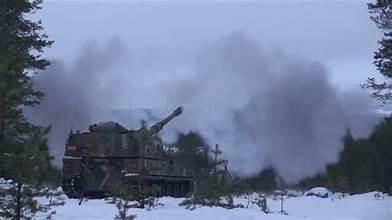 K9 howitzers expand in Europe with additional orders from Finland SEOUL, April 10 (AJP) -South Korea will export an additional 112 K9 self-propelled howitzers to Finland under a government-to-government (G2G) deal valued at 546 million euros ($634 million), marking a follow-up order from the Nordic country after its initial purchase in 2017. The agreement was signed in Helsinki between the Korea Trade-Investment Promotion Agency, representing the Korean government, and Finland’s defense ministry, according to the Defense Acquisition Program Administration. Under the contract, Hanwha Aerospace will supply 112 K9 howitzers. Finland previously acquired 96 units through a similar G2G agreement in 2017. The latest deal follows about seven months of negotiations involving KOTRA, Hanwha Aerospace, the Defense Acquisition Program Administration and the Korean embassy in Finland. Officials from both sides attended the signing ceremony, including KOTRA President Kang Kyung-sung and Oli Ruutu, director general for resource policy at Finland’s defense ministry. The K9 howitzer has been in operation in Finland for eight years, where it has been deployed in harsh conditions including extreme cold and heavy snowfall. The additional order reflects continued confidence in the system’s mobility and firepower under such environments, officials said. The G2G export framework allows the Korean government to participate directly in contracts alongside private firms, supporting negotiations, legal reviews and communication with the purchasing country. The structure is designed to reduce risks for exporters and improve transparency in the contracting process. The follow-up order comes as South Korea’s defense exports continue to expand in Europe amid shifting security dynamics, including strains within the North Atlantic Treaty Organization and heightened geopolitical tensions following Russia’s war in Ukraine. The K9 howitzer is currently operated by more than 10 countries, including six NATO members. Upon increasing demand, Hanwha Aerospace has been ramping up manufacturing base in Europe. In February, the company began construction of a production facility in Romania, dubbed “H-ACE Europe,” to manufacture K9 howitzers and K10 ammunition resupply vehicles locally. The facility will include assembly, testing and maintenance capabilities, with localization rates targeted at up to 80 percent. Romania signed a deal in 2024 to purchase 54 K9 units and 36 K10 vehicles, becoming the 10th member of the K9 user group and the sixth NATO country to operate the system. 2026-04-10 07:49:38
 -
 OPINION: A fragile truce, a stubborn strait — and a long test ahead Thirty-nine days after the United States launched its operation against Iran, dubbed “Epic Fury,” Washington and Tehran agreed to halt attacks for 14 days and begin talks on ending the war. The deal clears an immediate hurdle — but little more. The two sides have remained adversaries for nearly 50 years. Expecting a sweeping agreement within two weeks is unrealistic. The agenda alone is daunting: reopening the Strait of Hormuz, trading limits on Iran’s nuclear program for full sanctions relief, guaranteeing regime security, and ending Tehran’s support for proxy groups such as the Houthis and Hamas. If negotiations falter, Washington’s choices are limited — extend talks, escalate militarily, or declare its objectives met and step back. Even in the last scenario, the outcome would not be a clean end but a prolonged gray zone between war and peace. That ambiguity is already visible in the Strait of Hormuz — the central fault line of this conflict. Despite the ceasefire, the status of the strait remains unclear. Iran continues to restrict access, allowing passage selectively while charging transit fees. Such practices run counter to the U.N. Convention on the Law of the Sea. Article 26 prohibits charging fees for innocent passage through territorial waters. Exceptions exist only when actual services are provided — such as escorting vessels — and even then must be applied without discrimination. Yet the legal argument may matter less than commercial urgency. If Iran proceeds with fees under the pretext of escort or pilotage, and diplomacy stalls, shipping companies may simply pay to avoid delays. That opens a more serious risk: potential violations of U.N. Security Council sanctions or U.S. unilateral sanctions. What may appear hypothetical today could quickly become a real compliance dilemma. Governments and industry must assess the risk while closely tracking how major powers respond. Comparisons with Ukraine offer a cautionary note. When Russia invaded four years ago, many predicted a swift resolution. They were wrong. The Iran conflict involves more variables, but a prolonged war on that scale appears less likely — for structural reasons. First is the constraint on U.S. defensive capacity. Missile interceptors, reportedly stocked for four to six weeks before the war, are being depleted rapidly under engagement doctrines that often require firing two interceptors per incoming threat. Production is not easily scalable, as many systems are built to order. Sustaining defense of U.S. bases across Qatar, Saudi Arabia, the United Arab Emirates and Kuwait — as well as the Fifth Fleet headquarters in Bahrain — could become increasingly difficult. Israel faces similar pressures. Second is the economic burden. U.S. gasoline prices have risen above $4 a gallon, up nearly 40 percent, feeding directly into household inflation. The memory of the 1970s oil shocks still looms large. The 1973 crisis drove oil from roughly $3 to $12 a barrel, triggering recession. The 1979 shock pushed prices toward $35–$40, forcing the Federal Reserve to raise rates as high as 20 percent and leaving the global economy struggling for years. Today, analysts warn that a prolonged disruption of the strait or damage to Iranian production could push oil beyond $150, even toward $200. Such a spike would reverberate globally. Even the energy-rich United States would not be insulated. With midterm elections approaching, the political cost of sustained disruption is significant. Third is Iran’s resilience. Its conventional forces remain substantial, with roughly 350,000 troops and an additional 190,000 in the Islamic Revolutionary Guard Corps. Tehran continues to launch missiles and has reportedly downed U.S. aircraft. It is also believed to retain about 450 kilograms of enriched uranium. Its asymmetric capabilities — particularly drones — are steadily eroding adversaries’ interceptor inventories. Crucially, there are no clear signs of internal instability, such as elite fragmentation or mass protests. Years of sanctions have also strengthened domestic production capacity in essential goods. Taken together, these constraints suggest that the war is less likely to end decisively than to settle into a managed, uneasy standoff. The geopolitical backdrop further complicates matters. Since Donald Trump’s return to office, U.S. relations with traditional allies have become more transactional. During his first term, experienced officials such as Rex Tillerson, Jim Mattis and H.R. McMaster — often dubbed the “Adults in the Room ” — helped anchor alliance management. That buffer is less visible today. Canadian Prime Minister Mark Carney has openly criticized Washington’s unilateral approach. For South Korea, however, the calculus is different. Given the security realities of Northeast Asia, the importance of the U.S.-South Korea alliance remains fundamental. In this context, Seoul’s priority should be to ensure the smooth implementation of last year’s summit agreement in Gyeongju — particularly expanding South Korea’s authority in uranium enrichment and spent fuel reprocessing, as well as advancing nuclear-powered submarine capabilities. These are not abstract goals but steps toward greater strategic autonomy. Two broader lessons also stand out. First, energy security. With roughly 70 percent of South Korea’s crude imports sourced from the Middle East, diversification is no longer optional. Supply chains must be restructured to enhance resilience. Second, the nature of warfare is shifting. As seen in Ukraine and now in Iran, drones have become central to modern combat operations, not peripheral tools. South Korea must accelerate efforts to strengthen its drone capabilities and integrate them into its broader defense strategy. The ceasefire may hold for now. But it does not resolve the conflict. It merely pauses it — in a landscape where the rules are shifting, the risks are compounding, and the end remains uncertain. Choi Jong-moon, Yoon & Yang LLC and former second vice foreign minister. * The author is an adviser at Yoon & Yang LLC and former second vice foreign minister. 2026-04-10 07:30:58