

Journalist

CGTN
-
 BTS becomes first K-pop act with multiweek No. 1 on Billboard 200 SEOUL, April 06 (AJP) -BTS’ fifth studio album "ARIRANG" remained at No. 1 on the Billboard 200 for a second consecutive week, which is the first time a K-pop act defended No. 1 beyond one week. According to a chart preview released Saturday (local time), the album held off new releases including "BULLY" by Kanye West, which debuted at No. 2, and "HADES" by Melanie Martinez at No. 3. The Billboard 200 ranks albums based on a composite metric of album units. It combines physical and digital sales, streaming equivalent albums (SEA), and track equivalent albums (TEA). The chart performance followed the release of the group’s "2.0" music video. The video, released four days ago, has drawn 27.74 million views on YouTube as of April 6. A behind-the-scenes clip uploaded 14 hours ago has reached 1.74 million views. On the Spotify Daily Global Chart, BTS placed four tracks within the top 20. "SWIM" remained at No. 1 with 7,716,554 streams. "Body to Body" ranked No. 7 with 3,754,874 streams. "2.0" followed at No. 13 with 3,360,525 streams, while "Hooligan" placed No. 16 with 3,133,948 streams. 2026-04-06 11:02:54
 -
 GM Korea signals full turnaround as it pays out first regular dividend SEOUL, April 06 (AJP) - General Motors Korea said it will pay its first regular dividend to shareholders, marking the clearest sign yet that the once-ailing Korean unit of the U.S. automaker has completed a turnaround eight years after its Gunsan plant was shuttered and billions of dollars in public and private capital were mobilized to prevent its collapse. The automaker's board approved an interim dividend on April 3, though the company did not disclose the payout's size in its public filing on Sunday. Industry observers estimate the distribution could run into trillions of won, given that GM Korea's unappropriated retained earnings exceeded 4 trillion won ($2.64 billion) after the company converted capital surplus reserves into distributable earnings. The dividend caps a rescue that began in 2018 when General Motors' Korean unit was on the brink of bankruptcy, weighed down by complete capital erosion and mounting losses. The closure of its Gunsan factory in North Jeolla Province sent shockwaves through the domestic auto supply chain and raised fears that the Detroit parent would abandon the Korean market altogether. Under a bailout agreement finalized that year, GM converted about $2.8 billion in loans to equity and committed fresh capital, while the state-run Korea Development Bank injected $750 million in preferred shares. In return, GM pledged to maintain its stake and allocate two new vehicle models to its remaining plants in Bupyeong, west of Seoul, and Changwon in the southeast. Those models — the Trailblazer and the Trax Crossover — proved pivotal. By concentrating production on compact SUVs aimed at North American buyers, GM Korea swung to a profit in 2022 and posted operating income exceeding 1 trillion won in both 2023 and 2024, according to the company's press release. The Korean unit sold about 462,000 finished vehicles last year, with 96.8 percent shipped overseas. Ahead of the dividend, GM moved to preempt any revival of speculation that it might be laying the groundwork for an exit. The company announced in March that it would invest $600 million in its Korean plants to upgrade press machinery and modernize production lines, building on an earlier commitment made in late 2025. GM Korea President and CEO Hector Villarreal said the investment reflects the company's confidence in its local workforce and operations. "We have a strong foundation, and this investment is a sign of confidence in our operations," he said. The capital restructuring that paved the way for the dividend — shifting reserves from a capital surplus account to retained earnings — is a well-established practice under Korea's Commercial Act and has been employed by other major Korean firms to expand shareholder returns. The move is not legally contentious, as the law permits companies to reduce capital reserves through a shareholder resolution and redirect the funds toward dividends. The government and KDB are unlikely to publicly oppose the payout as restricting a foreign-invested company from distributing profits could invite accusations of discriminatory treatment a 2026-04-06 11:02:45
 -
 Two low-budget South Korean films invited to compete at Moscow Int'l Film Festival SEOUL, April 6 (AJP) - Two low-budget South Korean films have been invited to compete at this year's Moscow International Film Festival, which opens in Russia next week. According to festival organizers at a press conference last week, "Journey There" and "Winter Light" will vie for the top prize in the main competition along with about a dozen other films at the 48th Moscow International Film Festival, which is scheduled to take place in the Russian capital from April 16 to 23. "Journey There" directed by Kim Jin-yu, tells the story of a woman who, after her husband's sudden death, faces her own illness and tries to carry out the assisted suicide the two had planned together. Director Cho Hyun-suh's "Winter Light" revolves around a boy who cares for his deaf sister and hopes for one last trip with his girlfriend, but unexpected things get in the way. In addition, two other films – documentary "In the Sea of Strange Thoughts" and short film "Nowhere, Somewhere" have also been invited to compete in their respective competition sections. Meanwhile, the prestigious annual festival will feature about 200 films this year including 19 international premieres and 96 Russian premieres. 2026-04-06 10:45:36
 -
 OPINION: Korea's Hanwha Group investment in time The strength of a company is not captured by numbers alone. Revenue, profit, assets and market capitalization reflect performance in a given moment. But how a company chooses to engage with the world — the philosophy it lives by — emerges outside those figures. This is why building schools and nurturing people carries a different weight. It is not merely an act of corporate social responsibility. It is a statement about how a company understands the future — and where it chooses to invest time. That is what made Hanwha Group Chairman Kim Seung-youn’s visit to Bugil Academy last week more than ceremonial. Marking the 50th anniversary of Bugil Academy, Kim wrote in the guestbook: “Let us build the next 100 years of Bugil, filled with passion for learning and growth.” In his remarks, he urged students to “stand on the shoulders of those who came before and grow into leaders who will shape the future.” More than 1,300 students, faculty and alumni attended the event. The message resonates because of how Bugil began. The school was founded in 1976 by Hanwha’s late founder, Kim Chong-hee, who donated scholarships without limit under the belief that “education is the fundamental cornerstone of a nation’s century-long future.” Even today, the statement feels unusually weighty. Building a business to generate wealth is expected of an entrepreneur. Choosing to redirect that wealth into education — into people — is a different kind of decision. A factory and a school may both be built structures, but their purposes diverge. A factory produces output. A school produces time. One delivers for today. The other prepares what comes next. It is in this distinction that Kim Seung-youn’s brand of entrepreneurship becomes clearer. His presence at the anniversary was not simply about honoring a founder’s legacy. It was about reaffirming that legacy as a living corporate philosophy. Kim served as chairman of the Bugil Foundation for more than three decades, from 1981 to 2014, helping shape Bugil High School into a leading private institution. Many companies speak of legacy. Few institutionalize it. Words fade. Systems endure. Schools remain. Alumni remain. The values and capabilities cultivated through education diffuse into society over time. What Kim has sustained is not just a school, but the institutionalization of a philosophy. Entrepreneurship is often described through expansion — risk-taking, decisive investment, scaling into new industries. These are real attributes. But they are not sufficient. Companies that endure ultimately depend on their ability to recognize, develop and retain people. Without that, scale becomes superficial. Growth expands outward but lacks depth. This is what gives Kim’s visit its broader significance. His emphasis on learning, growth and future leadership signals how Hanwha defines continuity. Business portfolios change. At different points, chemicals, defense, energy or finance take center stage. But beneath those shifts lies a constant: people. Technology can be acquired. Talent cannot be manufactured overnight. Yet this is precisely where many Korean companies struggle. They speak of talent, but operate on immediacy. Hiring is framed as long-term investment, but in practice favors immediate productivity. Training is emphasized, but often among the first costs to be cut. The result is a system adept at using people, but less patient in developing them. Against this backdrop, Bugil’s 50 years carry a different message. Education is slow. But it is the most reliable form of investment. Sustaining a school over five decades is not an outcome that appears in quarterly earnings. It reflects a longer horizon — one that values possibility over efficiency, continuity over immediacy. That kind of time horizon is rare in corporate decision-making. In that sense, Kim’s entrepreneurship is less about expansion than accumulation. Acquisitions and global market growth matter. But building a foundation of people — steadily, deliberately — matters more. Commemorating 50 years of Bugil while speaking of the next 100 is a reminder that a company’s future cannot be separated from the pace at which its people grow. The anniversary, then, is not only about Bugil. It poses a broader question to corporate Korea: What does your company leave behind? Numbers on a balance sheet, or a foundation others can stand on? Companies that generate profit may succeed. Companies that cultivate people endure. Education, scholarships, training — these are not peripheral activities. They define the level at which a company operates, not just how it is perceived. Fifty years of Bugil is a record of time invested in people. One hundred years of Hanwha remains unfinished. What will determine that future is unlikely to be different. Not how quickly people are used, but how long they are developed. That is where the true measure of a company is drawn. *The author is a columnist of AJP. 2026-04-06 10:30:28
 -
 Woori Bank Names 15 Branches as ‘100-Year’ Locations in Heritage Push Woori Bank said Monday it will designate 15 branches that have operated for more than a century as “100-year branches” as it marks its 127th anniversary. The list includes the Jongno Financial Center, Seoul City Hall Financial Center, Incheon Branch, Jeonju Financial Center and Dongnae Financial Center, among others. The bank said it will install plaques and monuments reflecting each branch’s history and tradition, highlighting their role as local financial hubs and expressing gratitude to customers. Woori Bank also said it has developed a new “heritage” design to strengthen its brand identity and will apply it across customer touchpoints. The design will be introduced first on everyday items such as shopping bags and business cards so customers can more readily recognize the bank’s history and brand value while using its services. “Woori Bank’s 127-year history was possible thanks to the trust of customers and local communities,” a bank official said. “By spotlighting our 100-year branches, we will reaffirm that value and continue strengthening our role as a financial partner.” 2026-04-06 10:09:01
 -
 South Korea, France Sign Deal to Cooperate on Preserving Jongmyo Shrine and Saint-Denis Basilica South Korea and France have agreed to cooperate on the preservation and management of Jongmyo Shrine and the Basilica of Saint-Denis. The Korea Heritage Service said it held a high-level heritage meeting with France’s Ministry of Culture on April 2 at the Fairmont Ambassador Seoul in Yeongdeungpo-gu, Seoul, and that its Royal Palaces and Tombs Center and the ministry-affiliated Centre des Monuments Nationaux signed a memorandum of understanding. In December 2022, the Korea Heritage Service — then known as the Cultural Heritage Administration — and the Centre des Monuments Nationaux signed a letter of intent to promote exchanges in cultural heritage. The new MOU, pursued as part of outcomes from a South Korea-France summit, builds on that document and calls for cooperation on systematic preservation and management of the two sites, reflecting shared historical and cultural characteristics. The Basilica of Saint-Denis, a Gothic church in Saint-Denis north of Paris, was built around the fifth century as a monastic church. From the seventh century, it served as a royal burial site, housing the remains of 43 kings, 32 queens, and 60 princes and princesses across multiple dynasties. At the high-level meeting held alongside the signing, Korea Heritage Service Administrator Heo Min and French Culture Minister Catherine Pégard agreed to expand exchanges in the heritage field, including site visits linking representative cultural assets, expert exchanges and mutual promotional efforts. They also discussed events planned for June to mark the 140th anniversary of diplomatic ties. The Korea Heritage Service said it will continue working with France and other countries to broaden cooperation in the heritage sector and expand opportunities to promote Korea’s national heritage and its capacity to preserve and use it worldwide. * This article has been translated by AI. 2026-04-06 09:45:17
 -
 Samhchundang Pharm CEO Withdraws $1.9 Billion Share Block Sale Plan Samhchundang Pharm said Monday that CEO Jeon In-seok has withdrawn a 250 billion won ($1.9 billion) plan to sell shares in a block deal that was disclosed March 24. The company said the sale, originally intended to raise funds to pay taxes, had been misunderstood in the market and was weighing on the company’s value. Jeon said he decided to pull the deal amid growing distrust and concerns it could damage shareholder value. The planned sale was meant to cover taxes including gift tax, but some in the market raised suspicions that the size of a U.S. supply contract had been exaggerated. “There were no falsehoods in the contract details,” Jeon said, adding that he could not “leave the situation as it is” when negative allegations could harm shareholders. He said protecting the company’s underlying value took priority over meeting his personal financial obligations. Samhchundang Pharm said it will hold an afternoon news briefing to explain the withdrawal, allegations related to S-PASS and details of the U.S. contract. The company is said to be considering alternatives such as stock-backed loans instead of selling shares to pay the taxes. It said the approach is aimed at stabilizing the share price and reinforcing its commitment to responsible management. Samhchundang Pharm said it will proceed with its business plans without disruption, with key milestones ahead including additional global supply contracts in the second half of this year and clinical trials for oral insulin.* This article has been translated by AI. 2026-04-06 09:42:52
 -
 Conductor Han-Na Chang Named CEO of Seoul Arts Center The Ministry of Culture, Sports and Tourism said Monday it has appointed conductor Han-Na Chang as CEO of the Seoul Arts Center. The ministry said Chang is the first female CEO with a musician’s background since the arts complex opened in 1988, calling the appointment meaningful for expanding diversity in the arts. Chang is expected to coordinate her travel to take office and, as early as April 24, receive her letter of appointment from the minister and begin a three-year term. Chang is an internationally recognized cellist and conductor. She made her world-stage debut in 1994 after winning the grand prize at the 5th Rostropovich International Cello Competition at age 11. She later performed with leading orchestras including the Berlin Philharmonic, New York Philharmonic and London Symphony Orchestra, the ministry said. Since 2007, Chang has conducted a range of orchestras mainly in Europe and North America, building an international network and broad repertoire. In South Korea, she served as artistic director of “Han-Na Chang’s Absolute Classic Festival” at Seongnam Arts Center (’09-’14) and “Han-Na Chang’s Daejeon Grand Festival” at Daejeon Arts Center (’24-’25). In November 2025, she was appointed a visiting distinguished professor at the Korea Advanced Institute of Science and Technology’s Graduate School of Culture Technology. Culture Minister Choi Hwi-young said Chang brings “rich on-the-ground experience and leadership accumulated over 32 years” and a deep understanding of the performing arts through her global ties with music organizations and artists. He said he expects her to present a new artistic vision for the Seoul Arts Center, which he described as South Korea’s leading platform for foundational arts, at a time when “K-culture” is expanding globally. The ministry also said it appointed Yoo Mi-jeong, a professor in Dankook University’s piano department, as CEO of the National Symphony Orchestra Foundation, and Park Hye-jin, a professor in Dankook University’s vocal music department, as head and artistic director of the National Opera Company Foundation. Both posts carry three-year terms. Yoo is a pianist who graduated from the Peabody Institute’s piano department and graduate school and completed Yale School of Music’s artist diploma program. The ministry said she has remained active through concerto performances and solo recitals, and has taught at Yonsei University and the Korea National University of Arts, served as an adjunct professor at Gachon University, and has been a professor at Dankook University since 2003. Park studied vocal music at Yonsei University and earned a master’s degree at the Manhattan School of Music. She has been a professor at Dankook University’s College of Music and Arts since 2009. The ministry said she has performed widely in South Korea and abroad, taking leading roles in operas including “La Boheme,” “Carmen” and “Turandot,” and won the female lead award at the 5th Korea Opera Awards. 2026-04-06 09:36:41
 -
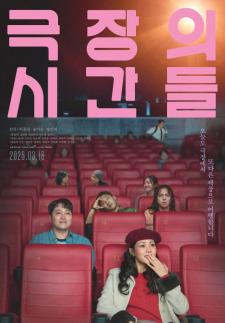 Korean Anthology Film 'The Times of the Theater' Invited to Moscow International Film Festival 영화 ‘극장의 시간들’이 제48회 모스크바국제영화제에 초청됐다. ‘극장의 시간들’은 Lee Jong-pil, Yoon Ga-eun and Jang Kun-jae taking part in an anthology of three short films. The work captures memories and emotions tied to theaters and movies, warmly exploring what the space of a “theater” means. The film was selected for the Francois Truffaut retrospective section at the 48th Moscow International Film Festival. The festival, Russia’s leading international film event, began in 1935 and will run from April 16 to 23. ‘극장의 시간들’ previously met domestic audiences after being invited last year to the Busan International Film Festival, the Seoul Independent Film Festival and the Mise-en-scene Short Film Festival. During its Busan screening, it drew attention after reports said President Lee Jae-myung and his spouse attended. Festival organizers said the film recalls the cinematic world of Truffaut, a leading figure of the French New Wave. Executive committee chairman Nikita Mikhalkov said, “This film, reminiscent of ‘Jules and Jim,’ is a notable example of contemporary directors superbly carrying on the traditions of film history.” A Tcast official said it was meaningful for the film to reach audiences beyond South Korea, adding that the company hopes it will renew appreciation for the value of watching movies in theaters despite the industry’s challenges. ‘극장의 시간들’ opened March 18 and is now showing in theaters nationwide.* This article has been translated by AI. 2026-04-06 09:36:15
 -
 Trump extends deadline for Iran to reopen Strait of Hormuz or face 'hell' SEOUL, April 6 (AJP) - U.S. President Donald Trump once again postponed his deadline, giving Iran one more day before carrying out his threat to bomb its power plants if Tehran fails to meet U.S. demands. Setting a new deadline, already extended from an earlier March 27 deadline, Trump wrote on his social media platform on Sunday, "Tuesday will be Power Plant Day, and Bridge Day, all wrapped up in one, in Iran." He also used strong language to warn that Iran would "be living in Hell" if it does not reopen the Strait of Hormuz, a critical chokepoint for roughly one-fifth of the world's oil supply. Without specifying further details, he posted again a few hours later, "Tuesday, 8:00 p.m. Eastern Time!" Just a few weeks earlier in late March, Trump had given Iran 48 hours to reopen the strait or face military action. He later delayed possible strikes several times, saying talks with Iran were making progress. The latest delay pushed the deadline to Monday before extending it again to Tuesday. This series of delays appear to be buying time to avoid a longer war with Iran, but the conflict in the Middle East is unlikely to be resolved soon, since Iran has shown no sign of backing down. Meanwhile, Trump is set to hold a press conference later in the day, where he is expected to highlight the rescue of a U.S. crew whose fighter jet was shot down by Iranian forces last week. 2026-04-06 09:28:56