

Journalist

CGTN
-
 Asian stocks drift lower as Iran conflict drags on, AI memory jitters weigh SEOUL, March 27 (AJP) - Asian equities ended the week on a subdued note as the Iran conflict stretched into a month-long standoff, while fresh concerns over AI-driven memory demand added another layer of uncertainty for investors. Brent crude rose 1.5 percent to $109.5 per barrel and West Texas Intermediate gained 0.9 percent to $95.3, keeping pressure on energy-importing economies already strained by prolonged geopolitical risks. Regional markets moved in mixed directions. Japan’s Nikkei 225 fell 0.4 percent to 53,373.1, while China’s Shanghai Composite rose 0.6 percent to 3,913.8. Hong Kong’s Hang Seng Index gained 0.7 percent to 25,023.6, supported by improving economic signals from China and expectations of further policy support. Global risk sentiment remained fragile. The Philadelphia Semiconductor Index tumbled 4.8 percent, while the VIX jumped 8.3 percent to 27.4, underscoring elevated volatility. In Seoul, the benchmark KOSPI slipped 0.4 percent to close at 5,438.9, recovering from early losses that briefly pushed the index toward the 5,200 level. Retail investors helped cushion the decline despite heavy foreign outflows. Foreign investors sold 3.88 trillion won ($2.58 billion), extending their selling streak, while institutions and retail investors bought 777.7 billion won and 2.71 trillion won, respectively. Foreigners have offloaded nearly 30 trillion won so far this month, including more than 10 trillion won this week alone, highlighting persistent external pressure on Korean assets. Chipmakers remained under strain. Samsung Electronics edged down 0.2 percent to 179,700 won, while SK hynix fell 1.2 percent to 922,000 won, as concerns grew over emerging AI compression technologies that could dampen future memory demand. The latest trigger came from Google’s unveiling of “TurboQuant,” a data compression algorithm designed to significantly reduce the working memory requirements of AI systems without sacrificing performance. If widely adopted, the technology could challenge the growth trajectory of high-bandwidth memory chips that have driven recent earnings momentum for Korean chipmakers. By contrast, autos and battery shares showed resilience. Hyundai Motor rose 1 percent to 495,000 won, while LG Energy Solution gained 2.6 percent to 394,500 won on expectations of expanding demand beyond electric vehicles, particularly in energy storage systems. Over the week, the KOSPI swung sharply, rising from 5,405.75 on March 23 to 5,642.21 on March 25 before retreating to 5,460.46 on March 26 and ending at 5,438.9 on Friday. The tech-heavy KOSDAQ rose 0.4 percent to 1,141.5, rebounding from earlier losses. Foreign investors sold 234 billion won, while institutions and retail investors bought 50.7 billion won and 170.0 billion won, respectively. Biotech stocks led gains, though Samchundang Pharm fell more than 4 percent after recent rallies, closing at 1,111,000 won. The Korean won weakened, with the dollar closing at 1,505.3 won after briefly breaching the 1,510 level intraday, reflecting sustained external pressures tied to oil prices and capital outflows. 2026-03-27 17:14:15
 -
 Korea Drug Regulator Eases Biosimilar Phase 3 Rules; Kolon Names New CEO MFDS releases guidance to ease biosimilar Phase 3 trial requirements, offers pre-review South Korea’s Ministry of Food and Drug Safety said March 27 that its National Institute of Food and Drug Safety Evaluation has released guidance outlining what to consider when deciding whether a biosimilar needs a Phase 3 comparative efficacy trial. The agency also said it will run a pre-review process to support faster biosimilar development. The guidance covers the theoretical basis for easing Phase 3 requirements, quality and clinical factors to weigh, and the procedures and documents needed to discuss a waiver. The ministry said it also plans to revise approval regulations to apply the eased requirements. It includes criteria under which a Phase 3 trial may not be required when sufficient similarity and safety to an already approved original drug are demonstrated based on quality data and Phase 1 results. The ministry said it will set up a pre-review system so biosimilar developers can consult on whether Phase 3 requirements can be eased for products under development. Kolon Life Science appoints Lee Han-kook as CEO Kolon Life Science said March 27 that it appointed Vice President Lee Han-kook as CEO at a shareholders meeting and board meeting held March 26. Born in 1973, Lee is a pharmaceutical and biotech industry professional with experience across the full process of developing and commercializing new drugs, generics and active pharmaceutical ingredients, from R&D and manufacturing to regulatory approvals and business development at home and abroad. He worked at Daewoong Pharmaceutical on synthetic research, overseas regulatory approvals, overseas business and building overseas research hubs, and later served as an executive in regulatory affairs at a biotech company in San Diego. He then moved to Kunwha Pharmaceutical, where he led the medical and R&D divisions and served as CEO. Lee said, “Based on Kolon Life Science’s strong bio and chemical capabilities, I will build renewed trust in the global biotech market and deliver visible results.” Gachon University Gil Medical Center holds free public lecture for Heart Failure Day Gachon University Gil Medical Center said March 27 that it held a “heart failure public lecture” on March 25 to mark the Korean Society of Heart Failure’s Heart Failure Day. Hosted by the hospital’s Heart Failure and Pulmonary Hypertension Center, the event aimed to explain heart failure, treatment, rehabilitation and overall management in an accessible way. Heart failure is a condition in which the heart’s function declines and it cannot supply enough blood. The hospital said patient numbers have steadily increased with population aging. Because early symptoms can be mistaken for simple fatigue or shortness of breath, early diagnosis and ongoing management are important. The lecture was chaired by cardiology professor Shin Ik-kyun and thoracic and cardiovascular surgery professor Park Cheol-hyeon, with specialists presenting by field. A question-and-answer session followed. Jaseng Medical Foundation donates 30 million won for children’s spine health program The Jaseng Medical Foundation said March 27 that it donated 30 million won on March 26 to the child welfare organization ChildFund Korea to support a children’s spine health initiative. The donation ceremony was held in a meeting room at ChildFund Korea’s office in Seoul’s Jung District, with officials from both organizations attending. The foundation said the funds will be used through September for about 600 children at 25 community child centers in the Seoul metropolitan area, including tailored stretching programs, instructor support, and providing InBody body composition tests and portable height-measuring devices. This year’s program is scheduled to run from July through September for 10 sessions, once a week. The foundation said it has worked with various organizations on the project since 2011. It began with eight institutions but has expanded to 25, more than tripling in scale, to support children’s spine health. In 2017, it received an excellence award for a program at the Seoul Social Contribution Awards.* This article has been translated by AI. 2026-03-27 17:09:00
 -
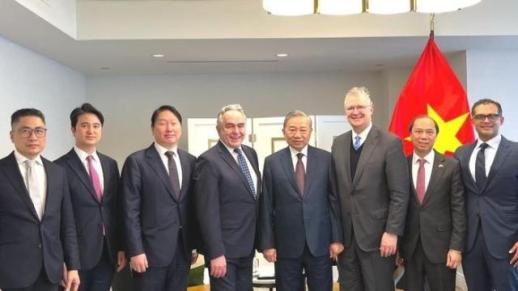 South Korean businesses in race to expand presence in Viet Nam SEOUL, March 27 (AJP) - With Viet Nam further solidifying its status as a strategic hub in Asia, major South Korean conglomerates are accelerating their push to make deeper inroads into the Southeast Asian country through investment and partnerships. These efforts are being led by companies likes SK Group, HD Hyundai, and GS Energy. In response, Viet Nam is also wooing foreign investors, pledging support to attract more investment from global firms. The country's General Secretary, Tô Lâm on Thursday vowed that his country will support international businesses as it seeks to "play a more active role in building sustainable and resilient global supply chains," speaking at a forum hosted by the Asia Business Council (ABC) forum in Hanoi. Lâm said that Viet Nam is "ready to work with global companies," stressing that foreign-invested firms play an integral role in the Vietnamese economy. Earlier this week, SK Group chairman Chey Tae-won visited Viet Nam to inspect several ongoing projects, including the construction of a 1.5-gigawatt liquefied natural gas (LNG) power plant in Quynh Lap, central Viet Nam, secured in February by its affiliate SK Innovation. SK Group has been expanding its presence there in resources and renewable energy including solar power facilities in Ninh Thuan in south-central Viet Nam since 2020. Choi's trip coincided with HD Hyundai Chairman Chung Ki-sun's visit to the country, during which he toured the construction site of the company's petrochemical carrier (PC) plant and other production facilities. GS Energy Vice Chairman Huh Yong-soo also met Deputy Prime Minister Mai Van Chinh in Hanoi the previous day to discuss expanding cooperation in the energy and infrastructure sectors. GS Energy is currently involved in major projects including the construction of an integrated refining and petrochemical complex in the northern province of Thanh Hóa, as well as a liquefied natural gas (LNG)-fired power plant in the southern province of Long An. The company is also eyeing the Vietnamese retail market as part of its broader strategy to diversify its business there. Viet Nam is, meanwhile, targeting carbon neutrality by 2050, shifting away from fossil fuels toward renewable and new energy sources, creating new opportunities for foreign investors. South Korean firms, already standing out among the pack in the country, are increasingly positioning themselves to play a central role in this transition while deepening industrial and supply chain partnerships. 2026-03-27 17:07:20
 -
 10 Most Anticipated Movies of 2026: Marvel, Pixar, Top Directors and Korean Films 2026 is shaping up to be a crowded year at the box office, with major sequels, big-budget franchise entries, new films from marquee directors and several closely watched Korean releases. Among the most widely discussed titles is “The Devil Wears Prada 2,” which reunites Meryl Streep, Anne Hathaway, Emily Blunt and Stanley Tucci. The film is set for a worldwide first release on April 29. With the original long treated as a workplace and fashion touchstone, attention is on whether the sequel can feel current rather than relying on nostalgia. In the blockbuster category, Marvel’s “Avengers: Doomsday” is positioned as one of the year’s biggest bets. Marvel has set a North American release date of Dec. 18, targeting the lucrative year-end season. Other high-profile releases include “Michael,” a biopic of Michael Jackson, due May 13, and Steven Spielberg’s “Disclosure Day,” scheduled to open June 10. Family audiences will also see familiar brands return. Pixar’s “Toy Story 5” is set for release in June, with the studio pitching a clash between traditional toys and cutting-edge technology. Christopher Nolan’s “Odyssey” is also on the calendar. Universal plans to release it July 15. Several Korean films are drawing attention as well. Na Hong-jin’s “Hope” is expected to open this summer, marking his first new film since “The Wailing.” Director Lee Chang-dong’s “Possible Love” has also been cited as a 2026 title to watch. It has been introduced as starring Jeon Do-yeon, Sol Kyung-gu, Zo In-sung and Cho Yeo-jeong, and is reported to be planned for a limited theatrical run along with a Netflix release. For fans of source material, a live-action adaptation of Tatsuki Fujimoto’s “Look Back” is set to be directed by Hirokazu Kore-eda, with a 2026 theatrical release in Japan announced. The story previously made an impression in animated form, and attention is on how it will be reinterpreted in live action. A year-end showdown is also taking shape. Both “Avengers: Doomsday” and “Dune: Part 3” are pointing to December release plans, setting up a high-stakes battle for attention and screens. 2026-03-27 16:21:25
 -
 Lee Yeongdo’s ‘The Bird That Drinks Tears’ Makes French Grand Prix de l’Imaginaire Longlist Lee Yeongdo’s fantasy novel “The Bird That Drinks Tears” has been named a preliminary nominee in the foreign novel category of France’s Grand Prix de l’Imaginaire, publisher Golden Bough said on March 27. The Grand Prix de l’Imaginaire is regarded as France’s top science fiction and fantasy literary prize, selected by a jury of experts including journalists, writers and critics. A total of 13 works made the first-round list. “The Bird That Drinks Tears” will compete for a spot among the finalists alongside new titles by authors including Man Booker Prize nominee Ned Beauman, Philip K. Dick Award winner Bethany Jacobs and World Fantasy Award winner Nnedi Okorafor. Finalists are to be announced March 30. The first volume of the French edition has sold more than 20,000 copies in four months, the publisher said. The series has also been released in major European markets including Germany, Italy, Spain, the Czech Republic and Ukraine. In Germany, it sold 50,000 copies in the first year after all four volumes were published. The novel has also drawn renewed attention in South Korea. During the Lunar New Year holiday, it ranked No. 1 overall on the e-book platform Ridibooks, while the print boxed set sold more than 2,000 sets and moved into the upper tier of fantasy and genre rankings at major bookstores. The publisher said interest was also boosted by Krafton’s open-world action role-playing game “Project Windless,” based on the novel. The game was unveiled at PlayStation’s “State of Play” showcase and drew attention from users worldwide. “The Bird That Drinks Tears” is being translated into 17 languages for publication in more than 30 countries. In June, the first volume is scheduled for release in the United States and Britain with major promotions, translated by Anton Hur, known for translating “Cursed Bunny.” * This article has been translated by AI. 2026-03-27 15:54:07
 -
 IOC to Bar Transgender Athletes From Women’s Events Starting With 2028 LA Olympics 2028년 로스앤젤레스(LA) 올림픽부터 성전환자(트랜스젠더) 선수의 여성 부문 경기 출전이 전면 금지된다. The International Olympic Committee said it adopted a policy to protect the women’s category in sport that will bar transgender athletes from women’s events starting with the 2028 Los Angeles Olympics. The IOC said its executive board approved the policy at a meeting on March 26 (local time). Under the new rules, eligibility for women’s events — individual and team — at the Olympics and all IOC-run competitions will be determined by a one-time sex test for the SRY gene, a gene linked to male sex development on the Y chromosome. The IOC said the move brings back sex testing for the first time since the 1996 Atlanta Olympics. Athletes who test negative will permanently meet the eligibility requirements for the women’s category. Those who test positive will be barred from women’s events at IOC-hosted competitions, except in rare cases involving a diagnosis of differences of sex development (DSD). Athletes with a positive result may compete in men’s events, in men’s positions on mixed teams, or in open-category sports that do not classify athletes by sex. The IOC said the policy will apply starting with the 2028 LA Olympics. It will not be applied retroactively to earlier competitions and will not apply to amateur or recreational sports programs. IOC President Kirsty Coventry said the decision was necessary to ensure fairness, safety and integrity in women’s competition. “At the Olympics, extremely small differences in performance can decide the outcome,” she said. “It is clear that it is not fair for biological males to compete in the women’s category,” adding that in some sports it is also directly tied to athlete safety. The IOC decision aligns with the direction of U.S. sports policy, the article said. It said U.S. President Donald Trump issued an executive order in February last year calling to “keep men out of women’s sports,” and that the U.S. Olympic and Paralympic Committee later announced steps to bar transgender athletes from women’s events in domestic competitions.* This article has been translated by AI. 2026-03-27 15:46:16
 -
 Han Kang’s ‘We Do Not Part’ sales surge after NBCC award Han Kang’s novel We Do Not Part won the National Book Critics Circle (NBCC) award on March 27, fueling renewed interest in the author and a sharp jump in sales. Online bookseller Yes24 said sales of the title rose 407% from 9 a.m. to noon after the award news broke, compared with the previous day’s total. Kyobo Book Centre reported sales were up 4.4 times as of 2 p.m., compared with the day before. The surge also reshaped bestseller lists. On Yes24, the book climbed to No. 5 on the real-time “Korean books” chart and No. 2 in the “novels, poetry and plays” category. After the NBCC selected the English edition translated by Lee Yewon and Paige Morris, the U.S. edition also rose to No. 6 on Yes24’s real-time “foreign books” list. On Kyobo’s real-time bestseller list, the title ranked No. 4. A Yes24 official said, “Following the Nobel Prize in Literature, another global award has kept readers’ interest going,” adding that demand is also rising among readers who want to read the work in English. The official added that it was “the first win for a Korean-language original novel,” and the second such achievement for a Korean author since poet Kim Hye-soon won in the poetry category in 2024 for Wing Phantom Pain. Publishers said Han’s latest award could keep interest in literature elevated for some time, with expectations that momentum will lift the broader fiction market. Kyobo said Han’s novel Human Acts was the overall bestseller No. 1 for two straight years in 2024 and 2025. Major bookstores rolled out promotions. Kyobo is running an event that will select 100 members who leave congratulatory messages and give each a 1,000-won Kyobo e-gift certificate. Yes24 said it will offer gifts, including a hardcover notebook made with the award-winning book’s cover illustration, to customers who buy Han’s works during a congratulatory comment event, and will also select 300 members who leave comments to receive YES points. Readers posted reactions such as, “Thank you to Han Kang for bringing good news in an anxious time marked by war,” and “Good writing is recognized by everyone.” 2026-03-27 15:45:18
 -
 Gulf Crisis, One Month On: Asia learns to wean itself off US Editor's Note: One month into the Iran war, a conflict that began in the Middle East is rapidly evolving into a broader economic and strategic shock for Asia, and in this special series, AJP examines those spillovers in full — from a comprehensive overview of Asia-wide shocks to industrial realignments, the mounting risk of a third oil shock, and rising security tensions — as the central question shifts from how the war unfolds in the Middle East to how deeply its consequences will be embedded across Asia. SEOUL, March 27 (AJP) - For decades, the American security umbrella underpinned stability in Asia. But in the first month of the U.S.-Iran war, that foundation has begun to shift. Amid a global surge in military spending, Asia’s leading economies are no longer waiting for Washington — they are bracing for a future where self-reliance is the only reliable guarantee of security. Since the late-February U.S.-Israel offensive, the conflict has reached a grim milestone: more than 3,000 dead, 15,000 targets struck, and a near-total paralysis of the Strait of Hormuz. Costs have climbed rapidly, surpassing an estimated $18 billion and rising by roughly $500 million a day. This anxiety is reflected in global arms flows. According to the Stockholm International Peace Research Institute (SIPRI), the volume of major arms transfers between 2021 and 2025 rose 9.2 percent from the previous five-year period, marking the sharpest increase in a decade. “It is common sense that the momentum of military buildup will persist long after the conflict ends,” said In Nam-sik, professor at the Korea National Diplomatic Academy. “For Gulf nations, no amount of economic prosperity can compensate for a collapse in national security. That existential fear drives them to spare no expense.” While the Middle East confronts immediate threats, East Asia is responding with more measured but accelerating adjustments. Long accustomed to chronic tensions, the region is now reassessing the durability of its alliances. “In East Asia, we are not seeing a sudden spike, but a steady and broad intensification of defense spending,” In said. “The key variable is the United States. Countries are beginning to internalize that American involvement may not be as steadfast as before. Preparation for reduced dependency is now essential.” That reassessment has been sharpened by Washington itself. As the United States presses allies for greater burden-sharing — including naval participation in securing the Strait of Hormuz — its latest 2026 National Defense Strategy signals a shift toward prioritizing homeland defense and Indo-Pacific deterrence, with partners expected to assume greater responsibility elsewhere. Recent rhetoric has reinforced that perception. President Donald Trump, in an Oval Office briefing, openly questioned allied “enthusiasm” for joint deployments, underscoring a more transactional approach to security commitments. In South Korea, this shift is accelerating long-standing debates over military sovereignty. President Lee Jae Myung has reiterated the need for “self-reliant defense,” including the transfer of wartime operational control (OPCON), currently held by the United States, by 2028. The urgency became tangible during the early weeks of the Iran conflict, when key U.S. assets — including THAAD batteries and ATACMS systems — were reportedly redeployed from the Korean Peninsula to the Middle East, exposing what officials described as a temporary “hardware gap.” “There is no better strategic location for the U.S. than South Korea to keep China and Russia in check,” said Koh Yu-hwan, former president of the Korea Institute for National Unification, pointing to Seoul’s leverage even as it seeks greater autonomy. Japan is undergoing a similarly profound shift. Tokyo has approved a record 9 trillion yen ($56.4 billion) defense budget for fiscal 2026, part of a five-year plan that would make it the world’s third-largest defense spender. Its growing investment in long-range strike capabilities marks the most significant military pivot since World War II. China, meanwhile, has avoided direct entanglement, opting instead for strategic patience. Analysts say Beijing views U.S. involvement in the Middle East as an opportunity to consolidate its position in the Indo-Pacific, particularly around Taiwan. India is moving along a parallel path. Facing persistent tensions with China and Pakistan, New Delhi is accelerating its push for defense self-reliance, with calls to raise military spending to 2.5 percent of GDP. “From Ukraine to the Middle East, we are witnessing a chain reaction of global instability,” said Air Marshal Anil Chopra, former Director-General of the Center for Air Power Studies in New Delhi. “These crises are a wake-up call for regional powers to expand defense spending and fast-track self-reliance.” Across the Indo-Pacific, the conclusion is increasingly clear: there is little time left to wait for stability elsewhere. Asia is emerging simultaneously as a major arms supplier and a primary arena for military buildup. China and South Korea now rank among the world’s top 10 arms exporters, while regional demand continues to surge. Japan’s arms imports have jumped 76 percent, and India remains the world’s second-largest importer. At the same time, dependence on foreign weapons is declining. Imports by China, South Korea and India have all fallen, reflecting growing domestic production capacity and a structural shift toward self-sufficiency. What was once a strategic preference is becoming a necessity. In a world where security guarantees are no longer absolute, Asia is no longer waiting. 2026-03-27 15:45:01
 -
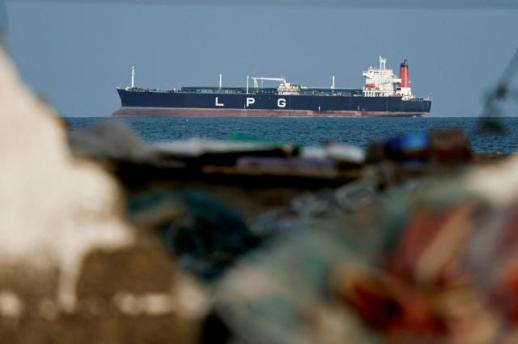 Gulf Crisis, One Month On: Seoul fending off stagnationary pressure with few options Editor's Note: One month into the Iran war, a conflict that began in the Middle East is rapidly evolving into a broader economic and strategic shock for Asia, and in this special series, AJP examines those spillovers in full — from a comprehensive overview of Asia-wide shocks to industrial realignments, the mounting risk of a third oil shock, and rising security tensions — as the central question shifts from how the war unfolds in the Middle East to how deeply its consequences will be embedded across Asia. SEOUL, March 27 (AJP) -A crisis is simmering - with the won revisiting levels seen during the global financial crisis and bond yields nearing 4 percent even as the base rate remains anchored at 2.5 percent - but Seoul authorities have few firefighting tools left. Even before the United States and Israel launched strikes on Iran in late February, Seoul authorities were struggling to defend the won, pressured by a persistent preference for dollar-denominated assets. The volatility in oil prices following the blockade of the Strait of Hormuz has since rendered much of the country’s reshoring efforts ineffective. Since the invasion began on Feb. 28, Iran’s Islamic Revolutionary Guard Corps (IRGC) has effectively maintained a near-total blockade of the strait, cutting off a critical transit route for crude oil and liquefied natural gas. The Dubai crude has surged to $130 per barrel, more than doubling from $60 at the start of the year, while Brent crude has risen over 40 percent to trade near $100. Asian economies, led by South Korea, are bearing the brunt of the shock. As of January 2026, 70 percent of South Korea’s crude oil imports originated from countries reliant on the strait — including Saudi Arabia, Qatar, the UAE, Kuwait and Iraq — far exceeding China’s dependency of 48 percent. The impact has quickly filtered through to the real economy. Retail prices for gasoline and diesel have risen sharply, while the government’s “emergency maximum price system” has struggled to contain the surge. A revised price ceiling set at 1,930 won per liter — more than 200 won higher than the initial cap — points to the limits of administrative controls and signals a de facto policy retreat. The semiconductor industry is also under strain. South Korea relies on Qatar for 65 percent of its helium supply, a critical input for chip etching processes, raising the risk of disruptions to high-tech manufacturing lines if the blockade persists. According to the Woori Finance Research Institute, if Brent crude averages $100 per barrel for a full year, South Korea’s GDP growth could fall by 0.55 percentage points while consumer prices rise by 0.76 percent. The Hyundai Research Institute warned that if prices exceed $150, growth could slow to near zero. Heightened complexity, deeper impact While South Korea has navigated geopolitical crises before, experts say the current situation is fundamentally different in both scale and structure. Unlike the COVID-19 pandemic — which reduced demand while leaving shipping lanes largely intact — the Hormuz blockade disrupts a vital artery handling more than 20 percent of global trade. The closest historical parallel is the oil shocks of the 1970s, when crude prices surged from $3 per barrel in 1973 to $39 in 1980, nearly doubling gasoline prices domestically. Yet even those shocks, analysts note, were less severe in their immediate supply impact. “What makes the current situation structurally distinct from prior oil shocks is the simultaneous disruption of liquefied natural gas,” said David Bieri, professor at Virginia Tech. “The strait carries not just oil, but also fertilizers and high-tech supply chains — compounding the shock in ways not seen in earlier crises.” Fatih Birol, executive director of the International Energy Agency, echoed that view, noting that current supply losses exceed those seen during past oil crises combined. Domestic policy responses are further constrained by structural vulnerabilities. Household debt, which surpassed 1,852 trillion won in late 2025, limits the scope for aggressive monetary tightening without risking broader financial instability. “Monetary policy must carefully consider the household debt situation to maintain mid- to long-term financial stability,” said Jang Jeong-su, deputy governor general at the Bank of Korea, acknowledging the “force majeure” constraints facing policymakers. Market interventions fueling distrust Despite the gravity of the situation, repeated government interventions — including verbal warnings, foreign exchange operations and a 5 trillion won bond buyback — have done little to stabilize market sentiment. The won has weakened sharply, falling nearly 5 percent since the start of the year and underperforming most regional peers. Bond yields have also climbed, with the 10-year Korea Treasury Bond approaching levels last seen during the peak of U.S. monetary tightening. International institutions have raised concerns over the ad-hoc nature of Seoul’s policy response. “South Korea’s aggressive market interventions risk undermining the predictability of its financial markets,” the Atlantic Council said in a recent report, warning that reliance on short-term measures could erode long-term institutional credibility. Experts have also flagged concerns over fuel subsidy policies. “When supply risks occur, demand must also be adjusted. Setting a price ceiling sends the wrong signal by encouraging continued consumption despite the crisis,” said Kim Hyung-gun, an economics professor at Kangwon National University. The Carnegie Endowment for International Peace similarly warned that expanded subsidies are crowding out social spending and delaying structural reforms that were only viable under more favorable external conditions. 2026-03-27 15:28:45
 -
 Fine dust advisory issued as smog blankets Seoul SEOUL, March 27 (AJP) - An ultrafine dust advisory was issued for Seoul and surrounding areas on Friday, as heavy smog carried by northwesterly winds blanketed the capital, with fine dust levels exceeding 81 ㎍/㎥, according to the Korea Environment Corporation. Such an advisory is issued when PM2.5 concentrations exceed 75 ㎍/㎥ for more than two consecutive hours. The elderly, children, and those with respiratory or cardiovascular diseases are advised to refrain from outdoor activities. Even healthy adults are encouraged to limit time outdoors and wear masks when going outside. Ultrafine particles, roughly one-thirtieth the thickness of a human hair, can penetrate deep into the lungs without being filtered, posing serious health risks. 2026-03-27 15:22:11