

Journalist

CGTN
-
 Nobel laureate Han Kang wins prestigious American literary award SEOUL, March 27 (AJP) - Han Kang, South Korea's first Nobel laureate in literature, has won another prestigious award for her novel "We Do Not Part." Han took home an award at the annual awards ceremony of the National Book Critics Circle (NBCC) in New York on Thursday, which "presents awards for the finest books published in English in six categories" - fiction, nonfiction, biography, autobiography, poetry, and criticism. The fiction honor adds to her growing collection of accolades, which includes the 2024 Nobel Prize in Literature and the 2016 International Booker Prize for "The Vegetarian." "We Do Not Part," first published in 2021 and translated into English by e. yaewon and Paige Aniyah Morris in 2024, tells the story of a woman confronting the emotional scars left by a bloody anti-communist crackdown on Jeju Island in 1948. About 10 percent of islanders were killed during the uprising, many of them civilians with little or no connection to insurgents. Shortly after its release in September 2021, Han described the novel as both a historical account of what occurred on April 3, 1948, and an "intense tale of love." In 2023, the novel already won the Prix Médicis, one of France's most prestigious literary awards, making Han the first novelist to receive the prize, which has recognized foreign works published in translation since 1970. 2026-03-27 09:55:16
 -
 Dongkook Pharm Moves to Develop Generic of Chong Kun Dang Diabetes Drug Duvie Dongkook Pharmaceutical has begun developing a generic version of Chong Kun Dang Pharmaceutical’s diabetes drug Duvie (lobeglitazone). According to the Ministry of Food and Drug Safety on the 27th, Dongkook Pharmaceutical on March 13 received approval to conduct a bioequivalence study for “DKF-457.” Duvie, developed by Chong Kun Dang, is described as South Korea’s first thiazolidinedione (TZD) class diabetes treatment, with annual prescriptions totaling about 20 billion won. TZD drugs once led the diabetes market in the 2000s, but their use declined after cardiovascular side-effect concerns emerged over GlaxoSmithKline’s Avandia (rosiglitazone). Dipeptidyl peptidase-4 (DPP-4) inhibitors later took the lead, and the market is now dominated by DPP-4 inhibitors and sodium-glucose cotransporter-2 (SGLT-2) inhibitors. While TZDs represent a smaller segment today, they continue to be prescribed for certain patients, including those with high insulin resistance or fatty liver disease. Interest has recently returned to combining TZDs with SGLT-2 inhibitors, and the move into TZD generics is being viewed as part of a strategy to broaden options for combination prescribing. Dongkook Pharmaceutical has been seeking to expand its share of the diabetes market in prescription drugs since 2023. It said it has 15 diabetes-related products, including Tenelican, Daplejin, Sitakan and the insulin injection Glazia, along with treatments for chronic conditions that often accompany diabetes, such as hypertension and high cholesterol. A company official said, “At the research stage, the flagship pipeline is DKF-447, a diabetes treatment that has completed product approval, and we plan to continue expanding the diabetes pipeline.” Competition in the Duvie generic market has already begun. Shin Poong Pharmaceutical started development first last year, setting up a race for generics. The substance patent is set to expire March 21 next year. A pharmaceutical industry official said competition is already overheated in markets centered on blockbuster products, adding that companies are expected to keep focusing strategies on areas where they can secure clear market share.* This article has been translated by AI. 2026-03-27 09:45:21
 -
 Ahn So-hee Says She Misses the Stage but Will Focus on Acting Wonder Girls member Ahn So-hee has shared her plans for future work. A video titled “Actor Ahn So-hee” was posted on March 26 to the YouTube channel “Insaeng84.” Ahn said she recently appeared in the play “Geuttaedo Oneul 2,” which ended last month. She said the two-person production was physically demanding, and that she played four roles, calling it a work that required significant energy both physically and emotionally. When Kian84 asked whether she would sing again, Ahn said she has shifted her focus to acting only. She said she does not regret the decision or feel disappointed, but added that she misses it. She said she used to enjoy being onstage for concerts. Ahn said the energy she receives as a singer is different from what she gets in theater, describing theater as quieter and more intensely focused. She said she misses the stage, but that theater has filled much of that, adding that she started doing plays the year before last and has continued without a break.* This article has been translated by AI. 2026-03-27 09:36:15
 -
 South Korea to Cut Generic Drug Pricing to 45% of Brand-Name Level, Industry Warns of R&D Hit The government will lower the benchmark used to set prices for generic drugs to about 45% of the price of original medicines, down from 53.55%. The pharmaceutical industry says the cut, combined with supply uncertainty tied to the Middle East conflict, could curb research and development spending and worsen job insecurity. According to the industry on the 27th, the Health Insurance Policy Deliberation Committee approved the drug-pricing overhaul at a meeting the previous day. It is the first broad revamp since a across-the-board cut in 2012, and the new pricing system is set to take effect in the second half of this year. The Health Ministry said it will phase in the adjustments over 10 years through 2036 to limit the impact on the industry. For drugs already listed, the rollout will be staged based on the listing year, with the first phase covering medicines listed in 2012 and the second phase covering those listed from 2013 onward. The so-called stepwise price cut, previously applied starting with the 20th generic, will be tightened to begin with the 13th generic. The industry has pushed back since the government announced a plan in November to lower generic prices into the 40% range of original drugs. Drugmakers said they could accept a reduction to 48.2%, about 10% lower, but the government proposed lowering the level to “43% or 45%,” leaving the sides at odds. A pharmaceutical company official said concerns have grown because the decision did not settle at 48.2%, adding that the change would begin to weigh on operating profit in earnest starting next year. The official said companies could move beyond cutting costs and selling and administrative expenses to reducing labor costs, raising job insecurity. A small and midsize drugmaker official said an immediate drop in operating profit is unavoidable and that smaller firms, which have limited ability to develop new drugs in the near term, would be hit harder. With raw-material supply instability linked to the Middle East war spreading to the domestic industry, some warned that investment decisions for new-drug development could be halted. A major drugmaker official said operating profit already fell last year and that, considering the coming price cuts, decisions on investment in new-drug development would be “all stop.” The official added that companies’ moves to cut labor costs would also become reality. 2026-03-27 09:09:00
 -
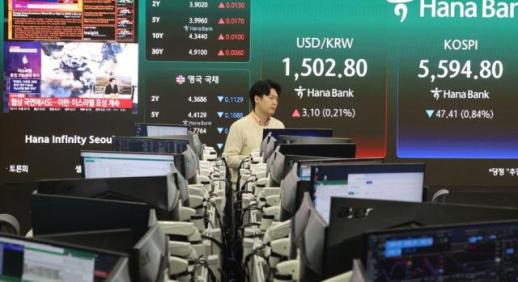 Foreign investors dumped nearly 20 trillion in South Korean stocks last month SEOUL, March 27 (AJP) - Foreign investors offloaded nearly 20 trillion Korean won (US$12.98 billion) worth of South Korean shares last month, extending their selling streak to a second consecutive month, according to data released by the Financial Supervisory Service on Friday. Foreign investors net sold 19.56 trillion won worth of shares - including 19.31 trillion won on the benchmark KOSPI and 239 billion won on the junior KOSDAQ - resulting in a net outflow of 12.13 trillion won in February. They instead shifted toward bonds, snapping up 7.43 trillion won worth for a fourth consecutive month. As of the end of February, foreign investors held 2,026 trillion won worth of listed stocks here, accounting for about 32.6 percent of the market. By country, the U.S. led with 838.19 trillion or 41.4 percent of total foreign holdings, followed by Europe at 31.8 percent, Asia at 13.8 percent and the Middle East at 1.8 percent. Foreign holdings of local bonds, meanwhile, continued to grow, rising 6.8 trillion won from the previous month to 337.3 trillion won, accounting for 12 percent of the total. 2026-03-27 09:01:51
 -
 Singer Lee Ji-hye Says Daughter Moved to Public Kindergarten After English Preschool Closed Singer and TV personality Lee Ji-hye said her younger daughter transferred from an English-language preschool to a public kindergarten after the preschool announced it was shutting down. A video titled “Why Lee Ji-hye’s daughter transferred to a public kindergarten after giving up English preschool? (Early English education)” was posted on March 26 to her YouTube channel, “밉지않은 관종언니.” Lee said she received a notice from the English preschool attended by her second daughter, Ellie, saying the school would close. “Tae-ri (my first daughter) graduated from there, and Ellie naturally went there too, so when I heard it was going away, I panicked,” she said. Lee said the English preschool assigned homework such as reading vocabulary words. She said Tae-ri followed instructions without much difficulty, but Ellie “absolutely didn’t want to do it.” Lee added that she decided it was not the right age to force her to do things she disliked, and began looking into public kindergartens. After Ellie moved to a public kindergarten, Lee said she was pleased with the change. “After switching kindergartens, Ellie started washing her hands on her own, eating on her own, and even learned to greet people,” she said.* This article has been translated by AI. 2026-03-27 08:57:22
 -
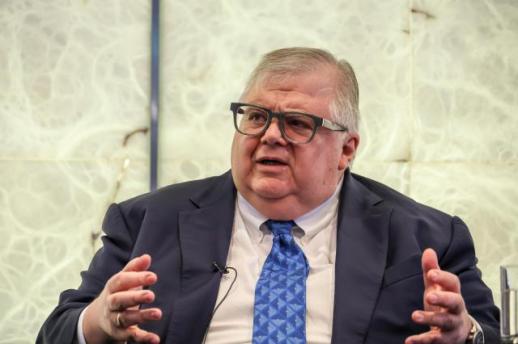 INTERVIEW: AI may turn Korea's inward finance into strategic edge: Carstens SEOUL, March 27 (AJP) - Unlike globally recognized industrial giants such as Samsung, LG and Hyundai, South Korea’s financial sector remains relatively underexposed overseas — yet its domestic orientation could become a strategic advantage in the era of artificial intelligence, a former top central banker said. Artificial intelligence is set to fundamentally reshape financial intermediation, from payments to supervision, according to Agustín Carstens, former general manager of the Bank for International Settlements. “AI will facilitate what we call ‘agentic payments,’ but, more importantly, it will significantly enhance the efficiency of transaction settlement,” Carstens said in an interview with AJP. He added that AI-enabled transparency could materially lower compliance costs by allowing regulators to monitor financial institutions in real time. “If regulators have continuous access to banks’ balance sheets and can assess them rapidly using AI, the need for heavy and costly reporting frameworks diminishes considerably,” he said. Carstens also pointed to growing momentum behind South Korea’s digital currency initiatives, particularly the Bank of Korea’s won-based stablecoin project, under incoming governor Shin Hyun-song — a former BIS colleague. Shin’s appointment comes at a critical juncture for financial innovation. Carstens underscored his expertise in tokenization, central bank digital currencies and AI-driven financial systems. “Through the BIS, we have undertaken extensive work on tokenization, central bank digital currencies and the broader impact of AI on the economy,” he said. “He is a leading expert in these areas and is well positioned to sustain the Bank of Korea’s momentum in advancing the digitalization of the financial system.” Carstens was in Seoul to speak at the 19th Asia-Pacific Financial Forum (APFF) 2026, hosted by Aju Business Daily, which this year examined why Korea’s financial sector has lagged its industrial base in global reach. However, longer-term digital ambitions remain contingent on near-term macro risks. South Korea’s energy-dependent economy is highly exposed to disruptions in the Middle East, particularly via the Strait of Hormuz, a critical artery for global oil and gas flows. “Korea depends significantly on energy supplies that transit the Strait of Hormuz,” Carstens cautioned. “Any disruption there could have immediate and material consequences for key sectors of the economy.” Such geopolitical shocks, he added, could weigh on the manufacturing and digital backbone of the economy — even as AI opens a pathway for structural upgrading in finance. 2026-03-27 08:53:57
 -
 Samsung SDI to acquire stake in precursor maker Fino to secure battery supply chain SEOUL, March 27 (AJP) - Samsung SDI is set to invest about 30 billion won ($19.8 million) in Fino, a South Korea-listed subsidiary of China's CNGR Advanced Material, as part of efforts to strengthen its battery materials supply chain. Fino released regulatory filing Thursday it had approved a rights issue of about 14.29 million new shares through a board resolution. Samsung SDI will subscribe to about 6.13 million shares, or about 40 percent of the offering, at an issue price of 4,897 won per share to secure an estimated 7.5 percent stake in the company. The investment is aimed at securing supply chain stability from the precursor stage of battery production, a critical upstream material used in manufacturing cathodes. Precursors account for 70 to 80 percent of cathode production costs. Fino is building domestic production facilities through CNP New Material Technology, a joint venture with POSCO Future M, with production lines for both nickel-cobalt-manganese and lithium iron phosphate cathode materials. Samsung SDI is ramping up its energy storage system business in the United States through StarPlus Energy, a joint venture with Stellantis in Indiana. The company has secured more than 3.5 trillion won in ESS battery supply contracts with U.S. energy firms since late last year. The move comes as Washington tightens restrictions on Chinese-origin materials in ESS batteries, pushing Korean battery makers to reduce their reliance on Chinese suppliers to meet subsidy requirements under U.S. energy legislation. 2026-03-27 08:48:03
 -
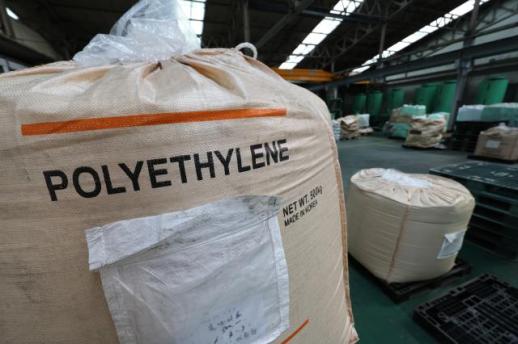 Seoul enforces ban on naphtha exports for 5 months amid supply crunch SEOUL, March 27 (AJP) -South Korea will keep domestic naphtha at home after its shortage from the widened conflicts in the Middle East has crippled a cracking facility, sending downstream ripples across factory floors to plastic delivery bags and cartons. The Ministry of Trade, Industry and Energy on midnight Friday issued a gazette enforcing ban on naphtha exports immediately for five months as a part of a package of "wartime" measures that included deeper and longer cuts to fuel tax and supplementary budget. Naphtha is an essential feedstock for producing petrochemical materials used by industries including semiconductors and autos. South Korea relies on imports for 45 percent of domestic demand, and supplies from the Middle East — which account for 77 percent of imports — have been disrupted by the war, the ministry said. The government previously supported efforts to secure alternative import sources, including those from Russia after Washington lifted some sanctions, and designated naphtha as an economic security item, making it eligible for low-interest financing through a supply chain fund. As the situation dragged on, it moved to stronger steps, including shifting restricted export volumes to the domestic market and banning hoarding. Under the notice, exports of all naphtha are restricted in principle, with exceptions allowed only with approval from the industry minister. Naphtha businesses (refiners) and users (petrochemical companies) must report daily to the ministry on production, imports, use, sales and inventories. Hoarding is prohibited. If a naphtha business’ weekly shipment ratio drops by more than 20 percent from 2025 without a reasonable explanation, the minister can order steps such as adjusting sales and inventories. The government can also order refiners to produce naphtha and take supply-adjustment measures to ensure naphtha produced domestically or brought in from overseas is supplied to specific petrochemical companies. According to industry minister Kim Jung-kwan, “Because naphtha is a basic raw material that supports South Korea’s industry, the government will secure as much volume as possible through support for overseas procurement.” He urged cooperation so that naphtha and related petrochemical products are distributed and managed in line with the purpose of the new notice. “The government will supply naphtha as a top priority so there is no impact on health care, key industries and the production of essential goods,” Kim added. The emergency step comes as supply disruptions have already begun to hit production lines. One of the country’s largest naphtha cracking centers has been forced to halt operations due to feedstock shortages, according to industry sources, amplifying concerns over a broader shutdown across the petrochemical chain. The shock is cascading into everyday goods. Plastic processors and packaging firms are reporting delays in securing raw materials, while distributors warn of tightening supplies of garbage bags and industrial films, echoing early signs of hoarding in retail channels. Seoul is also weighing more controversial options to plug the supply gap. Officials said the government is in talks with industry players over the possibility of resuming imports of Russian crude oil and naphtha, a move that would require easing sanctions imposed after Moscow’s invasion of Ukraine. South Korea halted Russian crude imports in December 2022, though the country previously relied on Russia for about 5.6 percent of its crude supply. Since then, dependence on the Middle East has deepened, leaving the economy more exposed to disruptions around the Strait of Hormuz — a chokepoint through which roughly 70 percent of the country’s crude and about half of its naphtha imports pass. Finance Minister Koo Yun-cheol earlier signaled the shift toward more interventionist policy, describing the export curb and stockpiling controls as necessary to stabilize supply chains under what the government views as wartime conditions. Whether the measures can fully contain the fallout remains uncertain. Without a de-escalation in the Middle East, industry officials warn that shortages could persist, raising the risk of prolonged disruptions not only in petrochemicals but across manufacturing sectors that rely on plastic and synthetic materials as foundational inputs. 2026-03-27 07:29:30
 -
 Korea Golf Course Managers Association Holds Annual Meeting on Tax, Labor Changes The Korea Golf Course Managers Association said Thursday it held its 2026 annual general meeting over two days, March 25-26, at Maison Glad Jeju and Golfzon County Ora CC. Advisers, an honorary chair, auditors and CEOs from member companies attended. The group reviewed last year’s projects and approved its financial statements, while discussing responses to fast-changing conditions in the golf course industry. The association shared the outcome of an appeals court ruling in a lawsuit over an agreement fee involving law firm Cheonjiiin, in which the plaintiff’s claims were dismissed and the defendant golf course prevailed. It said the decision is expected to serve as a key precedent for the same case involving more than 90 member companies, and it plans to respond actively if the case goes to the Supreme Court. Members also discussed tax changes aimed at easing management burdens. The association reported it is forming a consultative body on property tax and the individual consumption tax, and said it will pursue petitions and other government outreach to seek an end to higher property tax rates and the abolition of the individual consumption tax. Labor issues were another main agenda item. The association said it analyzed the impact of the “Yellow Envelope Act,” a revision to the Trade Union and Labor Relations Adjustment Act that took effect March 10, including expanded bargaining rights for caddie unions. It said it will hold briefings for members and distribute response guidelines. It also released a simulation estimating that adopting a “worker presumption system,” which shifts the burden of proof to employers, would add about 16.2 billion won in annual costs for an 18-hole course. It said it has set five response strategies, including policy recommendations. The association also discussed switching its membership fee calculation from a system based on the number of visitors to a flat fee based on the number of holes, citing fairness among members and administrative efficiency. Choi Dong-ho, the association’s chairman, said the meeting brought the association and its members together to seek proactive responses to issues that could “shake the foundation” of the golf industry, including the Yellow Envelope Act and the proposed worker presumption system. He said the association will continue to work to protect members’ interests and support the industry’s sustainable development.* This article has been translated by AI. 2026-03-26 18:21:00