

Journalist

CGTN
-
 Book Review: Building a Respected Family Business Success stories rarely lose their appeal, especially when they trace a climb from poverty through hardship to wealth and recognition. That arc drives Hwang Ho-taek’s book, “A Tycoon Who Loved Fine Instruments” (Nanam Publishing), built around the memoir of Min Myeong-sul, 84, chairman and founder of Cosmos Musical Instruments. It follows Min from a poor childhood in Haenam, South Jeolla province, through decades of struggle and growth. Min left home at 15 with 200 hwan, first for Mokpo and then, on impulse, for Seoul. He started his business at 30 and, more than 50 years later, had built a company with annual sales of 50 billion won. The book highlights friends and bosses who helped him at key moments, and it recounts a romance with the woman who became his wife after they connected through a morale-boosting letter during his Vietnam deployment. The memoir also emphasizes discipline. Min still keeps a stark note titled “Life and Death” that he wrote in 1965 before leaving for Vietnam, along with a 1972 opening announcement card. He says he has lived with the mindset that “the stake of my life is 200 hwan,” a posture the book links to steady work habits, trust in relationships and business opportunities. The narrative describes how that trust mattered as he moved from selling imported cigarettes and gum to working at a musical-instrument shop, and later as he pursued partnerships with global companies such as Yamaha and Kawai. Min’s pen name, Nam-eun, refers to Haenam’s nickname as Korea’s “land’s end.” The book frames it as both an endpoint and a starting line, reflecting Min’s insistence on continued challenge rather than settling. It also portrays a life of giving. Min, who entered the Catholic Church at 50 following his wife, Jeong Jin-suk Klara, is identified as Min Myeong-sul Francisco and is described as continuing donations and good works for his hometown and neighbors. The review argues that Min’s story also raises questions about family businesses. Min says he never pressed his children to take over, but the succession appears to be unfolding naturally. In South Korea, the author writes, negative sentiment toward conglomerates and inherited wealth remains strong, and corporate problems are real. Still, the review notes that family-run firms can benefit from fast decision-making, long-term planning and stable management, and it points to examples abroad: Japan’s Kawai, a piano maker run by the founder’s family into the fourth generation, and Sweden’s Wallenberg family, which has managed businesses for more than 160 years while earning respect for transparency, ethics and sustained giving. Citing the ancient text “Book of Rites,” the review quotes: “Music is giving.” It adds that a well-made instrument faithfully carries a performer’s expression. Cosmos Musical Instruments, it notes, took its name from its original location in Cosmos Department Store; intended or not, “cosmos,” meaning a “harmonious world,” fits instruments as “tools for giving.” The review closes by expressing hope that the company will remain a respected family business that seeks harmony and gives back. The reviewer also notes omissions: the book offers little detail on Min’s support for musicians, on the strain of his wife’s five bouts with cancer, or on Min’s own health while living for more than 20 years with an insulin pump. By contrast, it spends lengthy space introducing artists represented in the Min Family Art Museum collection. The review suggests that imbalance may reflect Min’s modesty. It ends by calling Hwang a diligent reporter and wondering what his next reporting and writing will bring. * This article has been translated by AI. 2026-03-26 08:54:23
 -
 'I Am Solo' Season 30: Youngsoo and Oksun confirm real-life relationship; Youngsik and Youngja split The real-life couple from "I Am Solo" was Youngsoo and Oksun. On the 26th, a live broadcast featuring cast members from ENA and SBS Plus dating show "I Am Solo" Season 30 aired on the YouTube channel "Chonjang Entertainment TV." Ten cast members took part, excluding Youngchul and Hyunsook, who were absent for personal reasons. In the previous episode on the 25th, Youngsik and Youngja, and Youngsoo and Oksun, became the final couples. Youngsik later said he and Youngja dated for about a month but decided to part ways because they were not compatible. "I’m having a serious relationship with someone who understands my shortcomings," he said. Youngja said she is currently single. "It’s not like I’ve been on 100 blind dates, but I’m thinking I should make it 100," she said. Youngsoo and Oksun said they are continuing their relationship. Youngsoo said he had claimed on the show that he would date casually for three to four months, but changed course after filming ended. "Two weeks after the show ended, I confessed and we started dating," he said. Oksun said she was surprised by how direct he was. "Youngsoo was very proactive and expressed himself a lot, so I was surprised and unsure at first. I opened up a lot," she said. She added that he thinks seriously about both the past and the future, and that she decided to begin the relationship in earnest. "I Am Solo" is a dating program in which single men and women who strongly want to marry try to find love. It airs Wednesdays at 10:30 p.m. on ENA and SBS Plus. 2026-03-26 08:21:19
 -
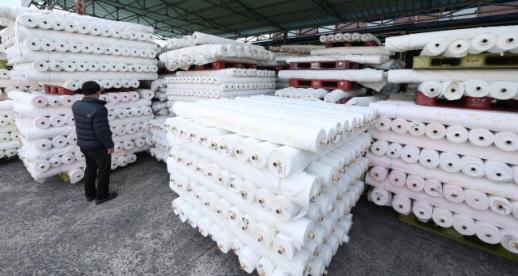 Korean manufacturers turn sharply pessimistic in steepest BSI drop since Covid SEOUL, March 26 (AJP) -South Korean manufacturers turned abruptly pessimistic, with sentiment posting its sharpest drop since the Covid-19 shock in early 2020 as the Middle East crisis spilled into the real economy a month after U.S.-Israeli strikes on Iran. The country's largest business association, Federation of Korean Industries (FKI), said Thursday its Business Survey Index (BSI) outlook for April stood at 85.1, based on a survey of the country’s 600 largest companies by sales. The index dropped 17.6 points from March’s 102.7 — which had marked the first positive reading in 48 months — falling back below the baseline of 100 in just one month. The March actual BSI came in at 92.6. By sector, both manufacturing and nonmanufacturing were in negative territory, at 85.6 and 84.6, respectively, marking the first time in 15 months that both sectors recorded readings in the 80s. Manufacturing sentiment deteriorated sharply, plunging 20.3 points from March’s 105.9 — the steepest drop since April 2020 during the COVID-19 shock. Nonmanufacturing also fell 14.8 points from 99.4. Within manufacturing, eight of 10 subindustries were below the 100 threshold, with only pharmaceuticals and electronic and communications equipment posting positive outlooks. All nonmanufacturing subsectors remained negative. Weakness was most evident in sectors directly exposed to crude supply disruptions. Petroleum refining and chemicals posted a BSI of 80.0, while electricity, gas and water fell to 63.2. Transportation and warehousing stood at 82.6, and nonmetal materials and products — including plastic manufacturing reliant on crude-based inputs — lagged at 69.2. FKI attributed the broad-based decline to heightened uncertainty stemming from the Middle East conflict, including surging global oil prices and rising ocean freight rates. Oil prices have Dubai grade has risen over 150 percent so far this year owing to the conflicts in the Middle East and crippling of the core waterway, the Strait of Hormuz, off the Iranian coastline. All seven major categories in the BSI remained below the 100 mark, including domestic demand (90.8), exports (94.3) and investment (95.4). The funding conditions index, which reflects corporate liquidity, fell to 89.7 — the lowest since June 2023. The profitability index dropped 7.1 points from the previous month to 90.8, signaling mounting cost pressures. FKI said companies are facing growing pressure on financial health, citing concerns over inflation from global supply chain disruptions and a slowdown in the real economy. Lee Sang Ho, head of FKI’s economic division, said rising tensions in the Middle East have heightened concerns over crude supply and dampened business sentiment, calling for swift policy support, including proactive fiscal measures, to prevent external uncertainty from spilling over into the real economy and disrupting corporate activity. 2026-03-26 07:48:02
 -
 OPINION: A third oil shock — and why Korea must not return to price controls SEOUL, March 26 (AJP) -The latest U.S.-Iran war is no longer just another geopolitical flare-up. It is rapidly taking on the contours of a systemic shock — one that is already pushing oil prices higher and exposing vulnerabilities across the global economy. President Donald Trump, who once unsettled markets with tariff threats, is now presiding over a far more destabilizing development. Damage to key oil facilities in the Middle East and disruptions in the Strait of Hormuz have revived fears of a supply shock, with consequences that extend well beyond the region. The roots of this instability run deep. A century of unresolved tensions — from borders drawn without regard to ethnic and religious realities to the enduring fallout of Iran’s 1978 Islamic Revolution — has left the region structurally fragile. Layered onto this are geopolitical rivalries that pit pro-U.S. and anti-U.S. blocs against one another, with energy sitting at the center of the fault line. History offers a clear warning. The oil shocks of the 1970s reshaped the global economy, driving inflation, slowing growth and forcing structural adjustments. Today, there is a growing case that the world may be entering a third such episode. This time, however, the impact is likely to be broader. Oil is no longer confined to power generation; it is embedded across transportation, manufacturing and petrochemicals. A disruption in supply now transmits more quickly and more widely through the global system. Few countries are as exposed as South Korea. More than 70 percent of its crude oil imports come from the Middle East, and roughly 700 million barrels annually pass through the Strait of Hormuz. Even a temporary disruption would reverberate through the economy. Yet supply itself is not the most immediate risk. South Korea maintains significant strategic reserves and retains flexibility to diversify imports, including from the United States. Even in the event of a short-term disruption, the country’s supply position appears manageable. The more pressing concern is price. As gasoline prices surged past 2,000 won per liter, the government responded with a price cap on petroleum products. The move reflects the political and social urgency that accompanies rising fuel costs. But it also raises deeper concerns about market function and policy direction. Price signals serve a purpose. When prices rise, demand adjusts. Suppressing that mechanism risks distorting consumption patterns and prolonging imbalances. Europe’s experience during the Russia-Ukraine war is instructive: while price caps were discussed, most countries ultimately refrained from enforcing them, recognizing the importance of preserving market dynamics. There are also questions of fairness and efficiency. Compensating refiners for losses through public funds effectively redistributes resources — often from those who rely on public transportation to those who consume fuel. It also introduces administrative complexity, requiring the government to verify costs and determine compensation, with inevitable disputes over transparency and accuracy. The implications extend beyond gasoline. Applying similar mechanisms to power generation could create distortions across the broader energy system, raising difficult questions about equity among different energy sources. More fundamentally, the policy risks reversing decades of progress. South Korea liberalized its energy pricing system to enhance efficiency and transparency. Reintroducing direct government intervention, even temporarily, risks entrenching expectations that are difficult to unwind. For that reason, the current price cap should be treated as strictly temporary — and lifted as early as conditions allow, even ahead of preset thresholds, depending on how the conflict evolves. That does not mean the status quo is without flaws. The current episode has drawn renewed attention to the structure of Korea’s refining sector, where four companies dominate the market and price domestic products in line with international benchmarks such as Singapore spot prices. This practice can result in domestic prices rising in tandem with global markets, even when input costs have not increased proportionately. Addressing such structural issues requires transparency and competition — not blunt administrative controls. Each time energy prices spike, pressure mounts for government intervention. Yet without a clearly defined framework, such interventions risk becoming ad hoc and politically driven. This moment presents an opportunity to set clearer boundaries. A coherent framework for energy pricing — spanning petroleum, electricity and gas — is needed to define both the role and the limits of government action. Failing to do so would leave South Korea vulnerable not only to external shocks, but also to repeated cycles of policy overreach. The next crisis, when it comes, should not find the system unprepared. About the author : △Seoul National University, economics △Ph.D. in economics, University of Texas at Austin △Chair, Private Advisory Committee for Trade Negotiations 2026-03-26 07:29:12
 -
 Rapper San E Says He Has Become a Father, Thanks Fans for Congratulations Rapper San E said he has become a father. On the 25th, San E posted a photo on social media with the message, "I became a dad," adding, "Thank you to everyone who is congratulating me." The photo shows his wife holding their newborn, with San E beside her in tears. San E, who held a wedding ceremony with a non-celebrity in 2022, said in September last year that his wife was pregnant. * This article has been translated by AI. 2026-03-26 07:12:14
 -
 SK Biopharm’s Xcopri posts record U.S. sales, lifts earnings outlook SK Biopharm said its central nervous system drug cenobamate, sold in the United States as Xcopri, drove record results as the company expanded its foothold in the U.S. epilepsy market. The company said U.S. sales of cenobamate totaled 630.3 billion won last year, up 44% from a year earlier. SK Biopharm reported total revenue of 706.7 billion won and operating profit of 203.9 billion won, up 29.1% and 111.7%, respectively, from the previous year. The company said that compares with 246.2 billion won in revenue in 2022, nearly tripling over that period. The company said cenobamate is an epilepsy treatment that became the first new drug developed by a South Korean company to win U.S. Food and Drug Administration approval in 2019. It said U.S. prescriptions in the fourth quarter jumped 29.2% from a year earlier, pushing the 2025 monthly average above 47,000. Market watchers have credited a strengthened U.S. sales organization and “line of therapy” marketing for expanding early prescribing. SK Biopharm said, “As new patient inflows continue, the foundation for growth has become solid,” and raised its 2026 guidance for U.S. cenobamate sales to $580 million, about 860 billion won. Lee Dong-hoon, SK Biopharm’s CEO, attended the company’s “2026 National Sales Meeting” in Florida earlier this year and said, “Based on a shared goal, we will break down organizational boundaries and move in the same direction,” adding that the company would pursue business expansion on the back of cenobamate’s success. Lee, described by the company as an investment professional, has led the global sales expansion of cenobamate. He also serves as CEO of SK Life Science, SK Biopharm’s U.S. subsidiary, and oversaw the buildout of a direct U.S. sales system that helped lift operating profit above 200 billion won last year. The company said Choi Yoon-jung, head of the strategy division and the eldest daughter of SK Group Chairman Chey Tae-won, is overseeing investments and shaping a mid- to long-term roadmap. It said she was promoted to strategy chief in a recent reorganization and is directly managing future growth initiatives, including the launch of a radiopharmaceutical therapy, or RPT, division. SK Biopharm said it plans to use cenobamate’s momentum to increase research and development spending and accelerate pipelines that apply precision-medicine approaches, including for Parkinson’s disease. Some in the market have said expanding cenobamate’s share and moving RPT into clinical trials could speed the company’s push toward a top-tier biotech position. Analysts said cenobamate is expected to hold a favorable position because it is the only branded new drug among epilepsy treatments. Huh Hye-min, an analyst at Kiwoom Securities, said, “For now, cenobamate is the only branded new drug, so favorable market penetration is expected,” and added that because most R&D catalysts remain at early stages ahead of Phase 1 entry, the company is likely to expand R&D investment to secure growth drivers after Xcopri’s patent expiration. SK Biopharm said it traces its origins to the “P Project” launched at the Daejeon research complex in 1,993 under the late SK Group Chairman Choi Jong-hyun’s vision to build new growth engines. The company said the “P” stood for the first syllable of “pharmaceutical,” and that it began with six researchers focused on developing new drugs. It said it later built a global base by establishing a cooperation system with a pharmaceutical research center in New Jersey and is now pursuing global markets with a CNS-focused pipeline. The company said it is also expanding beyond cenobamate into next-generation modalities such as RPT and targeted protein degradation, or TPD, as it seeks to demonstrate SK Group’s “30-year commitment” to biotech.* This article has been translated by AI. 2026-03-25 18:27:00
 -
 Changdeokgung Palace opens doors and windows to usher in spring SEOUL, March 25 (AJP) - A two-week-long event to soak in the atmosphere of spring is underway at Changdeokgung Palace in central Seoul, welcoming visitors who want to enjoy the historic royal palace with flowers in bloom. According to the Korea Heritage Service, the event, under the banner of "Letting in Light and Breeze at Changdeokgung," which kicked off last Tuesday, runs until April 5 and opens "changho" or the traditional windows and doors of palace buildings, to visitors. Changhos were installed in windows and doors to allow access, and they also help preserve buildings by allowing light into interiors and ensuring proper air circulation. During the event, visitors can tour the palace's historic buildings with all windows and doors open. Daejojeon, a major hall at the palace that served as the main living quarters of the king and the queen's office, has also been opened following the recent completion of restoration work. 2026-03-25 17:50:19
 -
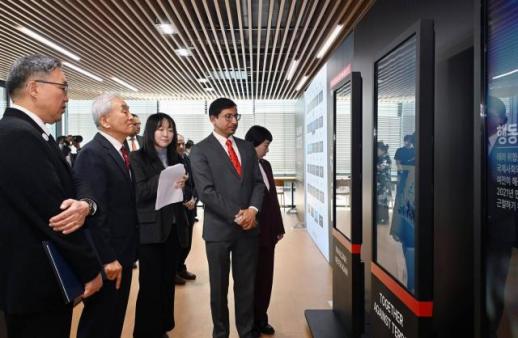 Embassy of India in Seoul hosts digital exhibition on "Human Cost of Terrorism" SEOUL, March 25 (AJP) - The Embassy of India in Seoul, in association with the Korea Democracy Foundation, hosted a two-day digital exhibition titled “Human Cost of Terrorism” at the National Museum of Korean Democracy. The exhibition was inaugurated on Tuesday by Mr. Lee Jae-oh, President, Korea Democracy Foundation (KDF); H.E. Mr. Gourangalal Das, Ambassador of India to the Republic of Korea (ROK); and Ms. Kim Jae-won, Hon’ble Member of the National Assembly. Mr. Lee Jae-oh in his welcome remarks underscored the symbolic significance of the venue, noting that a site once associated with the denial of freedom and human rights now stands as a reminder of the enduring value of democracy and human dignity. He emphasized that democracy is sustained through sacrifice and solidarity, and called for continued collective efforts to ensure that such tragedies are never repeated. In his keynote address, Ambassador Gourangalal Das highlighted the shared democratic values underpinning the India–Republic of Korea Special Strategic Partnership. He emphasized that terrorism remains a global threat to peace and stability and democracies like India and the ROK have the extra responsibility to speak out against terrorism in all its forms and manifestations. He underlined that perpetrators, organizers, and financiers of terror acts must all be held accountable and called for a coordinated, resolute and global response. Ms. Kim Jae-won, Member of the National Assembly during her special address highlighted the importance of cultural cooperation in promoting shared humanitarian values. She expressed hope that India and the ROK would continue to work together to advance peace, democratic principles, and cultural understanding. Over the two days the exhibition saw participation of the people from diverse fields including journalists, civil society representatives and government officials. The digital exhibition aims to fosters greater awareness of the universal nature of terrorism and reinforces the importance of international cooperation in combating terrorism in all its forms and manifestations. 2026-03-25 17:48:00
 -
 Korea Music Copyright Association disputes audit criticism over AI works registration The Korea Music Copyright Association, known as KOMCA, on Tuesday rejected a recent audit finding and related reports on artificial intelligence, calling them an interpretation that overlooks the specific nature of music copyright and the group’s response efforts. The Board of Audit and Inspection said in a March 24 announcement that 11 copyright collective management organizations, including KOMCA, were registering works and collecting and distributing royalties without separately verifying whether AI had been used. KOMCA responded in a statement Tuesday that it has reviewed internal policy while operating an AI task force team since 2023 and has officially implemented a “registration hold policy” for AI-used works since March. Under the policy, members seeking to register songs must check whether AI was used, and any work reported as AI-assisted is put on hold, the association said. KOMCA said the measure is a temporary management step meant to prevent confusion in the creative ecosystem and distortions of rights in the absence of legal standards. It said it is not denying copyright for AI-used works across the board, but taking a preemptive step to reduce disputes. The association also said there is no widely trusted technology worldwide that can perfectly determine whether AI was used. Given those technical limits, it said, the system inevitably relies on creators’ self-reporting, and a small number of false filings should not be treated as overall negligence by the association. As alternatives, KOMCA said its new chairman, Lee Si-ha, had proposed verification steps even before taking office, including requiring submission of DAW (digital audio workstation) files that can help show the actual creation process. It added that the association is accelerating development of a “Korean-style AI detection program.” KOMCA said it is also strengthening after-the-fact monitoring, including screening suspected AI-use cases found on platforms such as YouTube Shorts and withholding royalty payments while conducting additional analysis. The association said it is discussing national-level standards through the “K-Music Rights Organizations Coexistence Committee,” launched in February under Lee’s leadership. Topics include requiring transparency in AI generation processes and establishing clear criteria to distinguish human-created works from AI-generated works. “Even though management systems have not been established globally, the association has responded proactively,” a KOMCA official said. The official added that KOMCA will work closely with the Ministry of Culture, Sports and Tourism to help establish a fair copyright order.* This article has been translated by AI. 2026-03-25 17:45:57
 -
 Suzy fronts Longines 2026 event in Seoul SEOUL, March 25 (AJP) -Singer and actress Suzy, global ambassador of Swiss watch brand Longines, takes part in a photo call at the brand’s 2026 new product presentation on Wednesday at The Westin Seoul Parnas in Gangnam, Seoul. Dressed in a dark navy suit with a white shirt and black tie, she completed the look with long, softly waved hair and understated accessories. 2026-03-25 17:39:18